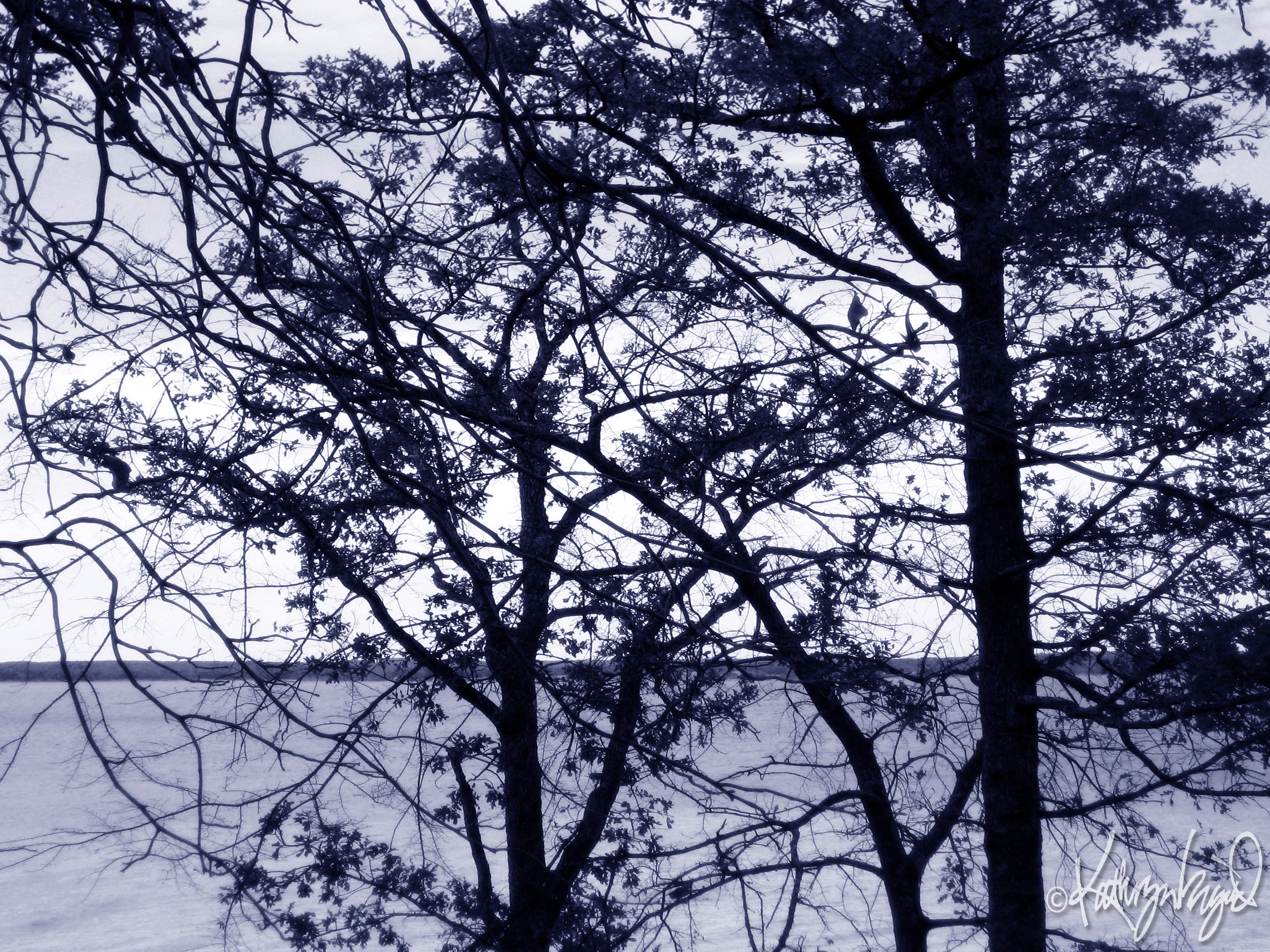
Improvisation Leads to Reverie

photoThought Becomes Deed

Improvisations in the gold-lit nave, where I sat as of old,

Among the candle flames and greens, the paraments and carven screens

And incense-laden night, these scenes of ceremony were the means

Offsetting those surprising, bold improvisations that you told

The sanctuary’s lofty lair, and all of us who huddled there

So mesmerized by new-made tunes, to which our souls were not immune,

Since you were writing down the runes

–as you have done these many moons–

You marked this newness down with care, though improvised out of the air;

digital illustrationI bent to listen to the way that old pipe-organ seemed to say

Something, in whispers, of a time–long past, I thought–in which sublime

Rhythms and patterns like your chiming play of Tierce en Taille, were, I’m

Quite sure, shaped as a different lay, wherein another love did play,

A love now gone to other stations of the Cross than these relations,

Playing something sweet and deep across the borderlands of sleep,

Across your grand recital; sweeping through the memories I keep:

Those evening organ-conflagrations, candlelit improvisations.

photo

Fanfare

My friends, whether you celebrate Christmas or not, between that and the coming of the New Year this is certainly a time of year in the western world when the presence of Christmas and New Year advertisements and discussions and preparations are ubiquitous to the degree that many of us still get drawn into the whole element of assessing our lives and our places in both the temporal and our inner worlds. It’s not a bad practice to do a bit of examination and evaluation from time to time anyhow, I think. Regardless of beliefs and philosophies, hopes and dreams, politics and projects, we can all benefit from a bit of gentle thinking-through about what matters to us. Somehow, for me that makes the end of a calendar year a cleansing time and a happy one in which I can look forward to a grand and hopeful entrance into the year just ahead.

With that in mind, I wish all of you great happiness in this time. I hope that you can find all the friendship, healing, comfort, peace and joy you desire, now and in the year ahead. And if you do celebrate Christmas, I wish you a truly happy one. If it’s Hanukkah for you, L’Chaim! If you’re preparing to celebrate any other holy days or holidays or are simply going forward full steam ahead with life, I send you my most heartfelt wishes for these delights to fill you now and in the year to come.

digital imageRinging Twelve

As the midday bells are sounding,

Morning light sharpens to blue,

Quiet moments find their grounding;

Thought needs no more things to do

To resolve all unsolved queries,

Weary, troubled, trying times–

Now thoughts rise to higher aeries

In the bell tower, where chimes

Ring new peace, and calm awaken,

Where new joy can sweep away

All the old thoughts, now forsaken,

At the bright noon of the day.

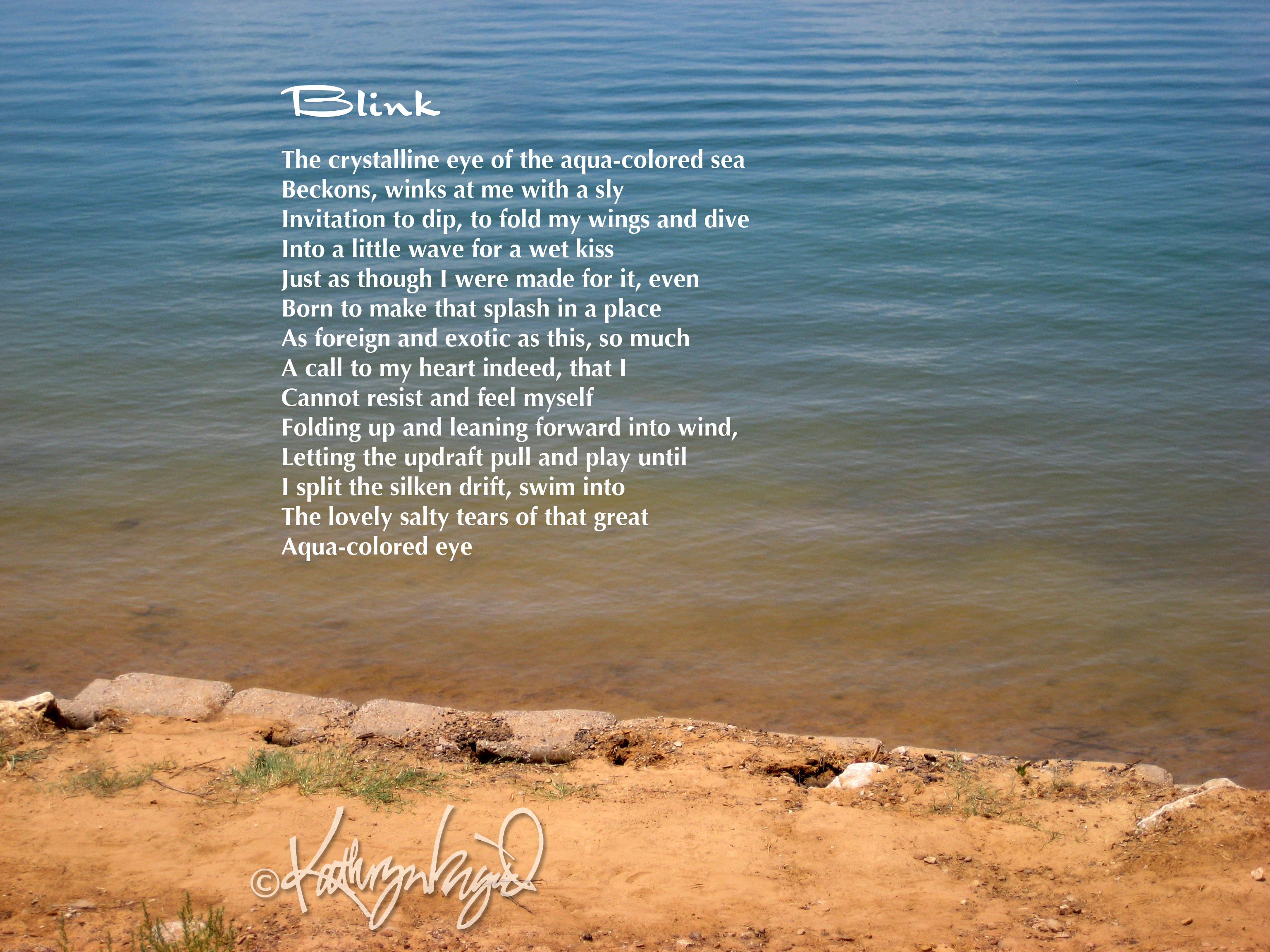
photo + textFanfare

With trumpets blazing bright as stars

The grand procession moves apace

To urge us from a darker place

Into the light no shadow mars

Nor chill cuts in; no drop of gloom

Can enter when this day springs forth

And blossoms cross the secret north

And leave no sorrow any room—

Let each take up the pageant’s pace

To follow at the trumpets’ call

And sing their joy to one and all

In this extremity of spacedigital image collage

The One Person More Lost than Me

photoMom has taught me a whole lot of things. One of the most useful is how to turn one of my most frustrating shortcomings into a strength.  It’s a skill I’ll still spend the rest of my life polishing, but having been taught the basics, I know what I need to practice, and that is a tremendous boost.

My lifelong shyness and social anxiety rose to a not-at-all-surprising high level when I started college. The small university I attended was hardly an unknown element to me, as my parents and a couple of other relatives, as well as some friends, had attended there and my older sister was already starting her junior year there when I arrived. But being predisposed to fear and intimidation as my responses to all social situations, I was guaranteed to struggle with extra doses of my old hauntings by the terrors of interpersonal experience in the new to me surroundings, with a roommate I met the day we moved in to our shared dormitory space, all new classmates, new teachers and administrators and a neighborhood where I’d never more than visited briefly before.

For the most part, I muddled through just as I’d done since I was old enough to know how to be afraid of new people and situations, and even had, as always, plenty of the enjoyment I was capable of having. I did acquire a number of grand new friends, including my roommate, who turned out to be a fantastic companion and like-minded girl. I took classes that challenged and intrigued me and I dragged up enough courage to participate in some events and extracurricular activities that broadened my scope significantly. I was surrounded in my living quarters in an all-female dorm by a cadre of terrific young women who bolstered my puny sense of self and cheered me on like the best of good neighbors.

But one day, as the first year progressed, I was visiting informally with a handful of those girls and we got into a discussion (as college coeds still often do, from what I’ve seen) about First Impressions. One of the girls, to whom I will be eternally grateful, let it slip that on first meeting me she had thought, and had since learned that others had too, that I was Stuck Up. That’s the simple classification among my tribe of someone who thinks herself superior to others and disdains and dismisses them. I was dumbstruck.

She went on, hastily, to add that on getting to know me she had realized that the reason I often refused invitations, that I didn’t look people in the eye, and that I evaded interactions and conversations instead expressed a defensive retreat into my giant ossified shell of shyness and my fear of all things new and unknown and that, in fact, she and others really enjoyed my company. That was some consolation, but realizing through her honesty that I projected an image far less benign and far more distancing than I guessed, I knew I’d have to somehow wrest my way out of the armor I’d built around myself and at the very least learn to act the part of someone with social skills even if I didn’t have them.

Naturally, I went whimpering off to Mom. And she surprised me by going beyond the sympathetic and consoling mother needed in the conversation. I’d never imagined that this person I’d always known as having not only a mother’s authority but a certain status as both the recognized Favorite Mom among all of my friends over the years and a kind of built-in First Lady of all of the organizations in which she participated, not least of all as the pastor’s wife–that she had another side, one not so entirely different from my own. That she had been deeply intimidated by being expected to play the roles of guide, hostess, chief female church member, community do-gooder and cheerleader, and all of the other philanthropic and social leadership parts inherently assumed by others to be part of her place in the world. And that, when Dad was busy being the speaker, preacher, chairman, boss and whatever his role of the moment happened to be, she was stuck in meetings and receptions and services and classes full of strangers who expected her to carry not only her own weight but that of whatever they thought was required for the occasion.

I almost wilted, thinking of what it must have been like for her.

But then she imparted the piece of wisdom that ‘cracked the case’ for me. I got the MacGuffin: social anxiety and extreme shyness assume that I am the center of the universe. That the rest of the world is watching me and is dependent on my doing or being certain things for its success and happiness. And that I am suffering the most for the cause. She put it in much more tactful terms, I’m quite certain, given that I was a flimsy excuse for an ego, a fragile not yet twenty year old still unable to see my path in everyday life clearly.

I think what she really told me (from which I extrapolated the above) was the incredibly handy ‘trick’ she’d learned for coping with all of these unreasonable social and activist demands. When you arrive, immediately look for the one person in the room more uncomfortable and more out of place than you. Even when you’re absolutely sure it’s not possible, there’s always someone more scared, more intimidated, more inexperienced or at the very least, who thinks that they are. It’s true, by the way; I’ve seen it proven over and over since. Go and gently introduce yourself and ask this person about him- or herself. Make this person the most interesting part of your life while you’re there.

That’s it, really. Suddenly, it’s not my job to be perfect or achieve the goals of the event or even to be interesting or brave; it’s my job to make another scared person feel more welcome and at ease. I don’t have to spend any energy on worrying about how I look to others or whether I’m doing what I’m supposed to be doing, because nobody with an ounce of sense is going to argue that taking care of someone in need isn’t what we’re all supposed to be doing, that recognizing that there’s someone whose need is greater than our own isn’t precisely the most attractive thing we can accomplish, and that a friendly smile isn’t the most fashionable item anyone can wear for any occasion.

I fall down on this effort often enough, still, and do my well practiced imitation of an additional pillar holding up the dimmest corner of the room. I haven’t Saved anyone else from the brink of doom through my heroic attempts to cheer them up for a half hour. I still have impressive dramatic skills in making faux pas and pratfalling my way through the day and then doing my best to make the earth swallow me whole.

But afterward, I remember to quit imagining myself the cynosure of Creation, let go of my need to be correct and impressive and likable and spend my energies on helping someone who doesn’t know Mom’s useful little technique to feel more correct and impressive and likable. I will put on my shiny smile and play the role of somebody better than me and hope that someday, if I practice it hard enough, it will become second nature and I won’t even have to work at it at all. It makes me smile just thinking about it.

If you happen to be headed to yet another office holiday party or first-of-the-year reception any time soon, you can test this theory yourself. Thank my mom. Or, if you happen to subscribe to a certain story that is commemorated on this very night, thank the Person who became most vulnerable of all in order to protect and rescue everybody weaker.


photo

A Sort of GPS for Traveling through Life

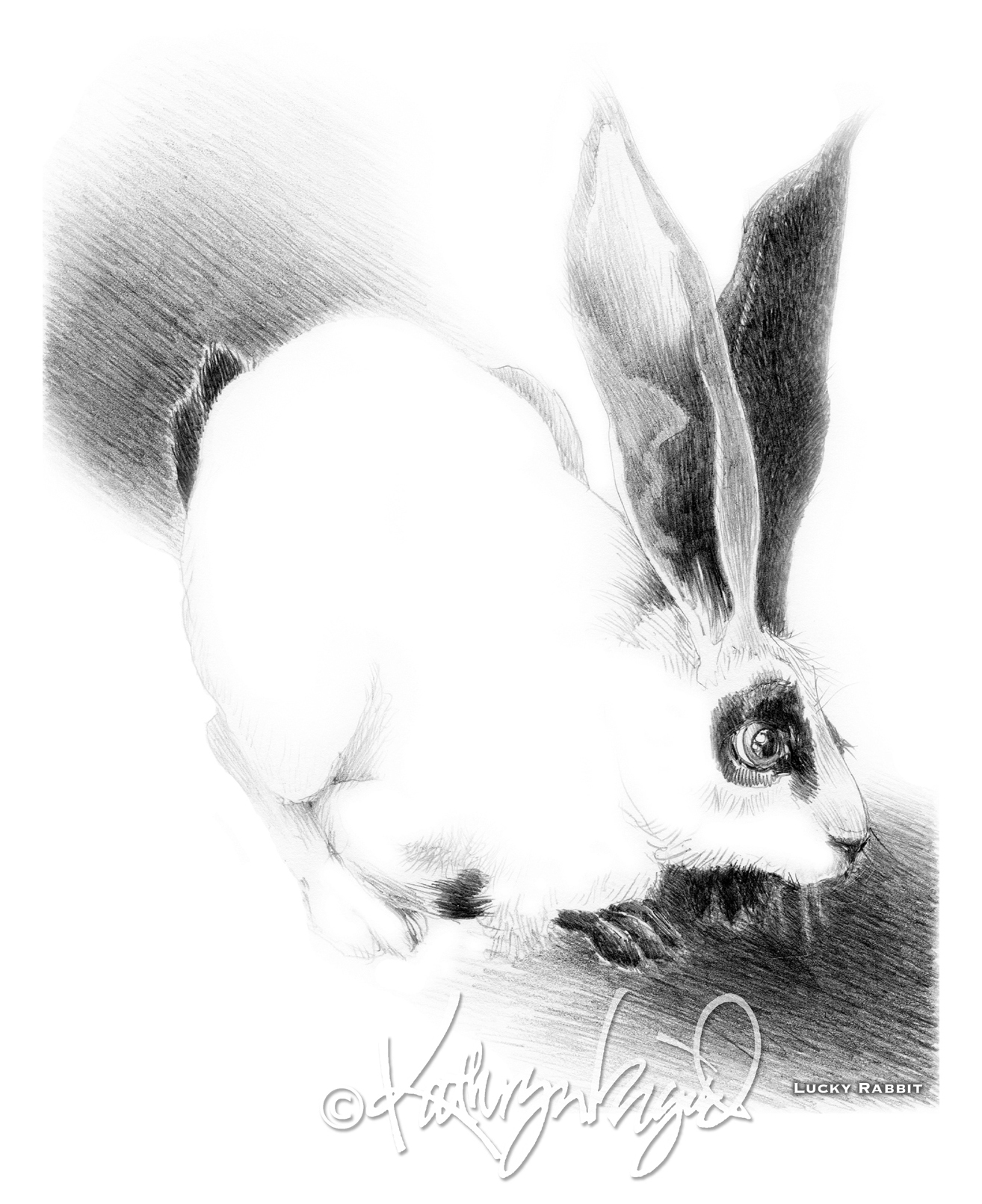
graphite drawingWhile I’m Rabbiting Around

Out in the widest open spaces, and the wildest places, too,

I have the tendency to racing ’round as rabbits tend to do;

I get a wild hair and I tear off just as often as I can,

Run all harum-scarum into Nowhere–yes, like any man,

Woman or child who senses freedom, hopping haplessly amok

With no goal or real direction, until suddenly I’m struck

With the knowledge I’m abandoned, lost, no compass-point in view,

Leaping like a rabid rabbit, with no hope, so far askew

From a purpose, from potential friends and comforts, joys and dreams

That I realize my running’s not the freedom that it seems,

That the beckoning horizon’s better when it holds a prize

I can dash toward, ears pricked upward, light a-dazzle in my eyes

And the scent of grand achievements drawing me to hare ahead;

All of this makes great the dashing and the derring-do, instead

Of tangential, random rambles, jumping pointlessly around,

And I’m glad to race and rabbit onward now, to higher ground
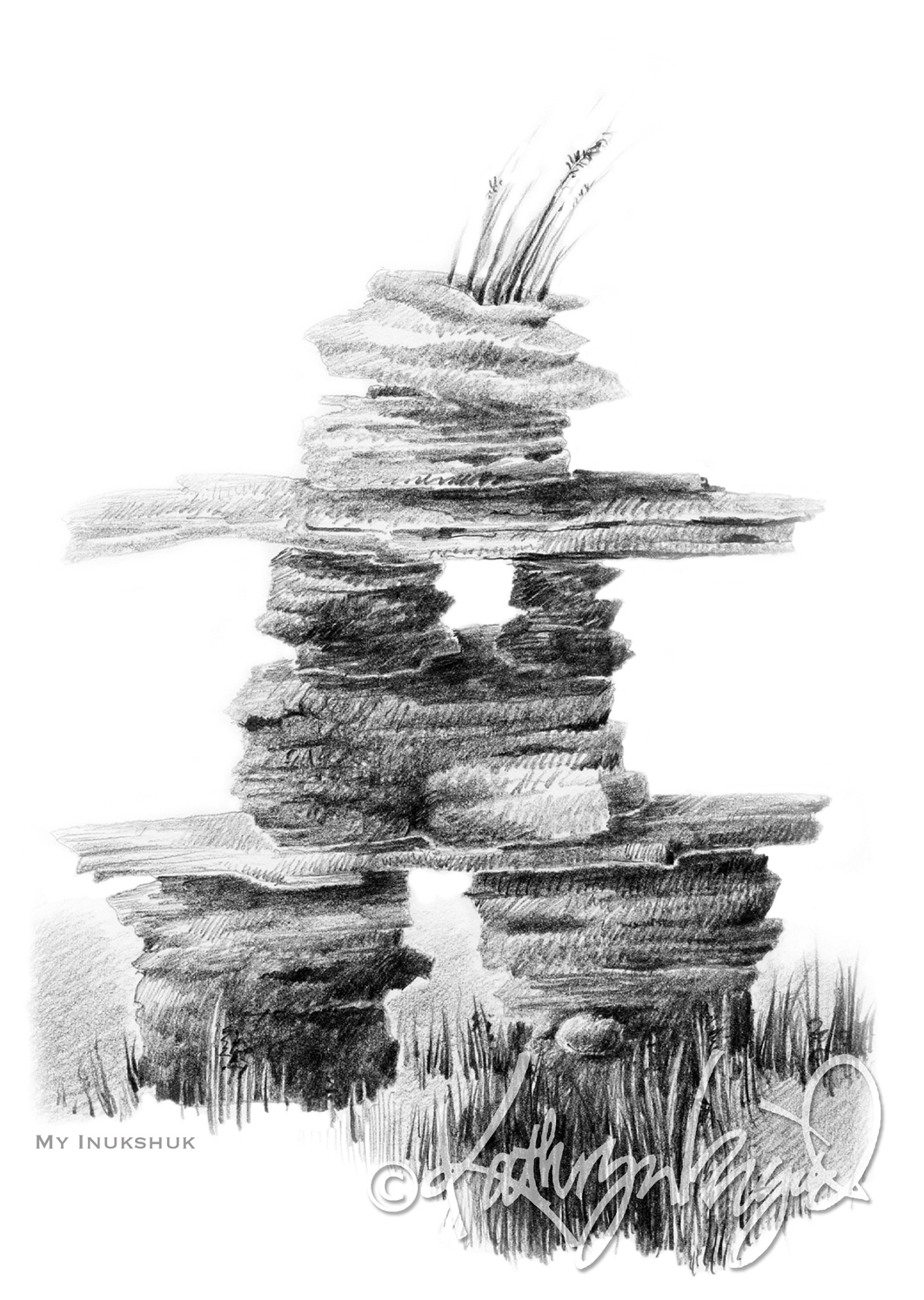
graphite drawingMy Inukshuk

Should I leave my friends a signpost

Where, I wonder, will it lead?

What will mark my place of passage;

Will it serve them in their need

For direction or for comfort?

Will it offer strength or hope?

Should I leave my friends a signpost,

Can it guide them up a slope

To a vista rich with promise,

To an exponential view

Always growing and expanding

With delight, as it should do?

Should I leave my friends a signpost,

I would like to have it guide

Them to grand and gracious places,

To that glorious countryside

Made of sweetness and of pleasures

Great as travelers can see;

Should I leave my friends a signpost,

Love is what the sign should be

Empress of the Ordinary

digital graphicOrdinariness is not a vice. It has taken me most of my life to grasp that home truth, to recognize the sublime simplicity that what is ordinary is not inherently bad. It’s not even necessarily boring or predictable, though most of us treat it that way and make it so.

It occurred to me as, for the umpteenth time in my life, I was marveling at the biography of some outlandishly gifted famous creature and reflecting on the comparably slack bag of tricks that could be held to define me. No one, I thought, will ever have reason to pore over my biography, no, not even to write it. I never so much as kept a diary for more than a few brief delusional periods before being recalled to my senses and silence by the glaring absence of exotica to lure even its author to reread it, once written. What is the great magnetism of the larger-than-life character’s story, I wondered; why am I compelled to recount and savor the life stories of those who loom heroically or with great drama or grand style on the horizon?

And I realized my answer was a strange surprise: I am seeking my own reflection.

Doubtless wiser souls have spotted this long ago! But what a freeing moment, in a way, was the discovery that what I am always hunting is familiarity, commonality, a sense of communion with others. It’s glimpses of characteristics I can truly understand—my own—that make extraordinary people real and attractive to me.

If that’s so, then perhaps my own “universal” qualities, my being Jane Doe or Everywoman, cloak in the seemingly ordinary person that I am not only shared parts that other people would find familiar in that same compelling way but also distinctions they might find equally surprising, strange, dare I say it, impressive. In the rags-to-riches celebrity tales, it’s not entirely the thrilling alternate universe of that unfamiliar life of wealth I find titillating—that’s so often a short last chapter to the tale, revealing little of real mystery and glamor—it’s that someone who seemed as ordinary as me got there. The story of a brilliant achiever or fabulous saint is rarely of great interest unless that greatness is seen set in the contrasting frame of dimmer, plainer beginnings, the quieter greys of mortality and everyday being.

So who am I, if not merely the forgettable dust of common humanity? Perhaps I really am Jane Doe. I have no characteristics more notable or exciting than my DNA or fingerprints and dental records to separate me from billions of others on the teeming earth. No reason to complain; the great and grand, the famous and infamous, the rich and rare among humankind would have less grey to offset their glory without me, and that might be purpose enough.

But I am more. I realize that every Jane and John among us has a story, a single glittering spark of distinction that sets us apart from all others. It may be the peculiar combination of ordinary traits alone, which for the unrecorded life dies with it and may remain ineffable forever. It may be no more (though this is presumably the greatest trait one could aspire to have) than that I am loved. Or maybe, just maybe, I am more interesting than I guess, and looking at myself as a biographer should can reveal someone more impressive and worthy of note than I have heretofore imagined.

And there’s always room to write a new chapter for the autobiography as long as it’s a work in progress.digital graphic illustration

Calling All Knights: To Each His Own Grail

digital photo art

If you don't have a dragon handy to defend your treasury, you may have to put on your own armor . . .


Never Give Up Your Holy Grail!

Just because some genius expert says the object you treasure is kitsch, the popular song you adore is cheesy and off-key, or the person you date is too dorky for you doesn’t mean you have to live by the so-called expert’s standards. If the object is radioactive, the song causes neighborhood riots and shatters windows all down the block, or the significant other is a part-time serial killer, then you should definitely be revisiting your values. Otherwise, winnow down your oddities to the ones that serve and please you well, and keep a relatively low profile with them where it keeps the peace. And then enjoy your little eccentricities. You are, after all, unique.

digital photo art

No matter what you treasure, you may be called upon one day to make a choice . . .

Never be Unwilling to Throw Out Your Holy Grail!

If the time comes when honest reassessment of your most treasured effects, whether they’re objects or ideas, leads you to the realization that they’re not what you once thought they were, can you do the brave, smart thing and amend the situation? Can you not only let go of your sacred cow but give it a firm boot in the behind and get it out of your barn altogether? Things, beliefs, even people—those ingredients of your life that once had a revered place in you—can change. You can change.

The past never snuffs out of existence, but you can put it in its appropriate place and give yourself permission to turn to better, more present things. Only if you’re willing to haul off and pitch away what you once held dear, vigorously and decisively, can you start afresh. The loss stings madly for a bit, and discarding anything you once adored generally tends to feel like misbehavior, but if you’ve really embraced the transformation, when the pain recedes that missing part can be replaced with better and richer possibilities, and your new life and new self are infinitely worth the trouble.

mixed media collage

One man's treasure is another man's trash . . . one woman's trash is another's treasure . . .

Daring to Live the Adventure of Life is Its Own Reward

The wonderful Eve Redwater (http://everedwater.wordpress.com/) gave me a generous gift on my birthday. I’m not sure it was intended specifically as a birthday present, but it was aptly timed so I’m certain there was at least some synchronicity at work in the event. See, I operate under a very contentedly delusional science system in which I, the sun, am always finding ways that the universe and all of the wild diversity in it revolve around me and conspire to do good to me and for my benefit. On the heels of Lady Eve’s kind gift, I was contemplating how to respond appropriately to receiving the Versatile Blogger Award from her and, virtually simultaneously, both got into a discussion via several posts and comments on my blog and those of several friends (thank you, CF, Smidge and Co.) about the roots and responsibilities of our creative lives and was reminded by my own birthday that my late godmother’s birthday was imminent. And yes, they are all interconnected–what a coincidence, eh?–in and through me.

It all meets at that point of origins + inspirations once again.

Getting involved in blogging was quite a milestone in my progress as an artist: the culmination of a large push I’ve been making toward steady, committed practice and broader sharing of my work, and also a starting point for working with a marvelous new community of inspiring and educated peers and mentors in the online community to expand my horizons to places I can’t yet imagine. No surprise, then, that it also begs the questions of where I started, where I am now, and where I might possibly be heading. That’s what’s on my mind a lot lately.

A significant part of the whole equation is that I have parents who raised all four of their kids to be unabashedly themselves and do their own thing. Of course, being semi-normal mortals, we all had our periods of self-doubt, frustration with finding out just what our own ‘thing’ might be, and any number of other growing-up issues. Having loved to draw and write and do any number of similar, incredibly unworldly things from very early, I was haunted fairly often–not least of all in my undergraduate days–by worry about how ridiculously impractical and selfish it seemed to study, then major in, and commit to a life’s work involved with the arts. I mean, really. Mom and Dad patiently assured me at all points that I should do what I felt called to do and be who I thought I was made to be, and I thwarted all of their efforts with equal stubborn force of hemming, hawing and hunkering fearfully behind innumerable university requirement courses before I would willingly and publicly admit to my addiction to art. [Ed: I like that when I typed ‘art’ just now, my computer offered to “correct” the word by writing “artichokes“, so it apparently recognized that I was in such denial it wanted to help me by disguising my intentions even from you, faithful readers!]photo

The upshot of all of this muddling around and foot-dragging is that I approached my junior year of college without having dared to declare a major, and I skulked around like a sneak-thief in the hallways of the art building and spent significant amounts of time maundering and mewling about the whole ordeal when I really ought to have been simply plunging in and getting soaked in all of the art I could lay my grubby little hands upon there and then.

Oh, woe is me! Boo Hoo, and all that. I thought I was supremely talented at evasion, but of course my parents had a secret weapon trained on me from the very beginning, and it was activated during these very tenuous years of my faltering development. It was a pair of super-agents they called my Godparents. My parents, it happens, besides being nifty talents in the parenting department, had the smarts and/or temerity to choose as godparents for their children some people that took the whole parental-surrogacy aspect of the job quite seriously. Mine were a couple of Mom and Dad’s closest friends from the quartet’s days together attending (you may be beginning to feel the frisson of familiarity, the sting of synchronicity, here already) the very same uni where I was now paddling around in a diminishing spiral of destiny-denial. Furthermore, my Godma, as I called her, and The Godfather, as he was known to me (for being, thankfully, the polar opposite of that fictional character), had long since taken up employment at said institution as a Business Office administrator and head of the department of Radio and Television, respectively. So I could go and see my Godma when I was paying my tuition or trying to find out where my last scholarship had wandered, or just when I needed some bucking up, because she was seriously skilled in dealing with all of those aspects of my college life. Her estimable spouse was housed in another building, across Red Square from her digs, and I had a little journey through the catacombs of the old dustbin to drop in on him, which trek I gladly undertook on certain occasions when I wanted a different flavor of encouragement from hers, or–gasp!–artistic advice.

See, with The Godfather, I could go all clandestine and it seemed right in character, so I didn’t try to pretend with him that I wasn’t heading in an art-ish direction, though which one of many directions was still quite cloudy in my crystal ball. After all, there was that James-Bondish crawl through dusty and dimly lit corridors in a faintly creaky building just to find him in his office. And of course there was the visiting, during which he would puff away on his pipe and I would pretend not to see or smell it, because Officially he had “quit smoking” and his wife “didn’t know” he still did it. Apparently he thought that her willingness to admit to relation of any sort with me proved she was non compos mentis, and I was certainly in no position to argue that, so he pretended not to smoke and I pretended not to be coming in every time to whine that I couldn’t sign up as an Art Major because that was just plain irresponsible and stupid. I would go ahead, maybe, with an English degree and get ready to teach, because at least that might lead to, oh, I don’t know, a paycheck or something like one. My godparents, bless their dear departed craziness, never once chastised me overtly for being, oh, I don’t know, irresponsible and stupid by not doing what I really felt called to do and exercising what little native wit or talent I might dig up in my education to do what I was perhaps meant to do. But somewhere along the line the gentleman with the invisible pipe neatly skirted the issue of what-to-do by saying, in effect, Never mind what you think you’re supposed to do, or even what you want, this is about who you ARE. He proceeded to clarify by telling me that it was perfectly obvious to him and to anyone else that might have spent thirty seconds or so in my company that there were certain compulsions and eccentricities that I couldn’t exactly gloss over that earmarked me plainly as an Artist.

I won’t say that I never questioned the whole thing again, but somehow Mr Wise Guy pressed the right button at the right moment so that what my parents and sisters and friends had all been eternally encouraging me to do and be suddenly was revealed as so much more dazzlingly clear and excellent than when I had been studiously ignoring them and covering my ears and singing LA-LA-LA-LA! at the top of my voice to drown them out the whole time.

This is all a mighty stretched-out way of telling you that I still believe life and all of the fine creatures surrounding me in it work pretty hard to steer me in happy directions and plunk dandy gifts in my path all the time. That many supportive people and useful events in confluence led me down the primrose path of Art; that a life lived in the midst of said art connected me to a whole lot of additional supportive folk and dropped me amid numerous other grand gifts; not least of all, that opening up the stubbornly barred gate to my own artistic playground was one of the really great gifts life has given me and I can’t imagine not living life surrounded by all sorts of ARTICHOKES! ARTICHOKES! ARTICHOKES!

Oh, you know what I mean: Art.photo + text

The Googly-eyed Romantic Point of View

Admit it, you start to slip into a coma the instant someone else starts spewing the horrifically saccharine details of their great love story. I do too; it just doesn’t stop me from being the mushy bore myself the moment I see a hairline of an opening. Honestly, don’t we all do it? There’s nothing much any of us are more inclined to brag about than our happiness, and nothing much that gives us greater happiness than fancying ours the Greatest Love Story in History.

You can be forgiven if you didn’t know yet that that title was already mine.

photoParticularly since I’m quite certain my love story doesn’t conform quite perfectly to your–or anybody else’s–idea of the ideal romance. We’re not much, around this household, on many constant and overt expressions of commercially endorsed couplehood: bouquets of roses, spontaneous gifts of expensive jewelry and sports cars, and going out to chateaux with extravagant four-star restaurants to toast each other over mortgage-worthy vintages are just not high on the list of things we often do. On the other hand, I am in the company of someone still teenager-enough to really like holding hands, hugging like there’s no tomorrow, and blurting out “I love you” pretty much every few minutes or so, even if we happen to be sitting right next to each other. He also reads to me, cuts my hair, laughs at my pitiful jests, cooks for me when there’s time, takes me on meandering road trips or spectacular world travels when the opportunity arises, covers my eyes when the really gruesome surprise is coming up in a scary movie he’s seen before so I won’t have to be tranquilized later, and sings me ridiculous made-up songs in the car.

Thing is, being soggy Romantics isn’t just about the stuff or the standards. It’s about finding pleasure not only in those storybook moments of ecstatic bliss but especially in the ongoing and real kindnesses and shared tasks that fill up the everyday, because the everyday is such an insurmountable percentage of our lives, singly and together.

So there’s no question that one of the things I find most romantic in my partner is that he does have an appreciation for all kinds of beauty and learning and amusement and work, from nature’s resources to friends and family, from rambling around a run-down part of town to finding starlight in the arts that we share as both as passion and as vocation. It’s reassuring, after all, that there’s not some impossible measure of queenly perfection I myself am expected to meet but that he sees good in the ordinary me and values it as though it were something romantic.

All the same, it doesn’t hurt that he’s fed me filets, tirelessly supported my “Expensive Hobby” career of being an artist/writer, and he’s taken me to castles and cottages, forests and mountains, cities of great sophistication and incredible vividness and hidden hamlets with more shaggy livestock than human population, and to seas both of the stormy north and those surrounding tropical islands. It is, truthfully, pretty romantic to stand at the shore of the ocean with the best person in you whole life right by your side.

photo + textThe most striking fact of our coming together as such a love-sodden twosome is that we were both quite content in our single lives and expected to live that way perpetually. I’m convinced that because we both liked who we were and how we lived our lives, had surrounded ourselves with a constellation of astonishing friends and loved ones, and had endless interesting things to do with our time and attentions, it was easier in reality to fall in love than if we’d been avidly hunting for something either of us felt too keenly that we lacked. And that is for me the romance in any part of life: that we don’t necessarily require it to make us whole or contented or excited or whatever-it-is; it’s a genuine, unexpected, unearned treasure. A gift, a bonus. The prize.photo

Give Me Your Talent and Nobody Gets Hurt!

digitally doctored graphite drawingWhy buy the cow when you’re gettin’ the milk for free? As crass as the expression is, it describes pretty neatly something more dangerously pervasive than ‘easy virtue’: artists‘ consistent problem of being undervalued and, subsequently, of undervaluing themselves. Those who take their creative work seriously are often not taken seriously themselves and their output is treated with the disrespect of being assumed effortless and frivolous.

Interesting, isn’t it, that people will loudly praise and admire successful self-made business owners and talented self-taught tradesmen and not generally assume, on the basis of this entrepreneurial zeal and autodidactic achievement, that those folk will unhesitatingly hand over their goods and services for free. But if the successes in question happen to be in the realm of, say, storytelling (via song, dance, picture or book) or the production of beauty for abstract philosophical purposes–these same admirers have no qualms about asking the artists for freebies on a regular basis, whether supposedly justified by a Good Cause or simply out of egregious ignorance of what it takes to produce these great stories and experiences.

I’m quite willing to explain to well-meaning people why it took me multitudinous years of steady study and practice to get to that level where I can “effortlessly” produce a fairly refined poem or drawing or essay in a couple of hours, never mind all of the expensive materials and grueling hours I’ve gone through en route to that one ‘keeper’. Yes, I’m that version of the proverbial “overnight success”. In this I am not so far different from the electrician that ordinary folk, however grudgingly, know they must pay because otherwise they will either wire their home just sufficiently to electrocute themselves, or to get sued by someone else who does. And then they can pay a $600-an-hour lawyer to assist them in their defense. No, my work is scarcely life-and-death. I am not going to offer anyone cranial surgery–nor am I charging anything like the going rate for that–though perhaps I have occasionally considered doing a free midnight trepanning on people who insisted on demeaning my work, and me through it.

Ultimately, though the personalities most typically drawn to creative fields of work are rarely equally skilled at and fond of marketing, self-promotion and business administration (and are often expressing themselves through creative outlets specifically because other forms of interaction and production are less pleasing and natural to them) it is up to them–us–to defend the arts. To tell the rest of the world that these antique yet constantly expanding and changing forms of communication, documentation, and explication are not merely decorative, though that would be enough, but shape our entire social fabric, our history and our sense of ourselves as humans. They express our cultural sameness and differences. They allow us to imagine and design and build new things that in turn can move all of humankind toward greater health, wealth, safety and comfort. Who do people think invents and designs their shelters, their transportation, their tools, their clothing? Who challenges us at every turn to uncover our darkest failings and to discover our better selves? There may be no other broad area of endeavor or lens through which we see our lives that covers so much needful, practical ground, quite contrary to the typical ‘outside’ view of the arts.

I’ve heard so many sob stories about how much people admire my work but can’t possibly afford it–all of them undoubtedly true enough–from the very people who ought to have a fairly good reason to recognize my equally impecunious state (not least, with my being an artist married to another artist and all) but who plow right ahead without batting an eye at asking me to donate my artworks to their organization’s fundraiser, my graphic skills [Ed: not many non-artists seem to understand the separation between various media and techniques, let alone when complicated by and applied through technology] for their brochure or book, my photographic services to document their special event, and on and on. I know all other artists get this same petitioning constantly.

And we acquiesce. Because the causes are great. Because we love and/or are related to the petitioners. Because we love what we do and we were going to do it anyway and somebody with money might see it and commission us for a serious work or offer to represent us in their gallery or decide to publish our book. For all the right reasons, we give in, over and over, and kick ourselves in the morning when we get up with generosity-hangover. Especially after the third person in line yesterday got our extra-special condescending explanation of Why we wouldn’t give it away for free ever again, even though she was standing right behind petitioners one and two who did get something, and we actually like her better than both of them put together and now we just know we are the biggest creep in the whole wide world and should be burned at the stake.

And here I am telling you to stand firm for the cause. Scurrilous scold that I am! No, do what you must, of course, and more importantly, what you want to do, and not what I tell you to do. Always keeping in mind that the reason you’re asked for these benevolences is because you are good at what you do, and because the persons asking can’t do it themselves but really do want it, and because if it has that much value, why then, you should jolly well be comfortable in expecting them to treat it as valuable and pay accordingly. And I apologize in advance for what a rat it may make you feel you are. Until you finally get a little much-deserved pay and can feed your family, your art, and the causes of your choice.

And for any non-artists out there who might have accidentally read this rant: consider giving a truly welcome and desirable gift that, emotionally at least, really does Keep on Giving: pay for some art. Buy a full-price ticket to a concert or the hard-backed version of a book; pay the asking price for an original painting or a hand-crafted piece of furniture; solicit donations for a fundraiser for the local Art Guild or Poetry Society or Contemporary Dance Theatre instead of soliciting from its membership for someone else’s fundraiser. Give a child a box of crayons and a tablet of paper without any expectation that she must make a picture to pay you for it. Teach a teenager to get music out of an oboe as skillfully as he gets it out of his MP3. They will all be eternally grateful. They will start to make a living and perhaps be able to afford your rates for roof repair, for legal advice, or for Great-Auntie’s home medical visitations. And you, you will thank yourself for enriching the world in so many ways.graphite and colored pencil on paper

“Mama, Where Do Baby Ideas Come From?”

graphite and colored pencil on paper

Ingvar Lidholm

Well, Honey, when a mommy artist and a daddy medium love each other very much . . . .

I can’t imagine that there is an artist or creative person alive who hasn’t been asked many and many a time where he gets his ideas or what inspired her to make this piece of artwork, write that song, take whatever photograph or choreograph any given ballet. In many cases, the answers are hard to condense into sound-bite-sized, manageable pieces for the occasion, because much creative endeavor is the tangible end result of a whole lifetime’s experience and train of thought, and we all know how often and how easily that particular train gets rerouted, redirected, diverted and derailed along the way.

But in general, most of us can point to pivotal moments that shaped our thinking, whether on an individual project or about our artistry as a whole. We can cite particular persons and their artistry that inspired and enlightened us and informed our own work as we grew. And for many of us, even we who are relatively late bloomers, a lot of the fodder for this inspiration begins early in life and creeps up on us subliminally to a certain extent.

I’ve already mentioned my long-ago irritation at being ‘bundled’ with Edvard Munch because of my Norwegian roots–and, of course, how ridiculous I realized that irritation was once I discovered that contrary to my belief, the more I got to know his work the more I actually admired it. Now, naturally, I take it as high praise (if perhaps hyperbolically so, though I’m happy to take it anyway) when my stuff is seen as meriting any such comparison.

My personal Style, if there is one, is defined more by a tendency toward slightly aggressive lines and bold coloration and faintly eccentric leanings when it comes to subject treatment than by any distinctive media, techniques or actual subjects. My affections in art are too fickle and my attentions too fleeting for me to be easily contented with any defined set of materials and topics and applications. But I find ideas and encouragement and guidance in the work of many painters, poets, draftsmen, printmakers, essayists, storytellers, architects, boat-builders, jewelers, botanists, lycanthropes . . . dear me, have I wandered again?

Part of the trick in pinning down who has been an influence on my work and where I’ve gotten my inspirations and ideas is that I’m very much a holistic, integrative and analogous operator, so in true Liberal Arts fashion I pull my many threads together from many divergent and possibly unrelated sources. The only consistent thing is that I try very hard to steal from the best.

My gifts are not musical, but I love music. So although my piano skills are fit only for personal amusement and my singing limited by spasmodic dysphonia and lack of practice to in-car singalongs and serenading my spouse with occasional outbursts of bent versions of formerly-familiar songs, I often work with music as my inspiring accompaniment. My paintings could be said to derive more from Aretha Franklin or Felix Mendelssohn, The Real Group or Tomás Luis de Victoria, than from Munch or Vincent van Gogh, though both of the latter have lent me many of my ideas about brushwork and coloration. My writing is more directly writing-derived, perhaps, but all of the favorite writers that spring to mind (Ogden Nash, Vladimir Nabokov, Dr Seuss, JRR Tolkien, S.J. Perelman, Gabriel Garcia Marquez, Tomie dePaola, Geoffrey Chaucer) are on my hit list because of the lyrical, even musical, qualities with which they treat poetry and prose. I love children’s books as much now as I did when an actual child, because the best of them of course comprise a perfect and literal confluence of verbal and visual imagery, something that becomes more deeply ingrained in me by virtue of drawing the senses together. And in that way, my writing is often led to incorporate certain textures and moods and colors or to carry a particular ambience by either pictures (real or imagined) or simply the weight of a visual experience I’m hoping to evoke with words. I’m no synesthete, but all the same I do depend on the interaction of all my senses to shape each of the creative works I’m developing.

I did once make an entire exhibition devoted to portraits of people (mostly historical figures) who had had influence of some significant sort on my art and my creative life, and perhaps the most telling thing about the gallery besides that I had deliberately filled it with nothing but portraits (a form I’d studiously avoided all along in my artistic journey until then) was that very few of them were of visual artists. Most were of composers, singers, and writers. A few were agents of social change, a couple were people I actually know, and a handful were influential in the philosophical or spiritual realms. The writers and musicians ruled the room. I doubt that would change hugely if I were to do such a survey of inspirational influences again. I do know that there would be a new character added, but I’m not certain how exactly I could represent in a portrait my network of online muses in blogdom.

acrylic and graphite on canvasboard

Igor Stravinsky