Nobody Loves Me, Everybody Hates Me . . . *

photo

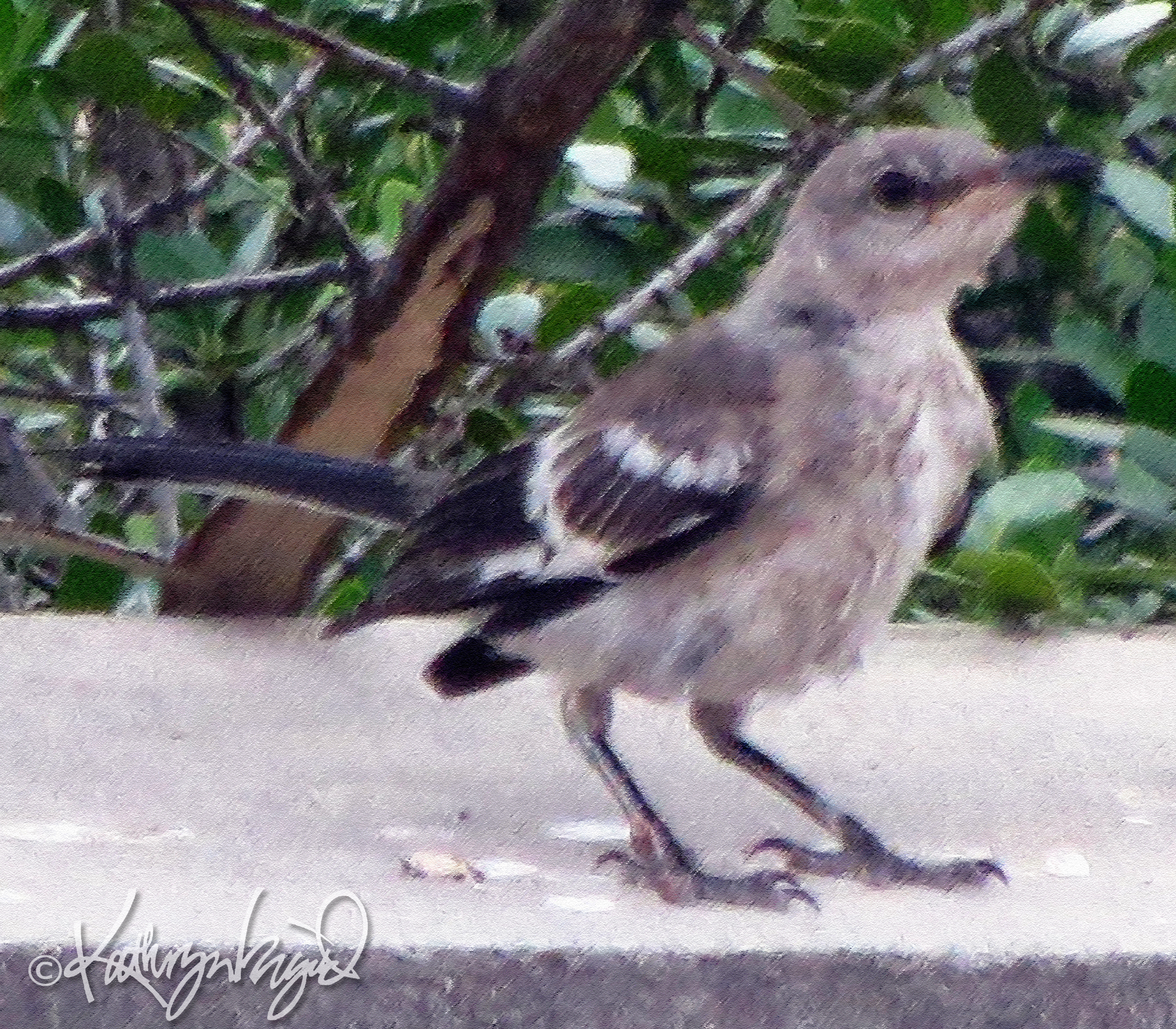
. . . Think I’m Gonna Go Eat Worms! [Note: no actual worms were harmed in the making of this photograph.]

Yes, it may be true that no man is an island–we all depend on others far more than we even recognize or comprehend–but conversely, every one of us is his or her own unique and seemingly isolated version of Three Mile Island at times when it comes to having personal meltdowns. It starts right at birth, when most of us scream and complain at having been removed from that ever-so-pleasant resort and spa, Mom’s innards, and ejected unwittingly and unwillingly into the cold, cruel world, and it continues, however sporadically, throughout our lives. We are such fragile creatures.

The majority of humans, happily, are not subject to this dark reality for too large a percentage of our lives, but it’s more common than is commonly discussed that we have trials, tribulations and the varying degrees of inability to cope with them that make us question, if not our sanity, then certainly our ability to rise above what’s bad, get a grasp on the good, and move forward regardless of feeling worthy or curable. Depression truly sucks–not just in the vernacular, but in the sense of pulling one down into a bottomless abyss like an evil and irresistible vortex.

I’m not referring, of course, to ordinary grief or sadness. We all get hit by those monsters at times. We flounder, we suffer, we recover. It may be deep and painful and take a long time to rebound from sorrows of even the most normal sort, but we do, eventually, learn how to go on living and being and take part in the doings of the world. Generally, that sort of difficulty or tragedy even tends to gradually heighten the sense and appreciation of what is good and joyful once we’ve experienced and survived the dark and can see the shining contrast of even a modest pleasure with what appeared insurmountably grim from its midst. True clinical, chemical, physiological depression, well, that’s a different thing.

It resists the most persuasive and intelligent logic. It batters self-worth and love in the most brilliant, gifted and accomplished sufferers. It tears at relationships of any sort with other people or with action, with one’s wit and will to survive. If it doesn’t make one outright, actively suicidal, it can simply kill through atrophy and attrition: sufferers have described the state of longing intensely to kill themselves but having no strength or energy to do so.

Why would I talk of such dire and dreary and horrid stuff, even think of it at all? Because I am reminded sometimes of when I used to be there. My worst bout of depression was perhaps aided and abetted by various situational and temporal aggravations, including the typical catalysts and intensifiers of real-world health and happiness threats: the onset of my spasmodic dysphonia, job problems, the murder of our good friend. These were of course widely different in intensity and timing, but to someone like me, their interaction with my evidently wonky endocrine system or whatever combined forces of chemical and biological imbalance were building in me meant that when I hit bottom, no amount of thoughtful and heartfelt reasoning with myself could ‘fix’ me or my situation.

I am one of the true Lucky Ones. I finally felt so brain-fogged, so unable to resist the pull of that deadly sucking, enervating, soul-destroying feeling of pointlessness and ugliness and being unlovable and incapable of doing anything meaningful or good–well, I got so needy that I actually let others help me. That was it. The only way out of the hole was to grip the hands reaching in toward me and let them do all of the work of pulling me out. Part of it was accepting these helpers’ assurances that they did indeed believe in me and in how I felt, that they loved me and knew that I had worth and potential. Part was letting others lead me around and taking their advice and simply letting go of what little shreds of ego I had left enough to say that I would do better in following an educated and experienced prescription for improvement than I’d been doing on my ever-weakening own two feet. And a part that was essential for me was loosening my grip on my insistence that taking prescribed treatment–both psychological and chemical–without trying to create or control it myself was a sign of weakness or failure. It took, in fact, all of my strength and intelligence to recognize that any strength and intelligence I had couldn’t save me.

The luck involved is clearly that together we (my caregivers–medical and personal–and I) did find the combination of therapeutic treatments, behavioral changes and chemical re-balancing medication that not only unlocked my present emergency state of depressive existence but ultimately proved to let me feel fully, wholly myself for the first time in my life. I know that this is not a cure but an ongoing process for as long as I live. And, having lived both ways, I am more than happy to take on that responsibility. It’s a privilege.

What’s most beautiful of all, for me, is that when it happens (as it has in this last couple of weeks) that several occurrences and situations conspire to remind me of this my past and how it shaped my present life and self, it also reawakens in me the profound gratitude for all of those complex minutiae that converged so miraculously well as to make this life possible. To make my continued existence at all possible, perhaps, but particularly such a happy me. What seemed like the most disastrous and irreparable of confluences instead conspired to make just the right blend at the right moment that finally offered me a rescue.

Turns out that eating worms is the very nourishment that makes some birds healthy enough to sing their hearts out with the pure delight of existing. Last week I was out walking and saw a ditch full of drowned worms, lured into and killed by stormy waters. This week I was walking the same route and the sky was filled with the most spectacular warbling, chirruping, musical bird songs I could hope to hear. Coincidence? Very possibly not.digital illustration from a photo
(* from the old campfire song Nobody Loves Me, Everybody Hates Me . . . )


What if I Never Grow Up?

digitally doctored photoAside from the fact that all of you know already that this is a given rather than a question, I can still pose it rhetorically and ask it of all people in general. See, I think about this a fair amount, and not just because of my own level of maturity at any given time or in any given category. It’s simply a question we all get asked in one way or another at some point, or should jolly well ask ourselves, at the least.

This marvelous Möbius loop of inquiry and insistence begins the first time we are told, as children, that we need to Grow Up, and it can be applied to any number of circumstances. The irony that this mandate is almost invariably handed down to us by a person or persons barely older and more grown than ourselves is of course lost on all of the parties involved, because we’re all too inexperienced and naive and, conversely, too full of ourselves to understand it. The bigger kid tells the littler kid to Grow Up mainly because the elder wants something that the younger has or has simply lost patience with her.

It doesn’t change. When we’re older, the toys and privileges may have changed to different brands of money and power, but as long as we think someone else has more of whichever kind we desire than we do, we’re just as inclined in adulthood to nit-pick at that someone for his supposedly lower maturity levels both as cover for our covetousness and in shallow hopes of shaming him into being more generous than we are ourselves. The failure of this silly system doesn’t change either, but it doesn’t stop the less magnanimous and less mature from nagging at those who are more so, no matter the age or the occasion.

There are perfectly good reasons to wish anybody, including ourselves, would think and act with maturity and keen sense and the wisdom of experience. Those things tend to lead to our being more level-headed in emergencies, more practical in the everyday, and more inclined to share those traits and all sorts of other things with other people–and that leads to better community. Who knows, even World Peace.

But isn’t it grand, all the same, to forever retain a large enough pinch of immaturity and, if not childishness, then at least the ability to be childlike, that we can still look at the wide world with the awe and wonder it requires. We should hang on, with youthful enthusiasm and gleeful tenaciousness, to innocence and hope, to curiosity and rambunctiousness, to unalloyed silliness whenever the moment permits. Maybe we should even be willing to get down there with the actual kids and roll around in the grass once in a while without batting an eye over how dirty it’ll get us or whether it might make our old joints sore tomorrow. If we can’t still do somersaults, then we’d better find other ways to regain and retain our not at all grown up point of view, because the world, especially while it’s still short of outright Peace, can really use a healthy splash of the ridiculous now and again.


Here in My Safe Little Place

graphite drawingComfort and security, that’s what I want. And I think I’m hardly unusual in that urge. Aside from the rare adrenaline junkies whose craving for danger and life on the edge knows no bounds, most of us like to have at least one place in life, on earth or in mind where we can crawl in, curl up and feel like nothing and no one can assail us there.

While I adore travel and I treasure those people and experiences and grand-and-glorious places that it has brought to my acquaintance, there’s at least a small part of me that may always be leaning toward Home. I don’t think of myself as an adventurer by any means at all, but I’ve grown a bit more attracted to the happy mysteries of the unfamiliar or even the exotic as I’ve gotten older, and I can appreciate much better how much wealth and delight the new and unexpected can often bring into my purview. Now, what I must keep in mind instead of a constant combat against my natural urge to shun all movement outward from my safe, soft center is that my concept of that person-place-or-thing identifiable as Home has changed, and can change, and certainly will change, because that’s exactly the sort of surprising flexibility that an even minimally worldly human can experience, once the crying need for total security is breached satisfactorily.

So here goes: once more I shall leap outward in hope and expectant happiness, and all at the same time remain busily, constantly honing the cozy little hideaway that will shelter my spirit and, if need be, my self when the adventures get a little overwhelming. With a cheery wave, when I’m not too tightly coiled up with my security blanket there, I shall ever bid you all a fond goodbye, farewell, and goodnight–and see you in the morning.

More Myths about Inspiration & Creativity

photo

Don’t accept a falsehood for your reality–if you have to create your own, then do it!

Back on that old topic of whimpering: of all the [wonderfully dire and woefully valid] reasons I can’t possibly do the enormous amount of work required by this assignment, there’s none simpler or more honest than Number 11:

11         BUT I DON’T WANT  TO _______________ (you fill in the blank)!

            Boo Hoo.  It’s not always optional, is it. Just keep firmly in mind that sometimes doing the required thing leads to unexpected delights in the end product. Not to mention the thoroughly predictable delight of having it done, finished, off the To Do list and out of nagging territory. Just get it out of the way now and you’ll be ever so relieved. Maybe even pleased with yourself!

12        ALL CREATIVE PEOPLE ARE (take your pick):

Eccentric; loose; savants; savages; radical; anti-intellectual; uncontrollable; fluff-headed; egocentric; snobbish; smelly…

Everybody is one or more of the above at some point; look at all of our pop-culture idols who get hung out to dry on a daily basis, not to mention all of the religious, educational and political Saints who irk the multitudes so regularly.  So imperfection is hardly a reasonable excuse for avoiding being (or being in the company of) an art maker.

13        IT’S SELFISH &/OR IRRESPONSIBLE TO BE AN ARTIST.

How about how selfish and irresponsible it is to be good at something that enriches lives and shapes culture and to refuse to exercise, to share, those gifts.  How unkind it is to stifle your true self and passions (and spend your life unfulfilled or with a chip on your shoulder) so that you live a half life and cheat your friends and loved ones out of your rich complexity.  How about that for selfish and irresponsible, huh? Choosing a ‘safe’ path never guaranteed anyone’s actually being safe, anyway.

14        NOBODY (read: Not Everybody in the Universe) WILL LIKE IT.

If you find anything that everybody likes, let me know.  For that matter, if you find anything NOBODY likes, I’ll be mighty surprised.  So, isn’t it good enough for you if you think your work has some value?  It may not make you a market mogul, but it’s amazingly fulfilling to be an artist, and (other than food, which is admittedly desirable) practically no other wealth compares.

15        THE GREATEST!!!

Who says?  There is no single Greatest of anything that everyone will agree on yet, and the odds are pretty good that they won’t all agree anything you do is the Greatest—or worst—ever, so why lose sleep over an untried concept.  Do your best and be done with it.

16        IF YOU CAN’T SAY (do) ANYTHING NICE (or well), DON’T SAY ANYTHING AT ALL.

A half-baked effort is usually better than no effort at all; no effort guarantees a lack of (or negative) result, and misguided or incomplete efforts can occasionally be rescued or luck into a better-than-deserved result.

digital artwork from a photo

Think beautiful thoughts!

17        IT ISN’T AS GOOD AS _________________’S.

Probably nothing anybody else ever does will be as good as my work, but aside from that impossibly high standard, you have as good a chance as any of doing work better than somebody’s, at least occasionally, as long as you do work.

18        ALL GOOD THINGS COME TO THOSE WHO WAIT.

But they don’t come to all of the specific people who desire them, or ‘on time,’ or in the desired form.  Your dream might end up in someone else’s stash of prizes if you don’t put up a fight for it.

19        I CAN’T DRAW A STRAIGHT LINE.

No, but a computer can do it for you, or you can use a straightedge, or you can hire a stand-in to draw your straight lines.  Don’t tell me your whole oeuvre as an artist/designer is going to be straight lines.  Sheesh.

20        CREATIVITY = INTUITION.

Intuition is an indefinable sense or sensation that can bring soul and emotional depth to the work (both process and product), but true creativity takes that nebulous touchy-feely power and combines it with study, effort, logic, research, skill and courage and synthesizes all of the elements of an artist’s knowledge and experience and passions into a concrete Work of Art (process and/or product).

21        THERE’S NOT ENOUGH TIME.

True.  We’ll never be given enough time for everything that’s important.  So it’s up to us to TAKE the time.  And MAKE the time.  There’s no real alternative.  It’s called Making Choices (and living with them).

22        YOU CAN’T FAKE INSPIRATION.

Maybe you can’t, but I can.  Seriously, folks, most people won’t know the difference if you substitute delirious hard work and enthusiasm and use all of your know-how to its limits.  If that isn’t quite Inspiration, at least it’s mighty inspirational.  When in doubt, review Item Number 10 in Tuesday’s post (linked above).

digital artwork from a photo

Go ahead: try your wings!

The Mythology of Inspiration

photo

Whatever your vehicle, Ladies and Gentlemen, start your engines!

In another lifetime I was a teacher. Not a fabulous one, mind you, but one who took what I did seriously and did my best to give my students, if not the actual practice that would make them more productive and skillful and happy in their making of art, at least the idea of what might be possible for them and perhaps the instigation of the will to develop over the longer term. Like every other teacher in history, I knew that most of the burden of improvement fell on my students and had surprisingly little to do with what I could or couldn’t, would or wouldn’t, should or shouldn’t give them. And like every other teacher, I heard from my students every excuse in the book about why they would inevitably fail to accomplish any of this, how they were powerless against the forces that conspired to keep them from making the assigned efforts or finishing their work. Having used most of the excuses myself, I had plenty of fuel to argue my case after spending the intervening years (or minutes) rethinking it all as I moved from student status to teacher. And I knew too that I would have to keep re-learning it all as long as I lived, since every teacher is only a different breed of student and Life is the biggest, craziest, toughest and most creatively optimal classroom of all.

So I made up a little page of possible excuses and a smidgen of food-for-thought responses to them–perhaps mostly for my own enlightenment and prodding–that I shared from time to time with my students if they happened to be getting a little too enamored of creating excuses to spend their creativity on drawing, design, writing, painting, studying, researching, making mixed media installations, critiquing or any of the other topics I was attempting to encourage them to learn. Here are a few items from my little list, because I am well aware that I still need to remember them myself and keep trying to blow past them with determination and, I hope, a pinch of wit.

1          GREAT THINKERS THINK ONLY GREAT THOUGHTS

               (and I’m not a great thinker).

If this is true, explain why the Old Masters painted over or destroyed canvases, Einstein was virtually dismissed as a pea-brain by some in his school days and our early experts on astronomy believed the earth was flat.

2          GENIUS IS BORN, NOT MADE.

This may actually be so, but untended and un-exercised, genius has no value whatsoever, and many a great achiever has acknowledged beginning an illustrious career ignominiously and becoming expert through sheer will and work.

3          EXCELLENT IS GOOD, GOOD IS AVERAGE &

               AVERAGE IS TERRIBLE.

               (Corollary: Good is excellent, average is good, terrible is average!)

Creative and inventive people often have a penchant for self-disparagement and perfectionism that leads them (and often others) to devalue work of quality; it’s also a common temptation to simply fall back on the platitude of ‘beauty is in the eye of the beholder’ and accept mediocrity because one is too fearful or lazy to be honestly critical and opinionated.  Accept it and get on with things.

4          IT DIDN’T TURN OUT THE WAY IT WAS SUPPOSED TO.

Oh, come on.  Almost nothing does.  Sometimes it just isn’t finished yet when it seems to have Not Turned Out.  And more often than not, the real result is an improvement on the original plan anyway.

5          IT CAN’T BE DONE.

It’s better to go down in flames of glory, for having tried, than to prove only that  you couldn’t (or just wouldn’t) do it.  And what if it does work?!  Don’t you just love those rare chances to say I Told You So, anyway?

6          ALL THE GOOD IDEAS ARE TAKEN.

            All of the good ones haven’t been invented yet, Silly.

7          I CAN’T THINK OF ANYTHING.

You don’t have to.  Steal ideas all over the place.  Just remember to cite sources, give references, and wherever possible, to thoroughly revise and synthesize things into your own particular combination or version of them.

8          WHY SLAVE TO HAVE IT ALL WHEN YOU CAN SETTLE FOR LESS.

            Perhaps because apathy is as dangerous to existence as the threat of annihilation.

9          IT COSTS TOO MUCH.

Some of the same people who whimper over buying a five-dollar sketch pad and two ninety-nine-cent pencils (two weeks’ supply, say) think nothing of adding four dollars’ worth of popcorn and soft drinks to their seven-dollar movie tickets: that’s Whiners’ Math.  But most art supplies can be hideously expensive, especially for those productive enough to use masses of them.  So it’s a necessary and healthy part of the solution-oriented artist’s life that analogs and alternatives be a constant study.  What can legitimately serve as a substitute for the too-expensive?  Often the product of such inventiveness proves more exciting than the work as first conceived.  Sometimes it’s important to make the commitment to spend the real money for the real thing, too: how serious are you?

10        I’M NOT INSPIRED!

Genuine inspiration occurs ZERO times in the average artist’s life. WHAT!!! Heresy! But truly, if we’re talking spiritual/mystical magic, most must instead rely on a painstaking and passionate process of trial, error, adventure and eventual coalescence to allow artistic completion and quality to arise.  Don’t wait around to be inspired, in case it’s not in the cards: deadlines and opportunities wait for no one.  If you’re the incredibly lucky one inspiration smiles upon, have conspicuous spasms of joy, make feverish use of the favor while it lasts, and get ready to work hard on the next thing when you become a mere mortal again.  We’re lucky enough just to be able to be the real thing, Working Humans.  Don’t knock it.  There’s joy enough in that.

Stay tuned . . .

photo

. . . for being tuned up and ready to roll is more important than knowing where the road will take you . . .


Simplicity Itself


photoSimplicity, I think, is like most of the virtues and values that we humans might hold dear–those who have it don’t necessarily appreciate it, and those who talk the most about it tend to know the least about it.

The rich and comfortable are so obsessed with the idea or ideal of simplicity nowadays that there are magazines, fashions, classes and whole philosophical movements devoted to its study and cultivation. People will expend massive quantities of energy and spend large quantities of money on trying to simplify their lives and themselves, when very likely simply giving up the energetic striving and letting go of the amassed money would do the trick in a trice. (Perish the thought!)

The poor and underprivileged have ultimate simplicity forced upon them, and tend to choose whether to embrace the unsullied earthiness and quietly hardworking ways thrust on them by their circumstances or to battle against them. Probably a majority of people, both poor and rich, will always think the grass greener where they are not, and hardly give thought to how hard the next person is trying to get over the fence onto their own enviably other property. Dissatisfaction may be an essential part of humanity’s natural state of being, much as it naturally chafes us to think so.

On the other hand, looking at what dissatisfies us with as unsparingly honest a glare as we can might in fact shed some light on how to find better contentment, not necessarily by having more or less of something (tangible or ephemeral) but by giving it all its appropriate due and then saving our true love for the most meaningful virtues and values of all. At the very least, that narrows down the field for most of us. At its best, it frees us up to say that life is remarkably livable where we exist right here, right now, regardless of the shade or tint of the lawn. The simple presence of any one particular leaf of grass or bud of bloom in the one square foot of soil nearest to hand may be quite enough, at least for one simple day.photo


Another Good Thing about Waving One’s Arms


Waving my arms is something I may think about more than the average person does. From when I was pretty young I was conscious of arm movement as being mighty significant in a seriously diverse series of ways. First of all, there was that childhood training we all enjoy, if we’re well inducted, in the art of waving hello and farewell. I have almost always preferred the former to the latter, but in either case, whenever the occasion was deemed genuinely worthy of such a gesture, I knew that it was a sign of love or affection, and that made it pretty darn worthwhile.

Then again, I also had an early fondness for wagging my crayon-gripping fist over a piece of paper (or whatever flattish surface was convenient) to make squiggly lines and, if I got lucky, get them to coalesce into picture-like concoctions. I  might be sitting off in a cozy corner at Grandma and Grandpa W’s, scribbling away, with the faint sounds in the background of parental and grand-parental chatter as they sat drinking their coffee intermingled with the slight chattering sound of Grandpa’s cup doing a little jitterbug against the saucer, because he had a mild tremor in his hand. Of course, his arm-waving was hardly dramatic, but it was one of those delicate underpinnings of my early memory that became part of the whole subtle weave of my perceptions.

Sometime in my early teens or thereabout, I found that the family resemblance extended to my having my own familial tremors, occasionally in my head and neck but mostly in my hands and arms. There have been times when it was more pronounced than was entirely convenient for a person wanting to draw, but fortunately it’s rarely been at problematic extremes, more often merely requiring that I find ways to compensate for or control or use the tremors to advantage in my art-making. In any event, keeping my hand in (no pun intended) as an artist has tended to keep the inevitable interactions of these two kinds of arm-waving present in my attentions. Meanwhile, my other grandmother had her own kind of arm-waving to lend to the family skill-set: Parkinson’s Disease.

Typically, Granny had the wit and will to battle her Parkinsonism not only with great tenacity in staving off the ravages of the illness for many more years than is typical but also with a lot of good-natured humor, because that was her style. So whenever we had a family gathering, she was the first to offer her services for tossing salads and making milkshakes. That my mother has followed in the Parkinsonian lineage would make her forms of arm-waving far worse to behold, knowing that the same sort of insidious progression lay ahead for her, and to be fair, including the knowledge that the odds are a bit higher for me than for some that I will eventually join the parade, but she too has maintained a bright attitude about it all. Besides that, I am very slightly suspicious that her particular skillfulness when it comes to shaking the dice gives her a unique edge in the evening board games.

But the top of the list when it comes to magnificent ways and reasons to wave one’s arms has surely got to be the one I’ve been witnessing so much now that the concert season is well underway again: conducting. Bands, orchestras, operatic performances, choirs. No matter what the form of the musical art, if there is a conductor up there waving his, her (or, particularly, my beloved husband’s) arms, the love that fills the air is what makes all of the arm-waving a worthy and beautiful thing. It brings hearts and minds into focus and, often, into community, and it makes the world a more wonderful place to be.

And that makes me want to stop waving my arms altogether, just opening them wide enough to embrace that better world and anyone I can in it.digital image from an acrylic painting on canvas


Treasure Knows Neither Time nor Place

photo

A memory-driven image by my great-uncle Rolph Bolstad . . .

I have been scanning and digitally restoring a number of photos out of our family’s trove, a heap that resembles the disorganized and neglected stores of many other families. I make a small dent in the stack from time to time, then get distracted by everyday life and often don’t revisit the project for quite a while again. While many of us obsess over parting with beloved memorabilia of any kind, the truth is that the majority of us don’t do much with it when we have it.

All good things are that way, I suppose: love, joy, peace and happiness of both the material and the intangible sorts are seldom given their full respect when we have them, only mourned when we think they’re out of reach. And from what I’ve seen and heard from friends around the globe, this is a foolishness that transcends all sorts of differences and makes us more alike than not–no matter what our location or culture, our beliefs, hopes, and dreams, we all seem to wrestle with this forgetfulness about appreciating what we truly value that we have right in hand, and the minute that we suspect we’re about to lose our grip on those gifts, whether by our own decisions or perforce, we get panicked and become certain that it’s a sign of apocalypse. Surely the end of our own self and sanity, and very possibly, that of the universe as we know it.

I come across that box of yet-to-be-scanned photos from time to time and get a pang: what if I don’t get back to this project before I forget who’s in the photos, where the shots were taken, before the images are too faded or decayed to be rescued at all?

Well, what if?

Honestly, I know full well that it will not be the end of the world. Not even the end of my pleasurable revisiting of those memories–what’s more significant than retaining this flimsy physical repository of memories is whether I use the versions of them in my head and heart while they last (head, heart and memories, all three). Once gone from there, the data held in a picture is only cold, meaningless data after all, and it never contained the warmth and soul of anyone or anything depicted in it. It’s merely a shadow-play version of the husk that is my human form and will no longer be me when I die.

So I’ll keep leafing through these paper and binary mementos of mine as long as it pleases me to do so, remembering mostly that what is seen therein is always more beautifully carried inside me. Change is indeed the only constant, yet in the photograph my great-uncle took, probably in Johannesburg, around sixty years ago there is the ephemeral prototype of the photograph I took in New York less than a decade ago. Fifty years or fifty centuries, it matters little if we learn to respect and rejoice in what remains true and crosses the boundaries of place and time as long as we keep it alive inwardly.

photo

New York City lives in my own memory as much as in a physical place . . . its beauties, like all things loved and valued, lies in me, in others’ hearts, far more than in itself or any image we can conjure of it . . .

Foodie Tuesday: I’m Roasting! No, I’m Frying!


photoOh, I know, you all thought I was having hot flashes again. [Not that I wasn’t.]

But it’s Food Fun day again, and I’m referring to cooking edibles this time. Old broads still gotta eat.

And since much of the time I am thermostatically challenged myself, I generally try to find ways to make the hot foods I’m preparing require the least possible amount of time putting me in near contact with the oven or cooktop. Why risk further overheating, of either myself or my preparations, should I need to stray far afield from the heated zones of the kitchen.

One fairly easy solution, though it seems somewhat counterintuitive to me, is to roast or fry food. Yes, they’re relatively high heat methods of cookery. But by using them, I can usually evade the stand-and-stir duty: do all of the prep before even turning on the oven, then tuck the food into the would-be fiery furnace, set the temperature and timer, and head off to cooler climes until the alarm sounds for my triumphant return to check and/or finish the dish, and serve and/or eat it. Simple as that.

Roasted beetroot, for example, a nice way to enhance the flavors and textures of a cool late-summer salad, gets cleaned and quartered and then needs nothing more than a small amount of fat and perhaps a tiny bit of seasoning before it pops into the tanning booth. Goat cheese is delicious when lightly coated and shallow-fried, even if like me you’re not quite the culinary artist to present it with perfect Cordon Bleu pizzazz, and it takes no more than a couple of minutes, tops, at the cooker to brown that fine crumb crust.photo

Roasted Beetroot and Goat Cheese Salad

Scrub and quarter a handful of medium-sized beets. (Clean and save the greens and stems.) Toss the beetroot pieces with a little fat (oil or melted butter; I used coconut oil to keep its noticeable flavor to a minimum), salt and pepper and scatter them in or on a baking or roasting pan. Since I was making such a small (2-person) meal, I just made a pseudo-pan out of heavy aluminum foil to keep any juices from dripping around the oven. Roast the roots at 350°F just until tender–10-20 minutes, depending on your oven and the size of the beet pieces.

Meanwhile, pat 1/2-cup batches of cold chèvre (goat cheese) into patties and coat them with coarse almond flour, pressing it in on all sides. Quick-fry these in a little butter in a nonstick pan over medium heat. You can see from my photos that I am far from adept at this part, so mine look less like haute cuisine than like something unearthed at Herculaneum, but I assure you, they taste quite fine.

Using in tandem these two homely yet highly edible items plus a small assortment of others, you can quickly assemble a presentable version of some hotshot chef’s beetroot-and-goat-cheese concoction and your stomach will not be critiquing the view anyhow. My version, this time around, consisted of a few of the tenderer, prettier beet greens pared down to the leaf and laid on the plate, a bit of peeled cucumber slices arranged in a green frame around the rest of the plate, and all topped with the chèvre rounds and roasted roots and a sprig or two of fresh dill. I’m sure that roasting any sweet enough veg or tuber–sweet potato, carrot, pumpkin, parsnip for example–would make a similarly fine complement to the bright, fresh taste of the cheese, which in turn could be substituted for with any nice salty/sour cheese, undoubtedly.

Which of course leads me to another hot-weather or hot-mama advantage of this preparation: the leftovers (if any) lend themselves to innumerable variant cold, cool or room temperature dishes that can be popped out of fridge or freezer next time the climate or one’s overheated innards require such things. Behold tomorrow’s dish: minced beet greens and stems, steamed quickly in the microwave while the beetroot was roasting, and now blended with that remaining diced vegetal goodness, some leftover quinoa, some diced dried apricots, a few pine nuts, a little orange dressing . . . and the beet goes on . . .photo


What of the Day After the End?

digital illustration from a photo + textAfter All is Said and Done

What will I do when at the end of time

The story folds back on itself and calls

On me to follow down those darkened halls

Of memory to revisit sublime

Past lives in fact and fiction ’til I’ve turned

Empty as much as is the hourglass

And all the strange bygones that had to pass

Before this book called History was burned?

What will this end extend to me, my kin,

my life and loves and all the world abroad?

Whether it’s silence of the touch of God,

Salvation of a sort will bathe my skin,

And on that gleaming day I’ll wake anew

Because I loved, and I was loved by, you.