You’re Not Afraid? You *will be*!

digital collage

The Jitters

Remember the years when we were young

And captive among our babysitters?

Sheer terror would reign with its horrid thrill,

The unspeakable chill we would call the Jitters.

Under the bed or under the house,

A mouse isn’t safe when the Jitters gleam

Reptilian fangs and rhinoceros horns;

O! The scorns we would risk to release a scream!

Anything dark and anywhere doored

Could harbor a horde of Jittery creeps;

They hide under blankets and lurk behind stones:

The wrack in the bones that never sleeps.

Do I hear the wind? Did you hear an owl?

Or was it the howl of the restless dead?

The moan of a sailor just as he drowned?

All around are the sounds of the things we dread.

That flickering light! The curtains a-moving,

And both of them proving that something is near:

We’d writhe in our agonies, plagued by deceptions

And all the perceptions of what we fear.

This, you remember, was life with the Unknown,

And all of the fun known as children was moot

Whenever night fell or a stranger came calling;

Appalling how it never stopped its pursuit.

Now deep in adulthood, responsible, sane,

We scoff at the pain of those gibbers and twitters,

Yet get us alone, in a vulnerable state,

And sooner or late, we succumb to the Jitters.digital collage + text

Endless Falling

A whisper in the gloaming just pre-dawn
A shiver or a prickling on the neck
A flutter of the eyelid, quick, then gone
And hope of any sleep is now a wreck

Above me in the dark are broken dreams
Above my brow an icicle of fear
Above the awful emptiness, the screams
In silent agony are all I hear

And under all this brittle disarray
And under skin and in the bone and soul
And under some enchantment, night and day
I know this wickedness will eat me whole

Against the dangers present in this fright
Against the door of Death I’ll knock tonight

The Power of Being Well Behaved

When I was teaching, I thought it useful to devote a bit of the informational materials I handed out at the beginning of every term to basic issues of classroom decorum. The idea that so-called common courtesy has to be taught, not just to children but to all ages, is no less ridiculous than understanding constant the need for training and refreshing what is called common knowledge or common sense. Generations have passed since people saw a need to comment on or complain about the uncommonness of all of these virtues.

More significantly, as a teacher I knew that if I didn’t encourage, if not demand, attention to such virtues in my classroom there was little hope of any other sort of learning happening in there. I’m old-fashioned that way. The silly thing is probably that it was only after leaving teaching that I thought very clearly about how much these attitudes mattered in any and every kind of cooperative venture, not only in the classroom but in the boardroom, the living room, and certainly in the places where politics, religion, health care, social activities and civic progress are in progress. At least, if we want actual progress to occur.

And that’s how my two cents came out as a personalized set of ten ‘commandments’. Ah, well. I’m kind of a megalomaniac, and I did feel the need to keep my eyes on what was happening.pen & ink

THE BIG OL’ HOW-TO LIST

for getting along with Kathryn

I   Come to class unless you are dead.

II   Show up on time. Lectures don’t always begin on the dot of the class-starting time, but if a deadline is stated as “beginning of class, 18 March” and you  arrive one minute late, technically I can tell you that you missed the deadline and so your project is rejected. Flunked. That’s harsh. But trust me, it’s fair. Besides, it’s a safe bet that if the lecture does start on time and you miss part of it, I’m not going to be terribly enthusiastic about repeating myself and your classmates who have just heard the stuff will definitely not be amused to have it reiterated. Be in place, cell phone and watch alarms and headsets off and fully participating in class, and we’ll all get along famously. Hurray for good manners!

III   Bring all assigned materials and have them in ready-to-use position when class starts. Written tests, especially pop quizzes, are uncommon in my classes (they do exist), but notes and written critiques can be required at any time. Be ready. Write down everything, and date it. Even if I don’t say you have to. Then you have documentation of what I told you (and when) if I should change plans inexplicably or you have a question. Also, it makes you look attentive and enthusiastic whether you are or not.

IV   Flattery will get you places. Forget that baloney about it getting you nowhere. You lose nothing by Making Nice with people and attempting to impress them with your admirable and outstanding qualities; they might even enjoy buying into the whole idea. It’s an excellent tool for impressing others, this making them think you find them worthwhile and fabulous. Conversely, the quickest way to turn a potential ally into a pain in the neck is to belittle, ignore, challenge the primacy of, argue with or antagonize her. Diplomacy and tact mean that you can frankly say, “I disagree,” or “what do you think of _____,” and get a respectful hearing. We are only human (if we’re lucky).

V   By the way, if your death prevents your attending class, call and let me know in advance.

VI   If you have big plans, talk to me. It’s possible that your previous experience with and knowledge of this topic mean you can quickly “test out” of the class requirements and go forward into a more challenging and personally fulfilling independent project. If so, let’s work together to get maximum use out of your time and energies.

VII   If you feel out of your depth, it’s okay to swim over to the shallow end and meet with me privately by appointment. Probably all you need is a bit of individual coaching beyond what’s available or comfortable in class time. Of course, if you’ll kindly risk asking the question in class, there are always others who benefit by having their identical question answered, and probably your learning it together will make it simpler.

VIII   Ignorance shouldn’t embarrass you. Holding on to ignorance should. You’re in class, presumably,because you don’t know Everything yet, same as the rest of us.  So ask your “stupid question,” please. Real stupidity is avoiding or refusing to try or doing something wrong because fear of lowering yourself prevented your asking the question that would’ve resolved the problem.

IX   Be patient. Spend the time. Attempt the highest levels of craftsmanship and professionalism. Pay attention to the tiniest detail.

X   Be bold and adventurous. Climb out of ruts. Seek a new perspective on the familiar and become familiar with the alien. Look for connections. Expect the infinite.

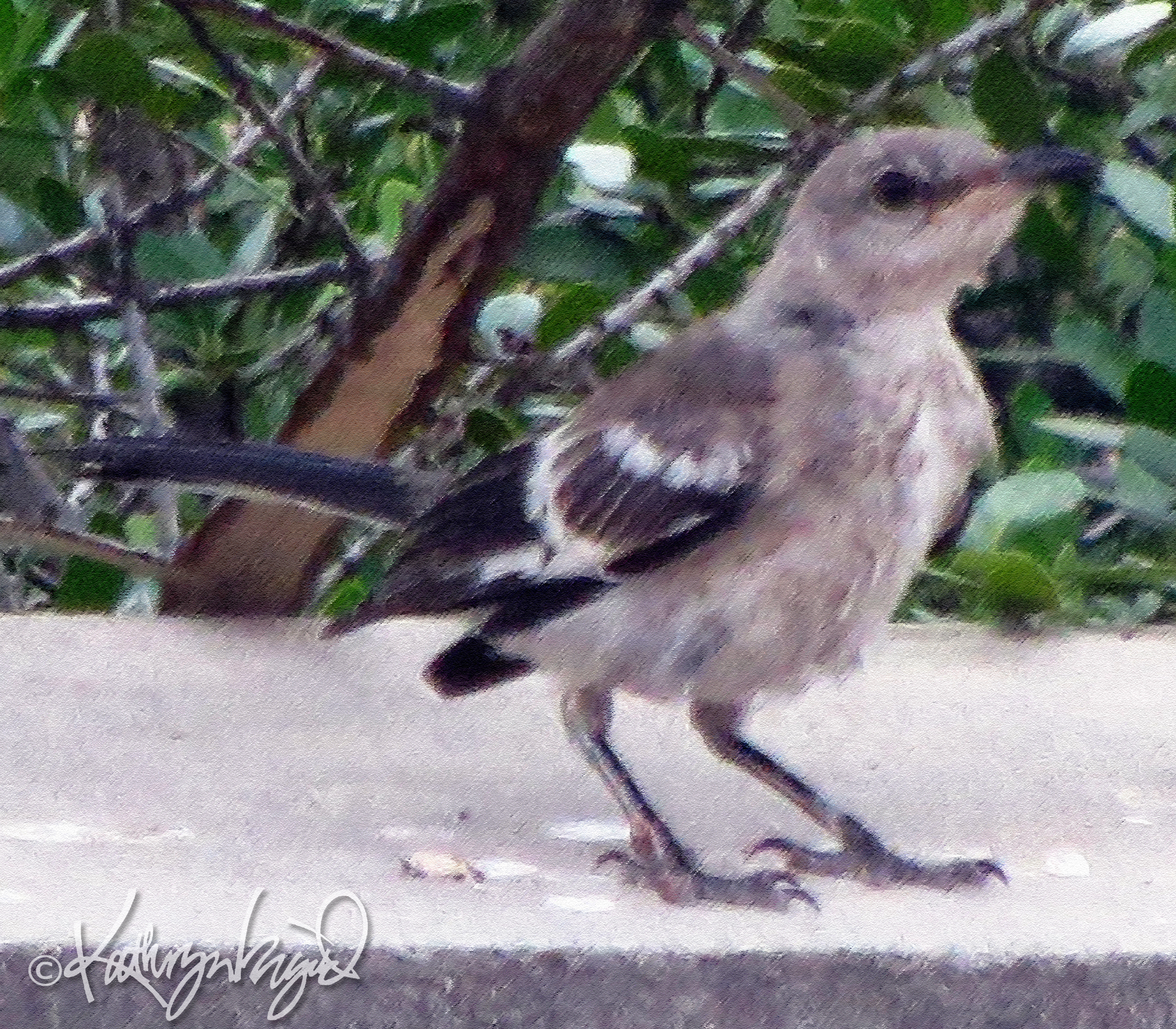
Nobody Loves Me, Everybody Hates Me . . . *

photo

. . . Think I’m Gonna Go Eat Worms! [Note: no actual worms were harmed in the making of this photograph.]

Yes, it may be true that no man is an island–we all depend on others far more than we even recognize or comprehend–but conversely, every one of us is his or her own unique and seemingly isolated version of Three Mile Island at times when it comes to having personal meltdowns. It starts right at birth, when most of us scream and complain at having been removed from that ever-so-pleasant resort and spa, Mom’s innards, and ejected unwittingly and unwillingly into the cold, cruel world, and it continues, however sporadically, throughout our lives. We are such fragile creatures.

The majority of humans, happily, are not subject to this dark reality for too large a percentage of our lives, but it’s more common than is commonly discussed that we have trials, tribulations and the varying degrees of inability to cope with them that make us question, if not our sanity, then certainly our ability to rise above what’s bad, get a grasp on the good, and move forward regardless of feeling worthy or curable. Depression truly sucks–not just in the vernacular, but in the sense of pulling one down into a bottomless abyss like an evil and irresistible vortex.

I’m not referring, of course, to ordinary grief or sadness. We all get hit by those monsters at times. We flounder, we suffer, we recover. It may be deep and painful and take a long time to rebound from sorrows of even the most normal sort, but we do, eventually, learn how to go on living and being and take part in the doings of the world. Generally, that sort of difficulty or tragedy even tends to gradually heighten the sense and appreciation of what is good and joyful once we’ve experienced and survived the dark and can see the shining contrast of even a modest pleasure with what appeared insurmountably grim from its midst. True clinical, chemical, physiological depression, well, that’s a different thing.

It resists the most persuasive and intelligent logic. It batters self-worth and love in the most brilliant, gifted and accomplished sufferers. It tears at relationships of any sort with other people or with action, with one’s wit and will to survive. If it doesn’t make one outright, actively suicidal, it can simply kill through atrophy and attrition: sufferers have described the state of longing intensely to kill themselves but having no strength or energy to do so.

Why would I talk of such dire and dreary and horrid stuff, even think of it at all? Because I am reminded sometimes of when I used to be there. My worst bout of depression was perhaps aided and abetted by various situational and temporal aggravations, including the typical catalysts and intensifiers of real-world health and happiness threats: the onset of my spasmodic dysphonia, job problems, the murder of our good friend. These were of course widely different in intensity and timing, but to someone like me, their interaction with my evidently wonky endocrine system or whatever combined forces of chemical and biological imbalance were building in me meant that when I hit bottom, no amount of thoughtful and heartfelt reasoning with myself could ‘fix’ me or my situation.

I am one of the true Lucky Ones. I finally felt so brain-fogged, so unable to resist the pull of that deadly sucking, enervating, soul-destroying feeling of pointlessness and ugliness and being unlovable and incapable of doing anything meaningful or good–well, I got so needy that I actually let others help me. That was it. The only way out of the hole was to grip the hands reaching in toward me and let them do all of the work of pulling me out. Part of it was accepting these helpers’ assurances that they did indeed believe in me and in how I felt, that they loved me and knew that I had worth and potential. Part was letting others lead me around and taking their advice and simply letting go of what little shreds of ego I had left enough to say that I would do better in following an educated and experienced prescription for improvement than I’d been doing on my ever-weakening own two feet. And a part that was essential for me was loosening my grip on my insistence that taking prescribed treatment–both psychological and chemical–without trying to create or control it myself was a sign of weakness or failure. It took, in fact, all of my strength and intelligence to recognize that any strength and intelligence I had couldn’t save me.

The luck involved is clearly that together we (my caregivers–medical and personal–and I) did find the combination of therapeutic treatments, behavioral changes and chemical re-balancing medication that not only unlocked my present emergency state of depressive existence but ultimately proved to let me feel fully, wholly myself for the first time in my life. I know that this is not a cure but an ongoing process for as long as I live. And, having lived both ways, I am more than happy to take on that responsibility. It’s a privilege.

What’s most beautiful of all, for me, is that when it happens (as it has in this last couple of weeks) that several occurrences and situations conspire to remind me of this my past and how it shaped my present life and self, it also reawakens in me the profound gratitude for all of those complex minutiae that converged so miraculously well as to make this life possible. To make my continued existence at all possible, perhaps, but particularly such a happy me. What seemed like the most disastrous and irreparable of confluences instead conspired to make just the right blend at the right moment that finally offered me a rescue.

Turns out that eating worms is the very nourishment that makes some birds healthy enough to sing their hearts out with the pure delight of existing. Last week I was out walking and saw a ditch full of drowned worms, lured into and killed by stormy waters. This week I was walking the same route and the sky was filled with the most spectacular warbling, chirruping, musical bird songs I could hope to hear. Coincidence? Very possibly not.digital illustration from a photo

(* from the old campfire song Nobody Loves Me, Everybody Hates Me . . . )


What if I Never Grow Up?

digitally doctored photoAside from the fact that all of you know already that this is a given rather than a question, I can still pose it rhetorically and ask it of all people in general. See, I think about this a fair amount, and not just because of my own level of maturity at any given time or in any given category. It’s simply a question we all get asked in one way or another at some point, or should jolly well ask ourselves, at the least.

This marvelous Möbius loop of inquiry and insistence begins the first time we are told, as children, that we need to Grow Up, and it can be applied to any number of circumstances. The irony that this mandate is almost invariably handed down to us by a person or persons barely older and more grown than ourselves is of course lost on all of the parties involved, because we’re all too inexperienced and naive and, conversely, too full of ourselves to understand it. The bigger kid tells the littler kid to Grow Up mainly because the elder wants something that the younger has or has simply lost patience with her.

It doesn’t change. When we’re older, the toys and privileges may have changed to different brands of money and power, but as long as we think someone else has more of whichever kind we desire than we do, we’re just as inclined in adulthood to nit-pick at that someone for his supposedly lower maturity levels both as cover for our covetousness and in shallow hopes of shaming him into being more generous than we are ourselves. The failure of this silly system doesn’t change either, but it doesn’t stop the less magnanimous and less mature from nagging at those who are more so, no matter the age or the occasion.

There are perfectly good reasons to wish anybody, including ourselves, would think and act with maturity and keen sense and the wisdom of experience. Those things tend to lead to our being more level-headed in emergencies, more practical in the everyday, and more inclined to share those traits and all sorts of other things with other people–and that leads to better community. Who knows, even World Peace.

But isn’t it grand, all the same, to forever retain a large enough pinch of immaturity and, if not childishness, then at least the ability to be childlike, that we can still look at the wide world with the awe and wonder it requires. We should hang on, with youthful enthusiasm and gleeful tenaciousness, to innocence and hope, to curiosity and rambunctiousness, to unalloyed silliness whenever the moment permits. Maybe we should even be willing to get down there with the actual kids and roll around in the grass once in a while without batting an eye over how dirty it’ll get us or whether it might make our old joints sore tomorrow. If we can’t still do somersaults, then we’d better find other ways to regain and retain our not at all grown up point of view, because the world, especially while it’s still short of outright Peace, can really use a healthy splash of the ridiculous now and again.


Here in My Safe Little Place

graphite drawingComfort and security, that’s what I want. And I think I’m hardly unusual in that urge. Aside from the rare adrenaline junkies whose craving for danger and life on the edge knows no bounds, most of us like to have at least one place in life, on earth or in mind where we can crawl in, curl up and feel like nothing and no one can assail us there.

While I adore travel and I treasure those people and experiences and grand-and-glorious places that it has brought to my acquaintance, there’s at least a small part of me that may always be leaning toward Home. I don’t think of myself as an adventurer by any means at all, but I’ve grown a bit more attracted to the happy mysteries of the unfamiliar or even the exotic as I’ve gotten older, and I can appreciate much better how much wealth and delight the new and unexpected can often bring into my purview. Now, what I must keep in mind instead of a constant combat against my natural urge to shun all movement outward from my safe, soft center is that my concept of that person-place-or-thing identifiable as Home has changed, and can change, and certainly will change, because that’s exactly the sort of surprising flexibility that an even minimally worldly human can experience, once the crying need for total security is breached satisfactorily.

So here goes: once more I shall leap outward in hope and expectant happiness, and all at the same time remain busily, constantly honing the cozy little hideaway that will shelter my spirit and, if need be, my self when the adventures get a little overwhelming. With a cheery wave, when I’m not too tightly coiled up with my security blanket there, I shall ever bid you all a fond goodbye, farewell, and goodnight–and see you in the morning.

May I Suggest . . .

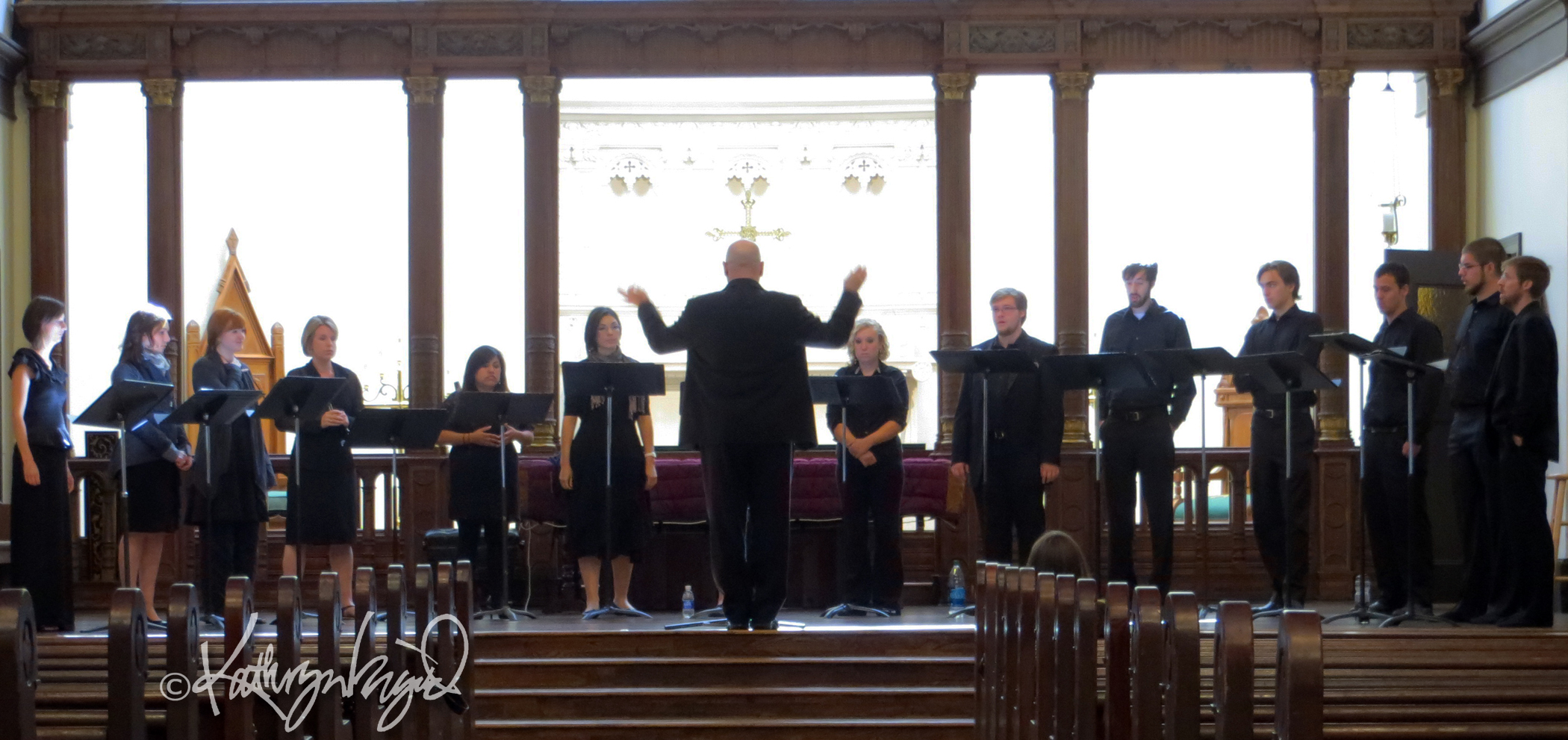
photo

The University of North Texas Collegium Singers in dress rehearsal for their performance at the Berkeley Festival of early music, June 2012, Dr. Richard Sparks conducting. Yes, *that* Richard Sparks.

MUSIC.

Having had my senses immersed in the bath of fall season-opener concerts of all sorts lately, to the literal tune of hundreds of voices and instruments in symphonies, marches, art songs, musical theater melodies, electronica, motets, chaconnes, folk songs, choral masses, lullabies and all sorts of other lovely music, I am reminded as always at this time of year that such an intense schedule of events, however fabulous and rich they are, can be exhausting. More importantly, though, I am reminded that it’s also invigorating, inspiring and often utterly thrilling.

It’s also the time of year when the European choral magazine for which I proofread and text-check translations goes back into full production for the year. The articles and news items are all full of reviews of the summer season’s festivals and conferences and the amazing machinery that underlies these productions, from choosing and ordering music scores through civic action, political efforts, fundraising, singer scholarships, educational programs for participants and audiences, performers’ uniform shipping, young composers’ symposia, etc, and right on down to whether ‘civilian’ supporters of the group are allowed to arrange the music stands or chairs onstage if the local symphony hall union members are on strike. At the heart of it all is such a profound passion for music that millions of people worldwide, including those from countries and cultures one might be surprised to find even having the time or energy amid their economic, social or yes, war-related battles to sing and to listen to singers. If there’s a genuinely possible force for world peace, my friends, it may well be in music.

More personally, it’s music that is a central force for my own happiness, for a large number of reasons. Every one of those listed above comes into my own life and being regularly. But as you know, I am partnered for said life with a musician, and so the whole topic comes that much more sharply into focus. Music has been a glue for us two from the very beginning of ‘us’. Ask our mutual dear friend, a fellow musician, if I were single and might therefore be ‘available’? Check. Collaborate over a large-scale music performance and its visual presentation as a way to get to know each other a bit, hovering around each other during rehearsals and preparation? Check. Go on a first date to a Mark Morris Dido and Aeneas dance performance [yes, truly spectacular, by the way] for which my suitor had prepared the singers? Check!
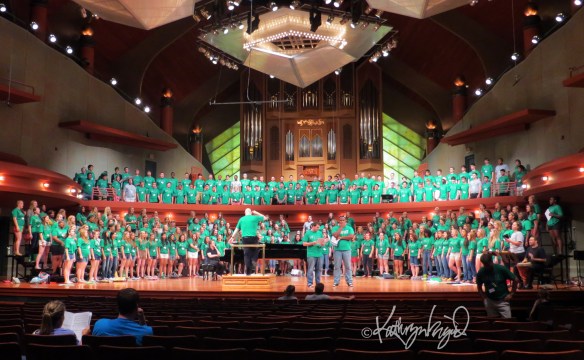
photo

Since thousands vie for the dozens of positions in the final selected groups, high school students in Texas undergo a rigorous preparation for All-State Choir auditions, studying the literature in workshops and camps across the state each summer to compete in their local and regional trials before the year of All-State even arrives. This is the UNT group working in the summer of 2012, rehearsing in the camp organized and run by Dr. Alan McClung, assisted by UNT students and graduates and conducted each year by a different guest conductor–this year, by my spouse. What can I say, it’s what he does. And what I love to hear and see.

What followed is, was and ever shall be musicocentric. Our honeymoon (more about that in a future post) was built, in fact, around my fiance’s conducting gig–a gig including, naturally, our aforementioned Dual BFF as accompanist–at a choral festival in Veszprém, Hungary, arranged under the auspices of the parent organization that spawned the magazine for which I still do editorial duties, if you can follow that sprawling, meandering melody line. One might say that it all began with music and went racing straight downhill from there. Or, if one feels as I do, that music has brought uncountable joys into my life from earliest memory to the present, and will sustain me until the end. In any case, one of the clear high points of musical pleasure has been attending the myriad concerts, events, conferences, performances, and festivals that bring musicians and music lovers together all over the world. A huge number of our favorite people are those whom we’ve met in and through all of this music-related stuff. We have deeply loved ‘family’ literally around the world whom we’ve met and with whom we’ve bonded through musical acquaintance.

If you haven’t done so yet, or not recently enough, may I suggest that you ‘get thee to’ the nearest conference, symposium or festival involving music as soon as you’re able. If, like me, you aren’t an active participant, know that every artist needs his or her cheerleaders and fans and supporters, and that your mutual love of the art will mean more than that you stood onstage during the work or the bows. Yes, even non-musicians can and should pitch in–even those with no sense of pitch can fold programs, stuff envelopes, recruit audience members and donors and board members and political supporters, can drive the shuttle that carries the singers and their accompanists from venue to venue at the festival, and can buy tickets and bask in the glorious sounds from town square to church nave to school ‘cafetorium’ to symphony hall and shout a resounding Bravissimi! to all and sundry.

Beyond that, though, the immersion of being in a place where a huge number of people, participants and supporters and happy observers alike, have come together from a wide range of territory for an extended period of days solely for love of music–that is a wholly different and magical experience everyone should have the opportunity to enjoy at least once. So I commend them to you, the small-scale community events offered by your local affiliated high schools and the international events hosted by long-lived organizations in exotic places and every variation on the theme you can find. I promise you will leave with a song in your heart and memories to last you to when all of your other memories have faded to dust and perhaps beyond. If music be the food of love, play on! For though in this line opening his play ‘Twelfth Night‘ Shakespeare exposed the Duke of Orsino’s conviction that being surfeited with love (in this instance, via its musical surrogate) would cure him of his hunger for it, I think that quite the opposite is true: if they are excellent, the more we experience them and are filled with them, the more we crave both love and music.

Food of that sort for thought: visit first the websites and then the events offered by your local choirs, bands, orchestras, theaters, and performance companies. My own favorites are hosted by professional organizations of music educators, conductors and performers simply because those are the ones I’ve naturally had the privilege to attend, as consort to my musical prince charming, and these all offer performances by top artists that are open to the public, sometimes even with free admission. Explore them! The organization that ‘sponsored’, or inspired and was the jumping-off point for, our honeymoon with its Singing Week in Veszprém–with its half-dozen ateliers conducted by musicians from Europe and North America and singers and whole choirs from all over as well–was what is now called the European Choral Association-Europa Cantat and it hosts a wide variety of such choral events throughout each year, with a focal youth choir festival occurring triennially in places like Passau, Leicestershire, Barcelona, Utrecht, Torino (2012), and Pécs, Hungary (a locale to be repeated in 2015).

photo

Just this month, the newly minted University Singers at UNT performed their first concert of the season with my spouse at the helm. If you live in or near a college town, you’ll find endless opportunities for attending all sorts of musical events, many of them free and most of them truly outstanding–after all, these people are all here gaining expertise for what may be their whole life’s passion, and performers need great audiences too.

Pop, folk, jazz, rock, blues, punk, bluegrass, Early Music, all flavors and kinds of music and individual organizations from the Oldtime Fiddlers [I once got to run the stage lighting for their competition in Washington state–fabulous fiddling, huge fun and even some fantastic yodeling!] to the Verona Opera [I can say from my one experience there that genuine opera under the stars is something not to be missed, even if it’s still 40°C when the singing ends in the middle of the night]: there is something for practically any musical taste out there, and many of them that I enjoy immensely are included among these. My personal pet organizations among the professional gang also include many others: IFCM (International Federation for Choral Music), ACDA (American Choral Directors Association), ACCC (Association of Canadian Choral Communities), TMEA (Texas Music Educators Association), Chorus America, the Boston (odd-numbered years in June), Berkeley (even-numbered years in June), and Vancouver (annually in August) Early Music festivals, and ever so much more.

Simplicity Itself


photoSimplicity, I think, is like most of the virtues and values that we humans might hold dear–those who have it don’t necessarily appreciate it, and those who talk the most about it tend to know the least about it.

The rich and comfortable are so obsessed with the idea or ideal of simplicity nowadays that there are magazines, fashions, classes and whole philosophical movements devoted to its study and cultivation. People will expend massive quantities of energy and spend large quantities of money on trying to simplify their lives and themselves, when very likely simply giving up the energetic striving and letting go of the amassed money would do the trick in a trice. (Perish the thought!)

The poor and underprivileged have ultimate simplicity forced upon them, and tend to choose whether to embrace the unsullied earthiness and quietly hardworking ways thrust on them by their circumstances or to battle against them. Probably a majority of people, both poor and rich, will always think the grass greener where they are not, and hardly give thought to how hard the next person is trying to get over the fence onto their own enviably other property. Dissatisfaction may be an essential part of humanity’s natural state of being, much as it naturally chafes us to think so.

On the other hand, looking at what dissatisfies us with as unsparingly honest a glare as we can might in fact shed some light on how to find better contentment, not necessarily by having more or less of something (tangible or ephemeral) but by giving it all its appropriate due and then saving our true love for the most meaningful virtues and values of all. At the very least, that narrows down the field for most of us. At its best, it frees us up to say that life is remarkably livable where we exist right here, right now, regardless of the shade or tint of the lawn. The simple presence of any one particular leaf of grass or bud of bloom in the one square foot of soil nearest to hand may be quite enough, at least for one simple day.photo


Another Good Thing about Waving One’s Arms


Waving my arms is something I may think about more than the average person does. From when I was pretty young I was conscious of arm movement as being mighty significant in a seriously diverse series of ways. First of all, there was that childhood training we all enjoy, if we’re well inducted, in the art of waving hello and farewell. I have almost always preferred the former to the latter, but in either case, whenever the occasion was deemed genuinely worthy of such a gesture, I knew that it was a sign of love or affection, and that made it pretty darn worthwhile.

Then again, I also had an early fondness for wagging my crayon-gripping fist over a piece of paper (or whatever flattish surface was convenient) to make squiggly lines and, if I got lucky, get them to coalesce into picture-like concoctions. I  might be sitting off in a cozy corner at Grandma and Grandpa W’s, scribbling away, with the faint sounds in the background of parental and grand-parental chatter as they sat drinking their coffee intermingled with the slight chattering sound of Grandpa’s cup doing a little jitterbug against the saucer, because he had a mild tremor in his hand. Of course, his arm-waving was hardly dramatic, but it was one of those delicate underpinnings of my early memory that became part of the whole subtle weave of my perceptions.

Sometime in my early teens or thereabout, I found that the family resemblance extended to my having my own familial tremors, occasionally in my head and neck but mostly in my hands and arms. There have been times when it was more pronounced than was entirely convenient for a person wanting to draw, but fortunately it’s rarely been at problematic extremes, more often merely requiring that I find ways to compensate for or control or use the tremors to advantage in my art-making. In any event, keeping my hand in (no pun intended) as an artist has tended to keep the inevitable interactions of these two kinds of arm-waving present in my attentions. Meanwhile, my other grandmother had her own kind of arm-waving to lend to the family skill-set: Parkinson’s Disease.

Typically, Granny had the wit and will to battle her Parkinsonism not only with great tenacity in staving off the ravages of the illness for many more years than is typical but also with a lot of good-natured humor, because that was her style. So whenever we had a family gathering, she was the first to offer her services for tossing salads and making milkshakes. That my mother has followed in the Parkinsonian lineage would make her forms of arm-waving far worse to behold, knowing that the same sort of insidious progression lay ahead for her, and to be fair, including the knowledge that the odds are a bit higher for me than for some that I will eventually join the parade, but she too has maintained a bright attitude about it all. Besides that, I am very slightly suspicious that her particular skillfulness when it comes to shaking the dice gives her a unique edge in the evening board games.

But the top of the list when it comes to magnificent ways and reasons to wave one’s arms has surely got to be the one I’ve been witnessing so much now that the concert season is well underway again: conducting. Bands, orchestras, operatic performances, choirs. No matter what the form of the musical art, if there is a conductor up there waving his, her (or, particularly, my beloved husband’s) arms, the love that fills the air is what makes all of the arm-waving a worthy and beautiful thing. It brings hearts and minds into focus and, often, into community, and it makes the world a more wonderful place to be.

And that makes me want to stop waving my arms altogether, just opening them wide enough to embrace that better world and anyone I can in it.digital image from an acrylic painting on canvas


Apparently I Executed the Secret Handshake Wrong or Something

digital artwork

Cinderella Opts Out

From your assessment of my deportment,

I must ask what the statement “of a sort” meant–

Oh, was I, I wonder, a shade improper,

Not brass perhaps, but a hint of copper?

Did I stand out from the regal crowd

By being a decibel too loud?

When I met the Queen, did I rudely greet her

With a curtsey too small by a millimeter?

Did I jostle the King, or step on his toes,

Or remark on the magnitude of his nose?

Have I shocked the royal entourage

With an unplanned glimpse of décolletage?

Say, what have I done in these latter days

To occasion such backward, lukewarm praise?

Do tell me where this prejudice starts

That substitutes etiquette for hearts!

I’ll not be one of the prince’s bijoux

Knowing I can’t have the wit to please you–

I’m off for home, where they make no sport

If my manners are only “of a sort”.digital artwork

Treasure Knows Neither Time nor Place

photo

A memory-driven image by my great-uncle Rolph Bolstad . . .

I have been scanning and digitally restoring a number of photos out of our family’s trove, a heap that resembles the disorganized and neglected stores of many other families. I make a small dent in the stack from time to time, then get distracted by everyday life and often don’t revisit the project for quite a while again. While many of us obsess over parting with beloved memorabilia of any kind, the truth is that the majority of us don’t do much with it when we have it.

All good things are that way, I suppose: love, joy, peace and happiness of both the material and the intangible sorts are seldom given their full respect when we have them, only mourned when we think they’re out of reach. And from what I’ve seen and heard from friends around the globe, this is a foolishness that transcends all sorts of differences and makes us more alike than not–no matter what our location or culture, our beliefs, hopes, and dreams, we all seem to wrestle with this forgetfulness about appreciating what we truly value that we have right in hand, and the minute that we suspect we’re about to lose our grip on those gifts, whether by our own decisions or perforce, we get panicked and become certain that it’s a sign of apocalypse. Surely the end of our own self and sanity, and very possibly, that of the universe as we know it.

I come across that box of yet-to-be-scanned photos from time to time and get a pang: what if I don’t get back to this project before I forget who’s in the photos, where the shots were taken, before the images are too faded or decayed to be rescued at all?

Well, what if?

Honestly, I know full well that it will not be the end of the world. Not even the end of my pleasurable revisiting of those memories–what’s more significant than retaining this flimsy physical repository of memories is whether I use the versions of them in my head and heart while they last (head, heart and memories, all three). Once gone from there, the data held in a picture is only cold, meaningless data after all, and it never contained the warmth and soul of anyone or anything depicted in it. It’s merely a shadow-play version of the husk that is my human form and will no longer be me when I die.

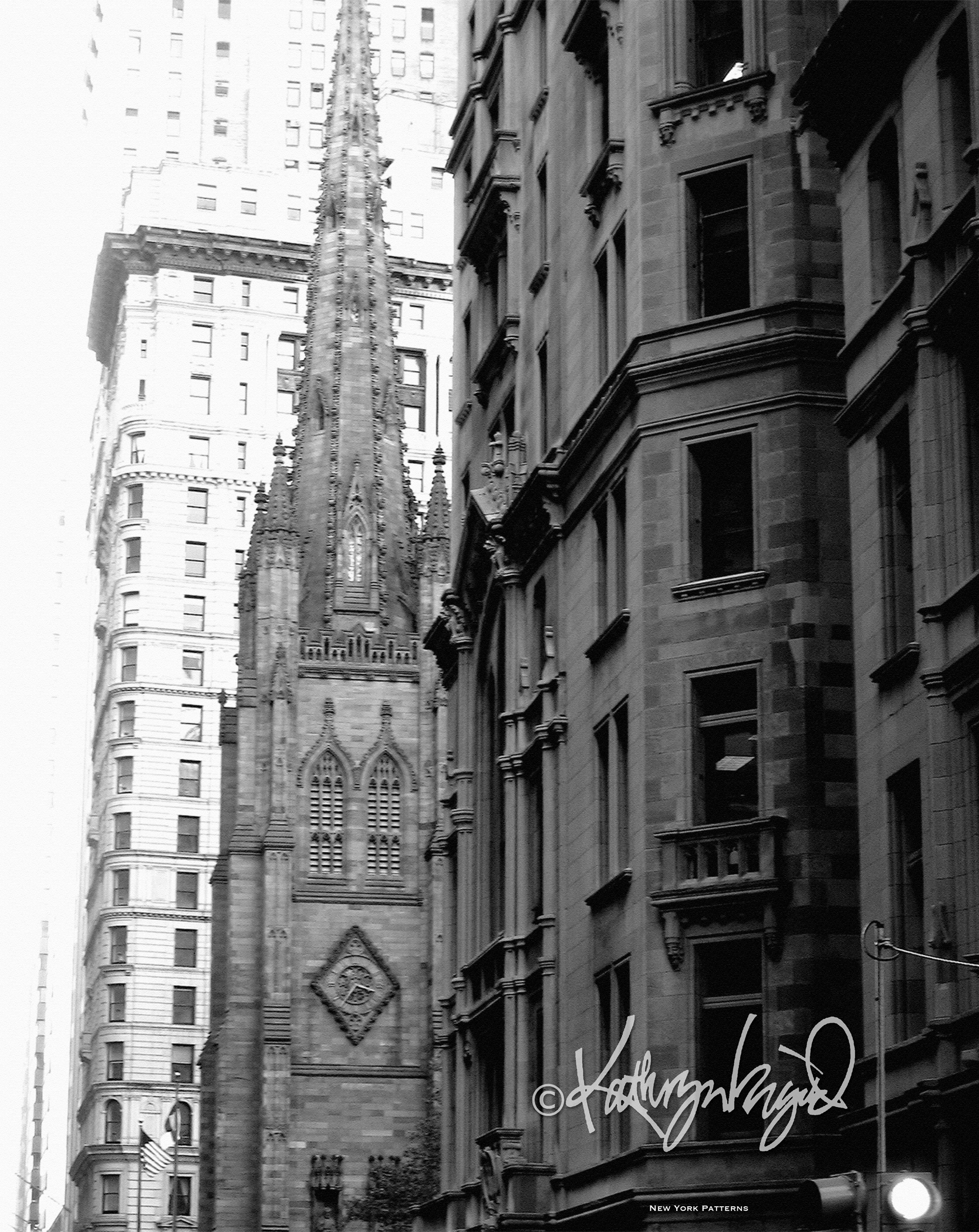
So I’ll keep leafing through these paper and binary mementos of mine as long as it pleases me to do so, remembering mostly that what is seen therein is always more beautifully carried inside me. Change is indeed the only constant, yet in the photograph my great-uncle took, probably in Johannesburg, around sixty years ago there is the ephemeral prototype of the photograph I took in New York less than a decade ago. Fifty years or fifty centuries, it matters little if we learn to respect and rejoice in what remains true and crosses the boundaries of place and time as long as we keep it alive inwardly.

photo

New York City lives in my own memory as much as in a physical place . . . its beauties, like all things loved and valued, lies in me, in others’ hearts, far more than in itself or any image we can conjure of it . . .