High Heels and Long Underwear

photoThe change of seasons, whenever and however it happens, always leads me to revisit the idea that we humans are mighty changeable creatures ourselves. This week it suddenly started to act like Autumn here in Texas, after stubbornly refusing to budge from sunny sameness for-seemingly-ever, and instantly there appeared on the public horizon a whole shift of attentions and fashions to go along for the ride. It reminds me as always of what will o’the wisps we are, how fickle and full of silly fancies and steered by every faint current into yet another direction entirely tangential to purpose and meaning, but gripping to us all when we are in it just the same.

Our concepts of beauty and usefulness and value are so mutable, so flexible, it’s a miracle we can find any consensus in our own hearts let alone in the larger community to define what’s important and desirable in our lives from day to day, year to year. I would include most “hard-liners” of any sort in this human whirlpool of constant shift and adjustment too. They will argue that their political or religious or societal stance never alters, but in fact it must if its context is constantly flickering and wriggling uncontrollably, just to maintain the semblance of fixity: the language, tactics, audience-targeting, tools to be used and even reasons for being considered an Immovable Object all have to adjust to the surrounding circumstances and forces in order to keep the believer’s sense of continuity and commitment firm. And that’s both a good and a very scary thing for both sides of the conversation. The Believer side, because it’s really not open to discussion and therefore should neither be questioned nor called to adjust, and the Other-Views side because it’s sometimes hard not only to consider whether we have become fixed in our own ways but also to consider which ways we can and should be going.

That idea alone can veer off into far deeper waters than the initial premise of this rumination warrants, so I’ll leave it by saying that I think of myself as being fairly comfortable with uncertainty and rather not so certain when it comes to taking sides. There isn’t much in the world I know that I see in clearly demarcated black and white, practically speaking. Maybe that’s why I do like to make black and white artworks as much as I do, after all.
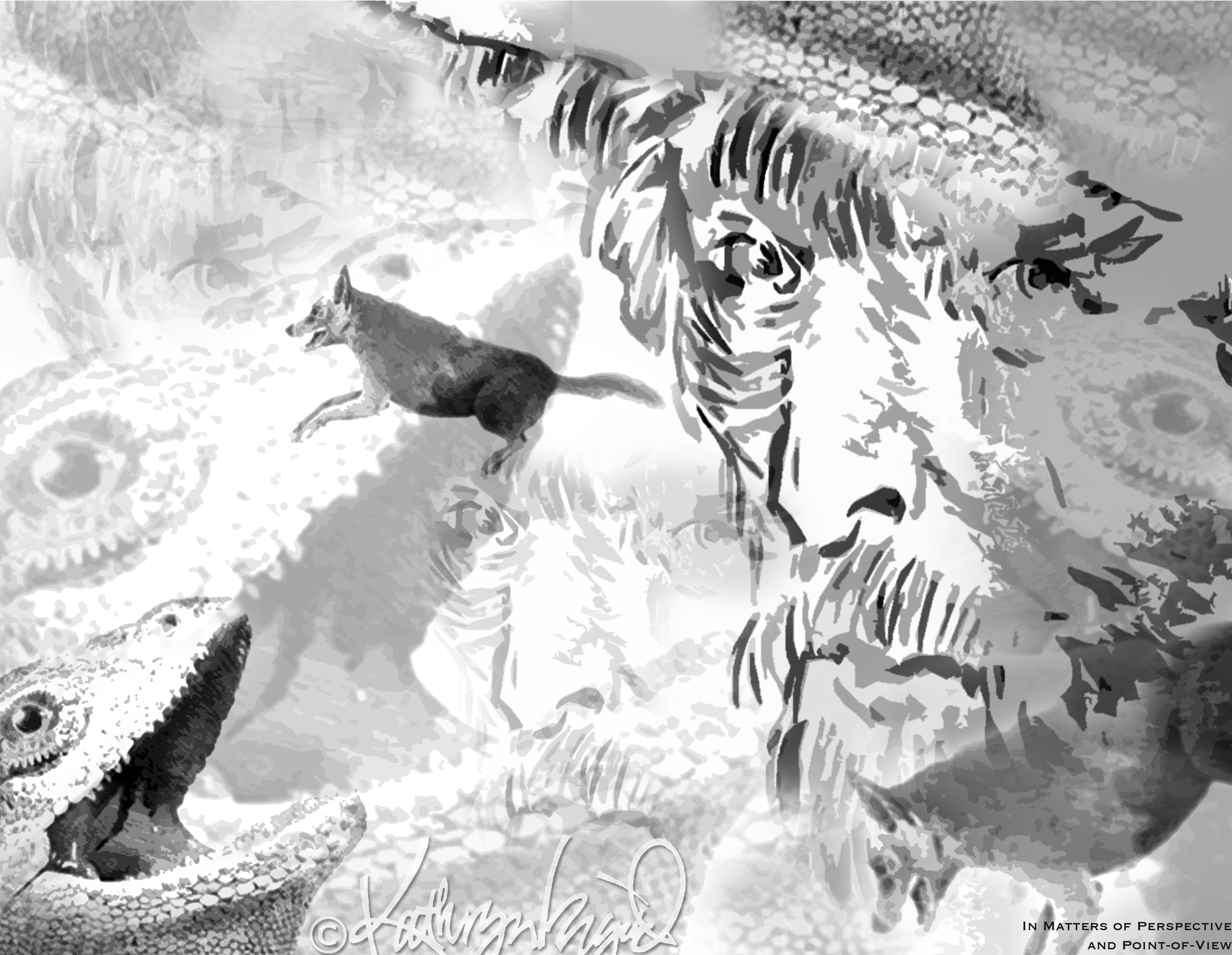
mixed media B/W illustrationIn the meantime, the changing of the seasons and its concomitant change of more frivolous things teases me into enjoying the oddity of how easily we are steered in matters of taste and pleasure. The college cuties rambling off-campus are still wearing the same few molecules of skirts and spray-painted tops, but in a faint nod to the changing wind and temperature, suddenly they’re accessorized with bigger than ever Sasquatch boots, long-fringed fake-fur (though still sleeveless) hoodies and, when the males of the species are out of gawking range, garments that look suspiciously like emergency-rescue wrappings used to save hypothermia victims from impending death. I presume these latter items reside, in male-proximal moments, in the depths of those Volkswagen-sized handbags so prevalent nowadays.

Certainly, you can see just from the way I use of the word “nowadays” that I’m old enough to be wearing underpants that could be mistaken for a parachute, holding my socks up with garters, and wearing clothespins on the back of my neck to keep my facial features more reliably in place. To be fair, I was a geezer in many ways from about when I hit the age of ten, so although I eschew such age-appropriate gear myself, I have never quite been what anyone would call At One with the trends. Fortunately for me, I find myself quite fabulous as-is, and apparently those around me have either built up serious tolerance or agree with my skewed view.

So I’m quite happy to live-and-let-live when it comes to personal decoration, even if it means watching delusional dames dress like teenagers, teenagers dress like trashy skanks, and grown men unable to recognize that their comb-overs neither fool anyone other than themselves nor do they remain hugging the skull as insulation when the wind arises but rather take sail and remain vertical until alighting after the storm passes or the gents go indoors, whichever comes first. After all, what would be the excitement, the entertainment value, if we all decorated ourselves well or sensibly or beautifully?

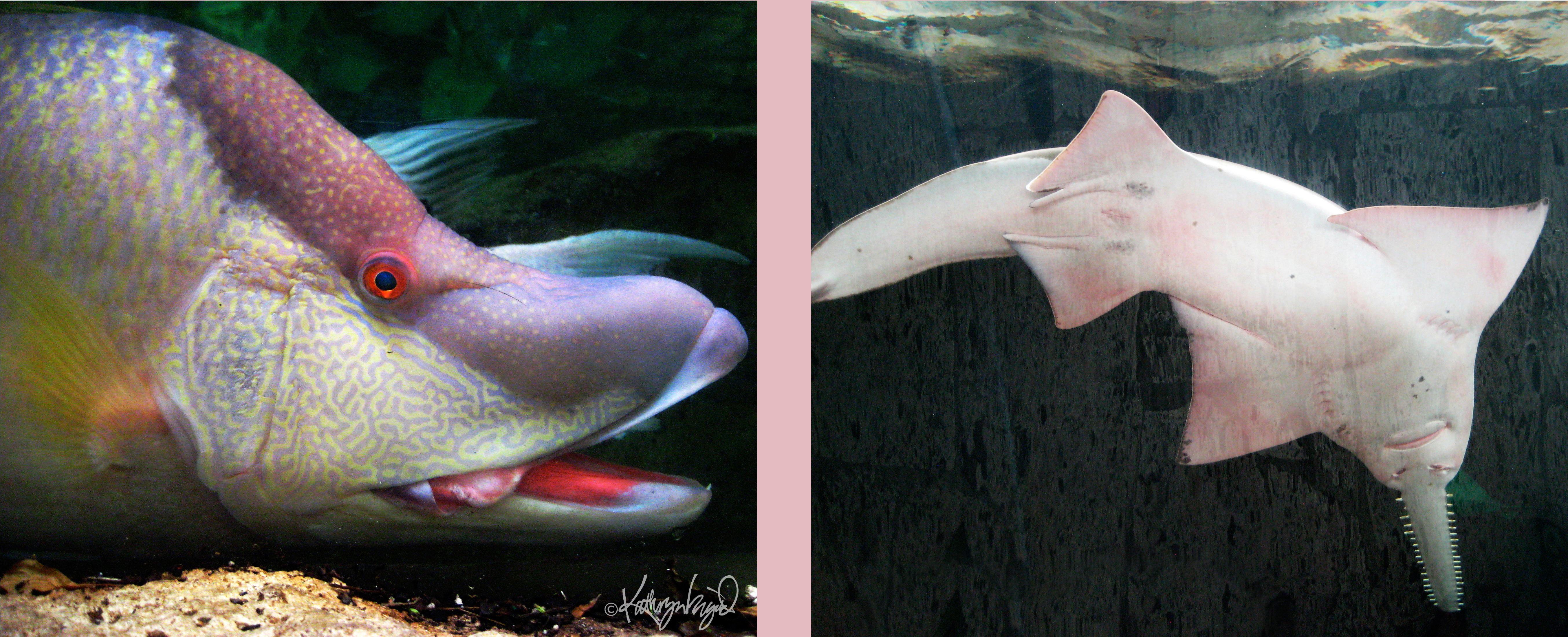
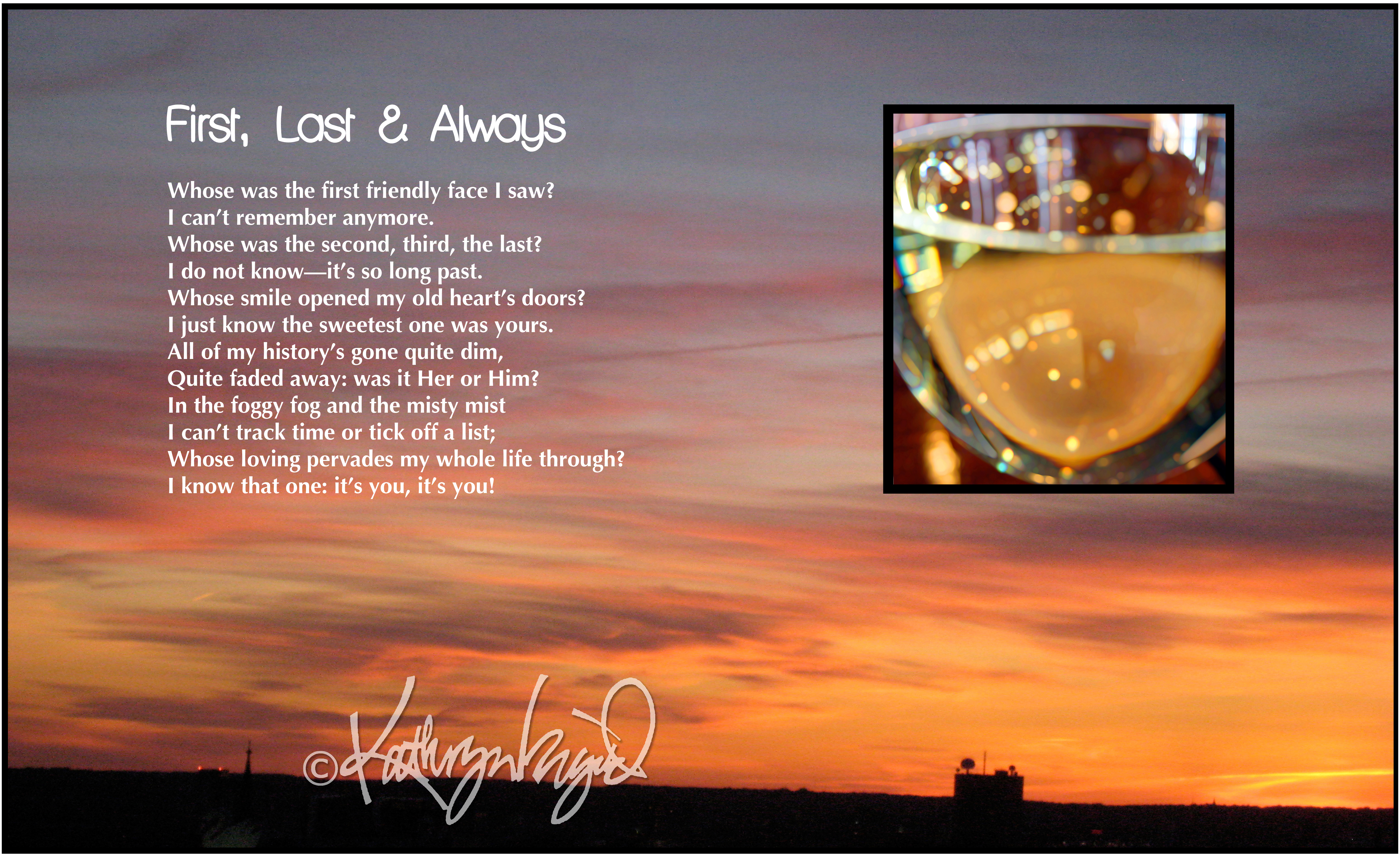
What, especially, would be the fun in all of us considering the same things beautiful? I know one thing: all species would die out shortly after becoming severely inbred if every creature were attracted to only one form of every feature of that creature. And don’t get me started on the likelihood that a handsome sawfish would find a cyclamen pretty or a person who loves to grow prizewinning turnips would like to date a person who looks like a really fine turnip. When it comes to beauty, I’m all for letting you keep your ridiculous prejudices as long as you let me keep my equally ridiculous ones, my friends.
photos x2

Unseemly Predilections

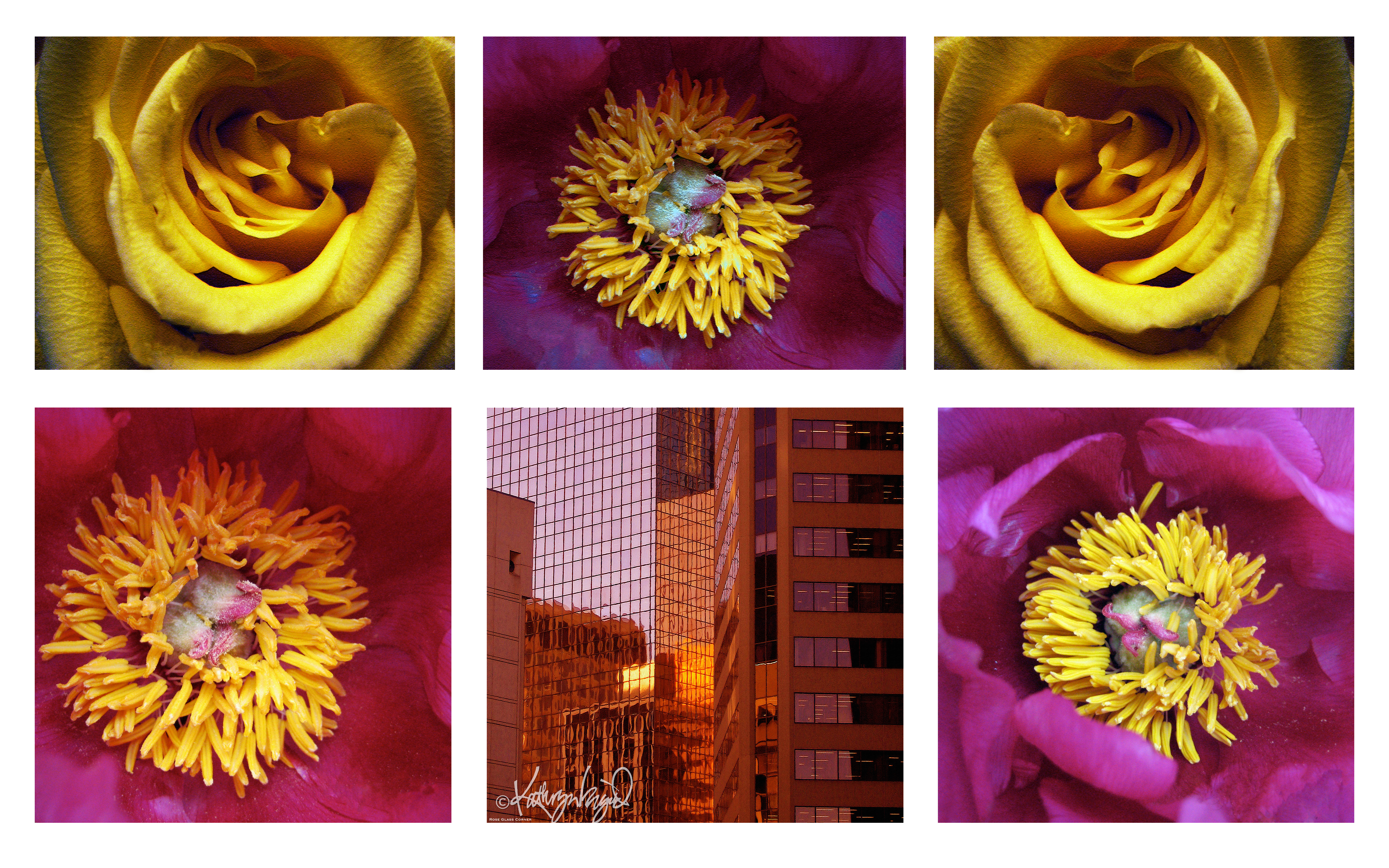
photo montage + textWherein the Language of Flowers Falls Mute

When he spied her ‘cross the room, June-Judy gave a wink

And he saw those brown eyes of hers, and faster than you’d think,

Was head-o’er-heels, tea-kettle up, had flipped his blond toupee,

And knew June-Judy must be his, and that, without delay–

The tale grows sadder here, alas, for when he crossed the room,

Bouquets in hand, adoring, shy, staggering under bloom

Meant to delight his lady-love, she smiled as if to speak

Affection, too, but when her mouth was opened, with a shriek

He toppled senseless to the floor amid his blasted roses,

Quite dead, our hero, and his blooms, killed by her halitosis.

digital photo montagePark Pastorale

Among the poplars in the park,

a possum paused to peer,

and though it had grown very dark

–it was late in the year

as well as late at evening-time–

the possum saw a bright

white streak pass by under the lime

tree ‘cross the way; the sight

so startled her she had to take

a closer, clearer look,

and wandered over by the lake

right where it met the brook,

gazed left and right and up and down

and saw the streak once more,

at speedy pace, dashing toward town,

along the lake’s broad shore,

and hurried closer at a run

so nothing should be missed,

and at that speed, a snappy one,

caught up–and here’s the twist:

the streak was on a young skunk’s back,

the skunk lad struck with fear,

at Possum’s rush, into attack,

and so stuck up his rear

and flipped his tail, prepared to spray

(look out, folks! Hold your noses!),

aimed at Miss Possum straightaway,

and spritzed the scent of roses!

For, happily, our young skunk swain

had spied this possum lass

and so admired her, he was fain

to skip the poison-gas

and woo her while he had the chance

and serendipity,

and now they dance their wedding-dance,

his possum-love and he.

We All Love Woobibe

photoChildren pretty much love food and love to eat. Grownups are great at over-thinking them out of it: ‘Ooh, that’s too peppery, you won’t like it, Jimmy!’ ‘Oh, no, Suzie can’t have oysters; they’re too strange for a four-year-old’s taste!’ ‘I’m pretty sure Elmo is allergic to that stuff, ’cause he made a face when he tasted it the first time, so we’ll be sure to keep him safely away from it!’ Not to mention, ‘Are you kidding, let that six year old have truffles shaved onto her pasta???’ And then we wonder why “kids are such picky eaters”. Duhhh.SilverpointThe natural curiosity and openness of children should be encouraged (okay, up to a point, Lord Copper), and the people I’ve known with Good Eaters in the family simply tended to let nature take its course and give their kids whatever opportunity and exposure they could. Setting an example goes so much further than any amount of teaching and preaching. That goes not just for eating but for learning about all aspects of food, from its historic and cultural origins to how it’s raised and prepared, and how the young’uns themselves can participate in the process. The more the exposure is filled with fun and delight, the better the odds for success.

That’s how one of our nephews discovered when he was quite little that he loved the taste of that marvelous vegetable with the poisonous leaves whose super-acidic stalks have been used raw in traditional Chinese pharmacology as a laxative: rhubarb. Fortunately our nephew was, as were most of us, introduced to rhubarb, or “woobibe,” as he called it, not in its medicinal form but in its delectable sweetened-and-cooked form that tames its acid, and so fell immediately in love with the changeling vege-fruit. He admired it so much that he got his grandmother to get him started cultivating the stuff, which he still does, happily. [Yes, that’s some of his beautiful rhubarb below.]photoIt just so happens that I’m a big ol’ fan of rhubarb too. I adore it in sauce, pie, jam, tapioca pudding, chutney, and roasted and candied and simmered, and-and-and. But then, I grew up surrounded by not only good cooks but very much in the midst of people who respected and enjoyed and gave thought to and were grateful for their food. All of which made me the fan-girl I generally am in my medium-old age. Happy places to be, both the medium-old age and the fandom.SilverpointYou up-and-comers, middle-agers and glorious geezers all–and of course I consider myself to be each and every one of those as well, depending upon the moment–I bid you to take such comestible comeliness as the magnificent rhubarb, the sizzling hot pepper or the tantalizing truffle with all of the seriousness and happy enthusiasm they deserve. Especially when the kids are watching.

Rhubarb-Beetroot Chutney [Not bad at all as a relish for nice fat stuff like a scrumptious grilled cheese sandwich or a hunk of juicy grilled salmon or buttery seared lamb chops.]

Combine approximately equal amounts of peeled and cubed fresh beets,  1″-cut fresh rhubarb pieces, and sugar with just enough water to start the sugar melting a little, plus a couple of whole cloves and a cinnamon stick and a tiny pinch of salt. Bring it all up gradually to a simmer and then let it cook gently over low to moderate heat for a nice long time until it melts and thickens together. Pull out the cloves and cinnamon stick, and puree all the goodness into a nice mash. Keep cooking if it isn’t jammy enough. Adjust to your own exquisitely fine-tuned personal taste and enjoy.

Now, please don’t fuss with this “recipe” any more than absolutely necessary; only if it’s really rather easy and fun to make does it taste appropriately yummy. Extra bonus points if you bring a nice small person or two along for the preparation and savoring, because you will have a happy fellow diner for life. You’re welcome.

Delight amid Sorrows: Día de los Muertos and Singing Neruda’s Poetry

Once upon a time, Pablo Neruda came to my rescue.

digitally painted photoI was a perplexed and moody undergraduate taking just a few too many credits at a time to cover for the semester I’d frittered away (both the time and the tuition money) in getting a much broader, deeper education by gallivanting across Europe with my sister to work on being ever-so-modestly less perplexed and moody (it did work, I swear it did!). By pushing a little extra during my remaining semesters I knew I could graduate ‘on time’ with my class and not use up further masses of time and money and my parents’ remaining non-grey hairs, so I crammed a bit to compensate. And by the time I signed up for one particular poetry course I was just a tiny bit frazzled. I knew I had a sort of dispensation from the university to take a certain number of credits Pass/Fail rather than as graded courses, and decided that since I’d not used that option and had taken other legitimate English courses already, now would be an excellent time to relieve a small portion of pressure by opting for P/F. Señor del profesor had a slightly different idea.

As in, “What, are you nuts?” and a firm No. Oddly, it had not occurred to me that this particular academic rubric could only be invoked with the professor’s permission. Silly undergraduate. My response was to burst into tears. But he persuaded me, in good professorial fashion, that it was for my own good and that he was quite certain I would do Just Fine in this course if I was committed enough to take it in the first place. So I pulled up my socks and took it like a good girl. I guess it’s only fair to confirm the obvious, that the professor did his part to get the aforementioned rescue work underway, and I’ll tell you now that being a true educator rather than a sometime impostor like me, he kept at it throughout the semester, and I was no easy or patient patient.

Meanwhile, I quickly discovered under said professor’s tutelage that my incredibly narrow view of poetry was just a sign of lost time and an opportunity to open an infinitely interesting and challenging world of unexplored wonders. But I was still horribly intimidated by the prospect of learning to bravely parse and explicate poems, and I was still amidships in the throes of general anxiety and fear of speaking up as it was. Yikes! Bit of a fright, that.

Then the wonderful Chilean master Pablo Neruda beckoned me to come in and make myself at home. His writing, so evocative and so deeply personal, made me feel somehow safe. This, despite his writing in Spanish, a language unknown to me except for some very useful food-related words. Now, I will admit to having read numerous translations of his poetry alongside the originals, but all one really needs when presented with this juxtaposition is, as I had, a little youthful church-Latin exposure, a handful of high school and college French classes (sorry, I came out of it with appreciation but not much real knowledge), and the will to make serious inroads in various dictionaries; the work simply sings. The variety that emerged from the different translations brought out a wonderful amplitude inherent in Neruda’s poetic work and inspired me beyond measure.

I fell in love with several of the Neruda poems I got to read for that class. But the poem that truly resonated in me turned out to be his ‘Entierro en el Este[‘Burial in the East’], and I happily labored over three different translations of my own after studying the existing ones by pros and linguists far beyond my skill level right alongside the beautiful Spanish-language original, whose marvelously lyrical sonorities drew me in inexorably, filling me with their dark and earthy music. Can’t say exactly what happened to those translations. Surely the world is missing nothing with their disappearance. The professional poets’ translations and transcriptions remain for Anglos’ edification. Far more importantly, the rich and exquisite deliciousness of the Spanish version remains, and not just on the page and in the ether but also in my heart.

Because the class requirement to learn and recite a chosen poem in class before writing a paper on it made some strange little spark light up in my soul and I realized that, however hard it might be to memorize a poem in a language I’d never spoken, it was well worth learning this one because I sensed how its incredible beauty would resonate not just with me but with my peers if I managed even barely well enough. Its sheer musicality made it easier to learn, with the help of a Spanish-speaking coach, and the difficulty of learning a foreign-language poem and its meaning deeply enough not only for the recitation but to be able to write semi-cogently about it kept it ingrained, I found, years later as well. Too, it gave me the great gift of lightening my fear: standing in front of my classmates and giving my all to this lovely Chilean masterpiece in Spanish somehow made me less terrified of forgetting or of making it dull–something I just knew it would be hard to do with such beautiful and moving words. I lost myself in the poem, which is precisely what good poetry in any language hopes to make us do.

mixed media drawingENTIERRO EN EL ESTE

Yo trabajo de noche, rodeado de ciudad,
de pescadores, de alfareros, de difuntos quemados
con azafrán y frutas, envueltos en muselina escarlata:
bajo mi balcón esos muertos terribles
pasan sonando cadenas y flautas de cobre,
estridentes y finas y lúgubres silban
entre el color de las pesadas flores envenenadas
y el grito de los cenicientos danzarines
y el creciente y monótono de los tamtam
y el humo de las maderas que arden y huelen.
Porque una vez doblado el camino, junto al turbio río,
sus corazones, detenidos o  iniciando un mayor movimiento
rodarán quemados, con la pierna y el pie hechos fuego,
y la trémula ceniza caerá sobre el agua,
flotará como ramo de flores calcinadas
o como extinto fuego dejado por tan poderosos viajeros
que hicieron arder algo sobre las negras aguas, y devoraron
un aliento desaparecido y un licor extremo.

Pablo Neruda

INTERMENT IN THE EAST [translation: KIW Sparks, 28 October 2011]

I work by night, in the heart of the city and surrounded

by fishermen, by potters, by the cremated dead

with their saffron and fruits, enveloped all in scarlet muslin;

below my balcony these terrible corpses

pass by with the rattle of chains and the playing of copper flutes,

such strident, lugubrious noise,

between the colors of those weighty, poisonous flowers

and the cries of the ash-covered dancers

and the crescendoing monotone of the beating drums

and the fragrant smoke of the burning wood.

For once they reach that place where the road meets the turbid river,

their hearts, stopping or perhaps starting a larger movement,

roll aflame, the leg and foot catching fire,

trembling ashes falling onto the water

to float like calcined blooms

or like a fire set in antique times by voyagers

so powerful they could make the very river burn, could eat

a food no longer known and drink the elixir of extremity.

El Día de los Muertos has a certain similar quality to the Neruda poem for me. The traditional Mexican celebration of the Day of the Dead coincides with the Catholic commemoration of All Saints’ and All Souls’ days (the 1st and 2nd of November, respectively). The depth of passion with which the bereaved mourn lost loves is brought to balance in Día de los Muertos in a marvelously worldly and tender way when families gather to tend the graves of their dead, to meet over feasting and drinking, amid art and dance and music and prayer and embraces and revelry of all sorts and to remember with love and joy the lives of the dead whom they have known and now carry in their hearts. I’ve long cherished the magical folk art arising from Día de los Muertos tradition, loving of course the charming and even joyful representations of Death as the natural culmination of life, and admiring the attitudes that these in fact symbolize. They feed that sweet dream in my heart of hearts where life and death intermingle in the most fitting way they can and we all dance between them with passion, with love, with hope–and with a river of deep, sonorous and abiding poetry flowing in our veins.

digital collage

A Hairstyle Fit for a Harridan

photo

My untamed nature often comes out in pointed ways . . .

Beauty queen I am decidedly not. Never shall be. It goes so thoroughly against my natural bent to fuss and primp for prettiness that it’s a miracle I don’t just pop out of bed and haul directly off to wherever the day should take me, entirely unimproved. But that just wouldn’t be nice. Unsuspecting people outside of my house deserve some consideration.

Ever look in the mirror and wonder just who that creature is that’s staring cryptically back at you? In my case I never doubt it’s my own image reflected, but depending upon the hour of the day (can’t promise it’s morning either when I’m willing to arise or when I’m remotely prepared for a look in the mirror) I may be only moderately willing to admit to the relationship, at best. This beast-that-is-me has no sympathy with playing princess. I’m glad to say that I think myself pleasant looking enough on the whole without any serious touch-ups, but the effects of what some jokester decided to name Beauty Sleep just make it hard sometimes for any natural niceness I possess to shine through visibly.

So I always recommend scheduling your interactions with me well after the crack of noon, just to be on the safe side. Otherwise, you may meet face-to-snout with a slightly startling character and I simply can’t promise there wouldn’t be lasting effects on your morale or sanity. I do mean well.

It’s not really my fault, but nighttime takes a toll on me that can counter the best effects of a good dream-fest abed. First, there’s the whole problem of the bed linens. While they may make the practice of lying down to pass the night more sheltered and comfy in a very welcome fashion, they also have a miraculous way of twisting themselves into a close enough facsimile of mummy wrappings that I always come out of bed wearing a series of elaborate stripes, squiggles and indentations that reconfigure me into a suspiciously mythical looking creature by morning. The Atomic Prune with Two Legs!!! Run for your lives! Somehow it seems cruel that the bed linens get to contort me mercilessly like that and yet I still have to de-contort them to get the bed back into usable form for the next night’s expedition towards forty winks.

Being from birth about as pale as a second-rate vampire, I am none too fond, either, of the proto-invisibility I achieve by sleeping my circulation down to virtual nil. Some days I fear that if I were to look into the mirror too soon after waking, I would have accomplished the full vampiric inability to see my reflection at all. It may be that I should consider building up my retirement funds by taking advantage of any temporary invisible state and become a criminal mastermind while it lasts . . . but then I remember that this would require the capability of being a mastermind along with invisibility. Never mind that, then.

My teeth grow sweaters overnight. I’m a big fan of fine cardigans, but never intended to produce them orally, let alone where they can apparently only be dismantled by brushing with a belt sander. Seems like I could be down to teeth the size of sesame seeds by the time I’m seventy at this rate. Not that I don’t like sesame seeds. Smaller and thinner than sweaters, at least. Certainly a new Look for me.

Most predictably of all, every time I look in the mirror is a new challenge to my skills for creature-identification, given the interesting and amazing things my hair can do. I wear it short both out of laziness–wash-and-wear hair is all the style I am willing to attempt–and out of vanity: I learned the hard way years ago that the long hair generally considered on other women to be a sexy beauty asset just makes me look like an inbred Afghan hound. So I go with the shorter ‘do, and it does just fine. Except overnight.

That’s when it takes on a life of its own and converts me into anything from a depressed Cheviot ewe to Dr. Seuss‘s Grinch, from an oil-slicked sea lion to an alien invader and/or Bob’s Big Boy. All of them potentially entertaining, I’ll admit, but at the same time, possibly unsettling to see in the mirror. Or is that just my insecurity speaking?

Very probably, my ruminating on it just now is merely an indicator that it’s about time I headed for the aforementioned bed. Risking, of course, whatever that contraption and my time overnight in it might chance to inflict upon my body and being. I think I can continue to cope: whatever Ma Nature dishes out I must learn to handle as best anyone can. I’ll let you know how that’s working later–but just in case, don’t stop by the house before noon!

photo

If it's good enough for Mother Nature, it's good enough for me!

Pests: 1; Everyone Else: 0

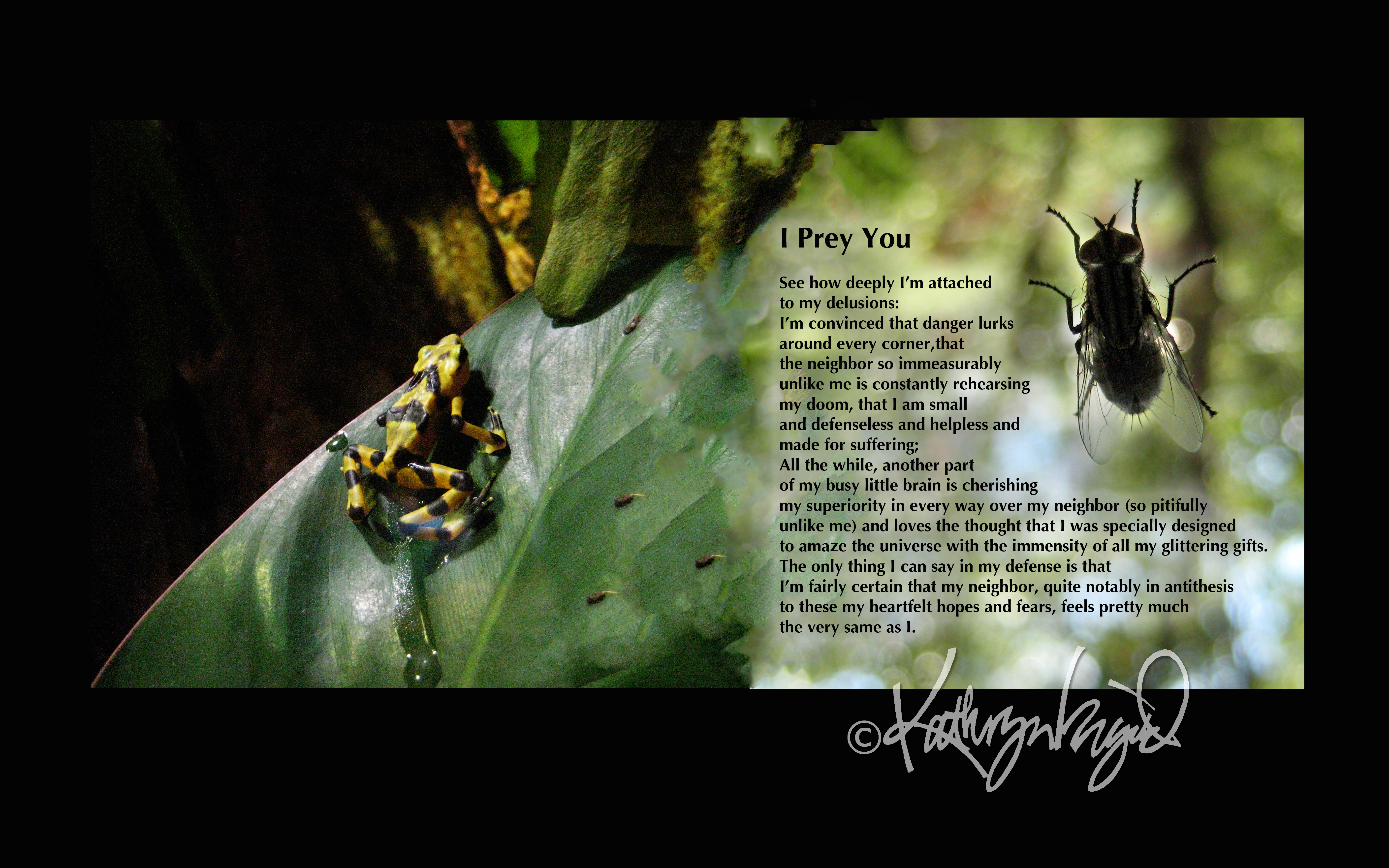
photo + textIs it a bug or beast that’s plaguing you, or is it all just self-imposed? Does it really matter? Fear, anger and other poisonous emotions are just as toxic as can be, and I know if I give my own worst self power over the rest of me, I’ve no one else to blame. Inner pest, outer pest: under attack I fold, I wither and the result is pretty much the same.

Solution? None that’s perfect. I’m mortal and oh-so-imperfect, and any solution I might try must likewise tend to fall far short of the mark.

Give up? Hardly! The imperfect solution is always far preferable to no attempted solution at all. So me, I’m just going to keep my eyes peeled, my ears and mind open to useable input, and I hope to find that the next surprise is always a happy one. That the next encounter is with a long-lost friend, the next journey is through beautiful countryside that leads to the next great joy of a long and fruitful life. Pests or no pests, trouble or none. Hope and believing because they lead to the sorts of happiness that no amount of dwelling in the dark can ever do.

digital photocollage

Into Each Life a Little Rain *Should* Fall

photo

The spring rains near where I spent much of my youth watered many a tulip or daffodil right along with me . . .

I come from waterlogged stock, I suppose. Born and bred in western Washington, where it is rumored that children are born with webbed feet and mildew is every basement’s middle name, I grew up accustomed to the proprietary blend of intense green and hazy grey that is the trademark of the region, a badge of honor of its own kind. The Evergreen State was not called that for nothing and earned the moniker by the bucketful; as a child, I may have feared that the immensity of the rain’s reach might require us all to develop gills, especially if Mount Rainier also decided her geologic pregnancy was complete and blew off the entire west coast into the ocean. There were times when, of course, I doubted the mountain‘s very existence because it had disappeared behind a rain-cloud bank so persistent that we hadn’t seen that glorious white diadem on the state’s brow in ages, but eventually a good shaker or at least a seismic cough would confirm that behind the cumulonimbus wall somewhere lay the spectacle of the mountain in wait for the return of drier skies.

Don’t mistake, as much of the Outside World has done, that this is indeed the whole Northwest experience. Children, perhaps, would contend that there is nothing but rain their entire lives, but I know from a much longer stretch of years, not to mention a gradually shifting climate over the last number of decades that has seen a skew toward somewhat later seasonal changes all ’round and definitely a degree-or-two of push in the direction of both the warm and cold extremes (among other things): the northwest is gorgeous, The Mountain does grace us with its presence pretty often, and the sun DOES shine. With true shimmering spectacle, in exaggeratedly cerulean skies. Sometimes whip-creamed with piles of white landscape-painterly clouds and sometimes just in that fabulous bowl of uninterrupted enameled sky inviting eagles to slide across it if they dare.

As a transplant in Texas, I’m learning a whole new vocabulary of extremes when it comes to things meteorological and geological. I spent a couple of brief, mountain-less years living near Chicago in my youth and had made enough family road trips to know a bit about how much terrain and weather could vary even over short distances. Moving to Texas, even north Texas, proved something of a paradigm shift in that regard, especially as we arrived seemingly on the cusp of some rather spectacular worldwide change when it comes to things weather-related. So it was an intriguing and, well, oven-crisped adventure to face a summer where our county officially slipped into drought right on the heels of all the other counties in the state, most of them throughout the region as well. My roots, accustomed to their abundant if not excessive access to cool clean water, began to protest. The arrival of the first low enough temperatures, accompanied by the first blessed misting of rain, well into October, and the appearance then of early summer blooms as though they thought it was just hitting mid-May seemed slightly ludicrous but nonetheless as welcome as a long-awaited prison pardon.

Today the temperature dropped, thanks to a sudden “cold front”–sorry, I just had to put it in quotes when it referred to 12C/52F degrees at the end of October; that’s the Northwest in me talking. Since we had had pretty solidly insistent summer temperatures until yesterday, this seems like rather high drama! It’s a firm reminder, if we really needed one, of our being composed of such a high percentage of H2O ourselves and having not just an inborn affinity then but a core-deep need for water, water everywhere. The problem is distribution. There’s so often too much of it in one part of the world and too little in another. Balance, by planetary measure, is not the same thing as our sense of balance as tiny little individuals and groups upon that planet, so we’re almost always wishing, wherever we are, that Ma Nature would set up a much fairer sharing system. Least she could do is let one of us kids divvy up the water and the others choose which glasses to grab for our shares.

That’s what makes it seem like such a benison when the floodwaters recede, the monsoon season ends or the hurricane relents and dissipates. When the parched clay gets a sip of rain, the stream-bed feels that first trickling, slaking return, and the blurry looking cloud that’s been hovering just a hair too far off by the horizon finally acquiesces, rolling in with its bellyful of soothing eau-de-vie. Today we’ve had a bit of rain again at last, and the grey lid over the oaks looks promisingly like the skies I knew in my “northwet” youth, and I am comforted by it all. Sun fills me with hope much of the time, I’m moved by the legendary promises of rainbows whenever they bend across my view, but when it’s been long enough between squalls and spritzers for me to miss them so, nothing is more beautiful than the dirty mashup of colliding clouds as they commence spitting their payload of rain on house and garden and me, umbrella or no umbrella. Let it rain!

oil on canvas

When I am thirsty, let it rain . . .

Homecomings of All Sorts

photo + poemOver the years I’ve learned that there is a huge range of meaning in that puny little word Home.

That broad spectrum has been on my mind a lot during the last couple of weeks.

colored pencil on paperEarly this month my parents visited an apartment complex near where a couple of my sisters live, and shortly after the visit we got a phone call from Mom and Dad to let us know they’d put a deposit on an apartment and would be moving from the house they’ve lived in for a couple of solid decades plus. This wasn’t truly a stunner: it’s something we had all discussed in various ways and at various levels of intensity over the last couple of years. After all, moving was kind of on our minds. My husband and I have changed addresses four times in the last seven or eight years, thrice by short distances for more practical-seeming digs and once across the country for a change of work life. Amid those moves of ours, my mother and father-in-law got on the moving-truck bandwagon and shifted from their own many-years’ home to an apartment as well.

For us the moves were partly logic-driven (so we hope at all times!) and always emotion-driven. No regrets on any of them; they were all the right thing at the time in their own ways. I think Mom and Dad S are satisfied with their life-shift too, and I sincerely hope Mom and Dad W will find as much good in the balance as well. I know surely enough that every gain tends to be accompanied by some tradeoffs, large or small. That’s life. I just spent a few days on a dash-through with my parents to assist with part of the sorting and packing and organization and shopping and networking that their move requires. It’s little enough that I can do, but it always unearths a whole slew of things–objects and thoughts–that center on the Homely concept and how it may differ for each of us and can also change over time.

mixed media collageWhat I think of most distinctly and frequently in this whole house-related context is of course that thing I mentioned about the meanings of Home.

I’m sitting in the centerpiece of what makes Home for me right now: a very comfortable house in a nice town, and most importantly, cozily perched next to my life partner, love, best friend–my husbandly-type person. Only the tiniest bit of elementary observation necessary to see that this combination provides a goodly batch of Home definitions straight off: physical shelter; a place to centralize my daily existence; comfort and safety and a sense (however delusional) of control over my life and environment. It’s a concrete expression of my sense of how I fit in the world and the pleasures I take in it. It’s a container for my current life story and my history, both personal and in the far broader ways of culture and roots and outright humanity. That’s where I begin to veer off into that lifelong learning curve of what Home means to me.

I think of arriving on Norwegian soil for the first time when I was twenty and being overwhelmed by the sensation of being rooted, blood-connected, of holding hands with my ancestors, in a way that caught me utterly by surprise. I think of listening to my grandparents and aunts and uncles unfurling their memories over me in my childhood and youth and how those people were my Home as much as anything in those days and in turn, the way that learning those bits of family and personal history further shaped my understanding of this whole construct. I think not only of all my grandparents and great-grandparents braving new worlds to create Home in America after uprooting from Norway, to build a new self or job or family or place or all of those things.

I think of my grandfather moving his family back to his hometown in Norway when my mother and her next sister were still very small, seeking a re-creation of Home as he had known it, but ultimately finding that place didn’t fulfill the need as much as his wife and children and his suddenly faraway life did, so with his homesick young spouse in the lead, headed back to the States with their little pinafore-clad girls to restart their own Home on their own coast. And I think of my youngest sister searching out the family history’s effects on her own notion of Home and landing, of all places, in a beautiful Norwegian city where some of Grandpa’s relatives still live and where she’s now been rooted back among them for over twenty-five years.

graphite and colored pencil on paperAll of this, jumbled and tumbled together, is what makes Home for me, but the center–the linchpin and the heart of it all–is unquestionably love. Wherever it’s located, however it’s designed, whatever it might constitute in the physical world, Home is clearly all about that connection shared with what and whomever we love most. And that will probably never change for me.

soft pastel on paper

Foodie Tuesday: Drinking Flowers and Eating Dirt

photo

When you can't afford to drink stars, why not drink flowers?

Molecular gastronomists amaze me. Their mastery of elaborate concoctions and decoctions, deep-frozen and spherized and powdered and atomized into unprecedented works of art is impressive, often–I’m told–just as extravagantly delicious (though few can afford to find out), and almost always results in an astounding display of visual artistry of one sort or another. Many practitioners are also preparing and presenting highly refined acts of theatre. I stand in awe of and sometimes deeply moved by the concept of what the molecular gastronome does. And think that perhaps no kind of cook is as deserving of a “gnomic” title as the mad scientist of the kitchen.

Yet both because so few people can stretch our pockets to carry large enough quantities of that other essential dining ingredient, dough–in its vernacular definition as money–and because trendy palates are so easily jaded, the stage for molecular gastronomy’s expression is necessarily a very narrow niche apart from its conversational appeal. I hear that many of the most famed practitioners of this very art are indeed delving into a new branch of the kitchen sciences, or more accurately, going back to the attics and cellars of it, by reexamining antique cookery of all sorts. No matter how much we hybridize and transmogrify the ingredients or tweak, deconstruct and reassemble them, there is and always will be a relatively limited palette of possible foods we can use for the culinary practice. For every pallet of russet potatoes shipped to the kitchens of the world, there are only so many truly new things we’re likely to be able to do with them and still result in an edible item, let alone one we want to eat.

The beauty of revisiting and rethinking traditions and successes of the past is that there are so many forgotten treasures that deserve to be enjoyed yet again. But far more than that, it’s because it takes us back to where we came from as families, as cultures, as homo sapiens, and allows us to understand better how we fit in the world. Think, for example, of the people that first took up and swallowed a handful of their native clay, not knowing but evidently instinctively sensing that it offered essential minerals and nutrients that the plants and animals in their usual diet could not provide. Imagine being the very first person to taste a mint leaf, an oyster, a strawberry. To eat honey, of all things. These intrepid adventurers advanced human existence immeasurably. Imagine, even, your own first taste of any kind of food–what a revelation, a revolution, for good or ill that was!

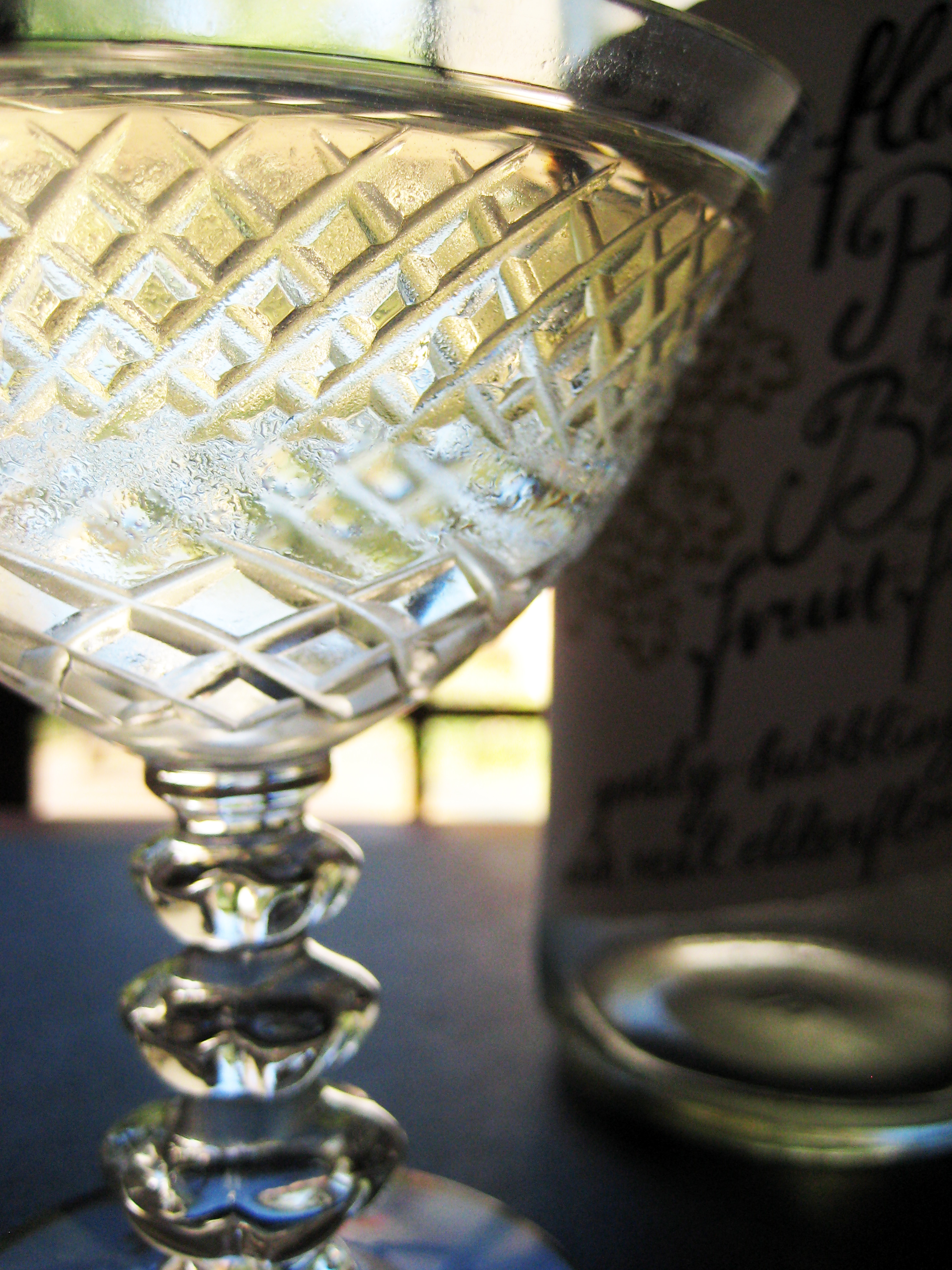
And so much of the origin of any culture’s cuisine is full of wonders and delicious things that we should be loath to forget and lose. While I would never be one to turn down a good glass of champagne or sparkling wine, there have been many discoveries to equal the joys of Dom Pérignon‘s possibly apocryphal but nonetheless fitting sensation that in such a quaff he was tasting the stars. One of my own favorites is the drink that has been a standard from farm to fancy-dress for uncounted generations, an elderflower cordial. It’s like a light lemonade with great floral top-notes. A classic home brew in the British Isles and Scandinavia and probably elsewhere as well, it’s both delicate and distinctive in its light and heady sweetness. My sister, who lives in Norway and has nice elders growing near her house, makes fabulous elderflower cordial with the technique she learned there. I’m neither so skilled nor so patient, but am not ashamed to rely on well-made commercial cordial, whether in syrup form as in the kind I buy off the grocery shelf when in Stockholm or at IKEA when here, or as sparkling pressé like that produced by the charming Belvoir Fruit Farms (nope, not getting any sort of payment for sharing this personal endorsement with you! But you should go visit their humorous and quirky and refreshing website just for fun even if you think “flower soda” sounds appalling).

A mighty tasty lunch or supper treat that’s different from the usual for me but is extremely simple to prepare and satisfies both my sweet and savory hankerings is fried cheese with a dipping sauce. I love the crumb-crusted and deep fried cheese with a tzatziki-like sour cream dip that we get at Bistro Praha, a very favorite haunt in Edmonton for innumerable delectable and delightful reasons from the uniformly fabulous central-European cookery to the marvelous people running the place. But again, limited in resources to get to Edmonton whenever I wish or, barring that, to get quite the right ingredients and find time to bread and fry and sauce it all up properly, I can do a variant here that’s also wonderfully satisfying. I find a nice slab of Halloumi or Queso Ranchero or (as here) Juustoleipä or some similar “heatproof” cheese and fry it on medium heat in my cast iron skillet with just enough butter or olive oil to keep it from sticking (this time the skillet was conveniently still seasoned just fine with duck fat from last week’s lunch) and just warm it through until nicely browned on the outside, melty inside. I had this with a cup of last week’s beef bone broth on the side, so between the two savories, both a bit on the salty side as I prefer them, I wanted the dipping sauce for the cheese lusciousness to be sweet and a tiny bit spicy to offset that. I mixed plum jam and ginger preserves and warmed them with a little minced fresh mint, and that did the trick perfectly for my tastes. Jam, cheese, broth: all slow foods in their initial preparation, but once in the larder or fridge, they become almost instant throw-together happiness. And there is a decidedly old-fashioned appeal to such a meal that makes me glad so many of our illustrious ancestors were venturesome gastronauts in their own right.

photo

A simple repast is not a thing of the past, but it needn't be dull as dusty history either . . .

Preposterous Beauty

photo + poemIt’s a redundancy, isn’t it, ‘preposterous beauty’? What could be more unlikely, more outlandish and excessive, than beauty itself? Yet it’s the one thing we all seek, in one form or another. We long for what seems perfect, what appears flawless. We yearn after those things that, at least in our own minds, represent the ideal.

In some ways, it strikes me as puzzling that we should be anything other than repelled by beauty, if indeed it is representative of perfection: who on earth should want to be reminded of her own imperfection and inability to achieve it? I can’t imagine that there are so many people so deluded as to think themselves either perfect or deserving of association with the perfect that they would willingly submit to being even juxtaposed with any other such wonder. So why do I, of all people, so wonderfully aware at all times of my almost cartoonish capability for exemplifying the imperfect in so many aspects, find that I too am compelled to seek beauty?

Beauty is perhaps the everyman‘s Everest, so I will intone along with George Mallory and all of his philosophical heirs: “Because it’s there.” If few can deserve of a prize, that is sometimes motivation enough for all of the remaining horde to contend for it, hoping that perseverance and pure luck will combine to favor them. If something is desirable, even if merely because of its beauty, why would we not wear ourselves out in the pursuit of it?

The particular joy of Beauty is, if I may, that it is not so particular. That is, there are so many kinds of beauty possible in all of existence, and so many ways of perceiving and interpreting them, that there are almost endless sorts of beauty to be pursued. It makes a person like me, who sees herself as among the least-likely deserving recipients of the benevolence of beauty, think that perhaps there’s enough to spare for me anyway, if I show appropriate reverence for it and make an effort. It’s the only way that I can explain to myself how a person of my humble means has been so indulged with so many forms of beauty granted me in my life.

photoI think of beauty as it is understood and distilled through all of our senses: that which can be tasted, smelled, seen, heard, touched and intuited–any and all of this can be beautiful. The range of possibility is overwhelming. Imagine sitting in a peaceful room and listening to a sure, sweet voice singing a compelling melody while sunlight suffuses the space with warmth and the scent of leafy spring creeps in at the windows. Isn’t it preposterous to think all of those beauties could converge in one act? And yet they can. Imagine kneading wonderfully elastic yeasty dough with the sweetest grandmother, one who laughs softly and often, her velvety skin crinkling up around her eyes in a mischievously creased smile, and the sound of her old radio down the hall sending you Django Reinhardt and Stéphane Grappelli to accompany your kneading and chuckling together. Preposterous? Of course! But such confluences of perfection do exist.

So I keep believing and hoping and yearning. I make drawings and poems and think that, when the stars align just so, in spite of myself I may make something of beauty. Or just stumble over it and be glad. It’s so ridiculous, so impossible; true beauty is so beyond my reach it might as well be Mount Everest and I a mere speck on the earth. But it has drawn me to try the climb before, and I know it will again and again. Beauty is really preposterous that way.

photo