It’s Foodie Tuesday and I Haven’t Eaten Yet

When I was an undergraduate, our university operated on a semester basis, and required all lower-classmen to take a course during the Interim month of January. As the courses offered during that period were designed in part as a testing ground for future standard semester courses (‘experimental’), in part as cram-courses for catching up a missed class in compressed time or as courses that otherwise didn’t fit into the typical academic demands of a semester or involved travel, they tended to be highly desirable classes anyway, and I opted to continue my Interim studies during all four years of my undergrad education. It came in very handy in my senior year after I’d taken a whole semester of the previous year to travel in Europe (non-academically, but spending my school funds all the same) and really needed to finish school in 3-1/2 years rather than the full four to compensate.

But the real benefit of the system was that I got to take a delightful course somewhat off the beaten path of my degree each January. One year, it was ‘Chinese Conversation, Culture and Cuisine‘–a supremely entertaining class team-taught by two brilliant New York Jews and their Chinese grad student (the team in itself a refreshment in the midst of a perfectly fine ‘white-bread’ west coast Lutheran uni education). Two days a week, one or the other of our professors would lecture on Chinese history and culture, slipping in lots of anecdotal hijinks from their respective times studying in China; one day was a practicum devoted to classic Chinese cookery, and was needless to say the day of perpetual perfect attendance for and by all in that class, given how hungry undergraduates always are for good food; and one day was spent focusing on the development of Chinese written and spoken languages, with some rudimentary training in making Mandarin-like sounds and practicing the beautiful strokes of character calligraphy to accompany what the sounds should, at least, have meant, though I’ve no doubt that what we actually said translated as something much more in the comical-infant-to-international-crisis-causing range. One of the few things that’s stuck with me for all of the intervening years was learning that the proper greeting was not Howdy or Hey, Baby, but Have you eaten rice today? And of course, that is heart and soul of compassion and hospitality in any culture or language. Would that we all might operate more fully on the basis of that concern.photo + text graphicAll of this wisdom aside, I guess it’s hardly rare for anyone as food-obsessed as I am to generally forget to eat once in a while. Here it is already 18.00 hours and I haven’t eaten more than a handful of pistachios. And those, not recently. Tasty though they were, I imagine I might not be just dreaming that I could enjoy a slightly more substantial repast before long. But sometimes I think a little semi-fasting is not a bad thing, because it may, for example, begin to ameliorate any damage done to my innards, and any, erm, expansive qualities reflecting that internal damage in my out-ards, over certain recent holidays by a slightly over-enthusiastic or exaggerated sense of my capacious personage’s actual dietary needs. Also because, being frank here (though I generally prefer the name Frances/is, should anyone ask), a short period of partial abstemiousness only serves to enhance the pleasures of the simplest foods.

And that’s what I’ll have today: the simplest. A little fridge-cleaning bite while paused from a somewhat overweening stack-up of household chores left too long undone, messes unattended. But I can’t say that I’ve any objections at all to a little truly simple food goodness, so I shall indulge in that momentarily. I’ll leave you with some verses to chew upon until my return on the morrow. Bon appetit! Or as we say in my family, Vær så god. That’s far more appetizing, I’m sure, than what I would have said in Chinese, no matter how good my intentions.photo + text graphicphoto + text graphicphoto + text graphic

Place Your Bets and Get Moving

Much as I’m drawn to wondering what lies ahead, guessing, inferring and even betting on probabilities, am I in danger of defining-by-divining? It’s easy to get so immersed in the practice of my prognostications that I start to believe in them as the appointed future and let them become my default reality. What a pity if by over-enthusiastic crystal gazing and navel gazing and pseudo-scientific extrapolations I manage to constrain my life to what I expect it to be rather than letting it unfold and taking full advantage of what I’m able to create out of those things with which life presents me as I roll along.graphite drawingCandling eggs and reading ultrasounds of one’s innards and charting historic patterns–divination by trusted means–that’s all well and good, but only as a thought-provoking guide for what may be, and after all, if I don’t like the sound of the predictors, why on earth should I sit around and mope instead of defying the gravity of the situation! If I am to have any true resolutions for the future–the new year now unfolding or indeed, anything more than that–I’d like to think they will be about living that future in full, about being present in my present as it comes. I hope to be sometimes engulfed in the sweep of current life and sometimes embracing the immense and bracing Possible contained in every living moment with openness and imagination, hanging on for truly dear life. Let me dare to be fully, wildly, passionately alive while I live and not entangle in what-ifs more than is actually useful.graphite drawings x2Everything we do with our days and with our hearts and minds and skills and nerve can be spent on worrying and wondering, if we take ourselves and our powers of prediction and over whatever mysteries lie in wait too seriously. Or there can be enormously exhilarating challenges and opportunities and blessings blooming in abundance, scattered around and waiting for recognition and engagement. I hope that I am growing wise enough at long last to let go of fear and inhibition and the fungus of fatalism encroaching on assumptions of a fixed and implacable future, to instead spend much more of myself on the kind of work and action and play that happen gladly in the moment of their discovery. Time, I say, to get moving and try those wings.

Interludes

photoContinuity

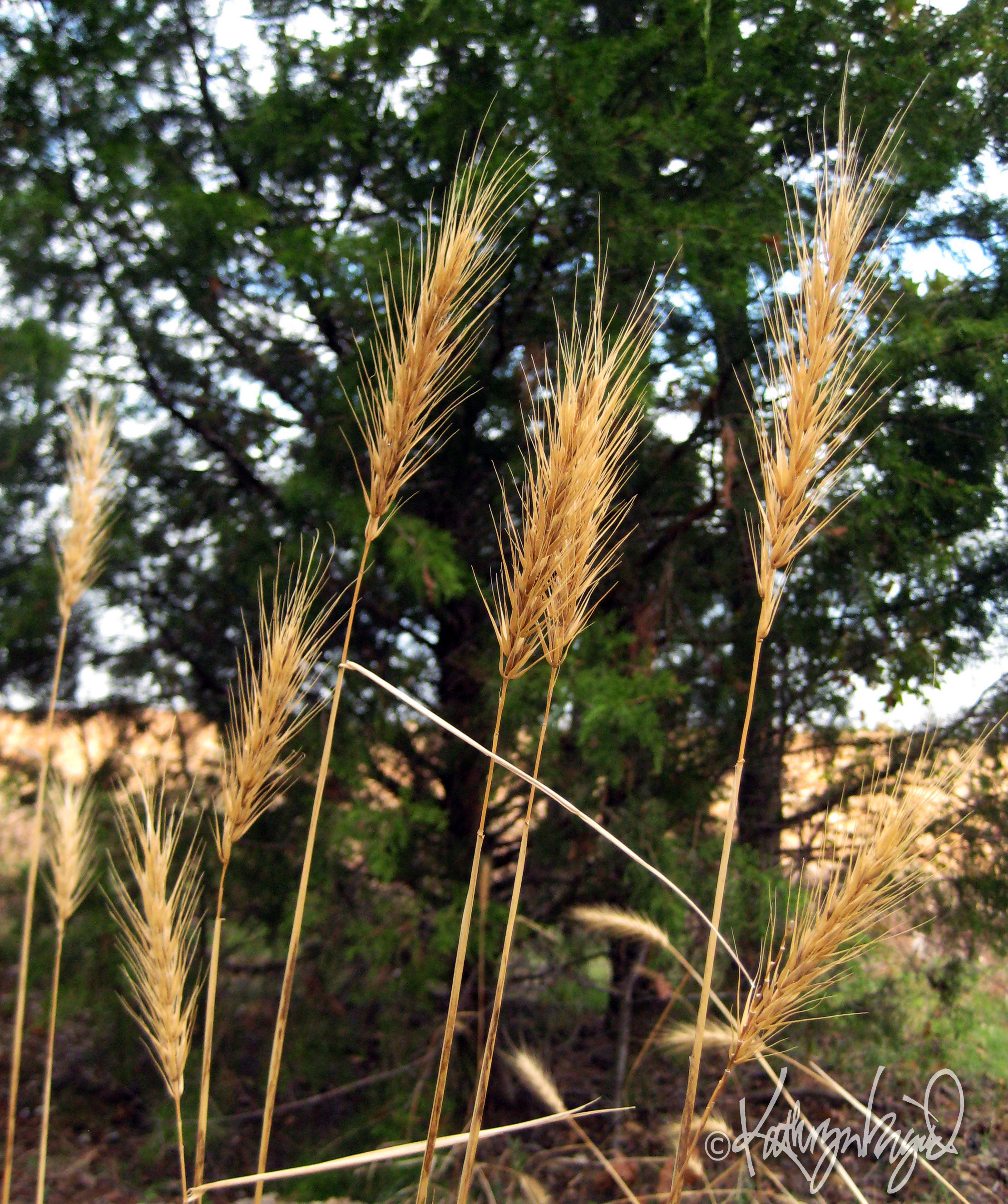
Winnowing chaff from new-cut heads

Of grain, the girls toss up from trays,

Flat-woven from the grasses there,

The seeds in ancient ways

And let the antique wind blow out

The husks in clouds of gold,

Then bow back down to seek more grain

As in the days of old,

For nothing changes in the dance

Each time the story’s told.photo

Elixir

They all were young and fair who sat

Under the rustling summer trees,

The copper beeches, lindens; these

Broad green allées of hazel that

Gave shade and silver glints of sun

In rhythm with their part-songs, airs,

And with their sweet dallied affairs

While laughing brooks made haste to run

Away, as time is wont to do,

And youth, but these stayed young and fair

Forever in their summer air

Because their songs of love rang truephoto

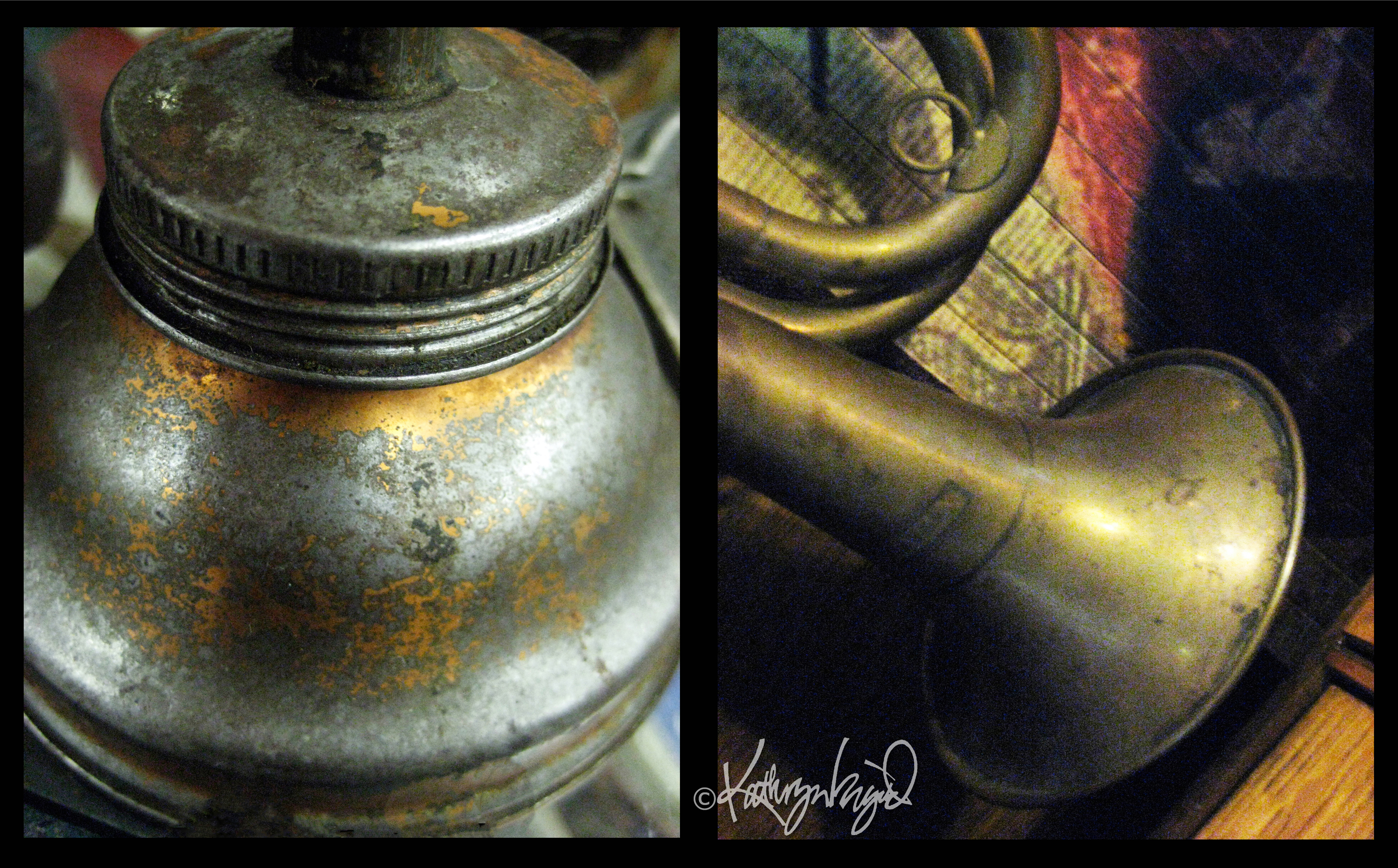
Age Becomes Beauty

photos x2Ingrained

The salt and oil of his hand

are torment and life’s-blood both

to the volutes of the instrument

and to

the curving, sinuous surfaces of that

deep-burnished ancient bass—its sigh

at the mindful, guiding touch

of the hand

steady with certainty, knowing

the way from note to note,

from phrase to

singing phrase, without

reference anymore

to intent because

the thought, the meaning, the joy

and the intensity are all

as deep as heartwood in

the ancient tree that was

the bass’s former self.

Those days,

no bird

set in the boughs of the

grandfather tree

had sweeter voice

than the breezes piping softly

through its leaves, no, even than

the tiny song

humming through

the tree’s own heart, minute

and pale yet, sub-sonically, a hint

a whisper—in

the lyric capillary rise

of tree’s-elixir every spring

of the string-bass sound

far-off, unborn,

lying cradled

until called out

by generations, ‘til,

goaded with salt,

soothed with oil,

called

to speak again as its

nature insists,

under a musician’s hand.

photos x3
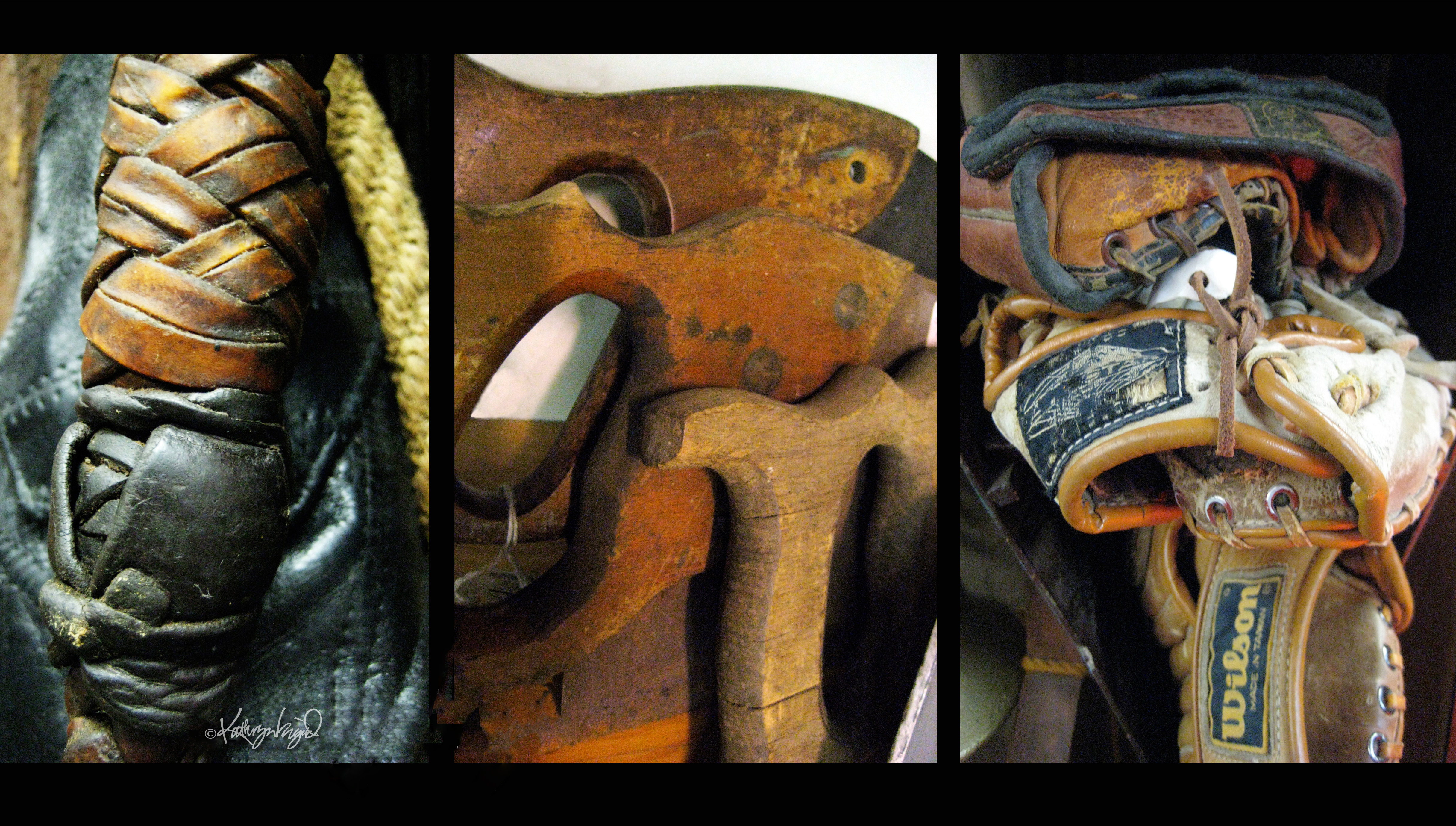
Well Worn

There is a dignity

And elegance to being worn

Beyond recognition as

The thing-that-was:

Once pretty, fully functional,

Well designed—It’s by

The fineness of this apropos

Well-suitedness for use

That things that might

Have been quite simple and

Quite plain become

The hard-used favorites

That by this aging then

As Beautiful

Become defined


Favorite Boots

Hard to imagine how much wear

It takes to soften down

The tough old boots I loved the best

And burnish their deep brown

Thick skin until it’s almost black

In places by the heel

And worn by stirrups near the shank—

But I know how they feelphotos x2
The King is Sleeping

Don’t go in—the king is sleeping;

Don’t barge in, disturb his rest—

All the bodyguards were keeping

Such good care at his behest

Up until a couple decades

Turned to several centuries

And the stalwart guardians made

A heap of dust fine as the breeze

And the palace came to crumble

And the country to decay

And the sands of time to tumble

To eternity, away—

Let the king sleep on in silence;

There’s no reason to awake

Anymore, to stir and rile and

See destruction come and take

From him all his kingdom’s treasures,

All he held and fought to own,

All his onetime loves and pleasures

Turned to silicates and stone—

Don’t go in—the king is sleeping;

History cries ‘let him sleep!’

While the passing age is creeping,

Peace is all he gets to keep

Delight amid Sorrows: Día de los Muertos and Singing Neruda’s Poetry

Once upon a time, Pablo Neruda came to my rescue.

digitally painted photoI was a perplexed and moody undergraduate taking just a few too many credits at a time to cover for the semester I’d frittered away (both the time and the tuition money) in getting a much broader, deeper education by gallivanting across Europe with my sister to work on being ever-so-modestly less perplexed and moody (it did work, I swear it did!). By pushing a little extra during my remaining semesters I knew I could graduate ‘on time’ with my class and not use up further masses of time and money and my parents’ remaining non-grey hairs, so I crammed a bit to compensate. And by the time I signed up for one particular poetry course I was just a tiny bit frazzled. I knew I had a sort of dispensation from the university to take a certain number of credits Pass/Fail rather than as graded courses, and decided that since I’d not used that option and had taken other legitimate English courses already, now would be an excellent time to relieve a small portion of pressure by opting for P/F. Señor del profesor had a slightly different idea.

As in, “What, are you nuts?” and a firm No. Oddly, it had not occurred to me that this particular academic rubric could only be invoked with the professor’s permission. Silly undergraduate. My response was to burst into tears. But he persuaded me, in good professorial fashion, that it was for my own good and that he was quite certain I would do Just Fine in this course if I was committed enough to take it in the first place. So I pulled up my socks and took it like a good girl. I guess it’s only fair to confirm the obvious, that the professor did his part to get the aforementioned rescue work underway, and I’ll tell you now that being a true educator rather than a sometime impostor like me, he kept at it throughout the semester, and I was no easy or patient patient.

Meanwhile, I quickly discovered under said professor’s tutelage that my incredibly narrow view of poetry was just a sign of lost time and an opportunity to open an infinitely interesting and challenging world of unexplored wonders. But I was still horribly intimidated by the prospect of learning to bravely parse and explicate poems, and I was still amidships in the throes of general anxiety and fear of speaking up as it was. Yikes! Bit of a fright, that.

Then the wonderful Chilean master Pablo Neruda beckoned me to come in and make myself at home. His writing, so evocative and so deeply personal, made me feel somehow safe. This, despite his writing in Spanish, a language unknown to me except for some very useful food-related words. Now, I will admit to having read numerous translations of his poetry alongside the originals, but all one really needs when presented with this juxtaposition is, as I had, a little youthful church-Latin exposure, a handful of high school and college French classes (sorry, I came out of it with appreciation but not much real knowledge), and the will to make serious inroads in various dictionaries; the work simply sings. The variety that emerged from the different translations brought out a wonderful amplitude inherent in Neruda’s poetic work and inspired me beyond measure.

I fell in love with several of the Neruda poems I got to read for that class. But the poem that truly resonated in me turned out to be his ‘Entierro en el Este[‘Burial in the East’], and I happily labored over three different translations of my own after studying the existing ones by pros and linguists far beyond my skill level right alongside the beautiful Spanish-language original, whose marvelously lyrical sonorities drew me in inexorably, filling me with their dark and earthy music. Can’t say exactly what happened to those translations. Surely the world is missing nothing with their disappearance. The professional poets’ translations and transcriptions remain for Anglos’ edification. Far more importantly, the rich and exquisite deliciousness of the Spanish version remains, and not just on the page and in the ether but also in my heart.

Because the class requirement to learn and recite a chosen poem in class before writing a paper on it made some strange little spark light up in my soul and I realized that, however hard it might be to memorize a poem in a language I’d never spoken, it was well worth learning this one because I sensed how its incredible beauty would resonate not just with me but with my peers if I managed even barely well enough. Its sheer musicality made it easier to learn, with the help of a Spanish-speaking coach, and the difficulty of learning a foreign-language poem and its meaning deeply enough not only for the recitation but to be able to write semi-cogently about it kept it ingrained, I found, years later as well. Too, it gave me the great gift of lightening my fear: standing in front of my classmates and giving my all to this lovely Chilean masterpiece in Spanish somehow made me less terrified of forgetting or of making it dull–something I just knew it would be hard to do with such beautiful and moving words. I lost myself in the poem, which is precisely what good poetry in any language hopes to make us do.

mixed media drawingENTIERRO EN EL ESTE

Yo trabajo de noche, rodeado de ciudad,
de pescadores, de alfareros, de difuntos quemados
con azafrán y frutas, envueltos en muselina escarlata:
bajo mi balcón esos muertos terribles
pasan sonando cadenas y flautas de cobre,
estridentes y finas y lúgubres silban
entre el color de las pesadas flores envenenadas
y el grito de los cenicientos danzarines
y el creciente y monótono de los tamtam
y el humo de las maderas que arden y huelen.
Porque una vez doblado el camino, junto al turbio río,
sus corazones, detenidos o  iniciando un mayor movimiento
rodarán quemados, con la pierna y el pie hechos fuego,
y la trémula ceniza caerá sobre el agua,
flotará como ramo de flores calcinadas
o como extinto fuego dejado por tan poderosos viajeros
que hicieron arder algo sobre las negras aguas, y devoraron
un aliento desaparecido y un licor extremo.

Pablo Neruda

INTERMENT IN THE EAST [translation: KIW Sparks, 28 October 2011]

I work by night, in the heart of the city and surrounded

by fishermen, by potters, by the cremated dead

with their saffron and fruits, enveloped all in scarlet muslin;

below my balcony these terrible corpses

pass by with the rattle of chains and the playing of copper flutes,

such strident, lugubrious noise,

between the colors of those weighty, poisonous flowers

and the cries of the ash-covered dancers

and the crescendoing monotone of the beating drums

and the fragrant smoke of the burning wood.

For once they reach that place where the road meets the turbid river,

their hearts, stopping or perhaps starting a larger movement,

roll aflame, the leg and foot catching fire,

trembling ashes falling onto the water

to float like calcined blooms

or like a fire set in antique times by voyagers

so powerful they could make the very river burn, could eat

a food no longer known and drink the elixir of extremity.

El Día de los Muertos has a certain similar quality to the Neruda poem for me. The traditional Mexican celebration of the Day of the Dead coincides with the Catholic commemoration of All Saints’ and All Souls’ days (the 1st and 2nd of November, respectively). The depth of passion with which the bereaved mourn lost loves is brought to balance in Día de los Muertos in a marvelously worldly and tender way when families gather to tend the graves of their dead, to meet over feasting and drinking, amid art and dance and music and prayer and embraces and revelry of all sorts and to remember with love and joy the lives of the dead whom they have known and now carry in their hearts. I’ve long cherished the magical folk art arising from Día de los Muertos tradition, loving of course the charming and even joyful representations of Death as the natural culmination of life, and admiring the attitudes that these in fact symbolize. They feed that sweet dream in my heart of hearts where life and death intermingle in the most fitting way they can and we all dance between them with passion, with love, with hope–and with a river of deep, sonorous and abiding poetry flowing in our veins.

digital collage

Foodie Tuesday: Drinking Flowers and Eating Dirt

photo

When you can't afford to drink stars, why not drink flowers?

Molecular gastronomists amaze me. Their mastery of elaborate concoctions and decoctions, deep-frozen and spherized and powdered and atomized into unprecedented works of art is impressive, often–I’m told–just as extravagantly delicious (though few can afford to find out), and almost always results in an astounding display of visual artistry of one sort or another. Many practitioners are also preparing and presenting highly refined acts of theatre. I stand in awe of and sometimes deeply moved by the concept of what the molecular gastronome does. And think that perhaps no kind of cook is as deserving of a “gnomic” title as the mad scientist of the kitchen.

Yet both because so few people can stretch our pockets to carry large enough quantities of that other essential dining ingredient, dough–in its vernacular definition as money–and because trendy palates are so easily jaded, the stage for molecular gastronomy’s expression is necessarily a very narrow niche apart from its conversational appeal. I hear that many of the most famed practitioners of this very art are indeed delving into a new branch of the kitchen sciences, or more accurately, going back to the attics and cellars of it, by reexamining antique cookery of all sorts. No matter how much we hybridize and transmogrify the ingredients or tweak, deconstruct and reassemble them, there is and always will be a relatively limited palette of possible foods we can use for the culinary practice. For every pallet of russet potatoes shipped to the kitchens of the world, there are only so many truly new things we’re likely to be able to do with them and still result in an edible item, let alone one we want to eat.

The beauty of revisiting and rethinking traditions and successes of the past is that there are so many forgotten treasures that deserve to be enjoyed yet again. But far more than that, it’s because it takes us back to where we came from as families, as cultures, as homo sapiens, and allows us to understand better how we fit in the world. Think, for example, of the people that first took up and swallowed a handful of their native clay, not knowing but evidently instinctively sensing that it offered essential minerals and nutrients that the plants and animals in their usual diet could not provide. Imagine being the very first person to taste a mint leaf, an oyster, a strawberry. To eat honey, of all things. These intrepid adventurers advanced human existence immeasurably. Imagine, even, your own first taste of any kind of food–what a revelation, a revolution, for good or ill that was!

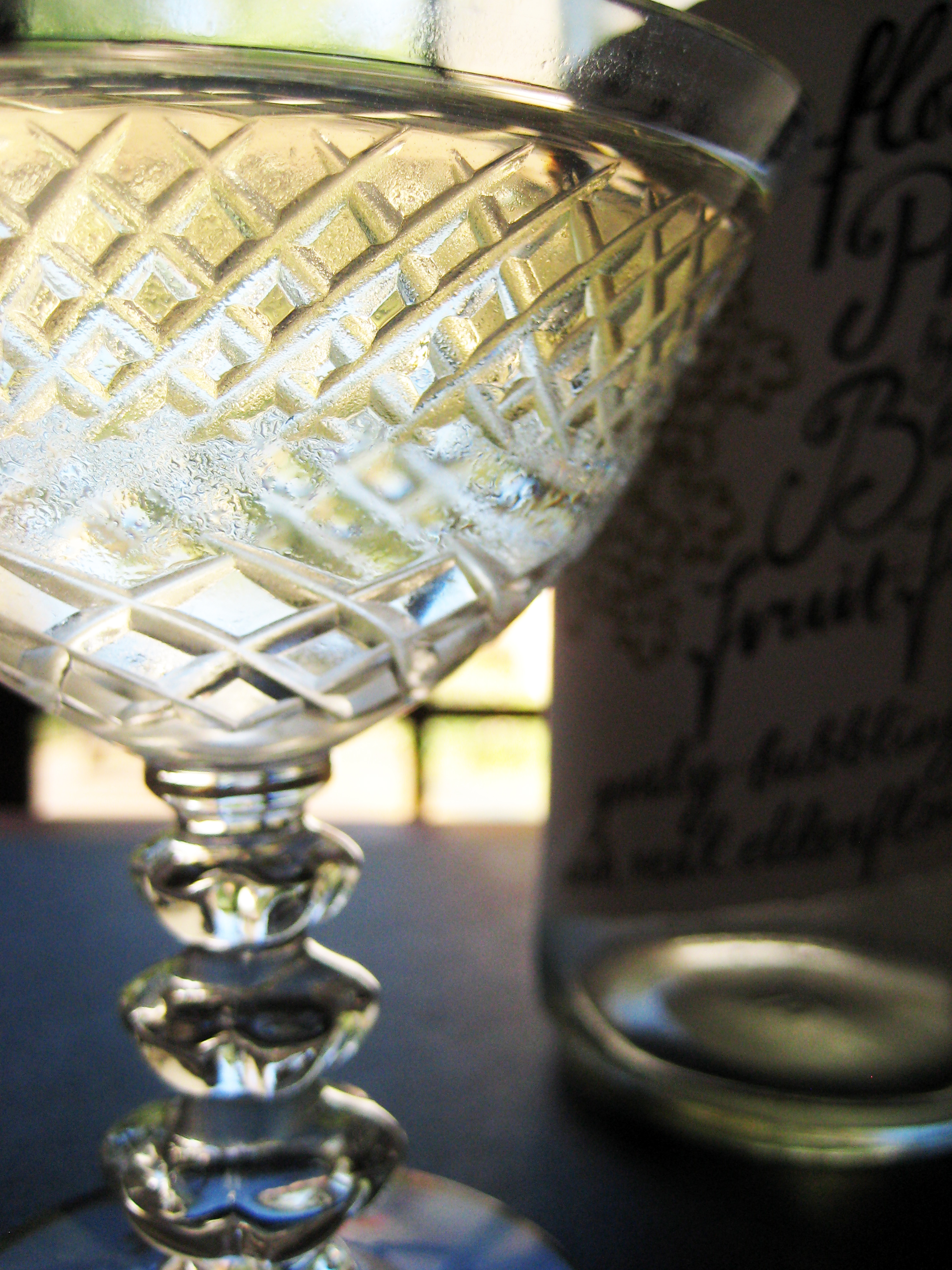
And so much of the origin of any culture’s cuisine is full of wonders and delicious things that we should be loath to forget and lose. While I would never be one to turn down a good glass of champagne or sparkling wine, there have been many discoveries to equal the joys of Dom Pérignon‘s possibly apocryphal but nonetheless fitting sensation that in such a quaff he was tasting the stars. One of my own favorites is the drink that has been a standard from farm to fancy-dress for uncounted generations, an elderflower cordial. It’s like a light lemonade with great floral top-notes. A classic home brew in the British Isles and Scandinavia and probably elsewhere as well, it’s both delicate and distinctive in its light and heady sweetness. My sister, who lives in Norway and has nice elders growing near her house, makes fabulous elderflower cordial with the technique she learned there. I’m neither so skilled nor so patient, but am not ashamed to rely on well-made commercial cordial, whether in syrup form as in the kind I buy off the grocery shelf when in Stockholm or at IKEA when here, or as sparkling pressé like that produced by the charming Belvoir Fruit Farms (nope, not getting any sort of payment for sharing this personal endorsement with you! But you should go visit their humorous and quirky and refreshing website just for fun even if you think “flower soda” sounds appalling).

A mighty tasty lunch or supper treat that’s different from the usual for me but is extremely simple to prepare and satisfies both my sweet and savory hankerings is fried cheese with a dipping sauce. I love the crumb-crusted and deep fried cheese with a tzatziki-like sour cream dip that we get at Bistro Praha, a very favorite haunt in Edmonton for innumerable delectable and delightful reasons from the uniformly fabulous central-European cookery to the marvelous people running the place. But again, limited in resources to get to Edmonton whenever I wish or, barring that, to get quite the right ingredients and find time to bread and fry and sauce it all up properly, I can do a variant here that’s also wonderfully satisfying. I find a nice slab of Halloumi or Queso Ranchero or (as here) Juustoleipä or some similar “heatproof” cheese and fry it on medium heat in my cast iron skillet with just enough butter or olive oil to keep it from sticking (this time the skillet was conveniently still seasoned just fine with duck fat from last week’s lunch) and just warm it through until nicely browned on the outside, melty inside. I had this with a cup of last week’s beef bone broth on the side, so between the two savories, both a bit on the salty side as I prefer them, I wanted the dipping sauce for the cheese lusciousness to be sweet and a tiny bit spicy to offset that. I mixed plum jam and ginger preserves and warmed them with a little minced fresh mint, and that did the trick perfectly for my tastes. Jam, cheese, broth: all slow foods in their initial preparation, but once in the larder or fridge, they become almost instant throw-together happiness. And there is a decidedly old-fashioned appeal to such a meal that makes me glad so many of our illustrious ancestors were venturesome gastronauts in their own right.

photo

A simple repast is not a thing of the past, but it needn't be dull as dusty history either . . .