What of the Day After the End?

digital illustration from a photo + textAfter All is Said and Done

What will I do when at the end of time

The story folds back on itself and calls

On me to follow down those darkened halls

Of memory to revisit sublime

Past lives in fact and fiction ’til I’ve turned

Empty as much as is the hourglass

And all the strange bygones that had to pass

Before this book called History was burned?

What will this end extend to me, my kin,

my life and loves and all the world abroad?

Whether it’s silence of the touch of God,

Salvation of a sort will bathe my skin,

And on that gleaming day I’ll wake anew

Because I loved, and I was loved by, you.

Will You Sing in My Stead?

graphite drawingWhen I can Sing No More

When I am weary, worn beyond all reckoning,

My breath is gone and voice has ceased to sound,

The darkness draws me in, its silence beckoning

And luring me to lie down on the ground–

To fall asleep; perhaps to melt there into death,

Because I can no longer coax my throat

To speak of joy, or yet to longer draw a breath,

To sing a song as long as one fine note–

Beloved Friend, how sweet if you will stand for me

And draw the air that lifts the lark to wing

Its way across the sky–if you will kindly be

My voice, and raise your own aloft and sing–

For in my silent darkness I shall never die

Long as your voice goes on and in your song I lie.

Real-Life Mysteries

While I’m on the subject of mystery stories (see yesterday’s post), there’s a true one that I hadn’t ever heard of until recently that almost defies imagination, even generations later. But that’s what true mystery stories do, isn’t it.

The story of a female immigrant serial killer/mass murderer, born in Norway but made in America, was a hideous and irreconcilable tale of horror and crime in the 19th Century and remains one today. Belle Gunness, who is believed to have killed all of her own children, two husbands and a handful of suitors, not to mention an accomplice or two of her own along the way–possibly executing as many as forty people in her lengthy crime spree–is surprisingly little known nowadays. I fear that this may be because we have so many other hideous and oversized monstrosities and real-life mystery stories handy to horrify and mesmerize us that many likely get pushed out of memory by the current ugly news. Undoubtedly the advent of World War I‘s dreadful specter was a factor in overshadowing a single murderer’s story rather immediately on its discovery.

All the same, once I knew of it, I found the woman a compellingly repellant subject for another mystery story illustration, being a subject worthy of an Edgar Allan Poe style drama or, yes, a true-crime cinematic epic. Though it was one of those news stories that ‘rocked the nation’ when uncovered a hundred years ago, the tale of Belle Gunness is relatively obscure nowadays. There have been a few generally tepid and mostly heavily fictionalized stories, books and movies based on the horrors wrought by this one woman’s apparent sociopathy and the trail of blood left in its wake, but it’s remarkable to me that such a grim, terrible story is scarcely known on a wider scale anymore.

Frightening, dark, and perhaps an indictment of the worst of human nature in general, yes–but I think perhaps part of the reason I find mystery stories so gripping is because I think they remind us–again in that somewhat ‘safe’ and detached format of past-history or fiction–that brilliance and the abyss are constantly in conflict in the human heart and only by understanding this and being willing to examine it in ourselves can we have a chance of rising to beauty and shunning the grotesque urges that we might have–and, if we’re truly fortunate, catching up the would-be wrongdoer in humane and forgiving and healing arms before she can ever fall so far. That’s my hopeful fiction, and I’m sticking to it.

digital collage

La Belle Dame sans Merci of the prairies, Belle Gunness. What fearful horrors shaped this woman’s inner darkness?

Today, I present Belle Gunness, a truly fallen woman and black widow whose mystery may never be fully unraveled, for your contemplation. May we never see her like again.

Mystery Story No. 1

I don’t know when, where or how the first fictional mystery story came on the scene, but since I thoroughly enjoy a good puzzle of the not-going-to-affect-me-in-real-life sort, I do like a good mystery story. So sometimes I like to create mysteries of my own. Mostly, visual puzzles. Pictures that invite interpretation, participation and invention on the part of the viewer. Images that demand a second look, or a two-hundredth one, because there might be clues in there, tales to be uncovered, plots to be discovered, fun to be made from the gossamer webs of pictorial intrigue custom-made for playtime. So here, for (I hope) your delectation and mystery-mongering, is a collage created with puzzling in mind. Enjoy!

And don’t forget to tell me if you devise the novel of the century after being so deeply inspired by it. Wink, wink.digital collage

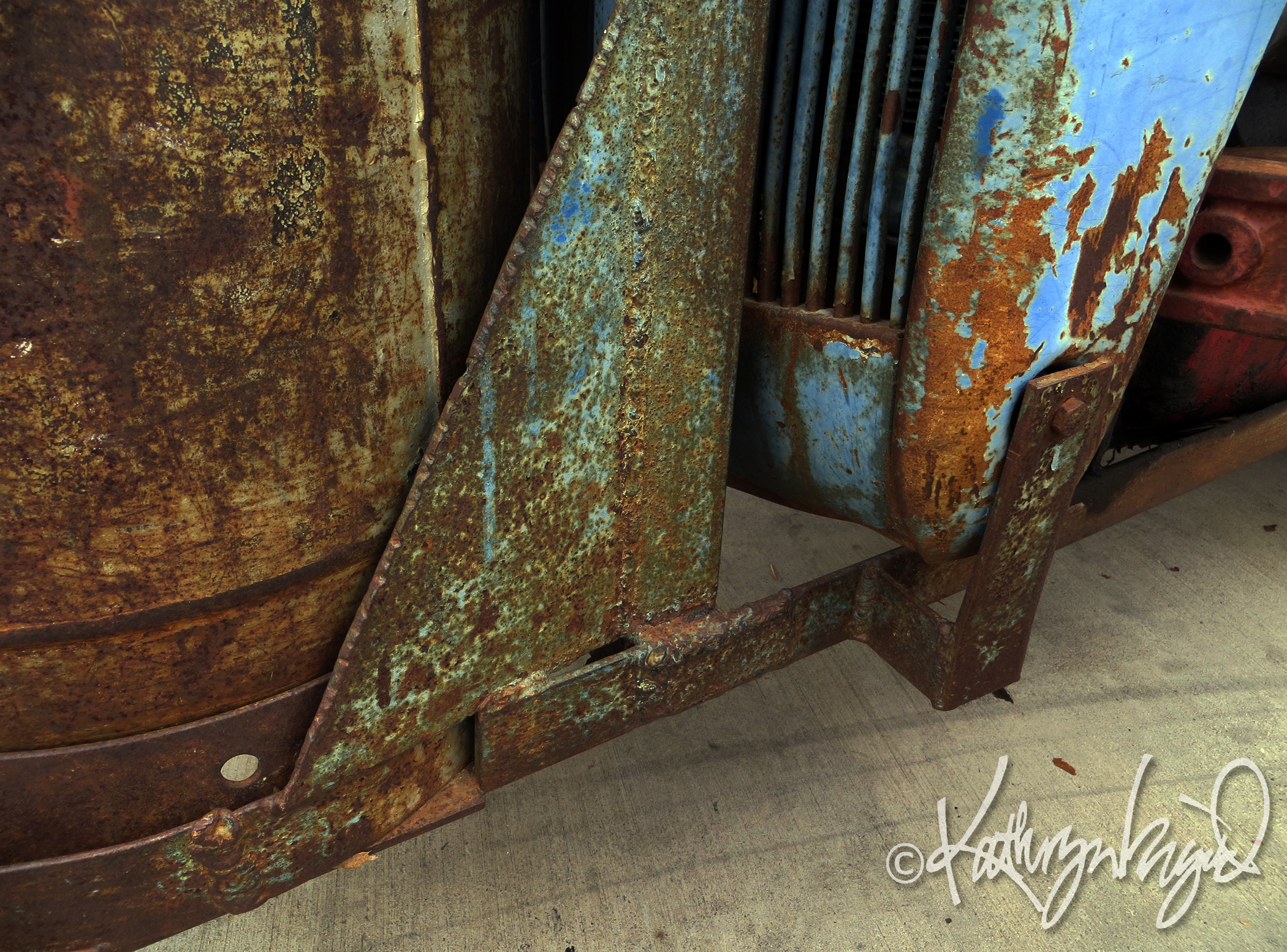
Rust in Peace


I flatter myself that I am improving with age. This morning’s Wordsmith offering from the fabulous Anu Garg of A.Word.A.Day was ‘crepitate’–one of my very favorites, thanks to the also fabulous S.J. Perelman‘s introducing it to me in the context of one of his typically scintillating, outrageously funny tales. I was reminded that crepitation refers to the creaking cracking popping grinding and other percussive noises of dusty old age, and that, not at all surprisingly, Perelman used it in self-deprecatingly hilarious description of his own antiquated joints as he gave what one must assume was–despite his stated intent of dash and panache–a dance demonstration to his date that was more rusty than rakish. Having done the requisite amount of damage to my own human machinery over the years by falling over and off of things, lifting things I had no business hefting, and in turn, turning, squeezing, smacking and otherwise torquing various portions of myself just enough more out of sync and syncopation that it’s remarkable if I only creak and don’t fall into syncope or crack up altogether.

So, whether dancing or just shuffling my slippered way around the hallowed halls of home, I consider myself  very fortunate only to ‘boop, whoosh, queel and grake‘ like another of my pantheon of fabulous wordsmiths, James Thurber‘s, old family car, and not to simply disintegrate wholly on the spot. Grey hairs? Bring ’em on! (Best color of hair I’ve ever owned by nature, as it happens.) Wrinkles? Oh, my, yes. Smile creases are only a badge of honor reserved for people who’ve had long and happy enough lives to earn them. Aches and pains will generally come and go, with more of the comings than the goings as time passes and I forget to accommodate my crepitude a little, but by golly it beats lying around and dissipating into a dust bunny of boredom.

And honestly, lots of things get more beautiful not just in spite of but because of their evident age, so why shouldn’t I give it a try?photo

photo

photo

photo

photo

photo

photo


Matters of Perspective


photo

Stormy skies can bring destruction . . . or the rains of growth and promise . . .

I’ve said before, and in ever so many ways, I’m a firm believer that we all live our lives wearing our own very distinctive glasses. By that I’m not referring to the glass-half-full vs. glass-half-empty attitude–but that’s indeed part of the whole idea. It’s about how we see the world through our individual filters.

In a fairly concrete fashion, that means that the quality of my actual eyesight–my acuity, ability to detect and distinguish colors, textures, shapes, depth of field aided by stereo vision, and all of that sort of thing does, in fact, have a profound effect on my world view and how I experience my passage through it in life. As a longtime visual artist, I am dependent upon all of this stuff for my very sense of self.

But I’m also convinced that each of us has a life history that includes our adventures from birth to the present, our nurturing or lack thereof, our environment and resources and social contacts and political influences and educational progression, and that whole reality is so distinctive for each of us, right down to a cellular level, that I can’t quite imagine how even the closest of kin could possibly have identical points of view.

I’ve been reminded of this in the last few days as I’ve been reading the latest Oliver Sacks book on which I’ve laid hands: The Mind’s Eye. Every book of his that I’ve read thus far is, since he’s a neurologist, a humane and humorous thinker, a deeply curious scientist, and a citizen of the world with wide-ranging interests, bound to be an adventure. Given the visual theme of this particular collection of case-studies (including his own discovery of and treatment for an ocular tumor), it is indeed a confirmation of my sense that such complex inventions as human bodies, multiplied by the almost infinite variants those influences I mentioned above can infuse, create and incubate an incredible range of possible ways to see and experience life in this world and whatever we can conceive of beyond it.

Yes, I am enjoying this latest Sacks book as immensely as I have all of his thus far. It’s been rather striking, too, to add to the layers of my own filters, many of which I’ve only come to recognize rather more recently in my life. I have sussed out and confirmed to my own wildly non-medical satisfaction that I am very probably distinctly dyslexic or cognitively ‘different’ in a whole bunch of ways, and having looked at this good doctor’s descriptions of face-blindness, or prosopagnosia, I’ve a feeling that my realization sometime not long past that I might have a degree of face-blindness might well be accurate. I’m certainly no less inclined to believe it since immediately before the book arrived on scene at the local library, I was working in our front yard when a car pulled up and the nice driver called me by name and conversed with me pleasantly until I could identify by her voice, questions and comments that she is the neighbor who lives directly across the street from me. Sigh. Sometimes the ol’ filters do get a little blurry.

More importantly, though, I’m convinced that how we respond to our life experiences and our histories–the choices we make and what we do with what we’re given and who we are within it–those are the truly telling filters. They’re the things by which we’ll be known, be remembered (if we’re remembered), and that offer us ways to define ourselves and our place in the world. So while I’m happy as an artist to play (as you saw in the last couple of posts) with my reality in the artificial world of visual imagery and how I attempt to show others what it’s like to see through my lens, I realize that my moods and attitudes are a part of that process too. Can I get others to understand or accept my point of view? Rarely, if I’m mighty fortunate. Can I help them to see it? More likely, if I work hard. Can I give them happy access to their own filters that might improve their moment or their day? That, I hope, I can do if I am true to the better of my instincts in responding to the world as I know it and expressing, the best that I’m able, with passion and with compassion. With love and joy.

digital painting from a photo

Heavens! What started as a grim and ominous day can become something bright and hopeful . . .
 

It’s that Time Again

photoIt’s a time of year when a whole lot of concerts and recitals are reawakened in the College of Music hereabouts, so tonight we headed out for the usual eight-in-the-evening music making. The sunset led us west to the concert hall–but just barely, as the evenings are shortening already by now–and the house was well crowded with people eagerly pressing in to hear their first of the orchestra’s season of performances. Arturo MárquezDanzón No. 2, Ludwig van BeethovenPiano Concerto No. 4 in G Major, Op. 58, Béla Bartók – Concerto for Orchestrathe latter, a scintillating performance of the virtuosic, wonderfully evocative and cinematic piece to set the bar very high for the year.

It’s also time to get another day’s post up on the blog, if I’m to meet my ‘local midnight’ deadline. Time to gather up my thoughts for the day into whatever package has offered itself, arrange my neurons into a more restful, sleep-invoking mode than last night’s (not another wake-every-half-hour one, please! What was that all about?) and recharge my batteries for tomorrow. Time also to look ahead in the autumn and think of when we can invite friends for visits, what is next on my long list of projects and chores and art making events that fits with my current resources and mood.

In short, it’s That Time: life as usual. The good, the busy and the unpredictable continue to flood my days and nights with change and, as it’s said, the more things change the more they stay the same. I don’t know for certain what tomorrow will bring beyond the few enigmatic things noted on a fairly bland and unadorned seeming calendar, yet every hour that ticks by in my existence brings with it some new piece of knowledge, a surprise visitor, events not planned or expected, a whole array of shifting atoms that make each moment quite different and generally much larger than I feared or hoped it would be. And that is how, in a sort of cosmic conundrum, I manage to find mystery and adventure and the impossible all utterly normal and quite the logical thing to happen to me, time and again.photo

Little to Say, and All the Time in the World to Say It

2 poems + graphite drawing (digitalized)

All I Can Do

photoMy Dearest,

I know that your day is dark. Your illness is proving incurable and your pain is chronic. Financial ruin is staring you and your family in the face. The season has turned harsh, your lover has betrayed your faithfulness, your longtime animal companion has died, and your heart grows heavy and your eyes dim with weary tears. War rages just outside your door and grips you by the soul as well.

I know all of this and yet I am thousands of miles from where you are. I can’t step over the threshold and take you in my arms and silently cry with you until the bitterness ebbs. It’s so far that I can’t just bring a basket of hot food and a bottle of wine to sustain you and slake your thirst. My words, even when I try to shape the letter that will ease your suffering one moment’s worth, are too small and sere and frail to make an inroad–and the letter will undoubtedly arrive too late. There is a faint echo in that digital delay when we speak on the phone, and all I can hear in it is our own choked breathing, no sounds of the deep solace really required.photo

All I can do is leave the gash in my own heart open and ask you to take up your residence in it. Know that my thoughts are reaching across the miles to you at every moment, awake and asleep. Let me shift some of the terrible burden from your shoulders to mine; I know it isn’t real, and doesn’t solve your troubles one small bit. But I hope that you can find some comfort and hope in my desire to carry you while you are too weak to carry yourself one small step further. All I can do is love you.

And so I do.photo

Hot Flash Fiction 1: Pedigreed

I know it’s been around, arguably, for generations, but the extreme short story seems to have undergone quite the revival in recent times, being popularly called in the English-speaking and -writing world Flash Fiction. Me, I’m an old lady and slow to keep up with any sort of trend. Or, to give myself partial credit, I am so old that I was already around the first time half this stuff was popular.

Never mind all of that. In the way of condensed arts, I’ve always been particularly enamored of short forms, miniatures and compact performances that have rich enough content to hold up under speedy scrutiny yet continue to beckon one for a second and third and thirtieth look, or at the very least, to get one’s nose a whole lot closer to the subject before waving farewell. That applies to works by others (short stories, small photos and drawings, children’s books, one-act plays, songs comprising one or two brief movements, and snappy quatrains), and very much to my own productions. Since you lovely people already know full well that I have the attention span of an end-of-season Mayfly, you can easily surmise that this obsession with tiny-tude is merely a natural outgrowth of my laziness and tangential, caroming path through life.

Which is, of course, partly true. But I’ve also been known to commit to larger-scale projects and yes, in real life, honest-to-goodness fact, to complete them, too. Sometimes, I’ll readily admit, this happens at a very, verrrrrrrrrrry slow pace. But though I have made murals twenty feet wide, rebuilt gardens from the bulldozer up, written and/or drawn every single day for years at a time, my heart does retain its deep affection for the minute, yea verily for that minutiae that can happen in a minute. But only if it’s worth the effort. There are still those larger goals to be achieved and metaphorical mountains to be climbed that require my continuing attentions between spurts of compact acting. And it’s the very change from the massive to the mini that makes those idiosyncratic idioms of iota-size such excellent crevice fillers and so appealing as a respite from larger concerns.

So, old though I may be, I’m trailing in the dust of your every trend–unless you’ll allow that I am only lapping myself in circles, having written couplets, sketched 3-second figures and made one-bite desserts since I was hardly bigger than a molecule myself. I like to think that I’m gradually getting better than I was back then, at least. Practice, practice.digital collage

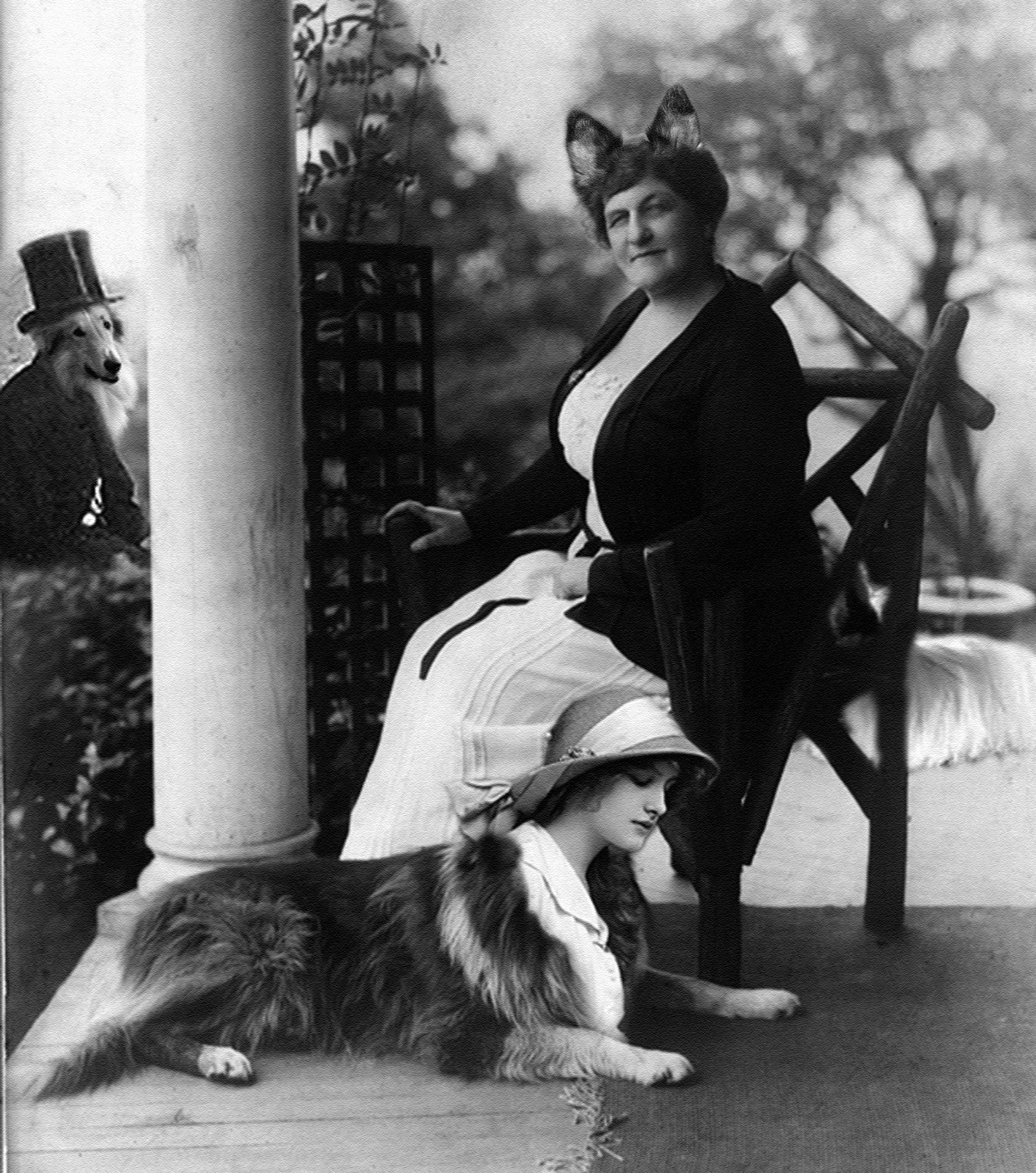
They were justifiably proud of their daughter’s pedigree, but it was precisely this family resemblance that first drew the unkind attentions of those catty girls in the sorority.