Snaking Upward
I’m not a caterpillar, no,
I’m just a humble worm;
I have my aspirations, though
Ambitions make me squirm;
I like to keep a secret how
I wish for fame and wealth;
I know to climb’s not bad, I just
Prefer it done by stealth.
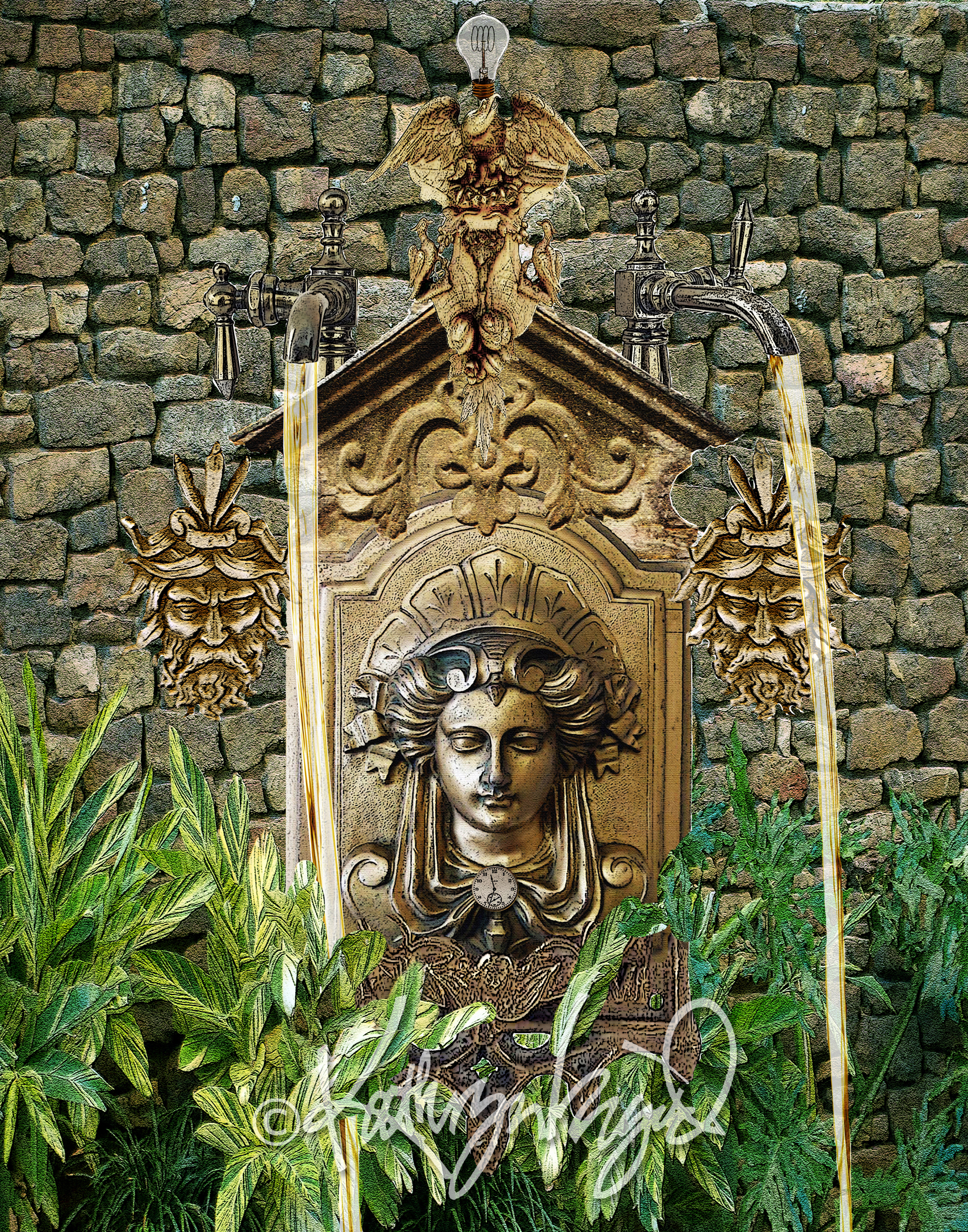
The Duchess was inordinately fond of animals. Though her courtiers would never dare say so to her face, they imagined she ought to have been born a zookeeper, or at the very least a farmer. This idea was strengthened, especially, by the fact that it always fell to the housekeepers and servants to make the palace tidy enough for Her Ladyship’s dainty passage through life and to freshen the air when the royal menagerie had pranced, prowled or otherwise paraded through its rooms and left unseemly gifts along the way. The Duke, who was as allergic to all things animal as the Duchess was attracted, considered for some time whether he oughtn’t to have a team of expert taxidermists and artisans solve this problem once and for all, creating a large display of preserved zoological beauty that might be both lower maintenance and less powerfully scented than the living creatures populating his estate indoors and out, day and night.
Unfortunately, the Duchess’s sisters who lived in the east wing of the palace did not support the Duke’s enthusiasm for the design, making noises of disapprobation at least as loud as the Duchess’s favorite dogs’ barking or donkeys’ braying. Perhaps, the Duke thought, he had been a little incautious in discussing this artistic concept with his secretary while within earshot of the sisterly ladies-in-waiting, for they both appeared quite ready to dash off squealing with rage to their unsuspecting sibling, or at the least, to imitate the household fauna in some other impolite fashion.
As it fell out, the Duke, however incautious he may have been in heat of the moment, was not without the wit born of hard experience. Working swiftly with his retainers, was able to resolve the situation quickly and suitably merely by shifting the subject of the new art to a slightly different one featuring the Duchess and her sisters. As an added benison of this resolution, it was discovered that he wasn’t allergic to winged or four-legged pets after all. The palace staff found maintaining the menagerie surprisingly less onerous afterward as well, even with the added curatorial duties of dusting off the Duchess and polishing her sisters from time to time.
‘Ah! non! c’est un peu court, jeune homme!
On pouvait dire…Oh! Dieu!…bien des choses en somme…’
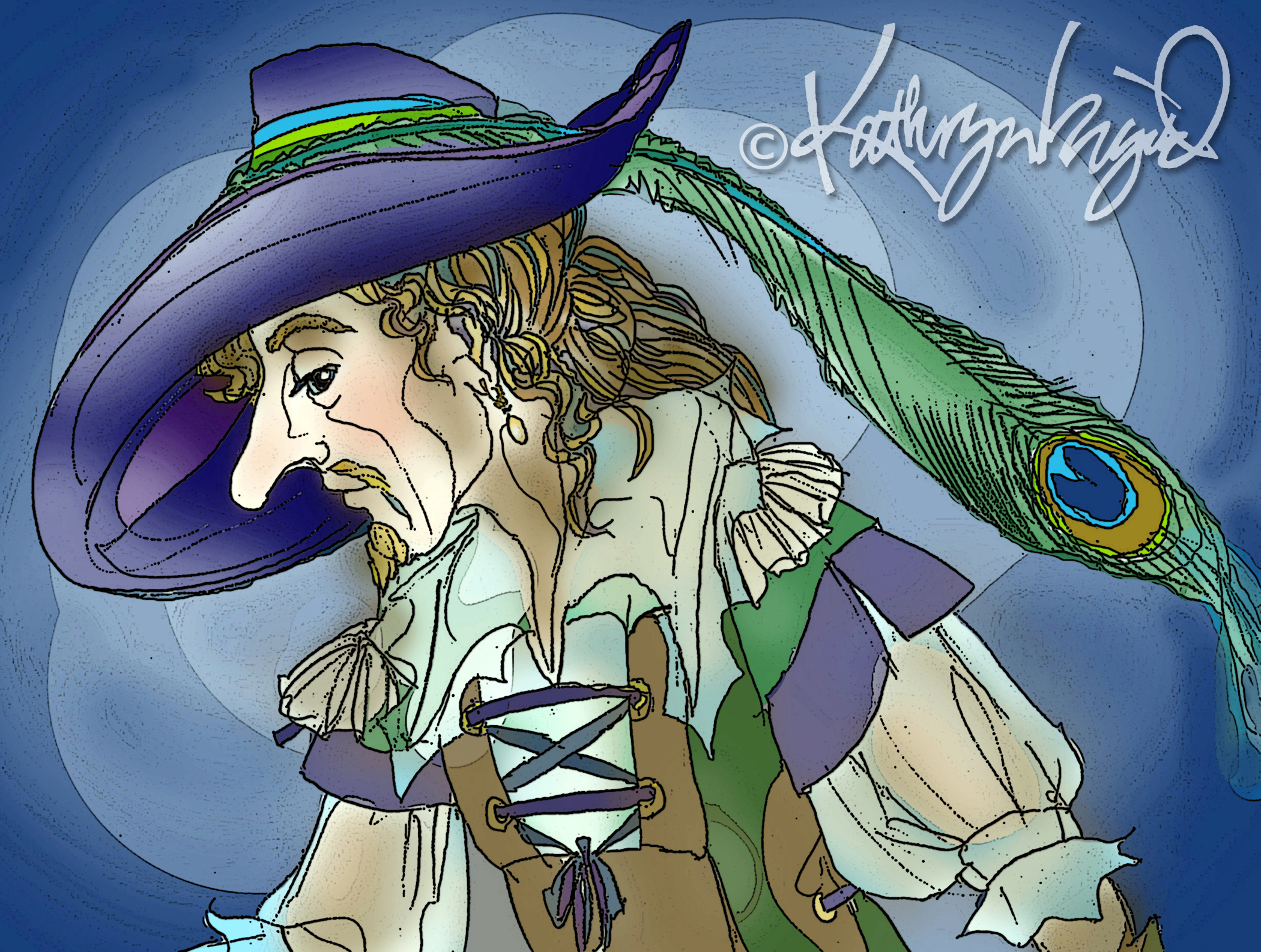
Would that I had the miraculous gift of the silver tongue–it’s said that the genuine Cyrano de Bergerac, the writer and duelist enshrined in fiction as some sort of demigod of dramatic speech, was in life something quite near to it as well. As a youthful admirer of the romantic dream, I memorized Rostand‘s most famed soliloquy of Cyrano’s (in English, naturally), but what remains after so many years have passed is not so much the poetry of his slick speech; it is instead a deeper sense that for all my staring at his nose along with everyone else I managed to miss the point.
The story is told in fictional form to so exaggerate the majesty of his nasal promontory that all we see in most readings and performances onstage is a caricature or cartoon man, led by a nose of bowsprit proportions and foolish improvidence to oversized action and wildly improbable joys and sorrows as a result. These kinds of things do happen to real people in real life, of course; even the real man behind the character was larger-than-life in both nose and existence, according to what we know. He did, if his contemporary portraits are anything near the truth, have a substantial prow, and we have his writings–satirical pieces to classical tragedies–to prove that his wordplay was quite substantial too.
But what perhaps ought to be said of him–whether real or imaginary–is that he was a bit of an outsider by virtue of looking Different, and his response was to fight for respect, both with his rapier and his rapier wit. [Given the historical man and the possibility that he was (not surprisingly, given the era and culture and his reputed exploits) syphilitic, he may well have experienced life completely without a nose if he lived long enough.] It’s easier to label and classify others on the basis of unpopular appearance or differing from the currently decreed norms than it is to cultivate what we have in common. Yet we can learn from some of our outlier counterparts if we will stop, for a moment, being so mesmerized and distracted by what makes them seem unlike us, what it is that we have and value in common. Best if we do that before losing the duel.
Though at least, if the duel is purely verbal, there can be some entertainment inherent in getting taught a lesson. I can live with being the unarmed woman in a battle of wits, as long as I get to keep living long enough to laugh about it. I may not be a genius, but that, my friends: c’est mon panache!
The Georgian era gave us, along with a whole raft of other creative gifts for sweethearts and mementos of important occasions, the piece of portraiture-cum-jewelry known as the Lover’s Eye. Something of an oddity, to those of us in the modern day who don’t happen to be of that individualistic bent that swallows capsules of a late wife’s ashes with daily vitamins, wears vials of a lover’s blood as a pendant or keeps the deceased boss’s body as a nice piece of taxidermy so that he continues to sit in on board meetings in perpetuity. Yes, all realities for some folk. Not so much for Average-Joan. Portraiture is generally so very much more socially acceptable.
A portrait of a lover’s eye, even if it happens to be shown without reference to and other, presumably equally adorable, parts of said person, isn’t quite so unsettling and freaky then. Of course, that assumes that one’s dearest has eyes, at least one eye, that is pretty attractive in its way. I got to thinking about this whole little question when I had the allergic attack recently that made my eyes so distinctively disgusting. However, I was reminded by that very episode that love is genuinely, in its way, blind. My darling husband didn’t cease to treat me with the usual kindness and affection and sweet intimacy, and while I know there was for both of us an underlying hope, nay, assumption that this was a temporary appearance for me, the possibility of permanence existed as well.
What did this prove? Nothing in and of itself, really. It did, though, remind me ultimately of the age-old truth that love makes us see the objects of our affections as good, desirable, as beautiful. That beauty is in the eye of the beholder. My spouse saw the Me he loved, without necessary reference to how I looked at the moment. And he does, after all, love me either despite knowing I’m a little bit weird and kooky, albeit (I hope) pleasantly so or, weirder and kookier yet, because I’m that way. Probably not especially hankering to wear around any new jewelry, my beloved. Least of all, jewelry with a little picture of my eye staring at him all of the time, as if my gawping at him in person, however admiringly, isn’t enough to send him up the wall. I’m not absolutely certain that a prettified version of my healthy eye would be markedly better than a silly and outrageous portrait of my eye in its bizarrely bloodshot wackiness, as jewelry goes. But my guy, he looks pretty fabulous no matter what he’s wearing. So there’s that. Wink, wink.
What Comes Naturally,
But I have to Scold You, My Pet
I know you only meant to make
A dandy first impression
By killing this whole crowd, but Jake,
Behold my grave expression–
For it is impolite, I think,
And maybe even naughty,
Recruiting everyone in sight
To play the role of Body–
Your nature calls you to the task,
I knew from your first GRRR!—
But some restraint gets less complaint
Than utter massacre.
I thank you that you rout the moles
And rodents by your labors,
Dear Jakey Boy, but next time leave
Your teeth out of the neighbors.
Practice as though Your Life Depended on It
Two singers strolled into a wood, and I
Followed the one less skillful; why?
Starved beasts will flock to an anguished cry,
As they did that day; in the wink of an eye,
I was on the road less traveled by,
And that has made all the difference.
[With sincerest apologies to Robert Frost]
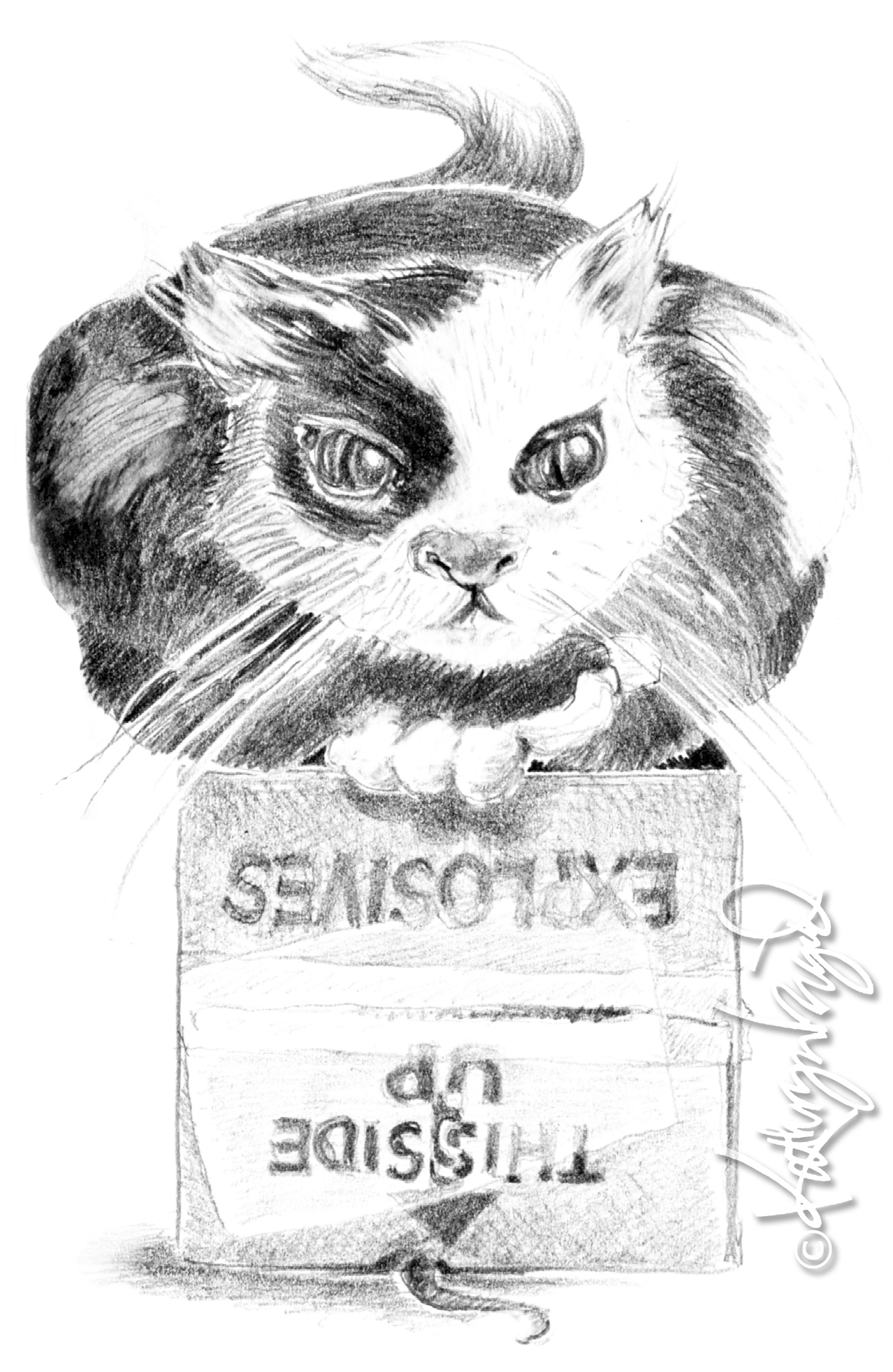
That little old four-letter word Work has challenged the finest among us to test the limits of endurance, wisdom, hope and courage for as long as there’s been such a thing as a job on this planet. We agonize and weep over our work as though doing unspeakable heroics every single minute, even when we know perfectly well that every living thing has faced challenges of his, her or its own since the first moment there were, well, living things. It didn’t take employers and employees to bring this tension to full expression. If I think I’m sitting on a powder-keg just because I’ve tackled something that pushes me to my limits (or, to be more precise, because it has tackled me), it’s time to step back, take a deep breath, and remember my compatriots of every sort striving and struggling and facing greater odds than I have ever faced, accepting them as the inevitable price of existence.
Not that any of this contemplation has the remotest chance of making me stop thinking myself both the greatest martyr and the finest superhero at work on the planet. I only get the smallest momentary glimpses of sanity through the veneer of my regular distorted self-image as the silly person I am, after all. Even though I know that in my own version of ‘cat and mouse’ the tiniest mouse could best me in the flick of a whisker.