Performance/Practice
Image
2

 If you’ve never experienced the almost ferally visceral adventure of hearing a performance where the formally clad male chorus belts out the lyrics of each work, each man in perfect time with what would ordinarily be his voice part (first tenor, bass, baritone, etc), but screaming so loudly that there’s no discernible key singly or altogether—then you’ve never heard the Finnish performers known as Mieskuroro Huutajat (Screaming or Shouting Men). In their performances, even the most famous and familiar songs are deep mysteries to be unmasked gradually by focused—if slightly frightened—listeners. If you haven’t had the Shouting Men experience, however, you might still have had such a hair-raising listening adventure in a supposed concert or rehearsal. Many an ordinary choir has its moments of being involved in an almost unbearable shout-fest.
Sitting in the back of a hard-surfaced rehearsal space packed with a mass choir in prep for the famously big and bombastic Beethoven Nine‘s ‘Freude, schöner Götterfunken,’ with a chorus of big-voiced collegians full of energy and enthusiasm, no less, could conceivably deafen you. Or drive you mad. ‘Ode to Joy‘ becomes almost insufferably opposite to joyful, the choral equivalent of being carpet-bombed, if the singers haven’t already been subject to a goodly quantity of training prior to your visit.
The recent evening where the latter experience reminded me of the aural dangers with which such rehearsals can be fraught was, thankfully, not that group’s first foray into the depths of the piece. They had worked past the awkward or tuneless point of flogging notes and were more focused on nuances of the sound in various parts of the composition where phrasing and textual emphasis begin to be more significant than learning individual notes or when strictly turning the volume ‘up to eleven‘ is the goal. Now it was time to be subtler, to learn why Ludwig van Beethoven or the text’s poet Friedrich Schiller might have chosen a particular word, or what singers in the rehearsal might need to be prepared for when they were handed off in a week or two to the symphony conductor who would lead the public performances. And, of course, it was time to be untying some more of the knots in the choir’s German pronunciation.
Getting the sounds of the language right and even, sometimes, appropriate to a period in history when the language was significantly different from the present version, if that’s when the composition was written, always makes as much improvement in the overall sound of a piece as getting the notes right. Most composers’ works are heavily flavored as much by the natural vowel and consonant sounds and rhythms of their textual languages as by their personal compositional styles and languages. If you’re singing in German but your first language is English or Korean or Spanish or Chinese, as is the case with most of these students, that can take some serious learning and practice.
On the night in question, the big Beethoven rehearsal was followed in less than a half hour by a full concert performance of another massive German choral classic, the Johannes Brahms ‘Ein deutsches Requiem.’ This piece was performed by the most advanced and experienced of the university’s choirs, with even bigger voices among them, in the main concert hall of the campus. That group was, of course, at the end of its whole rehearsal period of work on the Brahms, and was in concert dress and on stage in the far finer and more refined acoustics of the performance space. Attending audience members would hardly think about it, most of them not having just sat in the foregoing rehearsal, but despite the potentially deeper well of experience among the singers, their later stage of preparation, the improved acoustic, and the attentive state of the choristers that arises in performance mode, the problems and possibilities remained pretty much the same. If the German pronunciation was any less accurate, the pitches any less solid and informed, the changes in meter and volume any less clear, precise, subtle, and graceful, there could still be the risk of concert attendees being deafened or merely battered about the head by the cacophony. You might not always think of concert attendance (especially outside of death-metal arena performances) as being dangerous, but there it is.
As a favorite opera educator was fond of saying, practice and preparation could mean the difference between Bel canto (beautiful singing) and Can Belto (a humorous American coinage meaning, roughly, I Can Shout). The zone between these two can be remarkably small when the music is as grand-scale, powerful, and emotionally charged as Beethoven and Brahms’s superb works. No matter which the piece, far better that both performers and audience leave feeling joyful than near to needing their own requiems sung. Yelling “songs” can be an interesting stunt (and one I have experienced in a small and resonant space with that chorus of Finnish gentlemen blaring away at me), and it’s often a state that must be visited sometime during the preparation of a major choral work, too. But unless the goal is actually having listeners’ heads explode, it’s ever so much better that everyone does his and her preparation diligently until the big sounds, even in rehearsal, are not constantly terrifying but in fact mostly soul-stirring. Nice when we can save the shouting for a good standing ovation’s “Bravissimi!” at the end of the concert.
In fond memory of our dear James Dale Holloway, who was known to exhort his singers to “never sing louder than Lovely!”
Life never ceases to astound me, the people in my daily experiences in particular. This Friday evening, for example, I am going to another concert that will involve a whole host of dedicated, skilled, passionate musicians all working together to make history come alive in their performance. There will be wonderful music from greats like George Frideric Handel and Henry Purcell, and less widely known stars who also had connections with the London musical scene in a time when instruments were quite different, compositional and singing styles distinct from what we know nowadays, and the world, even of a metropolis like London, much smaller and simpler than the bright lights and wild energy we know now—yet the stories that the songwriters and performers of that age were telling differed rather less than you might think.The College of Music here at the University of North Texas where my husband conducts and teaches is gigantic, in some ways rivaling the sensation of a city itself, at times. Little London, if you will. Nearly sixteen hundred music majors and their teachers and peers work together to make all of these impressive performances, and of course they are far from limited to early music, though that’s the focus of the concert I’ll be attending. Tonight, there was music of Frank Zappa; tomorrow, voice and instrumental recitals precede the early music performance by the Collegium Singers and Baroque Orchestra; next week, along with many more spring recitals, there will be the Grand Chorus performance of Beethoven Nine and Vaughn Williams, and there are more wind symphony and jazz and chamber ensemble performances yet to come before the school year ends. It really is a bustling metropolis of its own kind, dazzling and almost losing me in its complexity. But again, the stories remain the same. It’s always about adventure and drama, love and longing. We seek to connect through the communal experiences of music.
So if you want to join in and can’t get to the campus, you can always tune in via the live stream, with many of our friends and relatives, by clicking on the link here. Or play or sing your own song, among your own friends and relatives. I imagine your stories will be familiar as well. I think I can hear them across this vast city of ours.
We have been fortunate, in north Texas, to get more than the expected doses of rain in the last number of months. It has gone some distance toward ameliorating the statewide drought’s effects on our county and nearby zones. The lakes have risen a little. The trees are breathing an almost audible sigh of relief. The locals swoon over the magical burst of wildflowers every bit as delightedly as the tourists do.
But it’s no perfect cure. A good rain can’t solve all of the world’s ills. The local drought is not isolated or ended but creeping through the nation in an ominous reflection of the receding polar ice caps, drought that is strangely now becoming a pestilence even on the more typically misty and moist California coast and Pacific Northwest. And there are still countries the world over suffering from much longer and deeper droughts.
Rainy weather can, on a smaller scale, also darken the skies of many individuals’ moods, bring soggy sorrow to brows usually brighter with cheer. It can both literally and figuratively dampen the parade of plans made by folk who rely on sunny weather for their sunny spirits and can seemingly call a halt to normalcy in zones like my home region, where a little struggle for water is generally to be expected. Any stretch of overcast and rain longer than 24 hours sends herds of north Texans running around, mooing nervously like it’s the End of Days in the Old West.
Still, rain can’t kill moods and expectations and obliterate optimism without our consent. While I’ve been moody and something of a little black cloud myself lately, being in the proverbial phrase ‘under the weather‘ (in the non-alcoholic version), I was reminded of this submissive and defeatist, even compliant, element when listening to the web-streamed broadcast of the university jazz concert I didn’t feel well, or wakeful, or cheery, enough to attend last night. The vocal and instrumental interlacing of familiar and wonderful jazz tunes lifted my mood more than the start of my medication kicking in had managed to do. They led me to listen to other upbeat music, from further jazz classics to pop, drumline rhythms, and one of those sorts of music that I find is fairly impossible to hear without breaking into a crooked grin: reggae.
It would seem, on reflection, that among those things rain cannot accomplish is keeping a good reggae number from cheering me up, and that is something I will happily and readily forgive the rain for failing to do.

Let it rain, Mon.
I’m strolling by an old oak, and as I approach am hearing a fantastic avian aria. I expect that, as usual, that little singer will fall suddenly silent when he senses my approach. Bet when I walk up to the low branch where he sits, on he goes.
There sits a feathered dandy, a handsome and hale male of the mockingbird persuasion, and as I stop to admire his good looks and impressive vocal repertoire, he looks me right in the eye and goes on singing. I whistle and chirrup and warble in as close an imitation of his excellence as I can manage, because it seems only polite to respond in kind, yet I feel not only inferior in my birdcalls but just a little sorry I’m not ‘available,’ let alone the right species for him. Ah, the biological imperative!
I can only assume that such a fine specimen of mockingbird-kind will find no shortage of applicants for the position of his tweet-heart. A creature so elegant, tuneful, and confident could never remain unnoticed by any ladies of his kind, and surely only a true birdbrain would mock his efforts.
All I know is that I couldn’t help whistling as I walked on, myself.
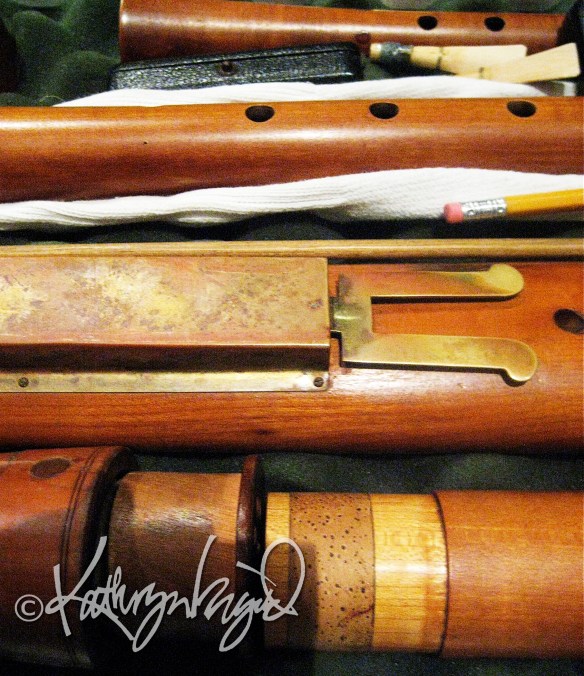 Rehearsals of Early Music vary more than those unfamiliar with the stuff would guess. Explaining to others why I, a non-musician, love sitting in music rehearsals of any sort is an iffy enough proposition in itself, but at least I can condense my main reasons enough that they may appreciate how much watching and listening in on the preparatory process—hearing what the musicians are working on, how, and why, not to mention any backstory of the pieces in question that gets shared en route—informs and enriches my experiences in concert performances. Tell them I love sitting in on rehearsals for early music, and I can get quizzical stares as though I’d said I love the temperate climate of Seattle. Isn’t that where it rains all the time? Well, the Pacific Northwest gets a fair quantity of rain, or it might be hard pressed to maintain its evergreen status, but in addition to lots of other notable and varied climatic features of the region, it gets truly spectacular sunshine as well.
Rehearsals of early music, too, are far more varied and nuanced and, at times, downright surprising than you’d guess if all you’ve ever heard of the entire body of work leading up to the Baroque period is that 30-second clip of background music advertising the local Renaissance Faire. It can range from the most tender, measured votive chant to the rollicking, rowdy, and bawdy; from plaintive solos through angel-choir harmonies and right on to shockingly modern sounding rhythms and dissonances, early music is an incredibly rich tapestry of sounds.
One thing that does remain consistent in a great deal of accompanied or instrumentally supported vocal music from early Western sources is the use of continuo. To a layman or amateur listener like me, this means that while there will be portions or movements of larger musical works when either the choir sings a cappella (unaccompanied by instruments) for a while or, conversely, together with the majority of the orchestra ‘singing along’ in accompaniment, there are often sections where one or more of the singers, or the entire chorus, is supported by a small group or individual’s continuo playing, too. Continuo is not an instrument, or at least not a specific one; rather, it is the practice of supporting sung music with a continuing and enhancing undercurrent of instrumental accompaniment.
The result, at its best, is that the sounds blend so seamlessly that listeners might well forget that they’re not hearing human voices exclusively, and the instrumental strains seem to disappear into the sound. Yet when the continuo is not played in the same passages, as may be the case in rehearsal, the phrases can sound strangely pale or incomplete.
A great continuo player, like a great accompanist, is a species of artist quite distinct from the great solo instrumentalist or even orchestral player. It is, in very rare instances, possible for one player to excel in all of these roles, but such magical creatures are truly few and far between. What distinguishes the fine continuo artist, and to some extent accompanist, is not only sheer musicality but an extrasensory ability to think in sync with the other artists in the performance—the other players, the singers, the conductor—and a remarkable degree of prescience in always giving just the help or polish needed at just the right instant without either being asked or demanding the spotlight for it. The best so seamlessly enhance the work of those around them that they raise the level of the whole performance in ways that a self-aggrandizing soloist cannot. There’s an element of generosity in the skill set that not only shows true mastery but also the confidence of knowing that such excellence is its own reward and the beauty and pleasures of the concert are great enough to cast their golden glow over everyone.
There’s a good lesson in there for all of us, musicians or not, isn’t there.
Among her treasured recordings of Harold Arlen gems, Ella Fitzgerald gave her distinctive verve to the admonition to Get Happy, and even a retrograde curmudgeon would be hard-pressed, hearing her clarion call, to resist the call. I think this is a great time of year to succumb to the great Miss Ella’s invocation. Listening to her sparkling voice, her incredible vocal agility, and her superlative interpretive artistry is Spring tonic to me, no matter when.
Let me just keep this snappy for today and add my voice, unimpressive as it may be, to hers to call everyone within earshot with a wide-open invitation to rejoice in whatever is available on the day. Live in the moment, yes. Sing at the top of your lungs, yes! Be glad and generous and gleeful with and through whatever you can possible find in the day, make of the day, and grow out of the day, oh yes indeed. You can ignore me, but if you listen to her, I think I can promise that you’ll find it mighty hard to ignore that glorious and welcome summons.
Critics, beware! Some performances are more unpleasant than you ever imagined.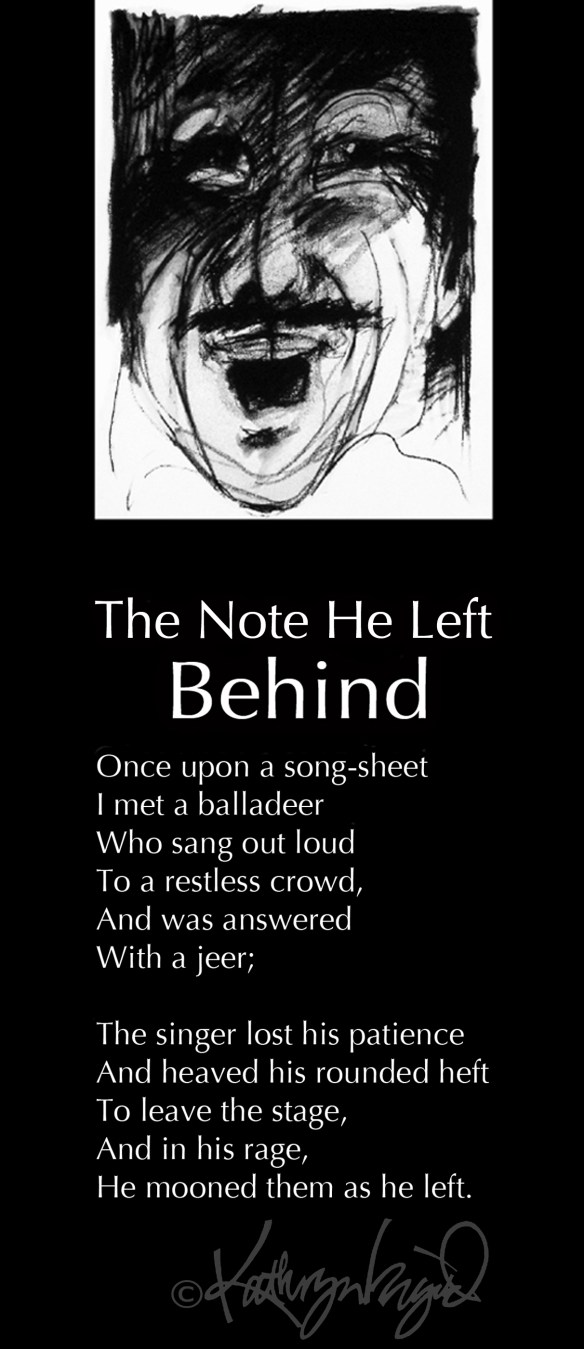


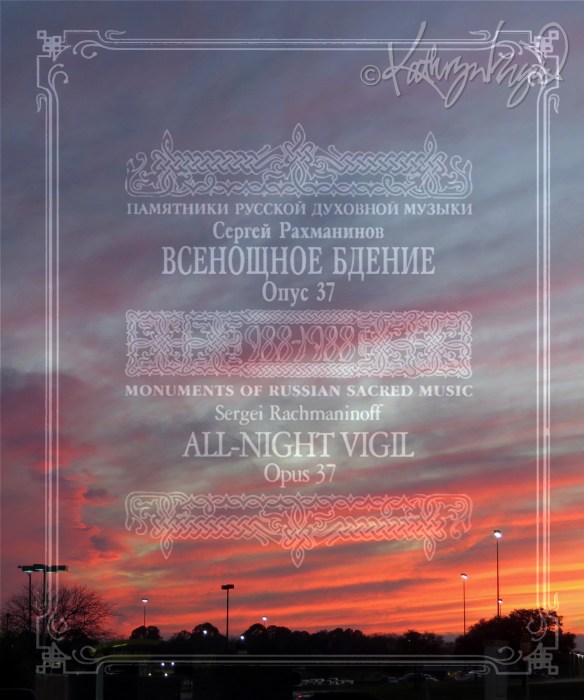
The original ‘our song’ I shared with my true love, because he was in the midst of rehearsing his choir for its performance when we came together—so intensely rehearsing, in fact, that in pretty much the only time I’ve ever known him to talk in his sleep, he whispered dreaming sweet nothings to me in Church Slavonic. Good times!
The expression ‘they’re singing our song’ refers, generally, to recognizing a tune or lyric that carries particular personal weight for a pair or occasionally, slightly larger group of people. It’s our school’s version of Alma Mater, the theme song of our organization, the song that accompanied a memorable first date, first dance, first kiss. Because of its power as a connective tool in communication and in recollection, music is bound to evoke potent responses and pull us into the examination of them, regardless of their current context. I’m one of that lucky class of people for whom music is a pervasive and positive element of my daily life, but I still have some specific favorites not only for what I find appealing about them musically or in their mood, style, and character—and yes, those range pretty widely—but also for the few that stand out in mnemonic and sentimental ways.
There are songs that reconnect me instantly with my childhood, something I suspect is quite a different experience for the younger generations than for mine and earlier ones. Until my youth, childhood songs came not exclusively from radio, films, television, and other distant, anonymous, fixed, or recorded sources but first from the relatives, friends, and teachers who shared them with us and often expected us to sing along. When my family sang in the car on a road trip, it might have sometimes been along with whoever was singing or playing the radio’s pre-packaged tunes, but as often as not it was singing folk songs we’d learned by rote, silly playground songs and game-narrative ones, bits of summer camp songs, rounds, and easily harmonized songs that were popular long before I ever stretched my little pipes to sing. I don’t imagine there’s so much of a lingua franca of family and playground singing not derived from Disney scores and downloads nowadays. There’s lots of delightful and even sophisticated stuff in those, to be sure, but I would guess that there’s a whole lot less that would be in any way distinguishable as historic, traditional, or regional, let along cultural, landmark music that’s just sung for fun anymore unless it’s loaded with undercurrents of market- or message-driven content. Is Mrs. Grady‘s daughter even known, let alone adored, by anyone under a half-century of age anymore?
It’s not strictly old-lady cantankerousness or being prudish, prune-ish, and nostalgic for what may be rose-colored memories that makes me sad for this sort of loss, though there are assuredly elements of those. It’s also a bit of longing for the subtle societal glue that resides in knowing a song: if I spontaneously start to sing an “old familiar lay” under my breath, will there be anybody within earshot who will hear, remember, and join in the song? Are all such endeavors relegated to prearranged flash mobs now? I had a couple of reminders of this urge, recently, and they renewed my quest for an expanded casual-singing culture of the kind that doesn’t require sets, costumes, death-defying choreography, and Auto-Tune.
The first such occasion was, unsurprisingly, in a church setting. Western churches of many sorts are still places where communal singing is common and many songs known to many of the participants by heart. I was at a Protestant church service where, as is typical during communion, the church choir sang anthems and the congregation then sang a hymn or two as well; when the high attendance at the service made communion stretch far longer than expected, the experienced organist got right on the task of keeping the flow going by playing an old hymn. After a few seconds, choristers started softly humming or singing the lyrics along with him, then grew bolder and harmonized, and gradually a number of congregants in the pews were joining in as well. It was really quite sweet, and I certainly thought it perfectly appropriate to the whole concept of a Communal event. But even there, I quickly realized, the truly familiar old hymn couldn’t quite be carried in the old way, because even the choir members clearly only knew one verse by heart, and while it was a lovely bonding experience for everyone, it was fleeting; at the end of Verse 1, a collective dive for hymnals to search for the words (what’s that eponymous first line, again?!), then the resignation to repeat the first verse or fall silent.
Another reminder came in one of the places where such random burst-into-song things do still exist beyond the borders of the performance hall but are perhaps not exercised as often as they used to be: a choral convention. The regional and national gatherings of musicians devoted to choral music—the composing, conducting, rehearsing, singing, performing, and yes, enjoyment of music made for groups of singers—are a great source of education, entertainment, and vivifying energy for me as the partner and follower of a choral musician. And even at these, it’s not as though I hear people breaking into song together, unless they’re rehearsing to perform for each other. Attending an enormous regional musicians’ convention recently, followed ten days later by an equally huge national one, was both exhausting and energizing. And at such events, I don’t often find people gathering to sing together outside of the so-called All Sing sessions, which are of course organized, arranged, led, and regulated nearly as much as any choir’s regular rehearsals.
The point of such conventions isn’t necessarily to build ‘casual relationships’ with singing. But mightn’t it be a fine thing, really? I would guess that the expectation that singing just because, at unplanned moments, with other people, could in fact lead not only to greater interest in and better understanding of more formal choral experiences but also to a more connected social world than social media alone can provide. As the 1971 Coca-Cola advertisement—yes, a commercial jingle—encouraged such idealism and eventually did indeed manage to build into a hugely popular, ex-post-brand-name sing-along song, I [would] Like to Teach the World to Sing. But obviously I can’t do it alone.

This is, in a unique way, truly Our song, because Richard Nance composed it as an anthem for our wedding, and it both became widely popular as an exquisite modern choral piece and remains deeply personal as a gift to my beloved and me from one of our dearest friends.
I Dream the World
I dream the world will learn to sing ‘Til joy suffuses everything—
When peace and happiness abound, I dream a song will be the sound
Most widely heard by every ear Around the globe that longs to hear
A note of kindness, care; of grace, When melody wraps its embrace
Around us like an angel’s wing—I dream the world will learn to sing!
I dream the world will learn to sing And make earth’s darkest corners ring,
Will throw aside all warring ways, Mend brokenness, take up the phrase
That calls to harmony all souls The way a carillon bell tolls,
First, lone and softly, then a pair Joins in, and more, and then the air
Is filled with song, like bells a-swing—I dream the world will learn to sing!
I dream the world will learn to sing And this, the message it will bring:
We must not wait in silent nights, Unsung ’til happiness alights,
‘Til care and kindness, sweetness, peace, Miraculously buy release
And save us from our voiceless state: If we don’t sing, it is too late,
So let our song rise up and ring—I dream the world will learn to sing!
 Art-Colored Glasses