Sources of Brilliance, Such as We Are

digital drawingTropical Splash

A-chatter in the curling fronds, the wet-leafed canopy, the ponds,

Among the tangled twining root of every vine-choked tree’s broad foot,

Wild birds spread out their neon wings in this green palace of such kings,

Shout to a sun that’s seldom seen, deep in this hot palace of green,

But bring a blaze that’s all their own, as bright as such a place has known.

Take flight! Take wing! Aim for the sun–race with them upward, every one,

Above the canopy, to see whether a sun can really be;

And if it’s not, let no bleak night deter a second from our flight:

Upward and forward, light or none, we always ought to seek the sun–

And if not found, our calling is that we must light these palaces.

All the Colors


When we speak of something having ‘all the colors of the rainbow’ I am certain we don’t quite understand the enormity of such a thing. My sisters and I used to criticize badly designed or tasteless clothing, interiors and the like as being so artificial and clumsy because they were of a ‘color not found in nature’–but then, too, our thinking was far too constrained. For nature, that queen of design, has more colors than can be perceived, let alone understood, by mere human eyes and minds.

She’s a trickster and a lavishly opulent over-doer, is Nature. We are much too small to comprehend the fulness of her range and beauty. What seems like one rather simple thing at first often morphs, as we look and imagine further, into something far different and most likely far more subtle and complex.

I was reminded of this last night when I sat down with a new set of children’s marking pens–the cheap permeable-tip markers that last for about five drawings but cost a tenth of what the ‘professional’ pens do–and began to sketch something leafy. As soon as I began I knew that one kind of green would not make a leaf; no, I knew that all four kinds of green supplied by the manufacturer of this little bag-of-pens couldn’t begin to be sufficient to convey the character of the simplest, plainest sort of leaf-like thing, let alone give a hint of the way light might play across it in different climes, at different times of day. Or how much its appearance must be affected by my own vision, my mood, my expectations.

Our abilities to envision, physical and metaphorical both, are fluid but can never quite keep up with the mysteries around us. And that, my friends, is a fine excuse for forging ahead into the puzzling and problematic and pearlescent thing that is the future . . . .

colored markers on paper

How It Works

In Haiku,

Reality takes

Sudden swerves


Today is a Great Day


photo + textphoto + textBy the way, today is especially delightful in my own life as it’s the sixteenth anniversary of my marriage to the most astounding and outstanding man I know. Happy day, my love, and here’s to many, many more.

Walk a Mile in My Baby Shoes

photoI’ve been thinking about childhood. The freshness and innocence, the naiveté and helplessness, the curiosity and amazement at every new thing–and everything is new–and of the naturally self-centered universe one forms because self is all one knows. I’ve been thinking about how all of these qualities, so clear and natural in childhood, repeat throughout our lives in cycles. Varied by age and circumstance, and certainly by our own personalities as they develop, but there and recurrent all the same.

I’ve been thinking about how little we are all aware of these cycles and patterns in ourselves over time. We humans, though we congratulate ourselves as Homo sapiens, intelligent beings, are poignantly–sometimes poisonously–unwilling and even unable to truly see ourselves all that clearly. It’s not terribly hard to be self-aware, to know the good and bad of one’s personality and character and style, but it’s amazingly uncommon that we choose to acknowledge it, let alone are able and willing to do anything useful to control or change what we can or should. Most of us are rather childlike, if not infantile, in that respect. We want forever to be loved and be the center of the universe in that way we sensed we were as small children, before knocking up against whatever form of reality dented that illusion for the first time.

For the very fortunate (like me) it’s easy to look with a critical eye on those who are in the midst of childlike neediness because of their poverty, ill-health, lack of education or resources, old age or difference from the popular norms. Easy to forget that I don’t have the same obvious petulance or beggarly qualities only because I am so fortunate, so well off and well fed and loved and young and-and-and. I am the lucky center of my universe for now. It’s simple to be placid when I’m so rich.

I can only hope that this good life not only continues to keep me content, but that it affords me the leisure and good grace to look a little less harshly on the struggles of others. To be more patient and understanding when someone else is in that childlike state of need, whether for the starkest, plainest of dignities–sheer life not being at imminent risk–or for food and shelter, for health and wholeness, for peace and hope. If I can’t be an agent of change, bringing those gifts to those who need them, at least I must try to remember what it is to be in that fragile state and know how much I depend upon the rest of the world myself for being, by contrast, not in my childhood of utter need.photo

Malignant or Maligned?

Are pigeons the oppressors or the oppressed? Having been a-traveling a bit recently, I was reminded of the omnipresence of pigeons, those birds noted as the comforting signatories of nature’s profound adaptability and variability, and less kindly but perhaps a bit more succinctly, as flying rats. Yes, I have seen a pigeon perch with apparent deliberation on the roof edge over a family’s picnic table, point its posterior in their general direction, and release a firehose-worthy arc of nastiness that sent the poor humans scattering for shelter. While I’ll readily agree that pigeons are known disease-carriers, that they tend to crowd out less aggressive and smaller birds from their habitats, and that they are notorious painters of streaky badness upon all and sundry within their aim, I still harbor a fondness for them in small doses–and preferably from a safely higher position.photo

Part of the sympathy stems from knowing that their widespread propagation was partly human-driven, as growing and/or roaming anthropoid populations gradually displaced native ones over time (also human, among many other creatures), and as people also on occasion deliberately imported various kinds of pigeons to new locales for other reasons. Certainly part of the feeling stems, as well, from knowing that we people-types are largely responsible for the decline and sometimes extinction of whole species–the rule rather than the exception, when it comes to pigeon families. The Passenger Pigeon is only the most obvious example of what has happened and is happening still among pigeon-kind, and no coy and cuddly images of how we embrace the Dove of Peace can counter that fact.photo

But let’s face it, this is neither a scientific treatise nor a polemic indicting all mortals for such depredations. We are a merciless lot, generally, and I am not in the least exempt from all ignorance or guilt. No, honestly, what struck me as I was pigeon-watching along my way on this latest outing was a much shallower, yet still pleasing and even, intermittently, refined aesthetic appreciation of the breed. I simply like watching their fluttery interplay. Their tumbling and stumbling acrobatics in a pool of water. I like watching how they quickly establish a pecking order whenever a group assembles, how they strut around preening and showing off for each other with a certain amount of pomposity and frivolousness, and turn instantly to blurry streaks catapulted into the air if they sense any danger, which includes the slightest movement of air around them or a change in the light. In short, I like anthropomorphizing them and being amused at how like them we are, squabbling and flirting and showing off and taking wicked potshots at each other and everything around us. I like watching them fly in such smooth synchrony when they circle their way through an updraft, and burst into chaotic motion when anything disrupts the flow. And of course, magpie that I am, I like looking at the myriad colors and patterns and iridescent gleaming streaks that paint the birds into something less commonplace than such a common creature ought to be.graphite drawing

Ten Thousand Kinds of Green


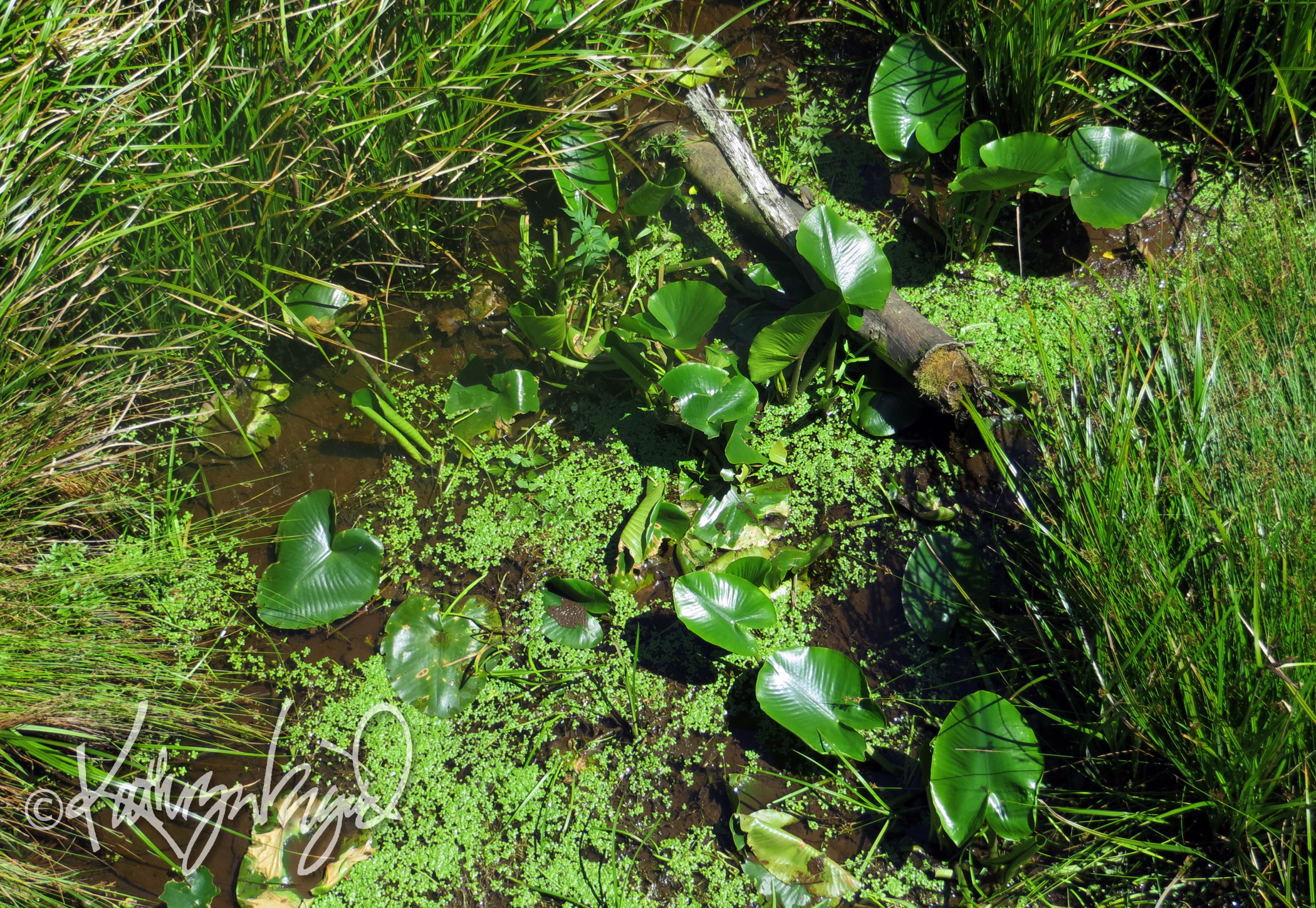
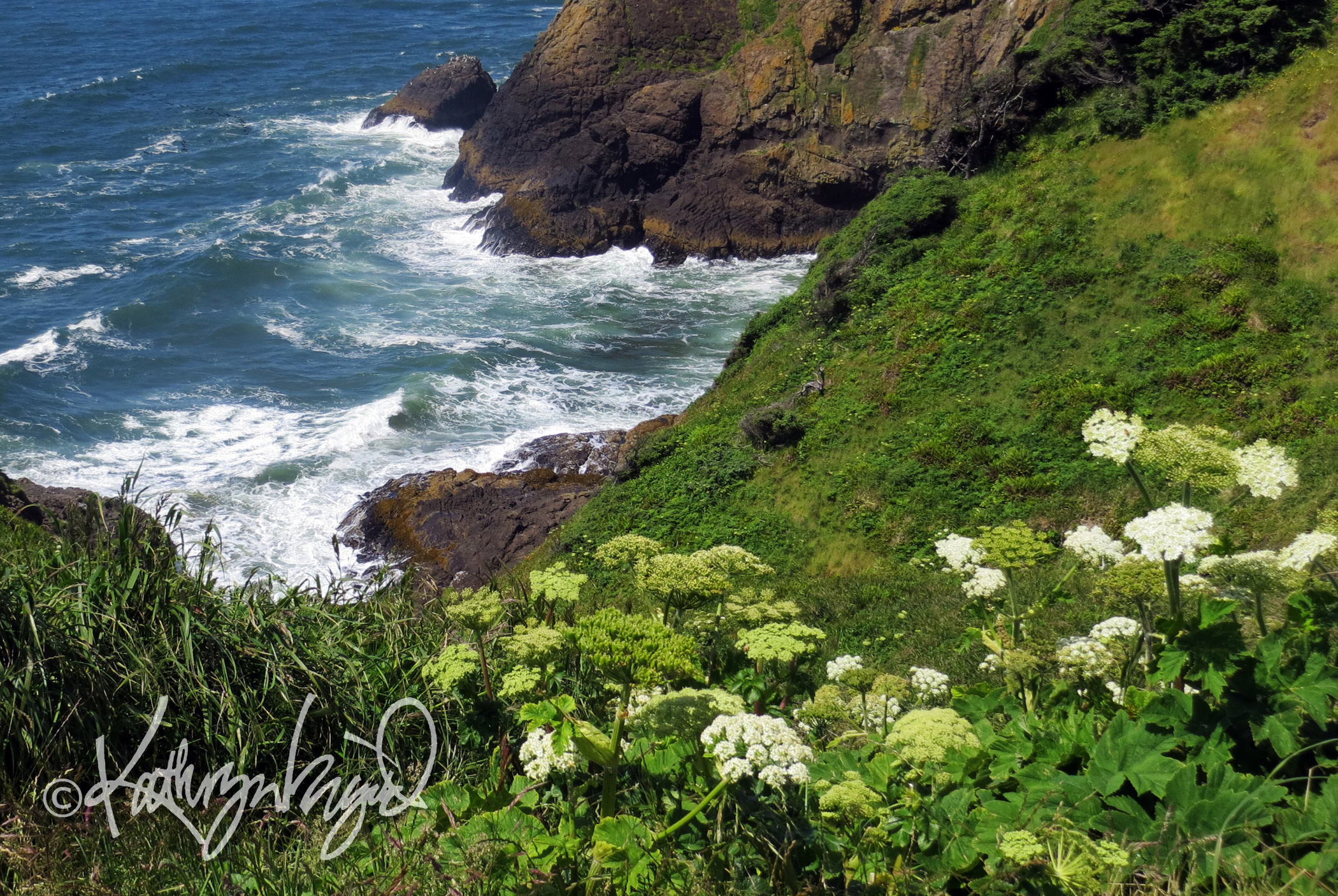
photoIt takes very little time upon returning to the Pacific Northwest for me to be reminded of one of its central characteristics that became so imprinted on my heart and mindset through my many years of dwelling there as to be interchangeable with my entire concept of wholeness and well-being: the color green. The millions of colors that can be called Green, to be more precise. Having been born in the Emerald City of the Evergreen State, I can confirm that they have earned their titles both the hard way (rain–sometimes seemingly endless–rain–oh, and snowpack and glacier runoff in the spring) and entirely honestly. The city and the state are genuinely, deeply, exquisitely green.photoOther places may be green with envy. Yes, there are certainly other spectacularly green places on earth, some of which I have visited, among them to wit: Ireland, Allgäu, and the jungle that straddles the Panamanian border with Costa Rica (a tropical cloud forest) all rife with verdure and also with all of those forms of watery nourishment that bring about such burgeoning beauties in their respectively green-glorious regions. Each green place is unique in the character and flavor of its glowing, growing vegetation, and each gains its place in my heart as much through its variations of verdancy as by any other means.photoWhat it all comes down to is that these things grow on me as much as on the face of the earth, filling my senses and my emotional center in ways that few other things can. This recent return to my mossy, leafy, grassy, graceful green roots merely reminds me of what lies deep within me all of the time. The west coast is so rich in tints and hues and tones and shades and variations of green that I cannot imagine an existence without them and know that green will always be the color against which completeness and contentment and ecstasy are best measured.photophotophotophotophotophotophotoMourn the tiresome persistence of the rain at times, if you must, but once you have been drawn into the corridors of the green world you will likely find it irresistible, too. It bursts with the presence of renewal and strength, lures you with the dappled dream-world light that only a leafy and towering tunnel of trees can create, and makes the heart ache with that yearning form of delight best found in things that sing of secrets, promises and hope.

The Stench of Doom

Breathe on Me, Breathalyzer

What is that sulfurous smell?

Is it the mouth of Hell?

Or is it only Morning Breath?

With you, I cannot tell.

oil pastel on paper

Through mystic haze and mystery,

Through funky dark and gloom,

Throughout the house and yard and park

And to the edge of doom,

It penetrates both brain and soul

And harries unto death—

Begone! foul demon, Hell-bound hound,

And take your stinking breath.

oil pastel on paperTake Thou Thy Hindmost Hence-ward

If thou must wind down, go downwind, please;

I’ll remain up here while thou tak’st thy ease,

for I’ve found if a lady’s downwind of thee, she’s

immediately an endangered species.

Wishful Gardening


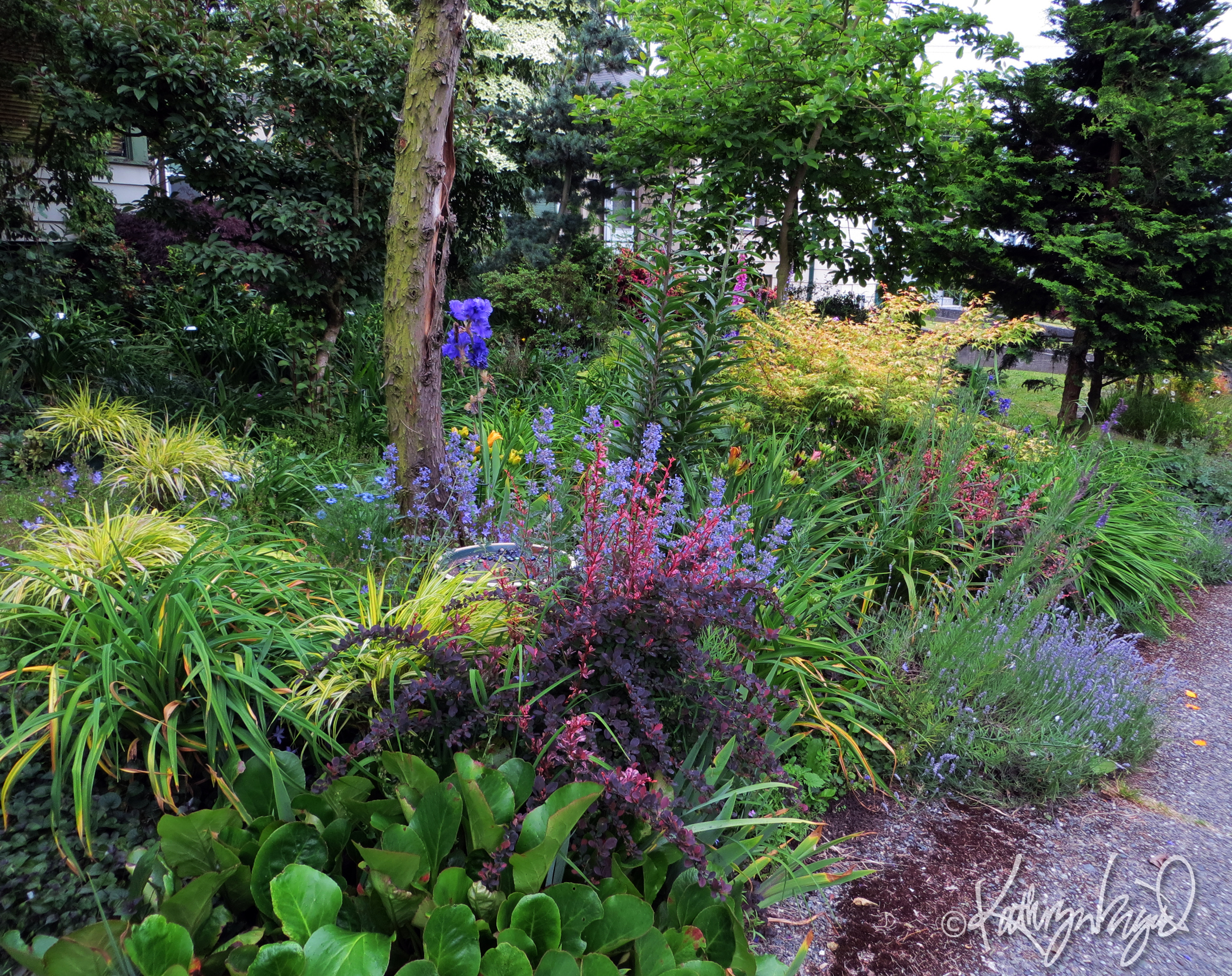
photoIf you haven’t already guessed it, gardening in the temperate climate of the Pacific Northwest is a mixed blessing. Yes, you can battle long, murky, cool, overly rainy winters that seem to last seven months of the year, so the easiest things to grow are mold and mildew, possibly between your fingers and toes. You want a green roof? Get yourself a rooftop Japanese moss garden without even trying just by positioning your house close to any healthy shade tree. I can’t promise you’ll feel very Zen about it, because like the fiendish imported English ivy, such moss is mighty hard to stop let alone kill, and eats buildings faster than you can spell ‘plague’. Mud is perhaps a given, but so, in the territory of a once quite active volcano is the euphoniously named glacial till that means Rock Picking becomes a competitive sport among gardeners and anything larger than a teacup had better be excavated for with vigorous pickaxe action and the tenacity of a Welsh miner. Slugs grow to mythic size and are believed by small children to be capable of swallowing their pint-sized innocent selves without chewing.photoBut the mildness of temperature and plentiful rains also mean that one can practically put a piece of two-by-four in the ground and grow a tree, or at the very least, can make greenery and flora proliferate in an almost jungle-like exuberance. Heck, though outsiders might doubt it, you can grow big healthy palm trees and citrus and big fat figs right there next to the cold waters of the Puget Sound, mere crawl strokes away from the chilly dark not-really-Pacific Ocean. So the P-Patch allotments of Seattle are rich; why, even a parking strip along a city street can support a dandy raised-bed vegetable garden full of tempting green and vitamin-packed leafy goods.photoOne of the things I’ve missed greatly since leaving the west coast is an incongruously tough plant, one evolved to withstand the vagaries of coastal wind and salt and coastal dwellers’ neglect with remarkable stamina and glamor. The Ceanothus, sometimes known as Farmer’s Lilac, is one of my very favorite plants for this combination of ruggedly handsome looks and ease of care. I am fairly certain that an experiment with one or two of these heady-scented, blazingly blue delights is in my Texan future. They come in such a variety of heights and breadths, leaf sizes, shades of blue and purplish, and even both deciduous and evergreen types that there’s sure to be a sort that will withstand even north Texas trials. Now that I’ve been back amid them in full-blast bloom, I know I can’t keep going sans Ceanothus without giving them a good old Texas try.photoThe other thing I miss most, perhaps, about Northwest gardening will likely be much harder to replicate in my newer, ahem, digs: cottage gardens. Besides that native-born northwesterners are not much inclined toward formality, their access to easy growing conditions make them quite fond of that crowded, colorful and slightly overblown style of gardening, not least of all because it leaves less room for weeds, which of course also love the mild and friendly weather. But in hot and dry climes it can be a little too stressful on the water meter and long for greater shade than is easily procured by the average gardener. Clearly, it’ll take some tricky thinking to overcome those obstacles. Our recent negotiations with the fellow who will likely supervise our landscape overhaul when we can manage to do it have been a solid reminder not only of the limits of NTX nurseries and their resources but how much it’s going to cost us to do any adventuring in the fuller development of our patch of ground. Our recent house plumbing near-disaster and a couple of automotive ones, not to mention the trip we are making just now, all send pretty clear signals to our budgetary brains that it’s yet a while before we can tackle much renovation or revivification in our happy little greenbelt-hugging home zone. So for now it seems all the wiser to me to store up all of the brawny, brainy yet beautiful garden ideas I can and savor my short stay back in cottage-garden country to help me suss out just what I can do to bring a semblance of it back home with me when the bank account has been fattened up a bit more again.photophotophotophoto

In the Shadow of The Mountain

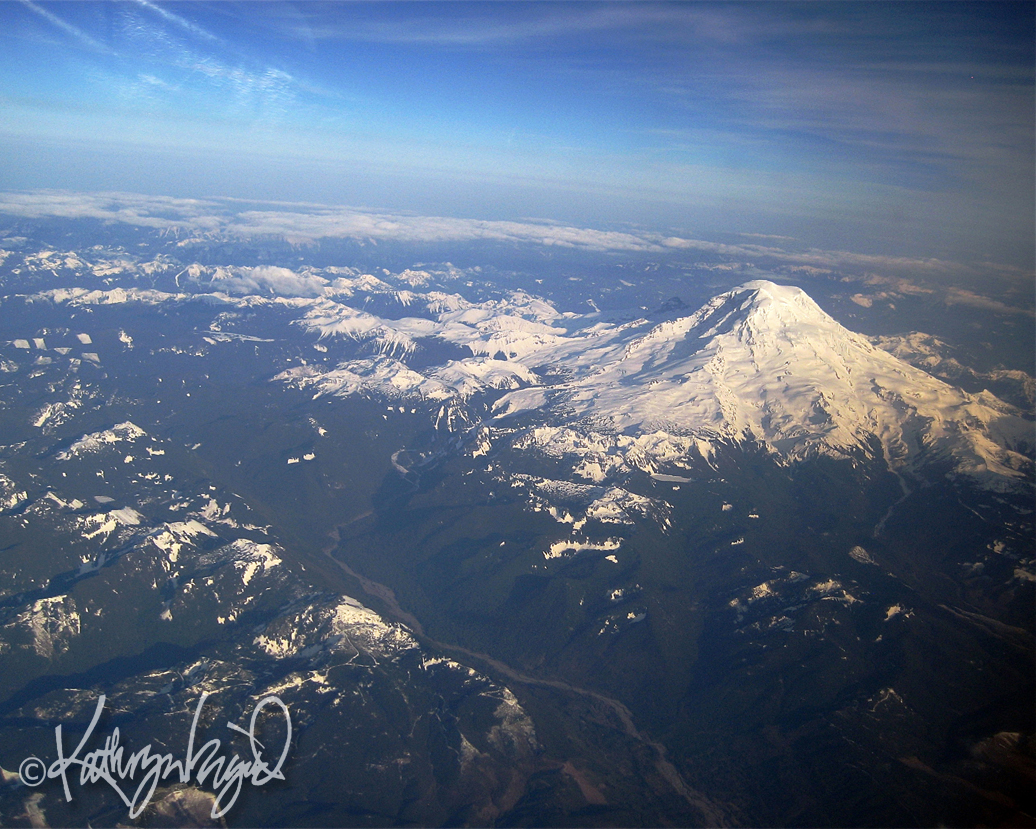
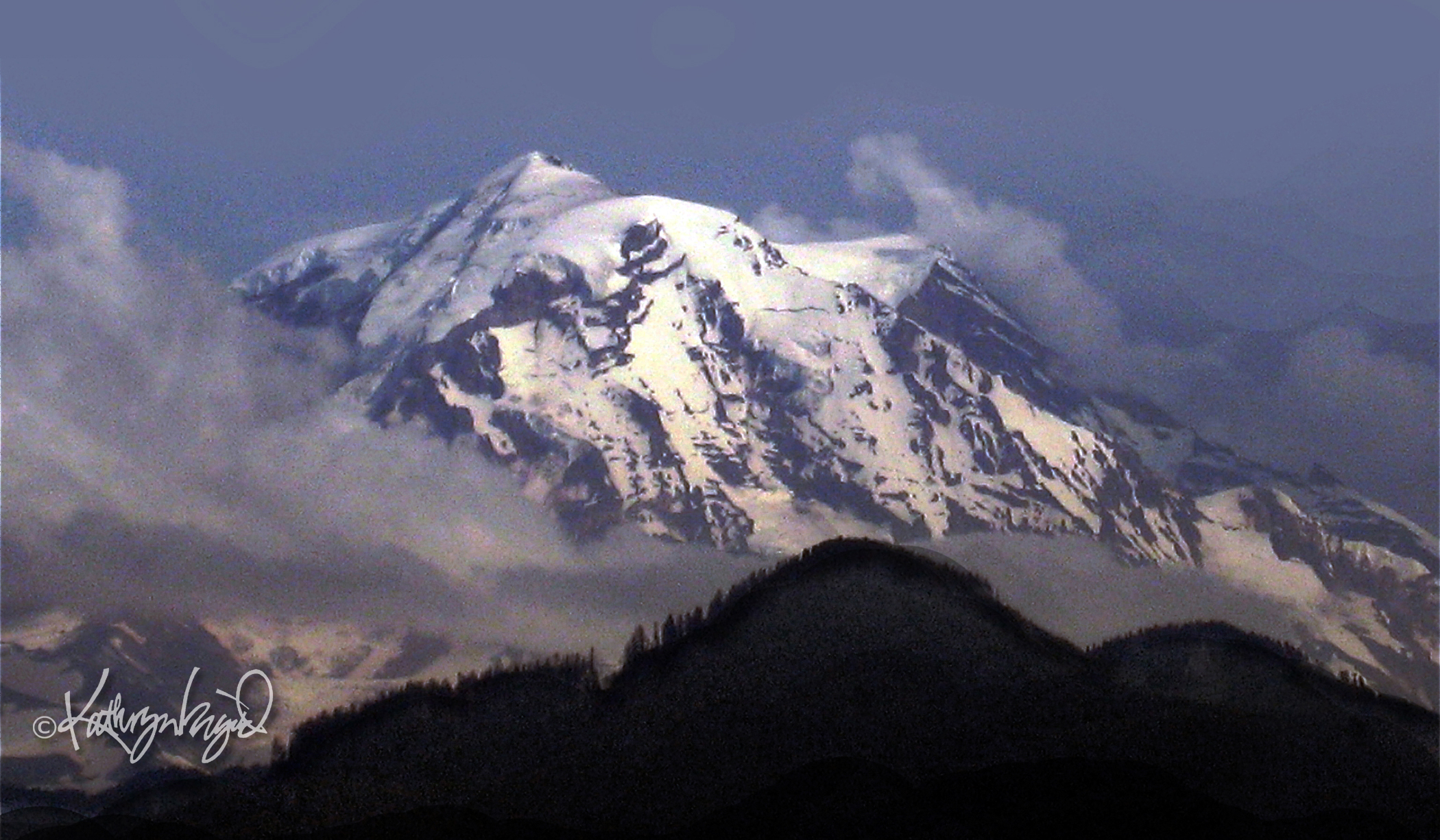
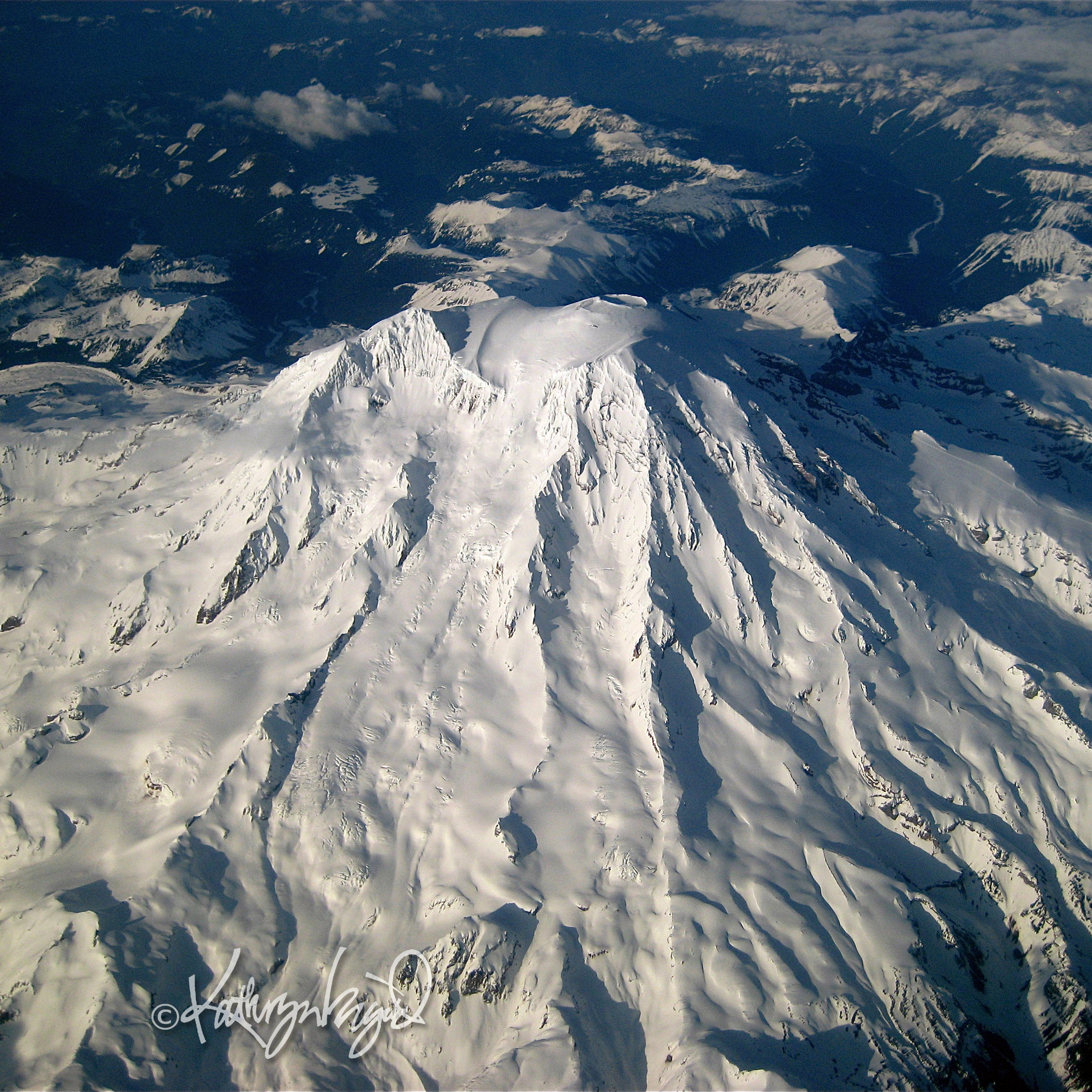
Perhaps this is true of other places, but I only know my hometown’s version of it: in Seattle, or pretty much anywhere in southwest Washington, Mount Rainier is frequently known simply as The Mountain. Yes, we call it by its full name, or by its ‘patrinomial’ ID of Rainier, and sometimes even by its graceful older name Tahoma. But its dominance of the skyline when visible, and of the ethos–the spirit–of western Washington thanks to its potent influences on geography and geological and meteorological character, not to mention the power it has to wipe out half the state should it decide to wake from its long dormancy, all mean that whether in plain view or not it has a hold on the hearts and minds of the locals like no other single force, natural or otherwise.photoSometimes when flying in to SeaTac airport the mountain is not only clearly visible but brilliantly etched and jutting boldly through the clouds, if any. SeaTac International Airport sits between Seattle and Tacoma, and the zone so called for its equidistance was finally officially given that insipid and cheap-sounding name some years ago–don’t get me started on it–but it’s well worth flying to a place with any ridiculous name you could conjure if and when you get the right weather, enough sunlight, and an accommodating pilot who appreciates Mt. Rainier’s beauty enough to tip a wing to the mountain’s flank and give the passengers a clearer view.photoTruth be told, we’ve seen precious little of the mountain on our current visit. It’s been pretty overcast much of the time, including when we flew in, so yes, the photos here are from other times. I’ve known of visitors who left disbelieving we even have a Mount Rainier, never having glimpsed that big white heap of sugar in weeks and weeks of waiting. The fabled wet weather of the Northwest can indeed curtain off our magnificent totem from view for seemingly interminable times and make us long to be reminded ourselves that it wasn’t all an hallucination or a passion-fueled fantasy. Even when visible, Rainier very often sports a ‘hat’ or veil that keeps a little mystery close by; being large enough to create its own weather, this geological behemoth seems to be quite often crowned with a companion cloud that rarely moves very far off or disappears entirely.photoDespite all of this hide-and-seek, the imminent danger we all know quite well as natives makes us bolt, strap, glue and otherwise thoughtfully position many of our tall or breakable belongings as though to protect them from a petulant child, because we’ve been through enough minor earthquake shakers in our lives to know preparedness pays. Still, while rainy Washington makes floods a real and frequent possibility, if that dormant volcano in our midst gives the really big belch geologists tell us is historically overdue, whatever isn’t swept off in the violent and instantaneous post-blast lahars [pyroclastic mudflows] that will likely submerge the surrounding valleys (the primary lahar channel of which was home to my family for most of my youth) will be treated pretty much like a snow-globe being handled by a curious Godzilla. Game over.photoSo we have a certain amount of respect for The Mountain, never mind it being such a fixture in our existence. No, I don’t know anyone who’s ever grown jaded about seeing it, no matter how long he or she has lived in its shade. This is not your typical mountain, looking pretty but losing its allure gradually as you realize you’re rather close and it’s stopped looming higher. It’s set in a fairly impressive range of mountains yet is so much bigger and more prominent than the rest that once the sky clears you just plain can’t miss it, and that sight quickly makes its mark on you. In snow-time, its blue-white flanks rise up to pierce the sky and look so sharply delineated you think you could stick your hand out and grab a fistful of super-vanilla ice cream from just behind that house over there across the street. As the snow melts, streaks made of billions of evergreens and a few exposed rocky prominences reflect sun and sky and passing clouds’ shadows in a changing array of colors that tease you with seeming first as near as your own breath and then suddenly as far distant as a too-sweet dream. Driving there can nearly drive you mad: you look to your left and it’s sitting right across the closest pasture; round the curve and it has shot away as far as the moon; over the next hill, in an instant it almost seems you’ll crash into the bank of snow just ahead of your front bumper.photoEventually you get onto the foot of Mount Rainier, yes you do, and you realize it’s so huge that you can still have a view of the peak that seems remarkably like the distant view of the whole that you had from an hour and a half’s drive away. The flora and fauna of this glorious bump on the earth have changed relatively little in millennia, and just being in their midst for an afternoon’s traipse along the trails makes you think both that your own sort might go on forever and that if the mountain is really going to blow, perhaps its taking you along for the ride in instant smithereens might not be altogether the worst thing. That’s how magical The Mountain is, even after all of these years of living at its foot. It might kill me, but if it does it will have fed my spirits incredibly well for a very long time indeed. That mountain there, she may keep her chapeau of a cloud-let coquettishly low on her brow for long periods of time, but when she finally does doff it, Holy Mother of Gleaming Glaciers, she’s a beauty.

You’re not the Boss of Me! Well, Yeah, You Probably are.

Lest I, as a mere human sort of creature, forget my place in the universal power structure, a few days communing with my sister’s four-legged family members swiftly reminds me that I can have all of the ingenious ideas and deeply meaningful thoughts I want in my pretty little head and they won’t change the reality of how the day will go for, and with, Ruffian, Mercer and Tristan.photo

Ruffian is well aware that all of creation was designed for the sole purpose of serving her and meeting her Needs (often mistaken by others as wants or Whining Points) and keeping out of her way in general so as not to disturb her beauty sleep. Being a large and well-rounded woman-cat, she prefers not to exhaust herself with any sort of excessive or unseemly activity if it does not culminate in being fed something. If there’s really no thrilling edible stuff involved, her time is far better spent in her semi-comatose repose, and most pleasantly of all, that in a place which is capable of creating maximum inconvenience for anyone who might wish to go through the door she is blocking, sit on the chair or window seat she is luxuriating upon, or sidle down the hallway she has carpeted with her soft and well-cushioned form. Yes, I suppose you are all by now sensing a bit of similarity between her and yours truly, perhaps?photo

Mercer, her fellow shelter adoptee, dresses formally for all occasions, preferring the classic tradition of the black suit and white button down shirt because he is much too dignified to be associated with frivolity and self-indulgence like his ‘sister’s’. If he should happen to take an interest in a cat toy and even deign to frolic after it a bit, it’s best for all others in the room to pretend not to have noticed, lest he take umbrage over this imagining of his being anything other than the most sober and staid member of the household. Despite his being strictly aware of his handsome panache and savoir-faire, he generally dislikes having his portrait taken, a trait I have assumed has to do with his being in the Witness Protection program and not wishing to be ‘outed’ inadvertently. I do suspect he might have some Scottish heritage because, although he doesn’t speak about this past of his, he still wears a fuzzy white sporran that swings jauntily under his belly when he’s patrolling his fiefdom.

While Ruffian and Mercer rule the house, Tristan lives exclusively outdoors. This arrangement seems to suit all three to the degree that each is able to maintain his or her sense of being the center of the solar system and ruler of all he/she surveys, since the two cats pay attention to each other primarily when needing someone to compete with over food, beat up or otherwise annoy.photo

Tristan was rescued from a neglectful owner after the people of the household split up and Tristan’s longtime canine companion died. He’s now twelve years old and, age and arthritis notwithstanding, maintains a cheerful demeanor, particularly if there happens to be a massive ham sandwich anywhere in sniffing distance. And he does have prodigious sniff powers, undiminished by the years. So when he goes for his three walks a day, nary a leaf or blade of grass goes unexamined, yet he keeps up a steady pace and chooses which of his favorite routes is preferable for the moment’s expedition, tugging all of his people-pack insistently if gently until we all acquiesce, recognize his prerogative, and follow orders. I’m just glad I smell acceptable to him, never mind whether any of our human companions find me tolerable or not.

After all, we are all just passing through, aren’t we? These three clearly know it’s all about the quality of the journey and that the destination will take care of itself soon enough. Say, toss me a treat, won’t you–I’m feeling a little peaked from not having napped enough yet today and can’t reach over that far.