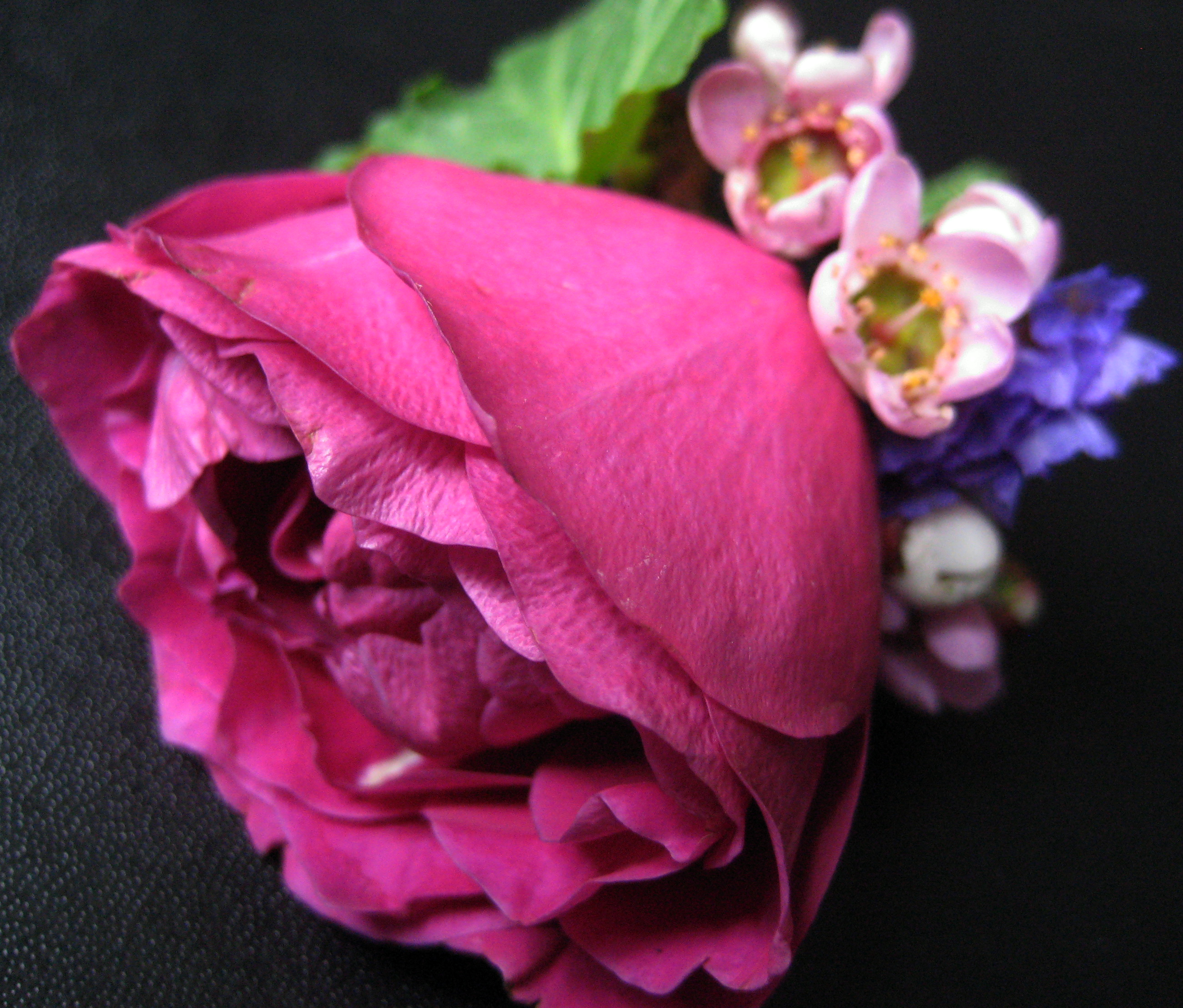
So there we were with a couple of bashful vergers posted with their baskets full of lovely handmade nosegays meant to recognize mothers, whether present among us or not. This is the pretty little presentation the Bishop's wife kindly took out and handed to me to honor my two mothers and their mothers, too, as well I would.
If you have any affiliation with things or persons British, you likely know that today is Mothering Sunday. As the Bishop informed the attendees this morning at the Anglican parish where my husband choir-conducts, it matters not that there is an American counterpart holiday–by the time that President Woodrow Wilson got around to declaring such a thing official in 1914, this congregation had already been celebrating Mothering Sunday for a good 35 years thanks to its British roots, and Texas-located or not, they sure as shootin’ weren’t going to stop recognizing mothers on this official day right along with the president’s little add-on festivity.
Anglophilic as I am, I’m hardly one to balk at keeping the faith with the old holiday myself, whether for stubbornness’ sake or for tradition, or for the beautiful British-ness of it all–though it originated as a Christian holiday, surprisingly, falling on the Sunday when one of the traditional texts began with a paean to Jerusalem, the ‘mother of us all’. But better than that, I happen to think that there are excellent reasons for celebrating mothers and motherhood as often and as publicly and resolutely as possible–two supremely excellent reasons to begin with: Elisabeth, who gave birth to me, and Joyce, who gave birth to my husband. I have two of the best mothers in the whole wide world. You can look it up; in any sensible encyclopedia or dictionary it will have a picture of the two of them in the entry explicating the heart and soul of the concept known as ‘Mom‘.
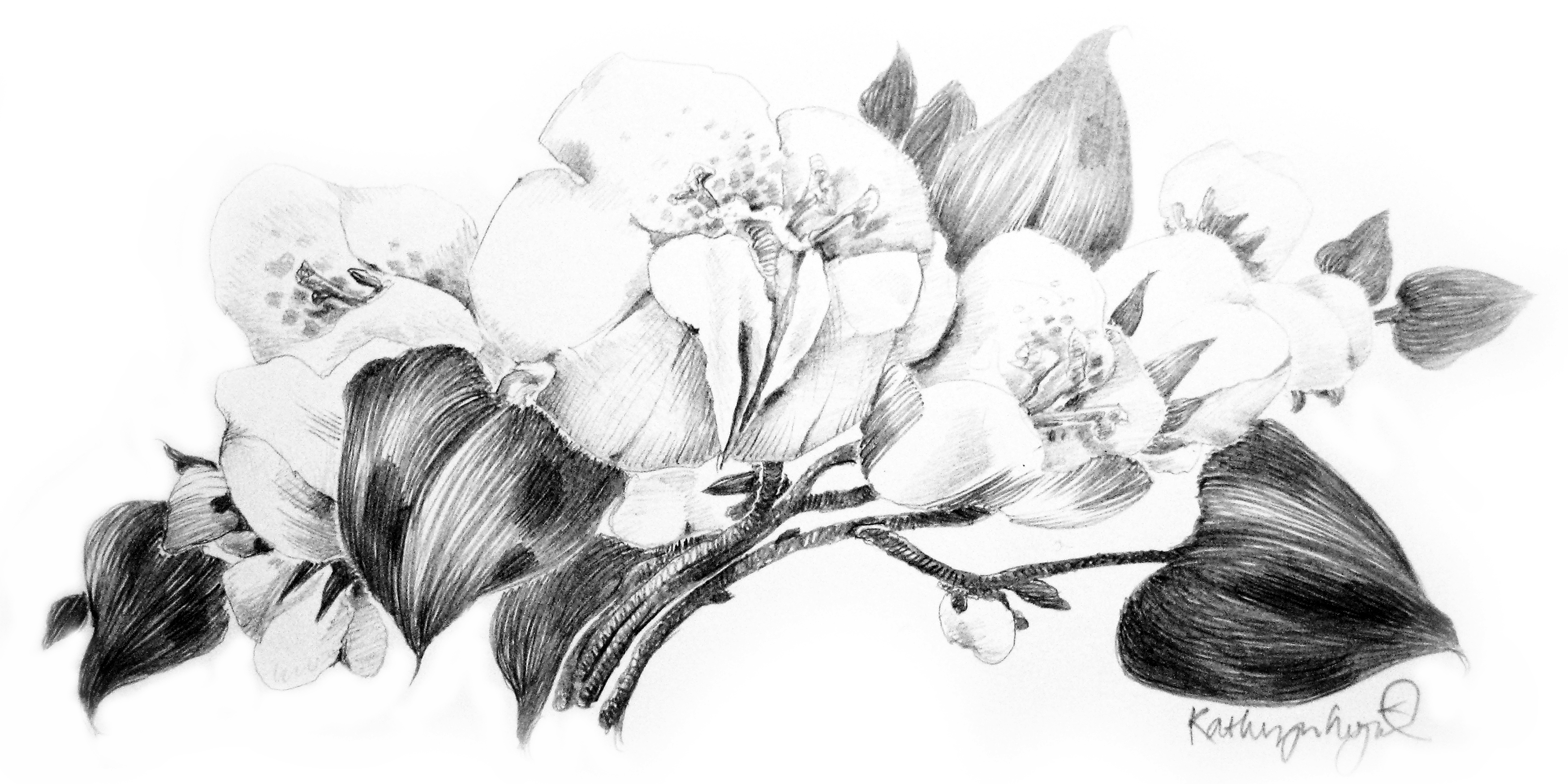
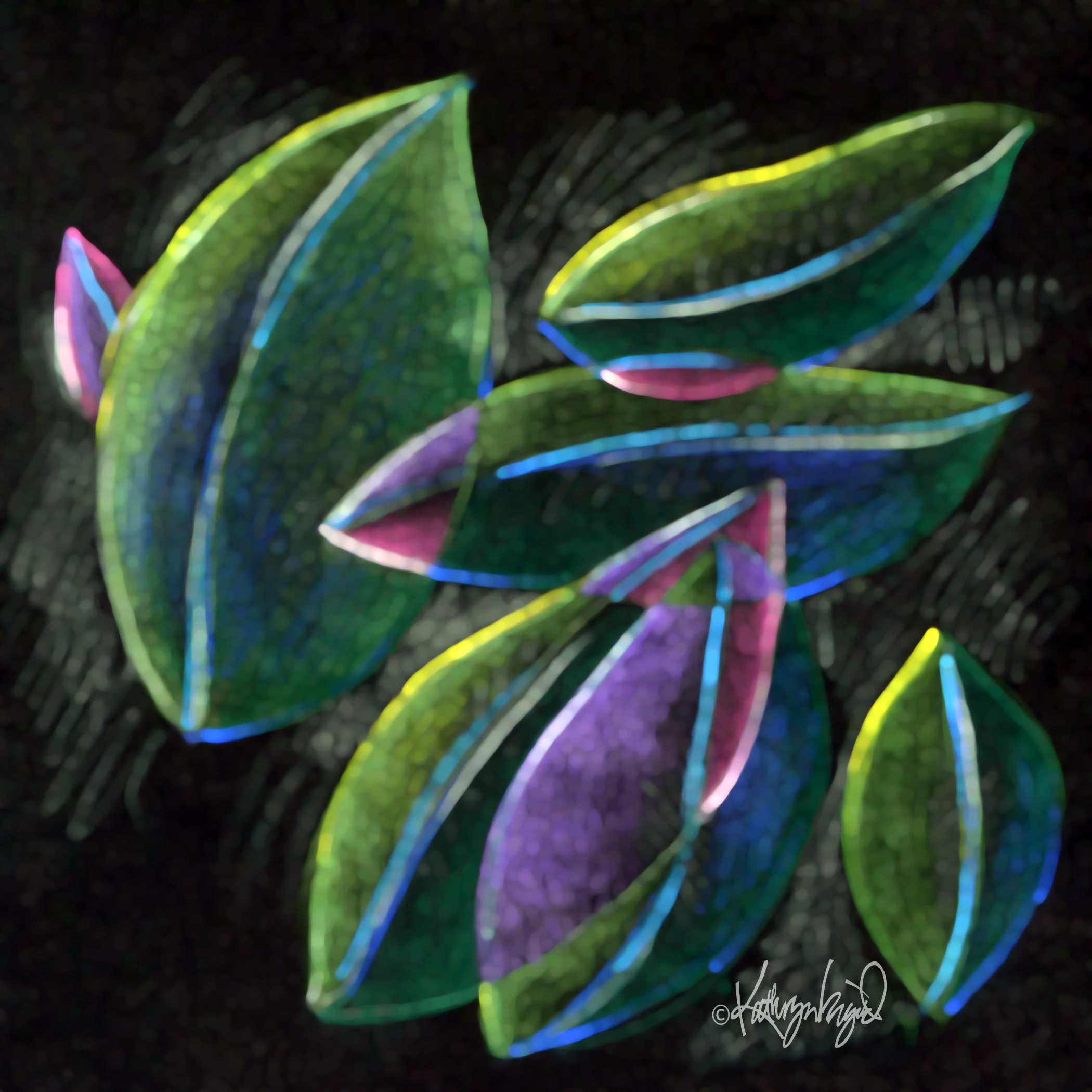
You could be forgiven if you thought from the accompanying photos of them that they had their work cut out for them with these two little melancholy looking shrimps of theirs but I assure you we, and our respective siblings, were all a supernal joy to raise from first to last. Okay, that part is pure baloney and bilge-water–but the point of course is how outstanding our moms were at mothering, and that part is utterly true. We were and are two incredibly fortunate humans, and we know it. No amount of roses and posies could possibly reflect the full spectrum of gifts that Joyce and Elisabeth have brought to both of our lives. But a sweet little nosegay with a brilliant deep pink rose is hardly amiss in the attempt.I made my own little corsage, of course, as a drawing of exotic (i.e., nonexistent inventions representing) flowers, because mere effusions in prose can never say how deeply grateful I am to have two such dear and devoted mothers to love. I am particularly and acutely aware of this when both, who have had their own adventures of survival and not just in spouse-training and child-raising over the years, are currently recovering from surgeries. Nothing like having one’s mom undergo surgery, especially as both are doing, surgeries that are not their first, to remind us of how fragile life and wholeness can be and how desperately we hope for our chance of having them back ‘better than new’ and with long and healthy and happy years ahead of them. The signs are good, despite the inevitable miseries of recovering bit by bit, with the expected setbacks, that our hopes will be fulfilled. The only medicine I can offer is love, and that I do send them in unspeakable abundance, but since my mother had spinal surgery I’m pretty sure a big hug is not the most desired form of cure even if I were 2000 miles closer to her, and since my other mom is probably still bandaged up here and there a bit herself, the same 2000 miles nearer-my-mom-to-thee might just prove a little too abrasive as well. So from this safe distance I send e-hugs, ethereal kisses and two-dimensional bouquets and eagerly hope to see both of our mothers springing with good health in June.
I wish and hope that both of our beloved mothers will last even longer than a little drawing of a bouquet can before it fades like live flowers.
If you are a mother yourself–biologically or by adoption–or act as a nurturer and sheltering presence for anyone, I wish you endless bouquets as well. Without all of you, none of us would be here. Literally, of course. But in the wider sense, we owe an immense debt to the caregiving and protective and human-betterment instincts so often attributed to mothers and grandmothers and godmothers and aunts, and rightly so, but also gracefully and beautifully practiced by teachers and community builders and cooks and nurses and companions and shelter-builders of every age and nature who have the desire to make the world better for those who might not be able to make it sufficiently so for themselves. Thank you. Especially you, Elisabeth and Joyce. You are treasures beyond invention. I can think of no higher aspiration than that others should take their example from you.
I have said that music transports me to Other Places. Indeed, all art has that potential for me, for internal travel. It’s one of the great joys of art. As I write this, I’m listening to a live broadcast of this evening’s concert from the Swedish Radio Choir‘s (Radiokören, or RK) concert, one that travels particularly far and wide–and deep–in my heart and mind for a whole lot of reasons.
Right at this moment, the radio host is interviewing Maestro Dijkstra, and hearing both of their voices, I feel almost as though I’m in the concert hall watching them chat onstage, myself. I’m quite sure I recognize the lady’s voice as that of the same well-spoken broadcaster who interviewed my husband when he was conducting on that same stage at Berwaldhallen at this time of year a few years ago for RK’s Vårkonsert, or Spring Concert. Peter Dijkstra had fairly recently signed on as RK’s chief conductor at the time, and was in town part of the time rehearsing the choir; it’s amazing how quickly the miles disappear when we hear familiar voices or sounds–and the Radio Choir’s distinctive choral sonorities are certainly a part of that equation for me, as well. Their recordings have been for decades among those most widely recognized worldwide for consistently outstanding quality and depth in an incredible range of literature.
So here I sit, listening to music sung by a beloved choir and conducted by a truly fine, familiar conductor, and despite being at my desk in my own house, I am traveling to worlds and galaxies far beyond the view of my window. The György Ligeti piece is a perfect vehicle. It’s best known for being that magical, eerie and ethereal sound heard in the famous scene of approach to the monolith in Stanley Kubrick‘s seminal film 2001: A Space Odyssey, and on a personal level is memorable and imaginatively inspiring even more directly because I have heard a couple of groups conducted by my spouse, in both rehearsal and concert, of this famously difficult piece. Each time, the piece itself transforms the performers as they work to ‘get inside’ and master it, and in turn is transformed by their performances, by the acoustic and atmosphere of the place where it’s being sung, and by the expectant and electric energy of audiences who are constantly challenged and awakened by its dramatics, both distinctive and subtle.
Johann Sebastian Bach and a great many of his works are widely familiar to audiences all around as well, and both in spite and because of their very familiarity bring us to an array of places remembered and imagined each time we hear them sung or played. The more famous and oft-played a composer’s works, the more variants we’re likely to come across in style and interpretation, in levels of technical expertise and period accuracy, and especially in the performances’ potential for transportation. I find it profoundly intriguing to see and hear how deeply performers can immerse themselves in the math and mystery, the dancing joy and bottomless grief and resounding laughter and historical drama of Bach, and to experience the accompanying journeys offered to me as a listener. I go to places of Biblical and Apocryphal history, yes, but also to more abstract aspects of the music and the texts: to dark forests and sunless night, and to soaring starry space; to drought-quenching fountains and streams; to realms of green and warm and welcoming respite and meditation.The Stabat Mater of Francis Poulenc, in his characteristic tonalities and performed here with exquisite power and emotional richness (and with a supernal soprano soloist’s voice soaring over the top of the intense and wildly beautiful waves of the choral singing) pulls us into a specific story, but is nonetheless large enough in its musical generosity to allow visions of many other places and states of being. This, too, is a strength of music and of outstanding moments of swimming in it–that it allows us to transcend what is and see, hear and feel what may be.
Music can fill me with passion, and it can also empty me so completely of passion that it lulls me into the abyss of restful peace where I feel nothing can touch me at all.
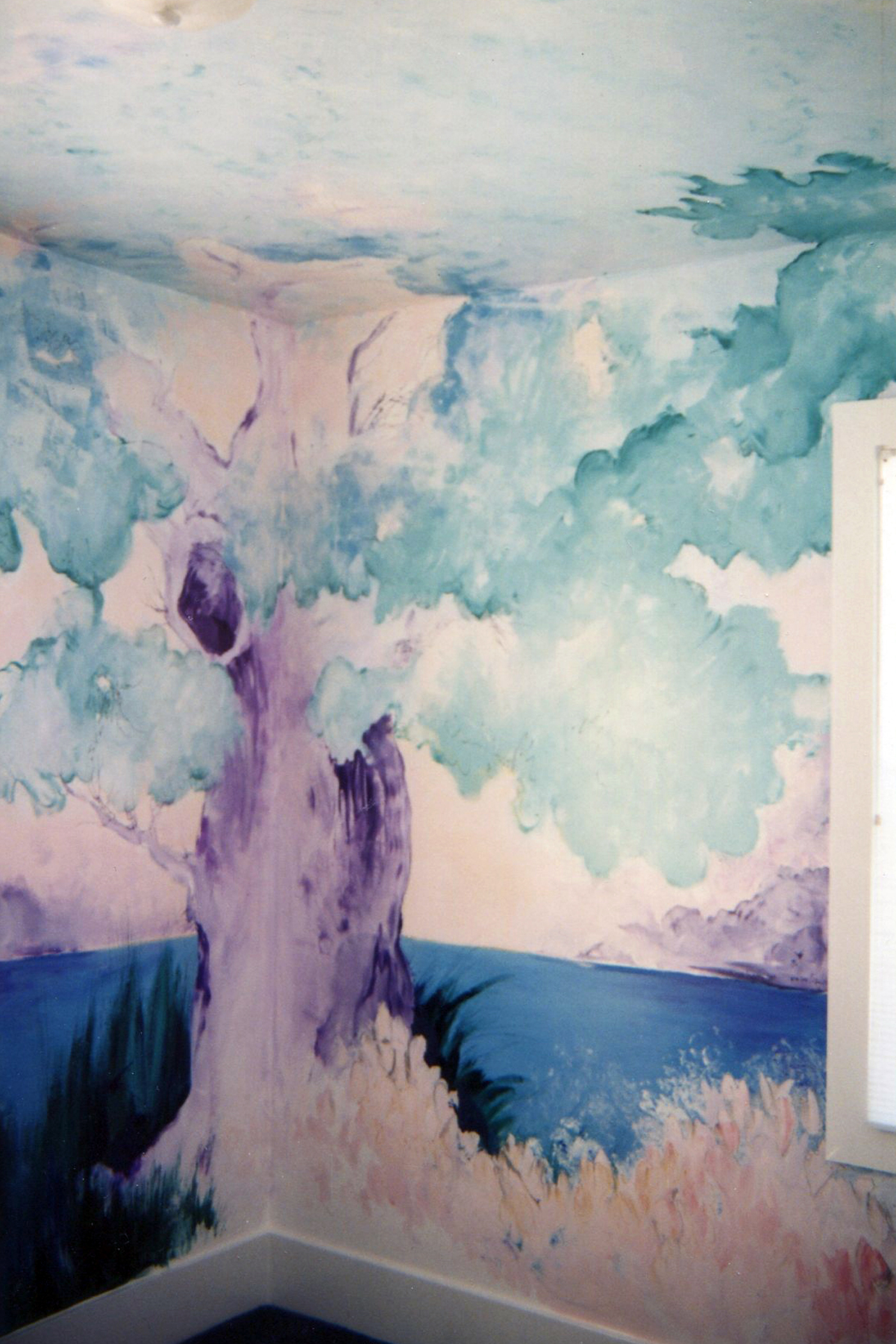
The images in this post are not based on any of the music in this program at all but rather are documentation of one of the small worlds I myself created a little while (well, a teenager’s lifetime) ago. I wanted to make a place that would act as a safe haven, fantasyland, and visual lullaby for the baby boy my sister was carrying. More than seventeen years later, our younger nephew his brother still has the same little woodland clearing in what’s now his room and seems not to be overly anxious to erase it under a more sophisticated or grown-up paint scheme and decor. So I suppose that perhaps it still offers for him adequately what I myself will never grow too old or mature to want: transportation to other places and planes, times, spaces, moods, hauntings and hopes and happiness. I hope that the luminous-paint stars that I sprinkled on that bedroom ceiling still light up after the lamps are turned off at night.
One of the rituals of fending off the dregs of winter’s chill is to linger in the hothouses and aisles of flower shops and every place that stocks us up with ideas and plants as we rejuvenate the landscape for the year. A splash of heated color draws the eye; the flash and gleam of leaves caught in each little draft pulls us in, from some pale-margined broad-leafed plant off to some lacy other. The faint sound of their fluttering evokes both sylvan breeze and birdsong and reminds us, beyond those, of springs and fountains drawn to life as winter thaws.
Perhaps the most evocative and pleasing sense that spring and summer lie in wait somewhere not far at all: perfume–the heady redolence that wafts from hyacinths and jasmine blooms, from sweet Viola odorata, from each little honeyed heart that says that life will soon return to earth. One of my favorites for sheer intensity and unstained loveliness of scent is Lily of the Valley–those clean, brilliant bells that cloister in the moss and keep their meditative calm a little secret ’til I’m close enough to catch their drift and see their whiteness glinting in the green. It may be, too, that breathing that intensity of air when these petite white satin blooms nod in the breeze calls up an atavistic searching in my blood. I start to hear that most beloved of Swedish songs (forgive me, my Norwegian forebears–but we were still ‘run’ by our cousins the Swedes until we parted ways in the early 20th century) resonating somewhere in the distance of earth’s slow axial turn, tolling in a sweetly sorrowful voice the tale of the grieving Lily King. Spring is like that–pierced with the lingering poignancy of winter’s deadly grip, but with an insistent, gorgeous urge to let earth be reborn; no matter the loss, the sorrow and the bygone things, to carry forward with what perfumed sweetness it can find.
The Romantic Nationalism that has periodically gripped the music world and produced such pleasures as David Wikander’s exquisite melody for poet Gustav Fröding’s Kung Liljekonvalje is that way too: longing for the old, but wanting something new raised up in it, like the rebirth that comes with spring. Sorrow and joy can mingle then, glowing with possibility and pain, with hesitation and with hope.
The text is sorrowful but evocative, I think, of the intensely bittersweet beauty of the Lily of the Valley; it isn’t hard to see how this must have captured the dark imaginings of many a Northerner in a Romantic frame of mind. I’ve included a translation of my own, meant not as a literal one but rather an attempt to understand something more of the character of the tale and perhaps, indeed, how it grew out of dreaming over the bowing bells of a tiny blooming thing, searching in its ice-white blossoms for promises of better and brighter things.
Kung Liljekonvalje King Lily of the Valley
Kung Liljekonvalje av dungen King Lily-of-the-Valley’s in the green-wood, Kung Liljekonvalje är vit som snö King Lily-of-the-Valley, who is white as snow, Nu sörjer unga kungen The young king now mourning his maiden, Prinsessan liljekonvalje mö Princess Lily-of-the-Valley, in woe
Kung liljekonvalje han sänker King Lily-of-the-Valley now lowers Sitt sorgsna huvud så tungt och vekt His heavy head so burdened with grief Och silverhjälmen blanker And on his silver helm gleams the sunset, I sommerskymningen blekt Pale dusk that can bring no relief
Kring bårens spindelvävar Round her cold bier the cobwebs are woven, Från rökelsekaren med blomsterstoft And hang from censers flow’r-filled & spent, En virak sakta svävar Their frankincense drifting down slowly, All skogen är full av doft The forest all filled with the scent
Från björkens gungande krona From birches’ swaying crowns to their bases, Från vindens vaggande gröna hus From winds that rock the green-wood’s home Små sorgevisor tona Small tunes, songs of sadness and mourning All skogen är uppfylld av sus Fill all of the woods as they roam
Det susar ett bud genom dälden And rustle as wind through the glen; find Om kungssorg bland viskande blad The King all cloaked in whispering leaves I skogens vida välden As full sorrow falls on the wood-world, Från liljekonvaljernas huvudstad The whole of the Valley still grieves . . .
Anticipation makes me itch. The weather forecast promises something rainy, maybe even a bit of a storm. The air is thick with it. The humidity hovers portentously and the breezes ruffle the small and silky leaves overhead and ripple around ankles, kicking up eddies of smaller kinds.
But no rain.
Will it come again? Of course it will. I say of course, but know that last year gave us drought. When do the mills begin to turn again? I listen, I watch. I wait. I go out and water the garden under a darkling sky, feeling in my heart if not on my skin a delicate moth’s-wing skim as though from mist. Not a drop on a leaf, my dears. Not a speck, not a butterfly’s tear. It seems . . .
The barometer will surely relent; the sky will weep; the mills will spin their tales once more. It will find me when it comes: I will be bent over garden beds, walking the front path out to the mailbox just to see. I will smile in the rain–just as I smile in the grey-cloud sun–waiting is something we all must do from time to time. I think it might not be so long before it rains again.
At times, time should just stop. Hold its breath, keep confidence with every secretive thing because some little happening occurs, a tiny treasured thing appears, as small as dust in air perhaps but so perfect in its lack of discipline as to be solace beyond words, a wonder like a young child’s hair lit by a momentary ray of sunlight to become more beautiful than all the votive flames that ever lit the night, like a killdeer’s evening call fluting out from where it hides in the tall grass.
. . . an hour in which enforced quiet time in a waiting room is transformed into time for invention in the sketchbook . . .
Let the treasury of life be honored by our awed obeisance, however brief, as we take our meditative pause to contemplate those little motes of sweetness that make up, in total, something so ethereal and grand–the sharp, resinous perfume rising from a path through piny woods on a sun-baked day; that bright mercurial flash of a school of tiny fry all turning in the shoals at once, glinting; an amorous bird showing off its vocal flashiness from a leafy grove across the way . . .
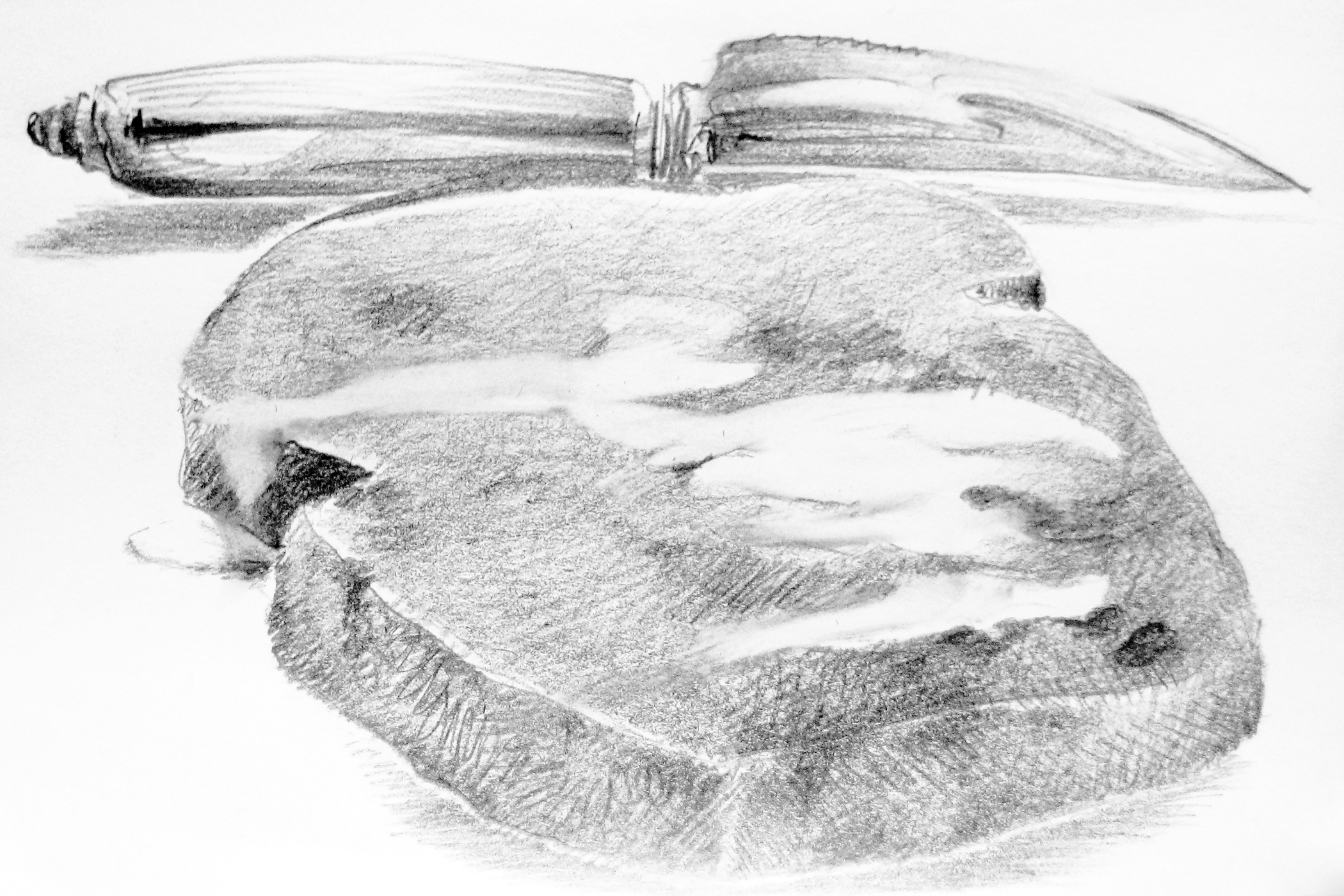
. . . a piece of rustic dark bread with butter melting into it . . . .
May we never forget to stop, if only for that little moment, to absorb the pleasurable surprise of living in the midst of millions of small miracles each night and every day, even if they’re often lost to us as too minute to catch our notice. The air we breathe is redolent with them–each step we take can draw us further into that precise great incident of wonder that should startle every heart into eternal admiration.
I’ve established a kind of détente with seeing the doctor. That makes me one unusually fortunate human being, as far as I can tell. Let’s face it, doctors are stuck in the same unloved House of Horrors where we go with cringing reluctance to visit lawyers, last-ditch tech support professionals, tax collectors and disliked distant relations: the Office of Last Resort, so to speak, because we don’t go there unless we absolutely have to go there. Anyone I see mostly when I’m at death’s door is not bound to be my first choice as fun-time playmate.
The dread I used to feel when the mere word “doctor” was mentioned in my hearing, let alone when I had to visit one, was undoubtedly exacerbated by my larger than life anxiety issues, but I know I was far from alone in the general pool of enmity and avoidance. Amazingly, the cure came to me before I got successful treatment for the extremity of my anxiety. It turned out to be ridiculously simple: get the right doctor.
It turns out that despite all of the docs I’d seen in my younger years having had all of the requisite starry credentials and, in many cases, references that glowed like halos, they simply weren’t the right fit for me. Sounds so obvious, but if you’ve never had that good fit, you can’t really conceive of such a thing, so the miserable one you got stuck with is the unwillingly accepted norm. It was such a shocking revelation to me to discover that my new physician was at the opposite end of the spectrum from all of my previous ones that I didn’t quite realize what had hit me at first. What?? No distance, no intimidation, no obfuscating or condescension or inappropriate levity or inflexibility?
She may have started at an advantage, this new doctor, having been my then-fiance’s respected physician for some years already and with my being in good health when I saw her for my new-patient checkup. But she was so no-nonsense, calm and attentive to detail from the start that when the inevitable episodes of viral attack or other pains did come, a trip to her office promised comfort and healing rather than fear and further pain. What a concept!
It’s not like I suddenly began craving any excuse for a visit to the doctor’s office, but I can’t overstate the immensity of going from a state of perpetual terror and revulsion at the mere thought of such a visit to one where I could go in for a wellness check at regular intervals and even–stunningly–make the appointment for one when prompted and then forget about it until the appointed date appeared on the day’s agenda rather than spending all of the intervening days or weeks actually making myself sick enough with fear and worry to need a doctor.
Now, I also understand those for whom the nuisance factor of giving up precious time to do this is tipped to oblivion by the dislike of the visit. And I truly empathize with those for whom the expense of medical care is impossible or too daunting: I am, after all, resident in a Two Artist Household and live in a country where if one or both of us hadn’t the luxury of Real Jobs as educators rather than always going freelance, the whole concept of regular physician visits might have easily been moot anyway. I am certainly grateful that my life has allowed me to choose to go to the doctor when I’m not unusually near death’s door. If nothing else, I guess I sort of feel karmically compelled to take that step since it’s available to me when it’s not there for everyone. And as an instant payoff, I discovered that being a generally very healthy person not only is its own reward but getting a good report, a Clean Bill of Health, from a wellness visit to the doctor even feels as cheering as crossing something off of my famous To Do list as DONE. That’s my favorite benefit of wellness, I admit–the smug, snug satisfaction, however temporary, of feeling just that little increment closer to invincible.
Why, you ask, is all of this on my mind just now? Well, I wrote the majority of this post while sitting (extra time, of course) in my doctor’s waiting room for my annual wellness physical. I did get generally pleasing news and no particular scoldings for any of my known bad habits, and no obvious findings of internal systems gone awry or organs gone missing or anything like that. Far more significantly, it’s very much on my mind because my mother is in an operating room two thousand miles away having a second spinal fusion surgery to attempt to correct some of her scoliosis and the effects of spinal stenosis, laminar deterioration, bone density deficiency, medication interaction, and a whole host of other physical trials that have had us all simultaneously marveling at and agonizing over her fortitude through years of debilitation and pain and sending up innumerable wishes for healing and hopes for relief in every way we know how to do so. I’ve never met her team of surgeons, physiotherapists and other caregivers (besides Dad and my sisters and our other family and friends), but let me tell you, my gratitude at being able to go, quite healthy, and sit talking with my physician about ways to keep my own body healthy as long and as well as I can–my gratitude at having a fine doctor and being able to see him just to make sure I don’t need to see him more–is immeasurable.
I hope that tomorrow I can tell you that Mom’s future visits with her doctor will become simpler and less dread-worthy rather soon too.
Since several people have asked, I’m posting a list today. No, it’s not one of those house-fixing lists I mentioned full of projects. But related, in a way, as it constitutes my contract of To-Do fun with my yard, garden, flower beds, and planter pots. It’s my seed and plant list–what I’ve put in thus far, and some of what I intend to add, the latter being primarily a larger batch of the listed Wildflower Sowing Mix. It’s my own blend, by the way, concocted from reading up on and observing what is native and/or simply adapts well in our part of the landscape. Starred (*) items are known natives or very long established growers here in north Texas, and items marked with two plus signs (++) are ones I’m emphasizing in placement or quantity because they’re particular favorites of mine.
For the Front Yard Flower Beds:
Blue-Eyed Grass (Sisirynchium)* ++ I’ve long been attracted to the tiny-orchid flowers of this miniature lovely, and was thrilled to discover the plant is native here. A surprise bonus when moving to a place that has a generally less easy climate than my place of origin in the Pacific Northwest.
Chives, Garlic (Allium tuberosum)
Coneflower (Echinacea purpurea)* ++
Garlic (Allium sativum) I don’t cook with a whole lot of garlic since marrying a Supertaster, but since they’re beautiful plants, I figure I’ll get what little garlic I need for cooking and have the garden attraction besides.
Lavender (Lavendula angustifolia)
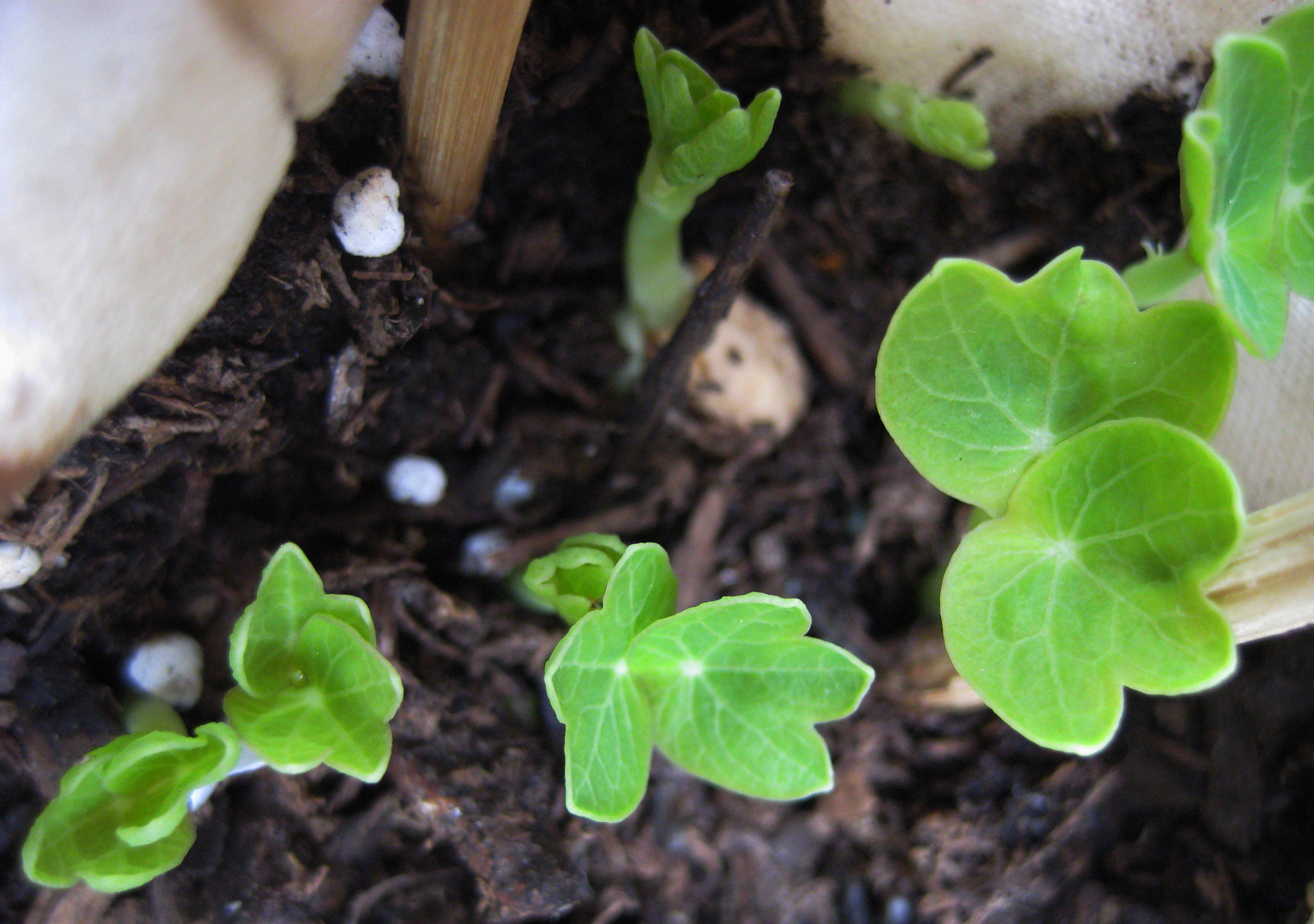
Nasturtium(Tropaeolum ‘Milkmaid’)
I have to admit I enjoy plants whose babies I can recognize early and so chart their progress a little more accurately. Nasturtiums are a very easy one to spot . . .
Spreading Petunia (Petunia x hybrida ‘Purple Wave’)
Texas Bluebonnet (Lupinus texensis)* ++ Seriously, how could I not put in any of this classic when I’ve moved to Texas? Not to mention that I’m a sucker for blue flowers. And things that will self-perpetuate once established.
Herbs (Planted front, back, indoors and out)
Basil, Sweet (Ocimum basilicum)
Borage (Borago Officinalis) ++ A rather magical herb, in my estimation, with its refreshingly cucumber-like flavor and exquisite bright blue flowers.
Chives, Onion (Allium schoenoprasum)
Marigold (Tagetes)
Parsley (Petroselinum hortense)
Curled
Italian Flat-Leaf @ John: I’ll try to have it fully in leaf when you show up here!
Rosemary (Rosmarinus officinalis) ++ I have one healthy plant going, and since it seems to thrive in this yard and I love the plant and its culinary qualities, I have a feeling it will get siblings eventually.
Vegetables (Mostly integrated into the flower beds, for fun)
Beetroot (Beta vulgaris ‘Tall Top Early Wonder’)
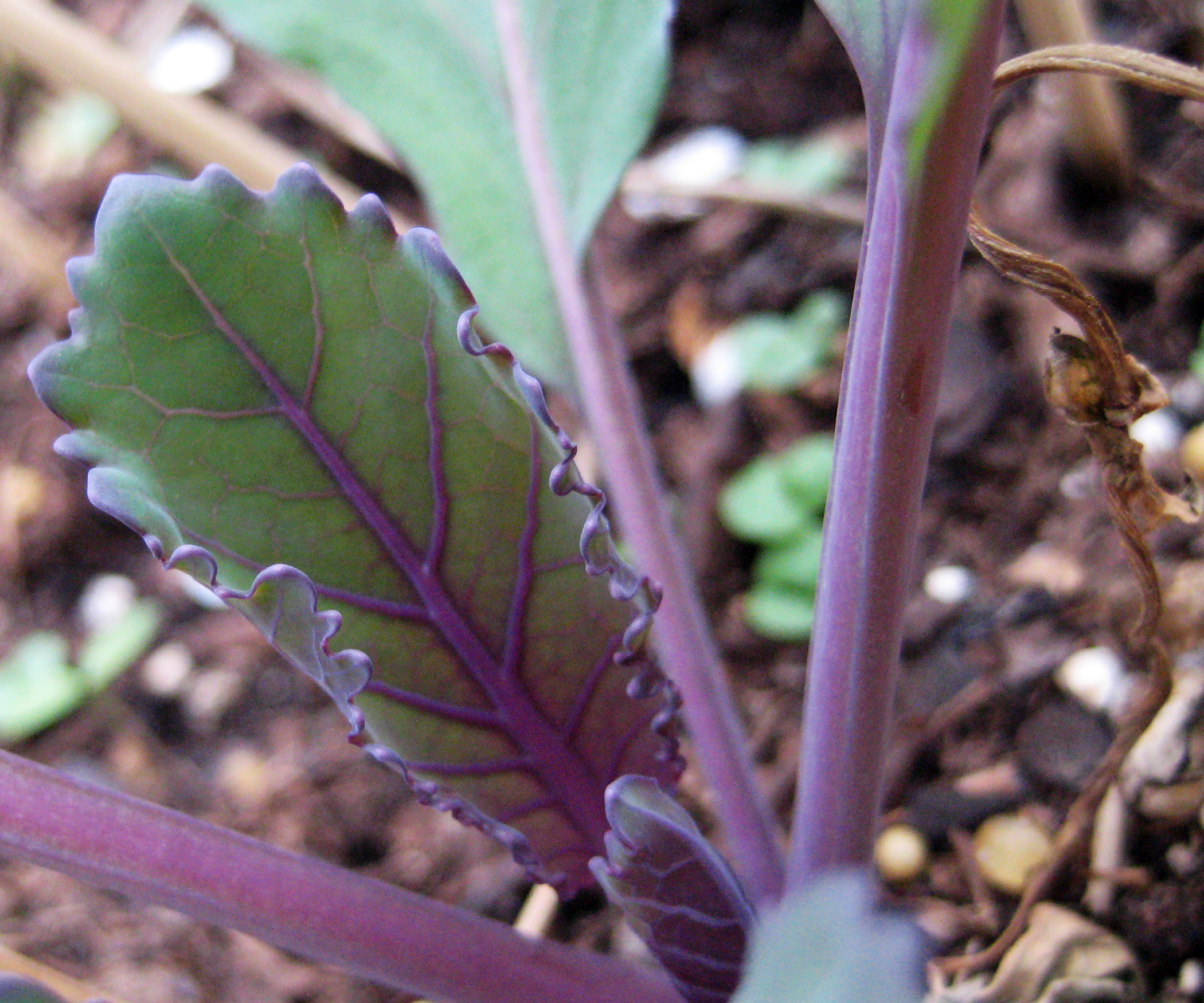
Kale (Brassica oleracea ‘Dwarf Blue Curled Vates’)
Bright blue like that of this Salvia gives such pizzazz to the garden . . .
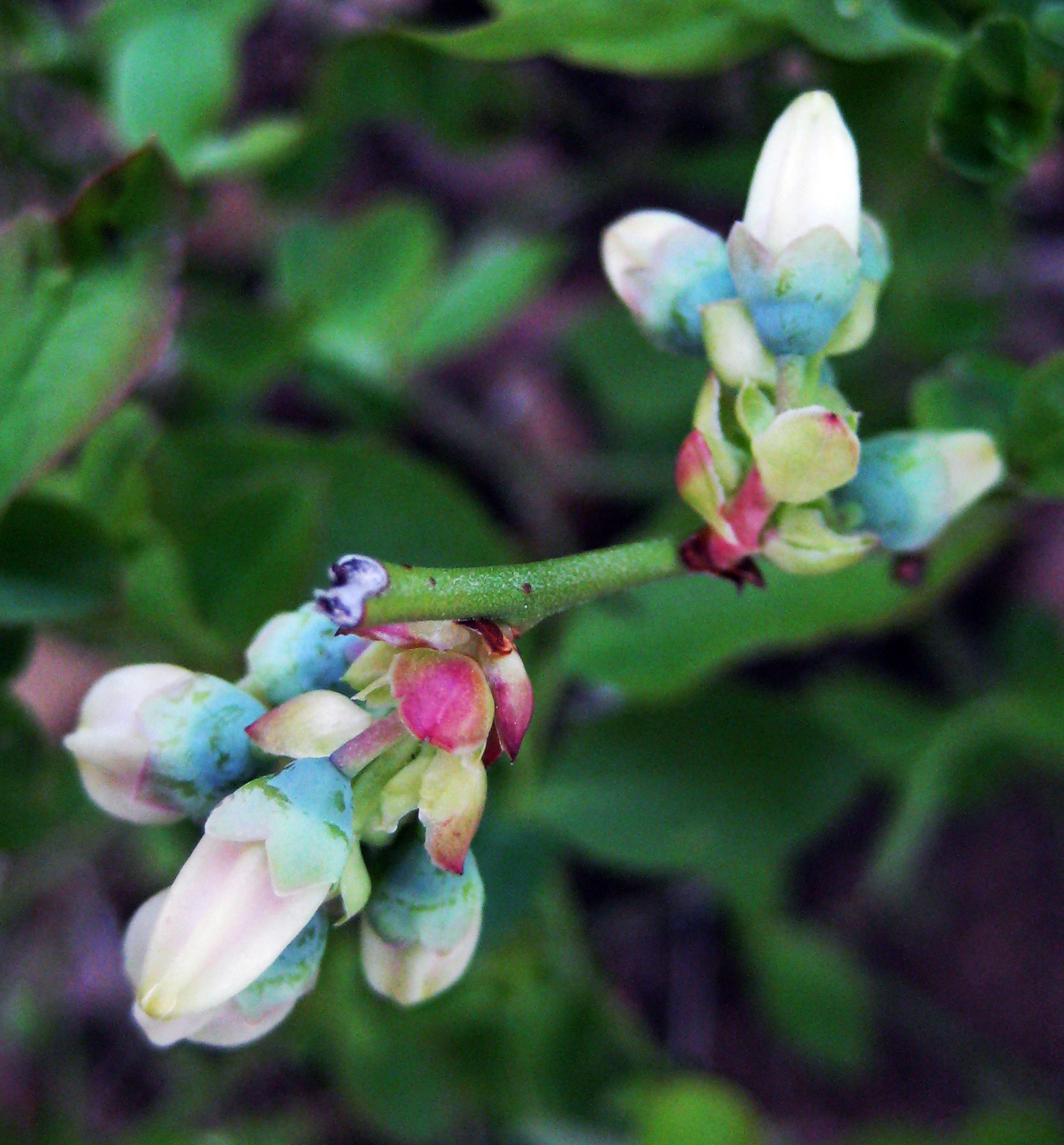
Blueberry(Vaccinium corymbosum ‘Biloxi’) ++ You may recall that I really dislike eating blueberries–but I know the birds and creatures will like them if I leave them, and I think the plants are beautiful!
Irresistible little blooms on the blueberry . . .
Clematis(Clematis, var.) I’ve put in several varieties, and the first leaves are beginning to appear, so I think I had better give those little green pretties something to climb up soon or risk their meandering in the underbrush.
Peering out from under oak leaf-mold and purple tradescantia that's already shown its first bloom of the season, the clematis leaves are beginning to crawl forward . . .
Columbine (Aquilegia ‘Origami Mix’)
Corkscrew Rush (Juncus effusus ‘Spiralis’)
Eastern Redbud(Cercis canadensis) The first of our little city give-away adoptees appears to have survived the winter, but won’t yet show its bud growth.
Fig Tree (Ficus carica ‘Brown Turkey’) I found a sturdy fig tree rooted in a three-gallon pot for four dollars. How could I refuse? Even if it turns out to be only semi-productive (though I’m told they grow well enough here), the leaf will be a nice variant in the yard.
Forsythia (Forsythia x intermedia) A good shot of early color is always welcome.
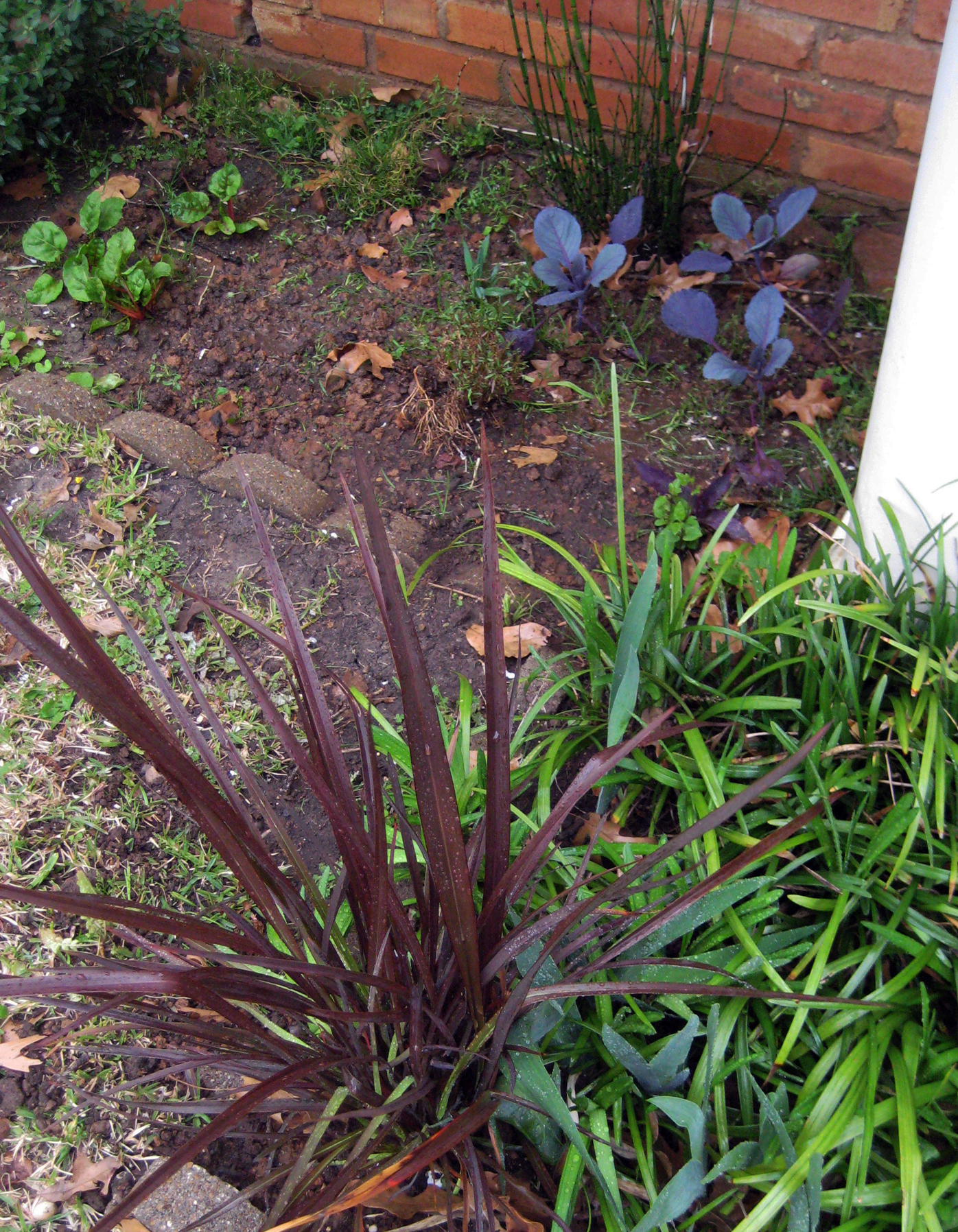
Horsetail Reed(Equisetum hyemale) Strangely for a place that verges on drought, the yard here has one or two water-collecting spots! So wet-footed plants should do fine.
I find it strange that there is a place--ANYWHERE in this north Texas garden--that can stay wet for so long, but it's a handy spot to put water-tolerant plants like the Corkscrew and Horsetail reeds, after all . . .
Lamb’s Ear (Stachys byzantina)
Mexican Plum(Prunus mexicana)
The Mexican Plum tree just planted this last fall has wasted no time in putting out dainty little white flowers . . .
New Zealand Flax (Phormium tenax) Going for a bit of large-scale drama, here. (You can see the NZ flax’s big burgundy swords in front of the wet growing bed above.)
Red Cabbage(Brassica oleracea var. capitata f. rubra)
When it's on sale, why not use the bedding plant! And I got a half-flat of red cabbage babies, so they went out front for their ornament as well as in hopes of good eating . . .
Soapberry (Sapindus saponaria)
Even the six inch tall Soapberry tree seedling from last year is swelling into bud . . .
Tulips (Tulipa spp.) Of a white unnamed variety; oh, yes, I did succumb. I put just a dozen in my front porch planters. Half of them were soldas orange, but buying a generic handful of bulbs, one gets what one gets, no? And white tulips are beautiful too, so I shan’t complain.
A splash of orange might have been showier, but there's no classic like an elegant white flower . . .
My husband’s parents are longtime travelers and music lovers. In addition to being their son’s chief cheerleaders and supporters in his musical career from the beginning, they have always enjoyed listening to all sorts of other music, particularly jazz, and in that, particularly big band and swing music. They love live music and have gone many times on road trips to various jazz festivals over the years, and Mom called this afternoon with an enthusiastic review of their just-completed trip down to the Newport Jazz Festival. They don’t do any of this by halves: it’s a serious pack up the car and leave home expedition for these two, in this case a drive from east of Seattle where they live on south down the Washington corridor to Astoria (just over the Oregon border) to meet a couple of good friends at a restaurant before they trek their last couple of hours down the coast to Newport, Oregon where they stay for the festival. They attend a number of concerts and events every time, and this time opted for the additional festival closing candlelight dinner with its own live music. And of course, being Mom and Dad, they also took a couple of side trips to see an old friend (possibly younger than they are) who doesn’t get around as much, and to go a bit farther down the coast for an extra stay in a seashore place they love. And the centerpiece of the trip is, on these expeditions, certainly still the music–they take such contagious joy in the variety of performers and styles and pieces and concerts they hear each time and, I think, are fueled by them with a bit of a new lease on life each time too. Music does do that to us, as I might have mentioned once or twice in these posts . . .
I think of all the lives that have been changed by music–and the music-makers who have changed the lives of us listeners who get to experience it–and am astounded yet again by the potency of this communal experience. What would it be like to [shudder!] have a world with no composers, no violinists, no Dave Grusin, no African drummers, no klezmer bands, no Ray Charles, no Elly Ameling, no Chinese opera, no Eric Clapton, no mariachi, no Baroque oboists, no ZZ Top, no reggae, ska or zydeco music, no Ella Fitzgerald, no oud or sitar, no Jussi Björling? An unimaginably dark place, that world, if you ask me!I’m always immensely pleased to hear Mom and Dad have had another marvelous time out exploring and savoring the countryside. Of course there’s the simple delight in knowing they’re happy. But besides that, through these adventures of theirs they keep up with an enormous cadre of family and friends all over the country, take interest in a mind-boggling range of cultural and historical sites and sights along the way, admire the breathtaking breadth of the American landscape and its ever-changing character, meet and adopt fascinating people everywhere they go, dine at whatever local favorite watering-hole captures their imaginations, and come home to tell the tale and renew our interests in such things–either over the phone or, if we’re lucky enough to all be in the same part of the country at the same time, over dinner.
So much of this started in part as a response to their love of music and the pull it has to bring them across this sprawling land. I think of the composers, music theoreticians, and other artists and philosophers worldwide and over the years who have posited a cosmic musical scale, heard music in the ambient overtones of the atmosphere in which we exist, and built art and ideas around that in ways the speak to the inherent musicality of our existence. It’s entirely possible to conceive of the existence of something that very literally attunes us to one another and to the universe in which we exist, that urges us irresistibly to live in harmony somehow.
Whether there is some quantifiable and empirical way of knowing and understanding this, I as a non-musician and madly un-scientific person can’t tell you fully. What I do know is that there is something so inherently compelling in music that almost all of us are drawn to its power in one form or another. And that there is plenty of good reason for us to attempt harmonious living of whatever kind we can, and if there is no other way to achieve such things I think that in music might very well lie the key to doing so.
Who are *you* calling a Shrimp??? These here critters are Prawns, ma’am!
Living in north Texas, I realize we’re only a day’s drive away from the Gulf Coast, and stores and eateries here have generally plentiful provisions of Gulf Coast shrimp, catfish, stone crabs and other delicacies of the region to be sure. But I will admit to occasional bouts of longing for the profligate availability, in our former stomping grounds on the West coast, of those indigenous oceanic treats and northwest native water denizens with whom I grew up. The salmon and steelhead Gramps would bring us fresh from the Skykomish; the Dungeness crab caught that morning in the icy water of Puget Sound or sweet clams dug from the rocky coarse sand beaches of the Pacific Ocean, all right at our doorstep. The Alaskan runs of halibut and Copper River salmon being dashed down the coast from boat to table in a matter of hours. These are the delicacies on which I was weaned and cut my kitchen choppers, so to speak. Gulf Coast treats are a delight of their own kind, but neither should ever, could ever, supplant the other in anyone’s heart and mind and tastebuds.
So I indulge a little when I come across any of that home-reminiscent bounty of the sea and shore when I’m able. But I’m also working my way around the places in my newer home region that seem to proffer the authentic and fresh and well-crafted seafood known and loved by Texans and lake-landers and southerners, to learn more of what’s so great about what’s right here and what can be brought in that brings the oceans with it. Today needed to be a seafood day; either my heart or, at the very least, my tastebuds told me so.
On an ordinary Tuesday, I’m out grocery shopping in the afternoon, because my zookeeper husband, having a short turn-around time between when he gets home from Tuesday morning staff meetings and work at the church in Dallas and when he needs to be back at the university to do his final preparations for choir rehearsal there, has me drive him over and that gives me a convenient time with access to the car for the grocery expedition. Today wasn’t ordinary, though–having sung an extra-rigorous schedule of rehearsals and performances of Theodora, the Collegium singers had earned a break from today’s usual rehearsal time. Since his schedule today included useful and necessary meetings with at least three or four different parties during the day and a significant reception event in the evening, all in Dallas, and since most of my partner’s administrative and score-study work can be done at or from any of his three current office spaces (school, church and home all having library materials, keyboards, computers and telephones), it’s an all-day Dallas day.
While we could, of course, have brought our lunch, it offered an opportunity for us to go to a place known for its seafood and indulge the whim a bit. So that’s what we did. Truluck’s–where I confess we’ve not yet tried anything not particularly aquatic to eat other than a little salad–seems to me to treat their seafood with respect, and not try to disguise anything second-rate with overworked or over-complicated distractions. So the fresh prawns in the first shot, their “Shrimp Cocktail“, is nothing but five massive prawns cooked, chilled, and served in their own stainless cauldron over billowing dry ice (that looks remarkably like the dish was shipped straight from Cawdor) with a couple of wedges of lemon and a hearty spoonful of brain-clearing horseradish cocktail sauce. It’s entirely possible that anyone wishing to do so could eat this supposed cocktail with some of the house bread and butter and leave fully replete and contented. But one has, after all, passed the display tank in the entrance on the way to one’s table, and the crustaceans there waved their antennae and claws ever so coyly and winsomely . . .
…with a friendly ‘Howdy Do’ to all and sundry…
. . . so, clearly it would be rude to ignore the invitation and bypass a further dish. The dish of choice: a bowl of the house Lobster Bisque, as creamy and unfussy and redolent of the rosy lobster as one could like, and studded with a few very nice hunks of mild and tender lobster meat lazily rafting around in the foamy pool. The soup is poured into the bowls tableside, over a good dollop of goat cheese, and having that nice bit of mild zing gradually melting into the soup so that it intermittently brightens the mellow, cayenne-tinted warmth of the broth and balances the lovely bit of cognac (or is it sherry?) just barely sweetening the pot–well, it’s all finally melded into a slurry that goes down a treat on top of those recumbent prawns now nestled neatly in one’s happy stomach.
Creamy and dreamy.
I’m still looking forward to the next time out on the coast and eating Cheri’s inimitable clam chowder (no one else’s anywhere has come close yet) at the 42nd Street Cafe, or wild-caught King salmon straight off its cedar roasting plank, or taking ridiculously big forkfuls of Dungeness crab drenched in melted butter and washing them down with a glass of some nice, crisp, dry Washington Riesling . . .
Of course, there’s all of that seafood beckoning to me from the vast array of countries and cities and restaurants and home kitchens full of good sushi and curries, gravlax and dishes alla Pescatore and, oh, oh, ohhhhh . . . .





















 Art-Colored Glasses