A Dawdler in the Regiment

In olden times, say, when I was in high school, such schools still had Guidance Counselors who evidently thought it genuinely helpful for students (or at least, highly amusing to the counselors and their pals) to give “aptitude tests” to predict youths’ futures. These assessments were ostensibly meant to help us kids find our true paths in life and, more importantly, to steer us somewhere in a job-like direction when we graduated. But of course, they had more than a tiny whiff of the whimsical, as most students knew that giving fanciful answers to the quizzing garnered some pretty fantastical career proposals for them. I was too much of a Goody Two-shoes in those days, apparently, to opt for that form of entertainment. Pity.

You would think I’d’ve been right there on that artistic bandwagon, given the inspiring leadership of my father, who was known to send excuse notes to school after any of my illness-driven absences that led to Public Service Announcements on the school intercom system detailing my kidnap by Green Gremlins, among other purported adventures, and filled my classmates and teachers with glee. But instead of following Dad’s fine example, I answered the Aptitude Test questions with the dull and timid truth that was my safety net at the time, and was assessed as having correspondingly dreary potential.

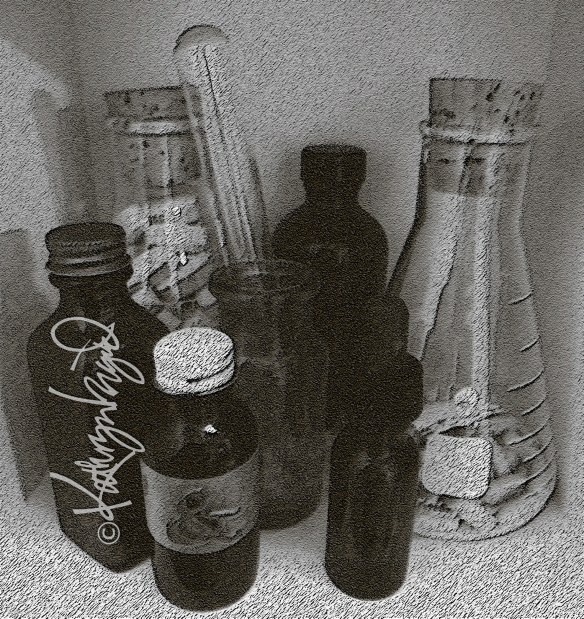
Photo: Calculated Risks

I guess I just never was big on taking risks.

That was how it sounded to my young ears, anyway. My best option was listed as joining the military, not the most obvious choice for a deep-dyed pacifist. I certainly was no Daughter of the Regiment, born and bred to the military life.

Future Me #2: working in a funeral home. Now, lest you think I’m denigrating funeral professionals or that I consider them or their work boring, that couldn’t be further from the truth. I want minimal fuss, maximum simplicity, when it comes to disposing of my corpse: recycle any usable parts for medicine and science, burn the rest without flourish, and throw out the ashes as compost ASAP. But funerary services aren’t for the dead, are they. Those who offer care and consolation to anyone in need, especially in grief and loss, have my highest respect. It’s tough and complicated work, and tremendously important. I’m just not the person for the job. I haven’t the knowledge, the skills, or the selflessness that doing that admirable work requires. It would take a more creative and positive approach than I can offer.

I don’t lack for imagination, and I’m not wholly without empathy, I hope. But perhaps my peculiar kind of imagination—the surreal and byzantine, the cheerfully macabre—is not the very best sort to be exercised in most funeral counseling and service arrangements, let alone in preparation of a person’s remains for a dignified viewing and memorial service. And there are the added complications of my being easily overwhelmed by others’ worries and struggles, never mind my being horrendously squeamish. If the High School guidance counselor thought it’d be a hoot to see what happened when he put me into the parlor with a grieving family and I suggested they convert Grandpa’s remains into a friendly robot to keep them company and tend to their housekeeping, following that recommendation immediately with a fit of hysterical cackling and a dash out the nearest door to vomit, then perhaps he had the right candidate. Green Gremlins in my future as well as my past.

Photo: A Boar No More?

I’ve always loved the interesting landscapes, history, and art in cemeteries, and I don’t mean to be a pig about it, or a boor, but funerary work didn’t seem like my destiny to me.

The military option was at least in one way more realistic: part of me does crave order. So many other characteristics (dare I say it) militated against my joining any of the armed forces that it was an obvious non-starter for me, but all of these years later I still find myself  wanting to bring more order to my daily life. Starting a daily blog was a good step in that direction, when I did it four-plus years ago. Now I need to extend that discipline to other areas of my day-to-day occupations so as to maximize both their productivity and my pleasure in them. I expect both better health and more enjoyment as payment for the new commitments.

What elements of life would I like to habituate more fully by regimenting them with a slightly rigorous daily schedule for now? First, sleep. Yes, I know that you know I sleep far more than average, and I relish long, uninterrupted nights. I would rather sleep less but more healthfully, to be honest. Be more dependably, deeply asleep, and a bit earlier, and then more fully refreshed and alert when awake.

Hydration is a higher priority than ever, too. It seems small enough, but the good doctor who just shot down my kidney stone assures me that no matter what my geological analysis reveals, I had better start drinking more water to stay healthier, and I know that if I don’t just plain schedule it in for a while, I’m unlikely to remember to make it a habit. Exercise is another such thing. I have no desire to become an athlete. That’s neither in my inherent character nor on my wish list; I do, however, want to be set up for as long and healthy a life as I can manage, and the sedentary nature of writing and making most kinds of art is both antithetical to physical movement and so engrossing that I tend to forget to merely take breaks to move. If I schedule those breaks for a while, just like any old-school union employee, I hope I may train myself to improve in that regard.

I’ve already become slightly more regulated in my dietary ways, since my spousal-person and I successfully navigated our post-summer month of rehab-style eating (low carb, low sugar, no processed and junky foods) and both feel better. Good encouragement to continue the process with diet and otherwise.

The most important piece of the newly regularized itinerary for my average day is to shift the focus of my writing and artistic discipline gradually away from being dedicated to daily blogging and toward a new, more personally fulfilling version of my creative output. More books for publication, probably, on the relatively near horizon. A reduced blogging schedule, something more like three days a week, will certainly help me in that regard. But I think I’m just getting a little hungry, whether it’s more from four-plus years focused on that daily post or from merely getting a little older and more constantly aware of my finitude, the ever-increased nearness of my own need for funerary services from somebody who took the career path I didn’t—it doesn’t matter why. I’m just feeling ready to ramble in a new direction, and the only way I generally get used to such things is to build them into a Plan, for starters. To regulate and codify and systematize them into a semblance of order.

I never did join the military, but it turns out I tend to do fairly well in my own regiment.

Photo: Ah, but Witch Regiment?

Maybe I *was* destined for a more regimented life. Ah, but witch regiment?

In a Perfect World

Photo: In a Perfect WorldIf the universe were flawless, life within it ideal, and I supernally fine, I would arrange so that my dear, darling spouse could have the most beautifully untroubled and magically rich existence in history. When he woke up every morning, angels would fan him with their wings while serving him pizza and ice cream to his heart’s content and he’d never get uncomfortably sugar high no matter how many slices or scoops he ate. He would be wafted from rehearsing one unnaturally skilled and committed choir to another, each accompanied by the finest instrumental resources available anywhere, all the while enjoying the acoustic majesty of whatever stupendous space he desired at the moment. He would flit effortlessly to every city, country, and continent next on his wish list to make music or just to wander and rejoice in the culture and landscape, the people and history and endless other gifts of each dreamy locale, until he longed to be whisked to the next. He’d have a glorious day hike on Mt. Rainier any day he wanted, no matter where he was for the rest of the day.

And all of this would find him accompanied by me—but the fabulous, unimaginably sweet and brilliant and supremely good-humored version of me. Probably nicer to everybody than I have ever been, but especially to my husband. I might even be a good enough singer to qualify for one of his incredible choirs. If we wished. In a perfect world.

Especially today, it’d be nice to think he could exist in this perfect world. It’s his birthday, and I wish him every good thing on every day, with a plus-plus-plus-sized wishing on his birthdays. Sadly, no luck on that front. He woke up to the gentle breeze of my snoring, no angel wings. No sugary treats—homemade chili for dinner. Well, okay, a bit of chocolate for dessert. The choirs and ethereal travel…all of the other infinitely sweet wonders I wish were mine to offer him in vast quantities for every day of his long and deliriously happy life…only a dream, in this imperfect world.

But the love we share makes my world a greater joy, and I’m here to say that I hope that I can get better with each passing year at returning the favor. If all the perfection I can offer my beloved is to love him as best I can for as long as I live, then that’s what I’ll wrap up in silken tissue and a bow for now. He’s pretty tolerant of imperfection, I find, and that’s perfect for me. Happy birthday, my love.

I’m Dying to Know

Do you dare to think about your own death in reasonable, detached terms? Do you think that’s morbid and grotesque to even consider, or do you find it easy? If you find it easy to contemplate in the abstract, is it because you suffer from depression or are suicidal, or is it simply that you recognize living as an inherently terminal condition?

This is big stuff. Even the clinically depressed are sometimes able to recognize, on those tiny instants of light in the midst of the abysmal dark, that their death, no matter how insignificant and unworthy they may think themselves, will affect others. I know this from experience, and from lots of reading and conversation and observation. I know that even when I was at my lowest—thankfully, not as hideously low as that reached by many, as I know in retrospect—my rational moments told me that no matter how they felt about me, or even if they didn’t notice me at all, when I was alive, everyone who was peripheral to me in any way would have some tidying-up to do after my death. Physical, perhaps, for those to whom body removal and disposal fell, but whatever tiny tasks I was not present to perform anymore would either default to another’s To Do list or leave a gap, incomplete. I realized that I am the butterfly effect, in human form. You are. Every living, breathing being has a space in the universe, a purpose, and however unnoticed in life, has an impact both by living and by dying.

All the same, I feel especially fortunate that in my family, talk about death and dying were far from taboo. It wasn’t all that uncommon to find the dinner table talk veering in that direction, if somebody we knew was unwell or had just died. We didn’t need euphemisms and pussy-footing to protect us from the reality of death. It’s nothing more or less than the inevitable cessation of life, and if we can’t talk about that, we’re stuck dealing with all kinds of petty and logistical nonsense just to get through the process when we’d rather be spending time living and loving each other and getting through the complexities of the occasion with a modicum of grace and humanity.

So my family already knows that I would prefer they donate what they can of my organs or remains to someone who has a better chance of survival and health if I give it to them, or to scientists who can learn how to give future patients that better chance. In fact, the government know this: I’m on the organ-donor registry, should I die unexpectedly or with usable parts intact. My loved ones also know that I’d prefer a minimum of fuss disposing of whatever remains of my physical shell after that, the cheapest and quickest cremation and scattering of my ashes being my top choice. I figure that any Supreme Being capable of inventing the human creature from scratch can easily put me into another, newer shell if and when it’s my turn to exist in any other form, and as for the current body, it’s a good source of recyclable carbon and nutrients to replenish any part of the earth that enjoys a good, tasty meal of ashes, say, my long-loved flowers the irises.

Those close to me also know that I have far less interest in what they do to celebrate or mourn my passing than the still-living will. If the occasion of my death can be used as an excuse for a marvelous concert to raise awareness or funds or mere pleasure for the sake of a musical group, whether my spouse is still alive to conduct or attend such an event or not, that would be lovely. But hey, I’ll still be dead, so y’all can do whatever it is that makes sense to you and I promise I won’t roll in my grave or be a pesky poltergeist or complain in any other way. Still dead, if you didn’t catch my drift.

And that, in fact, is a beautiful thing, and a great comfort to me. I don’t look forward to the actual process of dying or the moment of my death. I’d happily live a long, long life in great health and an approximation of sanity that seems cheery enough to me, before dying for real. But once I do, I feel genuinely confident that none of this worldly stuff will matter to me in the slightest, so as much as I like to “plan” ahead to keep my survivors from any terribly fussy practical matters in the event, I’m not worried. Go ahead and dance on my grave, if there is one. Keep on living. Don’t worry about me; I’ll be fine. Really.

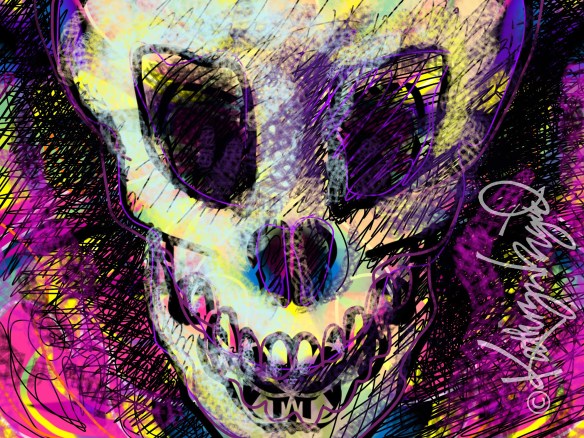
Digital illo: Mine was a Death's Head

To My Health!

To all of the world’s citizens who don’t get to enjoy gloriously good health: I am sorry. I am very, sincerely, truly, awfully sorry. I know that I’m incredibly fortunate to have enjoyed a life of mostly stupendous health, with few bumps along that road. I’m just superstitious, or pragmatic, enough to recognize that only a few little atoms or cells, a small dose of good luck and a platoon of guardian angels, or a couple of nanoseconds, separate the deathly ill from the sparklingly healthy among us, and all of this knowledge or intuition makes me all the more pleased with my incredible good fortune.

Photo: Nasal Catarrh

How’s *this* for a compellingly charming and romantic read! Imagine reaching over to the bedside table for a little light bedtime perusal and finding this lovely tome in hand. Among other things, I suspect I’d feel the urge to get right back up and wash my hands, imagining who was previously thumbing through the book!

Once in a while I get a little tickle from the universe to remind me just how lucky I am to be a healthy human. Most of the time, it’s nature and circumstance showing their cockeyed sense of humor by putting jocular hints and signs in front of me as I go along my way. It can be more pointed and poignant, too: those whom I love and hold dear, along with so many who are not connexions of mine, battle poor health and infirmity and imminent death every day around me. This is the painful and stark reality of our mortal condition. None of us remains untouched, unscathed.

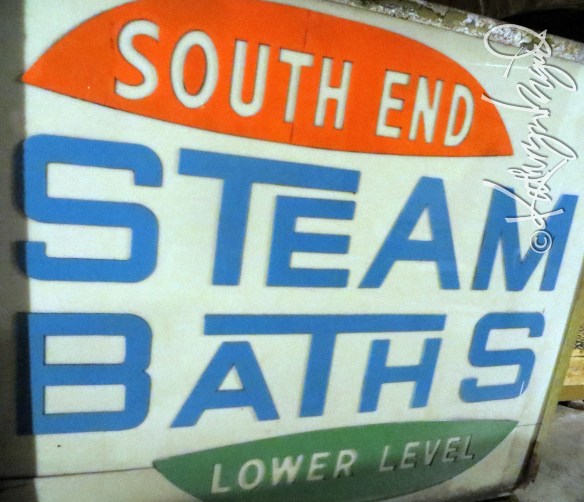
Photo: Steam Baths

This vintage sign always amused me when it still hung street-side in Seattle. Now, it lives Underground there, where it’s seen only on history tours of town. Once, it might have signaled (besides the subcultural club scene with which it was once associated) an old-school nod to better health. Me, I hope very much that I will stay on the better health side of the equation for a good long time before I, too, go Underground in my own way. Meanwhile, I’ll be careful to keep my “lower level” steam cleaned. Wink-wink.

But I will remain grateful forever, knowing as I do how near the precipice we all dance and how finite human existence will always be, for the long stretches of grand health I enjoy. If there’s any way for my wishes and hopes, prayers and positive vibes, to reach even one other person on this earth with equally blissful health, I am committed to putting those tendrils of care and hope out toward each and every one as well. And I salute, in great hope, to your excellent health!

Things I’ve Learned

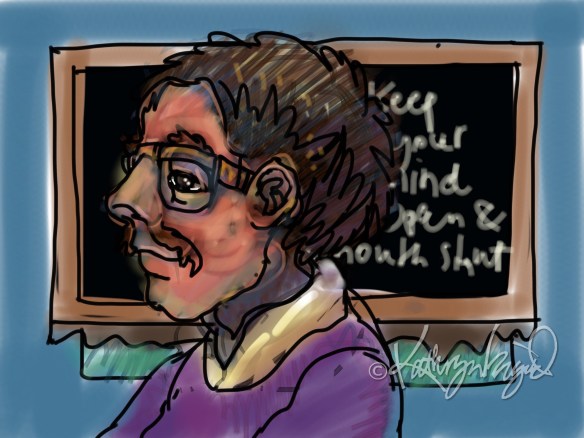
Most of the stuff I’ve been taught over the years hasn’t stuck especially well. Key among the useful and meaningful skills and knowledge that have been handed down to me are the remarkably applicable ones wherein I ought to spend most of my energy on keeping my mind open and my mouth shut. Many a disaster can be averted, I know, and many a mountain scaled, if one only practices this simple-sounding combination. But I also know from long experience that the person able to perform this remarkably magical duo of acts on a consistent basis is all too rare, and I am hardly the best practitioner of them.

Other people’s shortcomings, of course, are neither my excuse nor my problem: it’s I alone who need to iron out the kinks in this skill set. Along with these, there are a huge number of additional talents I ought to have cultivated better by now, knowing as I do through experience and example how significantly they can and should improve my life and the lives of those around me. For example, what if I stuck to the demonstrably excellent principle I’ve been taught, in which one stays focused and present in the now, the moment being lived, rather than entangled in mistakes past or muddled by the ever-impossible-to-read future? I can only imagine I’d waste a whole lot less time, energy, and worry, and spend it much more profitably and pleasurably.

I have learned a lot of things that, on their own and at face value, seem quite minute and insignificant but can actually be useful, if I pay attention to them. And if I bother to consider their inverses, their hidden sides, they may all the more inform and improve my existence. Life isn’t all clover and strawberries. Yet, as it happens, the occasional, if less-adorable, onions and garlic can season delicious dishes that even the most sensitive palates can love. A weedy dandelion brings provocative beauty, sometimes by its mere contrast, to the most refined and orderly of gardens. At times, the best company is oneself alone. Bigger, newer, louder, faster, stronger, and prettier are not always better. Cuddly looking creatures can bite. Long, heavy books can be well worth reading, but “Classics” aren’t always so.

Does hearing, knowing, practicing, or appreciating any of these tidbits really make me a better or more righteous person? Nope. But a longtime practice of attempting to find and test such little specks of potential goodness in the chaos of life might—could—help.
Digital illo: Things I've Learned

I’ve learned a lot of brilliant and useful things in my lifetime thus far. It’s too bad I’m not always good at putting them into practice. But I’m working on it, really I am.

What has been and will always be…

Photo: In the DistanceYou have forgotten my name.

My face is familiar, but you’re not sure in what context it belongs. Am I from a magazine cover, or someone from your healthcare team, or am I your firstborn child?

What was it we were discussing there a moment ago? It floated away in mid-sentence, along with the coffeepots and suitcases that just now floated by the window. Never mind, we’ll talk about it again sometime soon. And again, and again. We may not ever reach the end of the sentence anyway, since so many things, unmoored, float by the second-story casement while we’re sitting here.

We sit here a great deal now, indeed, because you’ve forgotten that you can walk. Once in a while you stand up, out of the blue, and stroll to the hall and stand there, pondering, until someone at the nurses’ station twenty steps away sees you, strides down to your room, and swings your wheelchair over to where you sit back down in it without noticing and ask, Are we on the way to My House?

The answer is always Yes.

When I come to see you, yesterday is millennia ago and you’ve missed me in the long years since I saw you then. If you speak, it’s of the more recent yesterday when you were newly out of school and first in love, and you speak in the present tense of how you expect a visit at any moment from those you knew—now dead. If you speak at all.

Often, in silence you look out that second-story window to see the world projected from behind your eyes. Whenever you turn to the room it’s as though I’ve just arrived. And you still can’t remember quite how you know me or why you can’t put a finger on my name.

You tell me a garbled but elaborate tale about someone with my other parent’s name, your late spouse’s, who according to you has just run off with your (also dead) best friend from school and they’re now shacked up in Tahoe, a place you’ve never been. Then you’re silent again, perhaps thinking further on these events so vividly real in the new world of your mind, never finding it improbable though that school-friend moved to the East Coast years before you’d ever met your One True Love.

Later in the week, their names have been bestowed on two tiny stuffed koalas that arrived clipped to the stems of a small bouquet that was sent last winter when you had had your sixth, or was it your seventh, minor stroke. See? I can’t remember now, either.

But over these last few years, it’s come to matter less. I stopped correcting you, only after much futile and agitated foolishness on my part. It took me too long to learn that. It took me too long to learn that Denial was a river that would only drown me, while you might float along with much less sorrow if I let you go wherever it is you need to go. I learned to agree with you no matter how odd the claims, and to remember at last that my reality is hardly the only one; perhaps it’s not even the truest one, at that. After all, wasn’t it you who allowed these possibilities in me when I was very young?

Yes, I recognize it now, though you cannot. When I was small—in days that even I can’t recollect—you agreed with my outlandish claims and played along when I imagined things. It wasn’t purely to amuse me and encourage my imagination, but you knew, as parents do, that it was real enough to me. When it mattered, you’d agree, and they you’d carry on with the action of Real Life, sheltering me from its harsher blows and steering me around the dangers calmly as we’d go. I talked my nonsense and you were there to set me back on my feet when I forgot I’d started learning how to walk.

I couldn’t always remember right from wrong, let alone the difference between pretending and what was real. You remembered it for me so I could live comfortably in those spaces in between where most of us exist a lot of the time when we are small and the boundaries are still so permeable. I’m just learning, now, to find my way back in and visit with you there. And you, forgetting that I’ve lost my way, lead me, without the need to try, because we’re headed Home. Yes, we are. The answer to that is always Yes.Photo: Other Planes

For Grandma, who dwelt in the alternate universe of Alzheimer’s for a few colorful years before wandering out of this plane forever.

50 Wishes for Happiness

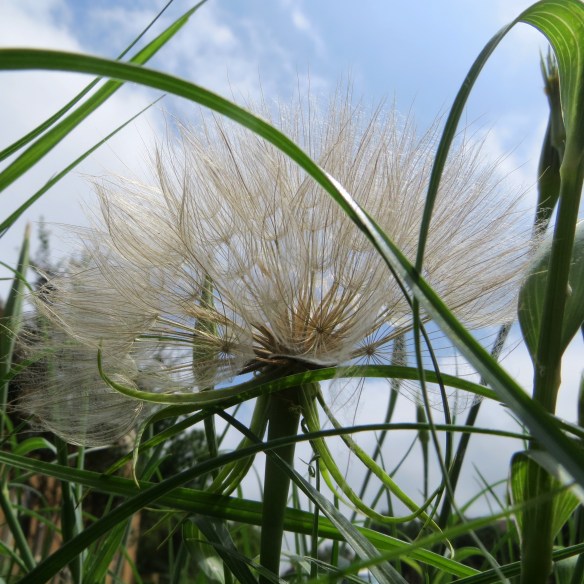
Photo: Carry My Wishes to the StarsOn the most auspicious sixth day of June in human history, my youngest sister was born. If you don’t know what made it the most auspicious, you haven’t met my youngest sister. On this anniversary of her birth, I offer her these wishes for this and many, many birthdays yet to come. Blow on the seeds and let them carry the wishes up to the stars (I give you a milkweed rather than a dandelion, because the former are bigger and bolder, and every seed makes a new plant to feed both butterflies and even more wishes)—Kjæresten Min, may you:

1: Always know that you are loved.

2: Live surrounded by flowers.

3: Breathe fresh air deeply and often.

4: Be grateful for your good fortune.

5: Embarrass yourself just often enough to keep you humble (but

6: also) Wear the armor of unassailable self-confidence.

7: Find money under the furniture every time you clean house.

8: Get hugged whenever you need it.

9: Be generous at every opportunity.

10: Enjoy your ongoing status as the Smartest Sister.

11: Hear fabulous music wherever you go.

12: Never have awkward holes in your clothes.

13: See rainbows in every rainy day.

14: Rest and recover easily.

15: Never be too mature for anything important.

16: Live long and well.

17: Wear only what’s comfortable.

18: Choose joy, every chance you get.

19: Let politics roll off your back.

20: Never sit next to a person who smells awful.

21: Learn to enjoy everything you Have To Do.

22: Be a little wild when you can.

23: Have underwear that never rides up and socks that never fall down.

24: Always be comfortable in your own skin.

25: Smile knowingly with great frequency.

26: Have plenty of opportunities to stretch your horizons.

27: Stay warm enough in winter and cool enough in summer.

28: Wear your silliness proudly.

29: Revel in great good health.

30: Keep monitoring the halls because you care.

31: Be forever glad that you live wherever you live.

32: Frequently learn new things that interest you greatly.

33: Never run out of chocolate.

34: Tuck and roll when necessary.

35: Age with style.

36: Travel in comfort and explore with relish.

37: Be invisible to pests.

38: Think every day is the Best Day Ever.

39: Remember the stuff that matters to you.

40: Forget everything that makes you sad.

41: Immerse yourself in welcome silence.

42: Avoid toxic situations neatly.

43: Keep your savoir-faire intact.

44: See your beauty as clearly as others see it.

45: Miss every pothole in the road ahead.

46: Celebrate at any-and-every excuse.

47: Find unexpected goodness around you everywhere.

48: Be overflowing with contentment.

49: Continue to shine brightly.

50: Always remember that you are loved.

And have the happiest birthday yet…until the next one…and the next…!

Good Night, Sleep Tight. All Right?

Last night, crabby me; lucky me, maybe, because it was for a good cause, but I did not enjoy the sleep study. I was getting tested for sleep apnea, though both the doctor and I suspect it’s more likely new allergies are the impediment to my night breathing and sleep. It was genuinely interesting to have the nice and friendly technician, Mohammad, explain to me all that was being monitored as he wired me up (dang! A perfect Selfie op missed!), including not only my breathing and pulse oxygen levels and heart rate but also limb motion for possible restless-leg syndrome, and EEG to see whether I have any detectable brain activity at any time. Unlikely, as you all know.

But I also wasn’t supremely keen on driving a half hour on our yucky under-construction-ripped-up-everywhere freeway to the lab and back—in an incipient thunderstorm on the return—for a wonderfully UN-restful 9:30 pm-5 am “sleep” that probably totaled about 5 hours of actual unconsciousness. For a person who craves 9-11 hours at a minimum (also a reason for the apnea testing), not my idea of restful. Getting awakened in the pre-dawn dark and effectively kicked out of the house is not my favorite thing even when I know it’s to take off for a fabulous vacation! This morning, of course, in addition to knowing I was going to have a very short night, I was freezing under a skinny blanket with the ceiling fan helicoptering madly over my head, and was told to stay on my back the whole time, too, my least common or favored sleeping position in the first place. I sure hope I’m right about not having apnea, ’cause then I don’t have to go back next week and do this again but with a night breathing Apparatus being fitted.

Although it was almost worth it all to get home and look in the mirror while I washed up and see what looked like humongous globs of snot here and there in my hair. Good thing the scalp sensors are glued on with water-soluble stuff!!! Something sort of like the old-fashioned butch wax my spouse and many of his pals used to groom their flattop haircuts when they were kids. Scrub, scrub, scrub. The body sensors were attached with a more typical bandage adhesive, so they just left grimy circles of a suction-cup sort here and there on my shoulders and legs. So many remembrances of my special time. Here’s to this being a one-time thing.

Needless to say, back home at 6:30 this morning, I washed my snotty hair and piled right into my own bed for another 5 hours, my actual night’s sleep. And then took a 2 hour nap late in the afternoon to top it off. Don’t want to be too tired to sleep through the whole night tonight, no matter how clear my breathing is. I have priorities, you know.Digital illo: Sleeping Beauty

Going Viral, Part 2: The End of Civilization as We Thought We Knew It

Digital illo from photos: Self-Destruct Mode

Self-destruct mode is easy. Living wisely is hard.

While I’ve been having my tawdry fever-dream worries about unequal health care and expanding populations competing for dwindling resources amid name-calling politicians, suspicious citizenry, and fearful doomsday announcers, there are plenty of other aspects that nag at me as parts of the larger knotty problem. (Aside: is it knotty of me to point that out in the first place?) How do we reconcile the desire for a well-balanced, healthy, safe, educated, and relatively comfortable populace with those ever growing numbers?

This planet is finite. I hear highly educated people saying that we have both the brain power among the best of our species to make our equally finite natural resources capable of stretching to serve the needs of the whole world’s population. I hear some of these same bright lights claiming that the potential is here and now ready to enable humans to live far longer than the current average. I’ve no delusions of mathematical or scientific adequacy, let alone grandeur. But my limited powers of discernment and logic make me skeptical of the veracity and practicability of these claims; even more so, dubious of their desirability. Explain to me why I’m supposed to be so excited to live 300 years.

I’m not too enthralled with the idea of outliving many of my beloved family, friends, and favorite connections, whether the latter are places or experiences that eventually become outmoded or impossible for any reason. Not crazy about having to expand my thinking to find ways to occupy and better myself for not just decades but tens of them. And where’s the appeal in living a zillion years if I have to work three-quarters of a zillion to keep myself in milk and cookies? I have little faith that the American Social Security system will sustain me through the span of a now-typical life in comfort, let alone the attenuated sort being proposed. Where is the food, water, shelter, and acreage necessary to support more of us for so much longer going to be found? If I don’t die for lack of some such thing, will I languish in boredom until I wish I could die? No, really, I’m asking.

If even a sizable handful of humans live that long, I’m inclined to think their wish for such expansive longevity has less to do with all of the additional goodness they can shower on the world and its inhabitants than with how much more they believe the world and all of its inhabitants can do for or give to them. If even a couple of those millegenarians succeeded, I don’t imagine them skipping around the globe and tossing vials of AIDS cures like rose petals out to the milling crowds of children who have been born infected, or composing chorales so mystically entrancing that everyone in earshot will suddenly burst into united song and lay down their enmities, forgotten for eternity. I have more of a pessimistic image of them spending their length of days and years figuring out ways to acquire, win, or steal more, to hoard more, use more, and waste more—without being called to account for it all. Oligarchy is the longest socioeconomic tradition I can discern in human history, and I don’t think any opportunist able to spend more years perfecting that pursuit would likely be inclined to do otherwise. In fact, I would guess that those best able to push their way first in line to receive the treatment and support it will take to live 300 years will already be wealthier than the vast majority.

So what might we get? A rebellion from the planet’s resources themselves, perhaps, like the accelerated depletion of space for the competing needs of farming, manufacture, and residence that outstrip the miniaturization and optimization of those physical systems. What happens is not inevitably so, but historically speaking, it’s typically competition and division. Somebody wins, and more somebodies, both human and other, animate and not, lose. And, also in the long historical tradition, it’s the rich and privileged who win and the poor and disadvantaged who lose. No matter what you think of Darwin and evolution, by the way, there’s plenty of recorded and even remembered history to demonstrate that riches and privilege are no more a guarantee of moral fitness and communal palatability than poverty or lack of resources ever proved that one was inherently rotten or nasty.

Do we just lie back and let chance decide everyone’s fate, with a good shove from the encouraging hand of whoever can afford it to favor their own interests? Sounds to me like a good starter recipe for fomenting an increased appetite for eugenics and eventual genocide. I would hope that we could learn to prefer a taste for a good, balanced stew of self-restraint, collective and collaborative work for the widest benefit, compassion for the weak, and the kind of independence that’s less about cache-building and stockpiling and fortresses, more about how each of us can supply more of our own needs without denying  others’, and how one person’s brilliance can be harnessed to shed light on the widest possible sectors of life.

If we’re too preoccupied with how to get other people to conform to our beliefs and ideas, how to keep our Stuff safe from anyone else using or benefiting from it, and how to make more room for more and better Stuff solely for ourselves, none of this is going to happen. I tend to think that few of us who are safe and well-fed and educated and privileged spend enough mindful time recognizing that we are so only because of all the other living beings who work and sacrifice to make it possible. I can’t fix basic household plumbing. I can live without it, I expect, but probably only until I start to get too cold, hungry, scared, ill, weary, or lost to manage one more trip to the nearest stream for semi-safe drinking water or one more trip to a quiet spot where I can relieve myself far enough from the same drinking stream. I can’t find my way from my own front porch to where my spouse works without constantly consulting GPS, so getting from home to the nearest place I could safely forage for food not tainted by the traffic and household waste of suburbia would be quite the stretch indeed, especially on foot. I rely on so many others to keep me alive and functional that I can’t even wrap my brain around the gap between my abilities and the comfort in which I live, and I suspect that most other middle-class persons, never mind the much-maligned One Percenters, would struggle in the same way.

Seems like an opportune point in our history to pause and reflect on why it is not only a benevolence but a necessity that we do our best to feed, clothe, educate, heal, and make very good friends indeed with the rest of our kind, and perhaps most of all, those we too easily forget to think of as our kind at all. We’ll pay for the privilege one way or another. I, for one, would rather do so by choice and with the hope of friendship as its basis than by force and in fear, knowing that I have stepped on too many backs on my way upward to have hope of anything in the end besides a very, very long fall.

I’m feeling better already, just thinking about it.

Going Viral, Part 1: The Texas Sore Throat Massacre

Digital illo from a photo: Going ViralI’m sorry if I breathed on you. I was unknowingly the “I” of the storm. Patient Zero. One hand on the door knob; ten thousand infected. The maker of monsters, incubator for incubi. Thankfully, I have not yet come across a single one of my hundreds and thousands of contacts throughout this winter who was evidently poisoned into illness through contact with me. I never had any of the usual indicators of being contagious during the whole time I had my various and numerous waves of feeling lousy: no fever, no evidence of strange-colored, pungent crud emerging from anywhere in or on my person…unless you count the slightly hallucinatory character of my thoughts in their natural state. My doctors, when I finally saw them, didn’t seem to think I had been particularly dangerous.

So I wasn’t quarantined. I didn’t get hermetically sealed in a makeshift NASA bubble-style ICU. I didn’t even get quite miserable enough to go to the doctor with my complaints until about ten days ago, despite having felt uncharacteristically unwell so many times through the winter, when I generally manage to go the whole year without suffering more than, at most, one cold. I just dragged myself around with a wan little, pasted-on smile.

But here’s the thing: that’s how Bad Stuff can get passed around. Not every little germy critter that sneaks its way into our bodies, even in this very knowledgeable, clever day and age, is necessarily that easy to spot, let alone to treat. Just because modern medicine can recognize so many more diseases and injuries and conditions than previous generations knew doesn’t mean that every medically trained person everywhere would recognize even the majority of them quickly and easily, never mind how unlikely any of us commoners are to notice and understand them ourselves. So for all I know, while I thought I was being the appropriate combination of careful for others’ safety and stoically dedicated to keeping up my own commitments during the whole fun winter, I might as well have been opening the door to unleash Pandora’s Pandemic. I might have been Typhoid Mary the Second.

Let me be clear about a couple of other things, too, though.

First, I grew up thinking that the nickname of Mary Mallon was as good an epithet for a vile and deliberate criminal mastermind as any. But in more recent years I’ve had reason to revisit that idea and wonder if she mightn’t possibly have been as much victim as villain, after all. The current political climate of preferring divisive self-righteousness and sniffy dudgeon on all sides of any issue about all of the evils perpetrated, always, by Them, not Us, makes it remarkably hard to establish and enforce any policies that do any genuinely positive things to make societal problems any better—poverty, education and healthcare being always top of the list. They’re always somebody else’s fault and everyone else’s problem. I can easily imagine a modern plague getting the better of this entire country as much because we refuse to cooperate with each other and pay attention to some basic survival instincts and practicalities as because anything were especially virulent or unusual.

If we refuse to converse and cooperate, we have no one to blame but our own desire not to be subservient to any greater good. The law of unintended consequences visits its ugly repercussions on us all at times, and most of all when we are busy wishing everybody who isn’t in our happy little 100%-shared-view groups would just stay quiet and out of the way.

Reality works quite differently, as history should have taught us all long ago. If, for example, (a) we don’t provide health care for the indigent/impecunious and (b) they become ill but must find some way to pay for health care, then (c) those able to do so will continue to work when ill. They have no other clear way to pay bills, feed families, and get tasks done than to do the work themselves as always. If (d) the only kinds of work that marginalized populations tend to be able to get are in servitude, then (e) their work will most often be in service work like hourly hire positions as housekeepers, janitors, maintenance workers, food service employees, day laborers, child care workers, and personal health assistants in private homes, nursing care or rehab facilities, and hospitals.

That’s right: if we don’t take care of the poor unless they pay, they will continue to work as long as they can drag themselves there, and the work they do is often both the lowest paid—where, as a bonus, it takes longer to earn enough, while sick, for their own care—and the highest social contact-oriented in all of society. If we want to be truly Dickensian, we can repeat the Typhoid Mary solution as well and imprison the ill to keep them from working; at least in that instance, we can make the choice to either care for that new prisoner or risk his/her infecting the prison population, which again in Dickensian terms could “decrease the surplus population,” but of course containment will remain an ever-growing issue, if the prisoners are dying in droves and the staff either succumb or, more likely, refuse to return.

Meanwhile, let’s just imagine, as some folk are inclined to do, that the majority of the poor anywhere are illegal immigrants and layabouts who only take jobs away from natural-born citizens and live as criminals by choice. We certainly wouldn’t want to either train and motivate any natural-born citizens who are layabouts to do any of these highly desirable jobs that have been stolen from them or, perish the thought!, educate and give incentive to both groups. Thankfully, we have a whole crew of people in many sectors of the political realm working hard to see that there’s plenty of money allocated to such progressive and humane and productive activities as developing larger PACs and private donation coffers to better control election results, and keeping business strong in the blessed US economy by letting larger and larger mega-corporations swallow up dwindling independents until they resemble nothing so much as a snake that has snacked on a water buffalo. I know that I, for one, am greatly relieved that we are nationally so opposed to monopolies, or I might mistakenly think they were popping up by the dozens. It’s also comforting that the same herd of politicos of all stripes have among their numbers plenty who think that the best way to finance such boons to humanity is to cut budget waste in areas like state funded universities, social services, and other massive boondoggles like universal health care. Clearly, educating, mediating, and healing larger groups of people to interact and live in good health, productivity, and harmony is an evil conspiracy.

You could say that feeling unwell makes me, unlike the hardworking poor, prone to lying around and getting irritable, misanthropic, pessimistic, snarky, and critical of the state of this so-called Union. I certainly won’t argue if you accuse me of thinking we’re a lot of selfish, under-informed, entitled rich people and a counterbalance of too many people who can’t support themselves and their families with the paltry resources left for them after the top feeders have had their fill. If, as some social commentators and economists and even scientists claim, the concept of surplus population and limited resources is a fallacious or at least far from inevitable construct, since we theoretically have the brain power to make what already exists on this planet into resources and better distribute them, then I can think of few better, more immediate, or more visible places than health care, civility, and education in which to begin this process. And I can’t think of any valid excuse for anyone who believes in the value of a single human being not believing in the potential value of each human being and thinking all worthy of the effort. Good citizenship and care for others should not be a partisan Issue.

Knowing thus full well that we’re all capable of being stupid, lazy, entitled, paranoid, or just plain bad (just read or listen to the news, if you’ve somehow forgotten this), I still don’t think we should just assume that anyone is any or all of those. Isn’t it better to encourage and defend kindness, generosity, trust, humility, respect for differences, and joy in our commonalities?

Even I, at my most crabby old complainer moments, think it worth a try to do better. To be better. I would hope others might think me worth the effort.