Will You Sing in My Stead?

graphite drawingWhen I can Sing No More

When I am weary, worn beyond all reckoning,

My breath is gone and voice has ceased to sound,

The darkness draws me in, its silence beckoning

And luring me to lie down on the ground–

To fall asleep; perhaps to melt there into death,

Because I can no longer coax my throat

To speak of joy, or yet to longer draw a breath,

To sing a song as long as one fine note–

Beloved Friend, how sweet if you will stand for me

And draw the air that lifts the lark to wing

Its way across the sky–if you will kindly be

My voice, and raise your own aloft and sing–

For in my silent darkness I shall never die

Long as your voice goes on and in your song I lie.

Rust in Peace


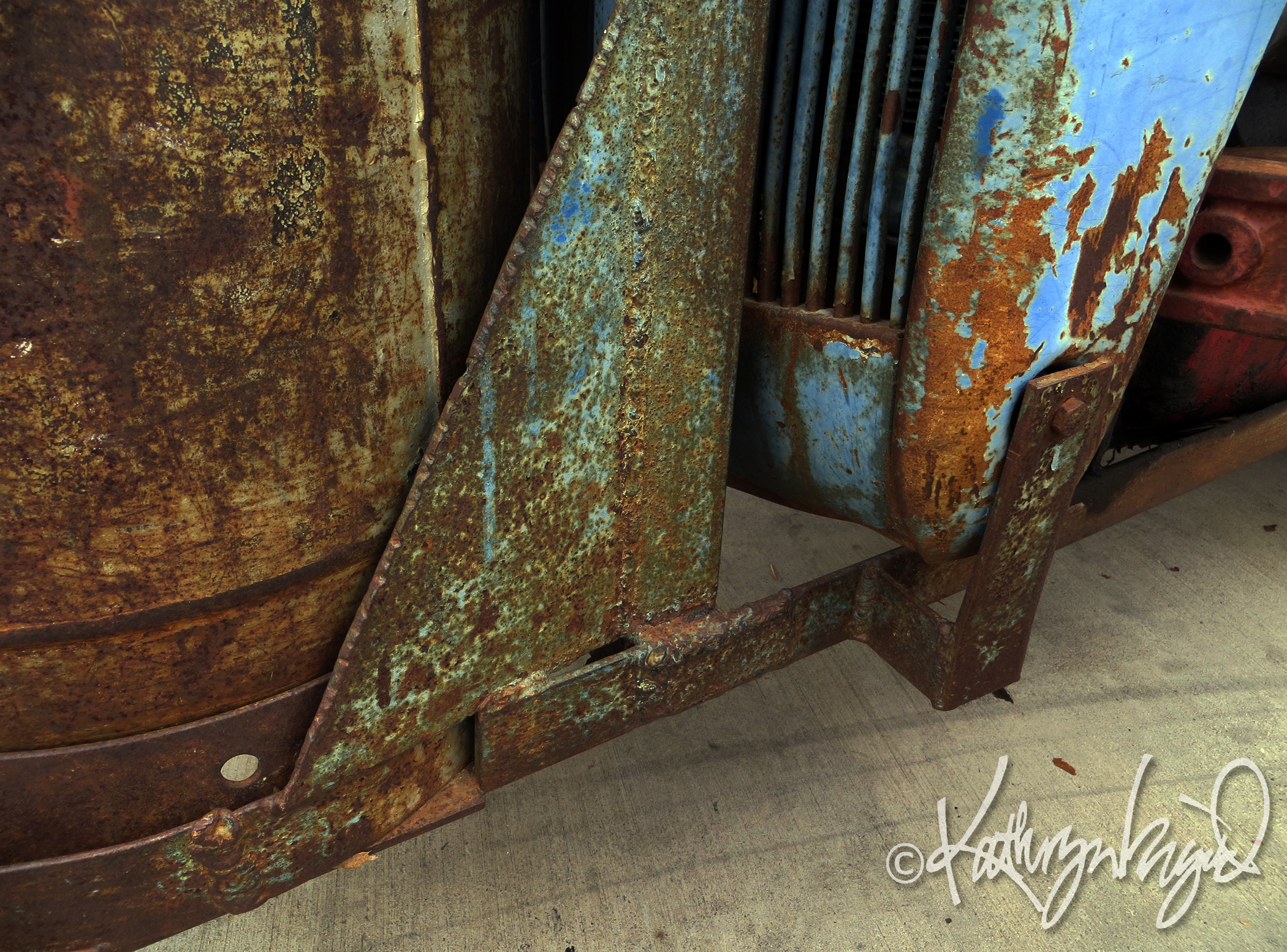
I flatter myself that I am improving with age. This morning’s Wordsmith offering from the fabulous Anu Garg of A.Word.A.Day was ‘crepitate’–one of my very favorites, thanks to the also fabulous S.J. Perelman‘s introducing it to me in the context of one of his typically scintillating, outrageously funny tales. I was reminded that crepitation refers to the creaking cracking popping grinding and other percussive noises of dusty old age, and that, not at all surprisingly, Perelman used it in self-deprecatingly hilarious description of his own antiquated joints as he gave what one must assume was–despite his stated intent of dash and panache–a dance demonstration to his date that was more rusty than rakish. Having done the requisite amount of damage to my own human machinery over the years by falling over and off of things, lifting things I had no business hefting, and in turn, turning, squeezing, smacking and otherwise torquing various portions of myself just enough more out of sync and syncopation that it’s remarkable if I only creak and don’t fall into syncope or crack up altogether.

So, whether dancing or just shuffling my slippered way around the hallowed halls of home, I consider myself  very fortunate only to ‘boop, whoosh, queel and grake‘ like another of my pantheon of fabulous wordsmiths, James Thurber‘s, old family car, and not to simply disintegrate wholly on the spot. Grey hairs? Bring ’em on! (Best color of hair I’ve ever owned by nature, as it happens.) Wrinkles? Oh, my, yes. Smile creases are only a badge of honor reserved for people who’ve had long and happy enough lives to earn them. Aches and pains will generally come and go, with more of the comings than the goings as time passes and I forget to accommodate my crepitude a little, but by golly it beats lying around and dissipating into a dust bunny of boredom.

And honestly, lots of things get more beautiful not just in spite of but because of their evident age, so why shouldn’t I give it a try?photo

photo

photo

photo

photo

photo

photo


Matters of Perspective


photo

Stormy skies can bring destruction . . . or the rains of growth and promise . . .

I’ve said before, and in ever so many ways, I’m a firm believer that we all live our lives wearing our own very distinctive glasses. By that I’m not referring to the glass-half-full vs. glass-half-empty attitude–but that’s indeed part of the whole idea. It’s about how we see the world through our individual filters.

In a fairly concrete fashion, that means that the quality of my actual eyesight–my acuity, ability to detect and distinguish colors, textures, shapes, depth of field aided by stereo vision, and all of that sort of thing does, in fact, have a profound effect on my world view and how I experience my passage through it in life. As a longtime visual artist, I am dependent upon all of this stuff for my very sense of self.

But I’m also convinced that each of us has a life history that includes our adventures from birth to the present, our nurturing or lack thereof, our environment and resources and social contacts and political influences and educational progression, and that whole reality is so distinctive for each of us, right down to a cellular level, that I can’t quite imagine how even the closest of kin could possibly have identical points of view.

I’ve been reminded of this in the last few days as I’ve been reading the latest Oliver Sacks book on which I’ve laid hands: The Mind’s Eye. Every book of his that I’ve read thus far is, since he’s a neurologist, a humane and humorous thinker, a deeply curious scientist, and a citizen of the world with wide-ranging interests, bound to be an adventure. Given the visual theme of this particular collection of case-studies (including his own discovery of and treatment for an ocular tumor), it is indeed a confirmation of my sense that such complex inventions as human bodies, multiplied by the almost infinite variants those influences I mentioned above can infuse, create and incubate an incredible range of possible ways to see and experience life in this world and whatever we can conceive of beyond it.

Yes, I am enjoying this latest Sacks book as immensely as I have all of his thus far. It’s been rather striking, too, to add to the layers of my own filters, many of which I’ve only come to recognize rather more recently in my life. I have sussed out and confirmed to my own wildly non-medical satisfaction that I am very probably distinctly dyslexic or cognitively ‘different’ in a whole bunch of ways, and having looked at this good doctor’s descriptions of face-blindness, or prosopagnosia, I’ve a feeling that my realization sometime not long past that I might have a degree of face-blindness might well be accurate. I’m certainly no less inclined to believe it since immediately before the book arrived on scene at the local library, I was working in our front yard when a car pulled up and the nice driver called me by name and conversed with me pleasantly until I could identify by her voice, questions and comments that she is the neighbor who lives directly across the street from me. Sigh. Sometimes the ol’ filters do get a little blurry.

More importantly, though, I’m convinced that how we respond to our life experiences and our histories–the choices we make and what we do with what we’re given and who we are within it–those are the truly telling filters. They’re the things by which we’ll be known, be remembered (if we’re remembered), and that offer us ways to define ourselves and our place in the world. So while I’m happy as an artist to play (as you saw in the last couple of posts) with my reality in the artificial world of visual imagery and how I attempt to show others what it’s like to see through my lens, I realize that my moods and attitudes are a part of that process too. Can I get others to understand or accept my point of view? Rarely, if I’m mighty fortunate. Can I help them to see it? More likely, if I work hard. Can I give them happy access to their own filters that might improve their moment or their day? That, I hope, I can do if I am true to the better of my instincts in responding to the world as I know it and expressing, the best that I’m able, with passion and with compassion. With love and joy.

digital painting from a photo

Heavens! What started as a grim and ominous day can become something bright and hopeful . . .


It’s that Time Again

photoIt’s a time of year when a whole lot of concerts and recitals are reawakened in the College of Music hereabouts, so tonight we headed out for the usual eight-in-the-evening music making. The sunset led us west to the concert hall–but just barely, as the evenings are shortening already by now–and the house was well crowded with people eagerly pressing in to hear their first of the orchestra’s season of performances. Arturo MárquezDanzón No. 2, Ludwig van BeethovenPiano Concerto No. 4 in G Major, Op. 58, Béla Bartók – Concerto for Orchestrathe latter, a scintillating performance of the virtuosic, wonderfully evocative and cinematic piece to set the bar very high for the year.

It’s also time to get another day’s post up on the blog, if I’m to meet my ‘local midnight’ deadline. Time to gather up my thoughts for the day into whatever package has offered itself, arrange my neurons into a more restful, sleep-invoking mode than last night’s (not another wake-every-half-hour one, please! What was that all about?) and recharge my batteries for tomorrow. Time also to look ahead in the autumn and think of when we can invite friends for visits, what is next on my long list of projects and chores and art making events that fits with my current resources and mood.

In short, it’s That Time: life as usual. The good, the busy and the unpredictable continue to flood my days and nights with change and, as it’s said, the more things change the more they stay the same. I don’t know for certain what tomorrow will bring beyond the few enigmatic things noted on a fairly bland and unadorned seeming calendar, yet every hour that ticks by in my existence brings with it some new piece of knowledge, a surprise visitor, events not planned or expected, a whole array of shifting atoms that make each moment quite different and generally much larger than I feared or hoped it would be. And that is how, in a sort of cosmic conundrum, I manage to find mystery and adventure and the impossible all utterly normal and quite the logical thing to happen to me, time and again.photo

All I Can Do

photoMy Dearest,

I know that your day is dark. Your illness is proving incurable and your pain is chronic. Financial ruin is staring you and your family in the face. The season has turned harsh, your lover has betrayed your faithfulness, your longtime animal companion has died, and your heart grows heavy and your eyes dim with weary tears. War rages just outside your door and grips you by the soul as well.

I know all of this and yet I am thousands of miles from where you are. I can’t step over the threshold and take you in my arms and silently cry with you until the bitterness ebbs. It’s so far that I can’t just bring a basket of hot food and a bottle of wine to sustain you and slake your thirst. My words, even when I try to shape the letter that will ease your suffering one moment’s worth, are too small and sere and frail to make an inroad–and the letter will undoubtedly arrive too late. There is a faint echo in that digital delay when we speak on the phone, and all I can hear in it is our own choked breathing, no sounds of the deep solace really required.photo

All I can do is leave the gash in my own heart open and ask you to take up your residence in it. Know that my thoughts are reaching across the miles to you at every moment, awake and asleep. Let me shift some of the terrible burden from your shoulders to mine; I know it isn’t real, and doesn’t solve your troubles one small bit. But I hope that you can find some comfort and hope in my desire to carry you while you are too weak to carry yourself one small step further. All I can do is love you.

And so I do.photo

Hot Flash Fiction 1: Pedigreed

I know it’s been around, arguably, for generations, but the extreme short story seems to have undergone quite the revival in recent times, being popularly called in the English-speaking and -writing world Flash Fiction. Me, I’m an old lady and slow to keep up with any sort of trend. Or, to give myself partial credit, I am so old that I was already around the first time half this stuff was popular.

Never mind all of that. In the way of condensed arts, I’ve always been particularly enamored of short forms, miniatures and compact performances that have rich enough content to hold up under speedy scrutiny yet continue to beckon one for a second and third and thirtieth look, or at the very least, to get one’s nose a whole lot closer to the subject before waving farewell. That applies to works by others (short stories, small photos and drawings, children’s books, one-act plays, songs comprising one or two brief movements, and snappy quatrains), and very much to my own productions. Since you lovely people already know full well that I have the attention span of an end-of-season Mayfly, you can easily surmise that this obsession with tiny-tude is merely a natural outgrowth of my laziness and tangential, caroming path through life.

Which is, of course, partly true. But I’ve also been known to commit to larger-scale projects and yes, in real life, honest-to-goodness fact, to complete them, too. Sometimes, I’ll readily admit, this happens at a very, verrrrrrrrrrry slow pace. But though I have made murals twenty feet wide, rebuilt gardens from the bulldozer up, written and/or drawn every single day for years at a time, my heart does retain its deep affection for the minute, yea verily for that minutiae that can happen in a minute. But only if it’s worth the effort. There are still those larger goals to be achieved and metaphorical mountains to be climbed that require my continuing attentions between spurts of compact acting. And it’s the very change from the massive to the mini that makes those idiosyncratic idioms of iota-size such excellent crevice fillers and so appealing as a respite from larger concerns.

So, old though I may be, I’m trailing in the dust of your every trend–unless you’ll allow that I am only lapping myself in circles, having written couplets, sketched 3-second figures and made one-bite desserts since I was hardly bigger than a molecule myself. I like to think that I’m gradually getting better than I was back then, at least. Practice, practice.digital collage

They were justifiably proud of their daughter’s pedigree, but it was precisely this family resemblance that first drew the unkind attentions of those catty girls in the sorority.

Foodie Tuesday: From GM to GF without Prejudice

photoYou know I’m not a vegetarian, let alone a vegan, nor do I on a regular basis obey or enforce any dietary edicts in my kitchen regarding the consumption of meats, fish, dairy, eggs, or practically anything else in the edible universe. But since I do respect the lives, health and right to believe what they believe about foods that other people have–even if the belief is patently ridiculous, like one that would, say, eat anything but my cooking (okay, there may be fine reasons for that one, too, come to think of it)–well, it means that I do think about what I eat. Surprising though that may be to anyone who has seen me hunched over my food like a half-starved grizzly just because I like it so much. Aside from the notion that I don’t mind being associated with a creature bearing (please bear with me) the wonderfully mellifluous and magical name of Ursus arctos horribilis, I can’t really make that claim. My body does express its likes and dislikes more clearly as I age.

This means that despite my blissful youth of eating every triple-scoop of ice cream that appeared before my glistening eyes without experiencing a noticeable twinge on my elastic waistband, I now find myself questioning whether a single scoop ‘every so often’ might threaten me with an equal and opposite seismic event should I waver too close to any fragile chairs or ice-covered ponds. That a stick of butter should probably no longer be considered an after-school snack. (Well, I thought about it, I’m sure.) Maybe even that the dreaded concept of Portion Control might in fact be a useful, if not lifesaving, one, particularly when applied to foods with calorie counts exceeding the sum total of my age, my IQ, plus my life savings in number. I’ll leave you to contemplate which of these numbers alone is the highest or lowest. And don’t tell me your conclusions, thank you.

Meanwhile, back in my kitchen, I stand contemplating yet another set of conundrums. I’m not convinced that a dramatic decrease in my intake of genetically modified foods is going to wildly affect my remaining lifespan or health, unless foods marked GM are in fact made by General Motors as engine lubricants and exhaust system cleaners. I’ll leave it to the more medically fragile and environmentally astute to deal with those concerns if I must. But I certainly think that if I have a reasonable choice between things grown with or without gene alteration and chemical additives and other forms of production hocus-pocus, I’ll opt for the less adulterated versions. And my gut tells me (this, more literally than might be delicate for full discussion here; suffice to say that I’m talking about both digestion and the expansion of my middle acreage) that wheat is not entirely my friend anymore, if it ever was. This is expressed primarily in a recognition that most of the wheat-based eating I have most loved over the years is also full of (mostly processed) sugar and rather high in not-so-nutritious calories and is therefore wonderfully addictive to me. I just plain eat more of what’s less good for me because it creates further cravings.

Well, let’s get to the cheerier part of this equation, at long last. Dessert again, if you will.photo

I’m gradually working to go gluten-free, or approach it more closely than I ever have before anyway, to see what cutting down on wheat or just plain cutting it out of the diet might do to simplify this one aspect of my food-related health and happiness. I’m learning to work with a number of ingredients that fill most wheat gaps in my taste, and I’m finding new stuff to like. Or is that bad? New foods to like, when I’m so ancient that I can’t just eat willy-nilly and know that there will be no consequences?photo
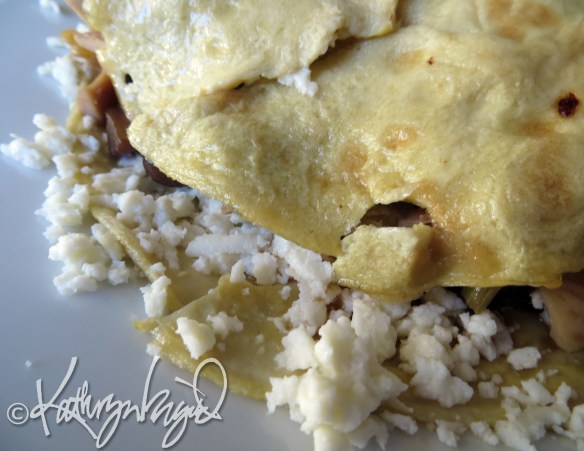
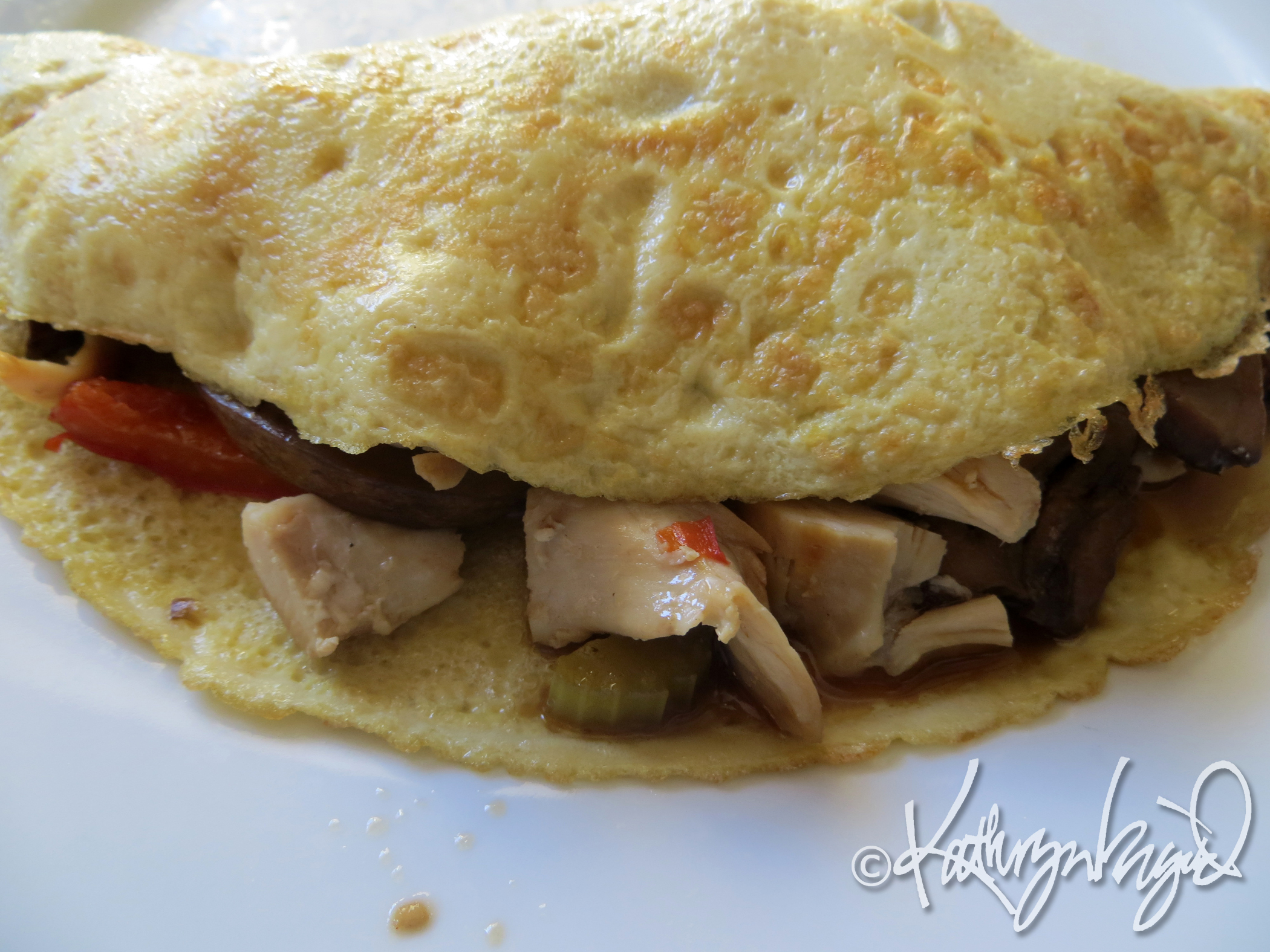
Here’s a simple little dinner that arose out of the experiment just recently. Small, tender (erm, check out the torn one, damaged by soft pieces of cheese) crepes made of egg, water, a touch of vanilla and a pinch of salt, folded over an uncomplicated filling of cubed roasted chicken warmed with sautéed celery and red capiscum and a whole lot of sliced brown mushrooms, all seasoned lightly with the bacon fat and butter in which they were mingled, a splash of broth, a freckling of black pepper, and a dash of Worcestershire. My beloved dinner companion was not desirous of anything further in his, so mine was the only crepe that had the queso fresco added. I think it works pretty decently either way.photo

For another easy little breath of fresh air besides merely leaving the little bit of flour out of the crepe mix, I varied our frequent-flying slaw addendum to try out a slightly different salad. Thinly sliced celery, shredded carrots and sliced almonds. A spoonful of ginger preserves, the juice of half a lime, and a couple of tablespoons of macadamia nut oil. Crunchy and clean and fresh, and a strong contrast to the soft textures and savory warmth of the crepes.photo
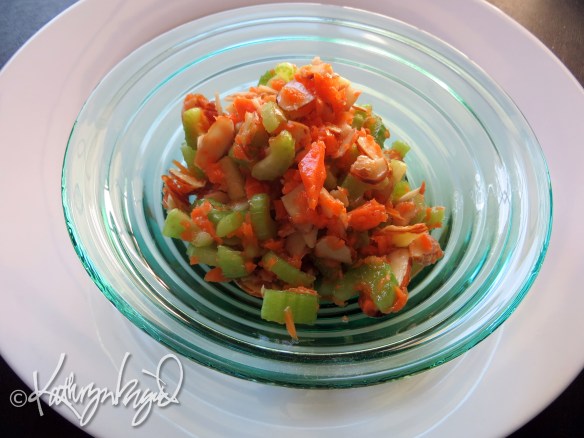
I’m not sure of it, but I think perhaps the meal was satisfying enough that it removed one iota of my natural craving for an actual dessert to follow it immediately. One iota, mind you. I can still envy those who can eat all the floury goodies they want without serious guilt or consequence. But there will be dessert. Many and many a time to come. It’s just that the desserts will be smaller than a triple scoop of yummy scrummy ice cream. And contain lots less wheat, I’m guessing. We’ll just see how all of this goes.photo
Janus, for Good or Ill

digital artwork

In every one of us there may be a little reflection of the god Janus . . .

Humans are not the only animals that can look both forward and back. But we’re the ones that choose to recognize this trait with a certain reverence and, particularly, to think we ought to make some use of it. We’re undoubtedly the only ones that impute a moral value to one or the other, depending not only on whichever we personally prefer but on what we think can benefit us or others.

We can spend our time and energies on studying, learning from, or even dwelling in the past. We can devote our hopes and plans to the ideation of what lies ahead as scientists, fortune tellers, scam artists or futurists of any sort from literary to application development. And there are certainly those among us who for whatever their religious, philosophical or preferential reasons are dedicated to keeping attention focused on the present time.

All of these approaches have their uses, to be sure. But I like to think that there’s room for a balanced use of this knowledge, these skills. In any time, there is much for us to learn. The successes and failures of the past inform present action, but keeping eyes on present action demands enough concentration that the revisiting of historical notes had best be done while not in the very act of the performance. Likewise, learning to predict, extrapolate and imagine possible improvements and variant outcomes is often the richest trove of possible new successes, but again, dreaming of these accomplishments-yet-to-come is only useful if we aren’t so immersed in them that we can’t complete the steps of today necessary to position us for the future.

We may not be the only beasts able to remember or to aspire, and are clearly not the only ones able to be completely present in the moment. But if we’re the only ones that truly care about such capabilities, why then, let us expend what effort and wisdom we’re able and see how well we can integrate the three. Only then, I suspect, will any of us ever live the fullest lives for which our many possible directions can set our courses.digital artwork

Penny for My Thoughts

digital painting of a photoNot to Worry, There’s More in the Bank

Do not despair that I have set low price

Upon my intellect and all its blooms,

Its wild embellishments, creative rooms

Filled full with every possible device

Invention and intelligence can build–

My brilliance shedding dazzling insights far

As light can travel from the largest star–

My memory mansion’s rooms are this far filled,

And yet I charge a pittance, just a cent,

For all the riches I have made to date,

And fling them with abandon, though so great,

Along the curb beneath your pediment.

Why would I cast my wealth thus at your feet?

Like pennies, I am also obsolete.

Giving Candy to Strangers

photoMost of us are taught from when we’re very small to avoid all contact with strangers. Don’t look them in the eye; don’t make friendly overtures, don’t speak to them, and don’t go running up and hugging random unknown characters. Above all, don’t accept the offer of candy or other lures from those who might turn out to be very lurid indeed.

All of that is mighty wise advice for little persons. They have no experience of the world, no basis for comparison or judgement, and no inner criteria to help them have a good chance of accurately assessing the situation. But when are we Big enough to learn that unfamiliar people are not only not all bad and dangerous but possibly in great need of any gracious and friendly contact they can possibly be given? When are we smart and experienced enough to realize that others around us are not always up to something nefarious or trying to sell us something we neither want nor need if they approach us out of the blue? When are we large-hearted enough to make a more hospitable evaluation of the risks or rewards in approaching the unknown with openness and warmth?

I have been told several stories recently that remind me of the opportunities that constantly surround us for making moves, both large and small, that have the potential to do anything from brightening someone else’s day to saving a life. Most of us fortunates have at some time and place in our lives ‘entertained angels unawares’–had a few of those moments of unexpected, extraordinary, beautiful contact with persons we didn’t know and understand that there are such agents in the world, even if we can’t immediately recognize them. Why not look for places where we can be those agents for no reason other than that we know from experience how powerful and life-changing, healing or hope-renewing, or just plain day-brightening such moments can be.

It is possible to be misinterpreted or rebuffed, true. But the vast majority of times that I’ve seen this sort of subversive joy-sharing happen without any ulterior motives, even if the recipient–sometimes me–is not altogether receptive at the outset, the end result is an astonished recognition that life is rather wonderful, that people, on the whole, are good and genuine and caring and fine, and that we have in our own small hands and hearts the astounding power of remaking ourselves and the world into better things by the simplest and least extravagant of means. A hug, a moment of patience where there has been tension. A donated dime or a pint of blood. A proffered packet of food or bottle of water that had been meant for something or someone else. Handing off the little trinket that was mine but that I can see another one admires or opening the box of treats I was saving for the family and sharing it instead with someone I don’t even know. Opening doors and assisting with chairs and lifting the parcel that’s too heavy for someone else.

They may seem tiny and insignificant enough. For those of us who choose to give them, they amount to easily made gestures. But insignificant? Hardly. For those of us who dared not, who may not have even known we could, ask–this one little mark someone offered to make on our day may mean, after it all, the whole world.photo