Hey, Baby, Wanna Ride Shotgun in My Pinto Wagon? (Daffy Drivers, Part 2)

I don’t know why it sprang to mind just now. Well, maybe I do. I seem to have been stuck in the previously described drivers’ vortex for a strangely gelatinous trip through surreal-ville lately and I’m thinking of drivers, pedestrians, bicyclists and cars with a certain measure of disdain, loathing, hilarity, terror, and mild psychosis, sometimes in turns and occasionally all in one big deliriously bleary blend. Despite knowing in my heart that traffic in suburban north Texas is marshmallows and candy-floss compared to the traffic experienced in much of the world (just check the all-too-true comments on my previous traffic-related post) I cannot resist a further rant.
photos

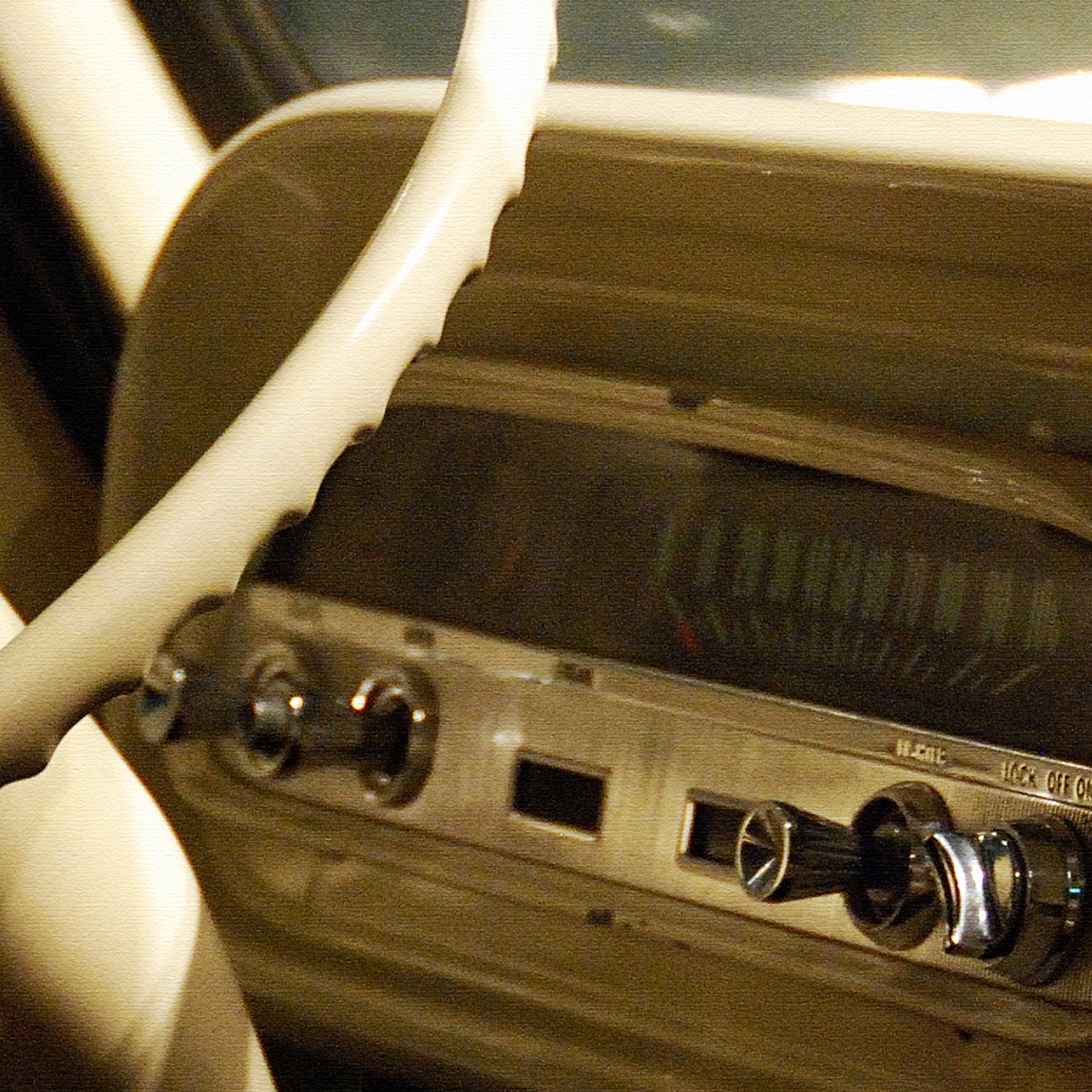
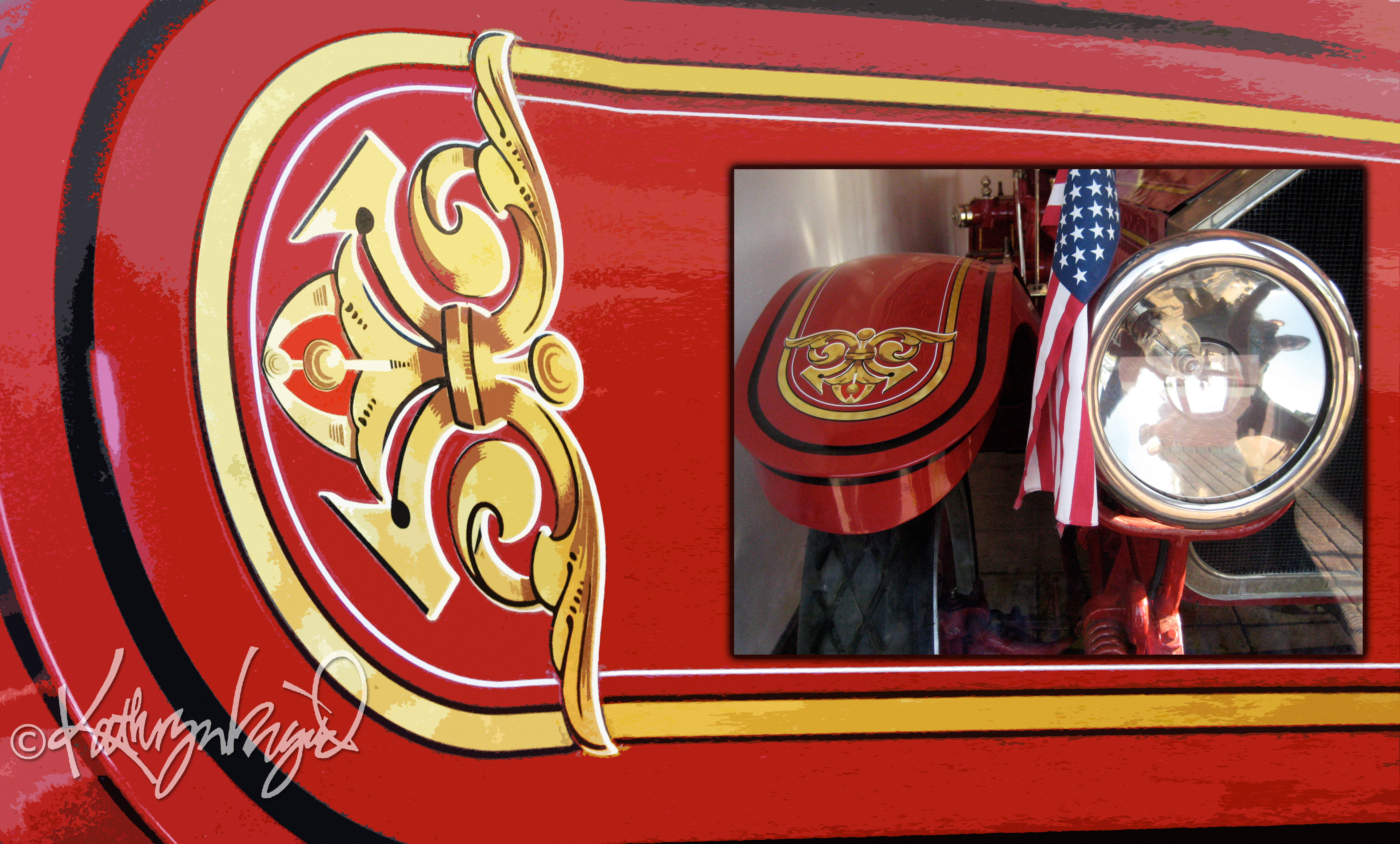
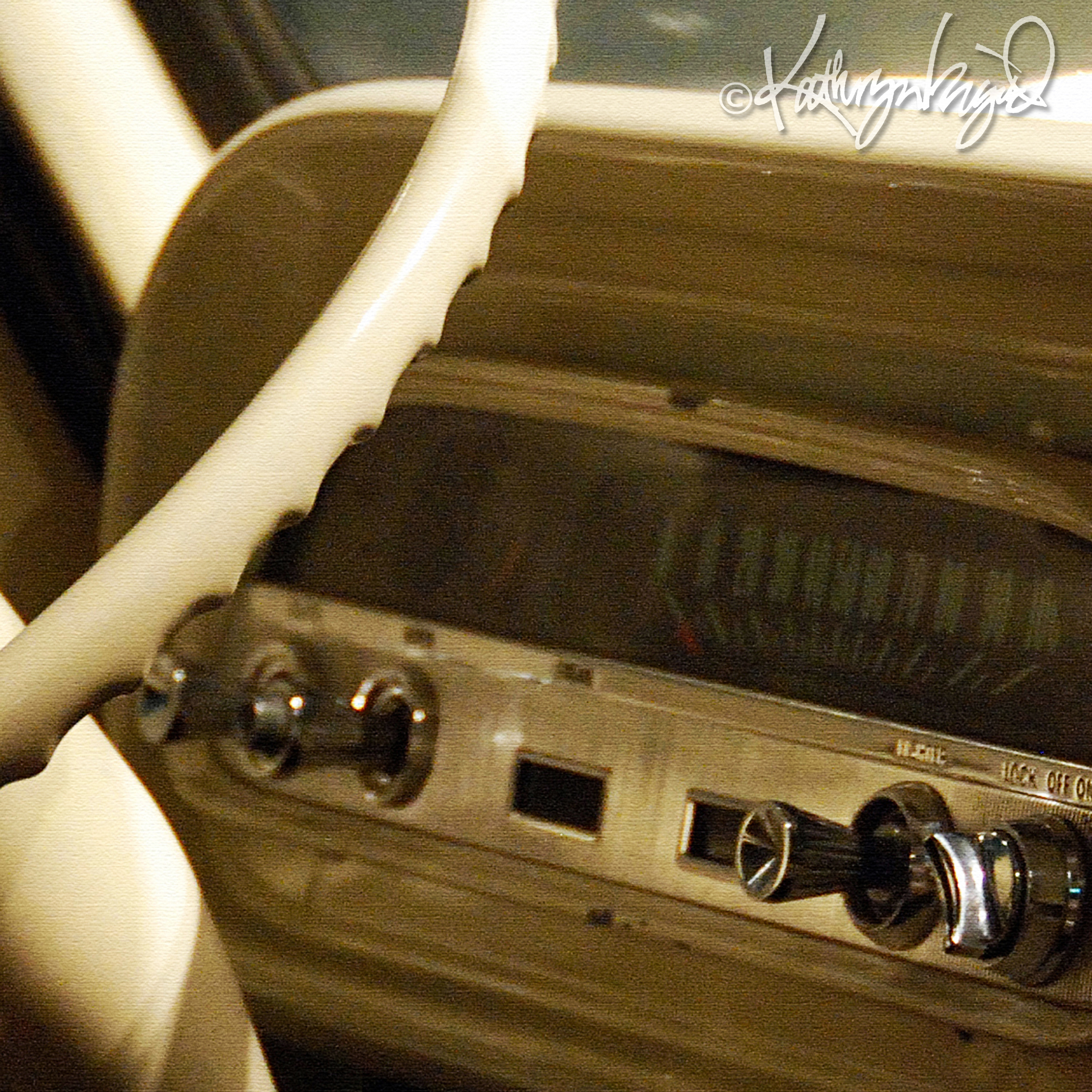
Details, details--automotive fanatics do love their detailing . . .

I have seen (three times within two days) the indescribably death-wishful strolls of different (but each time, ahem, male) pedestrians not only on the wrong side of the road but well into the lane of steady morning traffic bearing down on their armor-less backs, all the while with cars going past at 30+ mph in the next lane over, so NO chance of the drivers approaching said amblers’ backsides actually swerving to avoid hitting them. What do we in the cars get to do? Pot along behind a slowly walking person as though theirs were the most ordinary and acceptable behavior on earth, despite this being within blocks of the university, where every dull-witted bipedal being over age 11 knows that college drivers and mad professors are on the loose? Stunningly insouciant, these moseying moon-brains, to say the least, and irritating, too, by gad.

I live in the land of the “free” right turn–where it’s okay legally, if you’ve stopped at a red light, to proceed with a right turn if (a) there’s no one coming from another direction that has right-of-way by green light or prior arrival at the intersection and (b) you are actually in position to take said right turn. I’m all fine with that, despite being still a bit piqued that an intersection camera once got me dinged for a turn where I was positive I had followed all of the rubrics scrupulously. Recently, however, I got to witness two rather egregious abuses of the privilege right in a row and was glad to get home with skin and fenders intact. First there was the intersection where I stopped at the red light and waited to turn left, where ahead of me on the other side of the intersection a minor accident had stopped up the front of the right-turn lane. I waited for my left turn, which I began to execute when the requisite green arrow shone before me, and found myself suddenly front-bumper-to-front-bumper in a very nearly compromising position with an enormous truck (of that variety known in my heart simply as a “big-butt truck”–the sort that is large enough to haul a full load of heavy equipment to the farm but is waaaaaay too clean and scratch-free to ever have tried it). Mr Truck Driver had arrived behind the stalled accident, whipped out around it, and deemed it logical to grab a free right without ever considering that he was both out of turn and entirely invisible to us across the road.

After our close encounter I took a deep breath, released my crushed brake, took two more deep breaths, didn’t say or gesture anything that I was thinking, let the truck get well away from my vicinity, and went along my way. Not a mile later, I was stopped by a red light in the right lane. As it happened, I was first in that lane, so though I had no plans to take a free right myself (being in need of going straight ahead), I didn’t feel it likely that someone from across the way would try to cut me off by surprise again. Which indeed no one did. However, the young and helmet-less (I’m still baffled that that’s legal anywhere, but it is, so I’ll simply note it here as another risk factor the other driver took) motorcyclist behind me felt deprived of his free right turn, and rather than drearily waiting through another boring ten seconds of red light on my behalf, he swung out into the left lane and blasted around to the right in front of me to turn, just about in sync with the drivers coming from across the way who of course were being treated to an actual green light.

How I got home with both an undamaged car and clean underwear is testament more to good fortune than to my skillful driving or the strength of my nervous system, but I shall leave that musing and my temperamental unburdening here for the nonce and move on to what was really renewing my interest in road-tripping, if I may now use it in the more psychedelic sense. It was, you see, about the automotive beauty pageant.

I’m a dull person when it comes to vehicles. In our family, learning to drive required us to learn a couple of additional fundamental automotive survival skills, things like checking the oil and changing a tire, and, oh yeah, filling the gas tank. Like making sure air filters were changed as needed and seatbelts worn and like how to pump the hand brake in case those other brake-thingies just happened to go out of commission (the latter only happened to me once, but it was at 50 mph and the brakes croaked just as I watched a rock-filled dump truck pull onto the road a hundred feet ahead of me, so I am glad I was given that particular bit of useful wisdom). But outside of that, I wasn’t infused with lust for four-wheeled artful luxury. I’m strictly practical about my expectations from a car. Transportation. Carrying capacity as needed. Inexpensive to buy and to maintain. Generally reliable and safe. And I’ve done pretty well in that, too.

I can admire a beautiful vehicle, don’t get me wrong. I’ve had crushes on a strange variety of cars that struck my fancy at one time or another. When I shopped for my first car (as I was beginning construction work), I was offered a 1957 pushbutton-transmission Mercury that was in nice-but-not-cherry condition for a very fair price. It was a ridiculous Pepto-Bismol® pink and had a more extravagantly fabulous back-end than a Brazilian beach bunny’s, its trunk big enough for Mafia use–or at least for carrying all of the painting equipment and tools I was going to need to haul. But it really wasn’t the kind of car I could seriously contemplate filling with 300-pound paint sprayers and tool buckets and piles of dusty tarps and abusing in quite that fashion. Because it really was more about fashion than about transportation, and much as I could love its ludicrousness I finally opted for the more practical used Volare station wagon with fake-paneled sides and the super-duty shocks that I put in ‘er to hold up my cargo’s bulk. And it turned out I developed a crush on that car’s slant-six engine. Go figure.

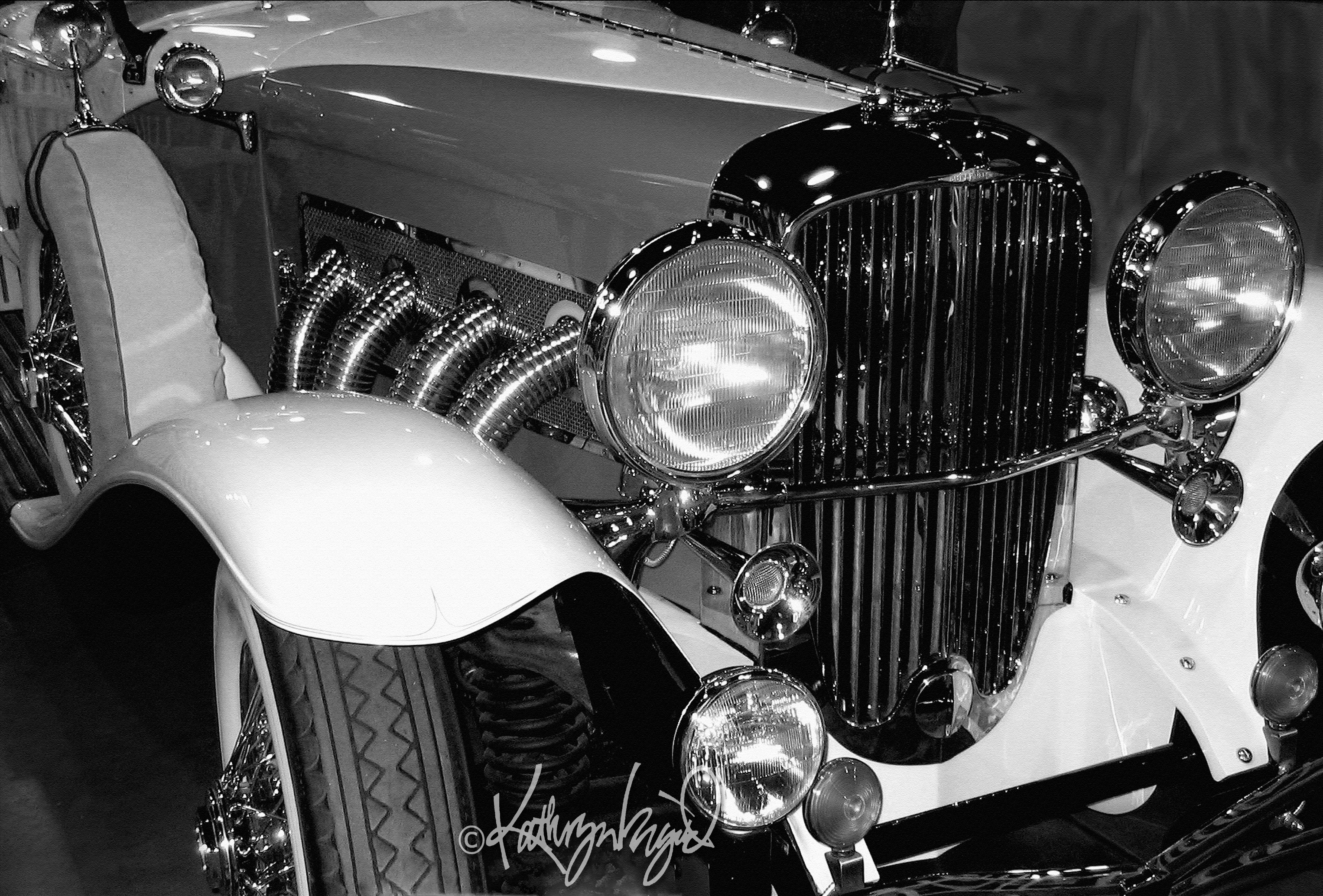
There are plenty of supremely handsome vehicles out there, to be sure. A ’29 Pierce Arrow, all decked out. Vintage Bentleys or Silver Wraiths. A perfectly restored period Duesenberg. Not to mention, say, a sleek blue 1967 Barracuda. Flash. Glorious. But any of those beasties would so outshine me that it would seem sacrilegious to even consider such a thing. Not to mention that if I had any sort of spectacular car I would still be unable to support it (insure it) in the style to which it might deserve to be accustomed.
photo

Smile for the camera!

Meanwhile, there are a whole lot of people who do have deep passions or perhaps even rather unseemly romantic notions regarding their various automotive loves. We’ve all seen those whose car, truck, motorcycle, RV or tractor represents (or, in many cases, clearly substitutes for) their identity as a male, female, or Other. The wheeled transport associated with that distinctive breed of guy-hood truly dependent on its vehicle for its masculinity gets from me the designation TPV, or Tiny Penis Vehicle, for that rather laughably desperate form of self-identification. There are lots of levels of vehicular artistry, from true-amateurs’ loving attentions to purists’ slavish restorations to custom trick-outs to the movable museum-pieces that are one-off sculptural artworks on wheels. So many fun options! I’ve seen the fantastic and the phantasmagorical, the happy and the horrific, and many a piece of magic in motion.

Perhaps my favorites are the outlandish and ridiculous concoctions put together by aspiring molto-machismos on a tight budget–whether of the wallet or of the imagination. The jacked-to-the-sky mini-boxes on massive heavy-equipment wheels so high that the driver can barely herk himself up into the driver’s seat. The I-did-it-myself custom paint job with heavily textured brush strokes running through its thick housepaint coat or the would-be designer approach whose flames and pictorials ended up a little closer to junior high graffitists’ than to graphic artists’ work.

Or one of my all-time favorites: it was an early-80s Pinto hatchback customized with massive tires that appeared to be crammed dangerously into the wheel wells as well as making the teeny car precariously high and teeter-y, and was painted antenna to tailpipe in dull metallic gold spray paint, all with a stingy and shaky hand. I came upon it as its young driver was cruising a mostly deserted street in a semi-rural suburb, and I remained unsure for a long time afterward whether it was pure cruelty on my part to have laughed so heartily on seeing it. Surely such effort deserved, at the least, a joyful response, and that I did give without hesitation.

Truth be told, that’s my reaction to car-love in general. I’m glad it seems to give so much pleasure to so many people, but I’m pretty mystified by it too, and mostly the seeming excess of affection just makes me want to fall on the floorboards howling with laughter. Good thing my seatbelt keeps me from any such thing when I’m behind the wheel myself. Hopefully, in a really outstanding specimen of a silvery-blue ’67 ‘Cuda, rebuilt to my own personal specs with eco-fuel conversion, a skillful on-call chauffeur, comfortably glove-fitting heated and cooled passenger seats for my companions and me, a mini-fridge in the trunk full of the day’s edible necessities and the proper libations for the non designated-drivers to sup during those pit stops requisite whilst road-tripping for joy, plus a lifetime’s supply of fuel, parts, insurance and police escorts to clear the roads ahead and find ideal parking spots. Either that or my ordinary, everyday, plebeian, functional, dependable and non-fanciful car. It’ll do me.
  • photo
  • I’m just happy if it gets me from here to there and back again . . .

Delight amid Sorrows: Día de los Muertos and Singing Neruda’s Poetry

Once upon a time, Pablo Neruda came to my rescue.

digitally painted photoI was a perplexed and moody undergraduate taking just a few too many credits at a time to cover for the semester I’d frittered away (both the time and the tuition money) in getting a much broader, deeper education by gallivanting across Europe with my sister to work on being ever-so-modestly less perplexed and moody (it did work, I swear it did!). By pushing a little extra during my remaining semesters I knew I could graduate ‘on time’ with my class and not use up further masses of time and money and my parents’ remaining non-grey hairs, so I crammed a bit to compensate. And by the time I signed up for one particular poetry course I was just a tiny bit frazzled. I knew I had a sort of dispensation from the university to take a certain number of credits Pass/Fail rather than as graded courses, and decided that since I’d not used that option and had taken other legitimate English courses already, now would be an excellent time to relieve a small portion of pressure by opting for P/F. Señor del profesor had a slightly different idea.

As in, “What, are you nuts?” and a firm No. Oddly, it had not occurred to me that this particular academic rubric could only be invoked with the professor’s permission. Silly undergraduate. My response was to burst into tears. But he persuaded me, in good professorial fashion, that it was for my own good and that he was quite certain I would do Just Fine in this course if I was committed enough to take it in the first place. So I pulled up my socks and took it like a good girl. I guess it’s only fair to confirm the obvious, that the professor did his part to get the aforementioned rescue work underway, and I’ll tell you now that being a true educator rather than a sometime impostor like me, he kept at it throughout the semester, and I was no easy or patient patient.

Meanwhile, I quickly discovered under said professor’s tutelage that my incredibly narrow view of poetry was just a sign of lost time and an opportunity to open an infinitely interesting and challenging world of unexplored wonders. But I was still horribly intimidated by the prospect of learning to bravely parse and explicate poems, and I was still amidships in the throes of general anxiety and fear of speaking up as it was. Yikes! Bit of a fright, that.

Then the wonderful Chilean master Pablo Neruda beckoned me to come in and make myself at home. His writing, so evocative and so deeply personal, made me feel somehow safe. This, despite his writing in Spanish, a language unknown to me except for some very useful food-related words. Now, I will admit to having read numerous translations of his poetry alongside the originals, but all one really needs when presented with this juxtaposition is, as I had, a little youthful church-Latin exposure, a handful of high school and college French classes (sorry, I came out of it with appreciation but not much real knowledge), and the will to make serious inroads in various dictionaries; the work simply sings. The variety that emerged from the different translations brought out a wonderful amplitude inherent in Neruda’s poetic work and inspired me beyond measure.

I fell in love with several of the Neruda poems I got to read for that class. But the poem that truly resonated in me turned out to be his ‘Entierro en el Este[‘Burial in the East’], and I happily labored over three different translations of my own after studying the existing ones by pros and linguists far beyond my skill level right alongside the beautiful Spanish-language original, whose marvelously lyrical sonorities drew me in inexorably, filling me with their dark and earthy music. Can’t say exactly what happened to those translations. Surely the world is missing nothing with their disappearance. The professional poets’ translations and transcriptions remain for Anglos’ edification. Far more importantly, the rich and exquisite deliciousness of the Spanish version remains, and not just on the page and in the ether but also in my heart.

Because the class requirement to learn and recite a chosen poem in class before writing a paper on it made some strange little spark light up in my soul and I realized that, however hard it might be to memorize a poem in a language I’d never spoken, it was well worth learning this one because I sensed how its incredible beauty would resonate not just with me but with my peers if I managed even barely well enough. Its sheer musicality made it easier to learn, with the help of a Spanish-speaking coach, and the difficulty of learning a foreign-language poem and its meaning deeply enough not only for the recitation but to be able to write semi-cogently about it kept it ingrained, I found, years later as well. Too, it gave me the great gift of lightening my fear: standing in front of my classmates and giving my all to this lovely Chilean masterpiece in Spanish somehow made me less terrified of forgetting or of making it dull–something I just knew it would be hard to do with such beautiful and moving words. I lost myself in the poem, which is precisely what good poetry in any language hopes to make us do.

mixed media drawingENTIERRO EN EL ESTE

Yo trabajo de noche, rodeado de ciudad,
de pescadores, de alfareros, de difuntos quemados
con azafrán y frutas, envueltos en muselina escarlata:
bajo mi balcón esos muertos terribles
pasan sonando cadenas y flautas de cobre,
estridentes y finas y lúgubres silban
entre el color de las pesadas flores envenenadas
y el grito de los cenicientos danzarines
y el creciente y monótono de los tamtam
y el humo de las maderas que arden y huelen.
Porque una vez doblado el camino, junto al turbio río,
sus corazones, detenidos o  iniciando un mayor movimiento
rodarán quemados, con la pierna y el pie hechos fuego,
y la trémula ceniza caerá sobre el agua,
flotará como ramo de flores calcinadas
o como extinto fuego dejado por tan poderosos viajeros
que hicieron arder algo sobre las negras aguas, y devoraron
un aliento desaparecido y un licor extremo.

Pablo Neruda

INTERMENT IN THE EAST [translation: KIW Sparks, 28 October 2011]

I work by night, in the heart of the city and surrounded

by fishermen, by potters, by the cremated dead

with their saffron and fruits, enveloped all in scarlet muslin;

below my balcony these terrible corpses

pass by with the rattle of chains and the playing of copper flutes,

such strident, lugubrious noise,

between the colors of those weighty, poisonous flowers

and the cries of the ash-covered dancers

and the crescendoing monotone of the beating drums

and the fragrant smoke of the burning wood.

For once they reach that place where the road meets the turbid river,

their hearts, stopping or perhaps starting a larger movement,

roll aflame, the leg and foot catching fire,

trembling ashes falling onto the water

to float like calcined blooms

or like a fire set in antique times by voyagers

so powerful they could make the very river burn, could eat

a food no longer known and drink the elixir of extremity.

El Día de los Muertos has a certain similar quality to the Neruda poem for me. The traditional Mexican celebration of the Day of the Dead coincides with the Catholic commemoration of All Saints’ and All Souls’ days (the 1st and 2nd of November, respectively). The depth of passion with which the bereaved mourn lost loves is brought to balance in Día de los Muertos in a marvelously worldly and tender way when families gather to tend the graves of their dead, to meet over feasting and drinking, amid art and dance and music and prayer and embraces and revelry of all sorts and to remember with love and joy the lives of the dead whom they have known and now carry in their hearts. I’ve long cherished the magical folk art arising from Día de los Muertos tradition, loving of course the charming and even joyful representations of Death as the natural culmination of life, and admiring the attitudes that these in fact symbolize. They feed that sweet dream in my heart of hearts where life and death intermingle in the most fitting way they can and we all dance between them with passion, with love, with hope–and with a river of deep, sonorous and abiding poetry flowing in our veins.

digital collage

Preposterous Beauty

photo + poemIt’s a redundancy, isn’t it, ‘preposterous beauty’? What could be more unlikely, more outlandish and excessive, than beauty itself? Yet it’s the one thing we all seek, in one form or another. We long for what seems perfect, what appears flawless. We yearn after those things that, at least in our own minds, represent the ideal.

In some ways, it strikes me as puzzling that we should be anything other than repelled by beauty, if indeed it is representative of perfection: who on earth should want to be reminded of her own imperfection and inability to achieve it? I can’t imagine that there are so many people so deluded as to think themselves either perfect or deserving of association with the perfect that they would willingly submit to being even juxtaposed with any other such wonder. So why do I, of all people, so wonderfully aware at all times of my almost cartoonish capability for exemplifying the imperfect in so many aspects, find that I too am compelled to seek beauty?

Beauty is perhaps the everyman‘s Everest, so I will intone along with George Mallory and all of his philosophical heirs: “Because it’s there.” If few can deserve of a prize, that is sometimes motivation enough for all of the remaining horde to contend for it, hoping that perseverance and pure luck will combine to favor them. If something is desirable, even if merely because of its beauty, why would we not wear ourselves out in the pursuit of it?

The particular joy of Beauty is, if I may, that it is not so particular. That is, there are so many kinds of beauty possible in all of existence, and so many ways of perceiving and interpreting them, that there are almost endless sorts of beauty to be pursued. It makes a person like me, who sees herself as among the least-likely deserving recipients of the benevolence of beauty, think that perhaps there’s enough to spare for me anyway, if I show appropriate reverence for it and make an effort. It’s the only way that I can explain to myself how a person of my humble means has been so indulged with so many forms of beauty granted me in my life.

photoI think of beauty as it is understood and distilled through all of our senses: that which can be tasted, smelled, seen, heard, touched and intuited–any and all of this can be beautiful. The range of possibility is overwhelming. Imagine sitting in a peaceful room and listening to a sure, sweet voice singing a compelling melody while sunlight suffuses the space with warmth and the scent of leafy spring creeps in at the windows. Isn’t it preposterous to think all of those beauties could converge in one act? And yet they can. Imagine kneading wonderfully elastic yeasty dough with the sweetest grandmother, one who laughs softly and often, her velvety skin crinkling up around her eyes in a mischievously creased smile, and the sound of her old radio down the hall sending you Django Reinhardt and Stéphane Grappelli to accompany your kneading and chuckling together. Preposterous? Of course! But such confluences of perfection do exist.

So I keep believing and hoping and yearning. I make drawings and poems and think that, when the stars align just so, in spite of myself I may make something of beauty. Or just stumble over it and be glad. It’s so ridiculous, so impossible; true beauty is so beyond my reach it might as well be Mount Everest and I a mere speck on the earth. But it has drawn me to try the climb before, and I know it will again and again. Beauty is really preposterous that way.

photo

Genuine Shenanigans; Accept No Substitutes

graphite drawing

Freedom to get up to all kinds of nonsense: one of the great perks of being a kept woman . . .

Playtime is such a necessary and fabulous thing! I am undoubtedly one of the most fortunate people on the planet: I get to have the run of my entire silly imagination and the opportunity to document it as much as time and crayons will allow. So off I go, playing like a little kid chock full of Super Sugar Blasters, not knowing in the slightest what will emerge from the madness.

That’s the fun of the whole thing.

Sure, sometimes even the pampered grassfed, free-range artist gets a chance to do a project that requires a certain gravitas. Heck, even gets an itch to do one. But really, what’s the fun of being an artiste if everything I do has to be serious? I think you know me well enough by now to figure out the likelihood of my acquiescing to a creative calling if it were an all-business sort of proposition. Oh, yeah.

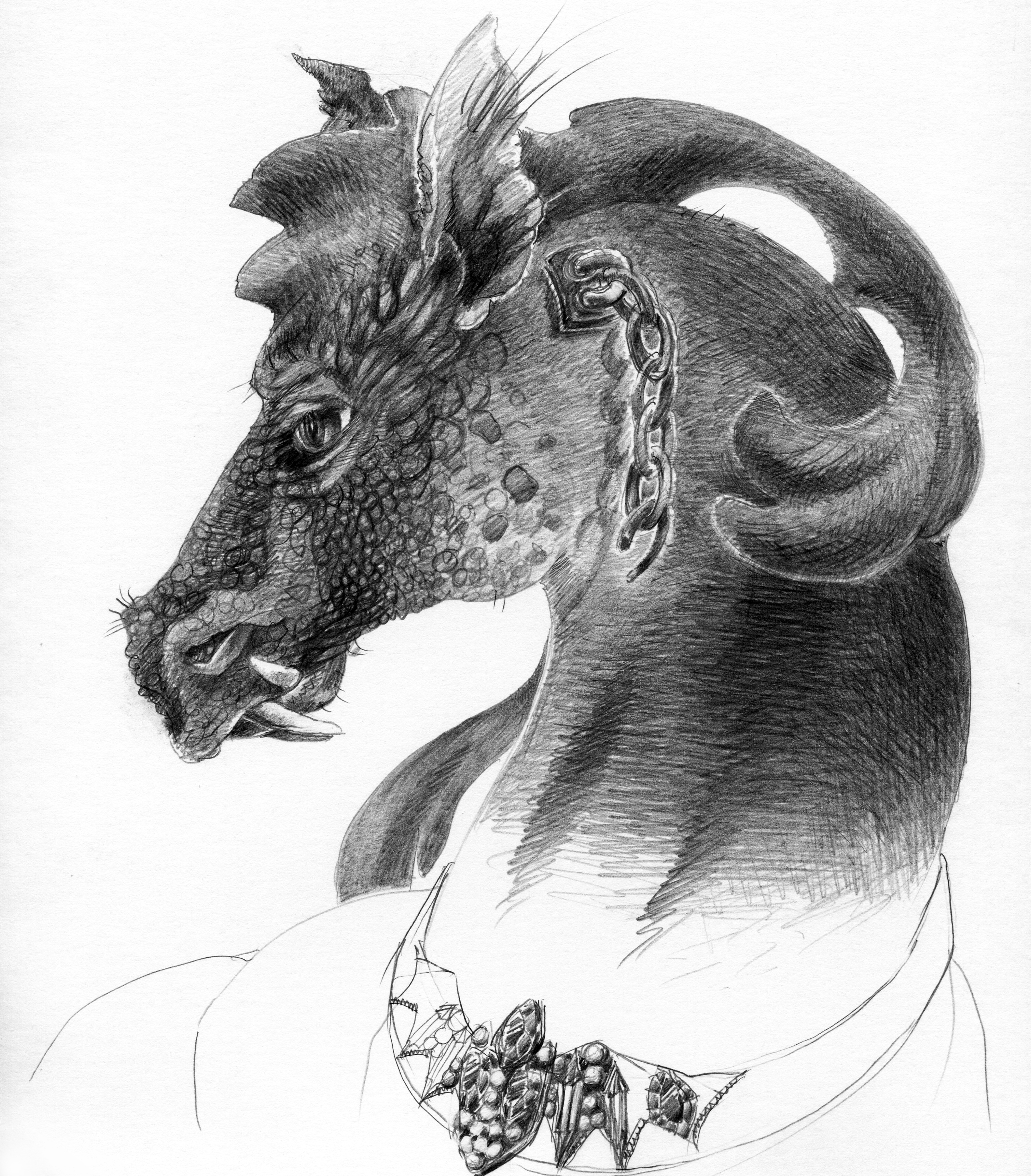
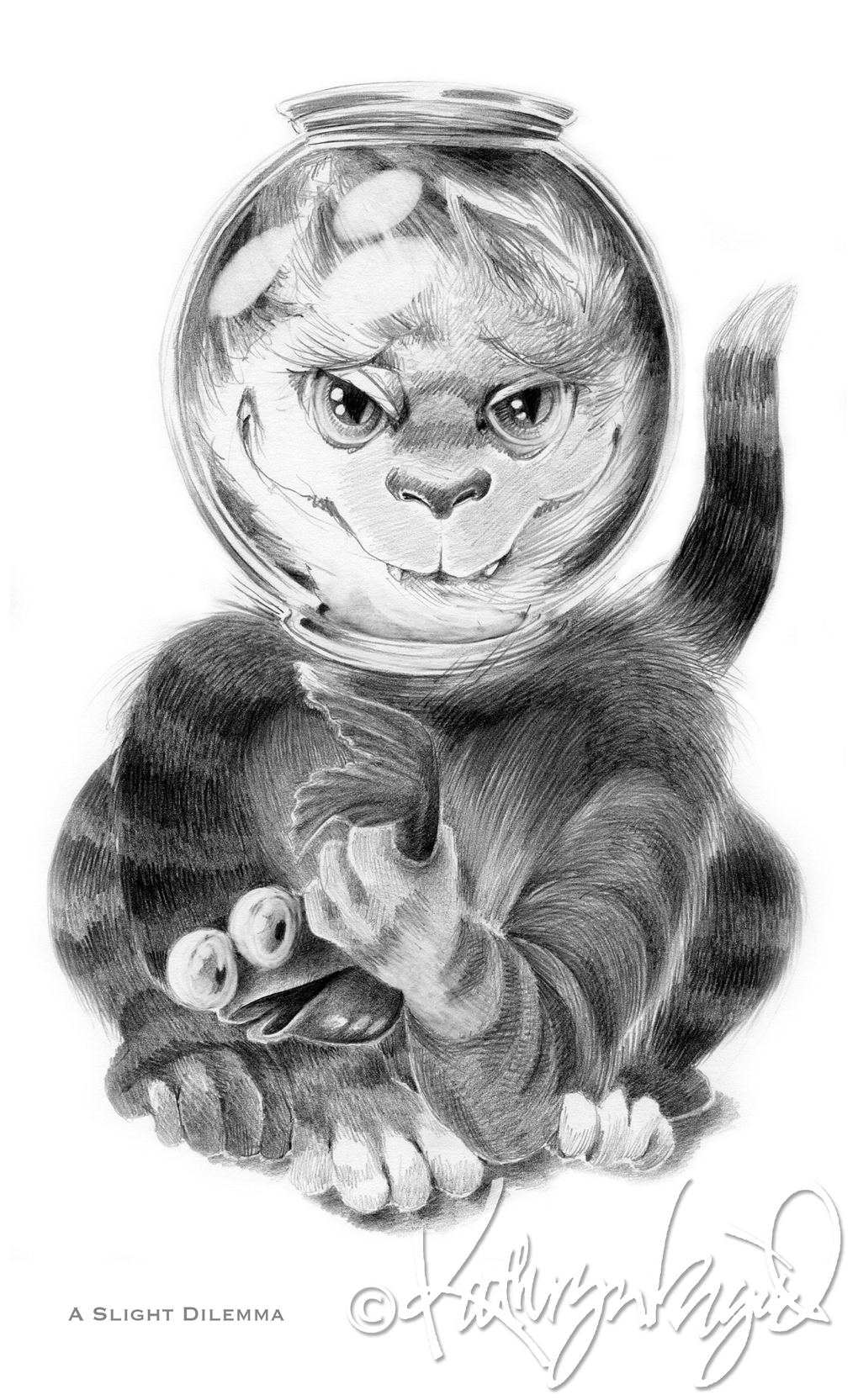
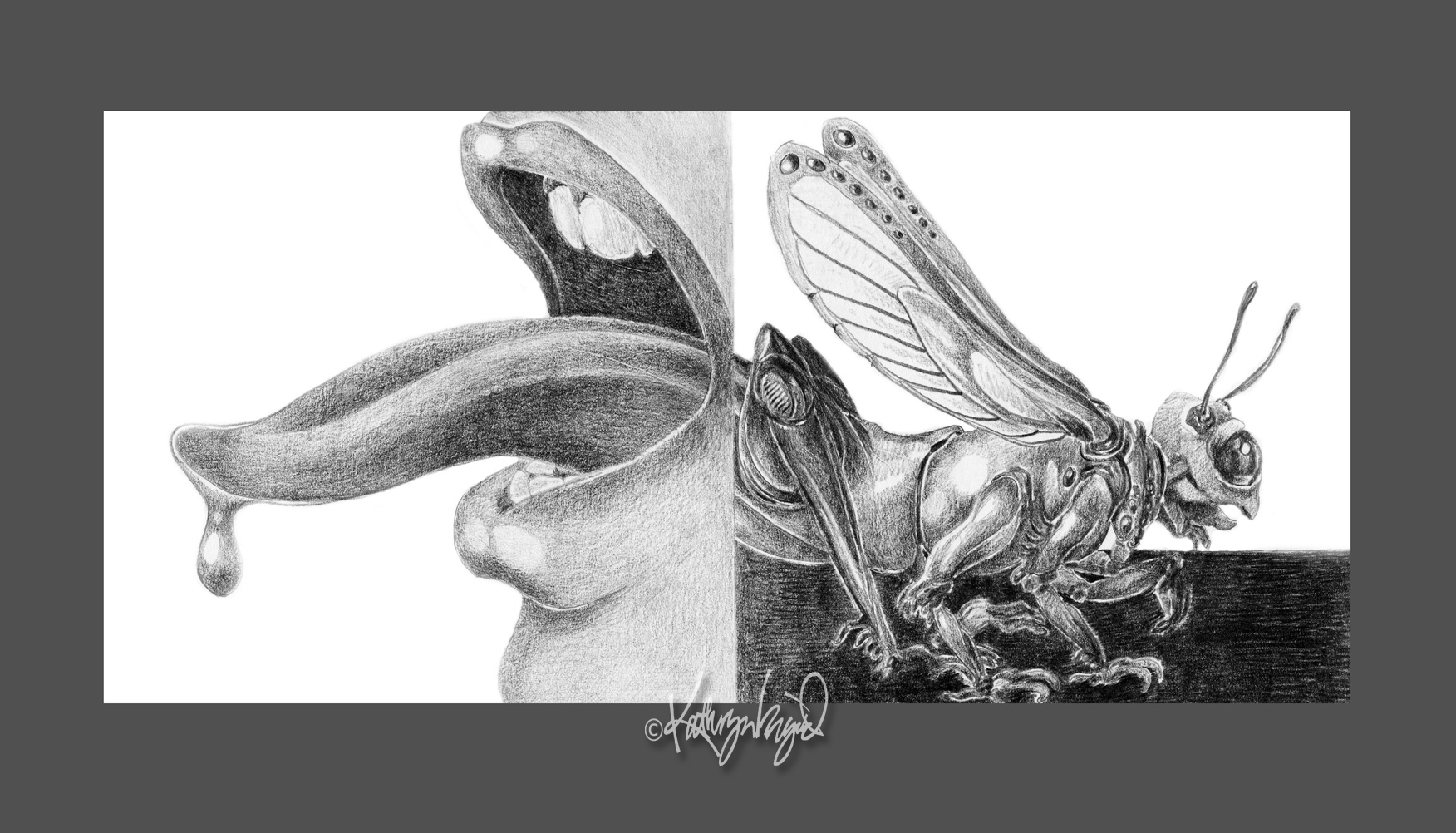
Much rather draw dragons. Paint giant insects taking over the world. Sculpt gargoyle faces and build neo-Baroque furniture. Assemble pseudo-robots out of mannequin parts and small appliances (Francine, where are you now?). Design and sew evening gowns out of trash bags and plastic doilies. Sharpen the pencils again and make up stories about, say, a cat that’s figured out how to get the fish out of the aquarium but not gotten so far as to figure out how to get herself back out of the aquarium after making the catch. Kind of like being an artist who has begun to figure out how she prefers making her art but still isn’t clear on what to do with it once it’s made.

Guess I’ll post some drawings again, for a start!

graphite drawing

Every gift comes with a few dilemmas, it's true . . .

How I Learned to Love the Dreaded P Word

[No, shame on you, not that P Word. Practice.]

photo

Apparently I was napping when the expected dose of wisdom was being handed out . . .

Is it somehow backward to say that if I learn by doing, the only way to learn to love doing something is to do it? Maybe it just proves that I’m kind of backward myself, for having taken such a large long chunk of life to figure out that that’s how it works. I’m not only a late bloomer in a multitude of things, I’m late in getting around to figuring out that I’m a late bloomer. Dang it. Tautologies and conundrums galore! (Wow, sounds like an imprecation to be screeched by a mediaeval-looking cartoon villain.) All I’m trying to say is that it took a lot of practice for me to learn to love practicing.

No doubt this self-evident truth dawns slowly because most of us are (I certainly are) born with a predisposition to (a) despise and evade anything that seems compulsory, and (deux) only experience can teach it to us. Talk about an irritating logical loop.

It is generally only out of desperation that I will finally buckle down and do something I’ve been artfully putting off, denying the existence of, and otherwise refusing to accomplish. I’m so busy worrying about making blunders that I refuse to even try. I’m so fond of being glued to my gilded divan and being fed chocolate-covered miracles by my adoring fans (okay, sitting on my backside, half a-snooze at the kitchen table, and licking the ice cream spoon until the finish is coming off of it) that I hate to break up the scene by becoming <shudder> an active and productive citizen. I’m resistant to change, stubborn and ornery, and always–like most of my creative compatriots in the arts, I gather–pretty well convinced that every artwork I produce is my last ever, that I will have lost the power to imagine, let alone do, any further works, and that even the stuff I’ve so far produced is only marginally non-heinous.

photo

I let the tools stare at me balefully for a goodly while.

Then, happily, I snap out of it. What a load of hot steaming hooey, I say to myself. [Roughly translated for your delicate sensibilities.] Most of the time I am actually able to do all of the foregoing in a shorter span than it takes to regale you with it. But there was that time in grad school . . .

Now, I’d even, driven more by economic reasons than good sense (but what the hey, it made a good substitute in the instance), taken three years off before grad school when my undergraduate studies concluded with my emergence clutching that wonderfully engraved Testimony to my glorified uselessness to a needy world: a Bachelor’s Degree in Fine Arts. As a matter of both principle and fact, I can honestly state that Art is indeed truly and meaningfully useful in the deepest of ways. Not, however in the way of, say, lining up salivating employers eager to avail themselves of my fabulousness in exchange for the quantities of money required for paying off undergraduate loans and frivolousness of that sort. Nor, while I’m being truthful, in the way of my improving the world greatly by waving around my magnificent diploma, no matter how sweeping and balletic the gesture (and whether physically or metaphorically).

Given my intellectual–oops, I meant academic hiatus, how very Freudian of me–you might think I’d come bombing into my graduate studies not only itching to get to work but stocked up with a mile high mushroom-cloud-in-the-making of spectacular new arty ideas and plots. Partly true, that. Unfortunately, I was still the same insecure, change-impervious, action-free action figure as ever, so what did I really do on arrival? Same old same ol’. I got straight to work making verrrrrry slow progress at producing a dainty little handful of drawings pretty much like all the drawings I’d done in the previous, oh, four years. Not exactly making me want to bound gazelle-like over to my first quarterly critique session and wow my prof with this pusillanimous production. I knew that the only sensible response to the presentation would be, in the words of the great art critic Clement Greenberg, “Yikes! Are you kidding me?”

Okay, I made that last part up, but I’ll betcha dollars to donuts that he was dying to say it from time to time.

My continued ability to collect graduate assistant cash to pave my way to another commencement party being dependent upon my actually doing some Graduate Studies, I sucked it up and went in for the fateful critique. Well, it’d probably be fairer to call that session therapy, or maybe just a brisk boot in the posterior, than a critique session, given that the art in question was not only rather questionably art (being sort of ripoffs of my own earlier work) but nigh unto negligible in numbers. Didn’t take too long to peel through with the insightful commentary, if you know what I mean.

But there was, wedged somewhere into that compact transaction, the seed of an idea. My mentor-advisor-prof mildly indicated that this evidence of my not having thought of or attempted anything other than what I’d done many a time before was just a little . . . unimpressive. Verging on enervating. Wrapped up in a stale tortilla. She was a gentle as could be, but didn’t sugarcoat it much. Great lady.

Without resorting to actual tantrum throwing, I got in a funk, a sulk, and finally, a fit of disappointed melancholy tinged with sulfurous ticked-off-ness. Reexamining my self, my work and my motives a bit, as you might hope. I know that old adage about the definition of insanity/stupidity/unrealisticositudinousness being Doing the Same Thing Again and Expecting a Different Result. Oddly, it had not entered my skull before that this might apply to the making of art, indeed to making art in an academic setting with the expectation of being evaluated as an artist worthy of an advanced degree. Silly me. At least it did come up at this late juncture. Better than never!

Knotty problem, simple solution: since doing things the usual way obviously wasn’t working, try doing things in an UNusual way. Me, I had to reduce it to a syrupy-thick extreme to test its full effectiveness (or mine), so I set myself the task of trying to do as much as possible that was the clear opposite of what I’d been doing. No point in being wishy-washy about it anymore. I’d been working strictly in black and white for a long time. So I worked all in color. My works had been small or moderate in scale, so I headed for larger formats. Slow work meant few finished pieces, so look-out-world, I was going to work fast (no avoidance, wasting time, or overthinking while in progress) and make More Stuff. Subject had been mostly still life with a twist, and definitely inanimate object-oriented. Time to try all figurative. Heck, I’d always avoided faces even when I did figurative work, so I decided to do variations on head shots pretty much exclusively. And so forth.

The upshot, as you can imagine, was a true shakeup of my predictable world. I had to come into my classrooms after hours and take over the space because there simply wasn’t enough room in the allotted grad student studio hovels, let alone my rented digs, for pinning up pieces of paper that were fast heading toward 4×20-foot, then 9×20-foot murals. The instant I determined to Go Big it was almost impossible not to get in a fever of production, drawing at all hours, with and on anything I could get my hands near. I raided the end-rolls at the local paper production plant and made trips to the big city to buy photographers’ backdrop rolls and strap them to the top of my old station wagon for the 2 hour drive home, rain or shine. I used up all of the pastels, pencils, pens, crayons, used cosmetics and condiments I could find to make marks and stains with, and then started drawing in a drybrush ink-wash style with house paint. My studio allotment did come in handy, because there was no possible place to cram all of the drawings I was making into my normal storage hideaways. I used any and every tool I could find at my disposal and grinned like a madwoman (as a madwoman?) over the wild newness of it all. Of me.

photo

When everything is called into action, everything becomes both worn and beautiful . . .

I’ve gone on long enough that you can easily guess the conclusion. At the end of the second quarter, my critique in the same 20×36-foot gallery that had been the site of that dispiriting time spent trying to read some interest into the small handful of pitiful drawings the quarter before–well, accounting number two found my teacher and me perched in the same room but with the four walls all plastered floor to ceiling, end to end, with new, colorful, living art. All great? Hardly. But all invigorating to me? Oh, yeah. My mentor really did look a little faint when she came in and I’m sure was looking for the correct room, since this was obviously the work of a different person. And it was.

It didn’t make me into an instant superstar, able to leap tall easels with a single bound and more powerful than a museum-full of Old Masters. It made me, instead, into someone able to remember why I’d felt compelled to make art in the first place, and aware for the first time that there were a multitude of methods, techniques, tools and concepts I’d barely known let alone tapped. It also made me into a very slight persona non grata in my immediate circle of family and friends when they all got called into service to install these monsterpieces with me for my thesis exhibition (“Ever thought about being a miniaturist?” “You want me to get on what ladder and hold up the side of a piece how tall?”), but that’s a story for another day. The story here is that the act of practicing on a grand scale truly woke me for the first time to that incredible frisson of adrenaline + joy that real practicing can give. That puts all of the bad days of unsuccessful practice right into the shade.

Surely ‘Tis Better to be Bombastic than Merely Bumptious

graphite drawing

As my music teacher once told me, "if you make a mistake, be sure to make the same mistake again, and with real conviction, when you get to Verse Two."

No one will be surprised to hear that as a kid with no sense of direction, space or straightforward western left-to-right/top-to-bottom reading I never did master reading music. Apparently I was a pretty decent prevaricator and persuader, though, because I faked my way through my five years of piano lessons by conning teachers and friends into playing my assignments for me up front ‘so I could get a feel for how they worked’–so I could phony them up by playing primarily by ear when lesson time came around again. Not to say that this flim-flam actually made me a good player. I had the decency to stop taking lessons when I was old enough that the act was wearing as thin as a starlet’s underwear. My teachers deserved to work with students with a certain amount of potential, after all. But I learned lots of fun and useful things from them in spite the inevitable moments of frustration and drudgery inherent in beginner’s practice. Not least of which was that the root not just of learning, but of potential innovation and variant excellence is the Mistake.

This is not meant as license for licentiousness–free rein to make egregious errata just for the lazy-ass or mean-spirited fun of it. But there’s a great difference between tripping on the invisible banana skin and bounding around boisterously without regard to the laws of gravity just to see how much I can liven up a dull funeral service. There’s a yawning gap between plonking a wrong note in the heat of a performance and sabotaging a poor defenseless deceased composer because I don’t care enough to learn her work properly. Despite my inability to make head or tail of those dots on a score, I did earnestly try to learn the proper notes right through by however devious the means.

I can neither confirm nor deny that the keyboard biff-ery that inspired the above gem of guidance regarding consistency of form used to disguise a melodic pratfall in any way improved upon the intended character or direction of the piece. Can’t even remember what I was playing. But you can be sure that the technique offered was a face saver, if not a life-saver, many a time after. Sometimes it’s just best to own up to my impressive capacity for fallibility right off, and enjoy a good horse-laugh at my own expense along with all of the other merrymakers in the room. Sometimes, though, I would rather take a page from the Bluffer’s Guides and adopt a meant-to-do-that nonchalance. There’s only so much I can take of being the unintentional class clown. Part of me dreams of Emma Peel sang-froid, a fantasy that however insanely unreachable is yet not easily quashed.

After all, it has served as the inspiration, time and time again, for all sorts of larger than life ideas, stories, poems, artworks and practical on-the-spot excuses, and who among us does not need those! Dogs, however voracious, can’t be expected to digest every available hunk of homework; traffic cannot account for the vagaries of my inspired life behind the wheel at every moment; and certainly the good taste and etiquette handbook, no matter how comprehensive, simply doesn’t have the capacity to cover my every gaffe and blunder in thought, word and dork-dyed deed. So thanking my lucky stars, and my long-ago mistress of pianistic peregrinations, I will continue on my hapless yet happy way, pretending to know what I’m doing in life while covering my blunders with bluster and the best imitation I can give of correctness. Whatever that is.

graphite drawing

What I MEANT to say was . . .

Brightening Our Days with Scary Stories

The news and indeed sometimes our own everyday lives provide plenty of stories of sorrow and horror and True Crime, which is–oddly enough–precisely why I like a good fictional tale of dread, doom and destruction. It’s such a relief to remember how to detach from dark and grotesque and terrifying things and even to laugh at them. But I’m mighty squeamish, when it comes to the real thing or even a too-good simulation of it, so slasher movies just don’t do the trick for me. I do need the remove and control that reading or visibly stylized and artificial images provide.

BW photo

Something is amiss in the conservatory . . .

It’s why when it does come to film I love the Alfred Hitchcock classics of suspense, or the genteel Gothicism of movies like Bunny Lake is Missing, Hush, Hush, Sweet Charlotte, and Gaslight. I avidly read the yarns of Roald Dahl and Edgar Allan Poe and Saki and their ilk, and bask in a good Henry James or Robertson Davies ghost story. I thrive on the dark-tinged fantasy of Edmund Dulac and the witty weirdness of Edward-too-good-to-be-true-named-Gorey.

Oh, yes, I’ll happily digest the terrors of a good contemporary thriller novel or the occasional modern fright-night movie, but I’m a sucker for old-school drama, it seems. Even in music, I can find lots of vicarious thrills and scare tactics in a great modern film or TV score and there are some current composers that excel in this (Danny Elfman, are your ears burning?), but my heart never ceases to lean back toward the bejeweled darkness of Mussorgsky’s Night on Bald Mountain and Saint-Saëns’ Danse Macabre and, if I’m in the mood for cinematic music, perhaps one of Miklós Rózsa‘s classic romantic scores.

photo

I am haunted enough by my own spooky imaginings . . .

It’s a fine thing to have the worlds of imagination in which to safely plumb and defeat all horrors and terrors. So I do like to indulge the urge myself with stories and poems and artworks of the brooding and twisted or the cheerily perverse and demented sort whenever I need reassurance–or just want to share the twinges a little.

  • photoWhat better way to find comfort on a drearily dark day than to curl up with a bit of artistic darkness?

Be Not Afraid of Me,

Unless You have a Good Reason

I buried the various body parts

in secret locations around the state,

reserving the heart of him I hate

to pin on the board for a game of darts,

and when it was thoroughly pierced and minced

I put on my favorite dress and heels

and danced a couple Virginia reels

before I washed up the room and rinsed,

then took the mincemeat left of the rat,

put it in the kiln for a nice hot burn,

where it made a fine glaze for a lovely urn,

and filled it with daisies, and that was that.

You might think I’m a teeny bit callous, cold,

rejoicing in vicious destructive acts,

but perhaps you’d relent if you knew the facts

and the rat’s true story at last were told–

but worry you needlessly? I? A shame,

when it’s highly unlikely by any stretch

of imagination you’d be a wretch

of such magnitude and incur the same . . .

now let us sit down for a cup of tea,

our own snug little tête-à-tête;

don’t worry about what you have just et,

unless you have reason to fear from me . . .

sepia photo

So what's the score on horror? Do we close the book on beastliness? Oh, no, there's ALWAYS so much more . . .

Smile and be

What looks like a smile

From this distance might

Be the bared fangs

Of monstrous threat

Or then again might be

The hateful grin

Of rigid death

So much to read

Out of a single smile

But all I need to know

Is, do I keep on

Going toward it

Best of the Very Worst, or How I Rose Above Personal Mediocrity to become a Self-Made Above-Average Character

”]digital drawingThe ever-inspiring Nia, photojournalist of all things sweet in Istanbul and wherever her travels have taken her, has tagged me with the honorable task of reviewing my short (thus far only, I hope) history as a blogger and passing along the challenge for such introspection and resurrection to some fellow internet trapeze artists as well. As one who has always prided herself, if that’s not too extravagant and approach to it, on being comfortable with her place in the middle of the pack, so to speak, in the universe, it is a tingly and cheering surprise when anyone tells me I’m otherwise. I mean, I knowI’m special, wonderful, and adorable and all of that since people I love and respect tell me so in my real life, but I am also fully aware that the rest of the planet is absolutely brimming with equally special-wonderful-adorable creatures in that sense. I’m also well aware that nothing I have done, made, said or been has shaken the foundations of reality or made me rich or famous, nor is likely to do so–and I really am okay with that!

So to be singled out as worthy of mention in this my new endeavor is flattering, frightening and flummoxing all at the same time. But mostly it feels really nice! It is a fine affirmation that my ego, smiling broadly at me in the mirror, is not so far off-kilter that my average-and-ordinariness cannot be seen by others, too, as maybe something a little shinier and more compelling than they actually are–or perhaps even edging upward over the years and efforts somewhere a tiny bit closer to excellence. Complacency, no, never, I hope. But isn’t it nice to get that sore shoulder once in a while that comes from cheerily patting oneself on the back?

mixed media drawing

Buckets of bouquets to us all!

I would like to offer the same supportive and enthusiastic back-pats to the following fellow toilers in the fields of blogdom:

Ted Griffith, who braves the blogosphere with wonderful photographic art despite frequent disclaimers of intimidation and inexperience apparently quite similar to my own;

Madeline of ah-lum-dahp-dah, daring adventurer and journalist (with great humor and compassion) of her experiences around the world at an age when I still thought it was incredibly gutsy to say Hi to a stranger at a boring reception;

Fellow unreasonable optimist Jared at Lexidelphia, poet and commentator on such useful things as mustache characteristics and the importance of being an impertinent little upstart when questions ought to be asked;

Milady Hannah-Elizabeth of The Last Classic, writing a remarkably insightful and thoughtful rumination on life with all of its ups and downs;

Beautiful Desi of The Valentine 4, whose ability to calm the stormy seas around her with wisdom and humor and passion are a great example to us weaker-willed souls;

Aaron Leaman, who like the rest of us hard-working arty types, starts with Nothing and makes Something–in his case, artful and thought-provoking photos, vids and texts.

Jack Campbell, Jr, of This Average Life, a guy that just happened to post today on the selfsame theme I had chosen for the day, with a unique twist. I think that qualifies as good taste in ordinariness!–or something like it . . .

My Fellow Bloggers: Should you choose to accept this mission, you will only need to revisit and link to 7 of your all but forgotten posts, linking to them, and then pass this mission/challenge on to 7 other bloggers . . . here are my own responses:

#1 Your Most Beautiful Post (in your opinion):   Another Kind of Safety (or, better yet I hope, something yet to come)

#2 Your Most Popular Post (per stat views):   The Supercooled Liquid that is Far More than Smoke and Mirrors 

#3 Your Most Controversial Post (per reality):   As American as Whaaaaaa . . . ???

#4 Your Most Helpful, or “How To” Post:   Happiness may be Ephemeral, but It’s Sure Worth the Effort

#5 Your Most Surprisingly Popular  Post:   I Hereby Crown Myself Mistress of the Mess-ups and Guru of Good Intentions

#6 Your Post That Didn’t Get the Attention It Merited:   Be Still and Listen, Thou Big Dope

#7 Your Magnum Opus (post you are most proud of):  I’m hoping like crazy that if there’s an individual post that’s “best” it is yet to come. What I’m really proud of is finally getting up the nerve and the gumption to actually join the blogosphere and persevere at it. And all of the rest of you that commit to this humbling and exhilarating and inspiriting task should be equally pleased to be in this weird and wonderful company!

colored pencil on paper

This little piggy cried, "Me! Me! Me!" all the way home . . .

Please pardon my wallowing in self-congratulation for a moment. Whee! Whee! Whee!

Art in a Tuxedo: Why Black and White is the Perpetual Classic

graphite drawing

No matter how old-fashioned the content or style, black and white imagery still has things to say . . .

You know that I’m wild about color. I’m a sucker for the extravagant and flashy and juicy and yes, even subtle, stuff you can do when you play with colors of any kind. But despite my persistent dalliances with exotic color, I always come home eventually to good old black and white. Unlike other relationships, though, this is not an instance of messing about with the dangerous and glamorous side and then coming home to what’s staid and safe and un-challenging. No, indeed.

For black-and-white work has its own tricks and secrets and deliciousness. There’s a good reason that all of the areas of design that feed on trendiness–fashion, architecture, print media, interior and industrial design, and all of their kin–go through cycles of obsession with black and white treatments of their star features. Why are the halls of power and wealth still ruled by black-limo-riding people buttoned down in their black suits and little black dresses? Not so much to show conformity and adherence to the rules as to assert ascendancy over them, a touch of indifference to them, and personal peacock significance that transcends them to the degree that they become merely the frame for one’s individual importance.

It’s no surprise to those who design anything, art or otherwise, that black and white work brings its own set of problems, and shares many others with color work. You still have to think about content (pictorial and psychological) and how you want to convey the right message or storyline with those. You still need to deal with space, volume, proportion, texture, shape, line, style, character, and all of the other ephemera that determine how–or whether–your message is getting across. But like that problem of playing or singing so-called simple music, where the performer’s every note, every interpretive move, is laid bare by the familiar and seemingly uncomplicated structure of the piece and thus lies open to the criticism of the least educated or experienced listener, black and white imagery can appear to be the path of least resistance, the easiest mode, for accomplishing any design goal and is therefore frequently scrutinized with a different and less discerning eye. The truth of the matter is that any technical or theoretical approach in any medium is as easy or hard as any other and depends more on how far the artist is willing and able to push to achieve her ends. If people look at my work with the attitude that it looks terribly hard to have made, that doesn’t change the reality of my process or the end product any more than if they look at it and sneer that their fourth-grader could do much better. Both are probably right some of the time!

All the same, there are some sophisticated possibilities in black and white alone that don’t need the interjections of color commentary to keep things interesting, either on the production end of the equation or in the concrete result and our responses to it.

Black and white stuff has come to have connotations in our western culture having to do with things like formality, businesslike attitude, clean simplicity, and expertise, depending on the context and mode of its use. Beyond that, it has the ability to stand out, in this age of constant bombardment with imagery, information and busyness, as a sort of unexpected moment of visual respite that calls to us. And as a compositional tool, it just plain never goes out of fashion. Getting the right contrast in values, intensity of edge and surface, and delicacy of line is a demanding and rewarding process that will never be boring. A fabulous black and white picture carries a cachet that sets it apart from anything that can be achieved with color, no matter how brilliant and fantastical the color may be.

graphite drawing

Old as it is, black and white imagery will always stay on the cutting edge . . .

Foodie Tuesday: Beauty is in the Tastebuds of the Beholder

photo

Zest for life, zest for food, zest for art: all "customized" by our own tastes . . .

I give myself credit for being a tolerably decent cook. Once in a blue moon I even fuss with fancy-schmancy cookery or baking, but less often with every passing year. As it is, I’m mostly far too impatient to get to the actual eating to consider fooling around with any processes that delay that significantly. For a visual artist, I’m shockingly laissez-faire about plating and presentation, and depend on the goodwill and patience of those at table with me to get me past that part of the meal to the part where I get to play human forklift.

Now, I have great admiration for those who are serious and artful chefs, and I certainly prefer to feast upon delicious, rather than fit-only-for-subsistence, foods. And if those foods are a feast for the other senses as well, why that’s nigh unto nirvana. But mostly that happens at other people’s hands, others’ tables. I’m too busy concentrating on not eating the entire meal while preparing it to devote much attention to subtleties of composition. When I’m a guest in another’s dining room, it’s everything a piggy like me can do to feign manners enough to keep from leaning over my dessert with a maniacal tooth-baring slaver that belies the need for utensils while I wait for the host to take that first bite. A picture comes to my mind of our former neighbor Everett, so in love with both carpentry and helping out, that when he knew a project was afoot at our place across the street he would place his lawn chair at the front of his open garage and perch on the edge of it in runner’s-starting-block position, gripping his favorite Sawzall® at the ready, for the moment when he might be summoned to join in the party.

Likewise, I never have much in the way of photo documentation of any culinary successes I have, because those are usually dived into and massacred unceremoniously even as the last sprig of fresh herbs or the final flourish of confectioners’ sugar is drifting down to alight upon them. Yes, I have made heaps of glistening handmade pork jiao-zi, a mountainous mocha Intercontinental torte, delicate Norwegian-style fishcakes with dainty potetkaker (fat mini-lefse potato cakes) dripping with butter on the side, steamed zucchini blossoms stuffed with scented couscous, homemade rosemary pasta with wild mushroom cream sauce, and many more such dishes and meals over the years. I have fussed and fiddled with sauces and garnishes meant to make a sultan sigh with admiration. But dang it, when the perfume gets too heady and the urgency to get this stuff on the board gets too intense, well, how can anyone blame a poor ordinary cook and unbridled scarfer-of-foods if the comestibles get hustled to table and everybody just puts his head down, knife up, and plunges in?

There is the additional problem of what some foods look like in the first place. I’m not talking about the delightfully horror-movie appearance of a freshly caught monkfish or that sort of thing, but about the kinds of delicious dishes that resist being prettied up. Food stylists and top-flight chefs find ways around this all the time, but in truth, there’s not much point in gussying up a mousse. It is what it is.

photo

Two words. Peaches. Cream. That is all.

In the case of this mousse from last week, I didn’t even bother to fool much with the fineness of the puree, since I like the slightly chunky chew of the peaches that emerges in each spoonful of otherwise creamy texture. Okay, I went so far as to put the dessert in tall stemmed glasses and even powder the top of the servings with a bit of good ground cinnamon, so that the scent of them would be that much closer to the diners’ noses in case the odd brownish-orange color and irregular texture were a teeny bit suspect. But I wouldn’t necessarily trade in for a prettier appearance the simple richness of peaches caramelized deeply in vanilla and cinnamon and  butter and then pulverized to blend with lightly sweetened heavy cream. That’s just my set of priorities, you see.

photo

I'm told it's all about the quality of the ingredients, anyway . . .

I have eaten and heard described plenty of dishes that start out with individual ingredients that simply oughtn’t to have been invited to the same party, so there’s a certain incompleteness to the general rule of ingredient-quality = finished-dish-quality, but the converse is so definitively true that it’s best to rely on this side of the equation. The most elaborate and skillful preparation of kæstur hákarl (the classic rotten shark preparation) is still going to taste like rotten shark, so either get with the Icelandic program and learn to enjoy it on its own merits or don’t be serving it in puff pastry with sugarcrafted butterflies on it. (Sheesh, at least you could put sugarcrafted arctic foxes on it.) Even I with my limited-experience palate and low tolerance for foods not appreciated outside of their native cultural circles will know something’s just not right.

I’ll take a slightly sloppy looking plateful of hearty and unpretentious homemade goodness any day. Especially if the singular parts of it are fabulous ingredients and haven’t been ridiculously tortured in the process. Then the only danger is if you get in the way of my ninja-like attack on the dish with my gleaming cutlery. I can only keep up the guise of manners for so long, my dears.