San Francisco, Fabulous as Always

photoSince we arrived yesterday afternoon for a couple of days OFF (excuse my yelling it!) in San Francisco, a longtime favorite city of ours, I will keep it mighty simple today. If you’ve ever had the smallest opportunity to visit this great city, you have no need to know why we’re thrilled to be here again, even for a quick stop. Stupendous food everywhere you go, glorious scenery (in this case, enhanced by perfectly clear, sunny and warm but breezy weather), fantastic walking, gorgeous architecture of all sorts, beloved historic and tourist friendly sites and sights galore, and most of all, a deeply endearing mix of cultures and ages and backgrounds among the people that make the people here memorably friendly and thoughtful and just plain fun to live among, however briefly.photo

So we are off from our temporary digs, located just outside the gate of the wonderful SF Chinatown, to enjoy the beauties of this marvelous place. I can’t be sitting around clicking and nattering on the web when San Francisco is right outside my door, much as I love talking to you lovely friends. I’ll give you a few quick snapshots from our locale here and get out to stock up on lots more.photoHappy Sunday, my fine friends!photo

Interludes: Songs for Dancing

digital painting from a photoSounding

In the hands of a master

The melody played so sweetly runs

Like a playful rivulet down the hall

Spilling an invitation to

Light-footed dancing, to

Birds chittering along, to light

Flickering between the window blinds

To call all of us down the passage

To bathe in its cool musicdigital painting from a photo

All our Loves

All our friends are singing

In the chorus on a Saturday

And though I know they will be fine

And sing it well, I have to say

That hearing all our friends ring out

In chorus is more complex still

Than polyphonic harmonies

And counterpoint, and what we will

Be loving best and savoring

On the occasion, likely, is

The sheer delight of soaking in

That all these loves are mine and his

‘Twixt Heaven and Hell

graphite & pastel drawingMuch of the repertoire categorized as Early Music by us modern folk was, whether religious or secular in nature, directly connected with the ideas of Heaven and Hell. Not surprisingly, a great many of these songs used love–doomed or newly married, joyful or unrequited, chaste or wildly earthy, or whatever brand was of interest in the moment–as the vehicle for exploring the concepts of Heaven and Hell. We are only able to conceive of and interpret any grand philosophy or construct through the lens of the familiar, and best so, through what excites our attention and preoccupies our waking hours. Love, in all of its myriad aspects, is a logical choice indeed for such explorations.

The programs sung and played thus far this week at Berkeley have been unsurprisingly full of love, lust, longing and loneliness and all of their cousinly affections, then. I had to laugh when a humorous piece contrasting Heaven and Hell included text and visual references in the performance that made Hell seem remarkably likely to be just another name for Texas, but that’s merely a reflection of this same recognition factor that makes songs of love such a universal language, so globally appealing.The whole festival this week is in itself a fine microcosm and affirmation of this communal language, created by not only the sharing of these great and even the not-so-great pieces of music, but also richly by the sharing of our common interest in music and the arts and the newly fledged acquaintances and enriched relationships that come from our all crossing paths in this event, by coming together as it were to sing the same song and revisit our sense of love and its wonders.

Now, let the players and singers strike up another chord!

Here in Music-land

photoWhile our neighbors, housesitters, et al., languish in the rain and heat back home in north Texas, we are enjoying the gentle zephyrs of coastal breezes, California-fresh seafood, and the retro-rrific air of counterculture that still wafts about in the refined west coast air of Berkeley. More than that, we are reveling in the good company of my spouse’s musical compatriots: his Collegium Singers from the university, many longtime instrumentalist and singer and arts administrative friends from all over, and fellow enthusiasts attending the Berkeley Early Music Festival. The Collegium crew sang, appropriately, like angels in their concert this morning, performing the Victoria Requiem they’ve been refining with such jewel-like precision and sweetness that I wouldn’t be surprised if the dead had resurrected just to listen in, had it been a true funeral service. Instead it was exquisitely meditative and left me–and clearly, the rest of the audience–feeling newly alive.

photophoto

It’s lovely enough to be back on the Left Coast and greeted with such stellar weather, to have my first glimpses of Berkeley’s laid back, live-and-let-live pleasures as a city, and to be in yet another university town where the average walk down a street takes me past representatives of countless countries and cultures, avidly breaking down the latest puzzle of physics or chattily discoursing on the political influences on the contemporary literature emerging from central Africa. It’s a delight to see (yes, and eat) classic dishes from France, Thailand, India, and almost any other culinary heaven imaginable, all within a quarter mile’s stroll of each other in the heart of town. And it’s unspeakably fine to smell the familiar resinous breath of the redwoods, firs, pines and cedars, to see olive trees and palms and Strelitzia reginae and succulents cheek-by-jowl with purple rhododendrons and lawns full of tiny English daisies. California. It’s been a while.photo

The musical immersion is as marvelous as always at festivals and conferences devoted to the art: the rehearsals, the post-concert critiques and deconstructions among friends and colleagues, and hearing fabulous pieces old and new is so invigorating. Heard in concert this afternoon was a vocal-instrumental ensemble that included in its quintet a dear former student of my husband’s, as marvelous a person and musician as ever, and among the works the group performed that were new to me were a pair of certainly not new (ca. 13th century), stunning anonymous compositions from the Montpellier Codex that simply took my breath away. Everything old is new again. Not least of all my amazement at the beauty and variety of music out there in the depths of the melodic pool whose surface I’ve barely begun to skim.photo

The other charms of Berkeley are many, including some of the most outstanding examples of nineteenth century American architecture anywhere. We took a short side trip on our first day in town to stop in and see the superlative work of Julia Morgan, perhaps best known as the designer of Hearst Castle, that monument to extravagant American ego, but to my mind better represented by the Berkeley City Club, a more refined and slightly more restrained palace of culture originally meant to house and host the many women’s clubs of the city. Every inch of the place speaks of thoughtful attention to detail and the cultivation of gentility. Signs of Berkeley’s longtime perch on the front edge of tech development and IT culture are everywhere, too, from storefront displays of vintage technological hardware that seem remarkably antiquated and quaint for being relatively recent iterations of what we now consider so commonplace. The constancy of the city’s citizens in bucking any idea that feels imposed or compulsory is still seen in the posters plastering every flat surface to promote individual choice, dedication to intellectual pursuits and challenges to anything that smacks of dull pedantry or legalism.photo

There was much more marvelous music this evening and will be tomorrow. Today alone, there were concerts at 11 am, 2:30, 4 and 8 pm–with a Heinrich Schütz reading session led by my husband sandwiched in between. Oh, and lunch with another wonderful former student. I can certainly guarantee there will be plenty more enthusiastic eating, drinking, visiting, strolling and happy wool-gathering in the sun as we idle (or dash) along on the way to the next event. For now, a brief pictorial and a wish that everyone who loves music may have an opportunity to attend some such grand events in their own places and times.photo

The Departure Gate is Always Closer to Arrivals than You Think


photoThe end of one thing is almost invariably the beginning of another. Nothing reminds me of this more pointedly than time spent at the airport. People are jammed into this microcosm of hurry-up-and-wait, playing out every aspect of plodding patience and spiky urgency, of rabid determination and aimless uncertainty, on the spectrum ranging from action to stasis.photoIt’s easy to forget, when one is in the Infinite Queue that always precedes ticket purchase, baggage checking or security examinations, never mind plane boarding, that even the most extreme globe-spanning flights comprise in reality a very small portion of one’s entire life span (one hopes). Even easier to become so focused on the specific trip being taken at the moment that one will be leaving many places yet to journey to others, long after the current sojourn is a distant memory. Every one of the departures and arrivals may have its own significance, indeed, but each is only a passing event in a longer timeline.photoPerspective is difficult to achieve and even harder to maintain. To go toward one loved person or place demands that we leave another behind. This is how we will always be, one foot planted and reluctant to move from where we have been and the other striving to move us toward the new, our hearts and minds leaning forward or back but seldom willing to hold still right where we are. And it isn’t such a bad thing, at that. It’s how we grow and change and find new loves, none of which can happen without taking the occasional flying leap, whether it’s on an aircraft or strictly metaphorical. Time flies, but so can we.photo

Companionship or Conspiracy


P&I + textP&I + textP&I + text

Maybe not Captain of My Own Destiny, but at Least I’m on the Crew

mixed media on canvasboard + textWhen I was a young artist-in-the-making, it irritated me to no end that people who saw my interest in art and knew of my Norwegian roots often instantly assumed that I was a big fan if not acolyte of Edvard Munch, Norway’s best known artist. Besides that my knowledge of Munch’s work was pretty nearly limited to ‘Skrik‘ (‘The Scream’) and what little else I’d seen even in passing was not at all to my taste, I took it as an insult and a frightfully narrow-minded view of my potential. And that, my friends, was the capper, because it implied that I was not in charge of my own future but predestined by my ancestry to be a pale imitation of somebody I wasn’t particularly fond of or impressed by in the first place. I was jolly well going to go my own way and choose my own muses and inspirations and, most of all, I was absolutely not going to be told what to do and when and how to do it by some ghostly abstract borne in my bloodstream.

As a very fortunate young pilgrim, I did manage to get to the Old Country and spend a little time rooting around my ancestral stomping grounds during my undergraduate studies. I got to meet and spend time with my great-aunts and various other relations and visit the house my grandfather helped build for his elder sister, our Tante Anna, and the family farms–the sylvan Ovidsland property with its tidy white house and taller red barn set in among the slender birches, and the more remote summer pastures of Eitland, a smaller and more rustic place on land with a sweet little lake for fishing up dinner. I was able to see the headstones of relatives long-gone, outside the little church where many of the family had attended services for many an age, and walk paths and travel roads where many of them had trod and ridden for ages before that.

oil on panel

Eitland, painted by an unknown family member or friend in the early 20th century.

It was a rich and rare opportunity to both visit the places of my family’s past and to live among my Norwegian family in their current places and way of life, something that few people get the chance to do and that I will treasure for as long as I live. Because it did change me, and change my point of view. It may seem strange, but some of the greatest change happened in completely unexpected ways; I was not especially surprised, though quite pleased, that getting to know family I had not known before and see the world from which my grandfather in particular emerged to live in the States (my other three grandparentsancestors all came from other parts of Norway, where we had less constant and present contact). But I never imagined that simply setting foot in the country of my ancestors would move me as it did. I could never have begun to imagine that I would be so struck, feel such a palpable and somehow heart-wrenching connectedness on standing in front of the amazing Oseberg ship in the Viking Ship Museum of Oslo–but I was; I did.

And I was truly astounded to discover, when I–a little reluctantly, perhaps–went with my sister to visit the Munch Museum that I not only found Edvard Munch’s work much more technically impressive and more profound, his life story and the stories that gave life to and were expressed in his work more impressive and thought-provoking than I had ever dreamed I would allow, but indeed, there was a lot more that I found simply compelling and even, startlingly, appealing. First of all, the guy could draw. He could paint, make prints, tell stories. He was, dammit, gifted and actually worthy of the attention. How very annoying of him, really. Because then I had to come back and re-think what I was doing a little bit. Was it so terrible to reflect something of our however-peripherally-common ancestry in my own work?

I had, if anything, a new appreciation for how much I didn’t wish to emulate his life, with the illness and suffering that marked life for and around him. But to take, as he did, what life presented and put it through the same filters of self and vision and thoughtfulness and surrealist whimsy and passion–that might be precisely what could make me more, dare I say it, myself as an artist. Who knew.

So by the time I set about making the collection of artworks for my master’s degree exhibition, it was an amusing ‘closing of the loop’ to find quite a number of people observing the works in preparation and in the finally installed show coming back to that same old observation that had used to frustrate me so. ‘Has anybody ever mentioned how much your work is reminiscent of Munch’s?’ It was even amusing to me to realize that, though the subjects might stray from his, though the media were sometimes decidedly different and the techniques concomitantly skewed to fit them, and though most of these viewers had no inkling of my ancestry, apparently there was a little something making its way up from my roots to the surface of my art.

Somewhere along the way I had also started to grow up a bit and begun to figure out that we all, inevitably, have less control over our own destinies than we fancy we do, and that that’s not inherently a bad thing–that life will always surprise us and challenge our grand plans and hopeful dreams and carefully charted paths. That the very things we can’t predict or control help to guide and shape us into things we might never have imagined we could plan or wish to do or to be. I guess I just took a longer and more convoluted route to letting my little commonalities with my fellow Norwegian artist Edvard show through; being dead, he could spare the time to wait for me to catch up. And once I got comfortable with the idea of seeing a hint of him in the mirror, I didn’t feel like screaming anymore either.digital painting from an acrylic painted original

Gleefully Grim & Wilfully Wicked

mixed mediaToast with a Time Limit

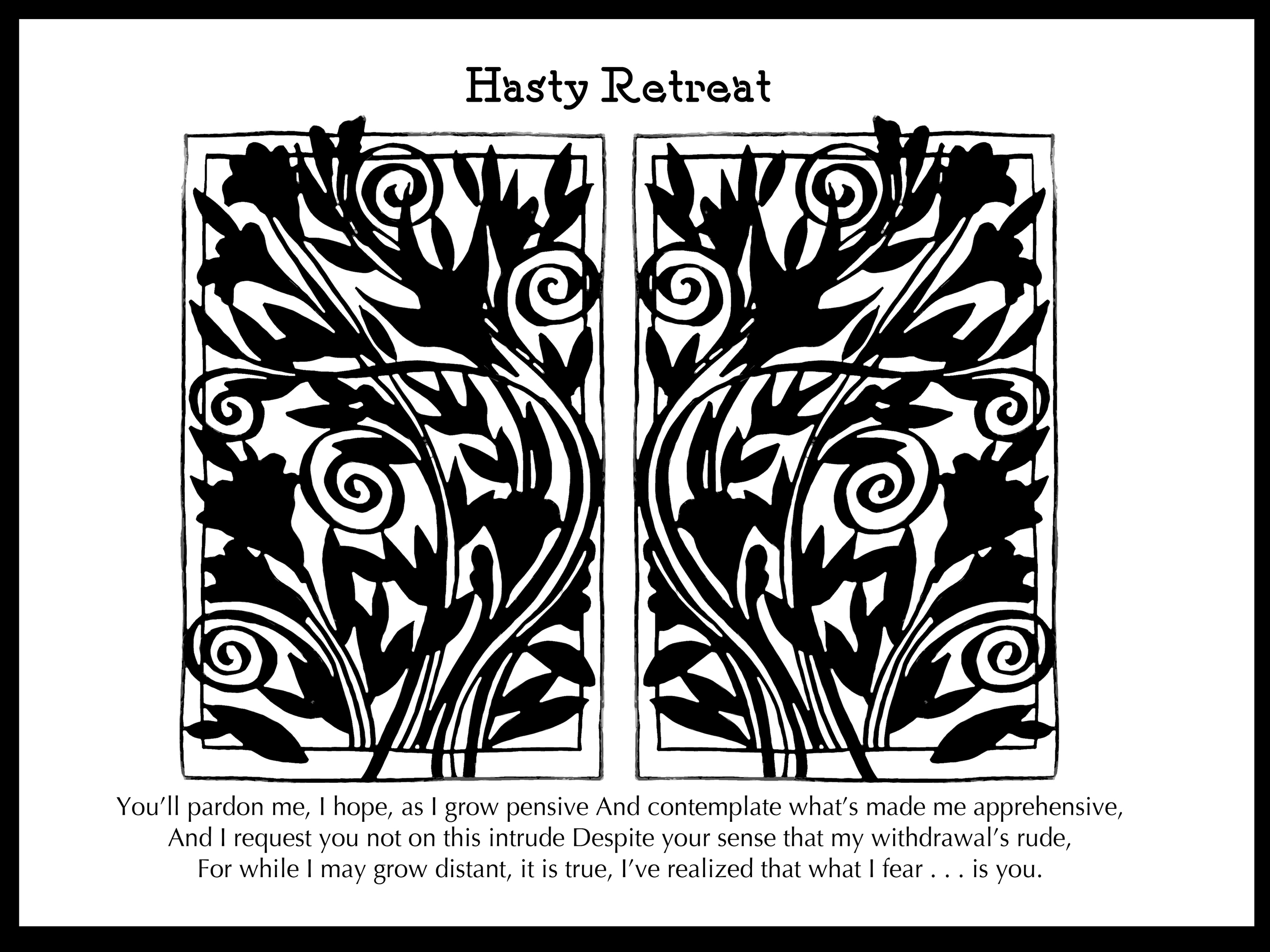
Here’s hoping the missing good cheer

That should have been prevalent here

Shows up at the door, not another old bore,

Or I’ll have to be leaving, my dear,

For your party is killing my joy

And particularly, to annoy

Me: wasting my time with dull boors is a crime

I’m not quick to forgive, my dear boy.photo

Coming-Uppance

Relegated to the lowest

Rank of feebleniks and fools,

I can see my betters’ failings

And their breaking of the rules,

But I keep my quiet counsel,

Counting nothing disconcerting,

Never flinch, for I remember:

Blackmail can be quite diverting!mixed media

Emptying the Vessel

Under my penitential veil,

Blue-socketed and ashy pale,

I genuflect and toll my faults,

Demurely dance a pious waltz;

I bend and bow and pine and scrape,

Dressed in hair shirts and chains and crape,

And when my guilt’s no longer sore,

I’ll dash right out and sin some more!photo

Close Shave

The opportunity occurs

So rarely, it is true,

That I can scarce resist the urge

To put my hands on you

With malediction in my heart

A glacier in my veins

A purring curse through smiling fangs

And voltage in my brains

That perks nefarious Nemeses

Like me to work your doom—

But I’d be left too much bereft:

No You to hate? Then, whom?

Foodie Tuesday: All about the Ingredients

photoI’ve said it before, and lots of food experts smarter than I am have said it lots of times before I ever did: good food preparation starts with good ingredients. No amount of genius and skill will make a great meal out of so-so ingredients, let alone out of bad ones. And me, I have a modicum of smarts and very modest, though for a lazy goof-off like me, surprisingly patient skills. So yeah, I can get the job done, as long as I have some excellent ingredients in hand.

photoStarting with salt. One of the most indispensable of delights in the entire pantheon of foods and culinary assets from its first discovery, good salt in just the right quantity is the First Rule of Yumminess in many, many a dish. But, hang on, salt should still often be the last ingredient applied. Tricky, no?

photoThe meal, however, if it’s with fun guests on hand and stretching a little over the course of the day or evening, well that should begin with a little taste of something nice. For the other day’s dinner guests, who were indeed a whole lot of fun, the starters were simple enough, and already on hand: the crackers I made (and posted) last week, the olives I’d previously bathed in sherry and olive oil, and smoked almonds, plus a few chilled prawns with dill-enhanced cocktail sauce. A fresh, cold batch of light Sangría:

Blushing Sangría

Two 750 ml. bottles dry rosé (I used a nice dry Pinot Noir rosé by Toad Hollow), plus 1 bottle of sweet white wine (I used a bottle of Moscato), 1/4 cup of Amaretto, 1/4 cup of Himbeergeist, 1/2 pint of fresh raspberries, 6 small or 3 large fresh peaches, 1 teaspoon rose-water, 1 teaspoon vanilla, 1/4-1/2 cup of light agave syrup or raw honey. Stir gently and chill thoroughly before serving.

The peaches I bought were an unexpected mix of half overripe and half underripe fruits, so I peeled and sliced the underripe pieces into the Sangría, where I’d already immersed the raspberries, and the too-ripe ones I pitted; I put the mushy peaches and all of the skins from both kinds into the blender with a bunch of the liquid ingredients, blended them all thoroughly and sieved the pulp into the Sangría, so I still got all of the mileage of flavor and color from the peaches, if a little less sliced fruit. In the end, it was plenty drinkable, so all was well in our pre-prandial world.photo

photoThe meal needed vegetable balance, of course, so I kept the ingredients to a fair minimum again and the flavors simple. Why mess with good contents? A mix of heirloom tomatoes and red cherry tomatoes made a simple but flavorful topping for romaine lettuce with a couple of simple salad dressing choices. Sweet corn, freshly pared off of the cob, was gently and quickly warmed in butter. And some delicate asparagus was steamed with a little soy sauce, a little plain rice vinegar, a very small dash of toasted sesame oil and a sprinkling of sesame seeds.

photoThe main dish, which I’ve undoubtedly mentioned in previous posts, was our old favorite household standby of Smoked Salmon Pasta. Not even a true recipe, really. Dearest John, I did not hand-craft my pasta. Yes, I bought refrigerated fresh fettuccine. Would that I’d had you supervising the party, not to mention in charge of the pasta-making, this element would indeed have been more, erm, elemental. Not to worry. Some day I shall reform. Meanwhile, a decent store-bought fresh fettuccine is not such a bad thing when dressed up just a leetle bit with smoked salmon cream. Simmer about a pint of heavy cream until it thickens to a nice sauce thickness, add about 1/4 teaspoon of freshly grated nutmeg and 1/4 teaspoon ground white pepper, 1 cup of broken up [hot smoked] alder smoked wild salmon, and a good splash of lemon juice. Toss gently with the freshly cooked and drained pasta and serve.photoThere are only two main high-quality ingredients needed to complete a pretty good party with all the rest of this, then. Dessert, naturally, should be offered–a bit of sweetness to follow all the preceding, and stretch as far into the evening as can be managed by all. But most significantly, the last essential ingredient of the gathering is, well, the gathering. The good company. We had that. Good enough company to want to stretch out the evening. So there was just a touch of dessert. Fresh strawberries and, you guessed it, chocolate.

photoI never said I was original in my menu planning. But I am really good at putting myself in excellent company, and that’s always what the party is all about. There you go: my real culinary talent is cooking up a right magical blend of outstanding people and enjoying the delights that result from the combination. Too bad there’s no cookbook out there that teaches that–no, wait–every good cookbook in the world gives guidance for just this art. As these good books teach us, choose your excellent ingredients wisely, food or company, and you will brew up a marvelous party.

You have a Lovely Forehead

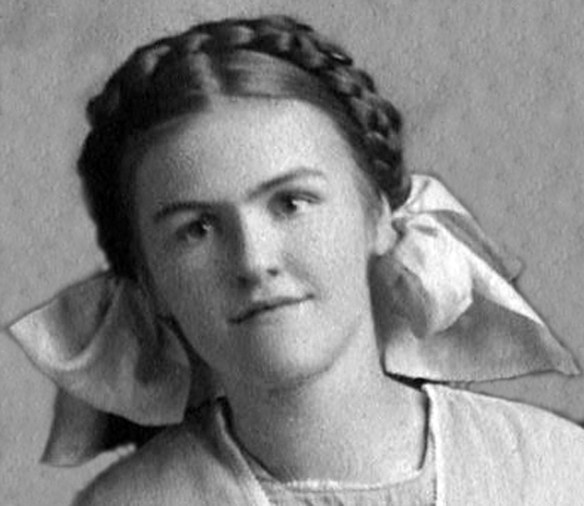
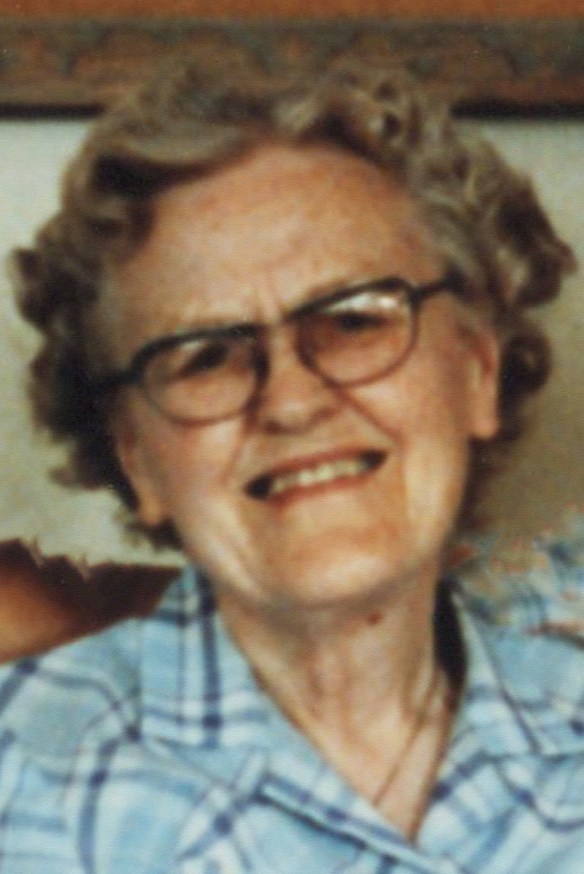
photoI was Auntie Ingeborg’s favorite great-niece. Of course, that’s potentially a less impressive achievement if you happen to know that each of my three sisters were her favorite great-niece, our father was her favorite nephew, his brother was her favorite nephew, and so on, ad infinitum. Potentially less impressive, I say, but not at all so in reality if you happened to know Auntie Ingeborg. Because she had a peculiar talent that is very rare indeed among humans: the capacity to make every individual she knew into her absolute favorite. It was completely sincere, unforced, and unquestionably real, and we never doubted it, any of us Favorites.

Auntie had a perpetual delighted smile and an endless twinkle in her eyes and rosy cheeks just made for children to pat affectionately, a lap that was always at the ready for clambering kids to pile on and around for stories, and a genuinely exotic store of entertainments few aunties of any sort can aspire to offer. But by popular standards of style and glamor, you’d never have given her a second glance. She found a perfectly prim schoolmarm look in simple crepe dresses and orthopedic shoes that suited her right down to the ground, and once she established that as her comfort look I don’t recollect her ever deviating from that significantly in the remaining decades of her life. She certainly wasn’t a magazine cover model, with her rather crooked teeth, and with her heart-shaped face accented just a touch too far by her under-bite. But that radiant smile, those softly blushed cheeks, and those merry blue eyes showed off the ethereal beauty of her heart to perfection, so I never once thought of her as ordinary at all. And she most certainly wasn’t ordinary.

Auntie had skills, talents, powers and exotic resources that no one could have guessed on first meeting her. First off, she lived in an apartment, quite the exotic concept to little kids raised in American suburbia. It was already a well-worn building of that vintage that had all sorts of wonderful creaks in its hardwood floors and hallways, a cage-style elevator that was just about the most mystical contraption I’d ever seen and carried us slower than a kid carries his books to school on Exam Day. And it had a Murphy bed. One of those fantastical metal monsters that stood on end, hidden in a closet, by day and pivoted out to unfold down at night.

But also during the daytime, as we learned, it stood guard in front of Auntie’s toy chest, an old and very slightly musty trunk filled with even older and rather odd and very delightful toys, including one of the earliest versions of a small robot I can recall, a little metal man that, when the key on his side was wound, began to walk stiff-legged across Auntie’s carpet in a cheerfully menacing zombie sort of way as the sharp little metal spikes that protruded through the soles of his metal feet would push out to raise up each one alternately from the rug. It was the sort of toy that would never be allowed by modern parents and other legal experts, because the foot-spikes were incredibly sharp and the metal was hard-edged and undoubtedly the paint on it was full of lead, and we loved to play with it almost endlessly.photoThere were other bits of magic and mystery stashed in the toy box, to be sure, not least of them that we quickly learned to dig into the box thoroughly on arrival, and as quickly as we could wrestle the bed far enough on its pivot to release the box to us, to find the box of Barnum’s Animal crackers that Auntie happened to have hidden along with the toys in there. Those who grew up eating them tend to agree that they are fairly insipid of flavor and texture, but the fact that they came in a charmingly decorated little box that looked like one of Barnum’s mythic circus train cars, full of exotic beasts, and it had a string handle on it for carrying around with us as we played with the toys and we got to dole out the little biscuits at our own leisure from the little wax paper lining inside the box–why, this was the stuff of dreams!

In truth, the toy box, though it was the object of our beeline in the door on arrival, was not the most crucial of entertainments at Auntie’s–that status was Auntie’s alone. For, as a lifelong grade school teacher, she knew how to amuse and occupy the caroming minds of wriggly kids about as well as anyone on earth ever did. She quizzed us about our wide-ranging and rarely accurate knowledge on any number of topics, showing more genuine interest and enthusiasm than any such conversation with miniature humans deserves, she played her old upright piano and sang silly songs and very old hymns, and best of the best, she would let us all pile up around her as she told fascinating folk tales, the finest of which were accompanied by her making pencil marks on her paper tablet to illustrate the path the story’s protagonists took from one episode to the next, the drawing of which ended quite miraculously in a picture of something–perhaps a giant vegetable with a person who lived in it looking out its window, or our favorite, a cat whose tail curled in a wild spiral that ended both the tail and the tale.photoShe was no specimen of the more refined social graces that might be expected by a more patrician crowd than her circle of family and friends. Physical or athletic grace was clearly not her great gift any more than it’s mine–when we moved the Christmas tree into the middle of the room to join hands and circle it singing old Norwegian Christmas songs, as was our sometime tradition, Auntie managed not once but in two different years to bump into and topple the decorated tree. I’m not even absolutely certain that the second time could be credited entirely to her, because it’s not as though there wasn’t the previous experience to tell my father, for example, that we could consider just doing that little ritual on one of the days when Auntie was celebrating at another relative’s house. But given that no one was harmed in the event and that we all had an excellent laugh not only on both ‘tipsy’ occasions (no, Auntie was not–only the tree was) but for all the years since as well, he can hardly be faulted if he did suspect a repeat in the offing. Auntie, as it was, laughed harder than any of us.

Auntie’s driving history, too, had certain mythic qualities to it, ending when she was at least in her eighties and still chauffeuring needy Old People (some of them undoubtedly much younger than herself) to the doctor’s office or the grocery store or church, or to where she taught English as a Second Language to immigrants for a very long time. The beginning of her automotive life was illustrated for us by the awe-inspiring story of the day that my father, then a high school student, came home after classes and found Auntie reclining on the family couch in a somewhat dazed state, from whence she plaintively asked if her nephew would mind going out to retrieve her car, which she had left at the neighbors’. He was puzzled as to why she hadn’t, evidently, brought it along with her all the way to his parents’ house, until on arriving at said neighbors’, he could see that her slightly skewed understanding of the operations of centrifugal-vs-centripetal force in driving had resulted in her cutting the corner of the street, jumping the neighbors’ front rockery, and landing the car in the midst of the garden border under their front window. It is unclear how, precisely, he was able to successfully remove the automobile from its highly artistic position in the neighbors’ front yard, but apparently this did occur, as did eventual restoration of the yard’s normal, more vegetal, aspect. Auntie’s driving was somewhat tamer after that, though occasional indications of her earlier style did leave us all wondering over the years how it was that she never seemed to get in any further accidents, or even get a police citation, out of all her miles on the road, an outcome for which we were all profoundly thankful.

It may be presumed that among other things, the lovely lady we knew alternatively as her self titling of Jog-along Julie did indeed keep on moving through life at a steady pace but because she had so many commitments to her teaching at school, community and church locales and to her watchful companionship of nearby friends, she didn’t need to drive very far when she did drive.

She was, after all, far too busy taking care of and cheering up a multitude of others, writing letters prolifically to family far and near, and reading–to herself and to others as well. Any birthday or holiday was almost guaranteed to be celebrated with the gift of books, and she can certainly claim much credit for how much her nieces and nephews of all ages learned to love a good story not only at her knee but in the pages of the books she doled out to us. Every story, even the books of silly rhymes and jokes she shared with us, may have had some subtext of educational purpose, given Auntie’s lifelong commitment to teaching, but we knew in addition that the central theme was simply how much she loved us.

She constantly made sure to say something supportive and complimentary to everyone, even on days when and to people with whom it was quite a stretch. When we sisters reluctantly sent her the dreaded school portrait photos that we always thought were hideous representations of who we were rather than what we hoped and wished we looked like to others, she would tell us how marvelously sweet and attractive we were, without fail. When one sister sent the photo that she hated most to reveal to the light of day (because she despised how far she had her hair pulled back on the occasion, thinking it made her face exceedingly exposed) Auntie wrote to her with great kindness that she had ‘a lovely forehead.’ Nothing could, for us, more simply and clearly have illustrated how gifted Auntie was in finding beauty in us even where we felt most flawed.

Though she seemed so fixed in time by her perpetual uniform of the schoolmarm look, by her continuity in writing letters, sending books, telling stories to the youngest members of any party, and driving, albeit more slowly, the Old Folk she knew to their appointed rounds, Auntie finally did actually grow old and die. But of course, even her funeral was occasion for us to hear her piping voice cheerfully chirping out how amazing and fantastic we all were. The relatives who gathered to plan her memorial service were suitably impressed to compare notes and discover yet more of her Favorites among their number. And the whole day of togetherness not only confirmed that her love was what we all had in common, but was filled with laughter at the same old stories of Auntie’s antics, and the warmth of her boundless thoughtfulness and selfless kindness toward all and sundry in the family and in the whole wide world.photo