Waiting–for What? For Whom?

digital artwork from a vintage photo

Her Champion

By the light of the window, pale and solemn, quiet, reticent,

She sat and gazed, the age-old tale of waiting, in this variant

Not for a lover or for change that was supposed to bring her hope–

No, but for something passing strange: a subtly altered isotope

Or subatomic shift of sorts that would reveal to her at last

That she was whole, and all reports that indicated in the past

She’d fallen, lost, or failed, or died were clearly false and incorrect;

That anything she chose or tried was incomplete in that respect–

What she awaited, delicate and silent in her ray of light,

Was just this news she ought to get: already she was fine, was bright,

Was loveable and brave and keen and capable as one could need

Or hope to be; by this I mean just that she was quite great indeed.

If you wait validation too, and sit in patience for the news

To be presented thus to you, get up! There’s not a breath to lose,

For simply knowing that your soul already harbors strength and worth

Is proof enough that you are whole; no greater treasure lives on earth:

Rise from the ashes of your fears, wake up from timid, silent gaze,

And race like a runner, months and years stuffed into the space of weeks, of days

Because your courage speeds and grows–leap forward! No more waiting: run!

And as joyful living overflows, you’ll find you were the awaited one.

Rainmakers

Now that super storm Sandy is mostly past, those in the wake of the destruction are left to dig out from under all of the mayhem. As all natural disasters do, Sandy left behind not only massive damage brought on by the high winds, flooding, snow, fire and explosions that were part of the storm and its immediate effects but a whole swath of financial, social, political, logistical and definitely not least of all, emotional and personal damages that will take years to be mitigated, let alone resolved. Besides the losses of life and health that are such obvious costs of a massive storm ripping through, we all know–those who have been through this grinder before, anywhere in the world most especially–that there are innumerable other things once held dear that have been slashed away in a few hours’ time and many of them will never be recovered.digital painting from a photo

The homes blown down, stripped away by violent waters, or burned were filled with people and lives and the Stuff of those lives–in many cases, all gone. The businesses closed for a few days, often in crucial periods of their peak season, are eclipsed by those whose doors, if they still physically exist, will close forever and by the many owners and employees and customers who will have to find other resources for making a living or acquiring the services and goods they count on to shape their ordinary lives. They will all find, as my spouse said very quietly to me when I came down the stairs to find him waiting palely on the 11th of September in 2001, that ‘the world as we know it has changed.’digital painting from a photo

But we also know from long experience that disasters, whether natural or human-made, can bring unexpected goodness trailing in their wake. The immediate selflessness and generosity and heroism shown by those who rush into the maelstrom to save others and who pull the stricken into their waiting arms of safety and warmth and shelter and healing are, when we others take a lesson from their shining examples, only the first wave of light and hope to follow the darkness and despair. If we all, whether by the nebulous but potent means of offering support in our hearts, minds, prayers, and invention or by the more concrete ways of donating, digging, driving; of building stronger buildings to replace those lost, remembering those who have died with forward-looking perpetuation of their virtues, and taking up whatever tools we have to recreate a more closely knit community that can expand exponentially to bring in every person with every need and every gift that can fill that need–then every storm is not an irremediable horror and every battle is not the one that will end safety and sanity forever. We are bigger than the storms. We can be the rainmakers who rise up out of ordinariness and even destruction to build something real and new and extraordinary.

Nobody Loves Me, Everybody Hates Me . . . *

photo

. . . Think I’m Gonna Go Eat Worms! [Note: no actual worms were harmed in the making of this photograph.]

Yes, it may be true that no man is an island–we all depend on others far more than we even recognize or comprehend–but conversely, every one of us is his or her own unique and seemingly isolated version of Three Mile Island at times when it comes to having personal meltdowns. It starts right at birth, when most of us scream and complain at having been removed from that ever-so-pleasant resort and spa, Mom’s innards, and ejected unwittingly and unwillingly into the cold, cruel world, and it continues, however sporadically, throughout our lives. We are such fragile creatures.

The majority of humans, happily, are not subject to this dark reality for too large a percentage of our lives, but it’s more common than is commonly discussed that we have trials, tribulations and the varying degrees of inability to cope with them that make us question, if not our sanity, then certainly our ability to rise above what’s bad, get a grasp on the good, and move forward regardless of feeling worthy or curable. Depression truly sucks–not just in the vernacular, but in the sense of pulling one down into a bottomless abyss like an evil and irresistible vortex.

I’m not referring, of course, to ordinary grief or sadness. We all get hit by those monsters at times. We flounder, we suffer, we recover. It may be deep and painful and take a long time to rebound from sorrows of even the most normal sort, but we do, eventually, learn how to go on living and being and take part in the doings of the world. Generally, that sort of difficulty or tragedy even tends to gradually heighten the sense and appreciation of what is good and joyful once we’ve experienced and survived the dark and can see the shining contrast of even a modest pleasure with what appeared insurmountably grim from its midst. True clinical, chemical, physiological depression, well, that’s a different thing.

It resists the most persuasive and intelligent logic. It batters self-worth and love in the most brilliant, gifted and accomplished sufferers. It tears at relationships of any sort with other people or with action, with one’s wit and will to survive. If it doesn’t make one outright, actively suicidal, it can simply kill through atrophy and attrition: sufferers have described the state of longing intensely to kill themselves but having no strength or energy to do so.

Why would I talk of such dire and dreary and horrid stuff, even think of it at all? Because I am reminded sometimes of when I used to be there. My worst bout of depression was perhaps aided and abetted by various situational and temporal aggravations, including the typical catalysts and intensifiers of real-world health and happiness threats: the onset of my spasmodic dysphonia, job problems, the murder of our good friend. These were of course widely different in intensity and timing, but to someone like me, their interaction with my evidently wonky endocrine system or whatever combined forces of chemical and biological imbalance were building in me meant that when I hit bottom, no amount of thoughtful and heartfelt reasoning with myself could ‘fix’ me or my situation.

I am one of the true Lucky Ones. I finally felt so brain-fogged, so unable to resist the pull of that deadly sucking, enervating, soul-destroying feeling of pointlessness and ugliness and being unlovable and incapable of doing anything meaningful or good–well, I got so needy that I actually let others help me. That was it. The only way out of the hole was to grip the hands reaching in toward me and let them do all of the work of pulling me out. Part of it was accepting these helpers’ assurances that they did indeed believe in me and in how I felt, that they loved me and knew that I had worth and potential. Part was letting others lead me around and taking their advice and simply letting go of what little shreds of ego I had left enough to say that I would do better in following an educated and experienced prescription for improvement than I’d been doing on my ever-weakening own two feet. And a part that was essential for me was loosening my grip on my insistence that taking prescribed treatment–both psychological and chemical–without trying to create or control it myself was a sign of weakness or failure. It took, in fact, all of my strength and intelligence to recognize that any strength and intelligence I had couldn’t save me.

The luck involved is clearly that together we (my caregivers–medical and personal–and I) did find the combination of therapeutic treatments, behavioral changes and chemical re-balancing medication that not only unlocked my present emergency state of depressive existence but ultimately proved to let me feel fully, wholly myself for the first time in my life. I know that this is not a cure but an ongoing process for as long as I live. And, having lived both ways, I am more than happy to take on that responsibility. It’s a privilege.

What’s most beautiful of all, for me, is that when it happens (as it has in this last couple of weeks) that several occurrences and situations conspire to remind me of this my past and how it shaped my present life and self, it also reawakens in me the profound gratitude for all of those complex minutiae that converged so miraculously well as to make this life possible. To make my continued existence at all possible, perhaps, but particularly such a happy me. What seemed like the most disastrous and irreparable of confluences instead conspired to make just the right blend at the right moment that finally offered me a rescue.

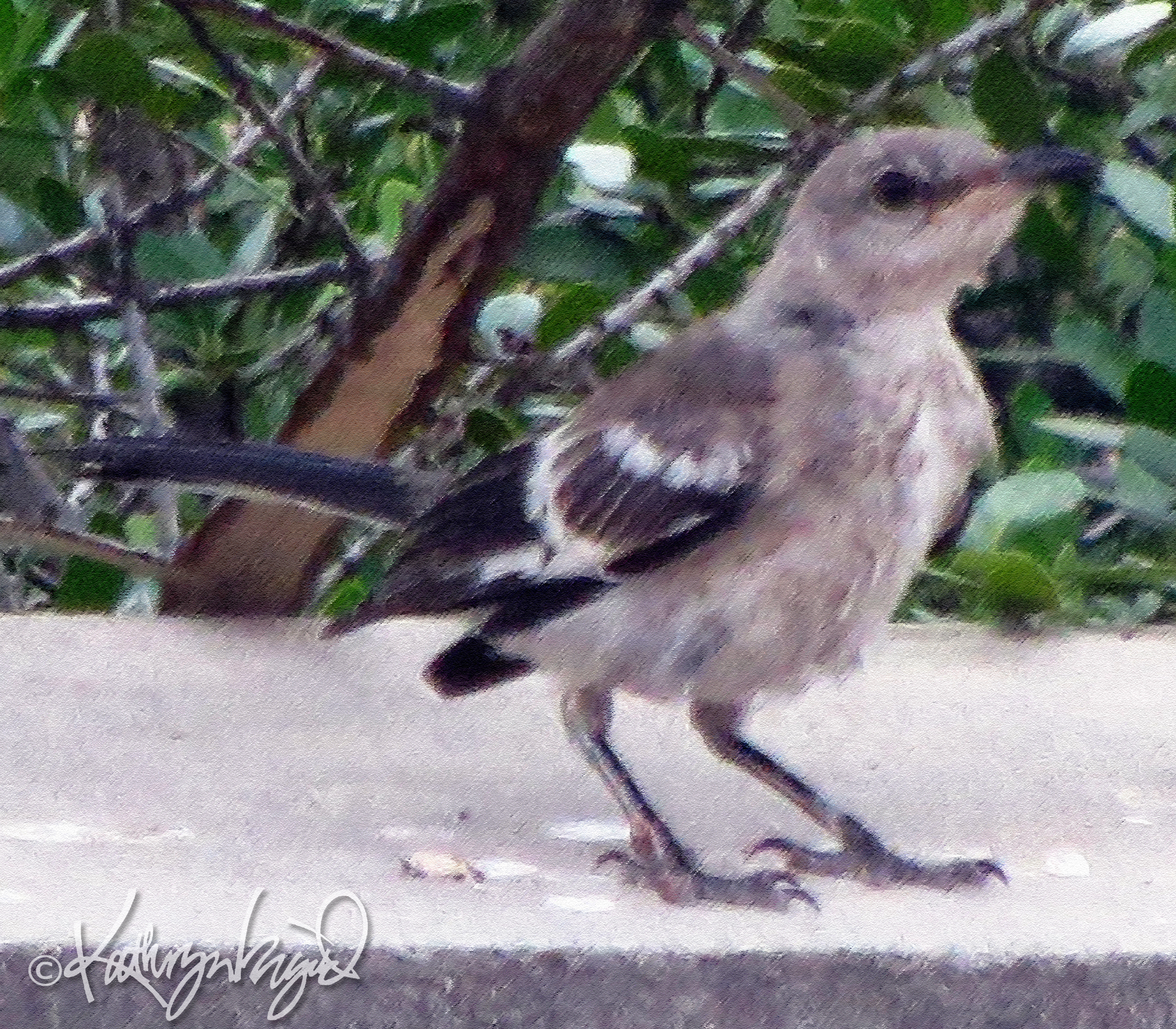
Turns out that eating worms is the very nourishment that makes some birds healthy enough to sing their hearts out with the pure delight of existing. Last week I was out walking and saw a ditch full of drowned worms, lured into and killed by stormy waters. This week I was walking the same route and the sky was filled with the most spectacular warbling, chirruping, musical bird songs I could hope to hear. Coincidence? Very possibly not.digital illustration from a photo
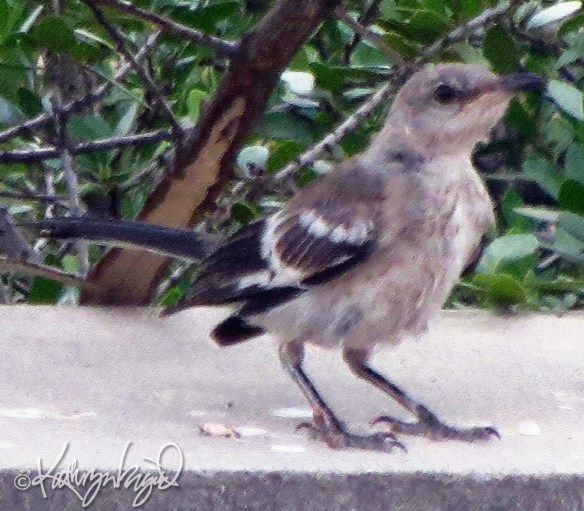
(* from the old campfire song Nobody Loves Me, Everybody Hates Me . . . )
 

Will You Sing in My Stead?

graphite drawingWhen I can Sing No More

When I am weary, worn beyond all reckoning,

My breath is gone and voice has ceased to sound,

The darkness draws me in, its silence beckoning

And luring me to lie down on the ground–

To fall asleep; perhaps to melt there into death,

Because I can no longer coax my throat

To speak of joy, or yet to longer draw a breath,

To sing a song as long as one fine note–

Beloved Friend, how sweet if you will stand for me

And draw the air that lifts the lark to wing

Its way across the sky–if you will kindly be

My voice, and raise your own aloft and sing–

For in my silent darkness I shall never die

Long as your voice goes on and in your song I lie.

Real-Life Mysteries

While I’m on the subject of mystery stories (see yesterday’s post), there’s a true one that I hadn’t ever heard of until recently that almost defies imagination, even generations later. But that’s what true mystery stories do, isn’t it.

The story of a female immigrant serial killer/mass murderer, born in Norway but made in America, was a hideous and irreconcilable tale of horror and crime in the 19th Century and remains one today. Belle Gunness, who is believed to have killed all of her own children, two husbands and a handful of suitors, not to mention an accomplice or two of her own along the way–possibly executing as many as forty people in her lengthy crime spree–is surprisingly little known nowadays. I fear that this may be because we have so many other hideous and oversized monstrosities and real-life mystery stories handy to horrify and mesmerize us that many likely get pushed out of memory by the current ugly news. Undoubtedly the advent of World War I‘s dreadful specter was a factor in overshadowing a single murderer’s story rather immediately on its discovery.

All the same, once I knew of it, I found the woman a compellingly repellant subject for another mystery story illustration, being a subject worthy of an Edgar Allan Poe style drama or, yes, a true-crime cinematic epic. Though it was one of those news stories that ‘rocked the nation’ when uncovered a hundred years ago, the tale of Belle Gunness is relatively obscure nowadays. There have been a few generally tepid and mostly heavily fictionalized stories, books and movies based on the horrors wrought by this one woman’s apparent sociopathy and the trail of blood left in its wake, but it’s remarkable to me that such a grim, terrible story is scarcely known on a wider scale anymore.

Frightening, dark, and perhaps an indictment of the worst of human nature in general, yes–but I think perhaps part of the reason I find mystery stories so gripping is because I think they remind us–again in that somewhat ‘safe’ and detached format of past-history or fiction–that brilliance and the abyss are constantly in conflict in the human heart and only by understanding this and being willing to examine it in ourselves can we have a chance of rising to beauty and shunning the grotesque urges that we might have–and, if we’re truly fortunate, catching up the would-be wrongdoer in humane and forgiving and healing arms before she can ever fall so far. That’s my hopeful fiction, and I’m sticking to it.

digital collage

La Belle Dame sans Merci of the prairies, Belle Gunness. What fearful horrors shaped this woman’s inner darkness?

Today, I present Belle Gunness, a truly fallen woman and black widow whose mystery may never be fully unraveled, for your contemplation. May we never see her like again.

All I Can Do

photoMy Dearest,

I know that your day is dark. Your illness is proving incurable and your pain is chronic. Financial ruin is staring you and your family in the face. The season has turned harsh, your lover has betrayed your faithfulness, your longtime animal companion has died, and your heart grows heavy and your eyes dim with weary tears. War rages just outside your door and grips you by the soul as well.

I know all of this and yet I am thousands of miles from where you are. I can’t step over the threshold and take you in my arms and silently cry with you until the bitterness ebbs. It’s so far that I can’t just bring a basket of hot food and a bottle of wine to sustain you and slake your thirst. My words, even when I try to shape the letter that will ease your suffering one moment’s worth, are too small and sere and frail to make an inroad–and the letter will undoubtedly arrive too late. There is a faint echo in that digital delay when we speak on the phone, and all I can hear in it is our own choked breathing, no sounds of the deep solace really required.photo

All I can do is leave the gash in my own heart open and ask you to take up your residence in it. Know that my thoughts are reaching across the miles to you at every moment, awake and asleep. Let me shift some of the terrible burden from your shoulders to mine; I know it isn’t real, and doesn’t solve your troubles one small bit. But I hope that you can find some comfort and hope in my desire to carry you while you are too weak to carry yourself one small step further. All I can do is love you.

And so I do.photo

Janus, for Good or Ill

digital artwork

In every one of us there may be a little reflection of the god Janus . . .

Humans are not the only animals that can look both forward and back. But we’re the ones that choose to recognize this trait with a certain reverence and, particularly, to think we ought to make some use of it. We’re undoubtedly the only ones that impute a moral value to one or the other, depending not only on whichever we personally prefer but on what we think can benefit us or others.

We can spend our time and energies on studying, learning from, or even dwelling in the past. We can devote our hopes and plans to the ideation of what lies ahead as scientists, fortune tellers, scam artists or futurists of any sort from literary to application development. And there are certainly those among us who for whatever their religious, philosophical or preferential reasons are dedicated to keeping attention focused on the present time.

All of these approaches have their uses, to be sure. But I like to think that there’s room for a balanced use of this knowledge, these skills. In any time, there is much for us to learn. The successes and failures of the past inform present action, but keeping eyes on present action demands enough concentration that the revisiting of historical notes had best be done while not in the very act of the performance. Likewise, learning to predict, extrapolate and imagine possible improvements and variant outcomes is often the richest trove of possible new successes, but again, dreaming of these accomplishments-yet-to-come is only useful if we aren’t so immersed in them that we can’t complete the steps of today necessary to position us for the future.

We may not be the only beasts able to remember or to aspire, and are clearly not the only ones able to be completely present in the moment. But if we’re the only ones that truly care about such capabilities, why then, let us expend what effort and wisdom we’re able and see how well we can integrate the three. Only then, I suspect, will any of us ever live the fullest lives for which our many possible directions can set our courses.digital artwork

Giving Candy to Strangers

photoMost of us are taught from when we’re very small to avoid all contact with strangers. Don’t look them in the eye; don’t make friendly overtures, don’t speak to them, and don’t go running up and hugging random unknown characters. Above all, don’t accept the offer of candy or other lures from those who might turn out to be very lurid indeed.

All of that is mighty wise advice for little persons. They have no experience of the world, no basis for comparison or judgement, and no inner criteria to help them have a good chance of accurately assessing the situation. But when are we Big enough to learn that unfamiliar people are not only not all bad and dangerous but possibly in great need of any gracious and friendly contact they can possibly be given? When are we smart and experienced enough to realize that others around us are not always up to something nefarious or trying to sell us something we neither want nor need if they approach us out of the blue? When are we large-hearted enough to make a more hospitable evaluation of the risks or rewards in approaching the unknown with openness and warmth?

I have been told several stories recently that remind me of the opportunities that constantly surround us for making moves, both large and small, that have the potential to do anything from brightening someone else’s day to saving a life. Most of us fortunates have at some time and place in our lives ‘entertained angels unawares’–had a few of those moments of unexpected, extraordinary, beautiful contact with persons we didn’t know and understand that there are such agents in the world, even if we can’t immediately recognize them. Why not look for places where we can be those agents for no reason other than that we know from experience how powerful and life-changing, healing or hope-renewing, or just plain day-brightening such moments can be.

It is possible to be misinterpreted or rebuffed, true. But the vast majority of times that I’ve seen this sort of subversive joy-sharing happen without any ulterior motives, even if the recipient–sometimes me–is not altogether receptive at the outset, the end result is an astonished recognition that life is rather wonderful, that people, on the whole, are good and genuine and caring and fine, and that we have in our own small hands and hearts the astounding power of remaking ourselves and the world into better things by the simplest and least extravagant of means. A hug, a moment of patience where there has been tension. A donated dime or a pint of blood. A proffered packet of food or bottle of water that had been meant for something or someone else. Handing off the little trinket that was mine but that I can see another one admires or opening the box of treats I was saving for the family and sharing it instead with someone I don’t even know. Opening doors and assisting with chairs and lifting the parcel that’s too heavy for someone else.

They may seem tiny and insignificant enough. For those of us who choose to give them, they amount to easily made gestures. But insignificant? Hardly. For those of us who dared not, who may not have even known we could, ask–this one little mark someone offered to make on our day may mean, after it all, the whole world.photo

Blogsistentialism

photo

Sighhhhhhh . . .

I’ve got this little problem, see. It’s about my name. No, I am really pleased with the one I was born with–Mom and Dad did a bang-up job with that, as far as I’m concerned. Parents have it easy with the baby-naming stuff; it’s not their fault if the kid doesn’t match up with the moniker, considering that they had no way of knowing the shrimp beforehand to fuss over pairing name and gnome perfectly.

My problem is with my blog title. I’ve winged it with my online place’s birth-name, a version of my own, since I started the gig a little over a year ago, but in truth, it was pretty much a place-holder since I had no inkling then that I’d not only stick with the process but have people beyond the borders of my immediate family visiting with me here. So the problem is, if there’s nothing in the name of my blog to tell anybody outside of the aforementioned familial borders what the heck this blog contains, or why on earth they would have the remotest reason to bother visiting here. If, indeed, they did.

Now, then, I’m having a good old identity crisis. ‘Cause I don’t know what the heck to tell anybody either. On Tuesdays, yeah, you’ll generally find food-related ramblings when you show up. Other days, though, swerve from one topic to another so loosely and with such unpredictable abandon that I don’t know when I sit down at the keyboard what direction I’m bound to take. New drawing? New photograph? Reminiscences about travel, DIY monkeying, garden plotting, commentary on freeway drivers or a freshly minted and wildly ridiculous poem–I just haven’t figured out any sort of way to describe in a couple of words what’s on the non-Tuesday menu around this blog.

I’m open to suggestions. Thanks to my obsessive dilettantism, my spouse suggests that the family nomenclature for me of Short Attention Span Artist might just do the trick, but as accurate as it is in describing me (and probably what I do, too), it still doesn’t seem to me likely to tell a total stranger what to expect on arrival. Tangential adventures like mine could possibly be described as, uh, Tangential Adventures, but of course that’s pretty cryptic too. Art, Poetry, Photography, Essays, and Ingenious Insights combines the pompous and the dully categorical in a way remarkable only for its long-windedness.

I guess I’ll just keep a-sittin’ here in my little corner twirling my ponytail for a while and see if some astounding inspiration happens to alight upon my bedazzled pate. Ooh, Bedazzled Pate! Nahhhh, sounds like some kind of yummy mousse studded with masses of rhinestones. The truly big question remains. Who am I? Doubt that can be answered in this or any other lifetime. But perhaps I’ll figure out my blog’s identity one of these days, at the least. Feel free to help!


A Touch of Blue


photoJoy has a funny way of residing in our hearts: it’s never completely untouched by sorrow or the knowledge of trials and struggles. It requires a measure of trouble, in fact, for joy to exist. How else can we begin to know and appreciate the depth and breadth of true joy?

I was reminded of this today by one of my little hummingbird friends. They are frequently identified, these tiny flying powerhouses, as being most strongly attracted to red flora, to bright red and orange and sometimes yellow flowers. But they’re not that exclusive, really. They are aggressive and territorial and mercurial, all colors we tend to happily equate with so-called ‘hot’ colors, of course, but it hardly proves that red flowers are actually the best available attractants for hummingbirds.photo

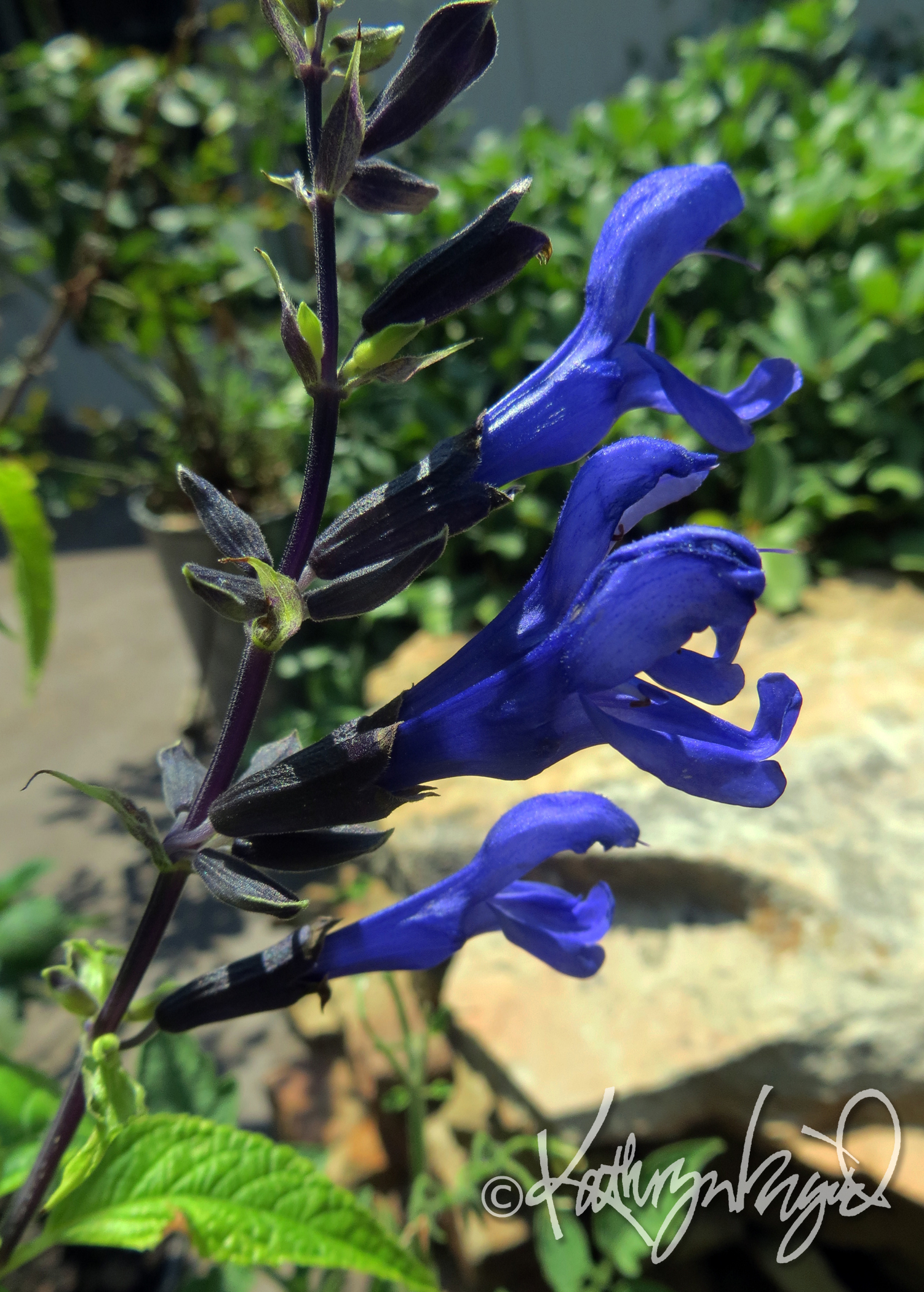
The hummingbirds that hang around my back patio have other ideas. Not least of all, that their pleasure, and their urge to imbibe a grand zing of energy-booster, can come from what is presently their very favorite treat back there: the blue-blooming sage. It’s a hot color too, that it is; the blossoms on the lovely Salvia ‘Black and Blue’ practically scream for attention from amid the bold lime-green foliage of the plant, so nobody with a modicum of visual acuity, hummingbird or human or otherwise, is going to buzz by without giving it a good, longing look of admiration.

With what do we credit the boldest of blues? ‘Cool’, we call them. But just like the wildest, hottest of reds and yellows and oranges, intense blues are attention grabbers. They grip us by the heart just as easily as any other high-hued beauties. But the existence of both is necessary for us to understand the differences between them, and the power each has. Is ‘cool’ the metaphor for melancholy and The Blues a name for sorrow? Perhaps. Are red and those other ‘hot’ colors present in warming flames, in sunlight, in the brilliance of joy? Possibly.

Do all of them enrich our lives? Absolutely. Ask a hummingbird.photo