Fix-It Fixations

Any homeowner or even mildly obsessed apartment-dweller who likes customizing his or her nest, office, cubicle, or living space knows that there are numerous ‘projects’ that are never officially finished. Most DIY projects of any sort, in fact, are only satisfying right about the time they’re in their last stages of preparation and very, very newly finished. Then we’re on to the next change or update we’ve been itching to see transform our spaces. For me, the Next Big Thing is perpetual: I never quite settle down and stop having new ideas and fantasies. My now-spousal partner knew even before my dad jokingly warned him when we sprang the (not especially surprising) news of our intent to marry that it was not merely in jest Dad told him to expect to come home virtually any day of the week and find the furniture moved all over the place, half the house painted, or the chairs reupholstered. Thank goodness he’s a very flexible, tolerant guy…of course, he wouldn’t be with me in the first place if that weren’t true.Photo: The '70s Called...

Nowadays I’m lazier and less willing to spend much money on concrete Stuff if I can save it instead for our various retirement plots and plans or spend on current doings. But the urge never dies; there’s always some little tweak or To Do lurking in the back corners of my brain’s attic. The one thing I’ve learned to appreciate better about the process is the slowness of it all that used to irk me immensely. Over the intervening time between idea and execution, the possibility of improving both process and product grows, and in many instances, the availability of a better set of materials and solutions arrives as well. Though I had in mind a nifty reboot of the existing dining room fixture that was, sadly, thwarted by the outdated wiring’s channels being too narrow for me to fit the necessary updated wiring through them, my time pulling apart and cleaning and fiddling with  the entire fixture in an unsuccessful attempt to bypass the problem was long enough for a more suitable modern fixture to at last appear on the market at a price I was willing to pay.Photo: Let There be Better Light!

Likewise, the wildflower and sapling “nursery” meadow I made out of half our backyard a couple of years ago has taken that long to begin coming to recognizable fruition as such a space instead of merely a raggedy weed patch. The time spent waiting for the (semi-dead, weak little one-dollar end of season) plants I picked up here and there to take root enough to survive longer term, let alone bloom, was well worth it, since those were not seasons of rich encouragement. This year’s mild winter and spring and its extraordinarily generous rainfall are providing a much friendlier environment for the plants now old and established enough for bloom to make their first appearances. So, though you can’t see it behind the blast of rose blooms in the last photo, there have been much more encouraging bursts of growth on a number of patches of chrysanthemums, Echinacea leaves, and myriad wild cousins, with some Salvia and Cynoglossom amabile (Chinese forget-me-not) throwing bright blue sparkles into the mix of pink primroses and green leafy things even before others come into bud.Photo: A Long Winter's Nap

Kind of the way that one new idea breaks in upon the muddle of all the old ones stirring in the brain while they wait to be put in order for becoming DIY projects and household fixes.Photo: Spring has Sprung

Foodie Tuesday: Do Not Refuse to Enthuse

Does my post title confuse? Bemuse? Please, friends, excuse. My moment of enthusiasm is not meant to give you a contusion, it’s only about infusion.

Photo: Infusion Effusion

For my infusion effusion: nope, not a solo meatball, but a tea ball full of flavoring goodies.

Putting flavor into liquid without leaving the flavoring agent in it any longer than necessary (or desired) is what one does when one is longing for a spot of tea or a cuppa joe, but it is surprising how seldom we remember the option when cooking. Cooking, as I do, for a mostly anti-veggie person, I find that he objects less to things that have been cooked into a dish or sauce until they’re visibly indiscernible and mild in flavor, so sometimes it’s also nice to infuse the food with flavors but not leave the actual flavoring agent in it at all, so as not to distract my partner from his appointed dining.

Making a mild variant of Tom Kha the other day, then, I used a tea strainer for the green stuff and a few other tasty Thai ingredients, knowing that I could pull out the solids when the liquid was seasoned enough by them. A base of homemade bone broth mixed with coconut milk and a bunch of home-ground curry powder is easy enough to throw together when those are all in the fridge, freezer, and/or pantry, as is almost always the case here, curries being as favored as they are in our house. I filled the tea ball fairly full of my various secret-agent Thai flavors: lots of minced fresh ginger and varying smaller quantities of Thai basil and cilantro leaves, lemongrass, red pepper flakes, and I would usually add kaffir lime leaves too, but had run out. In addition, I poured in a little lime juice (to substitute for that last ingredient) and some Tamari. Sometimes it’s fish sauce, sometimes Tamari.

Photo: Flavor Bomb

Strange looking, perhaps, but also strangely tasty.


I put some chunky diced carrots and celery and mushrooms into the broth along with the tea ball and the other liquids and simmered them all until they were cooked to my liking, keeping the heat on a very low simmer for a fairly long time. At the end of the process, it’s so easy to toss in, as I did, a big handful of langoustine tails to finish cooking them. Also great as a plain vegetable dish, with tofu (though I’m supposed to limit soy, because of my thyroid meds), with prawns or cubed chicken. Lastly, though it’s hardly a strict adherence to Tom Kha traditions, I do like to either serve the soup like a sauce over rice or add bean threads or, as in this instance, rice noodles.

So easy, so flavorful, so flexible. And such a dish, in turn, infuses my senses with all kinds of pleasant memories, going back to my first tastes of southeast Asian foods, most notably the feasts prepared by my fabulous Thai roommate and girlfriends when we were all in college together. Delicious. Yes, the memories, of course—and the food, too!Photo: Tom Kha Variant

Creeping Up Appearances

Image

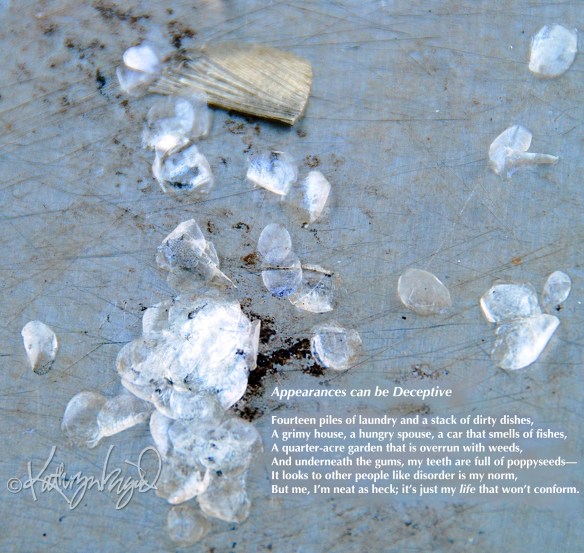
Photo + text: Appearances can be Deceptive

All Features Great and Small

Homemaking and decorating, housekeeping and DIY, major construction and minor tweaks: these are the things that turn a building into a true home. It might be as humble as a tiny apartment in a crowded part of town or an expansive villa, or even a palace or a tent, for all of that, but until it is arranged the way that makes the residents feel safe and comfortable enough to want to retreat there from the wider world, it’s just a space, and once it has been nested in the way that makes the residents feel not only that comfort and safety but also a sense of identity within it, it’s genuinely Home, and will remain so whether anyone moves away from it or not.

I’ve said before that I feel amazed and fortunate beyond words to have lived in regions, cities, neighborhoods, and especially Homes that embraced me in those ways over my whole life thus far, and where I have always been allowed or encouraged to express my own wishes and ideas to help me fit into them as well. And that is an incredible gift. But you also know that I can never resist personalizing “my” spaces, improving them where I can, and being extra-happy if I can do that on the cheap.

Photo: Garage Tidying

A clean, functional garage doesn’t have to look like a magazine cover, glamorous and pristine enough to lick, but when even the empty boxes (that whole left corner, plus everything behind the removed and stored interior doors on the right, for example) are in order and clean-ish, it makes all of my daily life a bit better.

Keeping a moderately clean and tidy house is the easiest way to accomplish that sort of thing, in my view. Relative wealth or poverty has less to do with how comfortable and beckoning a place is, for me, than whether anyone takes care of it, takes comfort and even some pride in it. Occasional massive cleanups of my garage (when I have one) so that I can not only park any vehicles I own in it, not just in the same neighborhood, but store what I don’t want in the house of my tools and supplies and even find them when I need them, that helps to make the place home.

For a small example, I need go no further than the kitchen and a look at an object I’ve been using about once a week for many years: my slow cooker. The first I had is long gone, but this model has been around for nearing two decades, I guess. It’s not the newest or fanciest model, but it still looks fairly decent, at least when I give it a major scrubbing, and it still works with impressive reliability. Unlike my creaky old oven, this little appliance is so dependable that I can confidently leave it on the low setting for a couple of days at a time, only checking to be sure that it sits where if it did sputter or overheat it has nothing overhead to damage and my big enameled-steel broiler pan underneath to catch any small volcanoes. Neither of which has ever happened, but still. The heavy crock insert is still, astoundingly, un-chipped and good-looking in its black glazed ruggedly handsome way, enough so I can haul it to the table without transfer to a different serving dish.

The one part that finally died this last year is so small that I was loath to replace the whole rigmarole for want of “a nail”—but I wasn’t about to spend huge amounts of my time hunting for such a little replacement part, for a probably obsolete model anyway, so on the day that the former lid handle literally dropped off in my hand, the hardware corroded through after years of various kinds of steam attacking it, I made a quick-fix with a wooden spoon and a piece of string. Better than scalding my hands while my soup stock was evaporating into thin air. But of course, that wasn’t going to last. When I finally did get time to go through my hardware, the obvious solution was stainless steel with rubber gaskets: stainless, to avoid the previous corrosion problems for as long as possible, and rubber, because the lid itself is glass and the steel, especially bolted under pressure, would put it at high risk of shattering. Like a similar glass pot lid had done the very first time I used a very expensive pot. Insert angry-face here.

Photo montage: Stainless Steel & Rubber

Hardware-store replacement for a pot handle: not just a little life-hack but a useful reminder not to overcomplicate things.

The little fix, though hardly an aesthetic thrill, seems to do the trick perfectly well, so as long as the electrical innards of the cooker hold up, there will be broth and sauces to fill my homely home with slow-cooking perfumes and our bellies with well-integrated nutrients.

A bigger problem in our household was that while we had lived for so many years near family members with bigger houses and the visiting relatives and friends had always stayed in those places, whether with us or without, once we moved across the country it was clearly time to return the favor and see that there would be welcoming space for overnight guests chez nous. The space itself was easy to finagle, both in our rented house of the first year here and the place we’ve now owned for five years, but putting in a comfortable and versatile bed for the intermittent users without breaking the bank was another issue entirely. We had our old slatted bed frame, nothing fancy but perfectly adequate (once I did some serious shoring-up of the flimsy joinery that had suffered a bit over the years of use and house-moving), but mattresses are so expensive!

For a while, I used an air mattress on the platform of the bed, because those are, after all, much cheaper and generally better made than those with which I’d grown up, and the slats are designed to be used without box springs. But after the night when Mom and Dad Sparks had slept (very little) on a mighty ridiculous slope because one end of the mattress had sprung a slow leak, it was definitely time to find a better solution there, too. Turns out, I did. I made a Bed Sandwich. Or a sandwich bed. Whatever it is, we’ve had a number of guests offer to move in with us. Or pack up the bed and haul it home with them.

It’s a hodgepodge of a bed and looks decidedly lopsided and goofy. The Princess who was so sensitive she could detect that irksome Pea under a mass of mattresses would undoubtedly turn up her royal nose at the very idea of reclining upon such an odd-looking conglomerate bed. But our visitors, from those of a certain vintage with replacement body parts and dodgy spines to youngsters who do daily yoga and could go ziplining in their sleep, seem to love how it feels so much that they feel at home in our guest room, and that is my idea of a good DIY project. I’ll bet even the Princess would be willing to give the bed a try, if persuaded by those reviews.

Photo montage: Bed Sandwich

From slatted bed frame, through a series of offbeat layers, to a humble-looking bed that guests don’t want to leave, the Bed Sandwich is one of my most successful homemaking DIYs thus far.

What’s the secret? Nothing fancy. Layers. The bottom layer is, literally, pieced together hunks of 6″ thick foam rubber, old camping mats, that I’ve had for years, assembled into a queen-sized mattress shape and held together with old cotton bedsheets, several layers of them to be sure none of the foam rubber falls or is squeezed out. The middle layer is the one that cost real money, back in the day: when we bought our master bedroom mattress, a very expensive and entirely-worth-it natural latex behemoth, we’d invested in a mattress topper, three inches of natural wool encased in a beautifully hand-stitched natural cotton cover, that was cushy and comfortable, but as it turned out, also a little less smooth and level than I typically like. I bought a memory foam topper for our bed and put the cotton-and-wool one on the guest bed. On top of that, I decided to put a memory foam topper as well, and it works both for additional padding and to smooth out the middle layer’s wavy surface further. Evidently it works. The bottom foam rubber layer, together with the slatted platform of the bed, is firm enough to support those who prefer or need a firm mattress, and the middle and top layers of padding seem mighty popular with both firm-mattress fans and those who just want the bed to give them a big hug all night long.

I am more content both because our guests seem to sleep very well, and I sleep better knowing that they do, especially since I have my sweetheart handy to give me a big hug all night long. Did I mention that as another thing that really turns a domicile into a home?

Hordes of Hoards

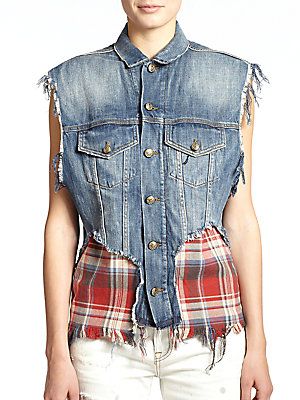
I just had some heartwarming reminders of how wealthy I am and how rich most of us are, without even thinking about it much of the time. First, there was this odd item I came across on a fashion/shopping site that startled me. “R13 Denim & Plaid Combo Vest.”

Saks Fifth Avenue Photo: R13 Denim & Plaid Combo Vest

Photo from Saks Fifth Avenue online: R13 Denim & Plaid Combo Vest.

Available at Saks Fifth Avenue for $695. Yes. Now, imagine this: one could buy a denim shirt + a plaid one at the local thrift store for a combined hundredth of the price (yes, it can still be done, with relatively little hunting), tear off the sleeves and lower portions of both, layer them together, and give the remaining $680+ to the poor, many of whom can’t afford a single one of the thrift store shirts. If a few people who wanted to buy the SFA garment did the latter instead of, or even in addition to, buying the Saks combo for themselves, what might the world look like then? Better dressed at more price points, I’ll wager. My personal taste would argue for not doing any of the ripping and faux-aging of clothes, as I live a life wherein my clothes get naturally beat up more than quickly enough for my taste, but that’s irrelevant to this train of thought.

Am I declaring Saks Fifth Avenue or people who shop there terrible? Certainly not. For one thing, I know plenty of people of moderate-to-massive wealth who are incredibly thoughtful and generous in their philanthropy, regardless of how they spend on themselves. Today I have been wearing a brand name denim dress, still in pristine condition, that I bought at one of the aforementioned thrift stores for $5 USD several years ago because someone well-to-do enough to own and no longer need it donated it while it was still in great shape for further use. Even major businesses, those often characterized as heartless, soulless, and solely dollar driven, can be usefully attentive to the needs of the larger world at times, and if they didn’t make those large amounts of money in the first place, how would they give away any such amounts of largesse?

Am I ranting against materialism because I despise wealth or hate acquisitive people? Far from it. If you’ve been around this blog for more than two minutes, you know I’m a highly dedicated magpie myself, loving Things and Stuff, and sometimes, the shinier and more pointlessly beautiful the better. Nature herself is great at promoting such things, and if you can open your eyes and mind to the view, even the urban ‘wasteland’ or the middle of a massive landfill can offer amazing perspectives on color, texture, pattern, and any number of other sensory attractions that comprise what a person might perceive as beautiful and even useful. But why should it all be consigned to the landfill, then, or just as sadly, to hidden stashes and caches of forgotten junk in our homes and offices and storage spaces? One person’s trash, as it’s said….

On top of the commercial reminder I fell upon today, my friend Switters recently put up a couple of fantastic posts about dealing with the aftermath of getting, keeping, and trying to part with large quantities of the Stuff of life, and I was moved to revisit my own experiences of that process. His commenter Jenny’s recommendations are outstanding. I’ve done most of what she suggests myself, and with great success. Somewhere along the line I imagine I’ve posted about it here, too, but it’s never an outdated topic among us rich folk, we who have anything more than barely enough. And I have learned—most importantly, for me—that decluttering and reviewing my belongings and responsibilities is an ongoing process. I’ll never stop needing to ‘rinse and repeat‘ periodically so that the big buildup never gets overwhelming for me. My original successful foray into the practice has made every subsequent one that much easier and more desirable.

I did learn from my mother and other influential family members and friends that no matter how high the sentimental value of a Thing, it’s increased rather than diminished by use. If Mom had kept her best china and silver like untouchable trophies for Special Occasions only, I’d have been terrified of using them, and I would have missed out on innumerable events that gave them additional mnemonic value through my own experiences. So what if a plate gets chipped or a sterling spoon gets bent? That in itself may add story, character, and relevance to the object. Otherwise, it’s just taking up physical and psychic space while waiting for Specialness that might never happen. So the Venetian wine decanter here holds mouthwash right now, because it comes off of the shelf where I forget it that it even exists to occupy the bathroom counter where, if I’m honest, it’ll get seen and enjoyed much more: every morning and evening at the least.

Photo: Venetian Mouthwash Decanter

The great Venetian Mouthwash Decanter!

Being a highly visual person, while decluttering I’ve clung particularly to the strategy of documentation-before-disposition and photographed—digitally only, to avoid adding photos to the Stuff already requiring management (talk about Unintended Consequences!)—every little thing in great detail, preferably ‘in situ‘ or as I remembered loving or using it most, before parting with it. What I discovered: out of the hundreds, maybe thousands, of things I’ve given away or sold or discarded in the years since my first great household purge, I can think of literally two or three that I’ve ever subsequently missed, let alone replaced. The latter, upgraded, of course. I can barely remember any times I’ve even actually looked at those memory-jogging photos. Knowing that they’re available should I become wistful is enough. For a sentimental softie like me, that was a shocker. Definitely a lesson well worth learning.

A peripheral item that turned out to be helpful to me is my recollection of what meant a great deal to me in years past: my grandmothers were both dedicated to the idea that anything they wanted us grandkids to treasure, they gave us when they were still around to tell us the stories and help us appreciate the context, so that there was a much greater chance we’d invest equivalent interest in their beloved belongings. I don’t even still own all of those items; much as I appreciated the gifts, it was the interaction that gave them the most meaning, and so the memories are the most significant part of the package. Any of those things that were part of that kind of transaction I in turn passed along to treasured people—niece, nephews, beloved friends, neighbors, and former students who became family—with the same story attached, and my own layer of the experience added on. The delight with which these are received is the center of the gift, and makes it irrelevant if they are, in turn, passed on to yet other dear ones, because the items become connectors of history and community that far surpass the inherent value of any of the objects.

That was the bottom line, for me. The realization that what I have loved most in any object is its emotional content and its connection to important people and events in my life makes the keeping of the objects less necessary than the honoring of the love they’ve contained. I will continue to buy, accept, and bear the caretaker burdens of Things. But I think it’s safe to say that the collection will continue to be more sharply curated, limited, and specialized with the passing of time and changes in my values and occupations, too. I have found that some of the beauty in objects arises from their not having cost much or taken a lot of care over the years. I love having my drawing and writing tools organized and readily available, but I don’t much care to store them in lead crystal vases and leather-bound boxes. A clean soup tin does very nicely. And in a pleasing nod to magpie-ism, tin cans are shiny. For the double win.

Photo: Shiny Objects Holding Other Objects

Shiny objects holding other objects. Bonus points.

A Very Brief Tribute—and an Invitation

Life never ceases to astound me, the people in my daily experiences in particular. This Friday evening, for example, I am going to another concert that will involve a whole host of dedicated, skilled, passionate musicians all working together to make history come alive in their performance. There will be wonderful music from greats like George Frideric Handel and Henry Purcell, and less widely known stars who also had connections with the London musical scene in a time when instruments were quite different, compositional and singing styles distinct from what we know nowadays, and the world, even of a metropolis like London, much smaller and simpler than the bright lights and wild energy we know now—yet the stories that the songwriters and performers of that age were telling differed rather less than you might think.The College of Music here at the University of North Texas where my husband conducts and teaches is gigantic, in some ways rivaling the sensation of a city itself, at times. Little London, if you will. Nearly sixteen hundred music majors and their teachers and peers work together to make all of these impressive performances, and of course they are far from limited to early music, though that’s the focus of the concert I’ll be attending. Tonight, there was music of Frank Zappa; tomorrow, voice and instrumental recitals precede the early music performance by the Collegium Singers and Baroque Orchestra; next week, along with many more spring recitals, there will be the Grand Chorus performance of Beethoven Nine and Vaughn Williams, and there are more wind symphony and jazz and chamber ensemble performances yet to come before the school year ends. It really is a bustling metropolis of its own kind, dazzling and almost losing me in its complexity. But again, the stories remain the same. It’s always about adventure and drama, love and longing. We seek to connect through the communal experiences of music.

So if you want to join in and can’t get to the campus, you can always tune in via the live stream, with many of our friends and relatives, by clicking on the link here. Or play or sing your own song, among your own friends and relatives. I imagine your stories will be familiar as well. I think I can hear them across this vast city of ours.Digital illo + text: Maze/Amaze

There was a Time…

For everything in life, there might indeed be a season. When it comes to the normal and quite predictable shift in relative values or availability, of course, I’m as skilled as the next person in forgetting to renew, rearrange, or simply release that which is no longer fulfilling. It might be an object of utility or beauty I’ve treasured and utilized until it was worn or a new and better one supplanted it. It could be a handed-down family treasure whose receipt over the years went from being an honor to onerous. It is even, occasionally, a relationship with a person that was exactly the right thing at the right time but has either shifted as our personalities and needs grew apart or has been taken from me by death or distance. The question, after any of these, becomes how and when I am able to distance my own self from them without fear of losing what was wonderful in having had them.

I worried about this each time I moved from one home to another, despite knowing it was impractical to take every single thing I owned with me to my next locale every single time, and with no surety about what would fit the new place or how I lived in it. When my husbandly person and I decided to downsize some years ago from a house to an apartment and simplify a little by getting rid of lots of what was essentially unused stuff, even though we’d both collected and enjoyed much of it happily over the years, this question arose yet again. I’ve not once regretted the off-loading of so much, even many family heirlooms, in that process. As we sorted and packed it off to new lives/homes, I decided to photograph not only the house and garden as they were but also all of the best-loved Things, thinking that if I could look at the photos when I got wistful and nostalgic later I would be comforted by the stroll down memory lane.

In the end, I almost never even looked at the photos afterward; just knowing that I could was enough, and made it quite easy, really. The very process of ‘documenting’ the stuff helped me remember it and my feelings about it even better than having it still in hand. In practice, I found that much of what I do keep around is easily forgotten simply because it’s not in constant use, so why have it at all? Somebody in need of such a thing will love it all the better, and I’ll feel more contented that the right person and the right object came together and I’m relieved of caring for something I too rarely appreciate. Out of sight, out of mind, and better out of sight in someone else’s appreciative hands than in the back of some cobwebbed cupboard.Photo montage: Stuff & Things

Because I Can

Photo: Homemade ToothpasteEverybody does certain things for no particular reason—sometimes to show off just a little, sometimes to test our limits a bit, and sometimes for the Everest-scaling excuse “Because it’s there.” Some of the things we do with the latter brand of casual offhandedness might, of course, be far better thought through, given that the utterer of that famous phrase died on the mountain and his body wasn’t even found until about 75 years later. But I’ll grant you that sometimes, too, a seemingly aimless act can lead to more useful ends.

As a person seriously devoted to both comfort and safety, I am more than content to leave any because-I-can acts of physical or psychological derring-do to anyone who wishes to live on the edge. I like my secure and restful life, thankyouverymuch, most especially the life part of it. But I’m willing, on occasion, to do small and non-dangerous experiments, if they seem to offer any interesting byproducts of use or entertainment.

Like making home-mixed shampoo, skin lotion, and toothpaste.

Sorry, if you were hoping for something really exciting! My inner life of fantasy has all of the elements of danger that I have the slightest interest in experiencing. But my day-to-day life and its practical requirements offer plenty of areas for potential improvement. If I can make my chores simpler, my needs smaller, the products I use slightly less expensive or toxic or complicated, and any other kinds of fixes that seem likely to make daily living pleasanter in any way, I’m generally glad to make the attempt at some point.

I don’t like most perfumed products. Nature gives me lots of wonderful smelling stuff to enjoy without my wanting to complicate those scents with artificial add-ons, so I’m more likely to buy an unscented, hypoallergenic version of any product if I can, and just enjoy the benefits of some of my favorite real-life ‘byproduct perfumes’: coffee brewing, freshly cut alfalfa hay, wet sidewalks after a long-awaited rain, a sleepy baby’s milky breath, sun-heated cedars and Douglas-fir trees, yeasty cardamom bread coming out of the oven. Flowers bursting into bloom in the garden. Salt spray at the shore. Spiced cider steeping on a cold night. Maybe it’s because I just recovered from a two-week cold, saw my poor spouse go through his own afterward, and woke up stuffy-headed again this morning, but the idea of all of those very lovely perfumes is the more alluring without thinking of their being masked by any artificial ones.

Then again, not only do I like to be clean both in my home and my person, there are some scents that do enhance my sense of cleanliness and good health in their ways, so I am not averse to adding those that I like, in the quantities I find appealing, to home-brewed stuff of personal- and home-care when I do make them.

My shampoo is almost always the all-purpose blend of a very plain liquid hand soap like Ivory (one could also use a similarly simple, if slightly more expensive, liquid Castile soap like Dr. Bronner’s) with nothing more complicated than tea tree and peppermint oils added in for their refreshing and slightly antimicrobial/antiviral qualities. The plain, oil-free soap is good for nearly any sort of (personal or house) cleaning that doesn’t require scrubbing, and with the oils it’s sufficient for my showering or bathing and hair care, no creme rinse needed. I don’t invest in any special skin treatments beyond the same home-mixed blend of skin moisturizer I’ve used on my face since my eccentric old dermatologist gave me his “recipe” of one part oil-free, hypoallergenic skin cleansing lotion + 1 part oil-free, hypoallergenic skin moisturizer + 1-2 parts water to use daily about 35 years ago. I have far better skin now than I did back then, so I guess it still works just fine.

The toothpaste-making is a work in progress, but I’m generally happy with that little science project as well. I have excellent teeth to begin with, so I wouldn’t recommend everyone jumping into fiddling with homemade toothpaste without consulting your dentist first, but these are also pretty standard toothpaste ingredients, so I’m not especially fearful of ruining my pretty white choppers. The blend at the moment is 1 cup baking soda (very mildly abrasive, and has some ability to remove or lessen stains and freshen breath—not, mind you, baking powder, unless you’re intending to bake your teeth into some sort of snack food) +1 cup coconut oil (melted for blending) + 1/2 cup powdered xylitol (the sugar alcohol sweetener, currently thought to be a cavity-fighter when used in moderation) + 2-3 Tbsp peppermint extract (flavor and breath freshening) + 2 drops blue food coloring. The latter is primarily to remind me that it’s toothpaste, since it’s just stored in a 2-cup jar in the medicine cabinet at the moment and I am, after all, occasionally forgetful. I might try the addition of a little Bentonite clay for better light abrasion, but didn’t have any on hand.

Let me just add that this little project is not my attempt to avoid fluoride. You are all free to choose to use it or not, but I am delighted that my first dentist happened to be among the first adopters of dental fluoridation and my home water district among the first adopters of fluoridated water. I have as near to perfect teeth as any 50-something I know, along with my three siblings, and our parents had typical earlier-generation rates of cavities and other dental problems; my dentists since then have agreed that early and consistent application of fluoride is very probably a significant contributing factor in this one-generation upgrade on general oral health. I don’t doubt that there are potential problems with overexposure or tradeoffs in other areas of health and well-being, and yet I wouldn’t trade any of those for a set of strong, healthy teeth with no caps, fillings, or other major interventions having been necessary, never mind growing up without fear of dentists and their tools. That’s my story. But I’m dubious that the occasional batch of homemade toothpaste without fluoride, at this point in my life, is going to threaten my dental magnificence. If my dentist tells me otherwise, I’ll switch back without a fuss. I’d hardly risk my teeth any more than I would life and limb for a little experiment.

I’m not, after all, that much of an adventurer.Photo: DIY Dentifrice

Foodie Tuesday: American Pizza Party

When company’s coming and it’s not supposed to be a fussy occasion, I’m not going to be one of those hosts slaving in the kitchen and trying to pretend perfection. I would much rather spend my energies on getting edible, uncomplicated food on the table and either being with the guests or, as was the case the other night, getting out of the way of my spouse’s dinner meeting so I could enjoy reading in peace while I ate my own dinner in the other room. The people in attendance at the dinner meeting could talk business and be casual and not concern themselves with etiquette or entertaining me—or I, them—and I could even relax a bit after fixing dinner.

Pizza, in the American style, is an easy choice on such occasions. This time around, I didn’t have any guests requiring any particular dietary care: no gluten-free needs, no vegans, no special religious occasions being observed, and so forth. I didn’t have any unusual worries about any formalities. Simplicity and ease of serving were a bigger deal than being distinguished or fancy in any way, and setting up so the meeting group could take care of their own food and drink once it was served was the obvious solution. Around here, that means being able to eat without utensils if we like, and helping ourselves when we want more. Pizza. Drinks. Fruit and vegetables already cut up and served cold, with a couple of dipping sauces in case anybody wants. Lots of paper towels or serviettes or cloth napkins, whatever’s available.

Did I mention pizza?Photo montage + text: Pizza Party

And while I could fiddle around and make homemade crust, I’m kind of too old and lazy for that anymore. Horrifying, I know. You can shun me. Or you can enjoy making your own pizza crust, or hey, just join in and buy store-bought dough and save yourself a little time. I won’t even judge you if you order delivered, ready-made pizza. I just got in the mood to do my own toppings this time. So that was the only fuss I made. I let the grocery store do all of the fruit and vegetable peeling and cutting and plating in those chintzy little plastic trays, and was quite content. The pre-made pizza dough bought from the refrigerated case at the store was good enough for me, and one of the guys at the meeting even asked me if I had made it, and I didn’t lie. Credit where it’s due.

For the veg, a dip made of blended cottage cheese and whole milk yogurt (equal parts or so) seasoned with dill, thyme, salt, and smoked paprika, and a pinch of cayenne. For the fruits, a sauce of caramel—brown sugar melted in butter, with a pinch of salt, and in place of the usual cream, more yogurt. And a big hit of good quality cinnamon, for this batch. Mixed nuts and individually wrapped candies and chocolates. Cold drinks. Good friends and colleagues, and big ideas floating all around. Satisfying sustenance.Photo: Pizza Buffet

Foodie Tuesday: Chili with a Chance of Quesadillas

Photo: Slowpoke ChiliIn the cooler parts of the year, my fancy often turns to chili. It’s hot and hearty, filling and lightly (my versions) spicy, and it can be made in big batches and frozen in smaller ones for later ease of meal preparation. And I am quite open-minded when it comes to chili. I say this with full knowledge that as a Texas immigrant I risk censure, if not being thrown bodily into someone’s smoker. But of course, one has only to do a quick online search for Texas Chili to discover that while there are certain characteristics generally accepted as required for any chili to qualify for the Texas stamp of approval, the variety of actual recipes is just as broad and full of little surprises as the flat and arid plains of West Texas. And trust me, that’s going some.

The central tenet of Texan chili religion, as far as I can tell, is that it is meat-centric and it contains no beans. Northerners and other heathens are quite accustomed to thinking of meat as just another potentially wonderful addendum to a stew-like, tomato-y dish characterized by its spices rather than its more concrete contents, and I confess that I find it a little surprising and somewhat confusing to see “chili con carne” listed on a Texan menu, under the circumstances, but meat does seem to be the universally assumed Truth about good Texas chili. I am happy to make or eat all-meat chili, but I’ve nothing against chili with beans, with or without meat, or even a lot of other sorts of chile spiced vegetarian dishes. The latter are rarely what I would consider chili, myself, but if the texture and flavor profile of the concoction suggests that identity, I’m not going to waste valuable eating time on arguing the point.

You notice that I do differentiate between chili and chile, but that’s a simple linguistic issue in which the tongue plays only a minor role, not the happier and more significant one of tasting: chili is the dish seasoned with chiles, the spicy peppers or capsicums. Many use the spellings interchangeably, and there is no problem with that in my mind, either; I am always more interested in how these things play out on my palate than on my linguistic palette. In any case, it is the flavor of these deviously delicious capsicums, combined with a few other characteristic tastes, that most readily identifies a dish as chili to me.

I have nothing against making what I call ‘instant chili’* when time is short and the appetite yearns for that warming food. Since it’s the spice blend that carries the main weight of the dish’s identity, as long as I have that handy I can make what I think is a pretty fine facsimile of the long-cooked treat. So what are the flavors that I most want my chili to have?

Chiles. My favorite ways to introduce them to my cooking include, at various times, a number of possible dried, crushed, and/or powdered versions of capsicums, sold by spice companies as Chili Powder or Red Pepper Flakes or, simply, as individually named ground peppers or whole dried pods. While the pods of dried capsicums can certainly be made into a nice dusty powder in a good mortar, or can be rehydrated and pulverized to a paste (with a stick blender or food processor is most efficient), they are easier to keep whole and ground to powder in a dedicated spice grinder, like my tiny and cheap old electric coffee grinder that has never even met a coffee bean. I always have my go-to chipotle-spiked salsa in the kitchen, and that’s an easy ingredient to use as well. My favorite, though, is to mash or blend chipotles canned en adobo. I find San Marcos brand delicious even though they have never deemed it worthwhile to change their misspelled label. See? I’m not that picky about linguistics.

The other spices and flavors that I most care about putting in my chili are cumin, smoked paprika, a bit of black pepper, garlic powder, freeze-dried minced shallots, and usually a bit of oregano (Mexican oregano, if I have it). Cumin is the second-most characteristic spice flavor in this and many other Tex-Mex or Mexican foods, and having a kitchen bereft of that spice would leave me feeling like half a person. So make sure there’s plenty of warming, soul feeding, earthy cumin in my chili. And salt! But I don’t add much of that during the process, because of course one of the other secrets to chili is its long, slow melding of flavors, and if I’m making ‘instant chili’ it’s going straight to the bowls of individuals who will choose how salty they like it.

What is this ‘instant’ chili*, you ask? Just a quick fry-up of ground meat (usually beef, but whatever minced meat I have on hand, mixed or singly) with the aforementioned spices, dosed with enough tomato sauces (salsa, tinned tomato sauce/puree/pieces/paste) to make a nice thick stew, and if I want them, tinned beans—black beans, kidney beans, pintos or black-eyed peas or (a little White Trash favorite of mine) field peas, whatever shelled, cooked beans I’ve got on hand. When one is hankering, one makes do.Photo: Slowpoke Chili

When one has oodles of time, one makes the real, slow-cooked stuff in quantity. You could call it a name I think appropriate enough:

Slowpoke Chili

I start mine with a batch of homemade bone broth. Then, after preparing dried beans (I like to mix black beans, pintos, and small kidney beans for a fun range of colors and textures), I cook them in some of that good broth. Meanwhile, the meat chili is essentially a separate preparation: I like to put a batch of beef in my slow cooker, well covered in more of the same broth and seasoned with the spices and peppers I choose for the occasion. I use a mixture of coarsely ground beef and cubes (about 2 cm or 1 inch) of stew beef, and the amount of fat in even high-percentage ground meat is generally balanced out by the lean toughness of stew cuts, so I don’t need to skim the cooked meat-broth combination at all. If I’m putting any vegetables into my chili, those will almost always be mirepoix and sometimes, sweet capsicums. I’m less of a fan of green capsicums (bell peppers) than of the milder, less burp-inducing red, orange and yellow ones, but if bodily noises were really a serious issue, I’d hardly be making chili at all, would I. Wink-wink. Preparing the beans properly, if they’re included in the mix, does make a difference in that regard, anyway.

When I have vegetables to add to my chili, I pre-cook them with a slow sauté in butter, both enjoying the bit of caramelization and the butter itself as added flavor elements, and then they can jump in the pool with the meat. Whether with vegetables or without, the meat is likely to cook at a very low heat for at least 24 hours, if not more. I enjoy the freedom to potter around and do other household tasks while sniffing that great perfume for a long time, as it builds the appetite while infusing the flavor. Somewhere in that day or three, the meat (and veg) will have absorbed most of the broth, and I’ll add my tomato elements. While the spice blend is perhaps the identifying signature of chili, it’s no chili to me without good tomato flavor, so again, I add about enough to make a fairly soupy spaghetti sauce consistency, knowing that eventually the cooked beans will be added, or in the absence of beans, the meat and veg will soak up yet more of that tomato goodness.

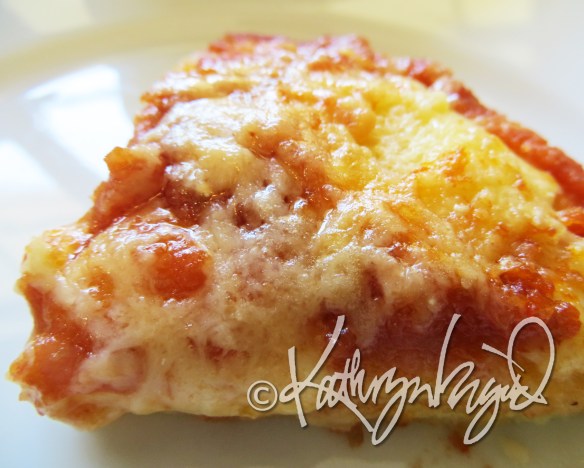
This is less of a recipe, as you know is pretty typical of my approach in the kitchen, than a guide to possible combinations that will please me. The proportions are different every time, and whether I add beans, or even vegetables, is a matter of mood and company more than a matter of Texan patriotism; I am, after all, a Northern invader. But I can tell you, it’s generally pretty darn good stuff. Add a few tender corn tortillas that have been layered with salsa or tinned enchilada sauce, plus cheese: cheddar, Monterey Jack, Cotija, Queso Blanco, or any such blend or substitution of similar types of mild and sharp, melting and melt-resistant chewy cheeses that suit your fancy and then heated through. If that meal doesn’t fulfill your chili dreams, there are always a multitude of cooks around here who have what they will assure you is the one, true, Texan article.Photo: Quesadilla or Enchilada?