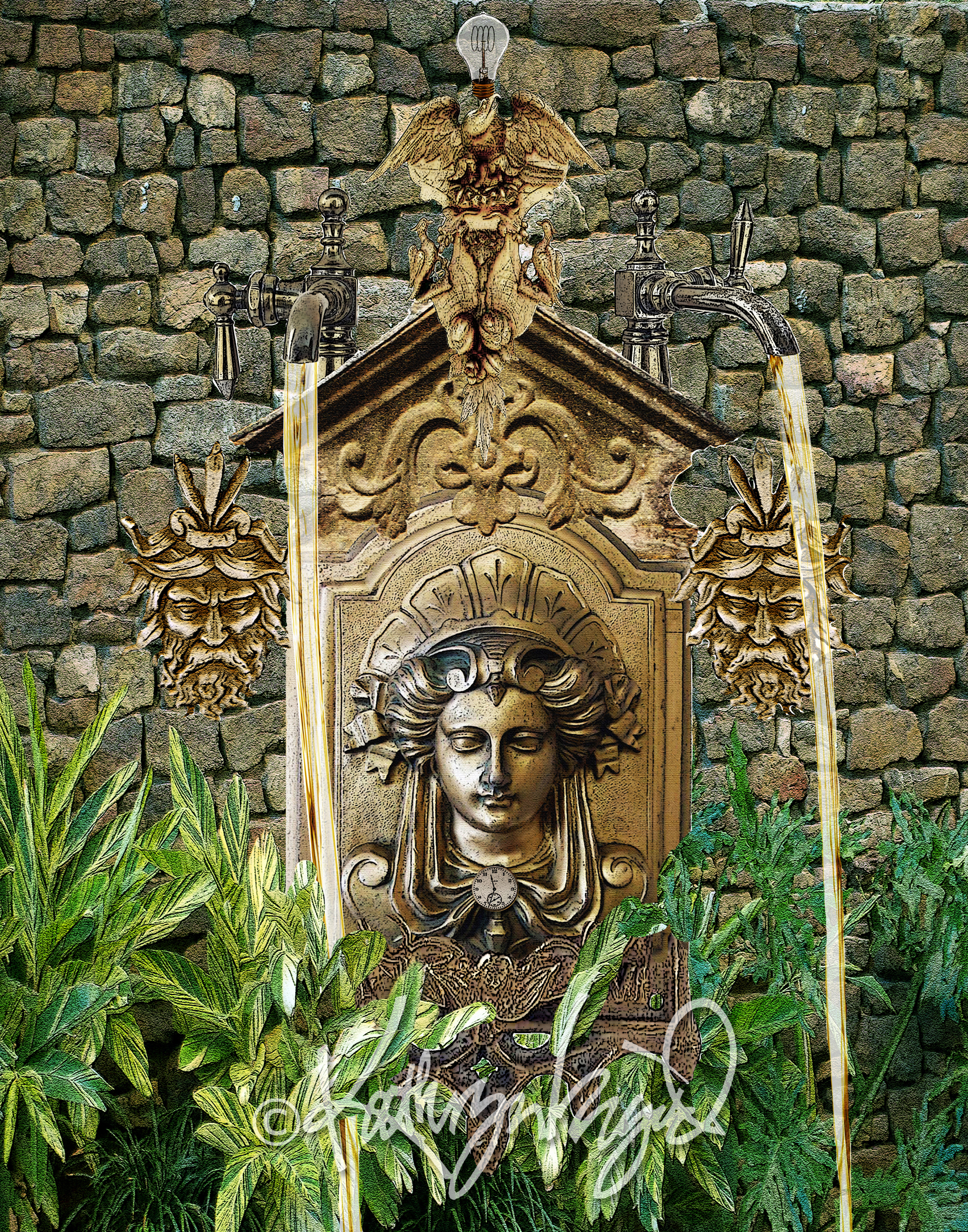
‘On Pouvait Dire . . . ‘

‘Ah! non! c’est un peu court, jeune homme!
On pouvait dire…Oh! Dieu!…bien des choses en somme…’
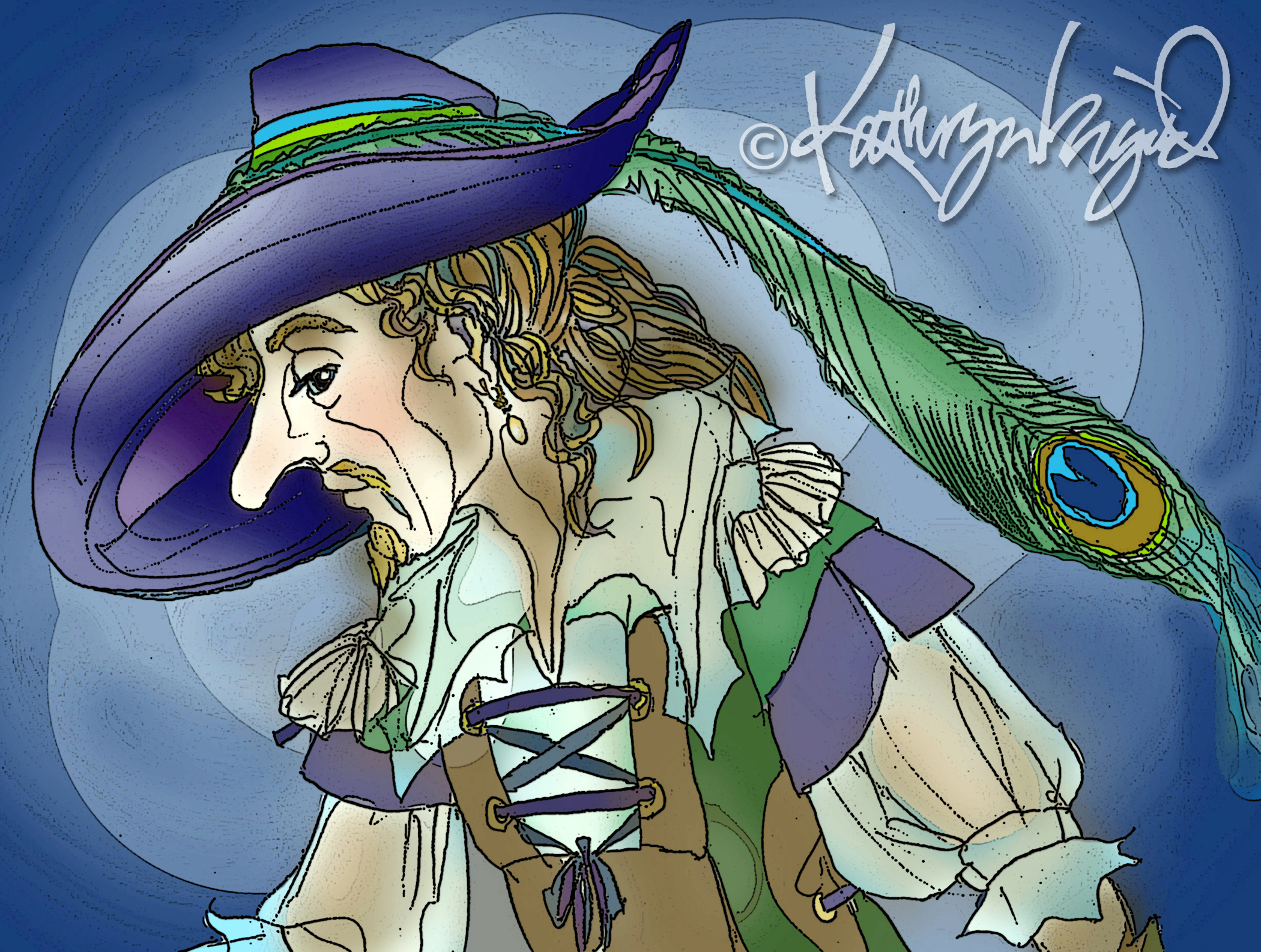
digital artworkWould that I had the miraculous gift of the silver tongue–it’s said that the genuine Cyrano de Bergerac, the writer and duelist enshrined in fiction as some sort of demigod of dramatic speech, was in life something quite near to it as well. As a youthful admirer of the romantic dream, I memorized Rostand‘s most famed soliloquy of Cyrano’s (in English, naturally), but what remains after so many years have passed is not so much the poetry of his slick speech; it is instead a deeper sense that for all my staring at his nose along with everyone else I managed to miss the point.

The story is told in fictional form to so exaggerate the majesty of his nasal promontory that all we see in most readings and performances onstage is a caricature or cartoon man, led by a nose of bowsprit proportions and foolish improvidence to oversized action and wildly improbable joys and sorrows as a result. These kinds of things do happen to real people in real life, of course; even the real man behind the character was larger-than-life in both nose and existence, according to what we know. He did, if his contemporary portraits are anything near the truth, have a substantial prow, and we have his writings–satirical pieces to classical tragedies–to prove that his wordplay was quite substantial too.

But what perhaps ought to be said of him–whether real or imaginary–is that he was a bit of an outsider by virtue of looking Different, and his response was to fight for respect, both with his rapier and his rapier wit. [Given the historical man and the possibility that he was (not surprisingly, given the era and culture and his reputed exploits) syphilitic, he may well have experienced life completely without a nose if he lived long enough.] It’s easier to label and classify others on the basis of unpopular appearance or differing from the currently decreed norms than it is to cultivate what we have in common. Yet we can learn from some of our outlier counterparts if we will stop, for a moment, being so mesmerized and distracted by what makes them seem unlike us, what it is that we have and value in common. Best if we do that before losing the duel.

Though at least, if the duel is purely verbal, there can be some entertainment inherent in getting taught a lesson. I can live with being the unarmed woman in a battle of wits, as long as I get to keep living long enough to laugh about it. I may not be a genius, but that, my friends: c’est mon panache!

That which is Seen

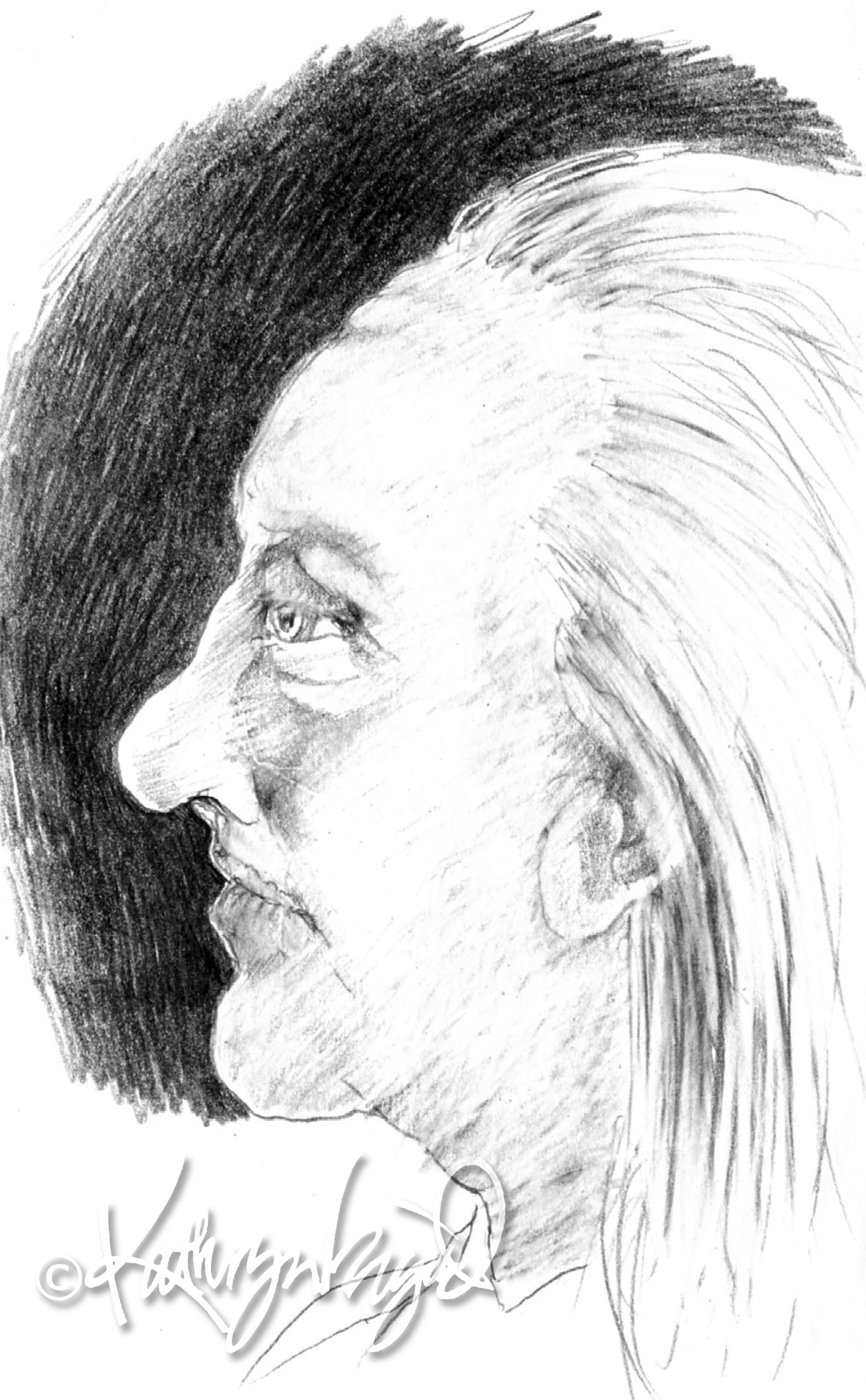
graphite drawingThat which is seen by the untrained eye of the casual observer is an older man, an elderly man, perhaps a shell of his former self. Not someone with a lot of use and life adventure left in him. Handsome, perhaps, in his latter years, with this silver hair and these pale clear eyes, with his faintly stooping posture before a window where no single thing that’s new is seen; elegant in his quiet way, and maybe wise. But not more.

What cannot be seen is the forty-two years he spent working for the postal service, learning the business from the bottom up and eventually teaching not just the next generation that would follow him but the next after that as well. There is no way to know at merely a glance that he tended a beautiful garden on Sunday afternoons where he grew too many vegetables for his own table so he shared the rest around the neighborhood. Invisible, too, is the love he keeps alive for his long-dead wife of thirty years, except for the small bouquet of flowers he picks from that garden of his and gives to their son and his wife every Monday because they were her favorite blooms. Yes, the flowers and the kids.

In the plain little vase where those flowers live for the week, there is room for all that can’t be seen in one quick look at the profile of a man who sits and meditates beside a window. Only by taking the time to appreciate the fulness of that humble bunch of flowers and all that they have to tell can anyone really know what to see when looking toward that window’s light. It takes a certain clarity to see what’s right in front of you.graphite drawing

Damaged

photoFortresses

Wars build walls

On a foundation of

Corpses–

The evil and

The innocent alike–

And what do the walls

Keep in?

Keep out?

How is it that

Battles can be declared

Won or Lost?

For both sides die,

Both parties always

Somehow

Lose land and goods

And certainly, soul;

Starve in the snow or

Roast in the heat,

All the while watching

The world they knew

Reduced to ugly

Holes and rubble and

Its storied walls replaced

By a fortress that

Is really

Only a new prison

poem

Noirish

Here Lies a Haunted Man

First thing in the morning a perfect blue sky,

with a few sheepish clouds and a breeze,

gives no indication of what, when or why

we believe we must hide in the trees,

to disguise from what enemy, storm, or what foe,

or to vanish from sight for which reason;

we know none of that, but we certainly know

we have entered a paranoid season.digital artwork

Dreamscape

Out of the leaves of a banana tree

A mysterious Eye is staring at me;

I have some magnetic pull, it seems,

For the kind of stuff that makes up dreams.

Ten past midnight, and all is well

Except that I’m under the nightly spell

That thrusts me onto those strange savannahs

Where pursuers send me stark bananas.

Crazed Weasels and Other Objects of Affection

The Georgian era gave us, along with a whole raft of other creative gifts for sweethearts and mementos of important occasions, the piece of portraiture-cum-jewelry known as the Lover’s Eye. Something of an oddity, to those of us in the modern day who don’t happen to be of that individualistic bent that swallows capsules of a late wife’s ashes with daily vitamins, wears vials of a lover’s blood as a pendant or keeps the deceased boss’s body as a nice piece of taxidermy so that he continues to sit in on board meetings in perpetuity. Yes, all realities for some folk. Not so much for Average-Joan. Portraiture is generally so very much more socially acceptable.digital collageA portrait of a lover’s eye, even if it happens to be shown without reference to and other, presumably equally adorable, parts of said person, isn’t quite so unsettling and freaky then. Of course, that assumes that one’s dearest has eyes, at least one eye, that is pretty attractive in its way. I got to thinking about this whole little question when I had the allergic attack recently that made my eyes so distinctively disgusting. However, I was reminded by that very episode that love is genuinely, in its way, blind. My darling husband didn’t cease to treat me with the usual kindness and affection and sweet intimacy, and while I know there was for both of us an underlying hope, nay, assumption that this was a temporary appearance for me, the possibility of permanence existed as well.digital collageWhat did this prove? Nothing in and of itself, really. It did, though, remind me ultimately of the age-old truth that love makes us see the objects of our affections as good, desirable, as beautiful. That beauty is in the eye of the beholder. My spouse saw the Me he loved, without necessary reference to how I looked at the moment. And he does, after all, love me either despite knowing I’m a little bit weird and kooky, albeit (I hope) pleasantly so or, weirder and kookier yet, because I’m that way. Probably not especially hankering to wear around any new jewelry, my beloved. Least of all, jewelry with a little picture of my eye staring at him all of the time, as if my gawping at him in person, however admiringly, isn’t enough to send him up the wall. I’m not absolutely certain that a prettified version of my healthy eye would be markedly better than a silly and outrageous portrait of my eye in its bizarrely bloodshot wackiness, as jewelry goes. But my guy, he looks pretty fabulous no matter what he’s wearing. So there’s that. Wink, wink.

Tough Neighborhood

Watch Out for those Kids

We were playing at boules and pétanque

In a park not so far from the Seine

But the children we played were so bloodthirsty there

That we vowed not to play them againdigital collage

Dizzily Dark Imaginings

photo + texttext + photo

photo + text

Cat, Mouse and Everyday Danger

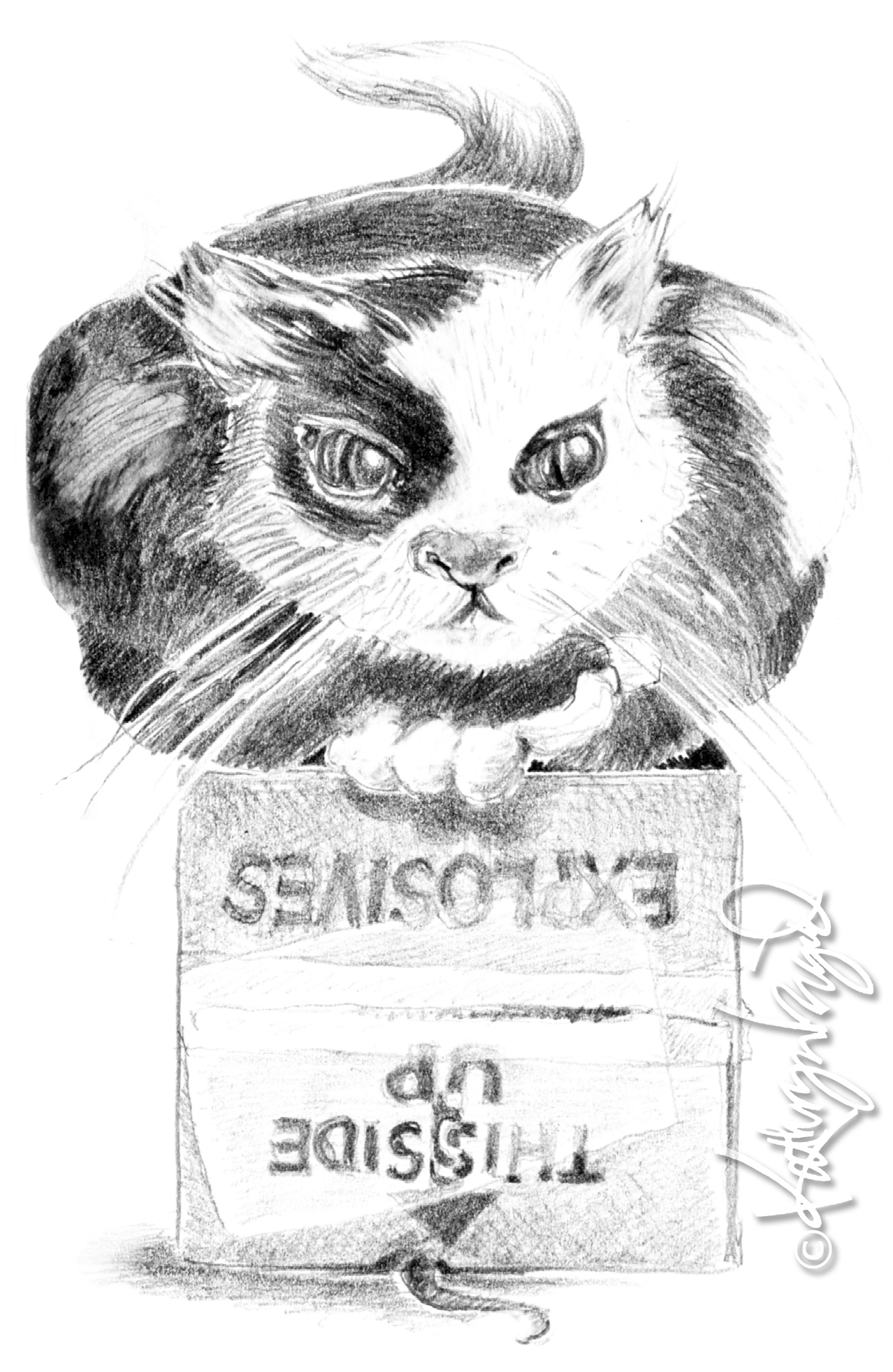
That little old four-letter word Work has challenged the finest among us to test the limits of endurance, wisdom, hope and courage for as long as there’s been such a thing as a job on this planet. We agonize and weep over our work as though doing unspeakable heroics every single minute, even when we know perfectly well that every living thing has faced challenges of his, her or its own since the first moment there were, well, living things. It didn’t take employers and employees to bring this tension to full expression. If I think I’m sitting on a powder-keg just because I’ve tackled something that pushes me to my limits (or, to be more precise, because it has tackled me), it’s time to step back, take a deep breath, and remember my compatriots of every sort striving and struggling and facing greater odds than I have ever faced, accepting them as the inevitable price of existence.graphite drawingNot that any of this contemplation has the remotest chance of making me stop thinking myself both the greatest martyr and the finest superhero at work on the planet. I only get the smallest momentary glimpses of sanity through the veneer of my regular distorted self-image as the silly person I am, after all. Even though I know that in my own version of ‘cat and mouse’ the tiniest mouse could best me in the flick of a whisker.

Change of Venue for a Change of Seasons

I lived most of my life in northern climes. My childhood and many subsequent years spent in the Seattle area naturally color my view of nature and my connections with it, so even though I’ve spent the last four years putting roots down into Texan soil my inner imagery of the season of growth is of sprouts and blooms native to alpine, temperate, rainforest and coastal territory. I appreciate and admire the vast and varied beauties of this wildly different terrain that is my new home, and my heart still resonates joyfully when it comes to those northwest marvels of green and gorgeous living things as well. I don’t think I’ll have to tell you which region inspired these two poems.

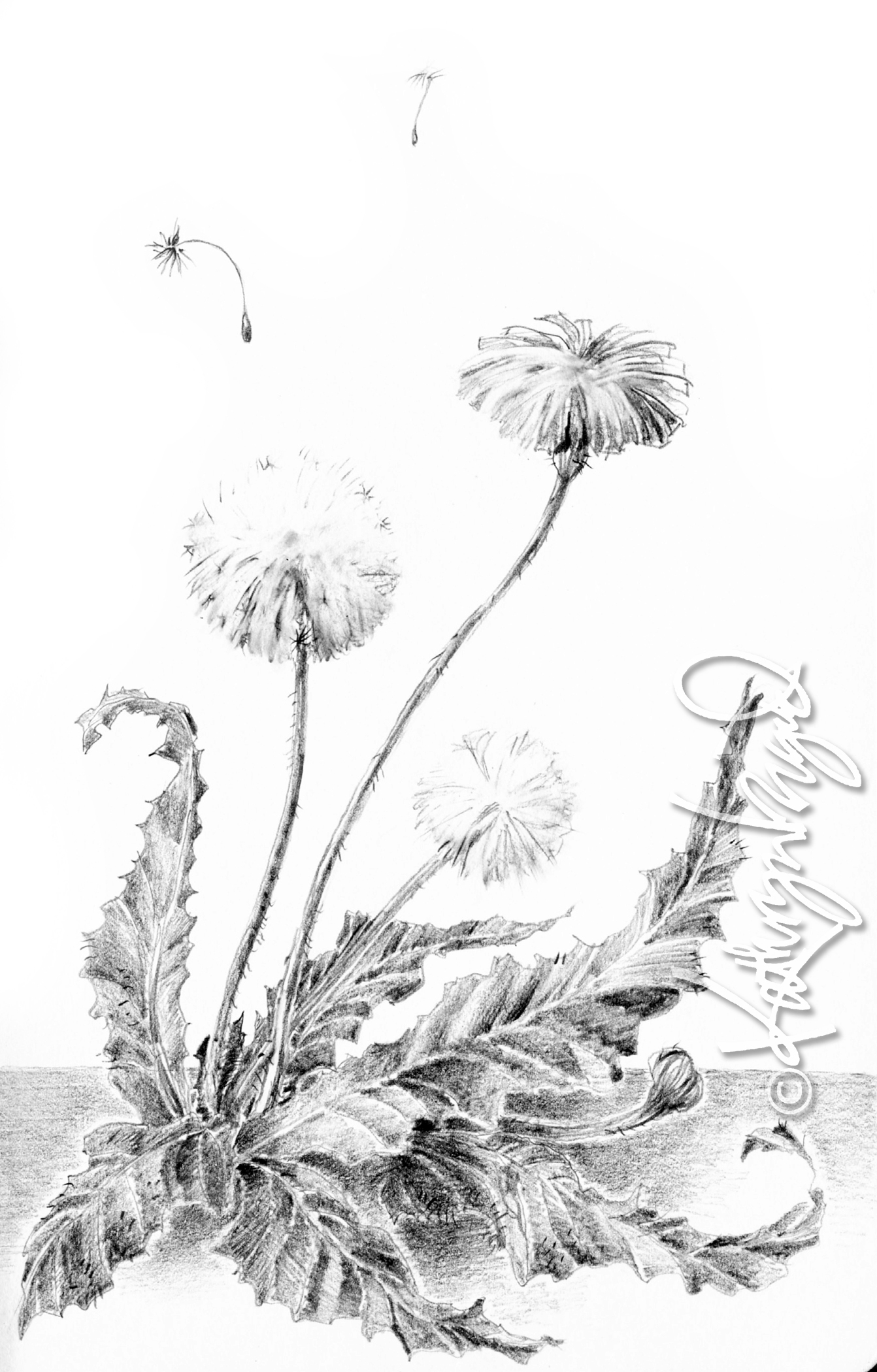
The drawings, though, could be a bit more nearly universal. Dandelions, in particular–I can’t think of many places I’ve visited so far that didn’t have a substantial contingent of that sunny little weed blossom. I hardly ever see their smiling faces without thinking of the adorable little enthusiast next door who peered over our fence and, seeing my mother pulling dandelions–and perhaps interpreting this as her enthusiasm for cultivating their charms–piped up to boast enthusiastically (much to her own mother’s chagrin): ‘we’ve got a MILLION of ’em!’ graphite drawingIn Return

Willingly as daffodils stretch out of the earth

At the first invitation of the sun,

So I come from the dark when my winter ends,

Turn my face up to the blessing sky,

And sigh at the promise of the spearing green

Arising by my feet, even if the icicles

Have not yet

Melted wholly away.

pen & ink

Avalanche Lilies

Amid the muffling drifts of downy snow

That draw the pearly winter sky down low

To kiss the earth once more in early spring

Are sparkling spears of palest glimmering

Green newness, first to show upon the white

And break the slope of frosted winter light

Uncurling soon to show the youthful face

Of spring’s renewal in this sleeping place

If still surrounded by the icy pale

Wild woolliness bedecking hill and vale—

The snow, though mighty, cannot fully stanch

The burst of springtime’s sparkling avalanche


Youth & Beauty, Beauty & Youth

We never needed to choose. Yet there’s always this foolish compulsion among us to measure attractions and, should we be so lucky, to consider ourselves superior because we successfully assure ourselves that whatever we think the best among the pretties and the old makes us seem more perfect in our own eyes. We’re our own creations in this way, our own versions of excellence, and whether we believe we fit somewhere high in the measure of greatness as beauties or as wise and wonderful elders, we spend an amazing amount of energy on fancying ourselves fantastic.graphite drawingWe expend a large quantity of this fanciful energy, as well, on believing that youth and beauty are irrevocably tied to one another, if not outright synonymous. If one becomes convinced of that construct, then it must follow that becoming old is some sort of process of becoming plainer or uglier or, at greater extremes, less important and worthwhile. As it happens, we are not necessarily all so stupid as I’m making us sound, really. Eventually we mortals do manage to wise up. Perhaps it’s only and logically plain self-preservation that, as we get older, we realize that either we’ve ruled ourselves out of relevance or we might need to adjust our expectations and interpretations to allow that the aged can also be wise or useful or, astonishingly, even beautiful too.graphite drawingSlow as we are to credit our elders with such attractions and advantages, the eventual realization that we are becoming the elders may motivate us to rethink that equation if nothing else can. It’s not that I look in the mirror and see my proliferating wrinkles and expanding crop of grey hairs as evidence that I’ve suddenly or finally become important, improved, impressive. It’s that I see someone, finally, whose value has nothing particular to do with whether those marks of vintage are present or not. I am free to see myself simply and fully as myself, if I’m willing to look, and from this lesson I should–most meaningfully–learn to offer the same courtesy and impartiality to anyone I see, not only myself but anyone. No matter the years or the appearance or how either conforms to the current tastes, every face I see should seem to me the face of worth and dignity. Who knows but what it might be oftener proved true if we allow it to be so.