Unnaturally Lightfooted

We’ve long since established that I can’t dance. I couldn’t dance well enough to stay in a second-grade dance class; heck, I couldn’t even be trusted to remember whether we were supposed to show up wearing tights with our tutus or not, for the class picture before the big recital. Though it’s only fair to give myself credit for having been obsessed with the ugliness of our getups to such an extent that I forgot the part about the stockings, and I promise you, they were hideous costumes.

But you also know that I am enamored of beautiful dancing of nearly any kind, if allowed to watch it from a safe distance. So I think I can be forgiven for letting others take to the floor in real life and only doing so in my imagination and, occasionally, in my poems. I think any creature, real or imagined, that can dance beautifully deserves my attention and admiration (as long as it wears the correct tights with its tutu).Graphite drawing: Swinging Dragonflies


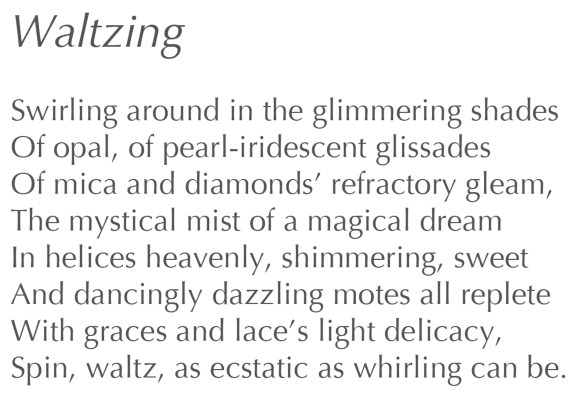
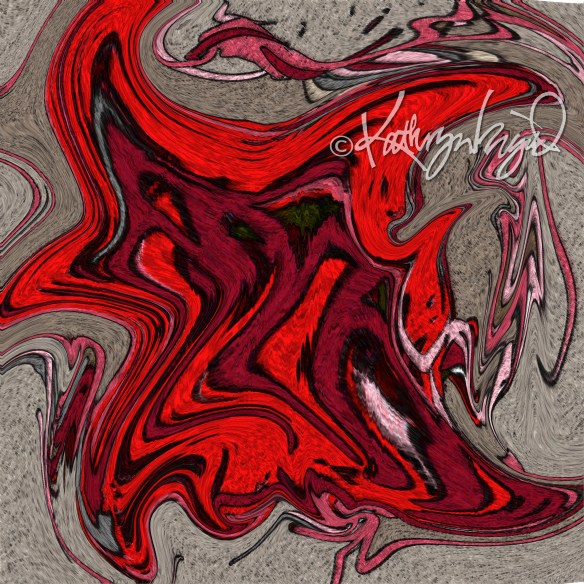
Text: Waltzing

A Faraway Look

Daydreaming is amazingly useful. No matter what teachers and bosses and impatient parents may have said over the years (never to me, of course, wink-wink), that pleasant fugue state of seemingly purposeless internal wandering is where a great deal of terrific, very purposeful invention and problem-solving happens. It takes us to inner regions where we are unencumbered by rules, editing, and logic, and can let the what-ifs of experiment and hope play together until, sometimes, they produce brilliant results that endless hours and years of study and labor might never have fostered. How can we expect to engender anything grand if we don’t aim for the seemingly impossible?Photo: Faraway

Consistent study and labor are, of course, quite necessary if we are to be able to even conceive of what exists and how we intend to alter it; to begin with no facts, no tools, no notions of probability or potential will inevitably leave us puzzling fruitlessly for ages before we ever approach a fantastic and outlandish idea, let alone a useful one. But once the seeds have been sown, we can’t assume that there would be no purpose in additional time and imagination spent on divining what to do when they begin to grow as well. The dreamers of the world have nurtured at least as much meaningful and helpful stuff as the mere scientists and scholars and brawny-brained geniuses have done, but with less hoopla, and it seems to me that we should be wary of working too hard to bring fantasists down to earth too soon.Photo: Fruition

Assume, when you see me in an apparently abstracted slide toward the comatose, that I am in fact inwardly journeying toward a dazzling insight or earthshaking invention or two, and leave me in peace. I shall emerge, in due time, bearing the harvest of this grand exploratory trip. Or at least I’ll have had a refreshing nap. I’ll happily leave it to you to determine the value of the difference, if any, between the two eventualities.

Early Music for Breakfast

Digital illustration + text: Haiku on the Least Supper

If you haven’t already crossed paths with Thomas Tallis‘s landmark Renaissance motet Spem in alium, I highly recommend it. It’s a truly astounding piece of European music history, representing the confluence of the political and artistic competition for primacy in that time period; it’s believed to have been composed as England’s answer to Italy’s Alessandro Striggio‘s own, earlier 40-part motet, or possibly to Striggio’s 40-60 voice mass. I’m no musician, but I’ve learned, mostly through witnessing a few performances of the Tallis by different groups led by my husband and his colleagues, just what a feat this piece really represents.

While the creation of Striggio’s works for 40 and more independent voices is amazing in its own right, the 40-part motet he wrote specified that the voices be doubled instrumentally. That is impressive enough. For my fellow non-musicians, think of it this way: a typical piece of music for a mixed choir requires singers to perform different notes and lines of music, often at the same time, so that what is heard is not one single series of notes, one after the other the way we sing by ourselves, but layers of notes that become deeper and more distinctive expressions of the words being sung. Instrumental doubling means that some or all of the vocal parts are supported by one or more instruments “singing” the same notes at the same time. This can intensify the effect of that singer or section’s line, and it can sometimes also help a less skilled singer or choir stay on target with the line.

In any event, the more typical choral works tend to have soprano, alto, tenor and bass voice parts, or singing lines, (or some combination of those) and generally, not more than eight or perhaps twelve different lines intermingling at once. Anything more than that means that every singer in a moderate-sized choir is responsible for knowing and performing his or her own notes, on pitch, at the right moments, and with exactly the right loud-soft dynamics and flow at every point throughout the piece. Being in a choir is a thrill; being in a good choir is a real intellectual and artistic and even physical challenge.

What makes the Tallis Spem so incredible is that it comprises not only forty individual, fully independent singers’ voices all singing their own distinct parts of the song, but indeed, doing so entirely unaccompanied. Every one of the singers has to be spot-on at all times without the support of either a fellow singer or any kind of instrumental doubling. If one singer goes off the rails, there’s the possibility that others will be thrown off of their pitch, timing, or even their place in the whole work. It could well lead to a musical train wreck. Think you’d be intimidated by doing this? I think any sane person should be!

But it’s powerful stuff, when it’s well done. I’ve had the privilege of hearing this feat beautifully accomplished by singers surrounding me in a cavernous cathedral space, and by singers standing onstage in a modern performance hall with a carefully engineered acoustic. I’ve experienced it in art galleries where Janet Cardiff‘s intriguing installation of forty high fidelity speakers on stands are placed in a circle in the otherwise rather bare room, each playing in synchrony the recording of one of the singers in a performance of the Tallis, so that one can stand outside the circle or in the center of it surrounded by the speakers, or can move to stand at one individual speaker at a time, getting entirely different effects depending upon which part of the score is being performed and where one stands in relation to the speaker playing that part.

No matter how it’s done, once you’ve gotten a little of the idea how this piece of music intertwines voices that seem at first to be operating without a clear relationship but then, more and more, to be converging into a meditative, chant-like, layered song, it is quite mesmerizing. There are some recordings and performances out there on CD, iTunes, and YouTube worth a listen, and if you get the chance to visit the Cardiff installation, called simply Forty-Part Motet, do it. Best of all, of course, is if some fine choir nearby offers a live performance that you can attend. It’s rather haunting and ethereal, and made all the more impressive by the knowledge of its complex origins.

Meanwhile, I have given you this bite-sized humorous meditation on the work. A haiku seemed the ideal vehicle for acting as either commentary on or antidote to a choral masterpiece so complicated and virtuosic. And I sort of wonder if, in the process of composing this grand work, Mr. Tallis had any chance to stop for rest or was so deep in concentration that he barely had time to do the Renaissance equivalent of opening a tin of luncheon meat and dining directly from it, pen and parchment in one hand and dripping Spam juice on the other. Thankfully, it doesn’t appear that this effort of his was entirely detrimental, let alone leading to his personal version of the Last Supper, since he went on to compose other fine works up until nearer his death some fifteen years later.

Eau de Toilette

Image

Digitally altered photo + text: Canned Applause

Mental Featherweight

Photo: Featherweight

Text: Ex nihilo ad nauseam


Digital illustration from a photo: I'm a Featherweight

Deep Sea Wishing

Digital illustration: Psychedelic PstarfishPsychedelic Pstarfish

Seems sillier than psyllium to sing of starry seas,

Yet so the ocean’s silken shore’s sufficient proof of these

That sparkling in such shady deep, something is sure to gleam

In stunning stellar specks and sparks in that submergèd stream,

So sing we sweet and shining songs of starfish as we wish

Upon the evening star to see a firmament of fish

Adrift in a Skiff

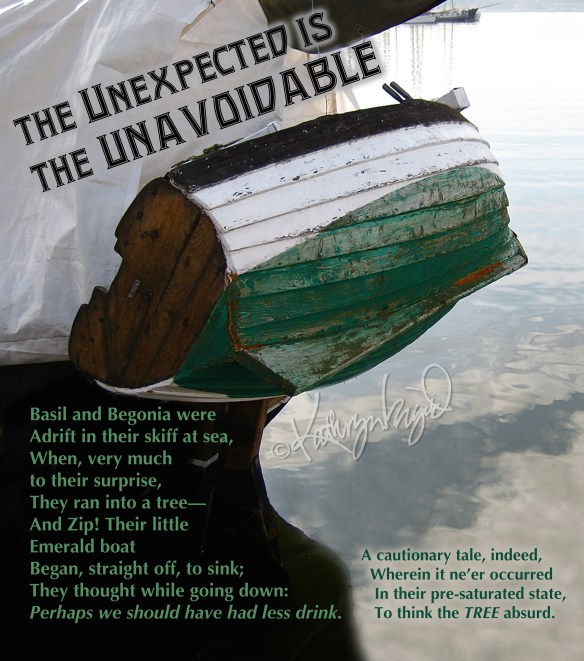
Some things simply can’t be planned, foreseen, or avoided. The impossible is surely one of those things, and I happen to know that the impossible happens amazingly often. At least, in my part of the universe.Photo + text: The Unexpected is the Unavoidable

The Great-Greats

Naming things is an endlessly fascinating and complicated way of creating and better understanding our relationships with them. Different cultures have even devised quite distinct ways of classifying and identifying the kinships within them, to the extent that families and relations in the different cultures affect the very ways people interact and consider themselves connected, responsible for each other, and much more.Photo: Great Great Grandparents

One of the appealing (or appalling) quirks, depending upon one’s view, of the American traditions of familial identification and the names given them in English is the way we use the word Great to specify layers of distance from ourselves. This photo, for example, is of one of my sets of great- and/or great-great grandparents (my maternal grandfather’s forebears), if I am not mistaken, and there is much to pique my curiosity in this image.

First, of course, is the question of whether I have identified them correctly at all. But then, in what ways—besides the nominal—were they great? Clearly, being among my ancestors is an easy in to that category. [Ba-dum-tsssssssshhhhhh!]*

Seriously, though, what distinguished these people? Safe to assume, from what little I do know of my relatives in Norway, these two lived on a small farm, and they worked hard. I mean, incredibly hard, by my standards. I’m inclined, actually, to think that the gent is my great grandpa and the lady next to him is his mummified mum, but having seen many a portrait from that era whose subject I was shocked to discover was eons younger than I’d have imagined, I can’t be sure. If this is a couple, I am extra, extra glad I have such a lazy and comfortable life. I may be no spring chicken, but I like to think that people will be able to tell whether or not I’ve already died, and when it does occur, won’t be able to make work boots out of my hide without tanning it further.

This could be the great-grandfather who was a tinsmith. A pretty skilled one, at that. The hands I see here could easily be tough enough to have put metal in its place. As for the farming, what little I’ve gleaned [enough with the shtick! I’ll try to behave myself]* from the various family stories and photos indicates that my family were subsistence farmers, growing what produce would feed their own households or be swapped with neighbors for  further goods, and raising enough sheep and goats, chickens and cattle to keep them in meat, eggs, hides and bones as needed. Agrarian life, until more recent decades, was generally a far more solitary and jack of all trades kind of existence. My grandmothers, great and otherwise (and I can only assume all of the neighbor women of this ancestress’ approximate vintage) did such work as probably made them all look equally leathery.

I would like to think that the sober, if not condemnatory, expressions in the photo sprang from the typical problem of holding still for the interminable exposure time a photograph required in those days, not to mention doing so while squinting in the sunlight. But I also suspect that a combination of that hardscrabble life of theirs and the grimly perdition-obsessed brand of religion to which many of my relatives have subscribed means that these two generally took life mighty seriously as well. They probably didn’t see so much to joke about or room for fun and games in their daily lives.

What I can safely assume about my relatives still gives me some hope. Obviously, they knew enough about how to survive and yes, thankfully, to procreate, that I am here generations later to tell the tale. I consider my existence a fine thing. Although they weren’t either wealthy or showy, they are dressed in well made, tidily kept clothing and lo, my mustachioed male relative even sports a watch chain, so theirs was not, even from the perspective of my privileged and cushy life, a torturous life of pure privation. So I don’t feel enormous existential guilt for their suffering. But I’m not inclined that way like they might have been, anyhow.

My late Norwegian relatives lived and labored in a landscape and climate rather like where I grew up in the American northwest, so I know that even if their daily work was hard they did it surrounded by beauty and nurtured in a mostly benevolent natural environment. They raised children who were able to go out in turn into the wider world and make their ways, eventually finding own their paths, making their own livings, and raising their own families, and eventually crossing many mountains, borders, and seas. I think all of this a fine, if modest, sampler of human existence with [dang it, I just can’t help it!]* relatively little grand tragedy or overblown drama. Most of all, I am glad that the long-gone beings who posed for this rather inscrutable image contributed to the production of a line of pretty good folk, culminating in my immediate family. That’s greatness enough for me, and makes me very thankful indeed. Happy Thanksgiving, my friends.
Horsepower

Photo + text: Horsepower

Photo + text: Downtown Manners

Murder, Mayhem, & Malicious Merriment

Drawing + text: Murder Mystery

Drawing + text: Thinking of You, Darkly