Aria

graphite drawingLa Chanteuse

This melody that lilts, lifts us to light

Like incense rising, or like hope aloft,

Like spring’s sweet perfume and like down-soft

New blooms, the lovely song eclipses night–

Brings sun and starlight and a shining flame

To paint the darkness into blazing day,

To chase all sorrow and all gloom away

Or give them luster as the marks of Fame–

The singing sinuous and smooth as glass,

As stillest water or a spotless sky,

And yet the singer never stops to sigh

Except when breathing lets a moment pass–

Because the music brings such passion, clear

Expressive, infinite and full of grace,

Poured out in rivulets and with a trace

Of magic only those with love can hear–

One aria can change the flow of time

And raise us all from simple to sublimegraphite drawing

Rare Beasts & Royalty

Sunset over the Serengeti & a Slight Belch from the King of the Beastsgraphite drawing

It happens sometimes on the plains, where Splendid Starlings and the strains

Tok-tokkie knocks create a song that’s just as rhythmic as it’s long,

Where Shongololo rolls and runs ‘tween rise and setting of the suns,

Where the hyenas sing their tunes betwixt midnight and morning’s moons:

It’s there the leopard’s race was lost–surprise–at noon, and at great cost,

To one old lion whose good luck dovetailed with leopards run amok,

To the degree that one loud crunch announced the end of it at lunch.

It’s Beginning to Look a Little Like . . .

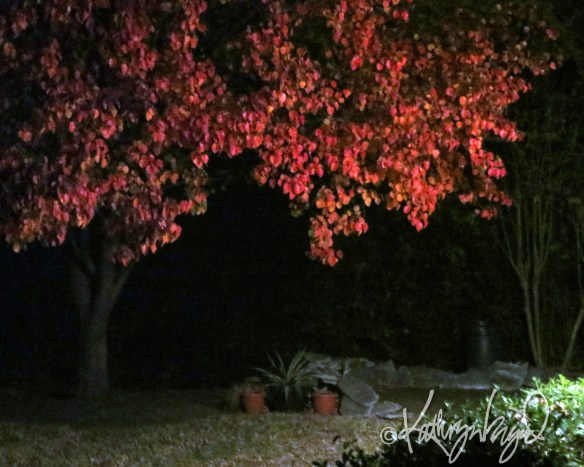
Now, I don’t know if I’d call it exactly Christmasy, but in the relative scheme of things, it is beginning to look a tad more wintry around here than it’s been up until now. In my nordo-centric upbringing I was never exposed to such stretches of overheated weather that I’d begun to disbelieve in winter altogether by the time the second week of December was commencing. So it’s kind of a relief to hear that we’re about to drop down to freezing temperatures overnight within a couple of days here. To see some turning leaves actually, really, truly drop off and leave a tree or two naked; berries lighting up as rosy as Rudolph’s nose; to hear the branches both leafy and bare whispering cool secrets in anticipation of the frost that may or may not arrive before the clock’s run out on potential wintertime.photoThe embarrassing thing about this is that, having had seemingly all the time in the world myself to prepare for this winter thingy, I’m still not exactly ready. I’ve got a whole big, fluffy list of stuff I can–and maybe should–get underway, if not completed, before this mythic seasonal happening arrives, and no, said list is not small either. I did get a small few things done in the long, sloping stretch leading toward this change of the weather, but it’s never quite so much as I would have liked to have accomplished. Story of life, isn’t it. I guess if I’m honest I should say that it’s beginning to look a lot like every other year I’ve known, every other change–or lack of change–of the seasons. And you know, I’m okay with that. Life’s been mighty good to me, and if it can be this nice even when I’m so far from perfectly keeping up with it, lay it on me.

Oh, and I’d appreciate it if I can have a sweater to go along with the seasonal change too, just in case. Thank you.photo

Gypsies at Heart

Becoming Gypsies

Freedom’s a romantic notion we imbue with pretty joys,

Dreamed escape from life’s commotion and the race’s worldly noise,

Endless travel, music, dancing, and the heat of thrumming hearts,

But though sweet, the dream’s entrancing magic’s only where it starts–

Gypsy life is what we make it, rich as fantasy can be,

Only when we reach and take it: yes, it’s up to you and me

To create this liberation and its joys for which we long–

Life becomes a celebration when we fully join the songphoto


You Phony, I Thought You Said You Understood Euphony

digital artwork from a photographAfter Oktoberfest, Paying the Piper

There was a player of the horn who made it so euphonious

That every creature ever born was drawn to hear him play,

Until one sad, hung-over morn, its noise was deemed felonious

And all his beer-braised friends, forlorn, plugged ears and ran away.

The sweet euphonium was heard no more in that green-wooded land–

The deer and nightingale ne’er stirred, and Prost! rang out no more–

His fellow players, quite deterred, closed up their merry oompah band

Like some cage-covered myna bird, and silent, hid full sore.

What have we learned from this sad tale, so stricken, deleterious

And dark as Death’s bleak lowest vale, wherein musick’s so frowned

Upon the hornist sought a gale of storm and rain delirious

And in the deluge, shaking, pale, turn up his horn and drowned?

The moral, though you might just miss it, e’er so hard ye strive to think:

‘Tis sadder to have died like this than surfeited of hoppy drink.

So, prithee, play all on your trumpets, flutes, euphoniums–be not shy–

But keep them quiet, knaves and strumpets, post-drink mornings, lest ye die.digital artwork from a photograph

Musick has Charms

The charms of music can, indeed, soothe the savage breast–and it can bring the terrible savage right out of the calm breast just as well. It’s a power that few can resist, love the music or not; it gets under the skin and slides on into the soul. The marvels of music are not, as you know, unknown to me and yes, I have been both incited and soothed at various times by it.

But I haven’t lived the life of total immersion. That is, as are most fully engulfing passions, left to the titans of the art. Not necessarily people known and celebrated by a large and laudatory world, indeed, but those who, whether in that pop-culture celebrity way or from deep in the dark of the behind-scenes action or somewhere in between have shaped history in whatever bold or subtle way their particular art could do.

I said I was going to be a bit dark and Halloween-ish these days, but I was reminded that this day deserves a different kind of recognition, being a memorable date of another kind altogether: the birthday of one of those titans of musical arts aforementioned. So you get a break from my grimmer humors while I bow to a great musician and a lovely man.pen & ink drawing

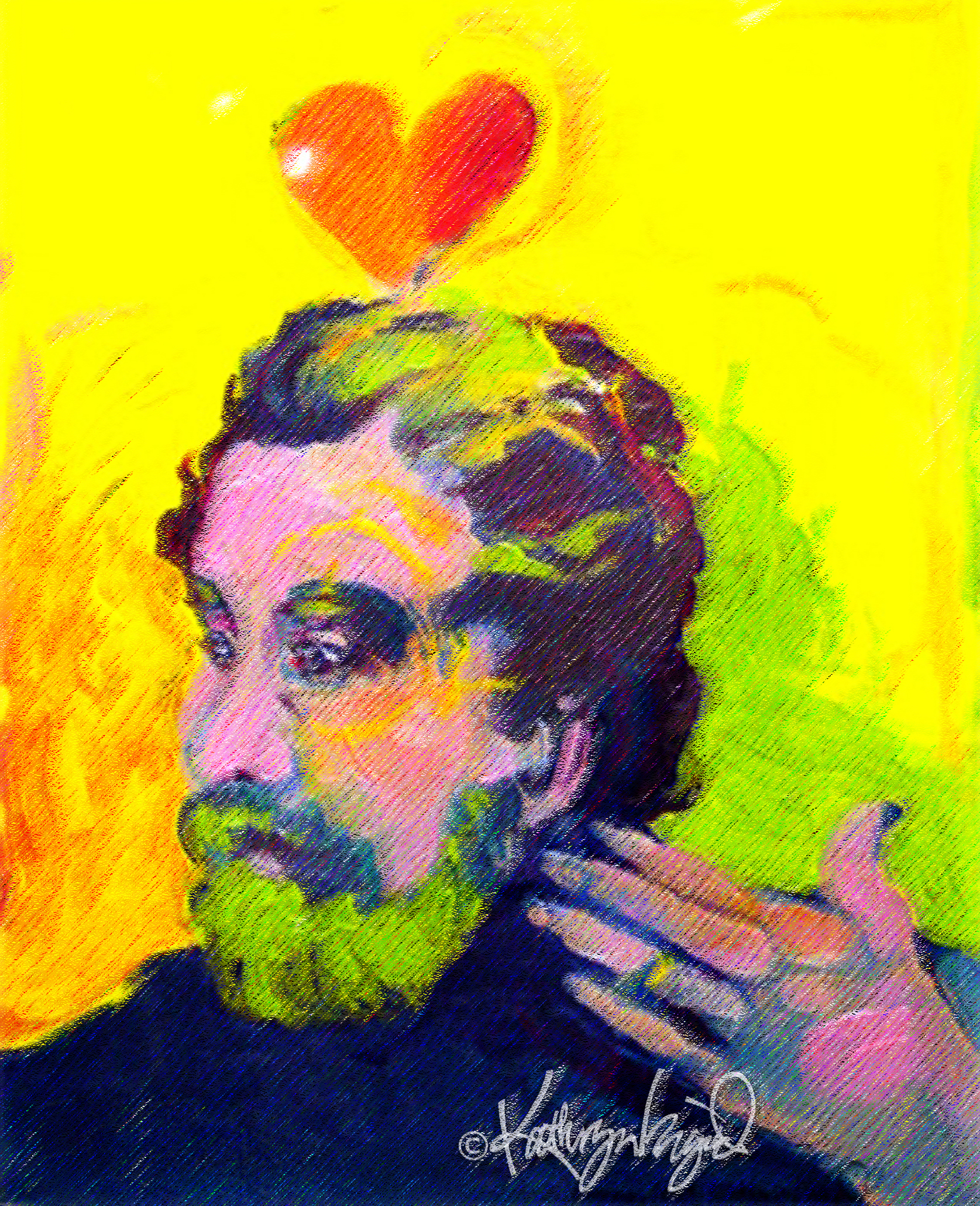
My husband, you ask? No, I would surely call him both as well, but I refer just now to one of the musicians who helped pave the way for my spouse, inspires him in his work, and befriended him both professionally and personally in ways that made it more possible for my partner to be quite the accomplished musician and artist that he himself is. I’m talking about the man sometimes known as the godfather of Swedish choral music, Eric Ericson.

He is celebrated by far more than just his family and friends, more even than his numerous choirs’ members and his almost countless students, because he stood at the center of an almost unbelievable burst of musical art flowering in the little Scandinavian nation of his birth and spreading throughout and beyond Europe quite immediately after World War II, sooner than it should have happened by rights except that his own country remained neutral and mainly untouched by the physical depredations of the war, and enough so that a number of outstanding leaders in culture took refuge there during and after the war, creating a remarkable hothouse where those fertile minds could put their restless art to work, and often did so together.

He is celebrated also because, as one of the central figures in this new bloom of music, he helped to shape the whole modern state of choral music, both in the church and in secular circles, in Sweden and to foster its wide spread via his own work and travels, via that of his artistic and intellectual partners and rivals and colleagues, and especially via the many, many young musicians that between them they all trained and sent off into the wide world. Their collective influence, expanding at the virtual rate of plant cell division and sending tendrils around the globe, is a rich and vital gift that will long outlive them all.pen & ink drawing

Thankfully, Eric Ericson, for one, is going to give that theory a run for it, as he has attained more than ninety years already himself. And his artistic offspring will undoubtedly keep the music sounding and growing for a very long time too, and for that I am happy and grateful indeed. We who love choral music today owe him thanks.

With that, I will say that the gracious and generous kindness that he and his dear wife have shown on a personal level to both my husband and me makes me as glad as anything to think of him on this day with great admiration and fondness. I hope that every note I have seen him conduct, heard him play on the piano while conducting and discussing the finer points of music or listened to him hum under his breath as he recollected another bit of his own fascinating and incredibly complex history as a musician will linger in the atmosphere for many years yet to come, and that in turn, no matter where on that spectrum of artistic or intellectual accomplishment any one of the rest of us happens to perch, we too will make our own kind of music echo happily in the hearts of all those whose lives we touch.

Happy birthday, Eric Ericson, may the music you hear always soothe and delight you.pen & ink drawing

May I Suggest . . .

photo

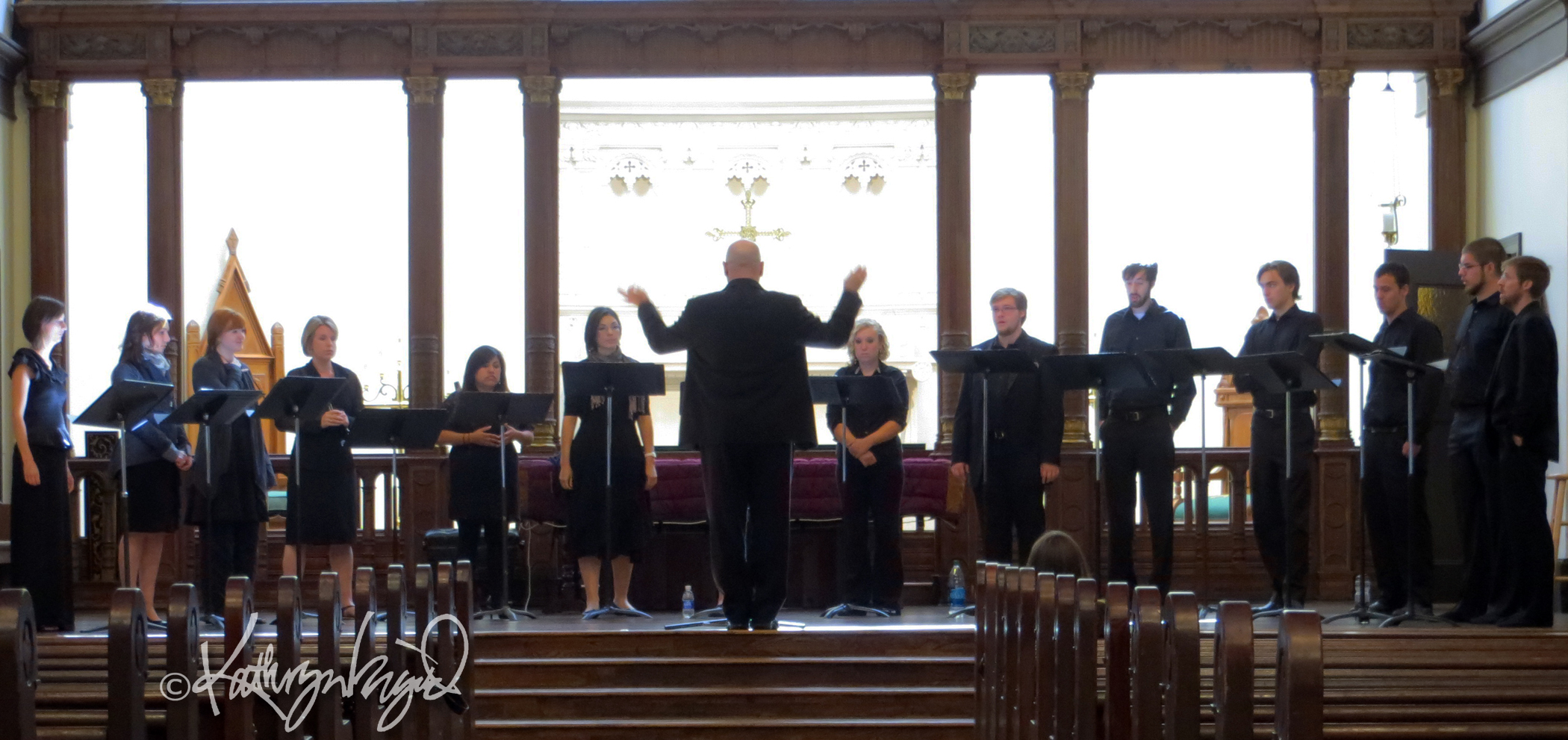
The University of North Texas Collegium Singers in dress rehearsal for their performance at the Berkeley Festival of early music, June 2012, Dr. Richard Sparks conducting. Yes, *that* Richard Sparks.

MUSIC.

Having had my senses immersed in the bath of fall season-opener concerts of all sorts lately, to the literal tune of hundreds of voices and instruments in symphonies, marches, art songs, musical theater melodies, electronica, motets, chaconnes, folk songs, choral masses, lullabies and all sorts of other lovely music, I am reminded as always at this time of year that such an intense schedule of events, however fabulous and rich they are, can be exhausting. More importantly, though, I am reminded that it’s also invigorating, inspiring and often utterly thrilling.

It’s also the time of year when the European choral magazine for which I proofread and text-check translations goes back into full production for the year. The articles and news items are all full of reviews of the summer season’s festivals and conferences and the amazing machinery that underlies these productions, from choosing and ordering music scores through civic action, political efforts, fundraising, singer scholarships, educational programs for participants and audiences, performers’ uniform shipping, young composers’ symposia, etc, and right on down to whether ‘civilian’ supporters of the group are allowed to arrange the music stands or chairs onstage if the local symphony hall union members are on strike. At the heart of it all is such a profound passion for music that millions of people worldwide, including those from countries and cultures one might be surprised to find even having the time or energy amid their economic, social or yes, war-related battles to sing and to listen to singers. If there’s a genuinely possible force for world peace, my friends, it may well be in music.

More personally, it’s music that is a central force for my own happiness, for a large number of reasons. Every one of those listed above comes into my own life and being regularly. But as you know, I am partnered for said life with a musician, and so the whole topic comes that much more sharply into focus. Music has been a glue for us two from the very beginning of ‘us’. Ask our mutual dear friend, a fellow musician, if I were single and might therefore be ‘available’? Check. Collaborate over a large-scale music performance and its visual presentation as a way to get to know each other a bit, hovering around each other during rehearsals and preparation? Check. Go on a first date to a Mark Morris Dido and Aeneas dance performance [yes, truly spectacular, by the way] for which my suitor had prepared the singers? Check!
photo

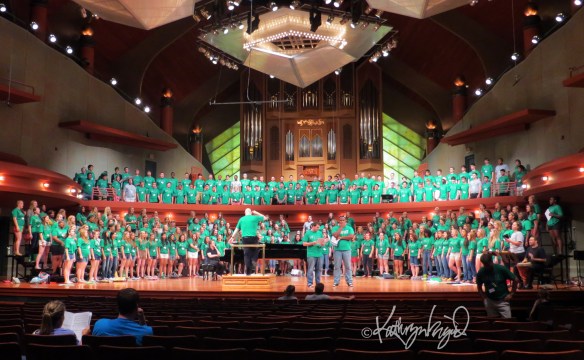
Since thousands vie for the dozens of positions in the final selected groups, high school students in Texas undergo a rigorous preparation for All-State Choir auditions, studying the literature in workshops and camps across the state each summer to compete in their local and regional trials before the year of All-State even arrives. This is the UNT group working in the summer of 2012, rehearsing in the camp organized and run by Dr. Alan McClung, assisted by UNT students and graduates and conducted each year by a different guest conductor–this year, by my spouse. What can I say, it’s what he does. And what I love to hear and see.

What followed is, was and ever shall be musicocentric. Our honeymoon (more about that in a future post) was built, in fact, around my fiance’s conducting gig–a gig including, naturally, our aforementioned Dual BFF as accompanist–at a choral festival in Veszprém, Hungary, arranged under the auspices of the parent organization that spawned the magazine for which I still do editorial duties, if you can follow that sprawling, meandering melody line. One might say that it all began with music and went racing straight downhill from there. Or, if one feels as I do, that music has brought uncountable joys into my life from earliest memory to the present, and will sustain me until the end. In any case, one of the clear high points of musical pleasure has been attending the myriad concerts, events, conferences, performances, and festivals that bring musicians and music lovers together all over the world. A huge number of our favorite people are those whom we’ve met in and through all of this music-related stuff. We have deeply loved ‘family’ literally around the world whom we’ve met and with whom we’ve bonded through musical acquaintance.

If you haven’t done so yet, or not recently enough, may I suggest that you ‘get thee to’ the nearest conference, symposium or festival involving music as soon as you’re able. If, like me, you aren’t an active participant, know that every artist needs his or her cheerleaders and fans and supporters, and that your mutual love of the art will mean more than that you stood onstage during the work or the bows. Yes, even non-musicians can and should pitch in–even those with no sense of pitch can fold programs, stuff envelopes, recruit audience members and donors and board members and political supporters, can drive the shuttle that carries the singers and their accompanists from venue to venue at the festival, and can buy tickets and bask in the glorious sounds from town square to church nave to school ‘cafetorium’ to symphony hall and shout a resounding Bravissimi! to all and sundry.

Beyond that, though, the immersion of being in a place where a huge number of people, participants and supporters and happy observers alike, have come together from a wide range of territory for an extended period of days solely for love of music–that is a wholly different and magical experience everyone should have the opportunity to enjoy at least once. So I commend them to you, the small-scale community events offered by your local affiliated high schools and the international events hosted by long-lived organizations in exotic places and every variation on the theme you can find. I promise you will leave with a song in your heart and memories to last you to when all of your other memories have faded to dust and perhaps beyond. If music be the food of love, play on! For though in this line opening his play ‘Twelfth Night‘ Shakespeare exposed the Duke of Orsino’s conviction that being surfeited with love (in this instance, via its musical surrogate) would cure him of his hunger for it, I think that quite the opposite is true: if they are excellent, the more we experience them and are filled with them, the more we crave both love and music.

Food of that sort for thought: visit first the websites and then the events offered by your local choirs, bands, orchestras, theaters, and performance companies. My own favorites are hosted by professional organizations of music educators, conductors and performers simply because those are the ones I’ve naturally had the privilege to attend, as consort to my musical prince charming, and these all offer performances by top artists that are open to the public, sometimes even with free admission. Explore them! The organization that ‘sponsored’, or inspired and was the jumping-off point for, our honeymoon with its Singing Week in Veszprém–with its half-dozen ateliers conducted by musicians from Europe and North America and singers and whole choirs from all over as well–was what is now called the European Choral Association-Europa Cantat and it hosts a wide variety of such choral events throughout each year, with a focal youth choir festival occurring triennially in places like Passau, Leicestershire, Barcelona, Utrecht, Torino (2012), and Pécs, Hungary (a locale to be repeated in 2015).

photo

Just this month, the newly minted University Singers at UNT performed their first concert of the season with my spouse at the helm. If you live in or near a college town, you’ll find endless opportunities for attending all sorts of musical events, many of them free and most of them truly outstanding–after all, these people are all here gaining expertise for what may be their whole life’s passion, and performers need great audiences too.

Pop, folk, jazz, rock, blues, punk, bluegrass, Early Music, all flavors and kinds of music and individual organizations from the Oldtime Fiddlers [I once got to run the stage lighting for their competition in Washington state–fabulous fiddling, huge fun and even some fantastic yodeling!] to the Verona Opera [I can say from my one experience there that genuine opera under the stars is something not to be missed, even if it’s still 40°C when the singing ends in the middle of the night]: there is something for practically any musical taste out there, and many of them that I enjoy immensely are included among these. My personal pet organizations among the professional gang also include many others: IFCM (International Federation for Choral Music), ACDA (American Choral Directors Association), ACCC (Association of Canadian Choral Communities), TMEA (Texas Music Educators Association), Chorus America, the Boston (odd-numbered years in June), Berkeley (even-numbered years in June), and Vancouver (annually in August) Early Music festivals, and ever so much more.
Another Good Thing about Waving One’s Arms


Waving my arms is something I may think about more than the average person does. From when I was pretty young I was conscious of arm movement as being mighty significant in a seriously diverse series of ways. First of all, there was that childhood training we all enjoy, if we’re well inducted, in the art of waving hello and farewell. I have almost always preferred the former to the latter, but in either case, whenever the occasion was deemed genuinely worthy of such a gesture, I knew that it was a sign of love or affection, and that made it pretty darn worthwhile.

Then again, I also had an early fondness for wagging my crayon-gripping fist over a piece of paper (or whatever flattish surface was convenient) to make squiggly lines and, if I got lucky, get them to coalesce into picture-like concoctions. I  might be sitting off in a cozy corner at Grandma and Grandpa W’s, scribbling away, with the faint sounds in the background of parental and grand-parental chatter as they sat drinking their coffee intermingled with the slight chattering sound of Grandpa’s cup doing a little jitterbug against the saucer, because he had a mild tremor in his hand. Of course, his arm-waving was hardly dramatic, but it was one of those delicate underpinnings of my early memory that became part of the whole subtle weave of my perceptions.

Sometime in my early teens or thereabout, I found that the family resemblance extended to my having my own familial tremors, occasionally in my head and neck but mostly in my hands and arms. There have been times when it was more pronounced than was entirely convenient for a person wanting to draw, but fortunately it’s rarely been at problematic extremes, more often merely requiring that I find ways to compensate for or control or use the tremors to advantage in my art-making. In any event, keeping my hand in (no pun intended) as an artist has tended to keep the inevitable interactions of these two kinds of arm-waving present in my attentions. Meanwhile, my other grandmother had her own kind of arm-waving to lend to the family skill-set: Parkinson’s Disease.

Typically, Granny had the wit and will to battle her Parkinsonism not only with great tenacity in staving off the ravages of the illness for many more years than is typical but also with a lot of good-natured humor, because that was her style. So whenever we had a family gathering, she was the first to offer her services for tossing salads and making milkshakes. That my mother has followed in the Parkinsonian lineage would make her forms of arm-waving far worse to behold, knowing that the same sort of insidious progression lay ahead for her, and to be fair, including the knowledge that the odds are a bit higher for me than for some that I will eventually join the parade, but she too has maintained a bright attitude about it all. Besides that, I am very slightly suspicious that her particular skillfulness when it comes to shaking the dice gives her a unique edge in the evening board games.

But the top of the list when it comes to magnificent ways and reasons to wave one’s arms has surely got to be the one I’ve been witnessing so much now that the concert season is well underway again: conducting. Bands, orchestras, operatic performances, choirs. No matter what the form of the musical art, if there is a conductor up there waving his, her (or, particularly, my beloved husband’s) arms, the love that fills the air is what makes all of the arm-waving a worthy and beautiful thing. It brings hearts and minds into focus and, often, into community, and it makes the world a more wonderful place to be.

And that makes me want to stop waving my arms altogether, just opening them wide enough to embrace that better world and anyone I can in it.digital image from an acrylic painting on canvas


Will You Sing in My Stead?

graphite drawingWhen I can Sing No More

When I am weary, worn beyond all reckoning,

My breath is gone and voice has ceased to sound,

The darkness draws me in, its silence beckoning

And luring me to lie down on the ground–

To fall asleep; perhaps to melt there into death,

Because I can no longer coax my throat

To speak of joy, or yet to longer draw a breath,

To sing a song as long as one fine note–

Beloved Friend, how sweet if you will stand for me

And draw the air that lifts the lark to wing

Its way across the sky–if you will kindly be

My voice, and raise your own aloft and sing–

For in my silent darkness I shall never die

Long as your voice goes on and in your song I lie.

Art, Before & After

graphite and markers on wood panel

Today, another little glimpse of artful goofing to re-imagine an existing piece of my work. I almost never tire of reworking/revisiting my old artworks from time to time. In part, it’s a way to critique and edit my stuff and see how I can grow and change over time. Mostly, it’s just good technical practice–a little bit of re-training my eye and hand and, when I get lucky, learning a new skill or two. In this instance, I took another of my pipeshade designs done in 2007 in preparation for Martin Pasi’s carving the wooden screen panels for his Winnetka instrument and I did some Photoshop playing with it to turn a pair of the panel designs into a merged single image and then ‘hand coloring’ it digitally to redefine it as a wholly new looking picture.

The whole Winnetka project was based on the church’s part of the collaborative team’s desire to have their organ artwork reflect local character. Since Congregational churches don’t tend to wish to fill their worship spaces with traditional religious iconography but rather prefer a more generally meditative space, so it made sense to aim for a design more simply nature-based and reflective of regional beauty. I decided to incorporate some of the Illinois state symbols into the design. This pair of panels featured the state bird, Cardinalis cardinalis–the Northern Cardinal. Is a cardinal too religious a symbol? Oh, that’s right: not a Roman Catholic church. Okay, cut me some slack.

Not really necessary to elaborate, is it. I just decided to show you the Before and the After versions today, and dispense with the intermediate steps–they’re not entirely thrilling to see, being a series of steps mainly devoted to converting the graphite drawing to a crisp black ink-outline appearance (only moderately laborious with the help of Photoshop) and then using my digital ‘coloring crayons’ to fill in the blanks to create a full-color version. This time, I opted for something much more cleanly graphic than yesterday’s reworked image. Who knows what happens next time? That, in fact, is the fun of both making art in the first place and then, in having the option of revising it, maybe even more than once. Can you say, mercurial? Nahhh, we know that I’m still just a big kid with a short attention span. No need to dress it up. I’ll just spend the dress-up energy on the art, if you don’t mind too much.digital artwork from an original drawing on wood panel