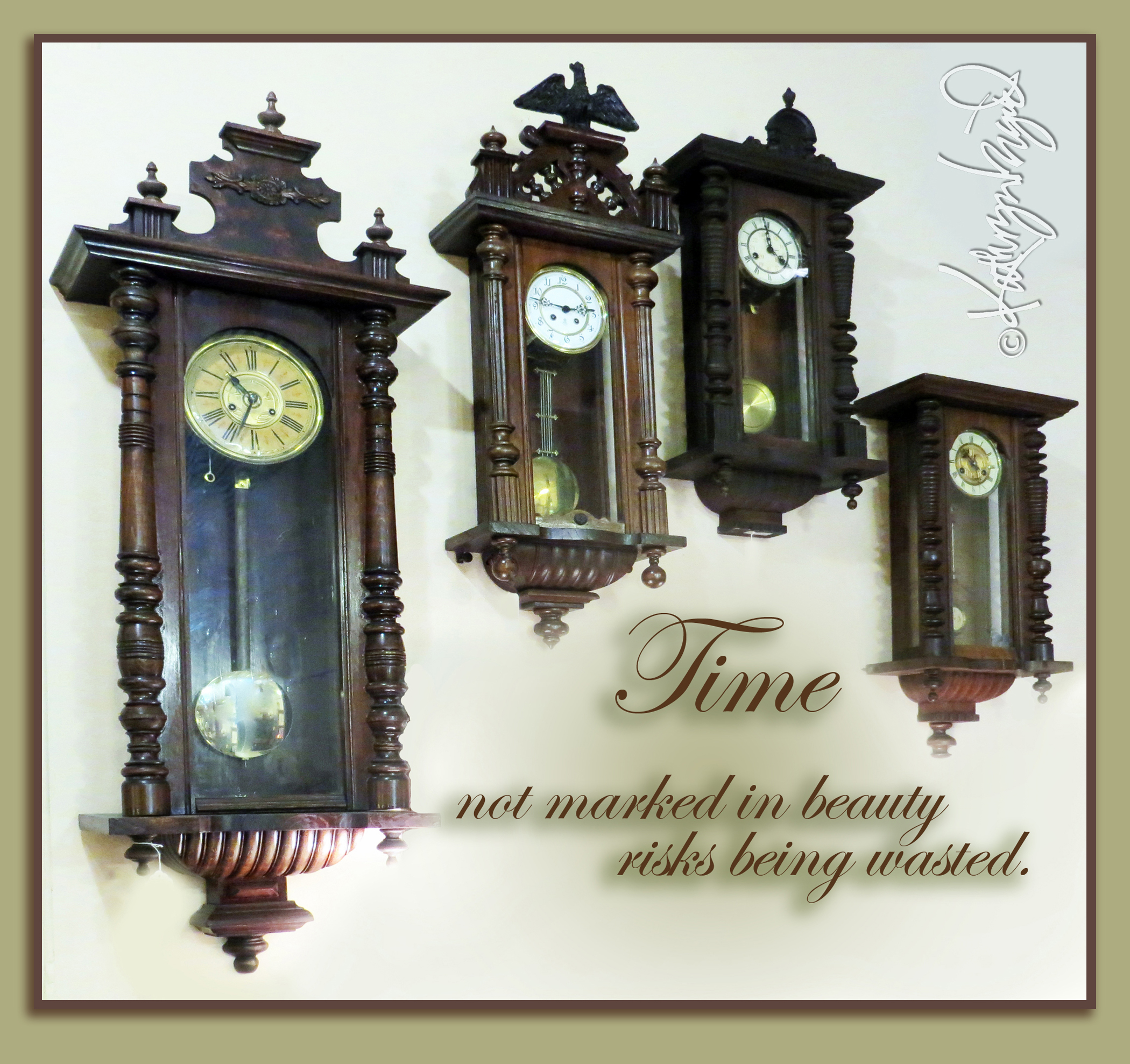
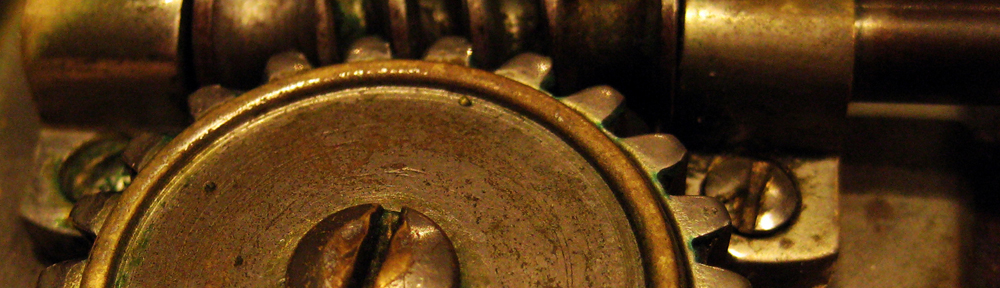
Now that everyone seems to have the technology to make cheap watches (which I must designate in my heart mere instruments for marking time, not timepieces), I get to wondering whether the beauty of true clockworks will always be preserved or will only serve as curiosities and fodder for art. That precision we take so nonchalantly to be ours is a museum of measurement and the poetry of a mechanism we should keenly regret to lose if we value something more than the rigid math of time, the seamless meeting of Doing and Deadline.
Category Archives: TIme
My Baroque Gesture
The first time I heard Early Music performed in period-appropriate style I experienced, not surprisingly I suppose, a full mixture of amusement, bemusement, mild horror and deep curiosity. It was in a performance of Claudio Monteverdi’s seminal opera Orfeo at the English National Opera; I was a mere college stripling who had probably not even heard the phrase Early Music at the time let alone known what it might mean, and ‘performance practice’ was in something of a time of transition. Anthony Rolfe Johnson sang the title role with, if I remember properly, a rather nice overall sound, but a straight-tone and senza vibrato style and a strangely stuttering kind of ornamentation that might well have been an authentic recollection of the opera’s original character and an accurate and historically informed version of the way it would have been presented by its composer and first performers. I, having never been taught such things, merely heard sounds quite foreign not only to my ear but to my concept of skilled and artful performance, let alone prettiness. I do remember thinking that either this was all far over my head (entirely possible) or it was a pointless and poor imitation of what the ENO imagined the average amateurish opera company of Monteverdi’s day must have been capable of doing (less likely), or poor Mr. Johnson, who later went on to receive his OBE, just plain wasn’t up to the job despite a naturally pleasant voice.
Years later, I may not be much smarter than the young squirt of those days, but I’m far more experienced and have heard worlds more music, both the great and the terrible and, of course, a massive quantity in between. And I’ve been taught a thing or two about the fine points of what is beautiful and magical when it comes to singing or playing with any amount of vibrato–or none–and the many elements that combine to create tone and color and variety and character in a performance. I’ve learned some useful stuff that changes how I perceive both the level of virtuosity in playing or singing and its aesthetic appeal, two aspects that do not always coincide in my ear, mind and heart but when they do, that combine to create a kind of joy that is virtually unattainable in any other way.
When my husband conducted a production of Orfeo over a quarter century after the first one I’d heard, I had a whole different understanding and appreciation for what the many performers were doing and why the stage director would expect them to do so both from a visual standpoint–training them, along with other coaches, in appropriate ways of moving and posing and gesturing as well as in those of vocal ornamentation, since she is a superb and well-trained Early Music singer herself–and an historically suited musical one. Just as there are countless styles and types of music known to us nowadays, which you can multiply by the number of individual teachers, performers and audience members to get a rough sense of the variety you’ll encounter, there were historical strictures and structures and stylistic trends and ideas that shaped earlier generations (centuries) of music and musicians and listeners, and while some have perhaps remained relatively unchanged since their inception, many more evolved over the ages. Our expectations of music have certainly changed, and our guesses as to how it was first conceived and perceived are only as good as the lines of scholarly inquiry and oral tradition can attempt to make them.
In all, it makes rich fodder indeed for both the ear and the imagination, and I for one am mightily pleased that I have had the opportunity to live a life immersed in all kinds of music and to learn along the way. I still like much of what I heard, whether ignorantly or not, in my younger days, and much of what I like now I learned to love along the way. While my form may be far from historically accurate or artistically impressive, I will still happily bow and curtsey to all the musicians who have shared their gifts with me in my life, and to all of those who work and are inspired to play more, to sing onward.
Ghosts of Our Former Selves
Daybreak Returns
From the grasslands, from the marshes, from the margins of the moor
Rise up misty ghostly creatures in the pearly light of dawn,
Some mementos, revenants or sylph-like spirits past and gone
To the brink of ancient memory and up to its creaking door,
People whom we, fond, remember or with some frisson of heart,
Those who populate our past, storied as fabled gods and kings,
Filled with magic and wild treasure and a million pretty things
That we wish we might have honored as such value from the start—
So at daybreak they come whispering, returning, silver-grey
Without tarnish in their sterling, as they rise up in our sight
And return to us those memories had fallen into night,
Bringing back that love and loveliness of theirs to present day
Tintinnabulation
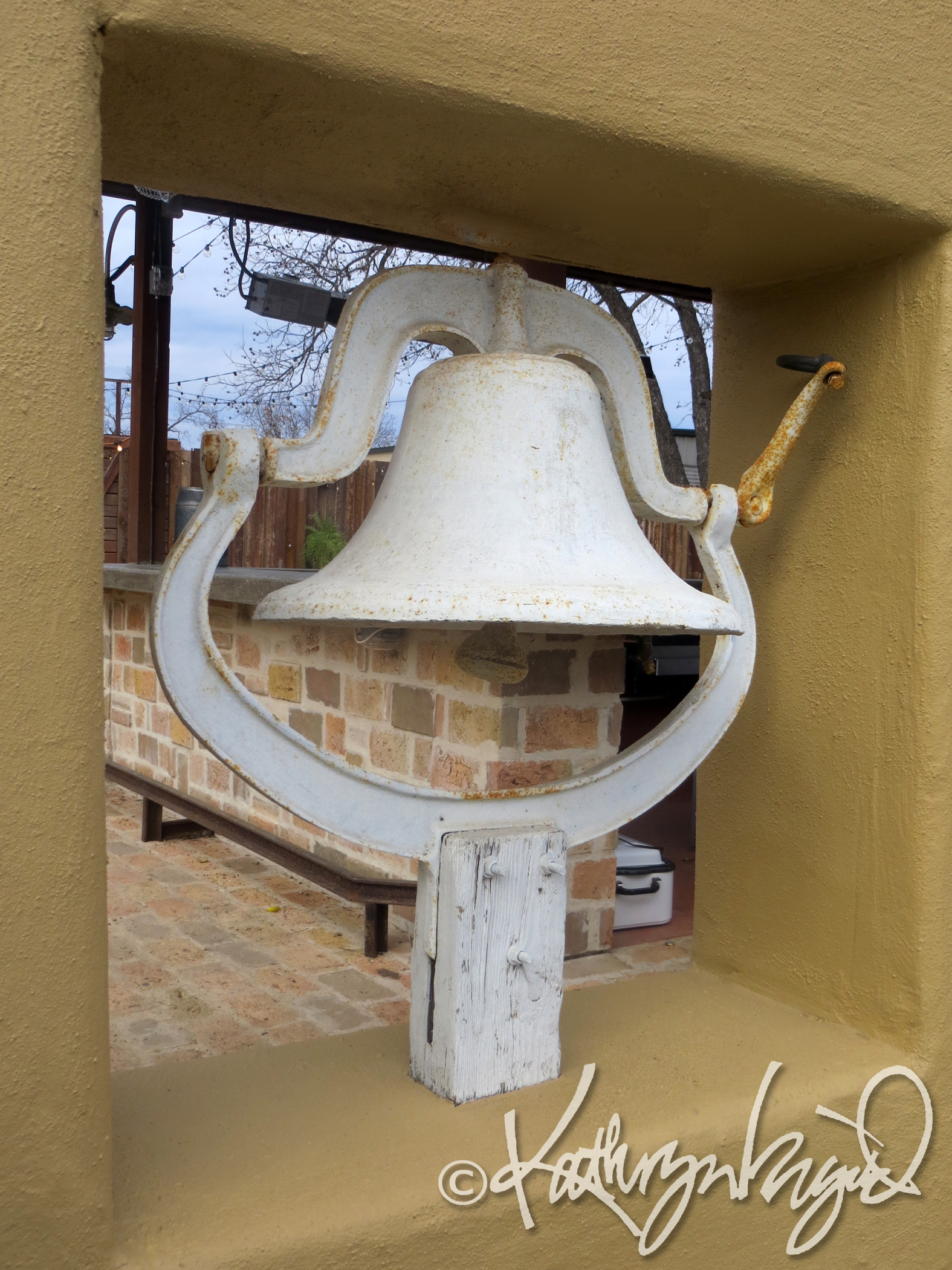
I hear a distant clamoring, that clear and golden hammering,
the calling so enamoring me of this hour of day,
That chorus of the chiming bells change-ringing, as their music swells
until no other parallels the news they swing to say,
‘Til every other sound should cease as swiftly as the bells increase,
work stop, hopes rise, hearts fill with peace; the ringing calls that soon
The echo of its chimes will fall where it sang out from wall to wall
in waves of life over us all to tell us it is noon–
No wonder, in this ringing sphere of tonal loveliness I hear,
I sense a sweetness drawing near and beckoning to me
To join the clangor of the song, to strike at every chime and gong
and bell, that each must sing along and set the midday free–
Ring every bronze and silver note, ring brass and gold, and keep afloat
all of earth’s joy–the antidote to death is in this tune–
Ring happiness, ring love and peace; ring out the hour of sweet release;
ring the refrain of this caprice until another noon!
Dream Dancers
What sprightly sprites, by noon and night, what fairies of the air
Dance in my dreams? To me, it seems there’s always someone there
To twist and twirl, to whiz and whirl, to pirouette, jeté,
To bow and bend and to transcend mortality this way.
No one can see this dance but me, and only when I slumber,
When forty winks or nap, methinks, begins to unencumber
The dancing denizens of sleep, my own replacements for mere sheep,
And I must count them, lest my deep repose should lose their number.
The Green Man is on the Move
Though he may well have sprung from the roots of ancient earthbound deities, the Green Man remains alive and well and, at this season, inhabits garden and woodland alike, filling sun and shadow with his mischievous magicks. And this presence is a very welcome thing indeed. Few things can compare with the appearance of those tender sprouts, however miniscule and vulnerable, that bring new signs of life to the winter’s loamy floor, unfurl their banners on the tiniest twig of the smallest shrub. The mere sight of one small tip of leaf can bring an upsurge of life to the dormant veins of even a hardened person who’s waited through the dark and chill for newness to arrive.
Did the long freeze of January kill that little sapling that I found? No, here’s the faint, alluring swelling of a bud, the blushing edge of a leaflet, soon to open wide in exuberant yellow-green shouts of Spring. Has the ice of the short days and long, long nights wholly buried and killed my favorite herb, both branch and root? No, I see a hairline stripe of promising verdure in the bony bark of its woody little stem. Life is a bold, determined act, and with its brazen call brings out the denizens of Earth, first the bud and then the bloom, one small broken seed shooting out a multitude of growing things at the conjuring wave of the Green Man’s hand. Like him, I cannot help but grin when the world begins again to wake in leafy laughter.
The Wheel: It’s Either a Millstone around the Neck or a Grindstone to Wear off Noses
The World in a Nutshell
All of the world’s in perpetual motion,
A loop of swift action, a constant commotion
That moves us in nervous centrifugal rings
To do and to act on a million odd things,
And so caffeinated we cannot hold still,
Or the moment of fixity surely might kill
Our fast-racing heartbeat, as used as it is
To zipping and zapping around in a whiz—
And all of us hope we will one day find quiet
And respite from all of our everyday riot,
But I am suspicious that it won’t occur
Until the last second of living, no Sir!
It’s Good to Set a Poor Example
I’ve been looking through a batch of old photos, ones taken at the home where my partner and I lived in our first years together, and find it quite striking how time changes my attitudes. Yes, of course, my tastes change dramatically as time goes by, like everyone else’s, and sometimes when I look at old photos (of house, hair, habit–) I am mortified, sometimes I’m mystified, and much of the time I’m just too busy falling all over myself laughing at my ridiculousness to worry much about it all. This time, however, as I looked at my pictures I was struck rather pointedly by another aspect of surprise in revisiting what had once been familiar almost to the edge of invisibility.
The photos looked remarkably foreign. It felt a little odd that I’d forgotten so much so completely in a relatively small number of years; is my personal fad-of-the-moment so shallow that it’s obliterated from my memory the instant it’s not in front of me anymore? Well, yes, probably so. I know when we downsized significantly to move from that place we sold or gave away tons, including beloved antique and heirloom items that I feared I’d regret losing, yet in truth hardly ever even thought about again afterward. But the stronger effect was that I am amazed to remember now, on seeing this former home of ours, how much of its DIY character and even the design choices I made were directed and colored by the modesty of our income. Just as I had never clued in when growing up that my family wasn’t rich because I wanted for nothing truly important (thanks, Mom and Dad, for the choices you made!), I never thought of it in those terms either when my husband and I lived in our first together-house–au contraire! I was happy that not only did we live in a place that reflected our tastes and comfort level and our own labors but our friends and family seemed to enjoy visiting there, feel at ease there too, and even admire it as a nice place. No one would ever have mistaken it for upscale, palatial or a showplace, but its humble charms seemed to be more than enough for us to feel glad of it.
People even hired me to do design (interior, objects, exterior and garden) projects based on what they liked of my work in, at and on our home. I was asked to allow a garden club to tour our yard the year after I had it bulldozed and reinvented it to my own tastes. I got hired to redecorate and consult on homes and offices and churches. Was it the swanky air of chic pouring out over every windowsill and sprouting in every flowerbed of our home, the hipness of our up-to-the-minute styling? Certainly not. But would I ever hesitate to invite any trustworthy person who came to the door to come in and make him- or herself at home or fear that I would be unkindly judged or seem uncool? No, even in my shyest and most anxiety-ridden moments, my insecurity never moved outside of my own being: I have always been confident of the niceness of my nests.
Thing is, I was most taken aback by recognizing in these old pictures a home happily occupied by a couple of people getting by on teachers’ incomes and setting up our grand estate on the masses of free time afforded by our having two full-time teaching jobs, his having two additional ‘outside’ choir gigs and my doing extracurricular commissioned design and art projects. As an adjunct faculty member I was in the familiar position of working over a decade full-time before getting to the pay level of the New Kid who came into the department that year straight out of grad school into an assistant professorial position (and I got to argue plenty for a huge percentage raise in my paycheck just to scrape up to that point)–those of you who have worked in higher education know full well what I’m talking about and also why teachers rarely work ‘only’ the fabled nine-month year of the academic calendar without having to supplement by taking side and summer jobs. Still, we were most certainly affluent compared to many, just not in that fairytale way of Having Money to Throw Around.
So the intriguing thing I saw in these photos was that much of my fanciful decorator achievements were then, as now, created by use of the designer’s equivalent of sleight of hand, smoke and mirrors. DIY. And lots of throws, slipcovers, repurposed and recycled and upcycled goodies of every sort. All of this to say that, far from being ashamed at the obvious poverty of my resources, I was and am proud of finding ways to make whatever I do have the best it can be and making my surroundings better with what I can manage. Nowadays I tend to think in those terms less because I actually can’t afford the more extravagant approach and more because I’d rather do it in a way that conserves and respects the resources more fully. And because I’m enough of a snob to know by now that what rich people consider Simplifying or Conservatism or Mindfulness is a far cry from the poor person’s point of view. The beauty of Home lies far less in decorative statements than in clean, secure shelter, in warm hospitality and kind hearts. If being impecunious can be motivational, then why indeed not do it well!
That which is Seen
That which is seen by the untrained eye of the casual observer is an older man, an elderly man, perhaps a shell of his former self. Not someone with a lot of use and life adventure left in him. Handsome, perhaps, in his latter years, with this silver hair and these pale clear eyes, with his faintly stooping posture before a window where no single thing that’s new is seen; elegant in his quiet way, and maybe wise. But not more.
What cannot be seen is the forty-two years he spent working for the postal service, learning the business from the bottom up and eventually teaching not just the next generation that would follow him but the next after that as well. There is no way to know at merely a glance that he tended a beautiful garden on Sunday afternoons where he grew too many vegetables for his own table so he shared the rest around the neighborhood. Invisible, too, is the love he keeps alive for his long-dead wife of thirty years, except for the small bouquet of flowers he picks from that garden of his and gives to their son and his wife every Monday because they were her favorite blooms. Yes, the flowers and the kids.
In the plain little vase where those flowers live for the week, there is room for all that can’t be seen in one quick look at the profile of a man who sits and meditates beside a window. Only by taking the time to appreciate the fulness of that humble bunch of flowers and all that they have to tell can anyone really know what to see when looking toward that window’s light. It takes a certain clarity to see what’s right in front of you.
Damaged
Wars build walls
On a foundation of
Corpses–
The evil and
The innocent alike–
And what do the walls
Keep in?
Keep out?
How is it that
Battles can be declared
Won or Lost?
For both sides die,
Both parties always
Somehow
Lose land and goods
And certainly, soul;
Starve in the snow or
Roast in the heat,
All the while watching
The world they knew
Reduced to ugly
Holes and rubble and
Its storied walls replaced
By a fortress that
Is really
Only a new prison