‘Social Activist Art’ is *New*, You Say???

drawingA recent New York Times article reminded me that, no matter how I might classify myself as anything but an activist, I have always been one, of a sort. It’s true that I’ve always assiduously avoided conversation, let alone physical action, tied to politics, religion, social policy and pretty much any ‘hot topic’ you can name unless I sensed I was in the safest possible environment to do so–generally, amid a comfy flock of like-minded partisans. The article is chronicling the US uprising of a relatively new breed of American artists and their support systems dedicated to, as the title bluntly states, social activism; the author gives appropriate reference, of course, to the practice being a long-standing one in other parts of the world, but shares the view that it’s still rather fresh and new here on American turf.

I’ll grant that the forms and formats may well have changed, and that there might be a larger collective sense among those who would embrace this title of being dedicated to the purpose more specifically than others, but I will step right out on my own tiny soapbox now and assert that, insofar as art is seen as a form of communication–and this might well include virtually all art except that created and performed in private and without any wish or expectation than anyone other than its maker will know it exists–it is inherently activist. The decision to create something I intend to be art and allow it to be known to others says a whole lot of things about me, the subject of my work, and my general worldview, and if I am allowing others to experience these in the art, assumes that they will respond through and with their own worldviews to it, effectively in a social interaction, whether we converse directly about it somehow or those who have interacted with my art turn around and respond to it in the continuation of their lives.

Who knew I was such a rabble-rouser? But truthfully, even by making those ‘meaningless’ little doodles that don’t turn into full-blown drawings or paintings, I am making something of a statement, am I not? I scribble, therefore I am. By doodling, I am not only using my energy to do that rather than anything else, I am also creating a portal through which my thoughts can emerge; if they turn, via this scrawling, into a concrete idea it may lead to the completion of an artwork expressing it more openly. This, in turn, suggests that I have a thing or two to say and I’m willing for others to hear it, see it, feel it–to interpret it and respond to it, even. I never think of myself as daring, but I think it’s fair to say that letting my inmost thoughts and imaginings be seen and analyzed by others through their own filters is at least a little brazen, if not occasionally foolhardy.

One of my late mentors, Lawry Gold, wrestled with the supposed divide between art and function, and he was anything but shy about being an outspoken activist, albeit a very kindhearted and generous one. He was a boldly countercultural person in a great many ways, and yet he seemed to me to reach the peak of his own overt rebelliousness when he began working on a body of art that was deliberately and unabashedly functional (beautifully art-covered, distinctively designed tables, lamps, clocks and the like) for sale through his gallery agents. This was something I know he enjoyed at least a little as cheery cheekiness to tweak artist snobs who were apparently so benighted they couldn’t accept the marriage of form and function thus, or so rich they could afford to sit around waiting for other equally rich people to buy their non-functional work, no matter what the state of the economy. Besides that these were among his most gorgeous and sophisticated works, to me they spoke of the recognition that art, besides taking so many different forms, speaks to us in many different ways, and that breadth and depth has great value.

At the same time, my friend never stopped making ‘non-functional’ art, because he of all people also had a tremendous desire to communicate, whether it was by visual storytelling in his often humorous, whimsically imaginative artworks or by making a more specific point with his illustrative and symbolic works. And he never hesitated to engage in the discourse that followed anyone’s viewing of his work. He and I had a joint exhibition of our artwork once, and as I was curating and installing the show I objected to one of his pieces that he wanted included, thinking it was not in keeping with all of the others we had selected, and he patiently steered me toward a clearer understanding that it was indeed very well suited; even though I never liked that piece as much as the others, I found that it carried an important part of the ‘conversation’ made up by the whole of the exhibition, and in fact that one interaction changed the way I curated many an exhibition of others’ work in the years that followed.

Ultimately, I see in the creation of art–of any form–an act that if it isn’t in open defiance of the social norms, allows or even invites the examination of and discourse on them. So even though much art is not made, like Lawry’s, to function in an obviously practical way, it all serves a purpose; ‘merely’ being beautiful or compelling may be purpose enough in adding layers of pleasure or relief or catharsis, but many works go far beyond that in opening new vistas to our contemplation, influencing our beliefs and even challenging us to change our behavior. All art is potentially advertisement or propaganda, for good or ill. And if that isn’t social activism, I think my encyclopedia needs some new illustrations.

digital illustration from drawings

Is all art crowd-sourced?

The Seal of Approval

What shall I say when I am asked my opinion and I think it would be best not to give it? I feel a little like I should perform a circus act, give the impression of cheery appreciation while keeping the less charming truth to myself. Not a little, really–I think I’m actually quite the liar at heart when it comes to people asking for information I’m pretty sure they would not actually like to receive. There are indeed those who want an honest and purposeful breakdown of the situation in question, but they are in my experience rather few and far between. In real, day-to-day life, what people are generally seeking is reassurance and affirmation, encouragement and support, not really a critique, when they ask for opinions.

So excuse me if I put on my happy face and do a little tap-dance of diversionary niceness when asked. If it’s strictly entertainment you seek, I’m here for you and will do my little tricks as best I can, but I hope you won’t decide to ask me for any touchier information. The only thing I’ll willingly admit your pants make look big is my discomfiture on hearing the question.photo

Hijacking Happiness

digital artwork from a drawingTrouble, as we all know, is highly contagious. I was reminded of this recently both by a television character and by a couple of real-life incidents involving real live people (who shall here remain nameless), and all of them, real and fictional, have a number of similarities, the chief one being their apparent unshakable belief that their suffering is greater than anyone else’s, is incurable, and is probably the fault of everyone else too.

My life is pretty fantastically good, when you get right down to it, so to people who don’t know me very well it might appear that I have no business criticizing anyone else’s way of handling sorrow and pain. But that’s just it: even the most wonderful of lives is touched by trials now and then, and struggle or strife isn’t fairly measurable in the moment. My paper cut seems as dire as your childbirth pangs when I’ve just gotten paint thinner on my hand. I know this to be logically ridiculous in the extreme, but don’t tell me the paper cut doesn’t hurt like boy-howdy at that moment. That would be tantamount to me telling you that since your labor pains will probably be over in short shrift, they don’t compare in any way to another’s battle-for-life with esophageal cancer, so you should just get over yourself. Whatever agony each of us is undergoing is more than enough and not to be belittled. And frankly, since each of us has a history that is tinged here and there with darkness, we do all have a sense, however small, of what it means to accept our griefs and cope with, live with, and go forward with them still present. Real sorrows never truly go away.

And for all of us who can feel empathy, or even more than that, can feel sympathy without having experienced the fulness of another’s troubles, life after infancy (when memory, like the lifespan thus far, is short) can be a perpetual bombardment of such troubles even when they’re not entirely our own.

I, of all people, will readily grant you that some people are far better equipped than others to find ways to survive pain and suffering and to continue living a full life without resorting to out-and-out acting. But that’s just it, isn’t it: barring full mental incapacity, don’t we owe it to ourselves, anyway, to try every possible avenue of becoming whole and happy (and of course I don’t mean that superficial kind of happiness that is either fully false or simply stupid); don’t we? When my personal apocalyptic horsemen appeared at the intersection of a group of the classic stressors (job-related problems, health challenges and the sudden death of a close friend converging on me at the same time) and plunged me into clinical depression, I was fortunate to not only have some of the significant tools (support from family and friends, a great doctor and a good therapist, and ultimately, medication that worked for me) for doing battle with those monsters but also the sense that there was no other acceptable option but to try to do that battle.

I won’t lie; there were times–and will probably be more of them over the years–when I did have to take the tack of that ‘fake it till you make it’ mode, when I simply wanted to quit and lie down and just hope it would all miraculously fix itself, or when I was as sulky and whiny and crotchety and pessimistic and tedious as unhappy people can be. We humans are good at all of that stuff, better than at being sunny and charming. But finally, even in my worst state I knew that was no way to live, and that the important people around me would suffer at least as much as I did, if not more. Thanks to the aforementioned helpers, I am here to tell the tale. More importantly, I don’t dwell in that darkness, even though there’s not much I could prevent or even fix about the troubles that led to such a state of existence. Things just happen. It’s how I deal with them that’ll likely make or break me.

That television character–and the many real-life imitators I referenced–stays so focused on how traumatized and maltreated she feels (albeit by genuinely distressing events and problems) that they become her one-note existence. She has a hard heart because it seems less trouble to close it to others than to be vulnerable to further hurt, but of course the actual effect is that she treats everyone around her like dirt, riding roughshod over their feelings and regarding any trauma or maltreatment they may suffer, often at her hands, as inferior or nonexistent. In turn, after being stomped on repeatedly by her seeming egotism, narrow-mindedness and refusal to set her hurt aside, the people around her disperse as speedily as that unlucky drop of water hitting a sizzling skillet explodes into mist. Those who tolerate her constant vituperation, impatience with their perceived stupidity or lack of sympathy, and her seeming wish to continue forever wallowing in her fury and self-pity, those characters ultimately become uninteresting or even unsympathetic themselves to me; after the ninety-ninth offense anyone sits back and takes without a fight, they tend to my eye to look like either enablers or equally fixed in victim mode.

I think we all have the power to steal others’ health and happiness, at least as much as the reasonably healthy among us should make every effort to take charge of our own. Doesn’t mean perfection is expected, but c’mon, people, if there’s really no going forward with life, perhaps a retreat to a very quiet hermitage would be more apropos than imposing our worst on the rest of the world. Yeah, I said it: get over yourself, Kathryn. Even if it might occasionally require brief periods of kindly deceit, times of returning to fighting off the dark singlehandedly, and the ordinary moments of being a jerk. It’ll mean equal demand on me for repentance, amends-making, and getting back on the wagon. There’s too much life left ahead, I hope, to spend it mired in a grim and terrible past, let alone impose it on others.

The upside of all this is that there is a possibility of turning this kind of thievery to good. Very simply, if I have to I can borrow my equilibrium and contentment from others. Put myself in proximity to saner, happier people than me until I can manufacture my own, and quietly absorb what I can of their good graces. I, at least, don’t want to be the one who steals the joy of anyone else; that only becomes the reason for new sorrows all ’round. Happiness and health can be contagious, too, if we let them. And so we all should, my friends. So we should.

Foodie Tuesday: The Daily Grind Need Not Grind Us Down

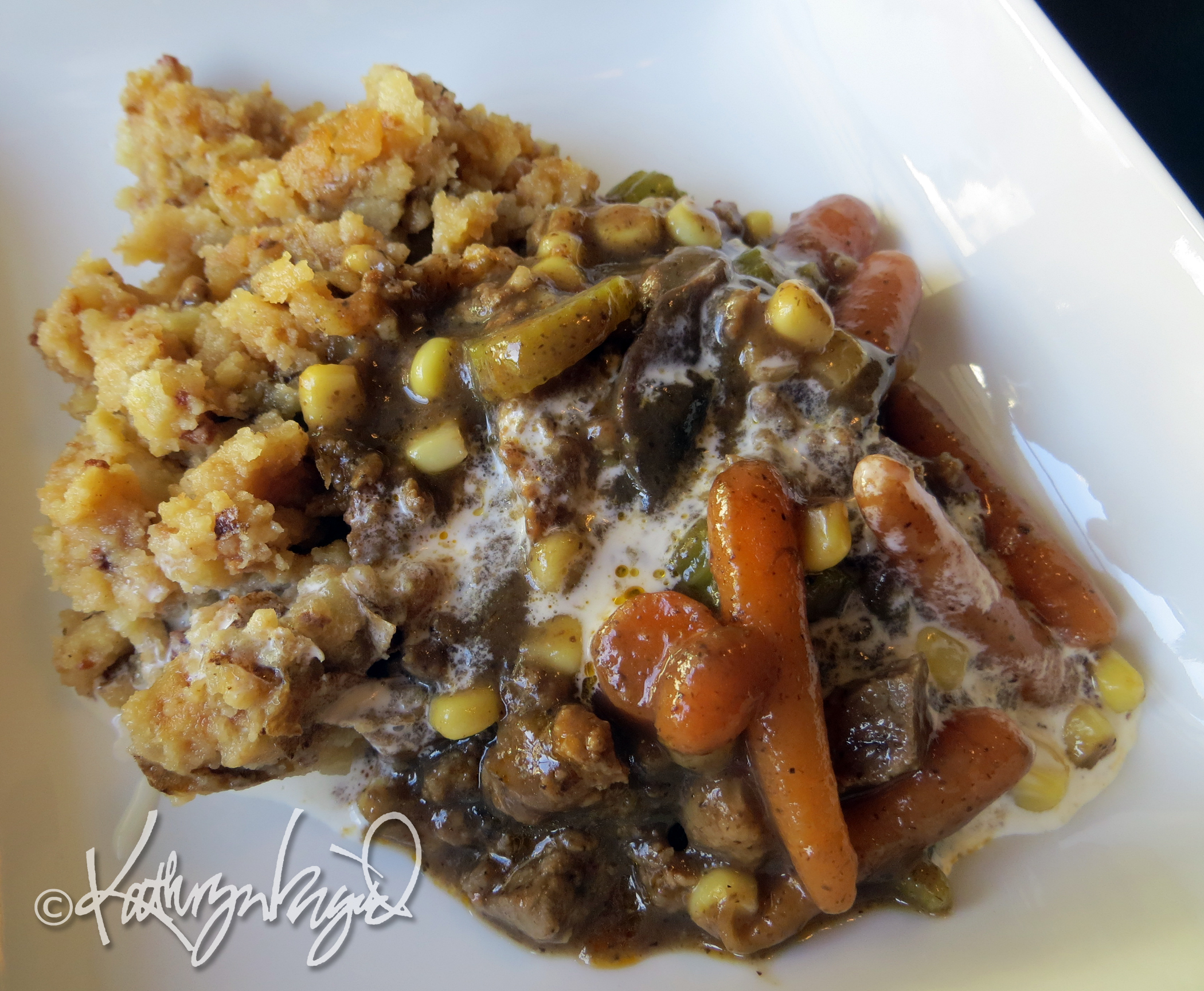
When I did a bit of checking on it, the name of my variant of Shepherd’s Pie seemed to be, by rights, ‘Pastel de Carne y Patatas’–but you know me, I can’t stick to proprieties very well. So I named it the more mellifluous sounding ‘Pastel al Pastor’, thinking as I do that shepherds get very short shrift in this day and age and can use a little flattering attention. What the dish is calls for it anyway, for it’s a rustic Mexican-tinged take on the comfort-food standard Shepherd’s Pie. In any event, like many longtime popular recipes, it got its start partly by using ground or minced meat, a hallmark of well-fed poor people’s diets since the cheaper cuts of most meats can become tenderer and allow much more expansive fillers and the disguise of plenteous seasonings in order to be palatable while still being relatively affordable.

Rustic and comforting it may be, but the simplicity of the end result in this recipe belies the multifaceted process by which it’s made. Don’t let that put you off, though, because it can be made in large quantities and frozen in smaller batches between times, so it can easily become a quick-fix dish after the first preparation. Shepherd’s Pie, in the vernacular, derives from the longtime concept of Cottage Pie, which in turn originated when cooks began more widely using potatoes to stretch those more expensive ingredients of the meal, the meats. Typically, these pies (and there are versions of them in an enormous number of countries, cultures and cuisines) are simply meat dishes, often made with the ‘lesser’ cuts or a mixture of leftover meats, with a potato crust. Probably the most familiar of them here in the US is the minced meat (and often, vegetable) mixture topped with mashed potatoes that is served in many a British pub and home kitchen and that we co-opted in our own American ways.

Mine, on this occasion, was to veer as I often do toward Mexican seasonings and enjoy my own little twist on the dish.photoPastel al Pastor

Seasoned minced or ground meats, topped with vegetables and mushrooms and gravy and served over smashed potatoes make altogether a hearty and countrified dish, not at all difficult to make but taking a little bit of time because of its individual parts. I make this in a generously buttered baking dish both because it’s easier to clean afterward and because–you guessed it–I love butter.

The bottom layer of the dish is made by frying a mixture of equal parts ground beef, pork and lamb, seasoned freely with salt, black and cayenne peppers, chili powder, smoked paprika and lots of cumin. Those without supertaster spouses will likely want to add some garlic powder as well, though it’s not essential. A splash of rich chicken broth or a spoonful of good chicken bouillon adds a nice layer of flavor, if you have it. Next, add a heaping spoonful of tomato paste and enough good salsa to make the meat mixture very slightly saucy, and just as the meats begin to caramelize, you’re done. [My go-to, if I’m not making my salsa by hand, is Pace’s mild Chunky Salsa with a prepared chipotle en adobo blended in thoroughly–I see on their web page that they’re reintroducing their chipotle salsa, so that’s probably fine too.] Drain the fat from the meat mixture and spread it in the bottom of your baking dish.

While the meat’s cooking, you can be preparing the vegetable-mushroom layer. I mixed about equal amounts of small cut carrots, sliced celery and sliced brown mushrooms, covered them with some of my ubiquitous chicken broth and cooked them until tender. Then I pureed half of them with a stick blender, adding a heaping tablespoon each of chipotle en adobo (that’s about a half a pepper), unflavored gelatin and potato flour for flavor and texture, mixed that with the remaining vegetables, and poured it all over the meat. I topped this with a cup or so of frozen sweet kernel corn and got ready for Potato Happiness.

Today’s version of this meal, Ladies and Gentlemen, was potato-fied with leftovers. I had half a baked potato and about a cupful of good french fries in the fridge, and they worked wonderfully when warmed with some cream and a touch of salt and smashed roughly. It would have been just fine to do the typical Shepherd’s Pie treatment of spreading the potatoes over the meat-and-veg before heating the dish through in the oven, but since this was all concocted of things I had around (taco meat I’d made and frozen, salad vegetables and leftover potatoes), on this occasion we just put nice heaps of mash on our plates and spooned the rest over them like meat-and-vegetable gravy.

For the more normal approach, I’d roast, boil or bake potatoes, season with salt and pepper, and combine with cream for the mash and then top the casserole, possibly adding some nice cheese either on top before browning it in the oven (a mix of shredded cheddar and Monterey jack, for example) or as a fine garnish, a serving-time crumble (cotija on top, anyone?). But ‘normal’ is overrated, and the dish was mighty, mighty tasty even deconstructed in this way. And it’s still flexible–yes, even a dish concocted of multiple leftovers has variety left in it, my friends. Add some peas (so many tasty cottage pies have peas in them), cauliflower, green beans, or any number of other vegetables. Make it spicier. Soup it up into a stew, with potato pieces incorporated. Change the seasonings to Indian and make it a post-Colonial curried version. You get the drift.

Thing is, of course, that this is precisely how the dish was conceived: as a loose general structure into which any number of variables could successfully be introduced, depending upon what was on hand. Save time, save labor, save money. Eat delicious potatoes and whatever flavorful wonders you can afford and imagine to combine under them.

Well, get along with you now, you know how it works. And you can be pretty sure that it’s going to taste good. That’s how folklore ‘recipes’ survive–on flexibility and reliability. Oh, yeah, and great fillers.

Even chicken, which sometimes gets short shrift when it comes to minced meat dishes because it’s left too unseasoned or cooked in ways that make it too dry, can make lovely ground meat dishes with a little effort. In the latest instance, I chose to precook mine in a sort of meat loaf sous vide, keeping the juices and additions in and on it until it was fully plate-safe, but this could easily be chilled in its loaf form, sliced and pan-fried without the intervening hot bath, I’m sure. And a food processor makes the loaf prep a snap, but it can be done with a knife and a pair of hands for mixing, too. In any event, I veered more toward Italy this time with my glorified chicken meatloaf concoction.photoCotolette di Pollo e Pancetta

[About 6 servings.] Mince and mix together the following and shape into a compact loaf: 6 boneless, skinless chicken thighs (dark meat stays moister), 3 ounces pancetta, 1/4 cup shredded Parmesan cheese, 1 teaspoon thyme, 1/4 teaspoon ground black pepper, 1/8 teaspoon powdered lemon peel, 2 eggs, 4 tablespoons cold butter and 1/2 teaspoon minced dried shallot. Wrap and chill the loaf until ready to fry it, or do as I did: vacuum pack it, cook it sous vide like a confit (low and slow–I let it go overnight), and then refrigerate until ready to use.

When it’s time to fix the meal, cut the loaf into slices about 1/4 inch thick and fry them over medium heat until lightly browned. With a well seasoned iron skillet or a nonstick pan, the butter in the loaf is quite sufficient to keep the slices from sticking, and they get a nice little lightly crispy crust outside their tender middles. I served mine with slices of fried cheese (any slow-melting mild cheese would do for this after-the-fact application, or you can top the meat slices with faster-melting sorts like mozzarella or provolone as the meat cooks) and a simple sauce cooked down from jarred passata (simple tomato puree–I like the Mutti brand passata I used, pure tomatoes with a little salt) mixed with the loaf’s excess juices, salt and pepper and oregano to taste. On the side, little ramekins of rice and buttered green beans are plenty, though of course there’s always room for invention on the plate. The whole assembly, since I’d put up both cooked rice and the confited loaf in the refrigerator beforehand, took not more than fifteen or twenty minutes to prepare.

¡Buen provecho! Buon appetito! Now, stop mincing around and get eating!

On Thin Ice (Advice to the Peewee Hockey Player)

With special love to all of my Canadian friends!digital image from a photo

Out Cold

Do not the hockey puck invite

Your flaxen brow to cleave

By wearing not your shining helm;

And do not tear your sleeve

Upon the blade of someone’s skate;

And don’t assay to test

Opponents’ blows, save if you wear

A Kevlar hockey vest;

Avoid, if you are able to,

A stick thrust at your sternum,

For whacks like this are undesired

Even by those who earn ‘em;

Above all things, I recommend

You not enrage the goalie:

Though wounds are bound to happen here,

Some risks are just unholy.digital image from a photo

Under the Shawl

digital artworkShrouded

What is the measure of sorrow’s depth? A mile, a fathom? Soullessness?

Is it a silent suffering or screaming agony? Or less

Than nothing? Is true sorrow deep as midnight? Is it fiery? Cold?

Is’t a return to youthful helplessness, or falling instant-old?

Who knows the grief in its extreme that tells how deep sorrow can grow?

Only the ghosts of doubt can guess at this: I hope I never know.

Ashore

Islands can bring out the hermit in people, as it seems–and conversely, the social butterfly. Some who go to islands voluntarily either do so out of the desire to cut themselves off, at least partly, from social pressures and demands or come to embrace the opportunity that appears when they’ve become islanders. But involuntary islanders, the marooned (whether by shipwreck or by job transfer), can often feel contact-deprived. Suddenly people who had no particular desire for company on a regular basis feel socially abandoned and hungry; who knew?

Me, I have never lived on an island. Certainly never been set adrift and stuck on one against my will. And I happen to have pretty serious hermitage skills when I want to haven them: I’m a master at finding the quietest, remotest, emptiest corner of any place when I sincerely desire it. So I don’t generally have to wrestle through either of those dire, trying situations mentioned above. And also, I don’t really expect to run into such a situation any time soon.

That means I rather like my visits to islands, which visits are thus far entirely intentional (unless you count wrong turns onto bridges leading to them), and I like aloneness enough to seek it. Even on an island, if need be. Truthfully, though, I’m quite happy to visit islands any time I can, for holidaying purposes. Whidbey Island, Molokai, Ireland, Vancouver Island, Puerto Rico . . . I will be glad to return to these and visit many another any time I might have the chance. Let me wander inland and explore the beauties beyond the islands’ perimeters. Perch me on a rock by the shore and I will be happy, no, delighted to spend my time in good company or solitude, either one.photo

Be a Good Sport

digital artworkIt only just occurred to me that the admonishment to ‘be a good sport’ has little to do with showing athletic prowess and a whole lot to do with someone cajoling someone else to do a thing that the other person has no desire to do. What a to-do!

Perhaps this little guilt trip was meant, if the person saying it to me had any thought about it at all, to encourage me to discover that I actually enjoyed those activities (sports or other) under consideration once I willingly participated. Maybe those who said it even thought I had a hope of becoming skillful, adept, if I just faked a bit of enthusiasm until I got more properly involved. Cynic that I am, I harbor some doubt as to the former and, let’s face it, find the latter somewhat laughable. I can’t think of anything anyone would trouble me to do by telling me to Be a Good Sport that would be necessary to my survival or the rest of the world’s well-being, so it seems pretty plain that I was being chided to do that thing in order to please the person who was scolding me.

If, by not wishing to participate in the present extravaganza (whatever it may be), I am not a Good Sport, then it seems to me a bit like when those demonstrators and activists and yes, politicians, who cheer on their personal causes by insulting and tearing down and attacking their opponents rather than by simply extolling the virtues of the cause and letting it win converts and participants by its own evident excellence, and said promoters are then utterly mystified and stunned that others don’t flock to the cause willingly. You may well surmise from this that I never did buy into the value of group-think much, and in turn, haven’t ever warmly embraced the ‘popular’ activities. You can call me a meanie, a wimp, a curmudgeon, whatever you like, but please don’t label me a Poor Sport for having different wishes and tastes than yours. It’s just not sporting!

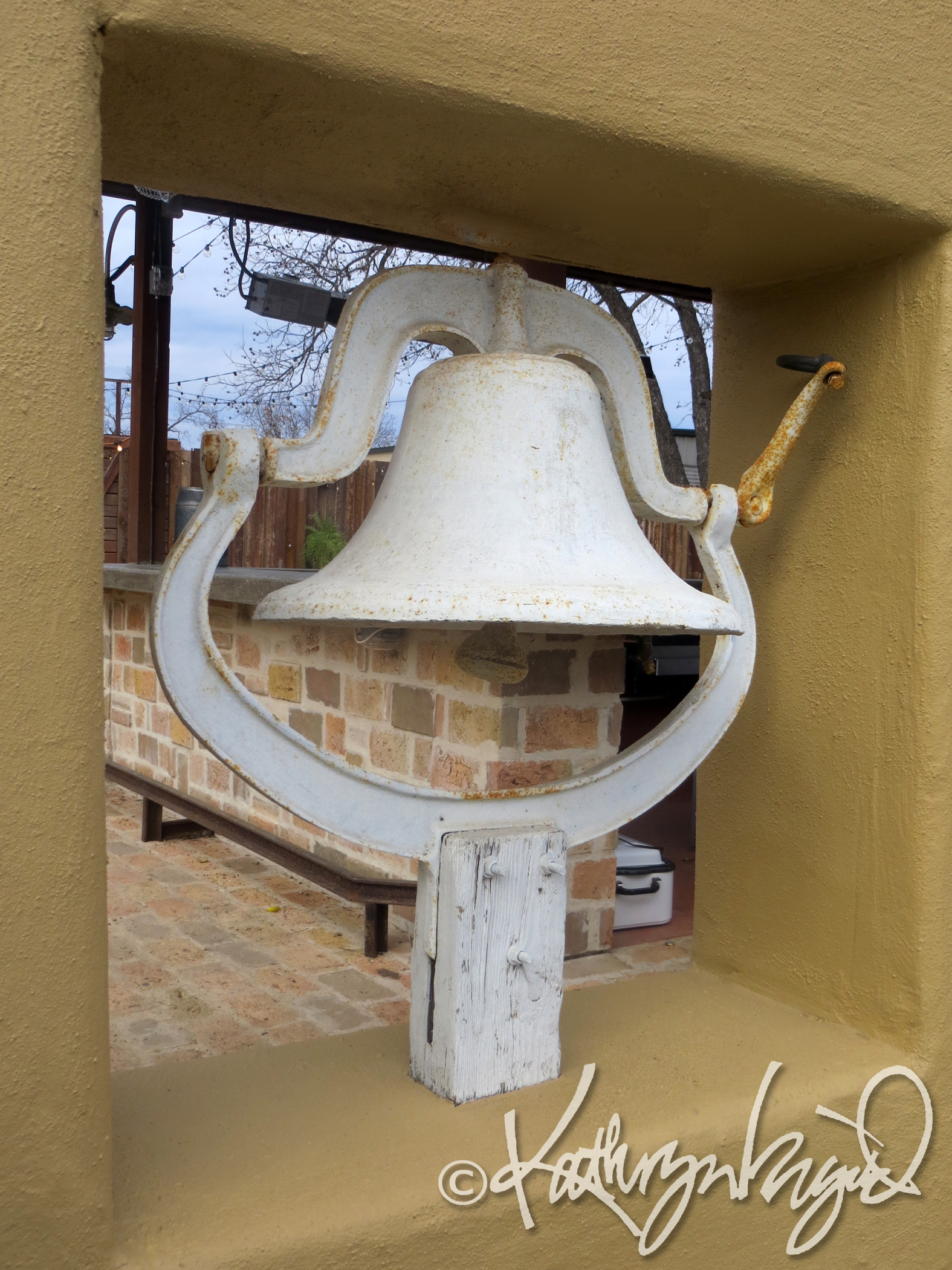
Tintinnabulation

photoOn the Hour

I hear a distant clamoring, that clear and golden hammering,

the calling so enamoring me of this hour of day,

That chorus of the chiming bells change-ringing, as their music swells

until no other parallels the news they swing to say,photo‘Til every other sound should cease as swiftly as the bells increase,

work stop, hopes rise, hearts fill with peace; the ringing calls that soon

The echo of its chimes will fall where it sang out from wall to wall

in waves of life over us all to tell us it is noon–photoNo wonder, in this ringing sphere of tonal loveliness I hear,

I sense a sweetness drawing near and beckoning to me

To join the clangor of the song, to strike at every chime and gong

and bell, that each must sing along and set the midday free–photoRing every bronze and silver note, ring brass and gold, and keep afloat

all of earth’s joy–the antidote to death is in this tune–

Ring happiness, ring love and peace; ring out the hour of sweet release;

ring the refrain of this caprice until another noon!

Dream Dancers

digital artworkCountdown to Dreaming

What sprightly sprites, by noon and night, what fairies of the air

Dance in my dreams? To me, it seems there’s always someone there

To twist and twirl, to whiz and whirl, to pirouette, jeté,

To bow and bend and to transcend mortality this way.

No one can see this dance but me, and only when I slumber,

When forty winks or nap, methinks, begins to unencumber

The dancing denizens of sleep, my own replacements for mere sheep,

And I must count them, lest my deep repose should lose their number.