Foodie Tuesday: When Baking Gives You Lemons…

You should find it dazzlingly obvious by now, if you’ve been visiting here for more than a week, that I am not a Baker. Exactitude is a form of patience that I lack, so much so that following a recipe to the letter—an important characteristic of baking’s central processes, whereby the necessary chemical and physical elements are able to perform their required duties and make the food do the particular tricks it’s supposed to do—is impossible for me, or close enough to it. As a consequence, I have made many, many baked goods that were not entirely, well…good. So many dishes that should have been light and fluffy come out more suited to supporting a truck while a mechanic fiddles about underneath it. What could and should have been moist and dense is instead frequently crumbly and dry and better designed in texture to use as kitty litter than as dessert, despite pleasant enough flavors. [Disclaimer: if you think this is an admission that I have eaten actual kitty litter, you have either greater faith in my scientific daring or even less in my common sense than I deserve.] Disappointing, these results, but enlightening, if I pay enough attention. Sometimes even remediable. There may be hope for me yet.

Maybe that’s why I don’t stop meddling with what should be fairly straightforward recipes. I trust that, at least some of the time, what doesn’t turn out best on first effort might be rescued by a further experiment or two.

This winter I was given a gorgeous, huge, tree-ripened lemon. My friend hand-carried it from her mother’s garden a couple thousand miles from here, and it was so big and juicy and magic-laden and perfect that I wouldn’t dream of letting it go to waste as a mere additional squeeze on dinner’s salad or a piece of fish. I sliced it thinly; not very evenly, because as I have surely mentioned before, my knife skills are less than impressive, but I gave it a go, and I did slice it fairly thinly. Then I layered those slices with cane sugar in a tight-fitting jar and filled all of the remaining space with plain, high-octane white alcohol (vodka, probably) and let it sit for a couple of months, just giving it a shake or tip once in a while to get the sugar to melt in and absorb and the lemon flavor to be intensified. When I opened the jar last week: Elysium! A rush of deeply floral, lightly sweet and highly lemony perfume bursting from the jar with the reassembled fruit in it. A whiff made for fainting over, if one breathed it in long enough. A liqueur not to be spent lightly, either.

I’d had this fancy, for a while, to try my hand at making some sort of citrus-cornmeal torte. I’ve read recipes for various kinds, particularly olive oil enriched ones from Sicily that sounded uniquely tempting, and decided to give my own version a try. Oranges and/or lemons, olive oil, corn meal. Not too sweet, not too bland. Just honest and refreshing. Sigh. None of the recipes I found was precisely what I thought I was salivating for at the moment, though. I still wanted moist and slightly dense texture, almost a steamed pudding character. What to do, what to do…. Of course: experiment, again. Knowing that baking still requires some commitment to precision, I did as I always do and turned to a tried-and-true basic recipe of somewhat similar character and substituted this for that and these for those. What resulted was not precisely what I’d had in mind, but not too shabby, either.

Photo: Lemon Cornmeal Torte

When I inverted the torte out of the springform pan, I broiled it briefly to finish coloring and caramelizing the lemon slices. If you have one of those dandy little brûlée torches, have fun with it. I don’t recommend an acetylene welder, however, unless you’re baking in your foundry.

Lemon Cornmeal Torte (Take One)

Preheat oven to 450°F/232°C (or whatever approximates those temps in your oven). Mine, as I’ve mentioned numerous times, is old and unreliable, so I must needs watch it like the vultures watch I-35.

I decided to use my springform pan. I lined it, inside and out, with heavy aluminum foil because, given the experimental nature of all of this, I was a little worried about leaks and other non-ingredient surprises. Not to mention that that uppity oven of mine might explode in a fireball or something. Probably wasn’t necessary, in the event, but still. On with the recipe:

I mixed about 3-4 T melted butter with an equal amount of cane sugar and spread it in the bottom of the pan, and then laid the lemon slices out across that syrup base.

Combine dry ingredients with a fork or whisk: 3 cups cornmeal, 1 tsp baking powder, 1 tsp baking soda, 1-1/2 tsp salt, 1-2 tsp ground cardamom, 1 T citrus zest. Since I’d macerated the Queen Lemon, her zest wasn’t fit for the task anymore, so I grated the peel from a couple of the clementines I had on hand.

In a separate bowl, beat together the wet ingredients. [These are where I think I would have done well to go a slightly different path.] I combined about 2-3 Tablespoons’-worth of flavorings from the following: liqueur from the preserved lemon, fresh lemon juice, and ginger syrup. I added enough buttermilk to the flavor mix to equal 2 cups total. [In retrospect, I would have bumped the flavorings’ amount to a full half cup and used 1-1/2 cups of the buttermilk.] Whatever the eventual “design” of the recipe, on this occasion I rounded the wet ingredient list with 1 cup orange juice, 2 large eggs, and 2/3 cup fine extra-virgin olive oil. I suspect I could well have added another egg at the time with good success, too, but I didn’t. We shall see!

Combine the wet ingredients with the dry and stir until mixed. Pour the batter in the pan over the lemon slices, set it in the oven, and bake just until set, the center not quite visibly moving anymore when you bump the pan, somewhere around 35-40 minutes.

Served with a very lightly sweetened whipped cream, it was pleasant and tasted of spring. But it wasn’t quite what I was craving, just yet. I wanted brighter, juicier lemon flavor and yes, this torte was still on the fragile, crumbly side. Onward, I say! The next day was good enough for reevaluating and rethinking. And rebuilding. That night we’d had a table-full of guests, but there was also another cake, so both desserts stretched beyond our needs. That left me, on the next day, with half a torte, or more accurately, a big quart bowl brimming with lemon-ish torte remnants. Make a trifle with the remaining whipped cream? Perhaps. But it wouldn’t fulfill my fancy, still, of that zingy, moist dessert I was imagining. Instead, I made:

Photo: My Pudding ReTorte

Even a tasty steamed pudding is often not so much to thrill the eye, so I served this little dish of mine with a puree of fresh strawberries in orange juice and a sprinkling of black sesame seeds just for the jazz of it. Less elegant looking than the original version, more zingy to eat.

Steamed Lemon Pudding (My Re-Torte)

I put the torte crumbles, sliced lemon topping and all, into my food processor with not only the almost-equal amount of leftover whipped cream but also a very hefty splash of lemon juice and three large eggs, and blended everything into a new, thicker batter. I poured it into a greased, covered casserole and steamed it until, again, it was just set. [It could easily steam in your oven or pudding steamer in the traditional way, but with my oven being so recalcitrant, I opted to steam it, covered, in the microwave instead.]

Photo: Rose Explosion

Roses *and* primroses: those pale tissue-pink sweethearts on the lower right are my first real crop of the dainty wildflowers since I seeded them two years ago in my backyard mini-meadow. Yay!

When I let it cool to room temperature, that iteration of lemon-cornmeal dessert proved to be more what I’d had in mind all along. It was just about the texture of a good Christmas pudding, but of course more seasonally fit in both color and flavor for what we did when my visiting friends returned for our afternoon coffee: we sat on the patio and spooned it up while sipping, chatting, gazing at the explosion of roses, and enjoying one of the nicest bits of outdoor-friendly weather we ever get in these parts.

Going Viral, Part 2: The End of Civilization as We Thought We Knew It

Digital illo from photos: Self-Destruct Mode

Self-destruct mode is easy. Living wisely is hard.

While I’ve been having my tawdry fever-dream worries about unequal health care and expanding populations competing for dwindling resources amid name-calling politicians, suspicious citizenry, and fearful doomsday announcers, there are plenty of other aspects that nag at me as parts of the larger knotty problem. (Aside: is it knotty of me to point that out in the first place?) How do we reconcile the desire for a well-balanced, healthy, safe, educated, and relatively comfortable populace with those ever growing numbers?

This planet is finite. I hear highly educated people saying that we have both the brain power among the best of our species to make our equally finite natural resources capable of stretching to serve the needs of the whole world’s population. I hear some of these same bright lights claiming that the potential is here and now ready to enable humans to live far longer than the current average. I’ve no delusions of mathematical or scientific adequacy, let alone grandeur. But my limited powers of discernment and logic make me skeptical of the veracity and practicability of these claims; even more so, dubious of their desirability. Explain to me why I’m supposed to be so excited to live 300 years.

I’m not too enthralled with the idea of outliving many of my beloved family, friends, and favorite connections, whether the latter are places or experiences that eventually become outmoded or impossible for any reason. Not crazy about having to expand my thinking to find ways to occupy and better myself for not just decades but tens of them. And where’s the appeal in living a zillion years if I have to work three-quarters of a zillion to keep myself in milk and cookies? I have little faith that the American Social Security system will sustain me through the span of a now-typical life in comfort, let alone the attenuated sort being proposed. Where is the food, water, shelter, and acreage necessary to support more of us for so much longer going to be found? If I don’t die for lack of some such thing, will I languish in boredom until I wish I could die? No, really, I’m asking.

If even a sizable handful of humans live that long, I’m inclined to think their wish for such expansive longevity has less to do with all of the additional goodness they can shower on the world and its inhabitants than with how much more they believe the world and all of its inhabitants can do for or give to them. If even a couple of those millegenarians succeeded, I don’t imagine them skipping around the globe and tossing vials of AIDS cures like rose petals out to the milling crowds of children who have been born infected, or composing chorales so mystically entrancing that everyone in earshot will suddenly burst into united song and lay down their enmities, forgotten for eternity. I have more of a pessimistic image of them spending their length of days and years figuring out ways to acquire, win, or steal more, to hoard more, use more, and waste more—without being called to account for it all. Oligarchy is the longest socioeconomic tradition I can discern in human history, and I don’t think any opportunist able to spend more years perfecting that pursuit would likely be inclined to do otherwise. In fact, I would guess that those best able to push their way first in line to receive the treatment and support it will take to live 300 years will already be wealthier than the vast majority.

So what might we get? A rebellion from the planet’s resources themselves, perhaps, like the accelerated depletion of space for the competing needs of farming, manufacture, and residence that outstrip the miniaturization and optimization of those physical systems. What happens is not inevitably so, but historically speaking, it’s typically competition and division. Somebody wins, and more somebodies, both human and other, animate and not, lose. And, also in the long historical tradition, it’s the rich and privileged who win and the poor and disadvantaged who lose. No matter what you think of Darwin and evolution, by the way, there’s plenty of recorded and even remembered history to demonstrate that riches and privilege are no more a guarantee of moral fitness and communal palatability than poverty or lack of resources ever proved that one was inherently rotten or nasty.

Do we just lie back and let chance decide everyone’s fate, with a good shove from the encouraging hand of whoever can afford it to favor their own interests? Sounds to me like a good starter recipe for fomenting an increased appetite for eugenics and eventual genocide. I would hope that we could learn to prefer a taste for a good, balanced stew of self-restraint, collective and collaborative work for the widest benefit, compassion for the weak, and the kind of independence that’s less about cache-building and stockpiling and fortresses, more about how each of us can supply more of our own needs without denying  others’, and how one person’s brilliance can be harnessed to shed light on the widest possible sectors of life.

If we’re too preoccupied with how to get other people to conform to our beliefs and ideas, how to keep our Stuff safe from anyone else using or benefiting from it, and how to make more room for more and better Stuff solely for ourselves, none of this is going to happen. I tend to think that few of us who are safe and well-fed and educated and privileged spend enough mindful time recognizing that we are so only because of all the other living beings who work and sacrifice to make it possible. I can’t fix basic household plumbing. I can live without it, I expect, but probably only until I start to get too cold, hungry, scared, ill, weary, or lost to manage one more trip to the nearest stream for semi-safe drinking water or one more trip to a quiet spot where I can relieve myself far enough from the same drinking stream. I can’t find my way from my own front porch to where my spouse works without constantly consulting GPS, so getting from home to the nearest place I could safely forage for food not tainted by the traffic and household waste of suburbia would be quite the stretch indeed, especially on foot. I rely on so many others to keep me alive and functional that I can’t even wrap my brain around the gap between my abilities and the comfort in which I live, and I suspect that most other middle-class persons, never mind the much-maligned One Percenters, would struggle in the same way.

Seems like an opportune point in our history to pause and reflect on why it is not only a benevolence but a necessity that we do our best to feed, clothe, educate, heal, and make very good friends indeed with the rest of our kind, and perhaps most of all, those we too easily forget to think of as our kind at all. We’ll pay for the privilege one way or another. I, for one, would rather do so by choice and with the hope of friendship as its basis than by force and in fear, knowing that I have stepped on too many backs on my way upward to have hope of anything in the end besides a very, very long fall.

I’m feeling better already, just thinking about it.

Just a Drop

A raindrop is a small enough thing.

Millions of raindrops together, they can do something.

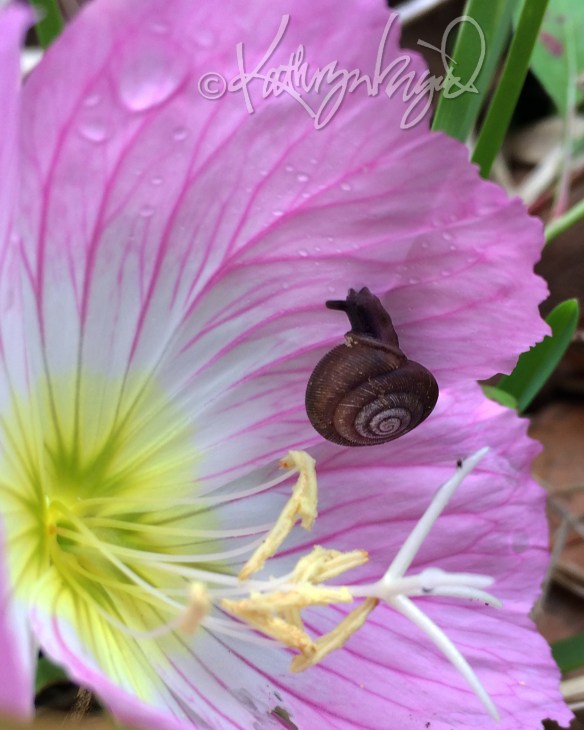
While other parts of the country and the world are thirsting desperately for even a few good rains, we in north Texas have been surprised with a gift of enough rain in the last few weeks to break the spine of a few years of our own drought.

We human sorts aren’t the only grateful living things in the event.

Wildflowers have been blooming in special profusion this year, even in my own backyard.

And other very small things seem grateful, too.Photo: A Primrose and a Prim Little Snail

Going Viral, Part 1: The Texas Sore Throat Massacre

Digital illo from a photo: Going ViralI’m sorry if I breathed on you. I was unknowingly the “I” of the storm. Patient Zero. One hand on the door knob; ten thousand infected. The maker of monsters, incubator for incubi. Thankfully, I have not yet come across a single one of my hundreds and thousands of contacts throughout this winter who was evidently poisoned into illness through contact with me. I never had any of the usual indicators of being contagious during the whole time I had my various and numerous waves of feeling lousy: no fever, no evidence of strange-colored, pungent crud emerging from anywhere in or on my person…unless you count the slightly hallucinatory character of my thoughts in their natural state. My doctors, when I finally saw them, didn’t seem to think I had been particularly dangerous.

So I wasn’t quarantined. I didn’t get hermetically sealed in a makeshift NASA bubble-style ICU. I didn’t even get quite miserable enough to go to the doctor with my complaints until about ten days ago, despite having felt uncharacteristically unwell so many times through the winter, when I generally manage to go the whole year without suffering more than, at most, one cold. I just dragged myself around with a wan little, pasted-on smile.

But here’s the thing: that’s how Bad Stuff can get passed around. Not every little germy critter that sneaks its way into our bodies, even in this very knowledgeable, clever day and age, is necessarily that easy to spot, let alone to treat. Just because modern medicine can recognize so many more diseases and injuries and conditions than previous generations knew doesn’t mean that every medically trained person everywhere would recognize even the majority of them quickly and easily, never mind how unlikely any of us commoners are to notice and understand them ourselves. So for all I know, while I thought I was being the appropriate combination of careful for others’ safety and stoically dedicated to keeping up my own commitments during the whole fun winter, I might as well have been opening the door to unleash Pandora’s Pandemic. I might have been Typhoid Mary the Second.

Let me be clear about a couple of other things, too, though.

First, I grew up thinking that the nickname of Mary Mallon was as good an epithet for a vile and deliberate criminal mastermind as any. But in more recent years I’ve had reason to revisit that idea and wonder if she mightn’t possibly have been as much victim as villain, after all. The current political climate of preferring divisive self-righteousness and sniffy dudgeon on all sides of any issue about all of the evils perpetrated, always, by Them, not Us, makes it remarkably hard to establish and enforce any policies that do any genuinely positive things to make societal problems any better—poverty, education and healthcare being always top of the list. They’re always somebody else’s fault and everyone else’s problem. I can easily imagine a modern plague getting the better of this entire country as much because we refuse to cooperate with each other and pay attention to some basic survival instincts and practicalities as because anything were especially virulent or unusual.

If we refuse to converse and cooperate, we have no one to blame but our own desire not to be subservient to any greater good. The law of unintended consequences visits its ugly repercussions on us all at times, and most of all when we are busy wishing everybody who isn’t in our happy little 100%-shared-view groups would just stay quiet and out of the way.

Reality works quite differently, as history should have taught us all long ago. If, for example, (a) we don’t provide health care for the indigent/impecunious and (b) they become ill but must find some way to pay for health care, then (c) those able to do so will continue to work when ill. They have no other clear way to pay bills, feed families, and get tasks done than to do the work themselves as always. If (d) the only kinds of work that marginalized populations tend to be able to get are in servitude, then (e) their work will most often be in service work like hourly hire positions as housekeepers, janitors, maintenance workers, food service employees, day laborers, child care workers, and personal health assistants in private homes, nursing care or rehab facilities, and hospitals.

That’s right: if we don’t take care of the poor unless they pay, they will continue to work as long as they can drag themselves there, and the work they do is often both the lowest paid—where, as a bonus, it takes longer to earn enough, while sick, for their own care—and the highest social contact-oriented in all of society. If we want to be truly Dickensian, we can repeat the Typhoid Mary solution as well and imprison the ill to keep them from working; at least in that instance, we can make the choice to either care for that new prisoner or risk his/her infecting the prison population, which again in Dickensian terms could “decrease the surplus population,” but of course containment will remain an ever-growing issue, if the prisoners are dying in droves and the staff either succumb or, more likely, refuse to return.

Meanwhile, let’s just imagine, as some folk are inclined to do, that the majority of the poor anywhere are illegal immigrants and layabouts who only take jobs away from natural-born citizens and live as criminals by choice. We certainly wouldn’t want to either train and motivate any natural-born citizens who are layabouts to do any of these highly desirable jobs that have been stolen from them or, perish the thought!, educate and give incentive to both groups. Thankfully, we have a whole crew of people in many sectors of the political realm working hard to see that there’s plenty of money allocated to such progressive and humane and productive activities as developing larger PACs and private donation coffers to better control election results, and keeping business strong in the blessed US economy by letting larger and larger mega-corporations swallow up dwindling independents until they resemble nothing so much as a snake that has snacked on a water buffalo. I know that I, for one, am greatly relieved that we are nationally so opposed to monopolies, or I might mistakenly think they were popping up by the dozens. It’s also comforting that the same herd of politicos of all stripes have among their numbers plenty who think that the best way to finance such boons to humanity is to cut budget waste in areas like state funded universities, social services, and other massive boondoggles like universal health care. Clearly, educating, mediating, and healing larger groups of people to interact and live in good health, productivity, and harmony is an evil conspiracy.

You could say that feeling unwell makes me, unlike the hardworking poor, prone to lying around and getting irritable, misanthropic, pessimistic, snarky, and critical of the state of this so-called Union. I certainly won’t argue if you accuse me of thinking we’re a lot of selfish, under-informed, entitled rich people and a counterbalance of too many people who can’t support themselves and their families with the paltry resources left for them after the top feeders have had their fill. If, as some social commentators and economists and even scientists claim, the concept of surplus population and limited resources is a fallacious or at least far from inevitable construct, since we theoretically have the brain power to make what already exists on this planet into resources and better distribute them, then I can think of few better, more immediate, or more visible places than health care, civility, and education in which to begin this process. And I can’t think of any valid excuse for anyone who believes in the value of a single human being not believing in the potential value of each human being and thinking all worthy of the effort. Good citizenship and care for others should not be a partisan Issue.

Knowing thus full well that we’re all capable of being stupid, lazy, entitled, paranoid, or just plain bad (just read or listen to the news, if you’ve somehow forgotten this), I still don’t think we should just assume that anyone is any or all of those. Isn’t it better to encourage and defend kindness, generosity, trust, humility, respect for differences, and joy in our commonalities?

Even I, at my most crabby old complainer moments, think it worth a try to do better. To be better. I would hope others might think me worth the effort.

DIY Survivor

Do or Die

The ancient Archaeopteryx had never turned a wing

Or lifted her substantial claws to help with anything;

She wielded her impressive bill, but only to express

Disdain for any task but what advanced her happiness

Exclusively, for she believed herself the focal point

Of all existence on the earth; her nose got out of joint

When anyone would question her supremacy as Queen.

You’ll notice, now, that she’s extinct, and never since been seen.Digital illo: The Archaeopteryx's Mistake

Full Medical Coverage

I told you that I’ve had medical stuff on my mind lately. One of the reasons is that, among my collection of Adjunct Sisters (you didn’t know that was a Thing, did you? It is, and a very important one at that.), one member is battling a disease I’d never even heard of until her doctors diagnosed her: Neuromyelitis Optica (NMO) or Devic’s Disease. Not funny, as you can tell if you look at the link. But the lady I know who is learning firsthand what that ugly condition is, she is funny. She’s fabulous in so many ways, and not least of them is her wildly adorable sense of humor, one of the many characteristics that has endeared her to our family since she joined the gang years ago as a friend and sometimes college-roommate of both of my younger sisters and laughed and loved her way into the whole family’s hearts.

So when I send her love and “advice,” since I am ill (no pun intended)-equipped to offer her anything of medical value, I try to give her, if not a belly laugh, at least a little smirk of silliness to help distract her way through the tough times. Today’s topic was medical masks and the myriad purposes they can serve. Perhaps those of you undergoing health challenges of your own can benefit from this utterly useless but well-meant meandering as well. And I do mean well. Forthwith! Here’s what I sent her today:

I think you know that Sister #3 is sharing your email updates with the other three of your sisters here, and I hope that you don’t mind terribly, because it’s so important for all of us to know what’s up with you and what we can be studying on your behalf and all of that. And of course, keeping you extra tightly in our arms, interwebbian though they may be. At least the latter makes us sound like friendly aliens, which of course is exactly what we are. You’ve known that all along.

Rituxan [the treatment proposed by her medical care team], as I understand it, is a chemotherapeutic drug. With that, I would guess it means that the intent is to kill off targeted invasive tissue, like those lesions of yours. I would also assume, especially with the liver toxicity warnings, that it means your immune system will be working extra-extra hard while you’re being treated, so I say, don’t be shy about watching out particularly vigilantly for your own health and protection during all of this time, whether it’s fending off a “mild” cold or dealing with any infusion side effects. Go ahead and take any old extreme prophylactic measure if your mood or the occasion warrants it.

Those who love you can and will support you in this adventure of yours if you let them learn how to be truly on your team by keeping them as informed as they can handle; I’m betting that those who do care about you deeply know or guess much more than they let on both that this is serious business and that it’s very stressful for you. No doubt everyone has frustrations and impatience that are surely exacerbated by seeing what stress you’re under. I can’t imagine there are too many parents, for example, no matter what the relationship with their kids, who don’t get a little extra crazy when they think their child is under attack and they can’t do that much about it.

As for protection, I can’t speak to the medicinal side of it, but I can offer my two (or two hundred) cents about some practical/tactical issues for protecting yourself from a few flying germs, and possibly, from a few unwanted attentions during the treatment and recovery process. Or how to get more attention, if that’s what you need.

In one word: masks. Medical masks aren’t as commonly used in the US as they maybe should be when what’s floating around us in our breathing air—whether of our making or someone else’s—poses a danger. Asia has been much more forward-thinking on this particular medical front, having had a couple of national crises with flus and other public health problems that resulted in some remarkably fashionable fashion shows, cultural events, and general public expressions of the usefulness of the mask.

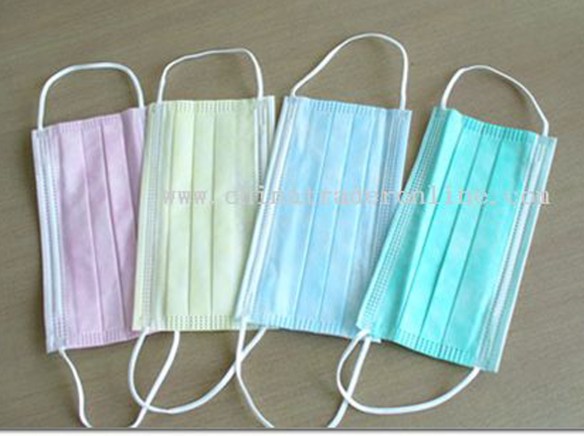
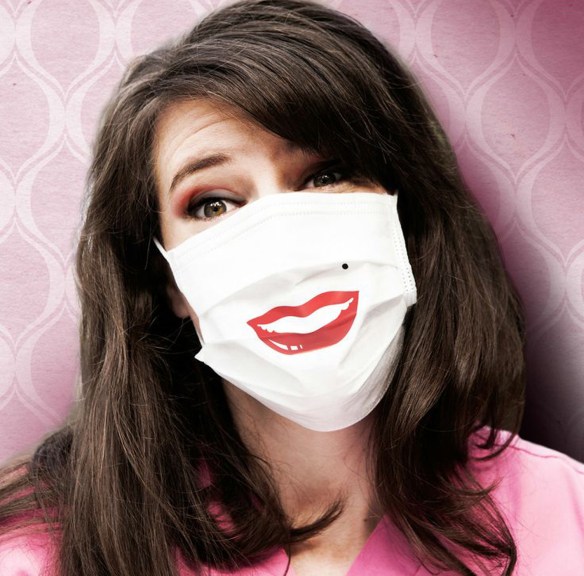
A quick web search offers a wide range of options in this regard, and you may choose to consider using some of them either merely while hanging around in the clinic or hospital where you get your doses of Rituxan or as ways to visibly express your current state of being so you don’t have to make constant update reports to everybody when you’re already tired.Photo: Jill's New Wardrobe, No. 1 If you want to go classic, there’s always the familiar rectangular style but with the slight upgrade of some dainty pastel colors for a little fashion flair. The shape and texture tell me that if you want to go classic but super cheap you could always find some vintage style maxi pads and tie them on around your head. This would, of course, have the bonus effect of startling others into leaving you alone.Photo: Jill's New Wardrobe, No. 2

For the classic style with, well, more style, you can find lots of fashion prints online, or you could do as has many a stylish stagecoach robber or gang member of yore, and use your standard medical mask with a bandanna or scarf artfully covering it. This could provide an added benefit in making the nice people at the admitting desk respect you more, and possibly feel compelled to offer you a sudden, steep discount on your treatment, although eventually this latter effect could be hard to defend in court if the security cameras in the facility happen to show you in a poor light.Photo: Jill's New Wardrobe, No. 3

Perhaps a more glamorous treatment of the above effect, and with good germ-averse coverage as well, this little combo can instantly turn you into the health-conscious chef/superspy you’ve always dreamt you could be.Photo: Jill's New Wardrobe, No. 4

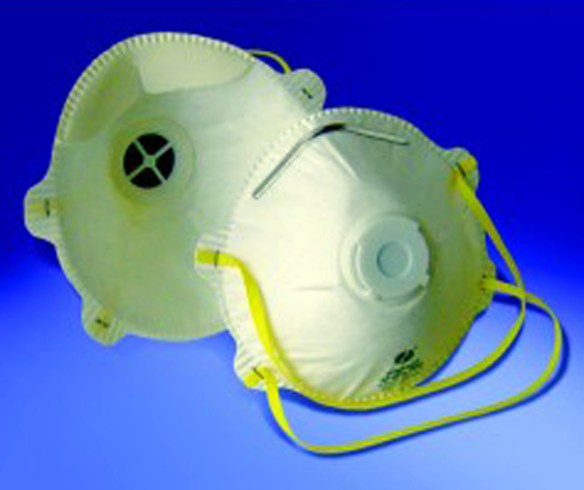
While designed to wear one at a time, these babies have the obvious secondary option of being combined as a uniquely-you bra or swimsuit after you’ve recovered from your illness, and for those of the younger set, the advantage of those screw-top central covers for infant-nursing convenience. Or a hot new pole-dancing uniform, should that be preferred.Photo: Jill's New Wardrobe, No. 5

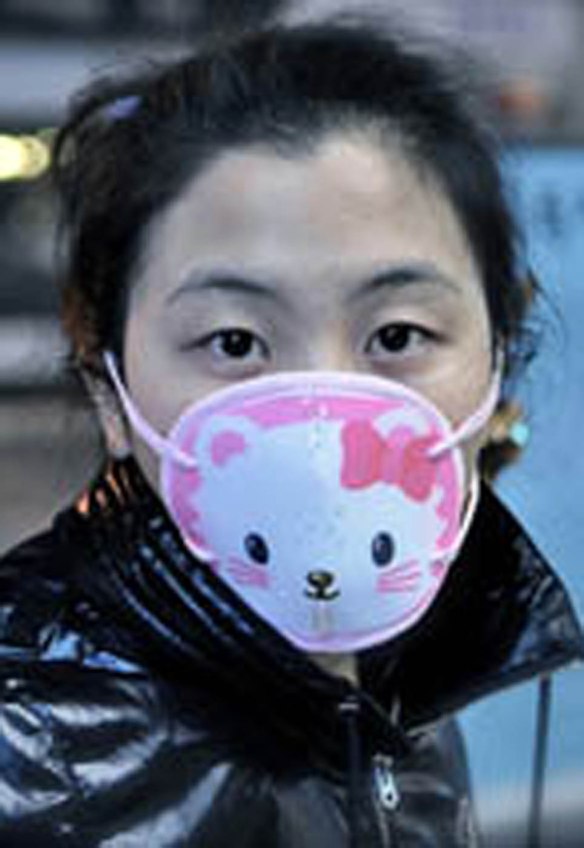
Sometimes just affecting a more cuddly mien (or meow) can help one to feel more cuddly. A touch of ‘kawaii,’ that delicate cuteness our Japanese friends treasure so deeply, could be just the solution. Hello Kitty is a good choice, although I personally would endorse the Hello Miss Kitty line in deference to my favorite writer-artist.Photo: Jill's New Wardrobe, No. 6

There are lots of other cute options out there if you like the idea of others comforting you with a gentle pat on the head or scratch behind the ears, or perhaps a handful of immunity-boosting kibble.Photo: Jill's New Wardrobe, No. 7

When you’re finding it hard to smile and put on a show of concern for your normal beauty regime, you can opt for the Marilyn look. Whether you choose Monroe or Manson is up to your taste and your mood, naturally.Photo: Jill's New Wardrobe, No. 8

Other expressions may be more appropriate for some occasions than others. I like the bronze hat with which this is shown, as you can use it to bonk people over the head smartly if they should refuse to respect your feelings with appropriate alacrity. An alternative version of the hat would of course be one like the legendary bowler sported by Oddjob, who knew how to handle disrespect very directly and succinctly as well.Photo: Jill's New Wardrobe, No. 9

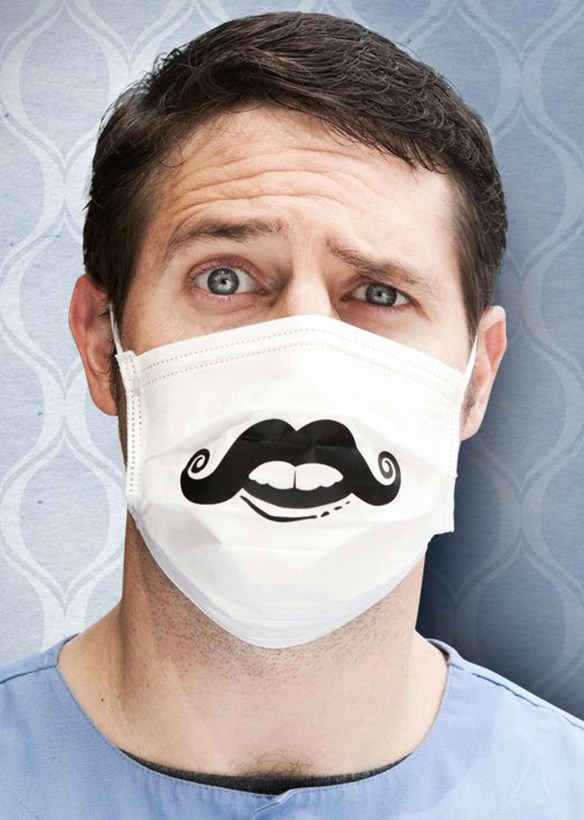
Perhaps a little facial hair would serve to embolden you or divert attention from your sense of feminine vulnerability? Here’s your mask!Photo: Jill's New Wardrobe, No. 10

For those who might prefer to project other ideas than mere germicidal ones, there are numerous elegant choices on the market. Or the black market, depending on how other those ideas may be. The shaven head is not only a good-looking addition to this particular mask format but also offers an excellent location for attaching a temporary thought balloon if you have something on your mind but aren’t sure just how to say it aloud.Photo: Jill's New Wardrobe, No. 11

Just want to embody a fierce opponent to your symptoms? Or to the nosy parkers who insist on offering medical advice like mine? A good wild beastie muzzle is sure to get you fired up and ready for battle.Photo: Jill's New Wardrobe 13

And you should never underestimate the versatility and expressive power of a full face mask, if you want nothing more than to keep your real facial expressions to yourself, along with the veil of separation from the viral vicissitudes of the world. A traditional Plague Doctor mask can be ideal for some persons, but there are numerous other beautiful variants out there. Photo: Jill's New Wardrobe, No. 12

This one comes complete with eye patch in addition to the full-face coverage, a plus for optical injury and illness care, and remarkably self-explanatory facial presentation that says, “Yes, I’m feeling Fabulous, thank you, and I do so appreciate your contribution to the beauty of my day today!”

Well, that’s enough high-powered medical advice for today. If I can ever be of actual support, I hope you’ll let me know, but in the meantime, I wish you amazingly speedy and thorough healing, and lots of love and laughter along the way. All of you!

I Can’t Help It When I’m Speechless with Happiness

Other than my general adherence to food posts on Tuesday—for no particular reason on my part other than my constant love of eating—I don’t often go with the popular day of the week trends or memes or whatever they are. But what makes me happy can render even the loquacious-unto-verbose me speechless, so what better to do than shut up and hand it over with no further fuss. My gift to you, therefore: a [nearly] Wordless Wednesday. The roadside view on Saturday was simply too fabulous not to be shared.Photo montage: Longhorn Beauty Pageant

Foodie Tuesday: Zombies, & an Old Lady with Good Bones

Zombies are still surprisingly popular these days, considering their poor (or, at best, wildly over-eager) social skills. The current crop of them was, impressively, a resurrection of many previous generations’ versions of the species, which means that they are not just returned from the dead, but returned from being returned from being dead. Or something like that.

In my kitchen, I am mostly nicer than a zombie-master, intending only good things to happen via my culinary experiments. But no matter how kindly my purposes, sometimes I am an unintentional bringer-of-doom. Many are my fellows, I’m sure, but perhaps fewer are those who will admit to stumbling around the cooktop in their experimental work, lest they be accused of attempted poisoning or any such mean-spirited rubbish. Sometimes I’m even dumb enough to try to revive the dish that had already failed, which I suppose makes me guilty of the same sort of resurrectionist hubris that has brought about many a modern-day pop-cultural scene of zombie-apocalyptic grocery shopping. At least I don’t attempt to feed the second variation of my experiments to anybody else before carefully being my own lab volunteer. But I hate to be wasteful.

Photo: Who's been Messing with My Cooktop?!

*”WHO’S BEEN MESSING WITH MY COOKTOP?!” roared the Giant. There was silence in the wreckage, for the Zombies had eaten the Cook—along with her only semi-successful Spätzle as a side dish, because her tiny brains alone were clearly not filling enough to assuage their ravenous collective hunger.

So when I made that recent jiaozi whose dumpling dough was less than perfect, I couldn’t resist trying to rescue the remaining dough. It was, honestly, closely based on other cooks’ supposedly successful versions of gluten-free pasta doughs, so I figured my inability to achieve a particularly shining success with the same wrapper recipe was more a matter of practice or tiny ingredient tweaks than anything more serious, and sought to revise the dough just enough to make it noodle-worthy. An added egg did, in fact, help it to have much more of the texture and malleability that I’d want in a pasta dough, although it was still just loose enough that unless I added further flour I couldn’t hope to roll it out in thin sheets. So I thought about thicker noodle variants and opted to give this dough a try as Spätzle, since those tiny schwäbische Schätze (southern German gems) aren’t rolled out before cooking. Indeed, the dough went through my grater rather handily (if extremely messily*), cooked at a good speed in my boiling broth, and floated up as light, petite, pale golden dumplings, just as I’d hoped.

They even tasted quite lovely, straight out of the steaming pot and doused liberally with browned butter and a sprinkling of grated cheese (I used Parmigiano-Reggiano for its added nuttiness). But tasting them ahead of time like this, as well-meant a prophylactic measure as it was, did mean that I would have to reheat the mess yet once more, and alas, even the most gently handled of pastas simply couldn’t survive another round of stasis-and-revivification. Sometimes the dead remain dead. The last reheating left me with buttered paste rather than pasta, and the only effect of adding the egg to the dough was, ultimately, to leave me with egg on my face. Ah, well. Of such mini-disasters are legends, or at least jokes, made. The joke’s on me.

Photo: Tasted Okay at First

Thankfully, the Cook had inadvertently saved the world by cooking dumplings that tasted okay at first but quickly became unpleasantly cement-like in the Zombies’ remaining innards and turned them all into stony statues of their *former* Former Selves. And so the Apocalypse was averted, and simultaneously, a glorious, artful monument in statuary made to commemorate the moment of this, the world’s rescue. You’re welcome.

Don’t get me wrong: being an old enough geezer (“lady” might be a stretch) to want to get the most out of my grocery money and cooking efforts isn’t always a bad thing. I’m ancient and experienced enough, in fact, to know that I should occasionally admit defeat and throw out the last of that failed dough. Chalk it up to been there, tried that wisdom.

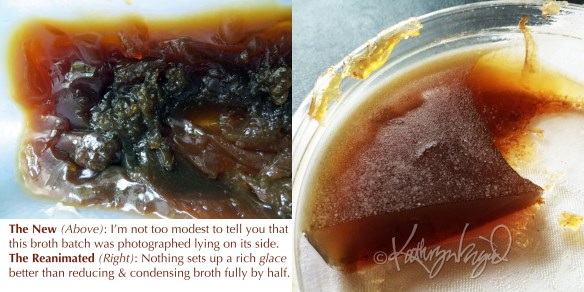
Other forms of wisdom are well worth the earning in the kitchen, too. Like, when there’s a fresh batch of bone broth cooking, a really, really fabulous batch made with my usual ingredients plus both chicken feet and beef feet that did indeed come out of the slow cooker as rich, glossy, and jellied as the most beautiful classic aspic of my dreams—but there’s still a pint of the last batch in the fridge, rather than bolt or toss the latter, I simmer it down and get an equally gorgeous reduction for sauce base and soup enhancement. I added some dry sherry before cooking it down. Just for fun. Oh, and a little sweetness. This little tub of wondrous demi-glace is good enough to melt for a beautiful finishing sauce for anything savory that isn’t vegetarian, just as it is.

Photo montage: The Broth Brothers

But another old-lady bit of kitchen witchery that more people should know and respect nowadays is that, while minimal cooking of vegetables can preserve more of their original nutrients, not to mention textures and colors, than boiling them to mush in the fashion of days long past—or as though they’d started cooking back then—softer veg is not nasty. Gentle handling is the difference. Some good Southern cooks in the US have not entirely forgotten and forsworn the low-and-slow glories of vegetables simmered for ages in bacon grease or butter, and any culture that values its stews, dutch-oven artistry, and slow cooker magic, for example, retains something of this truth.Photo: The Softer Side of Vegetables

So for a recent lunch with a couple of friends, I opted to carry on these traditions at both levels, piling up a batch of bite-sized cauliflower, carrots, and celery in my trusty small Pyrex covered dish, put a knob of browned butter and a quarter-cup of said demi-glace, still jellied, on top, and steamed the lot gradually in the microwave into lightly softened submission. For the finish, I stirred the vegetables, topped them with a piquant garnish “salad” I’d made earlier and refrigerated, a mix of preserved and chopped green olives, pimientos, black olives, and mushrooms. I added a generous sprinkle of Parmesan shreds, and let the dish heat one last bit before serving. Old-fashioned vegetable happiness. With a deep undercurrent of old-fashioned cooking from a rather old-fashioned person.Photo: Old Fashioned Covered Dish

Hordes of Hoards

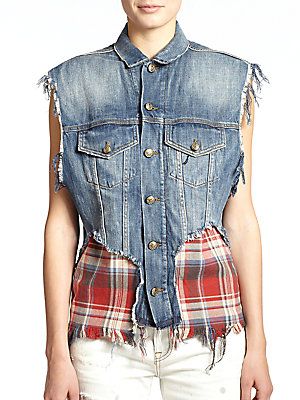
I just had some heartwarming reminders of how wealthy I am and how rich most of us are, without even thinking about it much of the time. First, there was this odd item I came across on a fashion/shopping site that startled me. “R13 Denim & Plaid Combo Vest.”

Saks Fifth Avenue Photo: R13 Denim & Plaid Combo Vest

Photo from Saks Fifth Avenue online: R13 Denim & Plaid Combo Vest.

Available at Saks Fifth Avenue for $695. Yes. Now, imagine this: one could buy a denim shirt + a plaid one at the local thrift store for a combined hundredth of the price (yes, it can still be done, with relatively little hunting), tear off the sleeves and lower portions of both, layer them together, and give the remaining $680+ to the poor, many of whom can’t afford a single one of the thrift store shirts. If a few people who wanted to buy the SFA garment did the latter instead of, or even in addition to, buying the Saks combo for themselves, what might the world look like then? Better dressed at more price points, I’ll wager. My personal taste would argue for not doing any of the ripping and faux-aging of clothes, as I live a life wherein my clothes get naturally beat up more than quickly enough for my taste, but that’s irrelevant to this train of thought.

Am I declaring Saks Fifth Avenue or people who shop there terrible? Certainly not. For one thing, I know plenty of people of moderate-to-massive wealth who are incredibly thoughtful and generous in their philanthropy, regardless of how they spend on themselves. Today I have been wearing a brand name denim dress, still in pristine condition, that I bought at one of the aforementioned thrift stores for $5 USD several years ago because someone well-to-do enough to own and no longer need it donated it while it was still in great shape for further use. Even major businesses, those often characterized as heartless, soulless, and solely dollar driven, can be usefully attentive to the needs of the larger world at times, and if they didn’t make those large amounts of money in the first place, how would they give away any such amounts of largesse?

Am I ranting against materialism because I despise wealth or hate acquisitive people? Far from it. If you’ve been around this blog for more than two minutes, you know I’m a highly dedicated magpie myself, loving Things and Stuff, and sometimes, the shinier and more pointlessly beautiful the better. Nature herself is great at promoting such things, and if you can open your eyes and mind to the view, even the urban ‘wasteland’ or the middle of a massive landfill can offer amazing perspectives on color, texture, pattern, and any number of other sensory attractions that comprise what a person might perceive as beautiful and even useful. But why should it all be consigned to the landfill, then, or just as sadly, to hidden stashes and caches of forgotten junk in our homes and offices and storage spaces? One person’s trash, as it’s said….

On top of the commercial reminder I fell upon today, my friend Switters recently put up a couple of fantastic posts about dealing with the aftermath of getting, keeping, and trying to part with large quantities of the Stuff of life, and I was moved to revisit my own experiences of that process. His commenter Jenny’s recommendations are outstanding. I’ve done most of what she suggests myself, and with great success. Somewhere along the line I imagine I’ve posted about it here, too, but it’s never an outdated topic among us rich folk, we who have anything more than barely enough. And I have learned—most importantly, for me—that decluttering and reviewing my belongings and responsibilities is an ongoing process. I’ll never stop needing to ‘rinse and repeat‘ periodically so that the big buildup never gets overwhelming for me. My original successful foray into the practice has made every subsequent one that much easier and more desirable.

I did learn from my mother and other influential family members and friends that no matter how high the sentimental value of a Thing, it’s increased rather than diminished by use. If Mom had kept her best china and silver like untouchable trophies for Special Occasions only, I’d have been terrified of using them, and I would have missed out on innumerable events that gave them additional mnemonic value through my own experiences. So what if a plate gets chipped or a sterling spoon gets bent? That in itself may add story, character, and relevance to the object. Otherwise, it’s just taking up physical and psychic space while waiting for Specialness that might never happen. So the Venetian wine decanter here holds mouthwash right now, because it comes off of the shelf where I forget it that it even exists to occupy the bathroom counter where, if I’m honest, it’ll get seen and enjoyed much more: every morning and evening at the least.

Photo: Venetian Mouthwash Decanter

The great Venetian Mouthwash Decanter!

Being a highly visual person, while decluttering I’ve clung particularly to the strategy of documentation-before-disposition and photographed—digitally only, to avoid adding photos to the Stuff already requiring management (talk about Unintended Consequences!)—every little thing in great detail, preferably ‘in situ‘ or as I remembered loving or using it most, before parting with it. What I discovered: out of the hundreds, maybe thousands, of things I’ve given away or sold or discarded in the years since my first great household purge, I can think of literally two or three that I’ve ever subsequently missed, let alone replaced. The latter, upgraded, of course. I can barely remember any times I’ve even actually looked at those memory-jogging photos. Knowing that they’re available should I become wistful is enough. For a sentimental softie like me, that was a shocker. Definitely a lesson well worth learning.

A peripheral item that turned out to be helpful to me is my recollection of what meant a great deal to me in years past: my grandmothers were both dedicated to the idea that anything they wanted us grandkids to treasure, they gave us when they were still around to tell us the stories and help us appreciate the context, so that there was a much greater chance we’d invest equivalent interest in their beloved belongings. I don’t even still own all of those items; much as I appreciated the gifts, it was the interaction that gave them the most meaning, and so the memories are the most significant part of the package. Any of those things that were part of that kind of transaction I in turn passed along to treasured people—niece, nephews, beloved friends, neighbors, and former students who became family—with the same story attached, and my own layer of the experience added on. The delight with which these are received is the center of the gift, and makes it irrelevant if they are, in turn, passed on to yet other dear ones, because the items become connectors of history and community that far surpass the inherent value of any of the objects.

That was the bottom line, for me. The realization that what I have loved most in any object is its emotional content and its connection to important people and events in my life makes the keeping of the objects less necessary than the honoring of the love they’ve contained. I will continue to buy, accept, and bear the caretaker burdens of Things. But I think it’s safe to say that the collection will continue to be more sharply curated, limited, and specialized with the passing of time and changes in my values and occupations, too. I have found that some of the beauty in objects arises from their not having cost much or taken a lot of care over the years. I love having my drawing and writing tools organized and readily available, but I don’t much care to store them in lead crystal vases and leather-bound boxes. A clean soup tin does very nicely. And in a pleasing nod to magpie-ism, tin cans are shiny. For the double win.

Photo: Shiny Objects Holding Other Objects

Shiny objects holding other objects. Bonus points.

Party Crashing Parson

At some point, romance is the catalyst of many a fall from grace. The higher the starting point, the more spectacular the tumble can be. Of course, some people on this goofy planet are just constitutionally unable to be graceful, no matter what the circumstances. Me, for example. But being sympathetic doesn’t mean I’ll let anyone else off the hook over it. Good material for silly stories don’t grow on trees, you know.Digital illo + text: Slippery Slope