Reverence for Beauty

Photo: Blissful NothingnessThe whole of nature has its ways of reflecting perfection, when we take that momentary pause in which we can step back to appreciate such things. Even, as I posted yesterday, in death there is room for new life; out of captivity, freedom. In silence, I come to better appreciate the small and unobtrusive ways, not just the large, noticeable ones, in which sound enriches my world: water burbling down a ditch, breeze-stirred grasses, bees that sing soft love songs to their golden pollen treasures. In stillness, I relish each breath and every tentative movement as the wind kicks up a little and sets the empty park swings in motion again. Out of wintry darkness and overcast days, I more consciously embrace a bright afternoon and its combed, silky clouds.

In a moment of quiet reverence, I, too, can reflect such perfection better and am made more whole and beautiful.Photo: A Brilliant Day

Wake, Awake!

Today, a nearly perfect day of blue and gold and bracing new-leafed green, demanded that it be enjoyed from outside the house. We, my darling chauffeur-companion-partner and I, obeyed. We went to the park.Photo: Pollinators at Work

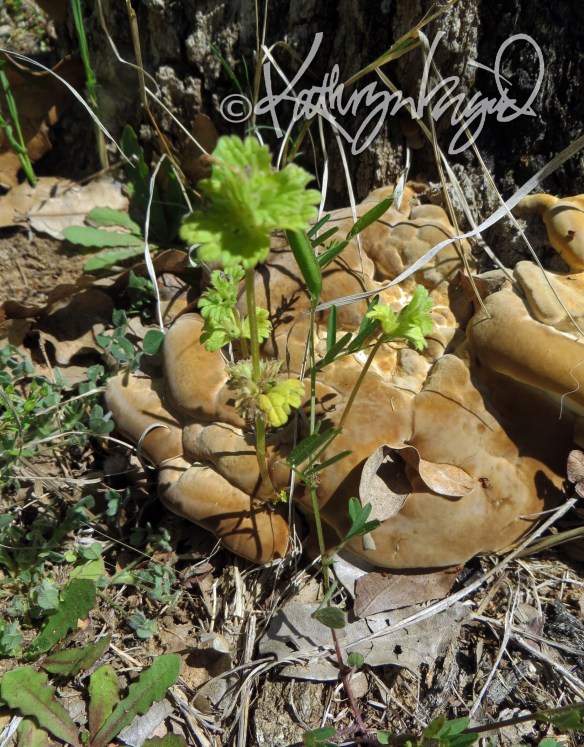
Being in a massive park, but one zoned as a number of separate and more intimate places  devoted to strolling, picnics, camping, horseback riding, fishing, and the like, we found no shortage of pleasant places to revel in the marvels of a sweet north Texas spring day. Tiny, starlike rain lilies leaping up from the sleepy clay shine like miniature suns but are even more sweetly pretty, somehow, when they’re nestling little pollinator insects. The swell of tree fungus at the base of a stump is pierced by the skyward plunge of a dainty but strong sprout of new growth from the cut tree.Photo: Sprout & Fungus

And in the short, wooded path at the park’s entrance, where the last years’ drought has compromised the forested patch of this little zone to the point where a careless spark or a small lightning strike blackened the undergrowth and seared the feet of the pines, the leaf-mould blanketing the path is whispering with scurrying insects. Dragonflies zip, crickets hum, and a flurry of minute emerald beetles flashes across the shadows into the warm sunlight on the piney dirt in search of other green things to dedicate to the extension of their fleeting little lives.Photo: Shiny Green

Renewal and refreshment are all around at this time of year, even in those parts of the hemisphere not so visibly on the brink of bloom. The very knowledge that the season of change and growth is near gives us a little nudge, when we let it, to remember that we, too, might be capable of change and growth. We, too, might bloom, with just a touch of faith and effort.

No Greater Gift

Digital illo: The Greatest GiftLove is the answer. Not romance, not lust, not preferential treatment; love. Real, tangible, spoken and expressed with clockwork regularity and with kindness and clarity. The sort of love that fills your car’s gas tank before you leave for work and gives you snow tires for an anniversary gift, that calls Tech Support and sits around on hold for forty minutes before the ninety-minute-long session of troubleshooting to fix your confounded computer’s latest case of the hiccups. The sort of love that silently reaches over and holds your hand when there are no possible words for the occasion, good or bad.

Love is forgetful and fretful, persistent to the point of irritating, deaf in one ear and hard of hearing in the other, and demands, without realizing it, a high percentage of return—and all of this is absolutely nothing in exchange for the comfort, companionship, reverence, and acceptance received before any of these minor shortcomings are called into account. This kind of love transcends human norms so far that I can only assume it derives from some larger, more stable and powerful force than our own desires and whims. Love is what makes me sorrowful for the sorrows of a kindred soul, joyful in her joys, and comforted by a deep sense of her presence when she’s absent.

Love is, too, the act of sending a hand-written note, in this age of technology, that says “I’m thinking of you” and carries with it great personal weight in and between the lines. My second mother, the one I acquired so fortuitously and blessedly through marrying her son, sent just such a note recently. It wasn’t long. It didn’t cover a lot of ground. It said little that she doesn’t say to us in our regular phone conversations. But it was so sweet, so heartfelt and unexpected, that it brought happy tears to my eyes and I was flooded with a renewed sense of how deeply glad I am to be immersed in such love. And it reminded me that I will be all the more deeply blessed if I can find ways to pass along such love, no matter how small or simple those ways might seem at the time, to all of the other people I possibly can, for as long as I possibly can. Amazing how these things can multiply. That, of course, is one of the reasons that love, in all its forms, is such a powerful gift.Digital illo: The Amazing Multiplier

Cowboy Comforts

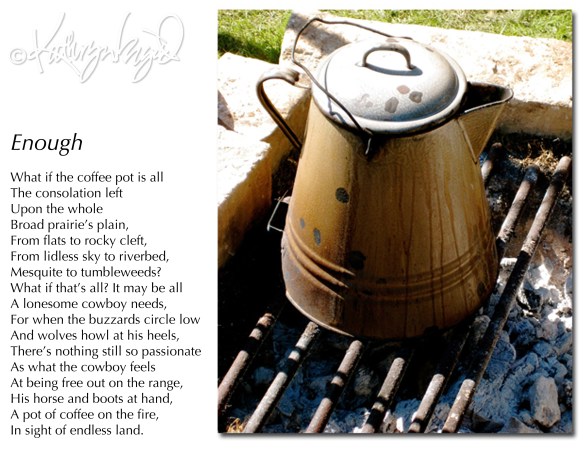
Time for another dose of Texas-inspired meditation. Because  I live in Texas. And I got to meditatin’. And I have been known to think—as American Thanksgiving Day approached, for example, but pretty much whenever it comes to me too—that one of the things I am perpetually impressed by and immensely grateful for is the soulful dedication of those people who do all of the difficult and endless and mainly unsung tasks, at often invisible jobs, to make life bearable and beautiful for the rest of us.Photo + text: Cowboy Poetry

Photo + text: Enough

It would be an exaggeration to claim that My Heroes have Always been Cowboys, but I do indeed respect the role they play in this pantheon of working-class wonders whose gifts are so much-needed and so often unheralded by the rest of us. I thank you sincerely, all of you independent gas station owners, ditch diggers, restaurant servers, car wash detailers, dry cleaning operators, factory workers, day laborers, and all of your committed fellow-men and women who carry us all on your backs.

Just a Second

Photo: Newness 1

What do you see? It’s not a trick question, only an invitation to look for the small and temporary delights right at hand. Newness and beauty are present all around us.

For all that we think of lives as finite and fleeting and time, constantly racing by, I don’t think we take it so seriously when we tell someone who’s waiting for us, “just a second.” After all, so much can happen in a second or less, yes, evening in a millisecond, as we can now measure it. Races are won and lost by the tiniest increments of time. On one side of the little mark signifying a clock’s second-long increments is the Now, and before the very thought of it is completed, Now already resides on the other side of the mark.

Photo: Newness 2

Dead stems of the past give birth to lively leaflets for the season to come…

No matter how protracted the process leading up to it, one nanosecond is the last one I will spend alive, and the next one will be the first one in which I’m dead. The thought has no moral value one way or another, and not much emotional value either, since as soon as it is likely to seem fully important to me in the most urgent of terms, it’ll be all done.

The only real value for me, in practical terms, is if I invest enough thought in this very moment of being still alive to commit to being wide awake as well: deeply present, and grateful for all of the good that is in my life at every piece of time I’m granted along the way. Whether it’s thanks to honoring spiritual values in the practice of mindfulness or it’s because I’m keenly aware of those lives that, however brightly they’ve burned, were far too short, it matters little unless I take advantage of the perspective these afford me and live my own life more richly because of it. Regardless of how I choose to spend this magnificent currency of breath and sentience and health and hope, even if it’s on sitting on a park bench and holding hands with my beloved (one of the highest and best things I know how to do, to be sure), making a conscious and committed choice is well worth the effort, and following through, all the better.

Just now, the value of mindful living in the present is particularly lovely because we are on the cusp of spring here in north Texas. And if you’ve read even a few of my locale-related posts, you can appreciate just how fleeting and tenuous is the very idea of springtime and how ephemeral its joys. I would be a fool to be so encumbered by longing for things past or worrying about things yet to come that I don’t pause, however briefly, to savor the wonder of what these treasured nano-joys can bring to my existence.

Photo: Newness 3

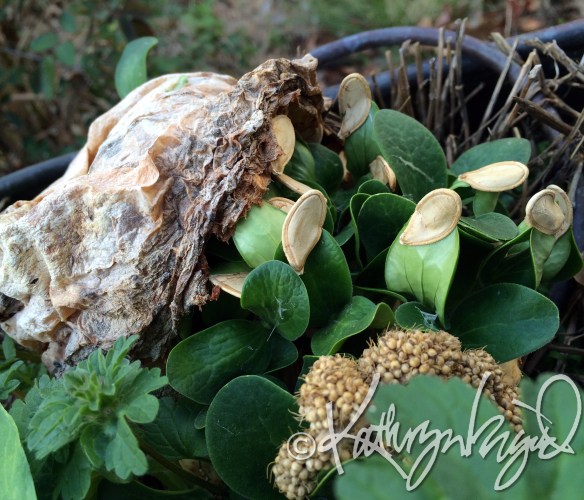
Out of death, life. The cheery pumpkins and gourds brightening the fading allure of the autumn garden have in turn rotted, dried, and decayed—but from their secretive hearts, the burst of seed and greenery returns to begin it all again…

Foodie Tuesday: The Not-So-Great Pretender

Unskilled as I am at so many culinary things, my well-intentioned fakery in attempting to prepare favorite treats from various delicious cuisines is not only highly unlikely to ever be quite accurate in its representation of the real deal but also just plain goofy and messy. I apologize to any purists out there, but I’m not above stealing ideas from everywhere I’ve ever found foods to love. And often, putting my own twisted twist on them, too. Perfect accuracy may, after all, be slightly overrated.Photo: Korean BBQ

After a recent delicious trip to a Korean BBQ house here in north Texas, I got good and hungry for a host of tasty Asian-inspired treats I hadn’t had in a while. I particularly wanted to revisit a recipe I hadn’t made by hand in many, many years: Jiaozi, or potstickers. And of course, I wandered off on my usual tangents. Making the wrapper dough wasn’t my best skill even when I was supervised by my teachers in my Chinese language, culture, and cuisine workshop back in college, and I had it in mind to attempt a gluten-free version on top of that, this time around, so instead of getting a nicely malleable dough in which to wrap the filling and practice my dumpling pleats—the one part of the wrapping that I was reasonably good at doing, thanks to Mom’s early training of me in the arts of tender lefse dough handling and pie crust edge crimping—I got falling-apart dough that was more easily squeezed around the filling in highly abstract, squishy-squashy little dumplings.

Pretty, they were not. I will attempt to revise the dough with the addition of egg binder next time and report back. But I got my poor little raggedy jiaozi to hold together just enough to fry and steam them, and the ingredients were at least agreeable enough to taste passable in the event, so I will keep trying. Meanwhile, I give you these little wounded stegosaurs:Photo: The Homeliest Jiaozi

The Homeliest Jiaozi this Side of the Yangtze

Make jiaozi wrapper dough: 3 cups gluten-free all-purpose flour + 1/4 tsp salt + 1 1/4 cups cold water [+ 1 egg, probably, for future reference]. Knead well into a nice elastic dough, wrap and refrigerate to rest for a minimum of 30 minutes.

Make filling: cook 1/2-1 cup minced meat (I used lamb this time) with 1 T minced fresh ginger, 1 tsp finely grated lemon/lime zest, 1 tsp minced fresh jalapeño, 1 handful sugar snap peas sliced crosswise into small rings, 1/1 rib celery (minced), 1 tsp minced shallots, good splashes of Tamari, rice vinegar, and dry Sherry, and a small splash of toasted sesame oil. Drain and cool the mixture slightly.

Divide the wrapper dough into 60 pieces, starting work with 1/4 of it at a time and keeping the rest chilled until ready to prepare dumplings. Roll each little piece into a ball and then into a flat circle, about 3″ in diameter. Put a small spoonful of meat filling on the wrapper, pull the sides into a half-moon shape around it, and gently pleat the curved edge, sealing it with water, egg wash, and/or a fork’s tines. Or, if your dough behaves like mine did, pull it up around the filling and squeeze the sorry-looking little objects into submission.

Pour a little cooking oil (I used avocado) into a large, flat pan, place the dumplings curved side up in the oil like little half-moon sailboats with just a little space between them, and put the pan on medium heat. As the bottoms of the jiaozi begin to brown, pour a little broth or water over them (just about 1/4″ or so), cover the pan, and let them steam gently for a few minutes to firm up, watching that the heat doesn’t get too high, or the liquid will cook away completely or break the dumplings into mush. At this point, the jiaozi can be refrigerated in a covered dish to be finished later. I put mine in a microwave-proof small casserole that still allowed them to sit on their flat bases in one layer, pouring the remaining steaming liquid over the top, so that I could finish steaming them and, if needed, crisping their little bases, when I was about to serve them for lunch the next day. Or you can, of course, keep on with the steaming and crisping for immediate eating.

Serve them hot, with a saucy little blend of Tamari, vinegar, and a few hot pepper flakes or added crushed fresh ginger on hand for dipping them.
There was a Time…

For everything in life, there might indeed be a season. When it comes to the normal and quite predictable shift in relative values or availability, of course, I’m as skilled as the next person in forgetting to renew, rearrange, or simply release that which is no longer fulfilling. It might be an object of utility or beauty I’ve treasured and utilized until it was worn or a new and better one supplanted it. It could be a handed-down family treasure whose receipt over the years went from being an honor to onerous. It is even, occasionally, a relationship with a person that was exactly the right thing at the right time but has either shifted as our personalities and needs grew apart or has been taken from me by death or distance. The question, after any of these, becomes how and when I am able to distance my own self from them without fear of losing what was wonderful in having had them.

I worried about this each time I moved from one home to another, despite knowing it was impractical to take every single thing I owned with me to my next locale every single time, and with no surety about what would fit the new place or how I lived in it. When my husbandly person and I decided to downsize some years ago from a house to an apartment and simplify a little by getting rid of lots of what was essentially unused stuff, even though we’d both collected and enjoyed much of it happily over the years, this question arose yet again. I’ve not once regretted the off-loading of so much, even many family heirlooms, in that process. As we sorted and packed it off to new lives/homes, I decided to photograph not only the house and garden as they were but also all of the best-loved Things, thinking that if I could look at the photos when I got wistful and nostalgic later I would be comforted by the stroll down memory lane.

In the end, I almost never even looked at the photos afterward; just knowing that I could was enough, and made it quite easy, really. The very process of ‘documenting’ the stuff helped me remember it and my feelings about it even better than having it still in hand. In practice, I found that much of what I do keep around is easily forgotten simply because it’s not in constant use, so why have it at all? Somebody in need of such a thing will love it all the better, and I’ll feel more contented that the right person and the right object came together and I’m relieved of caring for something I too rarely appreciate. Out of sight, out of mind, and better out of sight in someone else’s appreciative hands than in the back of some cobwebbed cupboard.Photo montage: Stuff & Things

Rules of Travel

Photo montage: Rules of TravelFrom my first days of international exploration, when I was still a wide-eyed college kid meandering Europe with my older sister, I recognized that whatever differences I see and experience in each place and on each expedition, there always seem to be threads of very familiar commonality as well. My sister and I dubbed these rather predictable elements of the journey our Rules of Travel. There is often a noticeably preset quality to certain places, events, and happenings that can make me feel, simultaneously, utterly out of my element and surprisingly at home wherever I roam.

For example, personal comfort is the lens through which I always view my current place in the world, so it’s only natural that such things as temperature, relative safety, quantity of elbow room, and other such characteristics always feel slightly less ideal than, well, my ideal. So one of our Rules went a bit like this:

Degrees of ambient temperature in the waiting area for a winter train are inversely proportional to the number of minutes before the train arrives.

That wonderful three-and-a-half month trip happened to be in the year of a record cold winter, when typically easy-rolling European trains were stranded or derailing, never mind having trouble keeping to a tight schedule, when towns that normally were undaunted by modest drifts of snow became isolated spots on a vast white map, unconnected by their accustomed transport and communications alike and filled with a cohort of folk ranging from the slightly mystified to the miffed, who were parked there perforce until such time as a bit of thaw or an intrepid snowplow should free them again. Needless to say, our itinerary moved in unpredictable fits and starts that found us standing for rather extended periods shivering on train platforms, huddled in our entire inventories of clothes layered together with a few sympathetic donations from relatives’ and friends’ closets, wondering not just when but if our train would ever arrive, and finding that it was essentially up to chance no matter how everyone tried.

Dashing through many a train station, airport, and tourist venue over the same trip, we had plenty of opportunity to observe a number of other repeated elements.

One obvious constant of student travel like ours was that funds were ever seemingly flush only in currencies not applicable in our present location; the corollary to this rule was that we always managed to arrive in said location on a Saturday evening, when the banks would not be open again for the exchange of funds into the local currency until Monday morning. By that time at least one of us was actively considering whether the peeling wallpaper in our shabby flophouse-du-jour had been applied long enough ago to have wheat-based paste behind it for the licking. Okay, that part was literal only once that I can remember, thankfully. The rest of it was pretty frequent, though, the Saturday arrivals happening oftener than they should to a couple of people who had somehow managed to get accepted for university studies. Sometimes, at that, arrival was on the tail-end of a marathon train trek meant to avoid overnight hostel fees en route but where we’d also regrettably neglected to pack more than one lunch for the whole two or three days, as the trains didn’t take our current currency either.

You see where this is going. Natural, practical brilliance, at least on my part, was never actually part of my traveling kit.

Another Rule: Escalator and pedway handrails are precisely calibrated to move at a rate relative to the underfoot surface that guarantees anyone holding a steady position of both hand and foot will arrive at the end of the stair or passage fully prone. For greater variety and increased adventure, some engineers build variable speeds into both surfaces’ mechanisms, providing the options of both ventral and dorsal arrival positions on the same equipment. It’s similar to the knowledge that all shopping carts worldwide are produced to assure that one wheel will consistently aim fourteen degrees further to the right, the east, or the direction of Purgatory than whatever direction the other ones are headed.

You might think from reading this that I am not fond of travel, or at least that I’m quite awful at it, but I’m really just more tolerant of uncertainty and willing to subject myself to chance than I generally give myself credit for being. In a way, I realize that I’m a living miracle. I am terrified of change and newness, easily intimidated, I have no natural compass sense, I’m forgetful and quickly confused, and I abhor discomfort. I stumble around, blundering little animal that I am, and forget all of the smart Rules I’ve ever known. But I’ve gotten to go gallivanting in a pretty good variety of really wonderful and interesting places, to meet fantastic people and see and do amazing things, and above all, I’m here to tell the tale. If that isn’t a fine endorsement of going with the flow as a traveler, I don’t know what is. That’s the only Rule that counts.

Darker than Dark

Digital illo from a photo: Black ButterflyEclipse

It all began with the erasure of

All memory, of thought and hope and care,

Of sight and sound and sense, and of the air,

Removal of all faint belief in love—

A chrysalis unsealed its crystal door,

Wherefrom emerged a brittle wingèd thing

That slowly pulsed the veining of its wing,

Searching for light and heat that came no more—

And, lastly, drew upon the black’ning sky

To fill its velvet wings, opaque, a most

Mysterious angel, butterfly, a ghost,

Then spread that inky cloak and sprang to fly—

And so was blotted out the sun and moon

And ev’ry ounce of life at highest noon.Digital illo from a photo: Black Wing

Continuo

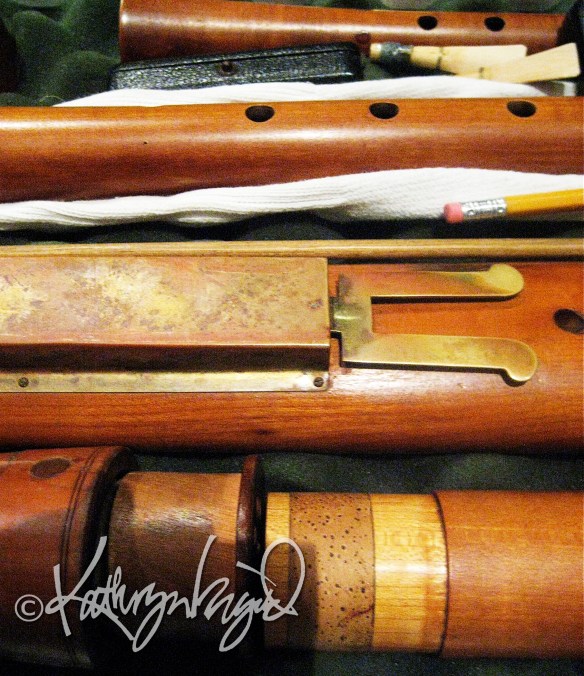
Photo: Early WindsRehearsals of Early Music vary more than those unfamiliar with the stuff would guess. Explaining to others why I, a non-musician, love sitting in music rehearsals of any sort is an iffy enough proposition in itself, but at least I can condense my main reasons enough that they may appreciate how much watching and listening in on the preparatory process—hearing what the musicians are working on, how, and why, not to mention any backstory of the pieces in question that gets shared en route—informs and enriches my experiences in concert performances. Tell them I love sitting in on rehearsals for early music, and I can get quizzical stares as though I’d said I love the temperate climate of Seattle. Isn’t that where it rains all the time? Well, the Pacific Northwest gets a fair quantity of rain, or it might be hard pressed to maintain its evergreen status, but in addition to lots of other notable and varied climatic features of the region, it gets truly spectacular sunshine as well.

Rehearsals of early music, too, are far more varied and nuanced and, at times, downright surprising than you’d guess if all you’ve ever heard of the entire body of work leading up to the Baroque period is that 30-second clip of background music advertising the local Renaissance Faire.  It can range from the most tender, measured votive chant to the rollicking, rowdy, and bawdy; from plaintive solos through angel-choir harmonies and right on to shockingly modern sounding rhythms and dissonances, early music is an incredibly rich tapestry of sounds.

One thing that does remain consistent in a great deal of accompanied or instrumentally supported vocal music from early Western sources is the use of continuo. To a layman or amateur listener like me, this means that while there will be portions or movements of larger musical works when either the choir sings a cappella (unaccompanied by instruments) for a while or, conversely, together with the majority of the orchestra ‘singing along’ in accompaniment, there are often sections where one or more of the singers, or the entire chorus, is supported by a small group or individual’s continuo playing, too. Continuo is not an instrument, or at least not a specific one; rather, it is the practice of supporting sung music with a continuing and enhancing undercurrent of instrumental accompaniment.

The result, at its best, is that the sounds blend so seamlessly that listeners might well forget that they’re not hearing human voices exclusively, and the instrumental strains seem to disappear into the sound. Yet when the continuo is not played in the same passages, as may be the case in rehearsal, the phrases can sound strangely pale or incomplete.

A great continuo player, like a great accompanist, is a species of artist quite distinct from the great solo instrumentalist or even orchestral player. It is, in very rare instances, possible for one player to excel in all of these roles, but such magical creatures are truly few and far between. What distinguishes the fine continuo artist, and to some extent accompanist, is not only sheer musicality but an extrasensory ability to think in sync with the other artists in the performance—the other players, the singers, the conductor—and a remarkable degree of prescience in always giving just the help or polish needed at just the right instant without either being asked or demanding the spotlight for it. The best so seamlessly enhance the work of those around them that they raise the level of the whole performance in ways that a self-aggrandizing soloist cannot. There’s an element of generosity in the skill set that not only shows true mastery but also the confidence of knowing that such excellence is its own reward and the beauty and pleasures of the concert are great enough to cast their golden glow over everyone.Photo: Lute's Heart

There’s a good lesson in there for all of us, musicians or not, isn’t there.