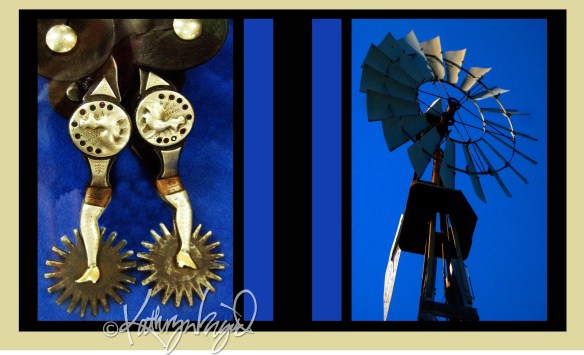
EVERYTHING is research, no? Put on your spurs, head into the wind, and file this, baby!
I think of life as one big information-expedition. Whatever we do or sense or observe gets filed for future reference. Some things are instantly obvious candidates for the Circular File, yes, but everything else should potentially be of interest in one fashion or another. Call it ‘learning from experience’ or fodder for future tall tales to the great-grandkids or simply useful stuff to know, I can’t think of anything that doesn’t, shouldn’t or can’t inform the future self if stored and processed thoughtfully.
Anu Garg‘s wonderful resource website and newsletter A.Word.A.Day (http://wordsmith.org/awad/) is full of marvels: offering the etymology of a word (or more) each day, it seeks to broaden not only our vocabularies but our exposure to and, hopefully, understanding of the history, culture, politics, religions, biology, biography, and so forth–not only of our immediate surrounding population and geographic areas but all of the world’s intertwining ones as well. In addition, the site includes quoted wisdom, pathos and humor from great thinkers and writers. Today’s quotation was one that especially resonated in me:
A writer — and, I believe, generally all persons — must think that whatever happens to him or her is a resource. All things have been given to us for a purpose, and an artist must feel this more intensely. All that happens to us, including our humiliations, our misfortunes, our embarrassments, all is given to us as raw material, as clay, so that we may shape our art. –Jorge Luis Borges, writer (1899-1986)
I’ve long felt that, whatever other good bad or indifferent qualities I impute to my life experiences, they shape not only how I think and act afterward but also what directions my creative life is bound to take. I have not even remotely achieved the Buddhist ideal of absolute presence in the moment or a fully and minutely examined life. In my case, though, I attempt most to apply that special rigor to the sensory experiences of my existence, since it is the use of the senses in interpreting and expressing my thoughts and ideas as art that gives me my best self-expression in its broader meaning.
Thankfully, my immediate circle is famously patient with such things. When my partner and I go for a walk, he is enjoying the movement and the tour through a place. I am spending some of the outing walking right along with him, but it’s usually interrupted from time to time by my stopping to investigate and/or photograph whatever intriguing distraction has caught my Miss Magpie eye. I call our walks ‘interval training’ on my part, because while my spouse has continued at his regular pace and I’ve been playing amateur researcher-inspector-scientist, the gap has widened from arm’s length and I must either speed up a little or hit a dead run to catch up for another bit of close-up strolling. Whether it’s now stored in my digital memory as a snapshot or not, whatever caught my attention is filed as quickly as possible–preferably while I catch up to my walking partner, since he may well have continued our conversation without noticing that I’d dropped behind and it would make for some disconcerting non-sequiturs indeed if I interjected with commentary on the beetle wing I just hurriedly stuffed in my pocket or the Art Deco cornice I paused to photograph.
Certainly I have found the digital mini-camera a boon when it comes to those fleeting moments of ideation and inspiration. More often than not, it’s long after the fact that I find the meaning and particular interests in whatever had diverted my attention, frequently because, upon seeing the photograph I’d hastily taken, I’m now noticing something new of interest. That’s usually when I spot similarities of appearance or type, or affinities that put this new tidbit into the context of some story I’d intended to tell or that make it a ‘good fit’ for grouping with other found treasures in my endless stream of visual-mental comparisons and meta-matches, these usually leading to yet another story or stream-of-consciousness ramble. Thus go the meanderings of the trackless mind.
The special appeal, for me, of such unplanned and serendipitous findings is that nothing goes to waste. There are no Wrong Answers in this class. Mistakes and griefs, misfires and tragedies, ugly things and scary things and unbelievably stupid things all have as much possibility for conversion into a good story or a fine piece of art as any happy or pretty thing can have. Even MY mistakes and griefs. With a bit of perspective, at least. So, whenever I can unfurl from the fetal position after having been hit by or created a disaster, I teach myself yet again to spring up with the cartoon-like enthusiasm of those eensy-weensy Olympians popping over the vaulting horse, throw my hands triumphantly in the air, and yell, “I meant to do that!” and then do my best to incorporate the most useful elements of what’s left of me after the experience into an even better me.
Or at the least, into a pretty cool piece of creative art.
It takes some courage, to be sure . . .
And it’s particularly helpful to remind myself that, even if I’m not quite up to that task, maybe the Artist character that I play could do it . . .




 Art-Colored Glasses