Foodie Tuesday: Egg on My Face

I have no particular secrets from you kind people out there in Bloglandia, so it can come as no surprise (especially to those who have seen any of my previous food posts) not only that I am an unreconstructed carnivore but also a generally unrepentant eater of all things–okay, nearly all things–that might be considered decadent if one is of the sort that equates dining habits with morality. I like eating. I like eating lots of different things, and in what even I will readily admit are too large quantities. It’s not good for my health, to be sure, and possibly not best for my soul, but there it is. I love food.photoOne of the things I would be most reluctant to give up eating or cooking with is of course that stupendous universal donor among ingredients, the humbly perfect egg. If I must be limited in my access and opportunities and omnivorous mania, I would proudly and gladly be wearing a nice schmutz of egg on my chops any day. Besides, with my coloring I am very ill-suited to wearing any other form of yellow, so why not embrace the ephemeral form of dressing up in some eggy yellow goodness that can at least be licked off my lips and make my innards very happy if its look doesn’t suit my exterior. I love what the egg can do for a sauce, a custard, a souffle. For baked goods; for dishes where it serves as binder, thickener, garnish.photoMaybe most of all, I love eggs when they star in the show. Their honest simplicity and smooth, creamy deliciousness deserve to be featured and recognized as the wonder that is borne in that beautiful capsule of the egg’s origin. So today I give you one of my very favorite meals, which despite my fondness for all sorts of marvelous mealtime miracles is a supremely simple omelette with grated sharp cheddar cheese melting in the middle, accompanied by some nice crispy bacon with a little drizzle of pure maple syrup, and a fresh, crisp, fabulous apple. I don’t usually mess with eggs much when I cook them, and a nice little cheese omelette like this deserves to be treated respectfully, so the only ingredient in the omelette besides the eggs, lightly beaten, and the cheese is just a nice big splash of melted butter to make the eggs easy to loosen from the pan and fold over when sufficiently set–but just barely set, really. Still light and creamy through the middle.photoI’d go on, but I’d kind of rather dash over to the kitchen and grab an egg or two . . .

Foodie Tuesday: Potato Famished

photoI’m going to keep this supremely simple. I love potatoes. Among my ridiculously long list of edible loves, potatoes rank pretty high on the list. It’s clear that my Viking ancestry designed my particular corporeal form to be composed of 70% potato water, so I’m spending my years just fueling it up as best I can.

Barring allergies or outright dislike, it’s hard not to admire the potato regardless of one’s lineage. It’s one of the most inspiringly versatile foodstuffs on this little old planet. There’s hardly anything that a potato can’t gussy up nicely. Let me just commune with the spirit of the potato here for a moment:

Boiled, roasted, fried, baked, steamed. Even raw. Yes, on rare occasions Mom gave them to us sliced like cold little potato bruschetti, buttered and salted and munched out of hand. Odd, but not unpleasant. Still, I’m a little more of an old stick in the mud and like them best cooked up one way or another. Grated, mashed, bashed, diced. Sliced and made into insanely tasty (and of course buttery as can be) Hasselback potatoes. Cooked and smashed, with lots of gloriously rich cream. French fried, skin on, in beef fat. Scalloped with a passel of cheese. Okay, you caught me. I’m stuck as always on my beloved theme of delicious FATS. Yeah, I yelled. Ahem. Now, back to our regularly scheduled swooning over potatoes. Tenderly toothsome cubes in vegetable soup or clam chowder or some dreamy slow-cooked stew. Crisply golden-browned hash browns tenderly steaming at heart. Silky smooth in a luscious cool Vichyssoise.

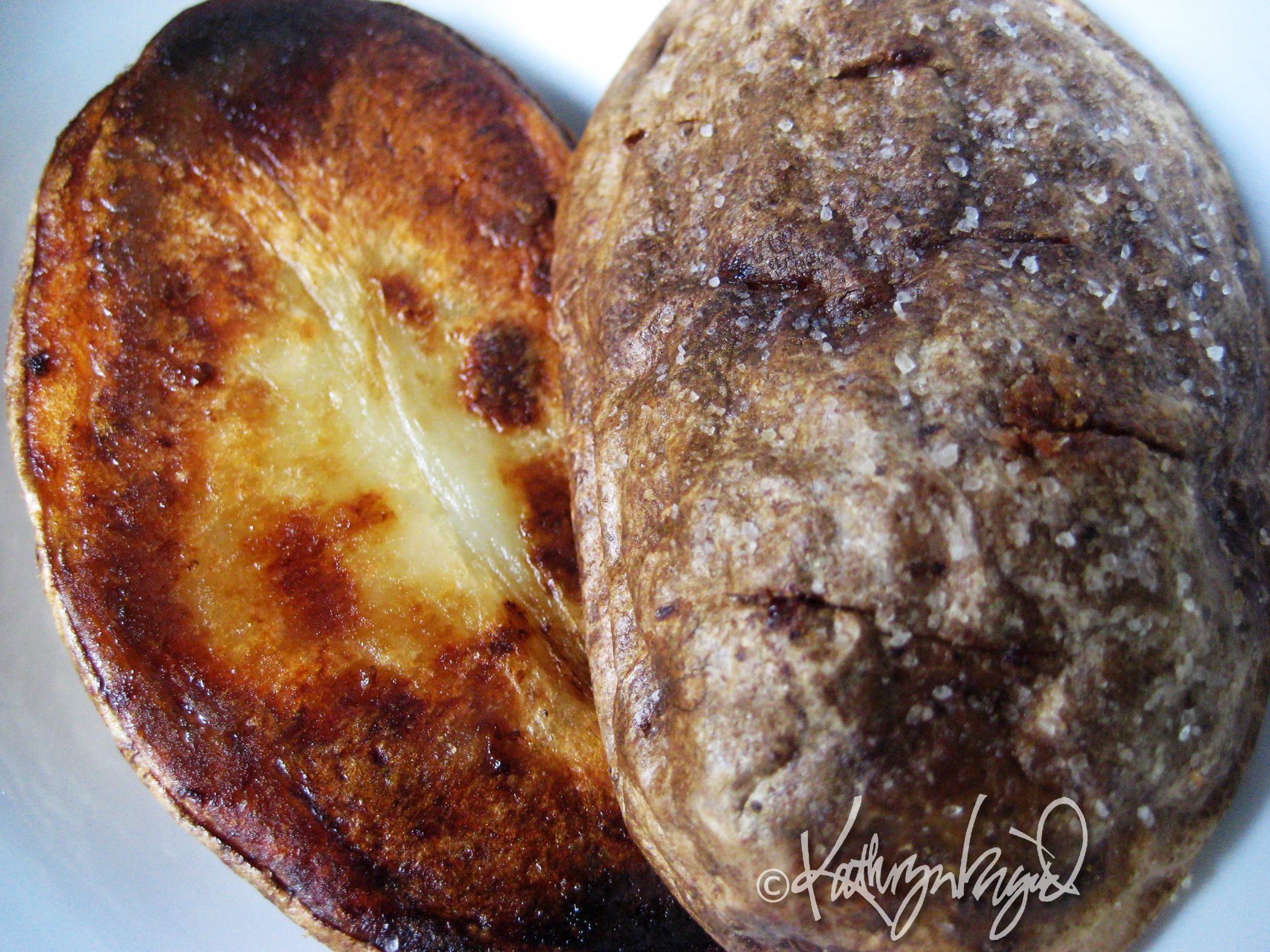
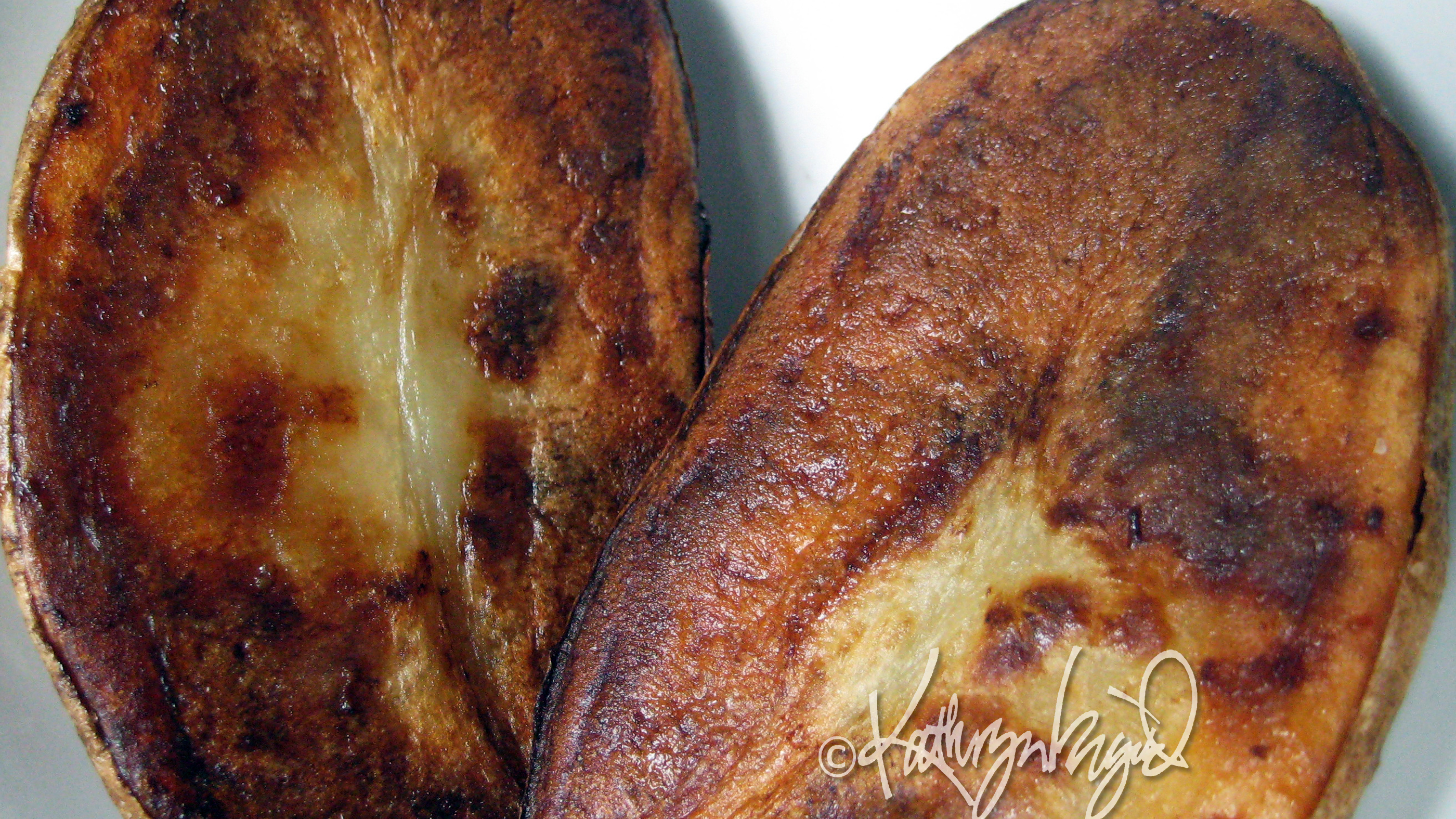
And of course, sometimes nothing else can possible compare to a fine and dandy baked potato. Say, served with tonight’s very simply cooked steak and very simply plain romaine and tomato salad. Just halve the russet potatoes, coat well with coconut oil, place cut side down in a baking pan and then stab them thoroughly in the back with a fork or knife to prevent in-oven explosion (or zombie resurrection, if that’s your concern), salt them well with coarse good salt, and bake until they’re tender inside and crispy outside (circa 20-30 minutes, depending on the oven and the size of your potatoes) at 350 degrees Fahrenheit. Some things can’t really be improved, now, can they.photo

Foodie Tuesday: When Munchies Attack

You don’t have to be a weed-head in a full haze of happiness to get the munchies, though I am reliably told that that particular activity can exacerbate any natural leanings you have toward being peckish. Me, I’ve never craved a smoke of anything other than the sweet and occasional lungful from a good barbecue, but I certainly do know how to get hungry often, and at least half of that oft-had status is devoted to being snackish as much as anything: a desire for something, whether sweet or savory, that is merely a between-meals treat, even if it ends up (as can happen, I admit) turning into something closer to a whole meal in and of itself. To suggest that this is not a frequent transmutation of the event would be both disingenuous and ridiculous.

What should I do when I become Snackish, then? Why, ignore my base impulses and go off to do something heroic and selfless, of course.

HAHAHAHAHAHAHAHAHAHA!!!!! Oh, dear, I almost hurt myself there when I fell off my perch in a paroxysm of delirious guffawing. You know perfectly well that what I will do is hunt for the nearest stash of munch-able items that appeal to my moment of salivary salaciousness and eat them, forthwith. The only conceivable defense in this instance is to provide for myself a few less horrifically harmful snacks that can still stave off the munchies and leave me to fight another day. Rather than stock up on additive-crammed delights that I would happily scarf down just as readily if they were within reach, I sometimes am smart enough to make a bit of homemade nice-vice stuff that might have a hope of keeping me from dashing out to the nearest convenience store and succumbing to the succubus of tantalizing trans-fats and copious drafts of processed sweeteners and weirdly Sci-Fi flavor enhancers and their many hideously alluring cousins.

Today, then, as I was already overheating the house a bit with several loads of laundry, I turned on the oven and made some crackers. The first is a work in progress: I decided that the recipe needs much further study and experimentation to suit my tastes, as it came out a little too fragile and thin in the end to ever act as a vehicle for cheese, egg or tuna salad, herbed labneh, or any such thing, which to me is the primary purpose of a cracker unless it happens to be unusually tasty on its own. I might be able to solve the latter issue of blandness in this recipe (a very simple combination of almond flour, seasoning, oil and egg) by merely changing and/or increasing the spice content, but for now it will definitely have to be considered a first run at Garam Masala crisps with orange oil.

photo

They even *look* a little too insipid, don’t they. Next time, bolder!

The recipe for the other batch of crackers will definitely get made again. It’s a bit too soft and chewy for toppings as I made it today, though the original recipe assures me that additional baking time at a lower temperature will fix that problem. But it’s quite tasty all on its own, so there’s no harm in having incongruously bendy crackers this time around, especially as the flexibility comes mainly from some added cheese right in the cracker itself. The recipe is wonderfully simple, too, so I will make it again–but as I do have this propensity for overdoing on the quantity of the aforementioned snack-ables, I had probably best not make them frequently. [Insert sheepish grin here.]

The original recipe comes from the good William Davis, MD, at wheatbellyblog.com, and I revised it a little to suit the household tastes.

photoChili Sesame Cheese Crackers

This makes a thin enough batter to self-level and fill an 11×17 baking pan, a mighty handy way to create a full sheet of these treats, which are easy to cut as they cool.They’re shown above stacked on their edges, so you can see that they’re only about a pencil’s thickness.

Preheat the oven to 350º F.

1-½ cups raw sesame seeds + reserve a half cup more
1 scant cup shredded Parmesan cheese + a handful of sharp white cheddar bits
1 tablespoon chili powder
½ teaspoon cayenne pepper
1 tablespoon ground cumin
1 teaspoon dry mustard
1 teaspoon sea salt

Pop all of this into a food processor and whiz it together until it’s a nice, slightly coarse flour texture. Add the reserved half cup of sesame seeds and mix again. Then stir in the liquids (below) and pour it all into that nonstick baking sheet pan of yours and pop it in the oven.

1 teaspoon Tabasco/hot sauce + 2 tablespoons good olive oil + 1¼ cups water

It will likely take 30 minutes or, as in my oven’s case, less, to lightly brown these beauties. Dr. Davis tells us that 10-15 minutes of additional baking at 250 F will crisp them further, but if you’re like me you won’t be much bothered with a chewy cracker–after all, slower chewing means slightly less shameless high-speed munching.

Maybe. They are tasty.

Foodie Tuesday: Good Housekeeper Cooking, or One Man’s Baking Disaster is Another’s Ice Cream Starter

Every cook of any skill or talent level knows–or should–that one of the best inspirations for the next dish or meal is found in cleaning and tidying the kitchen. It doesn’t mean I have to completely reorganize and sanitize every square centimeter of the place constantly, though undoubtedly I could stand to do both a little more often. But even the most cursory, quick cleanup of fridge, pantry or cupboards can remind me that I’ve stashed away a number of tasty items that ought to be used before they become lost in the mists of time. Petrified vegetables and mossy fruits, sandy-bleached spices and unrecognizable bogs-in-jars are all interesting science projects in their way, I suppose, but rarely likely to serve the purpose of good taste or nutrition for which they were initially acquired.

So I’m setting out on a mission, albeit at a sauntering pace, to see if I can’t catch up with some of my longtime plots and plans in the culinary realm and get a neater and more easy to clean workspace in the bargain. Today’s inspiration came from a fellow blogger who offered a recipe that sounded like a wonderfully easy mash-up of a traditional German chocolate cake’s glaze (with the broiled coconut topping) and a raisin spice cake. Mostly, it made me want to bake a gooey cake, something I’ve simply not done in forever. In my typical style, it was not that there was the remotest chance of my following the inspirational recipe even to a mild degree of accuracy, but the initial concept that thus urged me on was greatly appreciated all the same. In honor of the inspiration I went through my stores of dry goods like a little tornado and came up with a few ingredients that I thought would suit the occasion pretty well. I give you:

Texas Tornado Cakephoto

Preheat the oven to 325 degrees Fahrenheit. Grease a 9×13 baking pan.

Blend together the following ingredients. I did so by pulsing it all together in the food processor until it was a coarse flour-like consistency, but you could certainly hand shred, chop and mince the ingredients and then blend them.

1 cup of raw cane sugar

1/2 cup dried apricots

1 cup shredded raw carrots

2 Tablespoons of candied orange peel

2 Tablespoons of candied ginger

1/2 teaspoon ground cloves

1 teaspoon of more of ground cinnamon

1/2 teaspoon grated nutmeg

In a saucepan, bring to a boil 1/2 cup of butter and 1 cup of water, adding the prepared coarse meal of previously blended ingredients and cooking briefly to blend. In a separate large bowl, blend together 1-1/2 cups of mesquite pod flour, 1/2 cup of coarse almond meal, and 1 teaspoon of baking soda. When the wet ingredients have come to a boil, pour them into this dry mix and blend quickly. Pour the batter into the greased baking dish and level it as needed, and pop it into the oven for about 15 minutes.

While that’s baking, mix together the sticky topping ingredients. I just squished it all together quickly with my hands.

1/2 cup butter

1-1/2 cups brown sugar

1/2 cup almond meal

1/2 teaspoon cinnamon

1/4 teaspoon crunchy flake salt (I used Maldon sea salt)

When the cake comes out of the oven, crumble the topping mix over it fairly evenly, and pop it under the broiler just until it caramelizes. Cool, cut, eat. A little ice cream or whipped cream would not, of course, be amiss with this, but it can be eaten like a brownie or blondie just fine, too.photo

The problem is this: the stuff is too darned tender to even hold the shape of a small bar or square of cake. Needs better structure. Flavor? Oh, yeah–I mean, after all, look at all of the butter and spices and the mesquite flour and apricot and orange nuances. But it’s as crumbly as heck. What are gooey cake crumbs good for? Yes, that’s right folks: ice cream add-ins. So now I give you Texas Tornado 2.0:

Texas Tornado Ice Creamphoto

Yes, it looks mighty mish-mashy, like it’s right in the middle of the tornado. But by golly, it’s a lot pleasanter than being pelted with flying cars. In fact, it tastes pretty danged delicious. All it took was to crumble the whole pan of erstwhile cake up into chunky crumbs and stir them into unsweetened vanilla whipped cream. Yes, unsweetened–you saw how much sugar went into that cake, y’all. 1 pint of heavy cream, whipped up with a generous 1 teaspoon splash of good vanilla; fold in all of the delicious ‘dirt’ you made of the cake, put it in a sealed container, and freeze it. If you can wait that long. It really makes a pretty tasty pudding without ever freezing it, if your sweet tooth is aching already. So I’ve heard.photoThe surprisingly spiced-mocha scent of the mesquite flour is quite strong when the cake bakes. So much so, that I almost forgot it wasn’t actual brownies or chocolate cake in the oven. Which in turn may mean that I have some chocolate baking to do soon too. Something that holds up structurally, I should think. But I’m not sure I care. There’s always an alternate use for good food-parts. These things happen when I start rummaging around in the kitchen stores, don’t you know.

Foodie Tuesday: Sweets from the Sweet

photoI knew we’d hit the neighbor jackpot yet again. We have a history chock-full of fine neighbors between us, my husband and I, of that sort who are not only great to chat with at the mailbox but offer help and led tools when they see projects underway, share their mystical gardening secrets, and advise on who’s the best resource for automotive care, where there’s still an independent pharmacy in town, or what the local ordinances are on right-of-way maintenance.

But we all know that the best neighbors of all have not only generosity in their hearts but also food in their hands when they show up at the door. Rhonda was known to trade her fresh-picked raspberries for our over-abundant plums. David–actually the manager at our then apartments–went door to door delivering home-grown green beans, tomatoes and zucchini that he and his wife grew in the ‘bonus’ plot on the complex’s property. Peter rang the doorbell at our place in Tyee bearing bending boards of fantastic barbecued meats and salmon and vegetables.

Add to this that we had not only other great neighbors but also heroic postal carriers, pest treatment and HVAC specialists, and remodeling contractors who have become admired friends, and you know that our standard for being spoiled is very high.

So when we moved to our current home, perhaps it was only par for the course that our new next door neighbors would arrive with welcoming smiles–and food. But what food! We didn’t have to lift a finger for anything other than unpacking and furniture-dragging for at least three days after arriving in this house because we were handed an enormous platter laden with an assortment of deliciously varied homemade salads, another piled with home-baked breads and rolls and biscuits, a plate of tender, moist cream cake, and a gallon pitcher of sweet tea. If it hadn’t been love at first sight, it would surely have to have been at first bite.

photo

I'm a lucky chick, having such sweet neighbors!

The flow of gustatory glories has continued unabated (and ably washed down with Mr. Neighbor’s lovely wine-selecting and punch-making skills as well as his fine Scotch collection) from that day forward. You will have no trouble believing and understanding when I say that we are devastated that these neighbors have retired and have the temerity to plan to move back to home territory in another state. Who will phone us in Canada when our sprinkler system fails during a hot spell, to tell us that they’ve already hired the company that installed it to do repairs before we come home? Who will deliver our entire stash of newspapers they collected over our out-of-town trip, updating us on the rest of the neighborhood or sharing delightful stories of their own adventures? And who will show up at random, numerous and very welcome times bearing, say, cake or cookies or pie, or a handmade bread cornucopia with a massive vegetable-and-floral display in it at Thanksgiving, a gorgeously crafted Bûche de Noël at Christmas, a sprightly spring assortment of cookies and cupcakes and jellies at Eastertime?photo

The answer, as you well know, is that it is our turn to become those neighbors, to show up unannounced with that very special something-extra whenever we can, to lend tools and perhaps the hand to use them, and to spread the joy of hospitality whenever and wherever we can. The torch–or the torchon de cuisine–has been passed. I hope I’m up to the task!photoI’ll probably start with something supremely simple like the nut-and-seed crackers that have no real recipe and change every time I make them. They make a handy vehicle for dips, salsas and salads when I want a quick bite of lunch or a not too terribly naughty snack. This time they were thus:

Nut and Seed Crackers (and Tuna Salad)

8 cups of finely chopped mixed nuts and seeds (almonds, walnuts, pecans, macadamias, sesame seeds and pumpkin seeds) tossed together with about a cup of grated extra sharp cheddar cheese plus coarsely ground salt and black pepper and good chile powder to taste, all mixed with just enough water to clump together into ‘dough’ and rolled or patted onto a non-stick cookie sheet (I use a silicone lining sheet in the pan so I can be extra lazy on the cleanup), and then baked at 325-350 degrees F (depending on your oven) until golden brown. I let these ones cool in one big slab and then just broke them into uneven pieces about the size for carrying, say, some bacon and cheddar cheese dip or guacamole or seasoned labne or some tuna salad. Tuna Salad, around here, is nothing more than a good quality tinned tuna (one of the brands that cooks its filet directly in the can and adds nothing other than a little salt; I like High Seas and Tuna Guys and can order it online from both, but there are other excellent sustainable-fisheries purveyors as well) seasoned with ground pepper, dried or fresh dill, smoked paprika, yellow ‘ballpark’ style mustard and sometimes chopped capers, and bound with good mayonnaise until slightly creamier than just glued together (spreads better that way).

This combination may not exactly constitute sweets for neighborly delivery, but then we know that the sweetness derives just as much from not needing to fix any food oneself, if only for a brief moment. Or for days on end, if you happen to get one of our neighbor’s fabled deliveries!

Foodie Tuesday: Lefse as History

digital imageMama’s Justifiably Famous Potato Lefse

[This is a recipe she developed in collusion with a group of faithful Old Norskies in Puyallup, Washington, one of whom added the strict instruction that the lefse must be rolled “so thin you can read a faded love letter through it”. I’ve spelled out the procedure here in my own words, so Mom can’t be blamed for that part of the recipe!]

8 c. cooked and finely mashed potatoes

1/4 lb. butter

1/2 T salt

1/4 c. potato cooking water plus 1/4 c. evaporated milk

2-3 c. flour + more for rolling the lefse

Take a gallon bowl filled with 8 cups of riced cooked Russet potatoes, still hot, and press 1/4-pound piece of butter into the middle of it. Put a generous 1/2 tablespoon of salt on top. Pour a mixture of 1/4 cup of the potatoes’ cooking water plus 1/4 cup of evaporated milk over the top of the salt. Mash everything together thoroughly and mix it with 2-3 cups of flour. This makes enough dough for 20 lefse. [Yes, Mom was likely to make a triple recipe or more for many occasions. Eat one piece and you’ll know why.]

The flour amount should start out as small as possible and only get the potatoes into a very light dough-like, rather spongy consistency, and not stick to your hands as you mix. The more flour added, the tougher and drier the finished lefse will be. Mom almost always did the potatoes the day before their appointed baking day, rolled the tender dough into logs about 3″ in diameter and wrapped them in cling film, storing them in a cool place. The fridge is forever too crowded at the time when you’re lefse-baking for festivities of any kind, so if the weather was cool enough, the potatoes usually waited overnight on the workbench in the garage in that state for their final apotheosis.

Baking day is invariably messy and laborious, particularly on the days of multiple batch preparation. One does best to have the correct tools for the occasion, and they are many and specialized. First, you really ought to have a lefse griddle, which is a flat, circular electric griddle about 18″ in diameter and capable of reaching around 500º F in temperature. You’ll also want some nice old flour-sack dish towels or linen tea-towels to stack freshly baked lefse between on the counter as you take them off the griddle. You’ll find it helpful to have a pastry rolling cloth on your work surface, because not only will it keep the lefse from sticking as easily to the countertop, it’ll also help hold the lovely texture of the lefse’s surface that is so ideal for carrying oodles of melted butter and other fillings.

Make sure to have not just a rolling pin but an actual lefse rolling pin, a wooden pin whose roller surface is scored to create the optimum texture: some are simply grooved with parallel lines around the circumference of the roller and others, like Mom’s, textured with a full crosshatch of about 1/16th-inch grooves). Most people using the lefse rolling pins also like to use a soft cloth sleeve over the roller, because (and you can guess how I know this), a very soft, tender and potentially super-sticky dough will create a remarkably gunky agglomeration in the grooves of the pin, and lemme tell you, it’s a serious undertaking to get that concrete out ever again. Think about how many of those little grooves are on a whole rolling pin. Think fondly of an early death. Nahhh, just cover the pin.

Last and not least, it’s good to have a really fine lefse turner. Yes, the person who will flip the lefse when it is appropriately birthmarked on one side with light brown speckling to give the other side its chance for equally pretty freckling, that person will be an important part of your equipment. But even more important is the modest sword-like object known in our household as a lefse turner. It’s a flat stick around a yard/metre long. Yes, it would probably be entirely possible to use an actual sword for the purpose, but if you did, what would you use to fend off the ravening lefse-starved Viking invaders whilst baking? You could probably use a yardstick. Then you might well benefit from the ability to measure your lefse’s circumference in the very midst of moving them from griddle to stack. My mother has two lefse turners of both great practical beauty and artful grace. Gramps handcrafted them from fine-grained wood, making a 3/16″ thick x 2-1/2″ wide handle end pierced with a hanging hole and tapering them down to a soft ovoid tip less than 1/16th” thick, each turner sanded down to perfectly smooth softness so that it feels as sweet in the hand as that aforementioned sword ought to do in a master swordsman’s, and able to slip its narrowest point easily under a magically tender hot lefse to lift it from the griddle to the cooling stack.

photo

Mama's lefse turners, handcrafted by her father, hang on her kitchen wall.

With your mise en place, off you go. Slice the log of soft potato dough into evenly measured pieces that, when you pat them gently into shape, are about the size and shape of a slightly smaller diameter, slightly thicker than typical hamburger patty (twenty pieces from a whole batch, if you remember). Keep them rather cool, so that they don’t become more difficult to roll–they’re sensitive enough as it is. Gently flour the outside of a piece of dough, pop it in the middle of a small handful of flour in the center of the pastry cloth and roll the lefse out into a circle of delicate, ethereal, dainty, lightly textured sheerness as big as you can fit on the lefse griddle–even a tiny bit too big, because it’ll retract a tad and shrink to fit the griddle as soon as it hits the 450-500º heat; test to see how quickly your griddle bakes the flatbreads without either scorching or drying them out.

You don’t want the baked lefse’s spots too dark brown–lift an edge and check occasionally as they cook. You don’t want too much flour flying around–always use the smallest amount you can get away with using. You don’t want the lefse too dry–they’ll dry a bit as it is, when they’re awaiting use. As you can imagine, during the baking day one works hard, gets hungry, and smells buttery mashed potato dough cooking, so some of the lefse will not live long enough to worry your pretty little head about any real drying-out problems with them. Some will have to be rescued from their intended wait immediately for slathering with beautiful melting butter and eaten instantly. After all, there are always some lefse that resist the most valiant efforts to make them into a perfect circle and choose instead to replicate maps of various continents, and once you get too far away from Australia-looking they’re just not going to fold into even quarters for the standard packaging and serving format and it’s best to destroy the evidence. It’s sort of like James Mason’s delightfully dry remark in ‘11 Harrowhouse‘ when he’s found apparently in the midst of removing the contents of a diamond safe: “I’ve eaten the inventory.”

What else is there to say? Roll. Bake. Lay a freshly-minted lefse flat on a clean towel and cover it with another towel. Roll. Bake. Lay the next lefse on top of the first and cover it with that top towel. Repeat until all of that carefully crafted dough is baked into giant, tissue thin circles of lightly moist flatbread. When the whole batch is done, either eat it all for supper or let it cool under its towel, carefully fold each piece into quarters and then package small stacks of the finished lefse in zipper bags for the counter, refrigerator or freezer, depending on how long until they will be eaten.

And what is all of this enormous effort for? Some, including members of my own family, would say as Grandma W said regarding lefse’s cousin kumpe (Norwegian potato dumplings) that it was “a lot of work to spoil potatoes”. Others revere them as the Norsk version of the Mexican tortilla, Middle Eastern pita, South/Central Asian naan, or any other culture’s soft flatbread. Making lefse is of course potentially a fine way both to preserve the Norwegian culture in both country and family, as well as a social event. You know me, though: Lazy Girl helped only when I had to other than in the devouring of the finished product. It was usually other relatives and friends that pitched in with Mom in the manufacturing of lefse. And it’s so fragile, both as a tensile object and in its moisture content, that it doesn’t taste good for very long.

So in my opinion, what this labor of love is about is, well, love. Secondarily, it’s about a great potato flatbread best hot off the griddle and smeared with fresh butter only, as it always was preferred in my family. Others like it best with sugar and perhaps some cinnamon sprinkled on it before it’s folded up and jammed into their mouths, and we would sometimes, if the day had grown extra long and laborious over multiple batches of lefse, make a heartier meal of it by making a sort of quesadilla out of a hot lefse with some cheddar or Jarlsberg cheese and thin slices of good ham folded and warmed inside, not a bad “sandwich” at all.

In any case, I can tell you that there are many who will vouch for Mama’s inimitable lefse as the archetype of all potato lefse. But then, you already knew that Mom is pretty much the archetype of moms, so what would you expect! As for Grandma W, she may be forgiven for thinking potato dumplings, and possibly lefse as well, too labor-intensive for their meager culinary payoff since she grew up in her immigrant father’s grocery store and might have considered it better to enjoy prepared foods in that Modern, American way.photoThat’s Grandma, by the way, the little barefoot girl in white, Christmas-tree-tipping Auntie Ingeborg behind her, with their parents and little brother and an employee (haloed in window light) in Great-Grandpa’s grocery store. Lefse or no, they apparently did have some fine food on hand! May all of you dear readers eat well–whatever you’re eating!