Against the Grain

It’s not only thanks to dyslexia that I get lots of things backwards. Say, this morning, when I realized that I was about to publish yesterday’s post because I forgot about it yesterday. That was just plain forgetfulness. So here you go.

Backwardness, now that’s a much more deeply embedded part of my nature than just reading and seeing physical things differently than others do. I see life differently, too, and sometimes it sets me off on paths that diverge and digress from all previously known ones. And that’s not inherently bad.

I don’t necessarily advocate bucking the popular trend just for the sake of being different. I certainly don’t advise doing the opposite of what everyone else does all of the time merely to prove you’re above them all. That can put you right in the path of danger; sometimes rules and boundaries and well-trod routes and even conformity derive from practical need and hard-won experience putting people out of harm’s way.

But there are times, too, when it does pay to be willing to hang the painting upside down, go home by a different road, or get up and dance when nobody else dares to get out of their chairs. Once in a while, the gift of getting out of sync with all the rest of creation is that you will learn something none of the rest know, feel something you’ve never felt before or even discover something previously hidden from the universal view. Even if it only lasts for a short while, the inner evolution that results might well be worth holding in your heart, your inside-out, upside-down and backward heart, for a very long time indeed.graphite drawing

Treasure Knows Neither Time nor Place

photo

A memory-driven image by my great-uncle Rolph Bolstad . . .

I have been scanning and digitally restoring a number of photos out of our family’s trove, a heap that resembles the disorganized and neglected stores of many other families. I make a small dent in the stack from time to time, then get distracted by everyday life and often don’t revisit the project for quite a while again. While many of us obsess over parting with beloved memorabilia of any kind, the truth is that the majority of us don’t do much with it when we have it.

All good things are that way, I suppose: love, joy, peace and happiness of both the material and the intangible sorts are seldom given their full respect when we have them, only mourned when we think they’re out of reach. And from what I’ve seen and heard from friends around the globe, this is a foolishness that transcends all sorts of differences and makes us more alike than not–no matter what our location or culture, our beliefs, hopes, and dreams, we all seem to wrestle with this forgetfulness about appreciating what we truly value that we have right in hand, and the minute that we suspect we’re about to lose our grip on those gifts, whether by our own decisions or perforce, we get panicked and become certain that it’s a sign of apocalypse. Surely the end of our own self and sanity, and very possibly, that of the universe as we know it.

I come across that box of yet-to-be-scanned photos from time to time and get a pang: what if I don’t get back to this project before I forget who’s in the photos, where the shots were taken, before the images are too faded or decayed to be rescued at all?

Well, what if?

Honestly, I know full well that it will not be the end of the world. Not even the end of my pleasurable revisiting of those memories–what’s more significant than retaining this flimsy physical repository of memories is whether I use the versions of them in my head and heart while they last (head, heart and memories, all three). Once gone from there, the data held in a picture is only cold, meaningless data after all, and it never contained the warmth and soul of anyone or anything depicted in it. It’s merely a shadow-play version of the husk that is my human form and will no longer be me when I die.

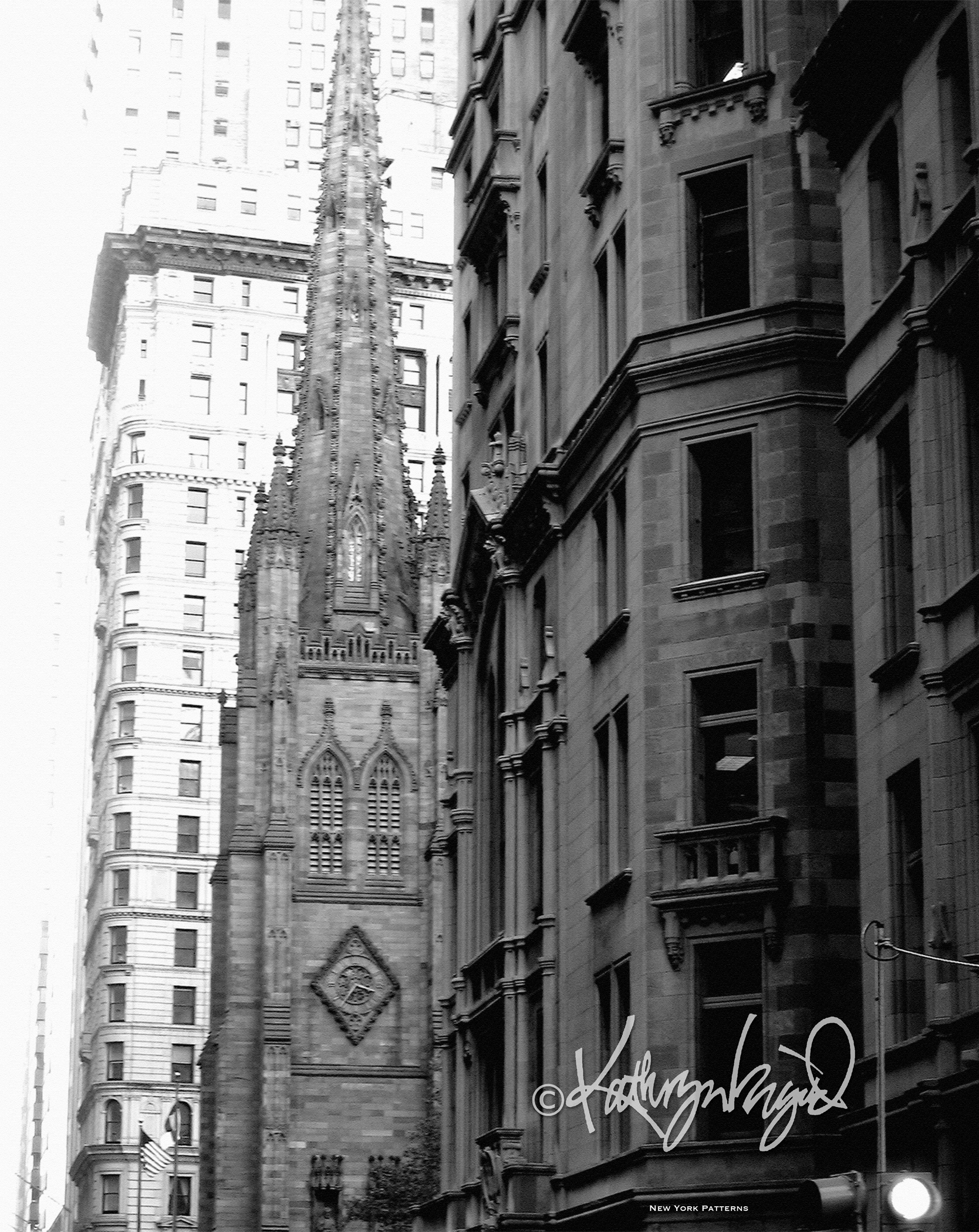
So I’ll keep leafing through these paper and binary mementos of mine as long as it pleases me to do so, remembering mostly that what is seen therein is always more beautifully carried inside me. Change is indeed the only constant, yet in the photograph my great-uncle took, probably in Johannesburg, around sixty years ago there is the ephemeral prototype of the photograph I took in New York less than a decade ago. Fifty years or fifty centuries, it matters little if we learn to respect and rejoice in what remains true and crosses the boundaries of place and time as long as we keep it alive inwardly.

photo

New York City lives in my own memory as much as in a physical place . . . its beauties, like all things loved and valued, lies in me, in others’ hearts, far more than in itself or any image we can conjure of it . . .

Giving Candy to Strangers

photoMost of us are taught from when we’re very small to avoid all contact with strangers. Don’t look them in the eye; don’t make friendly overtures, don’t speak to them, and don’t go running up and hugging random unknown characters. Above all, don’t accept the offer of candy or other lures from those who might turn out to be very lurid indeed.

All of that is mighty wise advice for little persons. They have no experience of the world, no basis for comparison or judgement, and no inner criteria to help them have a good chance of accurately assessing the situation. But when are we Big enough to learn that unfamiliar people are not only not all bad and dangerous but possibly in great need of any gracious and friendly contact they can possibly be given? When are we smart and experienced enough to realize that others around us are not always up to something nefarious or trying to sell us something we neither want nor need if they approach us out of the blue? When are we large-hearted enough to make a more hospitable evaluation of the risks or rewards in approaching the unknown with openness and warmth?

I have been told several stories recently that remind me of the opportunities that constantly surround us for making moves, both large and small, that have the potential to do anything from brightening someone else’s day to saving a life. Most of us fortunates have at some time and place in our lives ‘entertained angels unawares’–had a few of those moments of unexpected, extraordinary, beautiful contact with persons we didn’t know and understand that there are such agents in the world, even if we can’t immediately recognize them. Why not look for places where we can be those agents for no reason other than that we know from experience how powerful and life-changing, healing or hope-renewing, or just plain day-brightening such moments can be.

It is possible to be misinterpreted or rebuffed, true. But the vast majority of times that I’ve seen this sort of subversive joy-sharing happen without any ulterior motives, even if the recipient–sometimes me–is not altogether receptive at the outset, the end result is an astonished recognition that life is rather wonderful, that people, on the whole, are good and genuine and caring and fine, and that we have in our own small hands and hearts the astounding power of remaking ourselves and the world into better things by the simplest and least extravagant of means. A hug, a moment of patience where there has been tension. A donated dime or a pint of blood. A proffered packet of food or bottle of water that had been meant for something or someone else. Handing off the little trinket that was mine but that I can see another one admires or opening the box of treats I was saving for the family and sharing it instead with someone I don’t even know. Opening doors and assisting with chairs and lifting the parcel that’s too heavy for someone else.

They may seem tiny and insignificant enough. For those of us who choose to give them, they amount to easily made gestures. But insignificant? Hardly. For those of us who dared not, who may not have even known we could, ask–this one little mark someone offered to make on our day may mean, after it all, the whole world.photo