Foodie Tuesday: Medium Rare

I know all thoughts hereabouts turn to turkey at this time of year, but not everybody (even the meat-eaters among us) craves turkey, whether they’re celebrating Thanksgiving or not. Why ever eat something that you’re not wild about or hungry for just because tradition seems to dictate it? You’re free to be just as thankful for a fabulous steak dinner as for a roasted turkey, especially if you consider how little our modern image of Thanksgiving turkey dinners probably resemble the original feast they’re meant to commemorate.

And a good steak needn’t be a terribly rare thing. I used to avoid serving it not out of dislike but because I was sure it was too hard to prepare it nicely. Somewhere along the line, fortunately, somebody set me straight on that. If I can heat a pan to just slightly over medium high heat and own a timer, there’s not much excuse for being fearful about it.Photo: Medium Rare

What I learned was so simple that it seems laughable, but then that’s how I operate in the kitchen. This self-educated cook has a doofus for her teacher. Here are the incredibly easy things I learned to do that make steak dinner—with a fairly perfectly medium rare steak in the midst of it—a possibility simple enough I don’t hesitate anymore.

Let the steak be the star. Get the nicest quality cut you can afford for the occasion, at best a well-marbled 1 to 1-1/2 inch (2-3 cm) thick grass-fed beauty; pat it dry, coat it liberally [no matter what your political leanings] with salt and coarsely ground black pepper, or a spice rub if that’s your wish, and let it sit a few minutes absorbing that seasoning while you heat up your heaviest skillet on a middling-hot flame or burner. I love my cast iron skillets best of all for doing steaks. Melt a big dollop of good fat to coat the already fabulously seasoned skillet, and when it’s rippling with heat (but not smoking), gently lay in those steaks. One massive one that almost fills the pan can of course be cut up afterward for sharing, or several smaller ones put in together; just make sure that whatever’s in there has room—if it’s crowded in the pan it’ll steam rather than sear. That would be sad.

When the skillet has been made hot enough for the fat to shimmer in it and the steak is in place, expect it to act like a slightly irritable cat: that steak and the frying fat will hiss and spit a little. You might want to stick a splatter screen on top if you’re fussy about stovetop cleanliness, but it’ll wash off easily enough later if you don’t care in the meantime. What fat should you use? Avocado oil is great, if you can get your hands on some, as it has a high smoke point; for straight-up beefy flavor, you can hardly beat clean beef tallow, but it’s not too common to have that on hand (I keep the skimmed fat from my bone broth for such things at times); bacon fat is a flavorful alternative. Ghee or clarified butter is probably my favorite. Whatever you choose, I recommend something with a high smoke point to give you the ability to get a good, caramelized sear on the exterior of the steak without turning the inside of your house into a smelly barbecue pit full of tarry smoke.

But enough about heat and smoke and fat! The steak, still, is your starring player. What to do with that loveliness? Not much. Leave it alone! When it’s in the skillet, let it sit and sizzle completely untouched for about 4 or 5 minutes. The bottom edge should show you just a hint of the beautiful dark brown crust building below, and you’ll flip it over and do the same thing. The next thing you do is: some more Nothing. When you get a whiff of that superb, incredibly tempting scent of beef perfection as both sides have browned gloriously, you will want to stick your fork right into it, but don’t. Wait. Take the steak out of the skillet and let it rest on a warm plate for at least five or ten minutes while it finishes cooking from residual heat, and reabsorbing the juices that will all run right out of it if you cut into it too soon.Photo: Skirt Steak
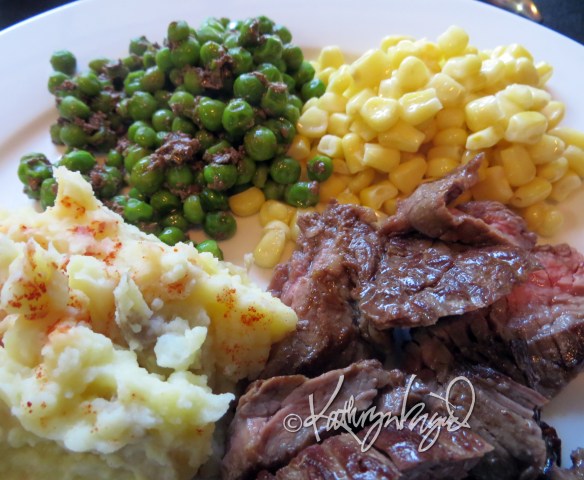
When you think you have suffered enough, wait thirty seconds more, and then you can pounce on that steak. While I’m waiting for my steak to be ready, I distract myself to prevent premature steak attacks. I deglaze the pan with a splash of Jack Daniel’s black label tastiness and a smack of salted butter, as often as not, to pour every bit of remaining goodness back onto the steak with a lagniappe of kindness. I make sure the salads, sides, and other accoutrements of the meal are all at table and all ready to play their supporting roles to the marquee meat. If all of that hasn’t kept me in check for quite long enough, I’ll just have to risk it, because I’ll have been sniffing the air like an unchained werewolf, and y’all had better get out of my way now and settle down to your own plates of steak and we’ll all be safe and happy, at least until the next full moon. Or steak dinnertime.

What’s-in-My-Kitchen Week, Day 4: Luxurious Tools

photoSome people love cars. Some are attracted to bling (you would think I’d be quite the blingy specimen, given my magpie eye, but I don’t at all like to wear it, generally) and others are collectors of shoes, antiques, sports memorabilia, whatever inspires them and warms the cockles of their hearts. Me, I’m a fool for tools. I try to restrain myself reasonably when it comes to actually buying them, since I haven’t the budget, storage space or skills to use many of them in reality, but there are some that do have a place in my pantheon of tool treasures. Some, also, in my pantry.

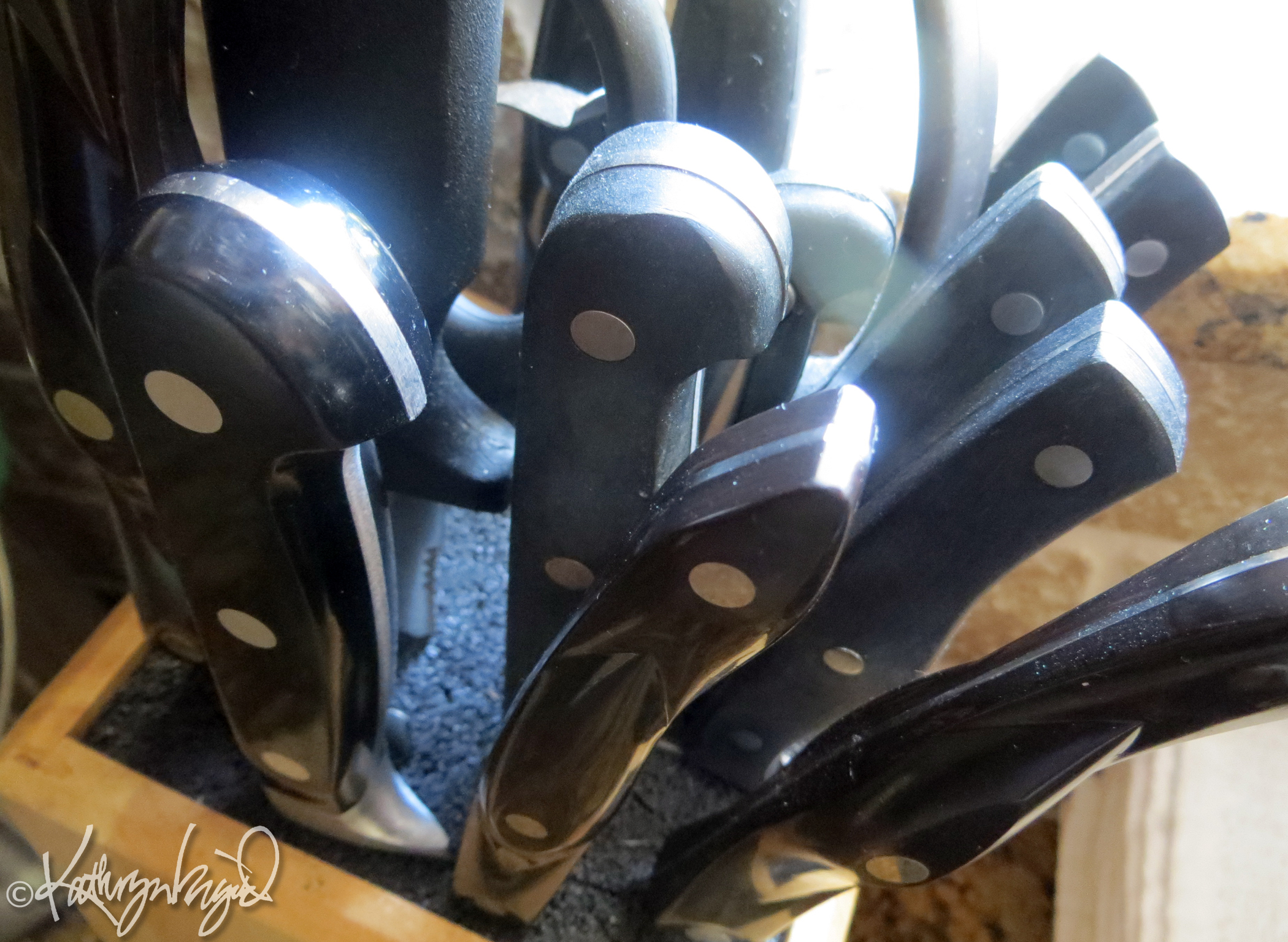
photoSimple is often best, to be sure. I do love my two cast iron skillets. And when it comes to kitchen tools, good knives are just about the pinnacle of both necessity and happiness for most cooks I know. I have a selection of knives (looking exceedingly dusty here after the granite was re-cut to fit our new cooktop properly), and I use all of them on occasion, but I pretty much devote my favored attentions to using one particular knife, a fairly modest Henckels 6″ stainless sweetheart that keeps its edge with very little sharpening and is just the right heft and balance for my ordinary purposes. I’ll bet there are plenty of others among you that are like me in this: no matter how many lovelies you collect of your most-used sort of tools, find you’re using the same one ninety percent of the time. When it’s right, it’s right. And knives, while they can’t make a chef out of anyone, can bring the average home cook closer to mastery than possible otherwise.

photoI’ve mentioned a few times before that I also luxuriate in the privilege of having some more specialized and, indeed, expensive kitchen tools. The sous vide immersion cooker that my husband kindly presented when we moved into this house isn’t used constantly by any means, but when I want fall-apart ribs or a beef roast as near to perfection as I can make, it’s absolutely the go-to favorite tool for those sorts of labors. The internal temperature monitoring version of my heavily used slow cooker, if you will, which gets a fairly constant workout cooking my various broths down to dense savory heaven, with the occasional chili or pot roast thrown in for good measure. The more high-tech tools in my kitchen arsenal include, of course, a good microwave; besides being so convenient for warming lunchtime leftovers, it’s great for steaming vegetables quickly, making a one-person egg souffle, or melting butter or chocolate for the current concoction.photoI like my hand tools, too, both the powered (I use my stick blender not just for pureeing things for soups and sauces but for whipping cream or eggwhites, too) and the old standbys of a small whisk, tongs–updated with nice gripping heat-proof silicone ends–or that lovely construction tool that has moved into the kitchen, the Microplane, which is a snap to use for zesting fruits or rasping nutmeg or finely shaving some nutty Reggiano. And that large strainer to the left is so very well-suited to my broth clarifying. I just wish it could work on my thoughts too. One present thought that is crystal-clear, however, is that the new cooktop–that smooth black glass on which the hand tools are resting–is going to be such a boon to this cook as has seldom been seen. While we’d love to have afforded the line plumbing and cooker for using gas, this functional and even topped electric will be such a stupendous improvement over the literally half-dead and wholly uneven old coil burner stove that I am elated just to have made scrambled eggs for breakfast. Such is the improvement in life of a new and improved tool.photo

The oldies are still goodies, as well. I am so fortunate as to have bought a house with (albeit thirty years old) a double oven. The pair shows its age visually, to be sure, but once I painted the two oven doors with a slightly glittery metallic black finish they don’t stick out of the updated kitchen decor too terribly, and they operate remarkably well in general. I’ve pulled together some meals for largish gatherings without much difficulty in finding enough space to roast, bake, broil and warm whatever was needed for the crowd. That’s when I pull out lots of my more specific and seldom-used other tools from my bag of kitchen tricks, too, to go with the less common ingredients I might use for special occasion eating events. Okay, the ice cream scoops and the wine bottle equipment aren’t all that rarely used around here, nor are a number of the other utensils here in these drawers. More often, it’s the pretty old silver and plated serve-ware–those sugar tongs with claws, and the beveled-bowl spoons and ladle, the pewter handled Norwegian forks and spoons–that makes me smile on mere sight.photo

Some of the tools I treasure most are, of course, sentimental for various reasons. Probably among the best of those in my kitchen are ones I don’t necessarily give constant notice precisely because they are so constantly in use and so well suited to their uses. My everyday stainless flatware is a perfect example. My paternal grandmother was a rather tender and sentimental lady (in her eighties, she still couldn’t hang up photos of her little daughter who had died at age two) but almost never showed it; she wasn’t much good at overt expressions of such emotion so it arose in subtler ways, like her declaring that it wasn’t right for young women of my generation (and my sisters’) to wait until we might-or-might-not get married to have well stocked home lives, so she told each of us when we entered high school to choose a flatware pattern, and she would give us Christmas and birthday gifts each year of a place setting of that pattern. The pattern I chose–Design 2 by Don Wallance–turned out to be singularly interesting in the event: first of all, I immediately found out that the company producing it was being bought by another and as it was produced in Europe and the new company favored an Asian manufacturer the pattern was likely to be discontinued (it wasn’t, as it happened, but the switch to a different mfr. changed some significant details, as well as the heft, of the pattern). Grandma, bless her, went off and bought a complete 12-place set of it and then just doled it out after. I, being forewarned, bought up serving pieces and extra teaspoons. And I have never once regretted my selection. I guess I’m not alone; at some point I discovered that it’s one of the few flatware patterns that was chosen for inclusion in the Museum of Modern Art‘s design collection in New York.photo

All things considered, it’s practicality that does win my heart most readily in my kitchen utensils as with my other tools. The true affection I have for my flatware is that it sits in the hand so very comfortably, the forks have strong, even tines and slight spoon-like bowls, the knives have no joint in them to collect food or get weak but do have a remarkably good edge, and both men and women seem to appreciate their balance and utility. They are in fact very attractive to my eye, yes, but if they didn’t do the job so well they wouldn’t have remained favorites for so very long (high school was an eon ago). It’s the same way I have come to be so pleased with my choice of kitchen sink when we renovated on moving in here a couple of years ago. I do enjoy it for its handsome looks and the way it neatly complements the granite counters, but more than that I love that its black composite surfaces are so incredibly easy to keep clean, are heat resistant when I stick in a hot pot to fill it with soaking water, and those deep and deeply useful double bowls could even, if some accident should demand it, be sanded back down to perfection. Now, if I could easily apply that sort of abuse and restoration to my body, that would be a welcome technique. But at least in this kitchen I have the tools to feed my body pretty well and–I hope–forestall any such extreme necessity.photo