Ah, Youth!

oil painting, digitizedPerspective–it’s so much a matter of perspective when we assess the situation, isn’t it. My sister’s younger son once had a moment of imbalance and tripped, not quite falling but giving the smallest yelp of surprise as he righted himself. His brother, two years his senior, rolled his eyes and sighed ever so indulgently, ‘Ah, Youth!’

Big brother was four years old.

There’s a lot of value in considering others’ point of view, not least of all when it happens, in the literal sense, to be at the same level as one’s own knees, or the top of the kitchen table. The whole world is remarkably different from such an angle. People treat us differently, expect different things from us, more often require time and patience and wisdom to interpret our words and ideas and actions.

We assume, quite rightly, that the young require this sort of accommodation and flexibility in our conversations and interactions. How much more so, then, should we be willing to see the universe more clearly through another’s eyes if we can consider him equal to us in age, experience, or status. We are all children in other people’s worlds, when it comes right down to it, barely able to see over their windowsills or fence-tops, hardly understanding a word of their language even when the speak, it seems our own. We’re none of us so truly far past two years old, apparently.

One Word Astray

colored pencil on black paperWe are such fragile, delicate beings. Inside the hard-shelled exterior of coolness, competence, and too-tough-to-care grown-up-ness we are all one word away from elation or despair far more often than we dare to admit. It doesn’t matter so much whether it’s a deliberately critical or slighting remark or it’s a supremely thoughtless slip of the lip. It might be as tiny as that moment when a really marvelous person very simply forgets to say that one little offhand, passing thing that he ordinarily says when he is leaving the library office just as you get in on a Wednesday to turn in your book–but you realize on the occasion that you depend on hearing it to make that moment shine. What power is in choosing or denying discretion and politesse!

Sometimes people clue us in when they’re in grave need of that word of assurance or generosity, but far more often than not, we all play guessing games a whole lot of the time about what others need to hear–or what they really, truly, deeply do not need to hear. It may be merely that the moment is wrong. End of a bad day; someone was passing in the hall and not supposed to overhear. Got passed over for the promotion or raise. Got the littlest sliver in a pinky finger that morning and it still hurts. Some days, darn it, any one of us can simply be needier and more sensitive than usual.

What spurs this rumination? I was asked recently by someone who couldn’t attend it what I had thought about a particular performance and I responded, shall we say, with blunt honesty. I tried to be discreet, making sure that there was no one proximal to overhear, but I know I wasn’t kind. Truthfully, I know it was also strictly my opinion–nearly everybody around was clearly loving the very performance I found directly opposite to my taste and wishes. What really horrified me, though, was not this thing that I obviously didn’t enjoy but that I was so mean as to say so to another person when there was no positive thing to be gained from the commentary by anyone at all. It struck me afterward as spiteful and small. On top of that, I saw an online remark from another person about something that was equally unappealing to the commentator, a remark that was equally opinionated and mean and in a position only to hurt anyone involved who might read it or hear of it. And there it was, fully public and in writing. I was appalled at the inappropriateness and crassness of it. And instantly appalled at how familiar it seemed. I had just done the same thing. Just because it wasn’t made public doesn’t absolve me in the least. I am sorry I said such a thing. It was an expression of a negative opinion that needn’t have been so harshly exposed to light and did no one any good, least of all me now that I regretted having said it.

Sadly, most of us are capable of having peculiarly dimwitted days of insensitivity or have that moment of foot-in-mouth disease at precisely the wrong time with exactly the least deserving or the one least able to let it roll right on by unnoticed. It’s not only surprising how easily we are catapulted to the stars by a little word of kindness or a perfectly modest compliment, it’s downright shocking how easily that tenuous delight and semblance of self-confidence is deflated and demolished in the next instant by so little a thing as, say, another person not confirming the praise. No need for actual disagreement or intentional omission, but the fact of that brief negligence is enough to plummet the last moment’s high spirits back into the abyss.

Are we all really so vulnerable, so shallow? Not usually–but when the moment is just that necessary bit off kilter, even those of us who ordinarily are the most steeped in aplomb, who seem to be marinated in the holy oil of contentment and stability, these too can crumble instantly to dust like stale biscuits. And none of us is wise and sensitive and compassionate and insightful enough to be perpetually attuned to even our own weak moments in this state, let alone others’. So all I can hope, myself, is that I gradually learn to pay better attention to this strange complexity and keep my ill-aimed darts to myself. And beyond it, that I’ll somehow grow much more mature and build a thicker skin, some handy sort of a human chain-mail suit that will, when the day comes that I find I am in dire need, not let me fold up and collapse just from one little puncturing remark but let me know, instead, that it was only one stray and unplanned word. And after all, that the flimsy breakable things that we are have beauty and purpose, too, and even those that made us crack will eventually remember it’s so, if they have any beauty and purpose of their own.

The One Person More Lost than Me

photoMom has taught me a whole lot of things. One of the most useful is how to turn one of my most frustrating shortcomings into a strength.  It’s a skill I’ll still spend the rest of my life polishing, but having been taught the basics, I know what I need to practice, and that is a tremendous boost.

My lifelong shyness and social anxiety rose to a not-at-all-surprising high level when I started college. The small university I attended was hardly an unknown element to me, as my parents and a couple of other relatives, as well as some friends, had attended there and my older sister was already starting her junior year there when I arrived. But being predisposed to fear and intimidation as my responses to all social situations, I was guaranteed to struggle with extra doses of my old hauntings by the terrors of interpersonal experience in the new to me surroundings, with a roommate I met the day we moved in to our shared dormitory space, all new classmates, new teachers and administrators and a neighborhood where I’d never more than visited briefly before.

For the most part, I muddled through just as I’d done since I was old enough to know how to be afraid of new people and situations, and even had, as always, plenty of the enjoyment I was capable of having. I did acquire a number of grand new friends, including my roommate, who turned out to be a fantastic companion and like-minded girl. I took classes that challenged and intrigued me and I dragged up enough courage to participate in some events and extracurricular activities that broadened my scope significantly. I was surrounded in my living quarters in an all-female dorm by a cadre of terrific young women who bolstered my puny sense of self and cheered me on like the best of good neighbors.

But one day, as the first year progressed, I was visiting informally with a handful of those girls and we got into a discussion (as college coeds still often do, from what I’ve seen) about First Impressions. One of the girls, to whom I will be eternally grateful, let it slip that on first meeting me she had thought, and had since learned that others had too, that I was Stuck Up. That’s the simple classification among my tribe of someone who thinks herself superior to others and disdains and dismisses them. I was dumbstruck.

She went on, hastily, to add that on getting to know me she had realized that the reason I often refused invitations, that I didn’t look people in the eye, and that I evaded interactions and conversations instead expressed a defensive retreat into my giant ossified shell of shyness and my fear of all things new and unknown and that, in fact, she and others really enjoyed my company. That was some consolation, but realizing through her honesty that I projected an image far less benign and far more distancing than I guessed, I knew I’d have to somehow wrest my way out of the armor I’d built around myself and at the very least learn to act the part of someone with social skills even if I didn’t have them.

Naturally, I went whimpering off to Mom. And she surprised me by going beyond the sympathetic and consoling mother needed in the conversation. I’d never imagined that this person I’d always known as having not only a mother’s authority but a certain status as both the recognized Favorite Mom among all of my friends over the years and a kind of built-in First Lady of all of the organizations in which she participated, not least of all as the pastor’s wife–that she had another side, one not so entirely different from my own. That she had been deeply intimidated by being expected to play the roles of guide, hostess, chief female church member, community do-gooder and cheerleader, and all of the other philanthropic and social leadership parts inherently assumed by others to be part of her place in the world. And that, when Dad was busy being the speaker, preacher, chairman, boss and whatever his role of the moment happened to be, she was stuck in meetings and receptions and services and classes full of strangers who expected her to carry not only her own weight but that of whatever they thought was required for the occasion.

I almost wilted, thinking of what it must have been like for her.

But then she imparted the piece of wisdom that ‘cracked the case’ for me. I got the MacGuffin: social anxiety and extreme shyness assume that I am the center of the universe. That the rest of the world is watching me and is dependent on my doing or being certain things for its success and happiness. And that I am suffering the most for the cause. She put it in much more tactful terms, I’m quite certain, given that I was a flimsy excuse for an ego, a fragile not yet twenty year old still unable to see my path in everyday life clearly.

I think what she really told me (from which I extrapolated the above) was the incredibly handy ‘trick’ she’d learned for coping with all of these unreasonable social and activist demands. When you arrive, immediately look for the one person in the room more uncomfortable and more out of place than you. Even when you’re absolutely sure it’s not possible, there’s always someone more scared, more intimidated, more inexperienced or at the very least, who thinks that they are. It’s true, by the way; I’ve seen it proven over and over since. Go and gently introduce yourself and ask this person about him- or herself. Make this person the most interesting part of your life while you’re there.

That’s it, really. Suddenly, it’s not my job to be perfect or achieve the goals of the event or even to be interesting or brave; it’s my job to make another scared person feel more welcome and at ease. I don’t have to spend any energy on worrying about how I look to others or whether I’m doing what I’m supposed to be doing, because nobody with an ounce of sense is going to argue that taking care of someone in need isn’t what we’re all supposed to be doing, that recognizing that there’s someone whose need is greater than our own isn’t precisely the most attractive thing we can accomplish, and that a friendly smile isn’t the most fashionable item anyone can wear for any occasion.

I fall down on this effort often enough, still, and do my well practiced imitation of an additional pillar holding up the dimmest corner of the room. I haven’t Saved anyone else from the brink of doom through my heroic attempts to cheer them up for a half hour. I still have impressive dramatic skills in making faux pas and pratfalling my way through the day and then doing my best to make the earth swallow me whole.

But afterward, I remember to quit imagining myself the cynosure of Creation, let go of my need to be correct and impressive and likable and spend my energies on helping someone who doesn’t know Mom’s useful little technique to feel more correct and impressive and likable. I will put on my shiny smile and play the role of somebody better than me and hope that someday, if I practice it hard enough, it will become second nature and I won’t even have to work at it at all. It makes me smile just thinking about it.

If you happen to be headed to yet another office holiday party or first-of-the-year reception any time soon, you can test this theory yourself. Thank my mom. Or, if you happen to subscribe to a certain story that is commemorated on this very night, thank the Person who became most vulnerable of all in order to protect and rescue everybody weaker.

photo

Eleven is My Favorite Number

mixed media collage

Sometimes good news comes from truly unexpected sources . . .

Even in languages we think we cannot understand, occasionally–perhaps with the help of images or context or a little theatre-of-mime interaction–we decipher the heart of the matter and make some kind of sense out of what we see and think and hear. Stranger still, sometimes from something terrible a good and beautiful thing can arise.

Modern philosophy and psychology have devoted plenty of study and energy to recognizing and making sense of how ingrained is the human urge to seek and see patterns. The mere fact that it was already bone-deep and age-old in us by the time it became a topic of study and conversation tells us how innate and intrinsic is our desire for the kind of order and continuity and sense found in rhythm, repetition and recurrence. Every kind of pattern offers its own version of meaning, and we like to cling to our own preferred sets of sought and loved markers for comfort.

We start very early with this stuff, showing preferences between different sorts of sensations even as infants–warm over cool, light over dark, sweet over sour, and so forth. We get attached to favorite foods and favorite colors. We develop our tastes and prejudices individually, corporately, culturally.

And we find ways to build elaborate systems of belief around the qualities with which we imbue our likes an dislikes. Not only is blue the boss’s favorite color, it’s THE color, it’s a matter of fact and faith, and people who prefer another color clearly need to be fixed. If the Empress is superstitious that everybody must wear raccoon fur hats on odd-numbered Thursdays, then everybody had better stock up on raccoon fur hats, pronto. (And all of the raccoons in or near the empire might be wise to consider relocating to safer territory.) That’s how dedicated people are to their preferences, my friends. In fact, if a certain sect thinks another certain sect has got hold of wrongheaded enough beliefs, they might just hijack a loaded airplane or two and knock over buildings full of Sect One people and smash them all to oblivion just to make the point of how wrong that bunch are.

Now, I have my favorites and fixations and beliefs, some deep and many shallow as pop-star fame. I like a good Lucky Number Three as much as the next guy, and while I am not the least bit triskaidekaphobic, I might admit to a little pointless fondness for the number Thirteen, if only out of pure cussedness–after all, it’s just the representation of a convenient numerical construct. But with the horrors of a certain 11th day of September so ubiquitous in the hearts, minds and media of the nation at present, I would like to say a word in defense of the wonderfulness of the number 11.

One of the ways I become intrigued by, then somehow attached to, any seemingly random thing is via that process wherein for any reason, at any moment, one becomes aware of having (peripherally or subconsciously) noted a series of recurrences of the object of interest, creating a pattern. In the instance of my seeing elevens repeatedly I can’t even think of how, where or why it caught my attention. But as these things work, once I noticed, I began seeing elevens everywhere for a while. Every time I’d look at a clock, it seemed, it was eleven minutes after some hour. Every meeting somebody required me to attend was either on the eleventh of the month or at 11:00 on some other day. Eleven birds would perch on the billboard across the way, whose white posts against a background of dark trees made a crisp white 11. Clearly once it got on that track, my brain willingly habituated to looking for elevens everywhere, and there was no need for them to have any meaning–their merely being eleven-related was their significance from thenceforward.

But in the way of such things, this made my pattern-seeking soul think that eleven ought to have some significance for me, and so I’d find myself in a reverie, a foggy abstraction in which I was spending any ‘down time’ between purposeful tasks or thoughts on mulling over possible reasons for eleven’s newfound status as a noted number in my life. There was the easy one of my pattern-hungry eye simply finding the clean and upright symmetry of the numeral notation “11” pleasant, soothing and even possibly a nice symbol or metaphor for such appealing characteristics. Of course there are happy temporal associations I could cite: my mother’s birth in the eleventh month of the calendar year; my nephew’s birth on the eleventh day of a far happier September. ‘Elevenses’–well, who can argue with the wisdom of a welcome morning break for sustenance? Not to mention the idea that eleven is even more than, and therefore obviously better than, the ‘standard number of completion’, ten–well, even a not-overly-bright worshiper of guitar amps could see the value in that.

When the dust settled and I’d conceded in my mind that I just had a new “favorite number” for no better reason than why I hold nearly any other thing preferable, I realized that just possibly I was looking harder for reasons to defend and admire eleven precisely because I was bothered by its unfair taintedness of late. That the infamy of the 9-11 attacks took place on the eleventh did not make the number eleven–an inanimate and abstract and essentially minor thing–inherently scary or evil. But if ‘thinking makes it so’, I decided I needed look no further than the damning act itself to see its purest inverse as well, indeed enough goodness to return with one hand what the other was snatching away. Unplumbed human cruelty and violence awoke its shadow twin, an equally unplumbed depth of human generosity and selflessness and healing. From the unwarranted spilling of torrents of blood and poison there also sprang a fountain of communal strength and compassion and they flowed into a sea of determination to be, if only for the moment, much better than we all had been.

For my part, I think I’ll just teach myself that I can count past ten on my fingers if I extend two digits like a skewed pair of twin towers and–far from collapsing–instead they form a V that means both Victory and (better still) Peace.

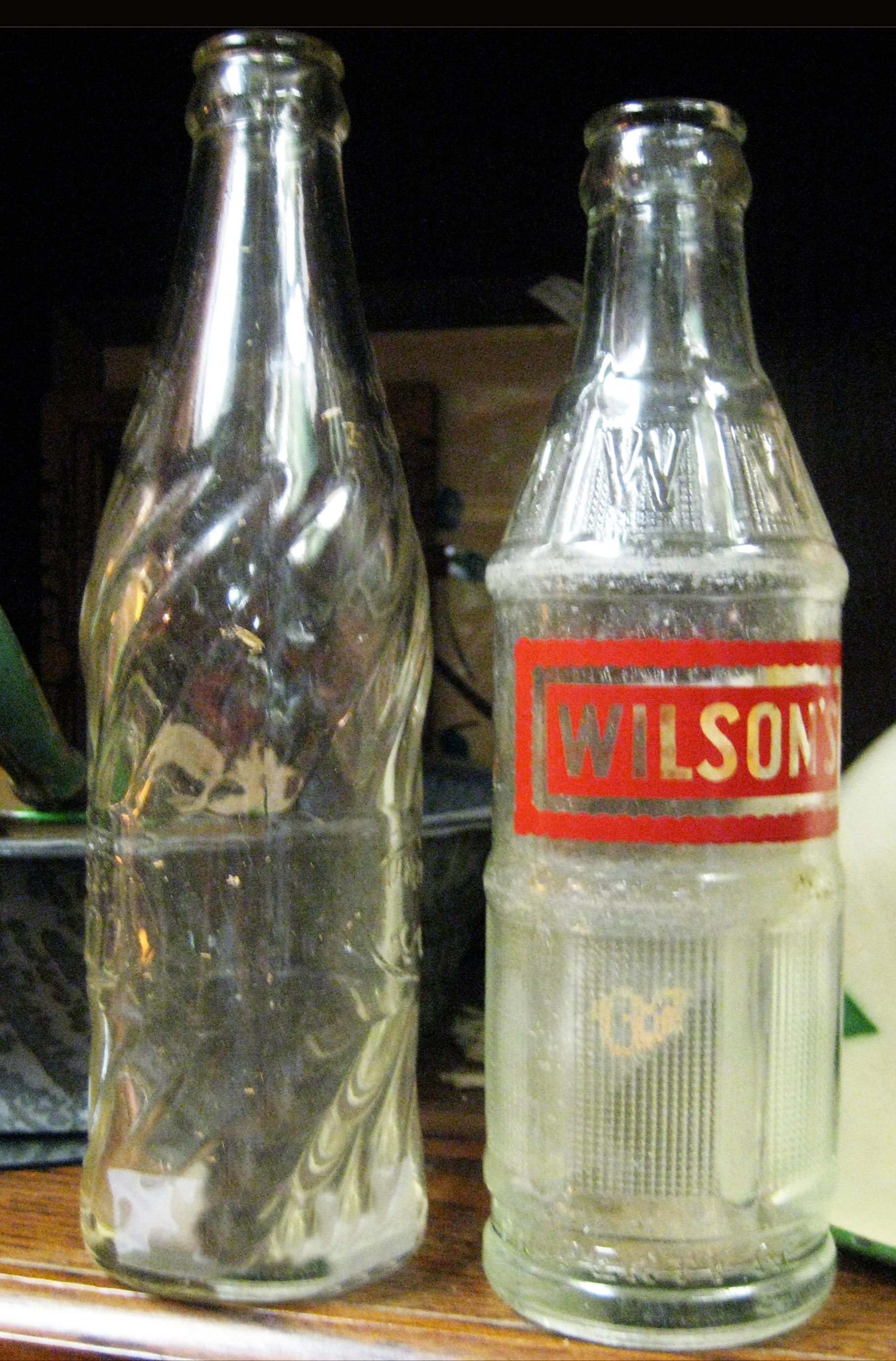
bottle photo

. . . and now let us drink a toast to the milk of human kindness . . .