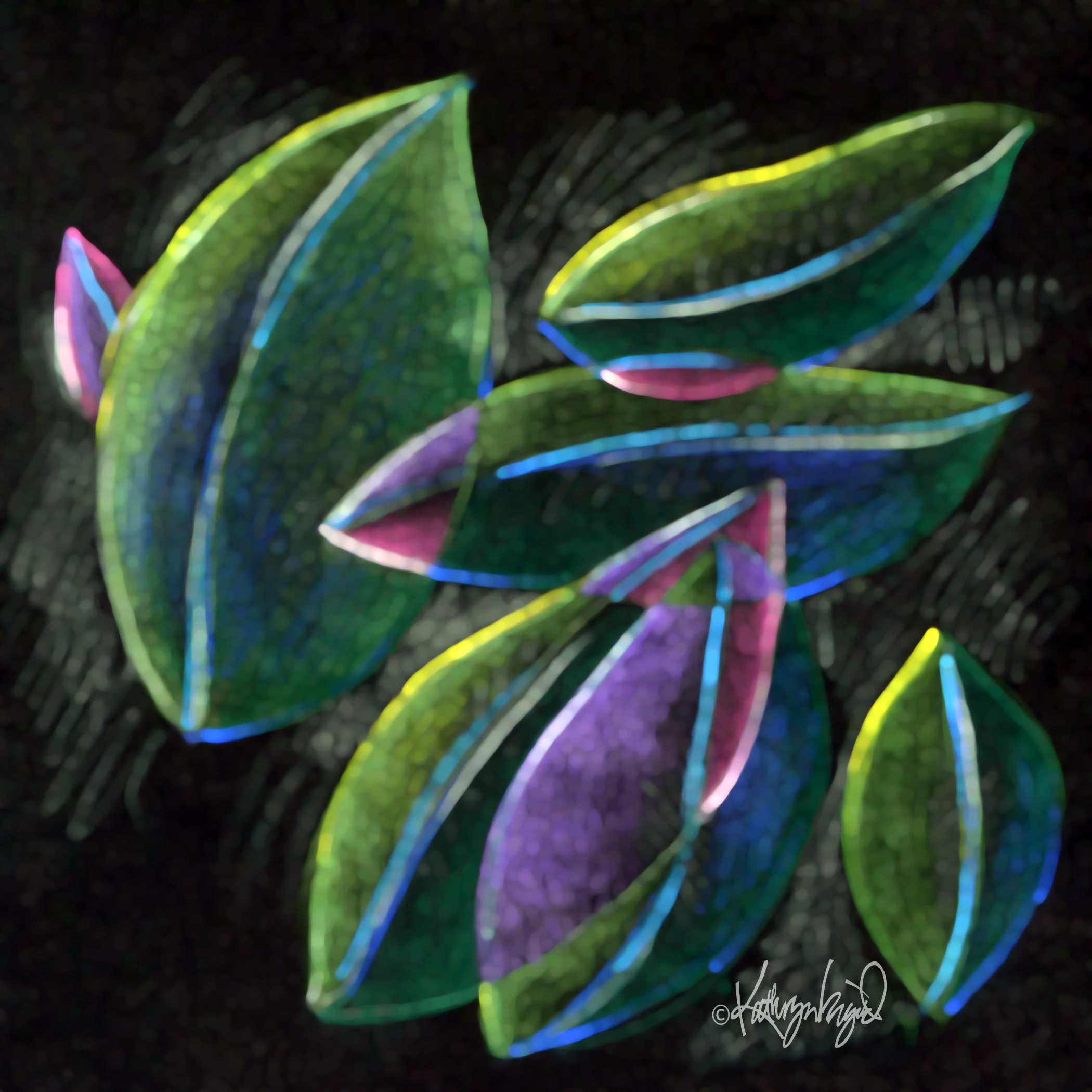
All Kinds of Music

Drawing/painting illo: Three ComposersIn my head, there is music. Mostly, it’s a rambling, meandering thing without much form or direction, just a little ditty that my subconscious seems to hum to itself along the journey of the day. Once in a while, it’s an earworm, some tune or phrase caught in the soundtrack of my brain and put on long-term Repeat because I heard it or remembered it recently and didn’t have another thing to replace it with soon enough. Often, when I’m drifting off to sleep or marking time while I wait for something to happen, there’s a sort of internal theme song of mine, a mere snippet of a melody that might be a simple part of a Bach invention or might just as well be something of my own invention inspired by Bach or some similar composer, a line that becomes more or less complicated, turns from something slightly Baroque to a more Classical seeming style for a bit and then becomes a very plain little row-your-boat kind of canon before returning to its silent corner to wait for my next moment of internal quiet. On rare occasions, there might be words attached or an obvious external source of whatever song seems to have sneaked and snaked its way into my frontal lobe for a lope or two around my one-track mind.

Yet I have not the gift of composition. When I think about it in a more determined and purposeful way, I have all sorts of ideas about how I would probably set a particular poem or story text of mine if I did have compositional skills, how I might voice the piece or what instrumentation I think would be just right for the words and ideas therein. But it would be helpful, if I really intended to do any such a thing, if I had the slightest notion whatsoever of music theory or how to read a score (let alone write one), of what certain instruments can and cannot do, and whether the human voice is actually capable of making the sounds that might be required of such a project.

I am ever so glad that there are composers in the world capable of carrying a musical idea to magnificent, magical fruition. I sincerely doubt that any of them would set any text, mine or another’s, in just the way that my moseying mind seems to believe it would—for good or ill—and that is the way the universe operates. Each of us has skill sets and desires and training and passions that make us better, or worse, fitted for the tasks and arts that we imagine to be useful or pleasurable, and each has limitations even on our own abilities to recognize where we will excel and when we might fall short. What a wonderful thing it is that, though I’m not a composer myself, there are excellent composers who can and will set my words to their own music, because after all, choral music is one of the most clearly collaborative of activities anyway.

What a wonderful thing it is that, though I will most likely never master bringing what rings inside my skull out of it in an intelligible way, let alone anything like the one I imagine in its internal incubator, somebody out there is busy penning loveliness and longing, drama and dreams, that will carry their music forth into the hearts, minds, and ears of a waiting world’s humming silence.
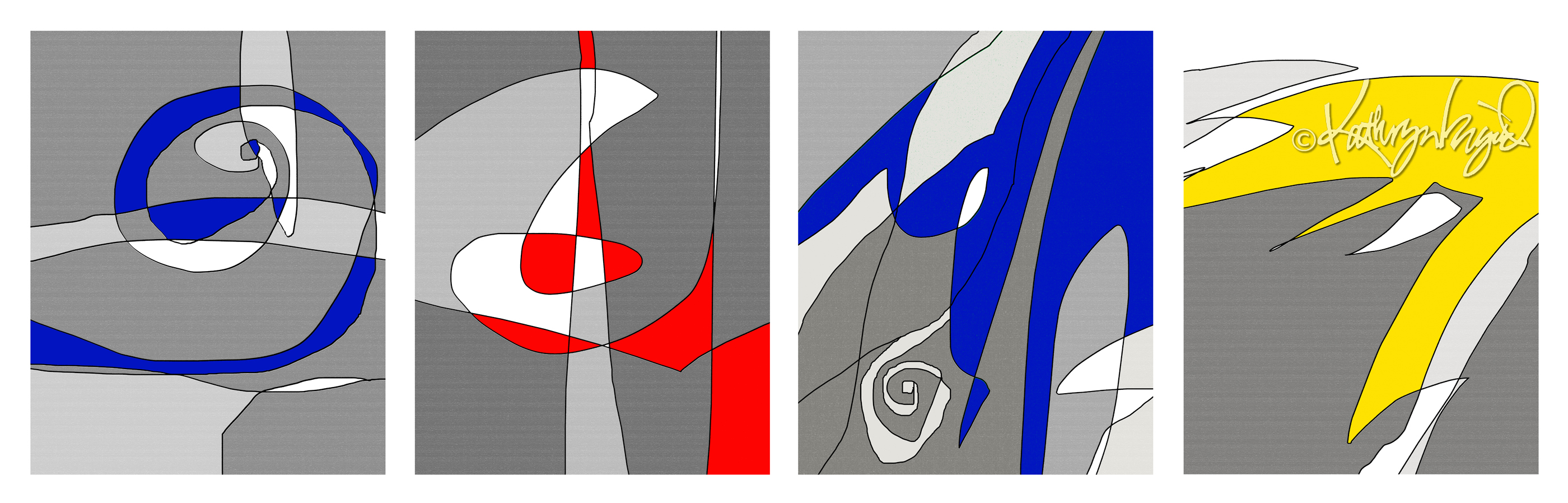
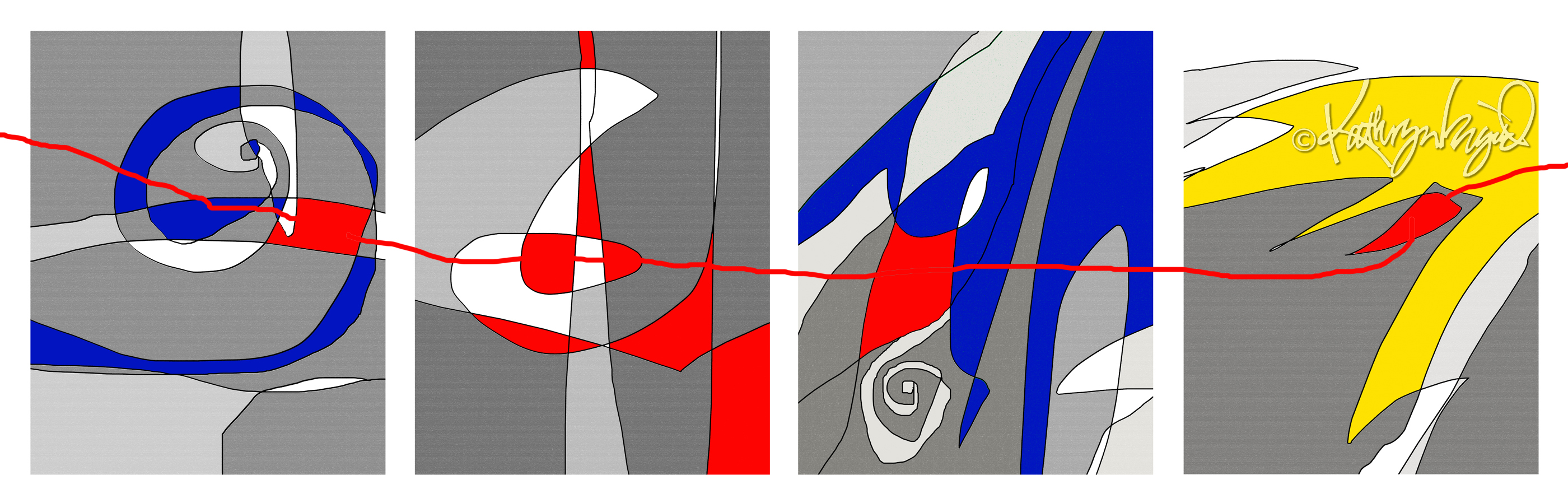
Röda tråden (The Red Thread)

Röda tråden is the Swedish phrase for connectivity. I learned it from my husband, who in turn learned it during his dissertation studies on modern Swedish choral history, and in a way it’s the perfect encapsulation of what his research revealed: that the astonishingly deep and broad influence of such a small country, in such a short time, on such a large field as Western choir singing and music came about primarily because of the remarkable and unique confluence and joining together of a huge number of events, people, ideas and resources in that little land at the end of the Second World War. As unimaginably terrible as war is on any scale, it’s all the more a testament to connectedness that at the end of one of the largest we’ve known, such good and meaningful and positive elements were all drawn into one significant, beautiful growth spurt in the art of singing together.digital illustrationAs a miniature of String Theory in the arts, this surge of the choral art in Sweden is notable (no musical pun intended) not only because it posits a reasonably substantial explanation for the larger choral sector’s modern expansive development amid the general devastation and struggle following the end of WWII, but also because in doing so it illustrates wonderfully how the intertwining of all sorts of seemingly disparate elements such as safe havens from political unrest and postwar reevaluation of norms, personal and professional relationships and experimentation with new media could come into contact and interact to create a new mode of thinking, acting, composing, teaching and singing. In turn, this is a striking model of how people from distinct cultures, educational backgrounds, economic resources and political systems and of widely varying personalities, unified by the one tiny thread of choral music, could be pulled together into a complicated system that, though still colorfully messy and imperfect, led to a potent common end that has had lasting and marvelous influence for long and fruitful decades since.

I am, of course, grateful on a personal level because this Swedish postwar influence on Western choral culture has not only enriched my husband’s professional and artistic endeavors–not to mention was the basis for his award-winning doctoral dissertation that in turn opened a lot of friendly doors to us both in Sweden–but because it produced so much spectacular music and inspiration for so much more.

digital illustration

Röda Tråden is the Swedish version of the idea that–indeed literally–fascinates so many of us: the connecting thread–that which binds one thing to another. I can think of nothing greater than to spend life seeking the Red Thread that shows us our commonalities and binds all people together as well.

Further, though, I am grateful that such an otherwise inexplicable event as the ‘Swedish Choral Miracle‘ seems to me ample proof that all things and people really are connected. And that through recognizing and making good use of those connections, however, odd or tenuous they may appear, there is hope for new and better songs to be sung everywhere.

If I needed further proof of this, last night’s concert gave it amply. My spouse conducted the combined forces of the Chancel Choir of the church where he’s currently interim choirmaster plus their excellent hired pro orchestra in performing Haydn and Dvorak’s two settings of the Te Deum text as the concert opening and closing, respectively, bookending the extraordinarily lovely and moving Missa Brevis of Kodaly. I came in to sit for the concert among strangers and acquaintances from the church and discovered a friend from another parish sitting across the aisle from me, then learned from one of the choir administrators that a friend of hers in attendance turned out to be a long-ago colleague of my husband’s from another state, and finally went up to greet my guy after the concert and found him speaking with a group of ladies in the front row, one of whom was the wife of a former US president. What brought all of us divergent people together in this moment? Music. Beautiful singing and playing. Chance, kismet, divine intervention. Call it what you will, the slender but unbreakable thread that connects us all drew us into one place for a time of basking in the inscrutably beautiful harmony that is beyond craft, beyond art. That is a concert without peer.

Musick has Charms

The charms of music can, indeed, soothe the savage breast–and it can bring the terrible savage right out of the calm breast just as well. It’s a power that few can resist, love the music or not; it gets under the skin and slides on into the soul. The marvels of music are not, as you know, unknown to me and yes, I have been both incited and soothed at various times by it.

But I haven’t lived the life of total immersion. That is, as are most fully engulfing passions, left to the titans of the art. Not necessarily people known and celebrated by a large and laudatory world, indeed, but those who, whether in that pop-culture celebrity way or from deep in the dark of the behind-scenes action or somewhere in between have shaped history in whatever bold or subtle way their particular art could do.

I said I was going to be a bit dark and Halloween-ish these days, but I was reminded that this day deserves a different kind of recognition, being a memorable date of another kind altogether: the birthday of one of those titans of musical arts aforementioned. So you get a break from my grimmer humors while I bow to a great musician and a lovely man.pen & ink drawing

My husband, you ask? No, I would surely call him both as well, but I refer just now to one of the musicians who helped pave the way for my spouse, inspires him in his work, and befriended him both professionally and personally in ways that made it more possible for my partner to be quite the accomplished musician and artist that he himself is. I’m talking about the man sometimes known as the godfather of Swedish choral music, Eric Ericson.

He is celebrated by far more than just his family and friends, more even than his numerous choirs’ members and his almost countless students, because he stood at the center of an almost unbelievable burst of musical art flowering in the little Scandinavian nation of his birth and spreading throughout and beyond Europe quite immediately after World War II, sooner than it should have happened by rights except that his own country remained neutral and mainly untouched by the physical depredations of the war, and enough so that a number of outstanding leaders in culture took refuge there during and after the war, creating a remarkable hothouse where those fertile minds could put their restless art to work, and often did so together.

He is celebrated also because, as one of the central figures in this new bloom of music, he helped to shape the whole modern state of choral music, both in the church and in secular circles, in Sweden and to foster its wide spread via his own work and travels, via that of his artistic and intellectual partners and rivals and colleagues, and especially via the many, many young musicians that between them they all trained and sent off into the wide world. Their collective influence, expanding at the virtual rate of plant cell division and sending tendrils around the globe, is a rich and vital gift that will long outlive them all.pen & ink drawing

Thankfully, Eric Ericson, for one, is going to give that theory a run for it, as he has attained more than ninety years already himself. And his artistic offspring will undoubtedly keep the music sounding and growing for a very long time too, and for that I am happy and grateful indeed. We who love choral music today owe him thanks.

With that, I will say that the gracious and generous kindness that he and his dear wife have shown on a personal level to both my husband and me makes me as glad as anything to think of him on this day with great admiration and fondness. I hope that every note I have seen him conduct, heard him play on the piano while conducting and discussing the finer points of music or listened to him hum under his breath as he recollected another bit of his own fascinating and incredibly complex history as a musician will linger in the atmosphere for many years yet to come, and that in turn, no matter where on that spectrum of artistic or intellectual accomplishment any one of the rest of us happens to perch, we too will make our own kind of music echo happily in the hearts of all those whose lives we touch.

Happy birthday, Eric Ericson, may the music you hear always soothe and delight you.pen & ink drawing

The Very Music of the Air

My husband’s parents are longtime travelers and music lovers. In addition to being their son’s chief cheerleaders and supporters in his musical career from the beginning, they have always enjoyed listening to all sorts of other music, particularly jazz, and in that, particularly big band and swing music. They love live music and have gone many times on road trips to various jazz festivals over the years, and Mom called this afternoon with an enthusiastic review of their just-completed trip down to the Newport Jazz Festival. They don’t do any of this by halves: it’s a serious pack up the car and leave home expedition for these two, in this case a drive from east of Seattle where they live on south down the Washington corridor to Astoria (just over the Oregon border) to meet a couple of good friends at a restaurant before they trek their last couple of hours down the coast to Newport, Oregon where they stay for the festival. They attend a number of concerts and events every time, and this time opted for the additional festival closing candlelight dinner with its own live music. And of course, being Mom and Dad, they also took a couple of side trips to see an old friend (possibly younger than they are) who doesn’t get around as much, and to go a bit farther down the coast for an extra stay in a seashore place they love. And the centerpiece of the trip is, on these expeditions, certainly still the music–they take such contagious joy in the variety of performers and styles and pieces and concerts they hear each time and, I think, are fueled by them with a bit of a new lease on life each time too. Music does do that to us, as I might have mentioned once or twice in these posts . . .

digital drawing imageI think of all the lives that have been changed by music–and the music-makers who have changed the lives of us listeners who get to experience it–and am astounded yet again by the potency of this communal experience. What would it be like to [shudder!] have a world with no composers, no violinists, no Dave Grusin, no African drummers, no klezmer bands, no Ray Charles, no Elly Ameling, no Chinese opera, no Eric Clapton, no mariachi, no Baroque oboists, no ZZ Top, no reggae, ska or zydeco music, no Ella Fitzgerald, no oud or sitar, no Jussi Björling? An unimaginably dark place, that world, if you ask me!digital drawing imageI’m always immensely pleased to hear Mom and Dad have had another marvelous time out exploring and savoring the countryside. Of course there’s the simple delight in knowing they’re happy. But besides that, through these adventures of theirs they keep up with an enormous cadre of family and friends all over the country, take interest in a mind-boggling range of cultural and historical sites and sights along the way, admire the breathtaking breadth of the American landscape and its ever-changing character, meet and adopt fascinating people everywhere they go, dine at whatever local favorite watering-hole captures their imaginations, and come home to tell the tale and renew our interests in such things–either over the phone or, if we’re lucky enough to all be in the same part of the country at the same time, over dinner.

So much of this started in part as a response to their love of music and the pull it has to bring them across this sprawling land. I think of the composers, music theoreticians, and other artists and philosophers worldwide and over the years who have posited a cosmic musical scale, heard music in the ambient overtones of the atmosphere in which we exist, and built art and ideas around that in ways the speak to the inherent musicality of our existence. It’s entirely possible to conceive of the existence of something that very literally attunes us to one another and to the universe in which we exist, that urges us irresistibly to live in harmony somehow.

digital drawing imageWhether there is some quantifiable and empirical way of knowing and understanding this, I as a non-musician and madly un-scientific person can’t tell you fully. What I do know is that there is something so inherently compelling in music that almost all of us are drawn to its power in one form or another. And that there is plenty of good reason for us to attempt harmonious living of whatever kind we can, and if there is no other way to achieve such things I think that in music might very well lie the key to doing so.