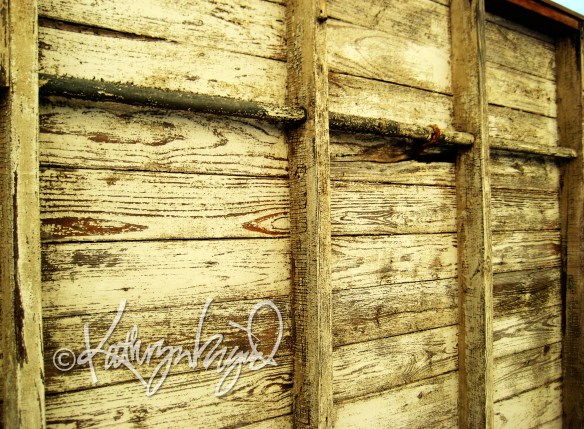
There's a reason this wall reminds me of that great tale of suspense and horror . . .
The Yellow Wallpaper, Charlotte Gilman Perkins’s wonderfully creepy short story in which she compresses the narrator’s descent into madness down to a few remarkably hackle-raising pages, is a bit like the process a building undergoes when neglected and ill-treated. The slide into decrepitude and decay may be slow and secretively incremental, as is often the case, or like Perkins’s poor madwoman the structure may disintegrate in an ever-speedier spiral rush to utter ruin. What is fairly consistent is that whoever is responsible for the maintenance of the place keeps it out of sight, out of mind enough to pretend that nothing bad is happening. What is more consistent yet, perhaps, is that any building falling prey to bad caretaking will do so in the way of a body falling to disease, that ‘thigh-bone connected to the hip-bone’ path of disintegration where the collapse of one part or system leads to that of the adjacent ones, and so forth, spreading until all are in full deconstructive mode.

When things slip into the vortex of dissipation . . .
So I know that I can’t rest on my laurels if I happen to find a moment of seemingly settled pristineness. It’s bound to be an illusion. Somewhere, just out of view or conveniently forgotten, there’s a fine crack stealthily forming between the concrete driveway and the foundation, a swash of grime sucking into the most vulnerable point in the guts of the HVAC, one industrious ant setting up a sneaking trail to the one corner of the living room window trim whose caulking has curled back and left him an opening for invasion. And I know where each of those things leads.
I begin to feel a hint of that same crawling paranoia that the infamous wallpaper fed in the story’s hapless heroine: the sense that bit by bit, the house is gathering forces to rebel against me and my toolbox, that an overwhelming wave of implosion is building, however secretively and discreetly, and if I don’t replace that blown fuse NOW and repair that squirrel-chewed piece of siding on the instant, it’s only a matter of time until that horrific night when I will be awakened by a faint creaking that builds in a breath to a hurricane’s roar just before the house and all of its messy innards, me included and mummified in my tangled bedding, are slurped with a giant THWOOP! into some portal or black hole in the time-space continuum, never to be seen again.

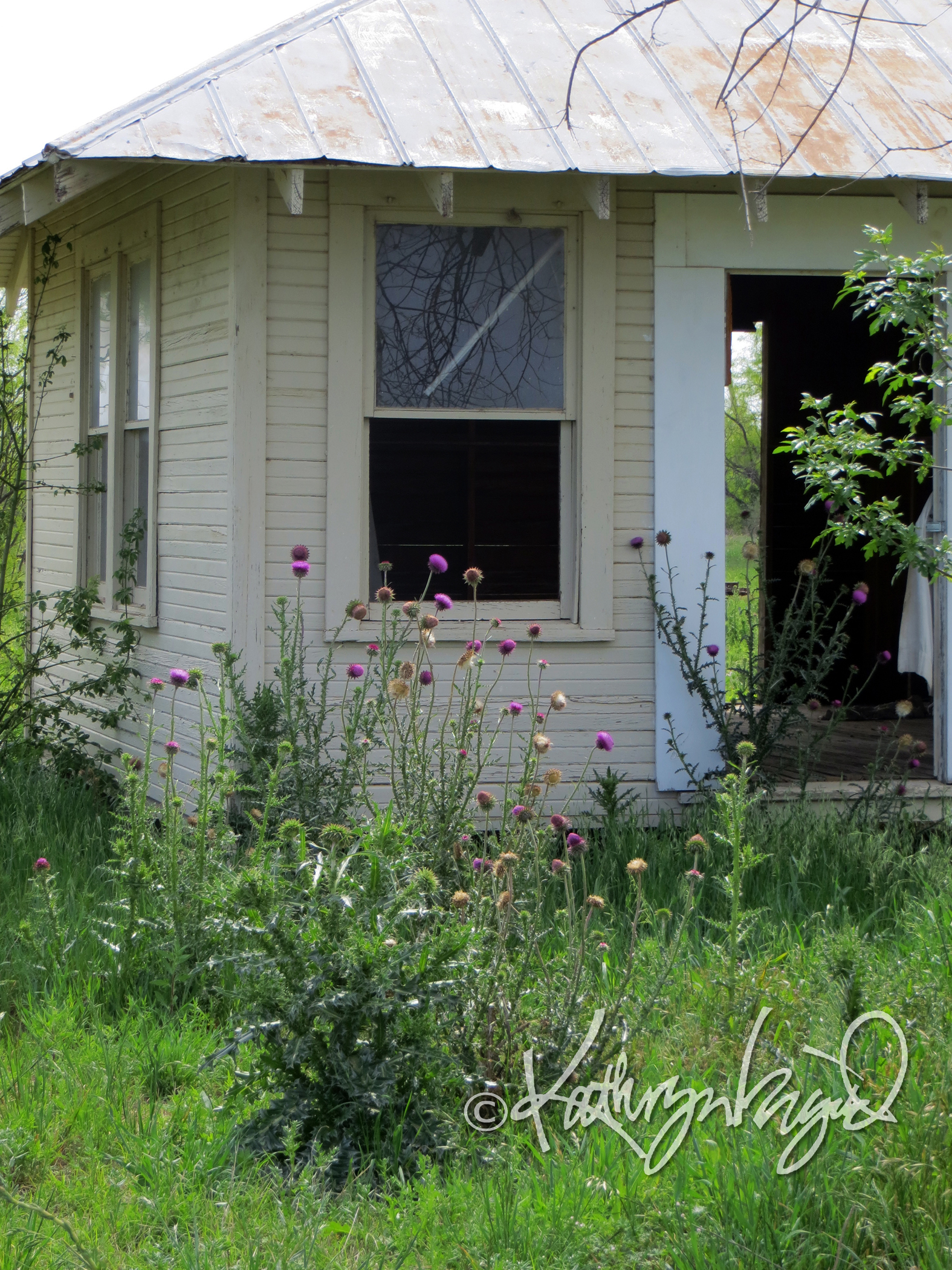
I can't just lock away the projects that I don't want to undertake, or the next visitor might be the undertaker . . .
Now, you will rightly surmise that a generally happy-go-lucky goofus like me doesn’t actually dwell on quite that level of near-nervous-breakdown over the state of my estate perpetually. Nor do I think anyone should. It’s mostly when I’ve been a little too, ahem, engrossed in my love of the yesterday-mentioned sorts of grim fairy tales and goblin-haunted wrecks of architecture that I might get a little inebriated with the idea that every bit of built space for which I’m responsible is headed for immediate wrack and ruin. The rest of the time I am with the ordinary hordes of folk who prefer the polite fiction of “deferred maintenance” over immediate activity and find a virtual infinity of ways to hide, compartmentalize and dissemble when we should be wielding our hammers. Sloth is always such a strong impulse, and the ability to fantasize justifications for it grows exponentially when fed a steady diet of To Do lists, self-imposed or not.
So far, my approach has been to drift along in apathetic torpor and evade the notice of beckoning chores for as long as my conscience can be stretched to tolerate it, and then fall about in a flurry of torrential attack on all the ills of the house for just barely long enough to congratulate myself on my excellent (or, okay, passable) mastery of the place, then fall back into my reverie of comfortable denial. It’s just possible that when that moment of dramatic self-destruction comes to my house of cards I will be safely couched in a nearby garden bed anyway, because it was too much trouble to get up and go in to such a flimsy place by then and I would have been too annoyed by the staring projects all awaiting me.
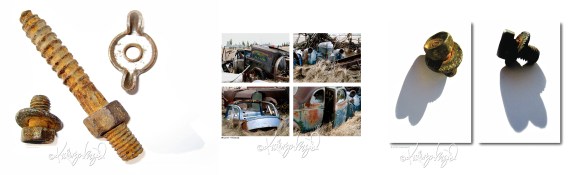
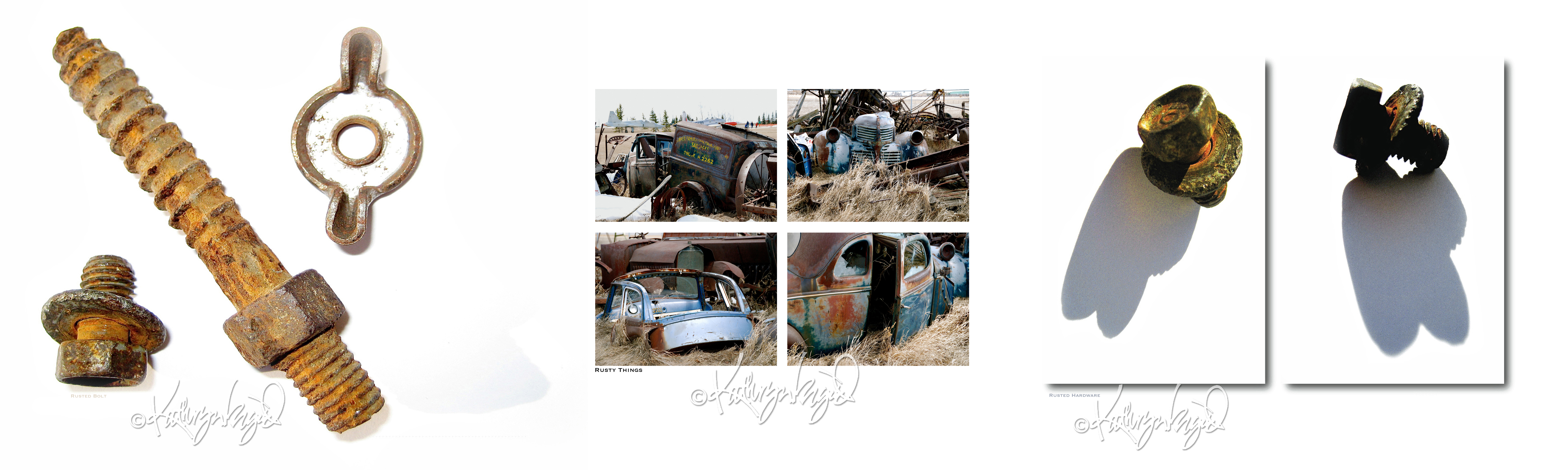
At what point, I wonder, will my love of all things crumbling and rusty be outweighed by my desire to have them actually function as intended? I'm sure many of my friends have asked themselves the same when thinking of me . . .


 Art-Colored Glasses