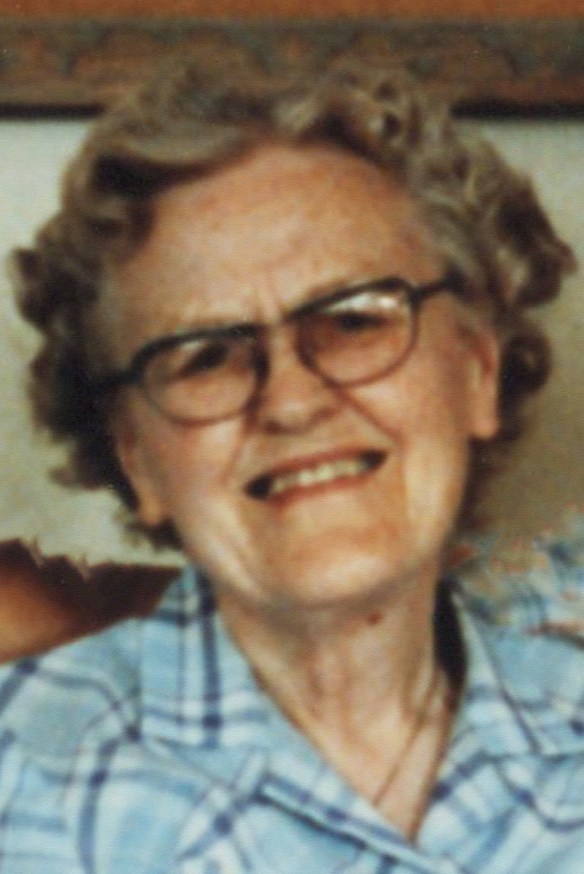
 I was Auntie Ingeborg’s favorite great-niece. Of course, that’s potentially a less impressive achievement if you happen to know that each of my three sisters were her favorite great-niece, our father was her favorite nephew, his brother was her favorite nephew, and so on, ad infinitum. Potentially less impressive, I say, but not at all so in reality if you happened to know Auntie Ingeborg. Because she had a peculiar talent that is very rare indeed among humans: the capacity to make every individual she knew into her absolute favorite. It was completely sincere, unforced, and unquestionably real, and we never doubted it, any of us Favorites.
Auntie had a perpetual delighted smile and an endless twinkle in her eyes and rosy cheeks just made for children to pat affectionately, a lap that was always at the ready for clambering kids to pile on and around for stories, and a genuinely exotic store of entertainments few aunties of any sort can aspire to offer. But by popular standards of style and glamor, you’d never have given her a second glance. She found a perfectly prim schoolmarm look in simple crepe dresses and orthopedic shoes that suited her right down to the ground, and once she established that as her comfort look I don’t recollect her ever deviating from that significantly in the remaining decades of her life. She certainly wasn’t a magazine cover model, with her rather crooked teeth, and with her heart-shaped face accented just a touch too far by her under-bite. But that radiant smile, those softly blushed cheeks, and those merry blue eyes showed off the ethereal beauty of her heart to perfection, so I never once thought of her as ordinary at all. And she most certainly wasn’t ordinary.
Auntie had skills, talents, powers and exotic resources that no one could have guessed on first meeting her. First off, she lived in an apartment, quite the exotic concept to little kids raised in American suburbia. It was already a well-worn building of that vintage that had all sorts of wonderful creaks in its hardwood floors and hallways, a cage-style elevator that was just about the most mystical contraption I’d ever seen and carried us slower than a kid carries his books to school on Exam Day. And it had a Murphy bed. One of those fantastical metal monsters that stood on end, hidden in a closet, by day and pivoted out to unfold down at night.
But also during the daytime, as we learned, it stood guard in front of Auntie’s toy chest, an old and very slightly musty trunk filled with even older and rather odd and very delightful toys, including one of the earliest versions of a small robot I can recall, a little metal man that, when the key on his side was wound, began to walk stiff-legged across Auntie’s carpet in a cheerfully menacing zombie sort of way as the sharp little metal spikes that protruded through the soles of his metal feet would push out to raise up each one alternately from the rug. It was the sort of toy that would never be allowed by modern parents and other legal experts, because the foot-spikes were incredibly sharp and the metal was hard-edged and undoubtedly the paint on it was full of lead, and we loved to play with it almost endlessly. There were other bits of magic and mystery stashed in the toy box, to be sure, not least of them that we quickly learned to dig into the box thoroughly on arrival, and as quickly as we could wrestle the bed far enough on its pivot to release the box to us, to find the box of Barnum’s Animal crackers that Auntie happened to have hidden along with the toys in there. Those who grew up eating them tend to agree that they are fairly insipid of flavor and texture, but the fact that they came in a charmingly decorated little box that looked like one of Barnum’s mythic circus train cars, full of exotic beasts, and it had a string handle on it for carrying around with us as we played with the toys and we got to dole out the little biscuits at our own leisure from the little wax paper lining inside the box–why, this was the stuff of dreams!
In truth, the toy box, though it was the object of our beeline in the door on arrival, was not the most crucial of entertainments at Auntie’s–that status was Auntie’s alone. For, as a lifelong grade school teacher, she knew how to amuse and occupy the caroming minds of wriggly kids about as well as anyone on earth ever did. She quizzed us about our wide-ranging and rarely accurate knowledge on any number of topics, showing more genuine interest and enthusiasm than any such conversation with miniature humans deserves, she played her old upright piano and sang silly songs and very old hymns, and best of the best, she would let us all pile up around her as she told fascinating folk tales, the finest of which were accompanied by her making pencil marks on her paper tablet to illustrate the path the story’s protagonists took from one episode to the next, the drawing of which ended quite miraculously in a picture of something–perhaps a giant vegetable with a person who lived in it looking out its window, or our favorite, a cat whose tail curled in a wild spiral that ended both the tail and the tale. She was no specimen of the more refined social graces that might be expected by a more patrician crowd than her circle of family and friends. Physical or athletic grace was clearly not her great gift any more than it’s mine–when we moved the Christmas tree into the middle of the room to join hands and circle it singing old Norwegian Christmas songs, as was our sometime tradition, Auntie managed not once but in two different years to bump into and topple the decorated tree. I’m not even absolutely certain that the second time could be credited entirely to her, because it’s not as though there wasn’t the previous experience to tell my father, for example, that we could consider just doing that little ritual on one of the days when Auntie was celebrating at another relative’s house. But given that no one was harmed in the event and that we all had an excellent laugh not only on both ‘tipsy’ occasions (no, Auntie was not–only the tree was) but for all the years since as well, he can hardly be faulted if he did suspect a repeat in the offing. Auntie, as it was, laughed harder than any of us.
Auntie’s driving history, too, had certain mythic qualities to it, ending when she was at least in her eighties and still chauffeuring needy Old People (some of them undoubtedly much younger than herself) to the doctor’s office or the grocery store or church, or to where she taught English as a Second Language to immigrants for a very long time. The beginning of her automotive life was illustrated for us by the awe-inspiring story of the day that my father, then a high school student, came home after classes and found Auntie reclining on the family couch in a somewhat dazed state, from whence she plaintively asked if her nephew would mind going out to retrieve her car, which she had left at the neighbors’. He was puzzled as to why she hadn’t, evidently, brought it along with her all the way to his parents’ house, until on arriving at said neighbors’, he could see that her slightly skewed understanding of the operations of centrifugal-vs-centripetal force in driving had resulted in her cutting the corner of the street, jumping the neighbors’ front rockery, and landing the car in the midst of the garden border under their front window. It is unclear how, precisely, he was able to successfully remove the automobile from its highly artistic position in the neighbors’ front yard, but apparently this did occur, as did eventual restoration of the yard’s normal, more vegetal, aspect. Auntie’s driving was somewhat tamer after that, though occasional indications of her earlier style did leave us all wondering over the years how it was that she never seemed to get in any further accidents, or even get a police citation, out of all her miles on the road, an outcome for which we were all profoundly thankful.
It may be presumed that among other things, the lovely lady we knew alternatively as her self titling of Jog-along Julie did indeed keep on moving through life at a steady pace but because she had so many commitments to her teaching at school, community and church locales and to her watchful companionship of nearby friends, she didn’t need to drive very far when she did drive.
She was, after all, far too busy taking care of and cheering up a multitude of others, writing letters prolifically to family far and near, and reading–to herself and to others as well. Any birthday or holiday was almost guaranteed to be celebrated with the gift of books, and she can certainly claim much credit for how much her nieces and nephews of all ages learned to love a good story not only at her knee but in the pages of the books she doled out to us. Every story, even the books of silly rhymes and jokes she shared with us, may have had some subtext of educational purpose, given Auntie’s lifelong commitment to teaching, but we knew in addition that the central theme was simply how much she loved us.
She constantly made sure to say something supportive and complimentary to everyone, even on days when and to people with whom it was quite a stretch. When we sisters reluctantly sent her the dreaded school portrait photos that we always thought were hideous representations of who we were rather than what we hoped and wished we looked like to others, she would tell us how marvelously sweet and attractive we were, without fail. When one sister sent the photo that she hated most to reveal to the light of day (because she despised how far she had her hair pulled back on the occasion, thinking it made her face exceedingly exposed) Auntie wrote to her with great kindness that she had ‘a lovely forehead.’ Nothing could, for us, more simply and clearly have illustrated how gifted Auntie was in finding beauty in us even where we felt most flawed.
Though she seemed so fixed in time by her perpetual uniform of the schoolmarm look, by her continuity in writing letters, sending books, telling stories to the youngest members of any party, and driving, albeit more slowly, the Old Folk she knew to their appointed rounds, Auntie finally did actually grow old and die. But of course, even her funeral was occasion for us to hear her piping voice cheerfully chirping out how amazing and fantastic we all were. The relatives who gathered to plan her memorial service were suitably impressed to compare notes and discover yet more of her Favorites among their number. And the whole day of togetherness not only confirmed that her love was what we all had in common, but was filled with laughter at the same old stories of Auntie’s antics, and the warmth of her boundless thoughtfulness and selfless kindness toward all and sundry in the family and in the whole wide world.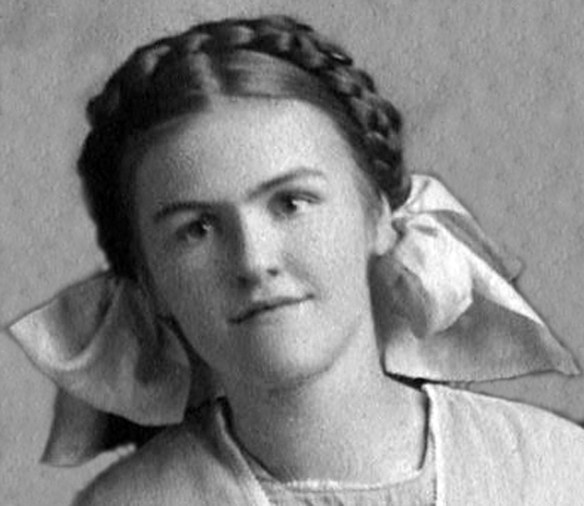




 Art-Colored Glasses