
 No matter where I am on the Fourth of July I am likely to think about the country in which I was born and have lived all of my life thus far: the United States of America. The Fourth is the official birthday of the nation, though many of the current states joined the union long, long after that July in 1776 when it was established by its founders. Like so many nations around the world, this country and its history are a tremendously complicated and varied patchwork of fact and fiction, hope and fear, two steps forward and one step back. Over and over and over again.
Imagine this: a pack of refugees from religious persecution left their homeland and sailed into the unknown across an ocean of which they also knew very little except that their passage across it was dangerous and miserable and killed plenty of them before they hit the new shore. When they landed, to their surprise there were already plenty of other people living on that new turf, and did that stop the interlopers from moving in, too? Of course not. I don’t expect it ever occurred to them, to be honest, that there wasn’t room for everybody or that if they took a ton of the resources around them that might just mean there were fewer for the previous residents of the land, folk who had, indeed, already long established a very different relationship with the continent.
That the illnesses and diseases the newcomers brought with them from Home would endanger and kill many of their new unwitting and unwilling neighbors could never have entered these interlopers’ minds, when they were so preoccupied with not only their current survival but their escape from the hardships and sorrows back in their own homeland. That they themselves would suffer privation, fear, danger, loneliness, and the loss of their lifetime homes, belongings, families and friends across the vast ocean they had crossed was a stark enough reality that perhaps they willed themselves not to think too hard about all that they faced next also affecting the long-tenured native peoples across whose lands they moved like human bulldozers.
The establishment of this new home was far from smooth and easy too, as anyone could probably guess, though I wonder if any of them really considered that the goal as much as simple escape from what they’d known before. Still, none of those inhabitants of North America—invaders or original denizens—could possibly imagine at the time, I suspect, quite how vast the whole continent was and what that meant in terms of creating new colonies within it, let alone new nations. In the years that followed, the westward migration confirmed the existence of innumerable tribes and clans of people not before known to the new arrivals, but also of wild creatures unimagined, of terrain unlike any they had dreamed possible, of climates that had been the stuff of legend until then.
In those many decades of carving out new paths and territories, it was inevitable that, just as it had been with the foregoing generations of various indigenous peoples, there would be struggles over who had access to what, who could live where, and who belonged together with or as far as possible away from whom. No surprise that this led not only to separated towns and enclaves and ethnic, religious, political or philosophical communities but also, in turn, to a wild array of accents and ideas that might as well have been different languages and different species altogether.
Amazing that all of this could remotely possibly coalesce into what is known as the United States of America. Today’s states are still so diverse, even sometimes from county to county or one side of the railroad tracks to another, that it’s nearly laughable to call them United. We fight like pesky siblings with each other all the time; it’s a miracle, in my book, that the so-called Civil War, one of the most uncivilized events in the country’s history, hasn’t simply continued from its beginning to the present day. It does, perhaps, at subtler levels. Just because the invasion of the continent by a bunch of frightened Pilgrims who only thought themselves seeking freedom from tyranny didn’t destroy the whole land and kill every one of them off outright, and because the various internal skirmishes that led to, but were far from limited to, the Civil War didn’t complete that annihilation doesn’t mean we’re not still perfectly capable of incredible incivility at every turn. We try, we fail.
On the Fourth of July, I think of how astounding and—generally—good it is that this messy nation has managed to survive this long without self-destructing. But I can’t help also thinking this of most of the rest of the world. Humans just plain are messy. We form and break alliances; we argue over being Right instead of being compassionate or practical, let alone pursuing justice. We blunder around, hog resources, ascribe privileges and powers to ourselves and our chosen comrades that we willfully deny others, or just pretend the others don’t exist, and thanks to our weirdly, wonderfully diverse array of accents, when we do get around to discussing the least of these things, even those who ostensibly share a language can’t understand each other half of the time anyhow.
Just possibly, our life form may have been civilized at a few choice moments. There is plenty of potential in this odd species of ours, I like to think. Even we Americans aren’t entirely irredeemable; we keep bothering and beating up on each other like so many brothers and sisters, and yet most of us still manage eventually to just agree to disagree and, in moments of precious lucidity, even to see each other’s point of view and operate in an environment of respect and hope. As rotten as we can be to each other, we care enough to wrestle it out and try to find ways to go forward. Together, even. If that isn’t a family worth saving, I guess I don’t know what one is. Happy birthday, USA. Go forth and get a little more civilized, if you can.


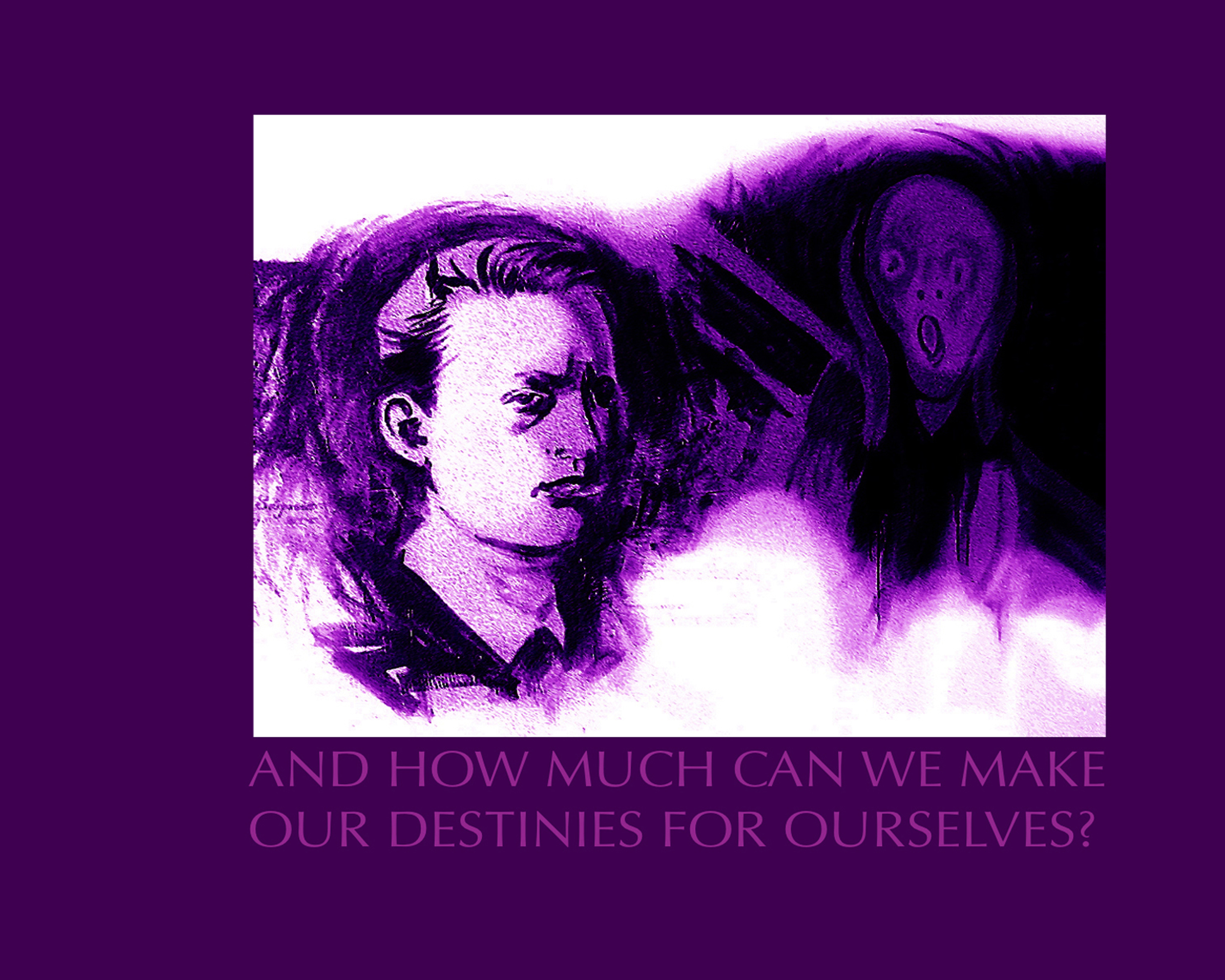
 Art-Colored Glasses