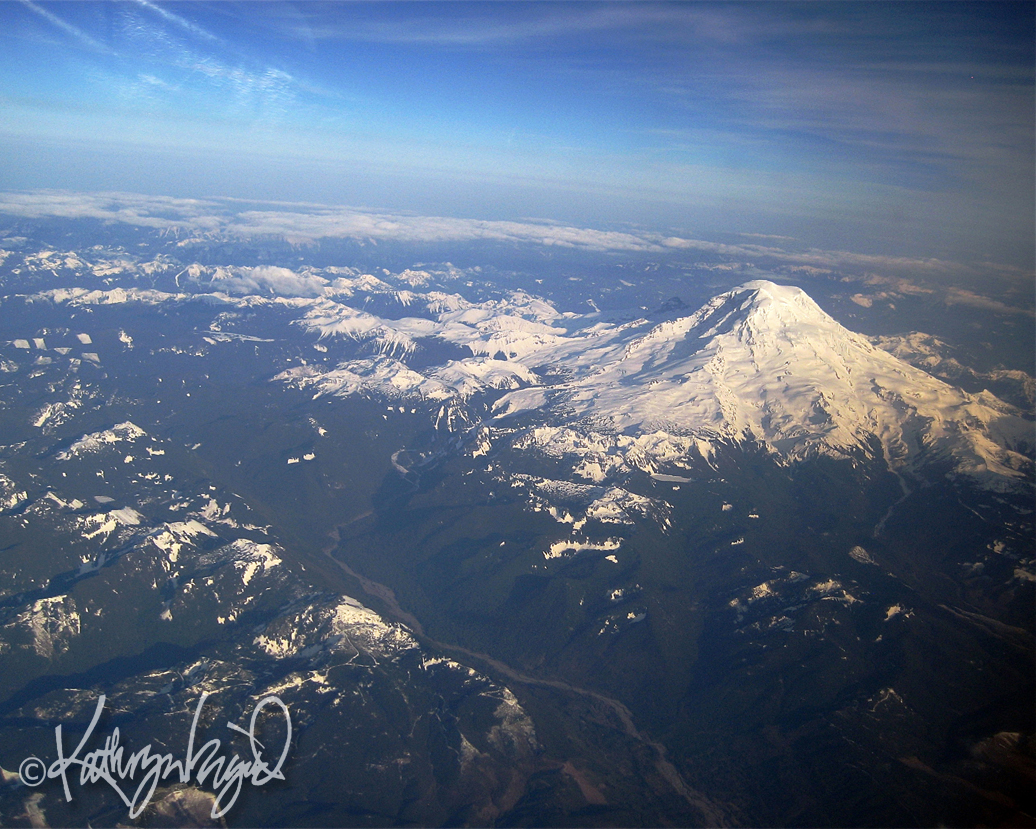
Perhaps this is true of other places, but I only know my hometown’s version of it: in Seattle, or pretty much anywhere in southwest Washington, Mount Rainier is frequently known simply as The Mountain. Yes, we call it by its full name, or by its ‘patrinomial’ ID of Rainier, and sometimes even by its graceful older name Tahoma. But its dominance of the skyline when visible, and of the ethos–the spirit–of western Washington thanks to its potent influences on geography and geological and meteorological character, not to mention the power it has to wipe out half the state should it decide to wake from its long dormancy, all mean that whether in plain view or not it has a hold on the hearts and minds of the locals like no other single force, natural or otherwise. Sometimes when flying in to SeaTac airport the mountain is not only clearly visible but brilliantly etched and jutting boldly through the clouds, if any. SeaTac International Airport sits between Seattle and Tacoma, and the zone so called for its equidistance was finally officially given that insipid and cheap-sounding name some years ago–don’t get me started on it–but it’s well worth flying to a place with any ridiculous name you could conjure if and when you get the right weather, enough sunlight, and an accommodating pilot who appreciates Mt. Rainier’s beauty enough to tip a wing to the mountain’s flank and give the passengers a clearer view.
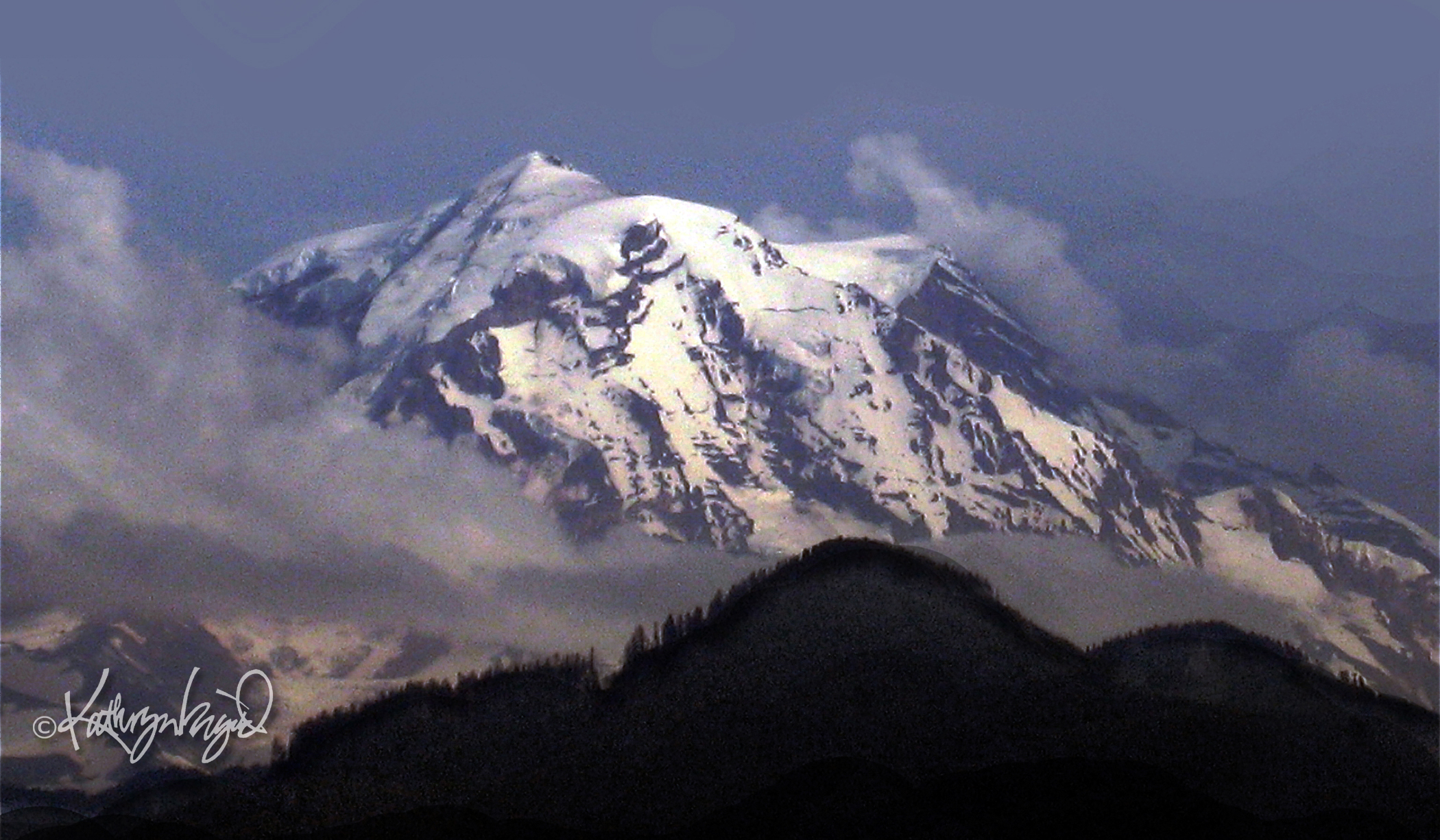
 Truth be told, we’ve seen precious little of the mountain on our current visit. It’s been pretty overcast much of the time, including when we flew in, so yes, the photos here are from other times. I’ve known of visitors who left disbelieving we even have a Mount Rainier, never having glimpsed that big white heap of sugar in weeks and weeks of waiting. The fabled wet weather of the Northwest can indeed curtain off our magnificent totem from view for seemingly interminable times and make us long to be reminded ourselves that it wasn’t all an hallucination or a passion-fueled fantasy. Even when visible, Rainier very often sports a ‘hat’ or veil that keeps a little mystery close by; being large enough to create its own weather, this geological behemoth seems to be quite often crowned with a companion cloud that rarely moves very far off or disappears entirely.
 Despite all of this hide-and-seek, the imminent danger we all know quite well as natives makes us bolt, strap, glue and otherwise thoughtfully position many of our tall or breakable belongings as though to protect them from a petulant child, because we’ve been through enough minor earthquake shakers in our lives to know preparedness pays. Still, while rainy Washington makes floods a real and frequent possibility, if that dormant volcano in our midst gives the really big belch geologists tell us is historically overdue, whatever isn’t swept off in the violent and instantaneous post-blast lahars [pyroclastic mudflows] that will likely submerge the surrounding valleys (the primary lahar channel of which was home to my family for most of my youth) will be treated pretty much like a snow-globe being handled by a curious Godzilla. Game over.
 So we have a certain amount of respect for The Mountain, never mind it being such a fixture in our existence. No, I don’t know anyone who’s ever grown jaded about seeing it, no matter how long he or she has lived in its shade. This is not your typical mountain, looking pretty but losing its allure gradually as you realize you’re rather close and it’s stopped looming higher. It’s set in a fairly impressive range of mountains yet is so much bigger and more prominent than the rest that once the sky clears you just plain can’t miss it, and that sight quickly makes its mark on you. In snow-time, its blue-white flanks rise up to pierce the sky and look so sharply delineated you think you could stick your hand out and grab a fistful of super-vanilla ice cream from just behind that house over there across the street. As the snow melts, streaks made of billions of evergreens and a few exposed rocky prominences reflect sun and sky and passing clouds’ shadows in a changing array of colors that tease you with seeming first as near as your own breath and then suddenly as far distant as a too-sweet dream. Driving there can nearly drive you mad: you look to your left and it’s sitting right across the closest pasture; round the curve and it has shot away as far as the moon; over the next hill, in an instant it almost seems you’ll crash into the bank of snow just ahead of your front bumper.
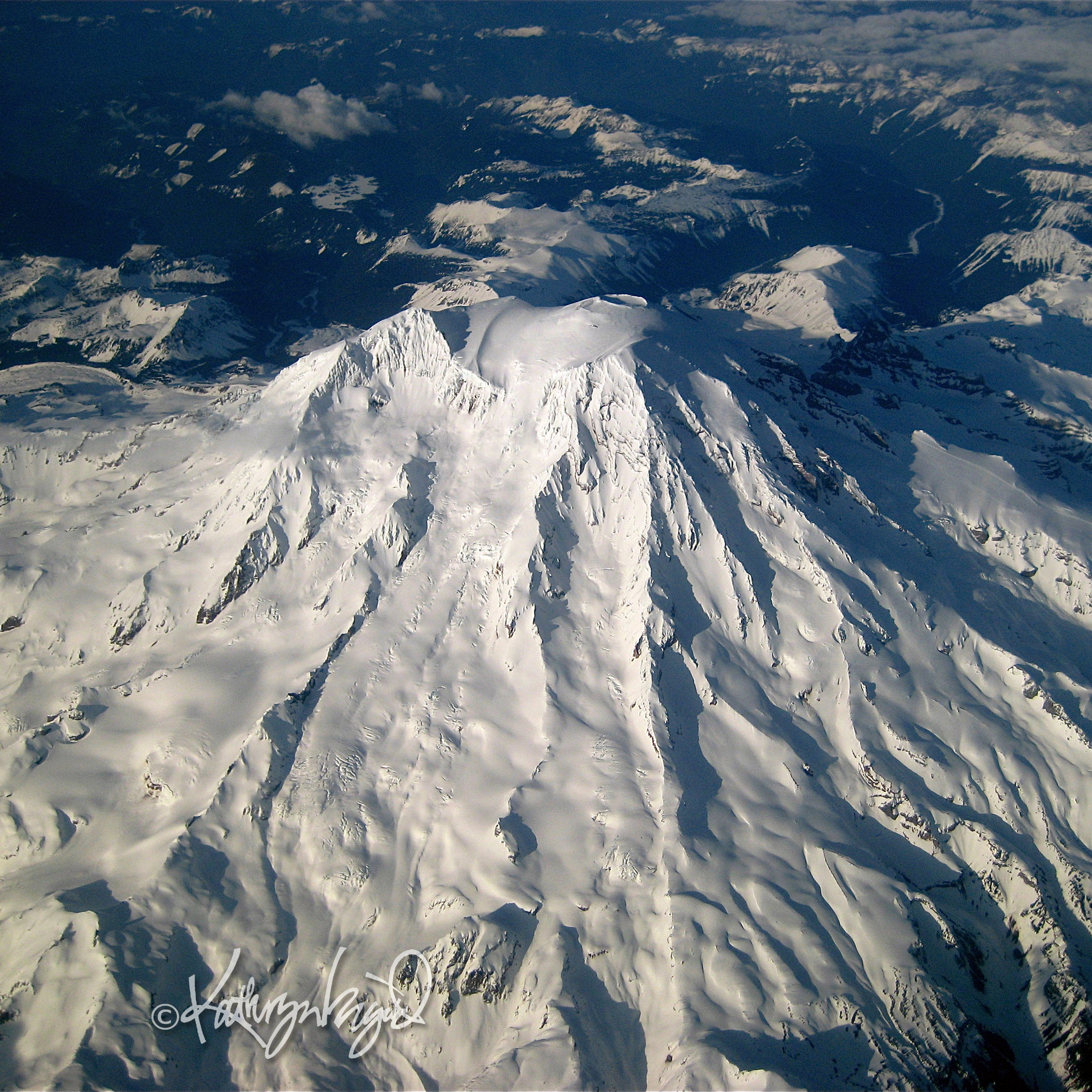 Eventually you get onto the foot of Mount Rainier, yes you do, and you realize it’s so huge that you can still have a view of the peak that seems remarkably like the distant view of the whole that you had from an hour and a half’s drive away. The flora and fauna of this glorious bump on the earth have changed relatively little in millennia, and just being in their midst for an afternoon’s traipse along the trails makes you think both that your own sort might go on forever and that if the mountain is really going to blow, perhaps its taking you along for the ride in instant smithereens might not be altogether the worst thing. That’s how magical The Mountain is, even after all of these years of living at its foot. It might kill me, but if it does it will have fed my spirits incredibly well for a very long time indeed. That mountain there, she may keep her chapeau of a cloud-let coquettishly low on her brow for long periods of time, but when she finally does doff it, Holy Mother of Gleaming Glaciers, she’s a beauty.
In the Shadow of The Mountain
16


 Art-Colored Glasses