Spring in Texas is a highly variable thing. Like most regions where I’ve lived or visited, north Texas can rightly claim (any day, any part of the year) that if you don’t like the weather, all you have to do is wait five minutes. Ma Nature is that sort of fickle filly. She treats us mighty differently from moment to moment, season to season, and from year to year, too. So while last year, the drought and excessive heat both started early enough that we saw virtually nothing of the vaunted swaths of Lupinus texensis, the state flower, the Texas Bluebonnet, this year’s mildness and largesse of rains has kissed the sullen banks of the highways, the pastures and prairies, and not a few lawns, with a brilliant return, as if our nature-mistress apologized with flowers for running off and abandoning us to sere and lonely brownness all of last season. The extravaganza began with a wild froth of yellow sprayed over nearly everything–it’s a wildflower form of mustard known by many names and perhaps most commonly here as bastard cabbage, that nomenclature derived from the rosette at its base that resembles a false cabbage, but Texans probably embracing the less kindly interpretation of its first name because it has spread so widely as to be an invasive and predatory plant whose tough rosettes block out the bluebonnets‘ rise. While I would hate to see it usurp the blue beauty of the state flower, the wild mustard‘s foam floating over the rolling grasslands is a very pretty herald of the return of spring’s wildflowers.
Following the arrival of the mustard, in quick succession, the verges are airbrushed, in turn, with the purples of several vetch-and-clover-like wildflowers I don’t yet know after moving to this region, then the red hues of Texas Paintbrush (Castilleja indivisa), then the sea of bluebonnets, punctuated by handfuls of the pale pink-and-white tissue of Lady Bird Johnson‘s favorites, the Showy Evening Primroses (Oenothera speciosa).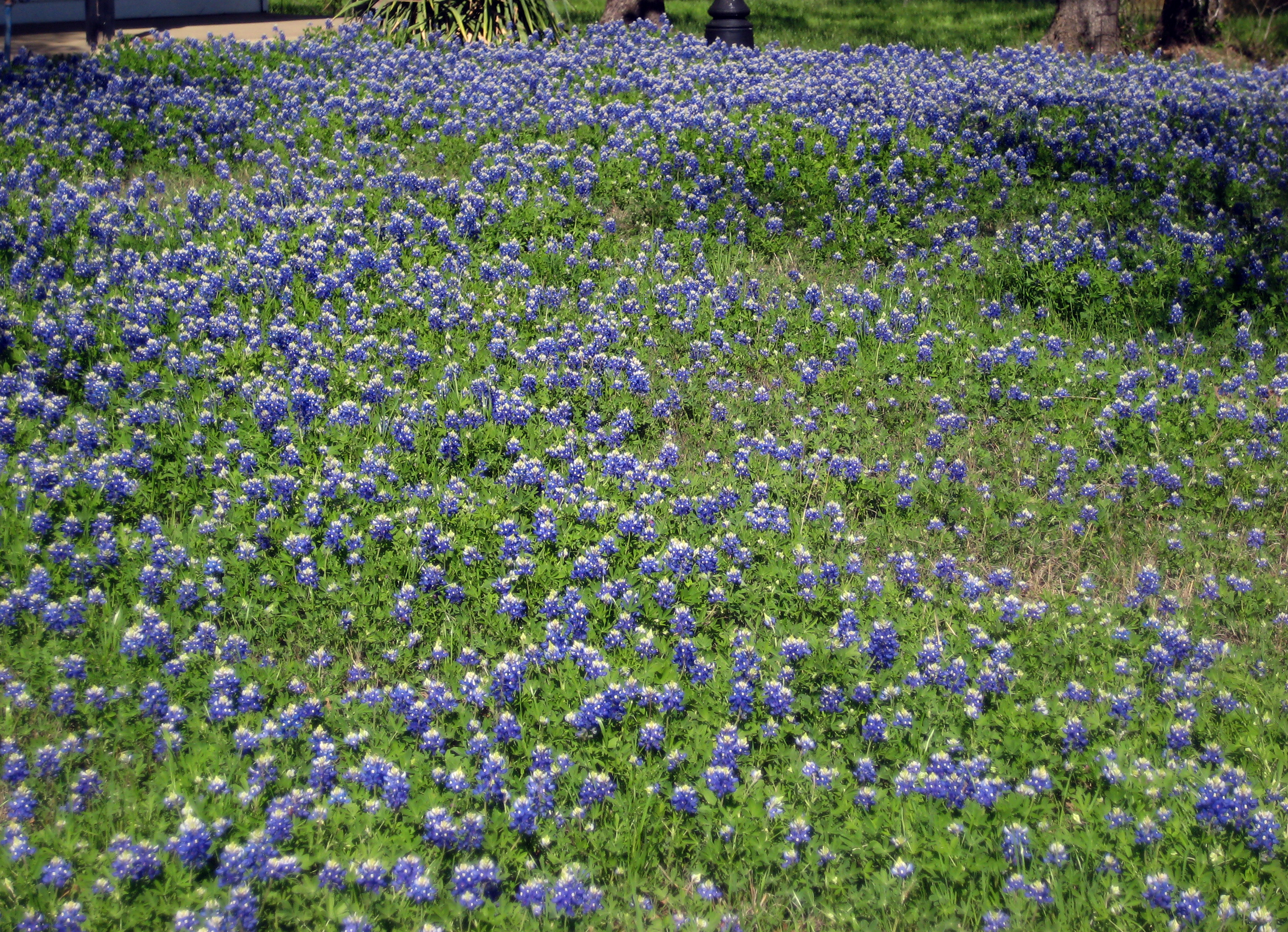 When you’re just moseying along, running errands and minding your own business and an explosion of living color appears before your very eyes, it’s not something you just ignore. If you’re me, you ask your husbandly chauffeur to be so kind as to pull over in the empty lot across the street from the biggest mass nearby so you can hop out and ogle, and take a few pictures. See, there’s this little bit of tension in the romance with wildflowers. As easy on the eye as nearly all of them are, they are, ahem, wild. People don’t really like wild very well, a lot of the time: everybody wishes in his or her secret heart to control the world–at least, to believe they can do so. Wildflowers grow and bloom when and where they are wiling and able to do it, and in many cases they’re not all that cooperative when we try to grow them on purpose. Never mind when the weather patterns of the moment aren’t as particularly conducive to their happiness, health and vigor as they could be. When the blossoming wild does decide to make a grand entrance, however, it can create these impressive and celebratory masses of glory right across the most inhospitable-seeming acres of dirt and weediness. Because, after all, wildflowers are weeds; weeds, wildflowers. As witness the aggressive behavior of the deceptively dainty-looking bastard cabbages, sweeping right over the top of the other spring blooms like a vegetable horde of Huns or Visigoths and laying siege until the smaller, weaker plants succumb and yield their ground.
 Like humans and animals and plants of all kinds, every living thing in fact that populates the earth, wildflowers are essentially invaders and will happily fill in any available space when they’re good and ready to do so. A plague upon the earth! Thankfully, unlike most species, wildflowers, whether annual or perennial, tend to repay their carbon debt rather quickly, subsiding into glorious compost almost as quickly as they arrived on the loam of last year’s dead. So I say, three cheers for the Texas Bluebonnet, which survives drought and depredation, bad seasons and bad gardeners, and gives us a massive dose of grand color virtually for free, then turns around politely and sacrifices its glories for the good of next year’s, or next decade’s, wild display.





 Art-Colored Glasses