The Fine Art of being Meaningless

When I was teaching, I hated grades and grading. Even more than when I was a student. I understand the desire, even the need, for being able to assess and evaluate and compare and all of that sort of thing, but my idealism would much prefer to believe in a world where people do the very best they can at whatever they are doing and that, all by itself, is grand enough. I know plenty of practical reasons why this fluffy fantasy can’t work 99% of the time in reality but it certainly never affected my intense dislike of the whole quantitative approach, most especially when it had to be applied–as empirically and evenly as possible, of course–by yours truly in some areas that are arguably quite subjective.

So I set up criteria as clearly as I could and identified particulars of skill, technique, fact, synthetic application of knowledge and so forth that I considered worthy of the study, and took what measures I could to insure that all students got equal access to those resources and had the opportunity to learn, incorporate, express and otherwise use them. And I gave out grades. It was my job.

But in that aforementioned reality, my own version of which I quite happily embrace post-teacherhood, I am not bound by any requirement to make or evaluate anything on the basis of comparison with anything remotely real, not even the stuff of other people’s invention and making. And I must say that I do appreciate my freedom. Sometimes there’s simply nothing more satisfying than writing or drawing or otherwise making decidedly unreal, if not impossible, things for the pure fun of it. Maybe it just appeals to the rebellious kid in me. Maybe it tickles my fantastic fancy. Who knows but what a miraculous accident could happen one day and I might invent a magnificently useful Thingummy of some sort.

But that’s not the reason to make these things anyhow, now, is it? What is most pleasing of all about the creation of any object of ridiculous and pointless nothingness is the act itself. It’s a fine thing to make artwork of any kind just because one can, to enjoy the creative process without regard to the outcome’s being anything but entertaining for me, myself and I. Yes, that’s what I like. No grading, no evaluations, no need to worry about whether it’s beautiful or meaningful, let alone realistic, because this is my own reality, my own personal little world.

And you’re welcome in it, as long as you know the only rule is that there are no rules, and the only value assessment I’m after on the occasion is whether I had a good time and got some valuable yet enjoyable practice in the process of creating my little graphite universe or my textual treasury of the moment. Well, there is a second rule: you, too, should feel free to visit my place of creativity without being required to grade anything, including your own experience of the stuff, and free as well to leave without being expected to like or dislike anything. Though I sure do like it when anyone is moved by my selfless acts of ridiculousness and leaving my meaningless soul exposed in public to do the same, without fear of recrimination or evaluation, and with the infinitely happy sense that such silliness is not only permitted but encouraged in this neck of the woods. Have fun, y’all. I am.

graphite drawing

A Machine for Making Nonsense

More Myths about Inspiration & Creativity

photo

Don’t accept a falsehood for your reality–if you have to create your own, then do it!

Back on that old topic of whimpering: of all the [wonderfully dire and woefully valid] reasons I can’t possibly do the enormous amount of work required by this assignment, there’s none simpler or more honest than Number 11:

11         BUT I DON’T WANT  TO _______________ (you fill in the blank)!

            Boo Hoo.  It’s not always optional, is it. Just keep firmly in mind that sometimes doing the required thing leads to unexpected delights in the end product. Not to mention the thoroughly predictable delight of having it done, finished, off the To Do list and out of nagging territory. Just get it out of the way now and you’ll be ever so relieved. Maybe even pleased with yourself!

12        ALL CREATIVE PEOPLE ARE (take your pick):

Eccentric; loose; savants; savages; radical; anti-intellectual; uncontrollable; fluff-headed; egocentric; snobbish; smelly…

Everybody is one or more of the above at some point; look at all of our pop-culture idols who get hung out to dry on a daily basis, not to mention all of the religious, educational and political Saints who irk the multitudes so regularly.  So imperfection is hardly a reasonable excuse for avoiding being (or being in the company of) an art maker.

13        IT’S SELFISH &/OR IRRESPONSIBLE TO BE AN ARTIST.

How about how selfish and irresponsible it is to be good at something that enriches lives and shapes culture and to refuse to exercise, to share, those gifts.  How unkind it is to stifle your true self and passions (and spend your life unfulfilled or with a chip on your shoulder) so that you live a half life and cheat your friends and loved ones out of your rich complexity.  How about that for selfish and irresponsible, huh? Choosing a ‘safe’ path never guaranteed anyone’s actually being safe, anyway.

14        NOBODY (read: Not Everybody in the Universe) WILL LIKE IT.

If you find anything that everybody likes, let me know.  For that matter, if you find anything NOBODY likes, I’ll be mighty surprised.  So, isn’t it good enough for you if you think your work has some value?  It may not make you a market mogul, but it’s amazingly fulfilling to be an artist, and (other than food, which is admittedly desirable) practically no other wealth compares.

15        THE GREATEST!!!

Who says?  There is no single Greatest of anything that everyone will agree on yet, and the odds are pretty good that they won’t all agree anything you do is the Greatest—or worst—ever, so why lose sleep over an untried concept.  Do your best and be done with it.

16        IF YOU CAN’T SAY (do) ANYTHING NICE (or well), DON’T SAY ANYTHING AT ALL.

A half-baked effort is usually better than no effort at all; no effort guarantees a lack of (or negative) result, and misguided or incomplete efforts can occasionally be rescued or luck into a better-than-deserved result.

digital artwork from a photo

Think beautiful thoughts!

17        IT ISN’T AS GOOD AS _________________’S.

Probably nothing anybody else ever does will be as good as my work, but aside from that impossibly high standard, you have as good a chance as any of doing work better than somebody’s, at least occasionally, as long as you do work.

18        ALL GOOD THINGS COME TO THOSE WHO WAIT.

But they don’t come to all of the specific people who desire them, or ‘on time,’ or in the desired form.  Your dream might end up in someone else’s stash of prizes if you don’t put up a fight for it.

19        I CAN’T DRAW A STRAIGHT LINE.

No, but a computer can do it for you, or you can use a straightedge, or you can hire a stand-in to draw your straight lines.  Don’t tell me your whole oeuvre as an artist/designer is going to be straight lines.  Sheesh.

20        CREATIVITY = INTUITION.

Intuition is an indefinable sense or sensation that can bring soul and emotional depth to the work (both process and product), but true creativity takes that nebulous touchy-feely power and combines it with study, effort, logic, research, skill and courage and synthesizes all of the elements of an artist’s knowledge and experience and passions into a concrete Work of Art (process and/or product).

21        THERE’S NOT ENOUGH TIME.

True.  We’ll never be given enough time for everything that’s important.  So it’s up to us to TAKE the time.  And MAKE the time.  There’s no real alternative.  It’s called Making Choices (and living with them).

22        YOU CAN’T FAKE INSPIRATION.

Maybe you can’t, but I can.  Seriously, folks, most people won’t know the difference if you substitute delirious hard work and enthusiasm and use all of your know-how to its limits.  If that isn’t quite Inspiration, at least it’s mighty inspirational.  When in doubt, review Item Number 10 in Tuesday’s post (linked above).

digital artwork from a photo

Go ahead: try your wings!

The Mythology of Inspiration

photo

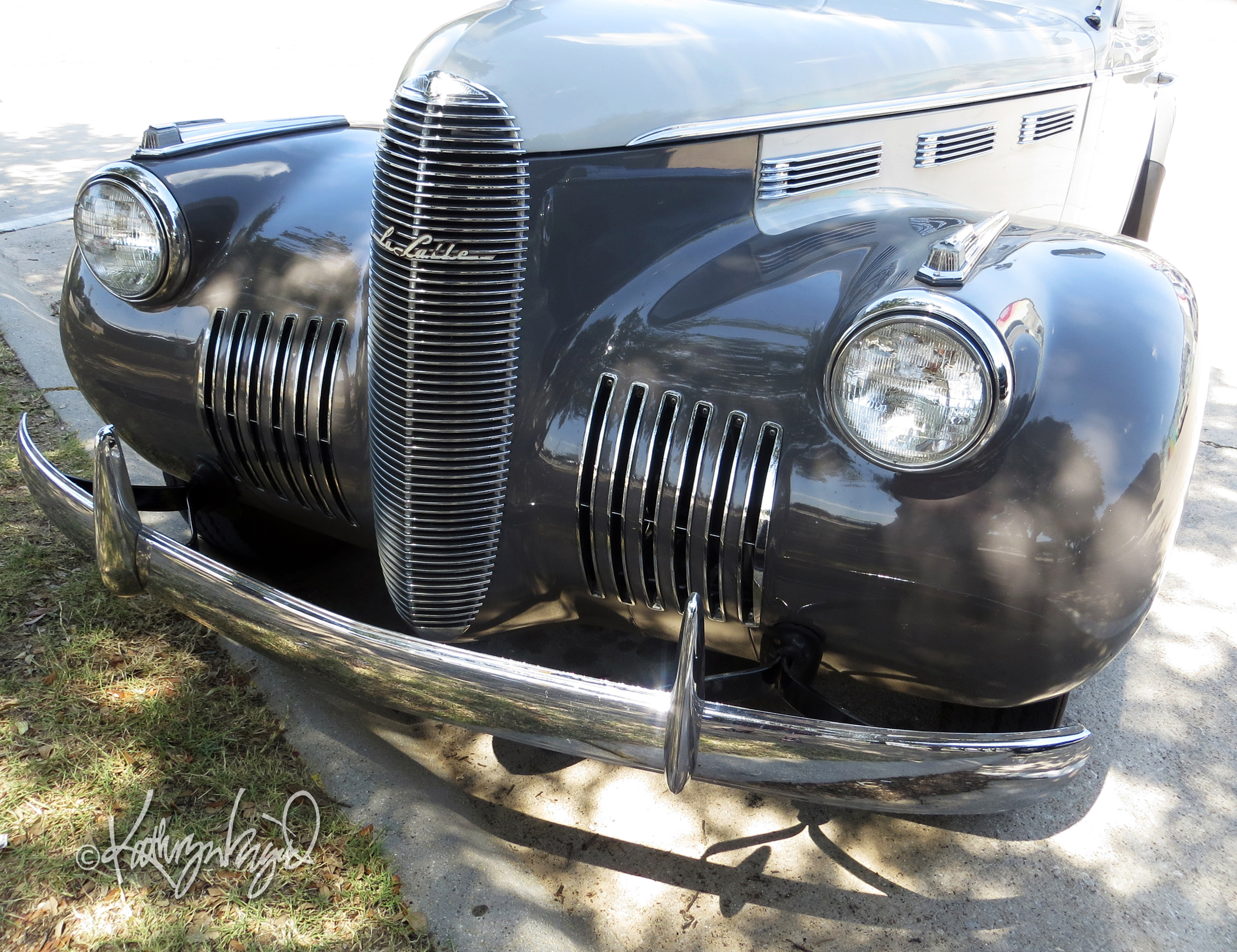
Whatever your vehicle, Ladies and Gentlemen, start your engines!

In another lifetime I was a teacher. Not a fabulous one, mind you, but one who took what I did seriously and did my best to give my students, if not the actual practice that would make them more productive and skillful and happy in their making of art, at least the idea of what might be possible for them and perhaps the instigation of the will to develop over the longer term. Like every other teacher in history, I knew that most of the burden of improvement fell on my students and had surprisingly little to do with what I could or couldn’t, would or wouldn’t, should or shouldn’t give them. And like every other teacher, I heard from my students every excuse in the book about why they would inevitably fail to accomplish any of this, how they were powerless against the forces that conspired to keep them from making the assigned efforts or finishing their work. Having used most of the excuses myself, I had plenty of fuel to argue my case after spending the intervening years (or minutes) rethinking it all as I moved from student status to teacher. And I knew too that I would have to keep re-learning it all as long as I lived, since every teacher is only a different breed of student and Life is the biggest, craziest, toughest and most creatively optimal classroom of all.

So I made up a little page of possible excuses and a smidgen of food-for-thought responses to them–perhaps mostly for my own enlightenment and prodding–that I shared from time to time with my students if they happened to be getting a little too enamored of creating excuses to spend their creativity on drawing, design, writing, painting, studying, researching, making mixed media installations, critiquing or any of the other topics I was attempting to encourage them to learn. Here are a few items from my little list, because I am well aware that I still need to remember them myself and keep trying to blow past them with determination and, I hope, a pinch of wit.

1          GREAT THINKERS THINK ONLY GREAT THOUGHTS

               (and I’m not a great thinker).

If this is true, explain why the Old Masters painted over or destroyed canvases, Einstein was virtually dismissed as a pea-brain by some in his school days and our early experts on astronomy believed the earth was flat.

2          GENIUS IS BORN, NOT MADE.

This may actually be so, but untended and un-exercised, genius has no value whatsoever, and many a great achiever has acknowledged beginning an illustrious career ignominiously and becoming expert through sheer will and work.

3          EXCELLENT IS GOOD, GOOD IS AVERAGE &

               AVERAGE IS TERRIBLE.

               (Corollary: Good is excellent, average is good, terrible is average!)

Creative and inventive people often have a penchant for self-disparagement and perfectionism that leads them (and often others) to devalue work of quality; it’s also a common temptation to simply fall back on the platitude of ‘beauty is in the eye of the beholder’ and accept mediocrity because one is too fearful or lazy to be honestly critical and opinionated.  Accept it and get on with things.

4          IT DIDN’T TURN OUT THE WAY IT WAS SUPPOSED TO.

Oh, come on.  Almost nothing does.  Sometimes it just isn’t finished yet when it seems to have Not Turned Out.  And more often than not, the real result is an improvement on the original plan anyway.

5          IT CAN’T BE DONE.

It’s better to go down in flames of glory, for having tried, than to prove only that  you couldn’t (or just wouldn’t) do it.  And what if it does work?!  Don’t you just love those rare chances to say I Told You So, anyway?

6          ALL THE GOOD IDEAS ARE TAKEN.

            All of the good ones haven’t been invented yet, Silly.

7          I CAN’T THINK OF ANYTHING.

You don’t have to.  Steal ideas all over the place.  Just remember to cite sources, give references, and wherever possible, to thoroughly revise and synthesize things into your own particular combination or version of them.

8          WHY SLAVE TO HAVE IT ALL WHEN YOU CAN SETTLE FOR LESS.

            Perhaps because apathy is as dangerous to existence as the threat of annihilation.

9          IT COSTS TOO MUCH.

Some of the same people who whimper over buying a five-dollar sketch pad and two ninety-nine-cent pencils (two weeks’ supply, say) think nothing of adding four dollars’ worth of popcorn and soft drinks to their seven-dollar movie tickets: that’s Whiners’ Math.  But most art supplies can be hideously expensive, especially for those productive enough to use masses of them.  So it’s a necessary and healthy part of the solution-oriented artist’s life that analogs and alternatives be a constant study.  What can legitimately serve as a substitute for the too-expensive?  Often the product of such inventiveness proves more exciting than the work as first conceived.  Sometimes it’s important to make the commitment to spend the real money for the real thing, too: how serious are you?

10        I’M NOT INSPIRED!

Genuine inspiration occurs ZERO times in the average artist’s life. WHAT!!! Heresy! But truly, if we’re talking spiritual/mystical magic, most must instead rely on a painstaking and passionate process of trial, error, adventure and eventual coalescence to allow artistic completion and quality to arise.  Don’t wait around to be inspired, in case it’s not in the cards: deadlines and opportunities wait for no one.  If you’re the incredibly lucky one inspiration smiles upon, have conspicuous spasms of joy, make feverish use of the favor while it lasts, and get ready to work hard on the next thing when you become a mere mortal again.  We’re lucky enough just to be able to be the real thing, Working Humans.  Don’t knock it.  There’s joy enough in that.

Stay tuned . . .

photo

. . . for being tuned up and ready to roll is more important than knowing where the road will take you . . .


‘Work in Progress’ is a Lifetime Commitment

I think of myself, as many people do I suppose, as a Work in Progress. What started out as a small, wiggly, colicky mass of spittle-covered humanity just over a half century ago is progressing, ever so gradually, into something like Iteration No. 10,000,022 or so, and will (if all goes as hoped) continue in the same unpredictable path until death do me part. I like it like that, if you want to know. I have no idea where I’ll be, what I’ll be doing, who I’ll be, a mere matter of months from now let alone in years yet to come, and that seems perfectly okay with me. Life continues to be a big adventure, and I’ll take it as it happens.

As a visual artist, I can say pretty much the same thing. Some works take their own sweet time to develop. Some take their own tangents and I just hang on for dear life and hope I can keep up with where they’re headed. I don’t always know what I intend to make when I begin a project, and I almost never know what I will make, given that art things sometimes cooperate and turn out similar to my imaginings and more often than not, they assuredly don’t. Sometimes the uncooperative piece ends up being much better than I could have conceived of it or even than I thought I could accomplish. A lot of the time, the end result of my artistic machinations ends in my being pretty surprised. Whatever happens in my life and my world, I’m pretty sure I’ll die surprised. Not a bad way to go, eh!

Just as an illustration, I thought I’d share a glimpse of ‘process’ that spans a fair amount of time and a couple of widely separated playtime brainstorms. Thanks to my exceedingly slow-simmering artistic processes, this piece incorporates a color background I scribbled a few days ago in colored pencil on paper and digitally melds it with an organ pipeshade design I did a few years ago (designed for Martin Pasi‘s pipe organ, an instrument made for Winnetka Congregational Church in Illinois, 2007), photographed as it was executed on wood panel in graphite and markers to prepare it for cutting and carving. Bit by bit and frame by frame, two rather disparate art projects merged into one, and that’s how it all went. This time.

colored pencil on paper

A simple abstraction in colored pencil, scanned from the sketch paper.

digital painting from a drawn original

Taking the original colored pencil drawing through a few painterly paces via Photoshop, I got a more cohesive background ‘starter’.

digital painting, new proportions

Rearranging the proportions of the digital artwork makes it a better fit for the mash-up I now have in mind.

graphite and marker on wood panel

The cartoon on wood panel, waiting for cutting and carving, was done in graphite and marker on the raw wood, crisp but not the look I had in mind for this use–more of a pen-and-ink appearance for now.

digitally converted 'pen & ink' look for

Photoshop to the rescue! Now we’ve gone back to black and white version and it looks more inked–almost tattooed, perhaps.

digital artwork from two original drawings, merged

So now, I can smash together the two images–the pipeshade design and the colored backdrop. I think I’m almost there . . .

digital artwork from the original Winnetka panel + colored backdrop

. . . ahhh, that’s better. Now instead of looking like the sun is underwater, I have a sense of sunrise or sunset. Now we’ll see if I can think of a *reason* for this image. Oh, who cares. I just like to Make Stuff when I get in the mood for it. So sue me. But if you can think of any reason for it besides personal entertainment, feel free to enjoy that concept!


Doodle Bug

pen & inkI would like to state for the record that I am not, nor have I ever been, to my knowledge, an actual doodlebug, either zoologically or as a rolling or flying vehicle, a dowsing rod, or a method of seismic activity tracking. Not that there’s anything wrong with any of those. And it’s probably safe to say that my garden and numerous dimly lit corners of my home are probably full of living and dead pill bugs (what we used to call potato bugs when I was growing up), and I confess to thinking it highly amusing that these creatures are in fact tiny crustaceans that live right in my house and look like–indeed, are scientifically named after–armadillos. House Armadillos or Domestic Crustaceans, either way kind of weirdly cool in my estimation.

But I digress.

What I am is one of the many humanoids prone to doodling. And that’s not a bad thing, either. Doodling (or randomly scribbling on whatever is handy, usually a cocktail serviette or textbook or office paperwork or top-secret legal document, depending upon one’s status and age and current supposed activities) often leads, though many a grade school teacher would vigorously deny it, to thinking. And on occasion at least, thinking is not an entirely bad thing.

Whenever I’m struggling to get a piece of writing, a drawing, or frankly, any other project underway, there are few motivational tools that compare with doodling. The serendipitous or random mark that merely records a purportedly thoughtless and pointless motion of the hand can sometimes come to resemble an actual Something, and well, Something almost always leads to Something Else. In drawing as in life, just getting in there and starting, whether I’m ready or not, is the best way to potentially get anything done. Who knew!

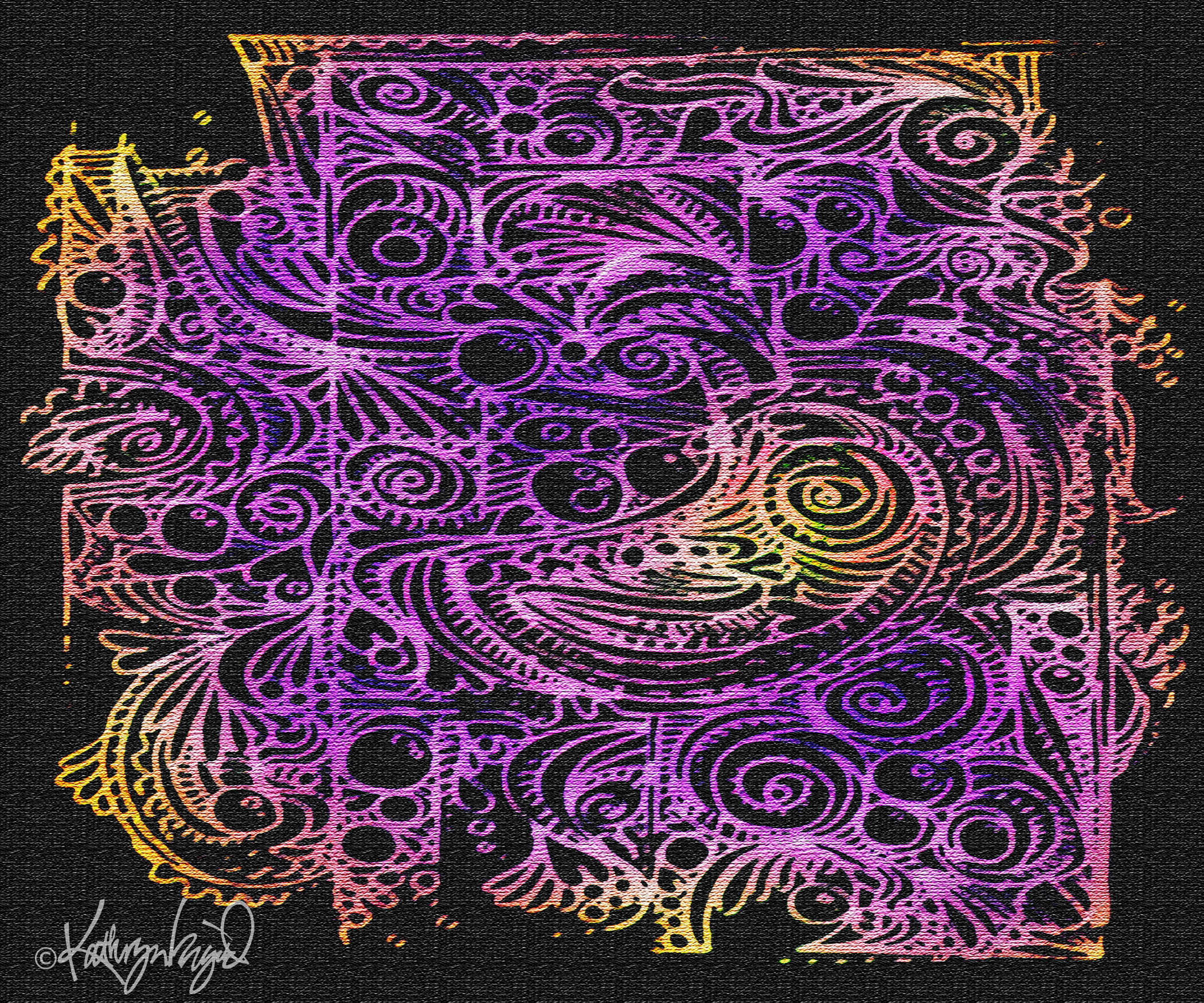
Today’s doodle is brought to you by my propensity for turning many of my scribbles and scrawls and squibs and squiggles into things that resemble simplified linear paisley patterns or rosemaling, or any number of other folk design traditions. Once I get going on them, I find it meditative to a degree just to follow the whimsical path of inserting repetitive forms and line treatments, geometries and organic outgrowths of the marks, until I’ve filled much of the available space. Many of these folk-like, repeating elements become almost a trademark doodling style that might be as identifiable to some as my handwriting. Though, hopefully, more legible. And while the doodles don’t necessarily lead to specific or pictorial drawings in and of themselves, they do lend themselves neatly to a more relaxed and receptive state of mind in which those more concrete thoughts and ideas can indeed begin to insert and assert themselves usefully. And that can lead to different sorts of drawing, whether more topical or more sophisticated or more directed. Or not! The inspiration is in the action.digital painting from a P&I drawing

Today I was led by the doodling, not to a different drawing entirely, but to scanning it and playing with it digitally, first layering colors all over the place, then digital textures, then altering the proportions of the image, and lastly, stitching the resulting mash-up into a larger grouping of four copies of the same image arranged in a pinwheel fashion and then stretched, skewed, cut-and-pasted, and electronically stamped into a fabric-like whole that uses the same idea of the initial doodles repetitions-with-evolutionary-changes so that the end product still seems to appear quite handmade, as it’s not symmetrical or fully even from side to side or top to bottom. Now, if I were to take that square and repeat it, even if I turned it 90 degrees each time, for example, it would finally become more machine-made in appearance as well as manufacture. But that’s just mental doodling right there, isn’t it, because I could further alter the combination every single time I ‘copied’ it.

Which illustrates exactly what I was talking about as characteristic of doodling. One thing does lead to another, as long as we bother to do the initial one thing.

That said, I suppose I should get up from my desk and go forth to do a few individual things that might lead to getting some other essential things done around here. Cheerio!digital image from a P&I drawing

The Only Useful Retrospective Operates on a Pivot

If examining history–on a grand scale or on a very tiny personal one–doesn’t ultimately result in turning around to move forward from that study, it is of no use. I find the obsession at the end of a calendar year with reviews, retrospectives and rehashes sometimes entertaining and even intermittently informative, but at the end of the day (or year) what I want is to know: where do I go from here?

digital image

What lies in the past remains in its ghostlike remembered forms . . .

There are plenty of fine reasons to revisit what has gone before. It’s meaningful to honor those things, events and especially people we hold dear when they are no longer part of our lives. We can recognize past mistakes, uncover gaps in our experience or behavior or education. We take inventory of what we have accomplished, what we have gained, how our world has expanded, and those valuable objects and attributes that have accrued to our accounts over the past part of our lives. But if it stops there, it can serve no great purpose in the long term, I think.

The deeper honor for recognizing losses must lie not only in coming to terms with them–acceptance, if possible, but if not, then some sort of détente that makes us able to separate that grief and pain from the necessity of not only continuing to live but to grow and thrive. It is no gift to those causes and persons we have loved if we do not continue in our own new ways to seek and become those things we admired in them, to share them with the rest of the world that missed the chance to know them in their own right. If we dwell on mistakes and do not seek amends for them, no one is made better, least of all ourselves. Failure that leads to learning, improvement, reconciliation or higher goals for the future is in fact a beautiful and curable disease. Real progress–growth–almost never comes without the forerunner of Failure. Most of us miraculously able to accomplish something grand on the first try can’t replicate such an accomplishment or even ‘get’ how to achieve the next one, because there has been no passage through the great human experiment of trial and error, of practice and repetition to drive us to the point where we can deliberately and even repeatedly do such fine things.

Certainly, recognizing the great and good things that have been granted us in the past is given its true value and meaning both by our showing appropriate gratitude and then by our turning to the task of making wise and joyful use of whatever wealth we have, whether it’s a piece of bread we can share or it’s the Nobel Prize that sets a foundation for a whole new field of research or it’s a solid investment that paid off well so that we can afford to reinvest in the company or it’s being experienced enough to teach a kid how to ride a bike. Having something of value isn’t really all that impressive if it sits and collects dust while we too sit and collect dust. Unless, perhaps, one is a connoisseur of actual Dust. That is another Issue altogether.

Meanwhile, here I am at the end of another calendar year, taking inventory with everybody else and wondering what it means for my future. What, after all of that, do I want to do with my baggage, good and bad? There are some specifics, I suppose.

I have been a slug, growing more and more sedentary and finding more and more plausible (to me, at least) excuses for doing so, and I intend to get fitter. Not as fit as in my days of hefting a 60-pound bag of Quikrete on my shoulder or scrambling up a scaffold three stories to haul five gallon buckets full of paint up for work. That Me is long gone. But I am going to find a much fitter 50+ me, and that will be satisfying work. As I’ve grown more dedicated to writing in the last year or so, I’ve shelved my previous commitment to practicing drawing regularly that was satisfying as a process and led to some equally pleasing improvement in agility and technique and even end product. So I’m going to re-balance my work to engage in creating more visual art again, whatever the mode or medium.

There, I’ve said all of that out loud, in public, in front of all of you grand people whom I admire for so many attributes that I won’t be able to replicate, and I know you’ll hold me to my promises, because you’re that kind of encouraging and inspiring folk and, yes, a little bit intimidating in your gifts. And the more so in your accomplishments, because after all, that’s what I’m really talking about here: not what we already are, but what we strive to become, however gradually and through whatever study and practice and love of progress it takes to close in on those horizons.

A bit of challenge? Oh, YESSSSS. So it will always be. Mysterious, sometimes frightening, certainly adventure-filled in many ways. But that’s what the past should be teaching us to do. Today was made possible by all of the yesterdays that shaped me, coupled with the will to move forward from them. Tomorrow will be made that much more possible by adding what I’ve learned and accomplished today and letting it help to push me another notch onward. If looking backward thoughtfully can do that, I can barely imagine what looking forward will do. But I’m going to lean into it and see.

digital image

The way ahead is always somewhat unclear; that can be part of the joy if I let it be . . .

How I Learned to Love the Dreaded P Word

[No, shame on you, not that P Word. Practice.]

photo

Apparently I was napping when the expected dose of wisdom was being handed out . . .

Is it somehow backward to say that if I learn by doing, the only way to learn to love doing something is to do it? Maybe it just proves that I’m kind of backward myself, for having taken such a large long chunk of life to figure out that that’s how it works. I’m not only a late bloomer in a multitude of things, I’m late in getting around to figuring out that I’m a late bloomer. Dang it. Tautologies and conundrums galore! (Wow, sounds like an imprecation to be screeched by a mediaeval-looking cartoon villain.) All I’m trying to say is that it took a lot of practice for me to learn to love practicing.

No doubt this self-evident truth dawns slowly because most of us are (I certainly are) born with a predisposition to (a) despise and evade anything that seems compulsory, and (deux) only experience can teach it to us. Talk about an irritating logical loop.

It is generally only out of desperation that I will finally buckle down and do something I’ve been artfully putting off, denying the existence of, and otherwise refusing to accomplish. I’m so busy worrying about making blunders that I refuse to even try. I’m so fond of being glued to my gilded divan and being fed chocolate-covered miracles by my adoring fans (okay, sitting on my backside, half a-snooze at the kitchen table, and licking the ice cream spoon until the finish is coming off of it) that I hate to break up the scene by becoming <shudder> an active and productive citizen. I’m resistant to change, stubborn and ornery, and always–like most of my creative compatriots in the arts, I gather–pretty well convinced that every artwork I produce is my last ever, that I will have lost the power to imagine, let alone do, any further works, and that even the stuff I’ve so far produced is only marginally non-heinous.

photo

I let the tools stare at me balefully for a goodly while.

Then, happily, I snap out of it. What a load of hot steaming hooey, I say to myself. [Roughly translated for your delicate sensibilities.] Most of the time I am actually able to do all of the foregoing in a shorter span than it takes to regale you with it. But there was that time in grad school . . .

Now, I’d even, driven more by economic reasons than good sense (but what the hey, it made a good substitute in the instance), taken three years off before grad school when my undergraduate studies concluded with my emergence clutching that wonderfully engraved Testimony to my glorified uselessness to a needy world: a Bachelor’s Degree in Fine Arts. As a matter of both principle and fact, I can honestly state that Art is indeed truly and meaningfully useful in the deepest of ways. Not, however in the way of, say, lining up salivating employers eager to avail themselves of my fabulousness in exchange for the quantities of money required for paying off undergraduate loans and frivolousness of that sort. Nor, while I’m being truthful, in the way of my improving the world greatly by waving around my magnificent diploma, no matter how sweeping and balletic the gesture (and whether physically or metaphorically).

Given my intellectual–oops, I meant academic hiatus, how very Freudian of me–you might think I’d come bombing into my graduate studies not only itching to get to work but stocked up with a mile high mushroom-cloud-in-the-making of spectacular new arty ideas and plots. Partly true, that. Unfortunately, I was still the same insecure, change-impervious, action-free action figure as ever, so what did I really do on arrival? Same old same ol’. I got straight to work making verrrrrry slow progress at producing a dainty little handful of drawings pretty much like all the drawings I’d done in the previous, oh, four years. Not exactly making me want to bound gazelle-like over to my first quarterly critique session and wow my prof with this pusillanimous production. I knew that the only sensible response to the presentation would be, in the words of the great art critic Clement Greenberg, “Yikes! Are you kidding me?”

Okay, I made that last part up, but I’ll betcha dollars to donuts that he was dying to say it from time to time.

My continued ability to collect graduate assistant cash to pave my way to another commencement party being dependent upon my actually doing some Graduate Studies, I sucked it up and went in for the fateful critique. Well, it’d probably be fairer to call that session therapy, or maybe just a brisk boot in the posterior, than a critique session, given that the art in question was not only rather questionably art (being sort of ripoffs of my own earlier work) but nigh unto negligible in numbers. Didn’t take too long to peel through with the insightful commentary, if you know what I mean.

But there was, wedged somewhere into that compact transaction, the seed of an idea. My mentor-advisor-prof mildly indicated that this evidence of my not having thought of or attempted anything other than what I’d done many a time before was just a little . . . unimpressive. Verging on enervating. Wrapped up in a stale tortilla. She was a gentle as could be, but didn’t sugarcoat it much. Great lady.

Without resorting to actual tantrum throwing, I got in a funk, a sulk, and finally, a fit of disappointed melancholy tinged with sulfurous ticked-off-ness. Reexamining my self, my work and my motives a bit, as you might hope. I know that old adage about the definition of insanity/stupidity/unrealisticositudinousness being Doing the Same Thing Again and Expecting a Different Result. Oddly, it had not entered my skull before that this might apply to the making of art, indeed to making art in an academic setting with the expectation of being evaluated as an artist worthy of an advanced degree. Silly me. At least it did come up at this late juncture. Better than never!

Knotty problem, simple solution: since doing things the usual way obviously wasn’t working, try doing things in an UNusual way. Me, I had to reduce it to a syrupy-thick extreme to test its full effectiveness (or mine), so I set myself the task of trying to do as much as possible that was the clear opposite of what I’d been doing. No point in being wishy-washy about it anymore. I’d been working strictly in black and white for a long time. So I worked all in color. My works had been small or moderate in scale, so I headed for larger formats. Slow work meant few finished pieces, so look-out-world, I was going to work fast (no avoidance, wasting time, or overthinking while in progress) and make More Stuff. Subject had been mostly still life with a twist, and definitely inanimate object-oriented. Time to try all figurative. Heck, I’d always avoided faces even when I did figurative work, so I decided to do variations on head shots pretty much exclusively. And so forth.

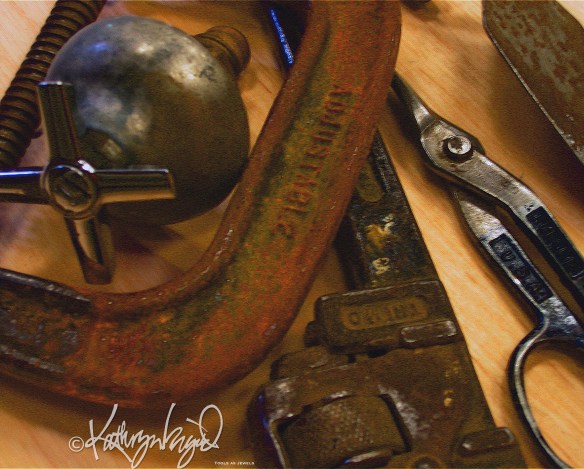
The upshot, as you can imagine, was a true shakeup of my predictable world. I had to come into my classrooms after hours and take over the space because there simply wasn’t enough room in the allotted grad student studio hovels, let alone my rented digs, for pinning up pieces of paper that were fast heading toward 4×20-foot, then 9×20-foot murals. The instant I determined to Go Big it was almost impossible not to get in a fever of production, drawing at all hours, with and on anything I could get my hands near. I raided the end-rolls at the local paper production plant and made trips to the big city to buy photographers’ backdrop rolls and strap them to the top of my old station wagon for the 2 hour drive home, rain or shine. I used up all of the pastels, pencils, pens, crayons, used cosmetics and condiments I could find to make marks and stains with, and then started drawing in a drybrush ink-wash style with house paint. My studio allotment did come in handy, because there was no possible place to cram all of the drawings I was making into my normal storage hideaways. I used any and every tool I could find at my disposal and grinned like a madwoman (as a madwoman?) over the wild newness of it all. Of me.
photo

When everything is called into action, everything becomes both worn and beautiful . . .

I’ve gone on long enough that you can easily guess the conclusion. At the end of the second quarter, my critique in the same 20×36-foot gallery that had been the site of that dispiriting time spent trying to read some interest into the small handful of pitiful drawings the quarter before–well, accounting number two found my teacher and me perched in the same room but with the four walls all plastered floor to ceiling, end to end, with new, colorful, living art. All great? Hardly. But all invigorating to me? Oh, yeah. My mentor really did look a little faint when she came in and I’m sure was looking for the correct room, since this was obviously the work of a different person. And it was.

It didn’t make me into an instant superstar, able to leap tall easels with a single bound and more powerful than a museum-full of Old Masters. It made me, instead, into someone able to remember why I’d felt compelled to make art in the first place, and aware for the first time that there were a multitude of methods, techniques, tools and concepts I’d barely known let alone tapped. It also made me into a very slight persona non grata in my immediate circle of family and friends when they all got called into service to install these monsterpieces with me for my thesis exhibition (“Ever thought about being a miniaturist?” “You want me to get on what ladder and hold up the side of a piece how tall?”), but that’s a story for another day. The story here is that the act of practicing on a grand scale truly woke me for the first time to that incredible frisson of adrenaline + joy that real practicing can give. That puts all of the bad days of unsuccessful practice right into the shade.
An Ounce of Invention is Worth a Pound of Manure

graphite drawing

When you can't BS your way through it, try coming up with a real idea!

Silence is only golden when it’s wanted. If I’m intending or needing to produce words and images, I am none too pleased if they refuse to come to me. You know how irritated I get with my uncooperative vocal cords when I’d like to have a nice ordinary conversation without struggle. Sometimes I’m far worse, though, about being reasonable and patient when it’s the written word that refuses to come out of the starting blocks. Neurological recalcitrance I can blame on some biological bad fairy, but it feels much  more like a personal failure when it’s intellectual drag that keeps me from the productivity I desire. Brain, get up and go!

Drawing combines the two potential frustrators in a perfectly imperfect storm of madness: both brain and body are refusing to cooperate in my scheme to produce. Internal hissy fits ensue. I know enough not to dissolve in a pool of weepy self-pity since it solves nothing and tends merely to make one look more than a little ridiculous and immature, and yea verily, I need no advancement in that department. Getting mad is equally unproductive. Nothing’s fixed. The only cure is to plod forward, idea-less, until a useful thing deigns to appear in my cranium or at my fingertips again.

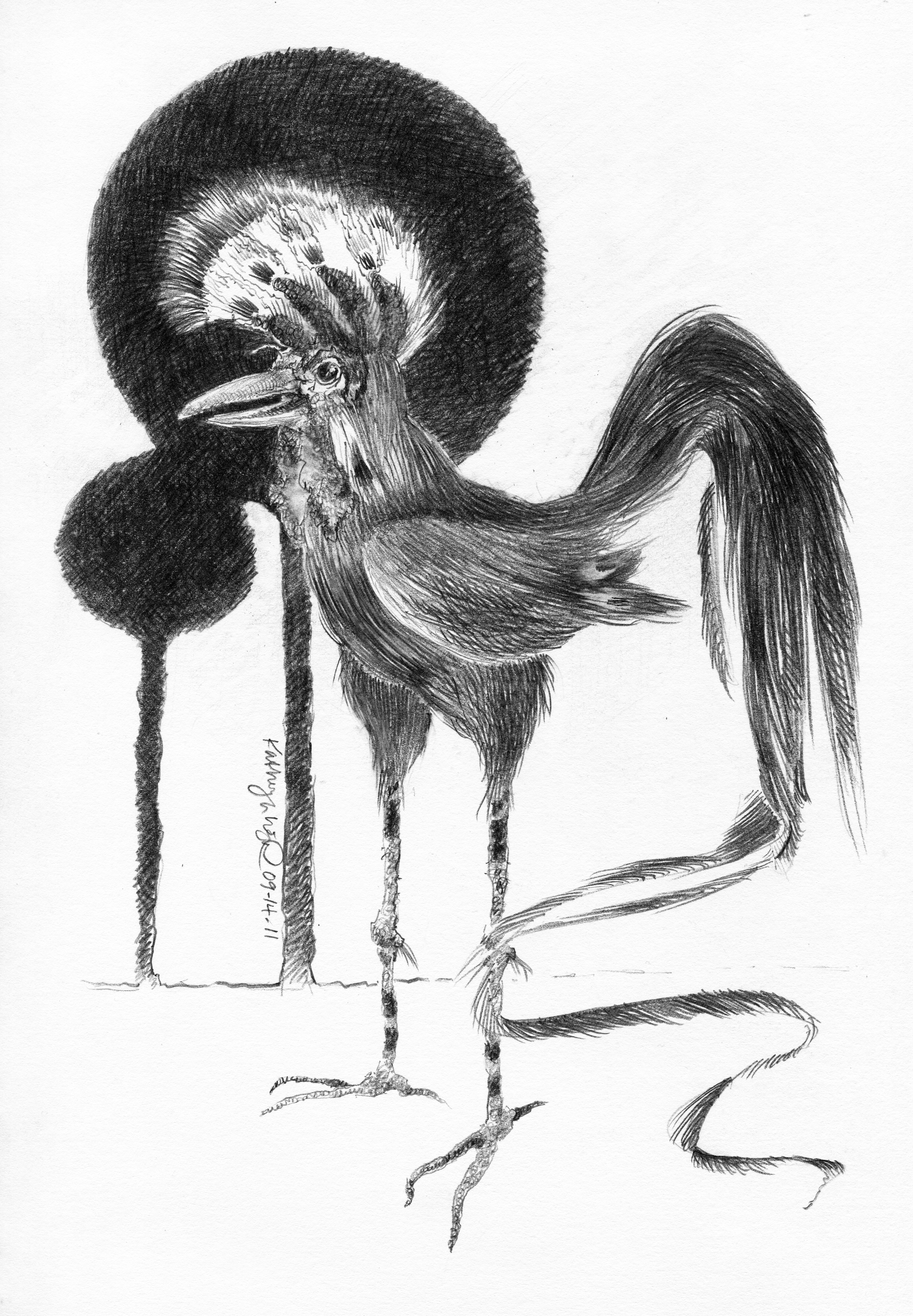
Last week’s drawing session was a good time to revisit the simplest of basics at all levels as a starting point in my latest campaign for artistic growth. But I’m thinking this week that what I also crave is improvement of my imaginative muscles so that when I flex them in exercise I needn’t always fall back on the expected standard fare to get something to appear. If I must, I will resort to baloney or bluffing to get me through, but is it not very much more amusing, and even fulfilling, to be able to think up something I’ve never thunk before?

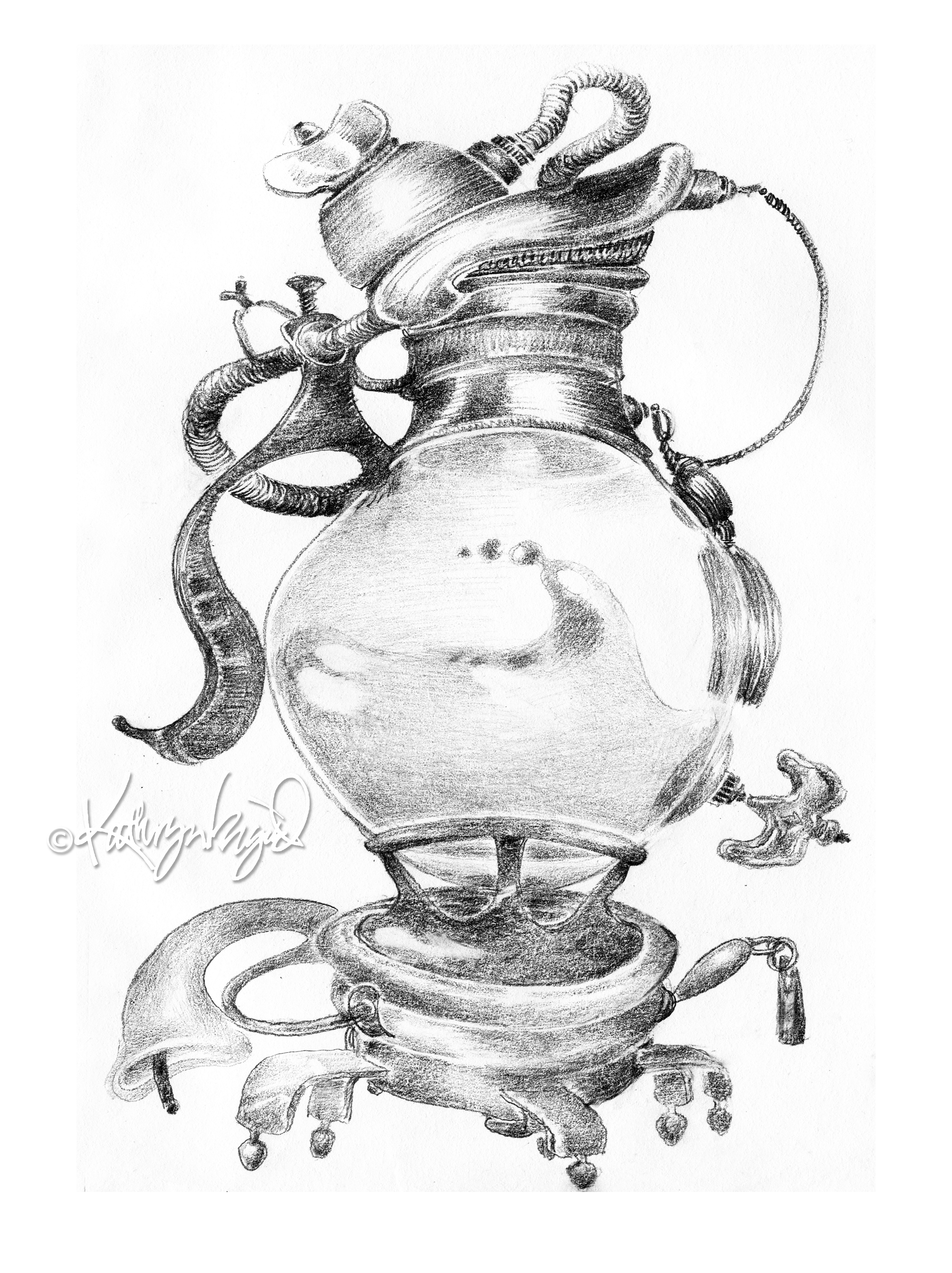
My way of getting that muscle at least poised to flex is to tell myself it’s time to make a picture of something no one’s seen before. Me, especially. The easiest way to do that is to invent new objects, scenes and creatures. Often it’s enough to make my own version of recombinant DNA or mutations or contraptions out of almost real parts assembled strangely and unexpectedly. The animals must be unlike any I’ve seen in real life or on film or in a zoological tome; more than that, they should be visibly ill-conceived enough that they would instantly become extinct, if real, for clearly failing to meet any evolutionary standard. The machines should be contraptions with no obvious possible use; more than that, they should appear to be made to produce ill-designed crud and, probably, life-threatening injuries upon anyone foolish enough to attempt operating them.

At least on paper, the only serious threat any of them poses is to my dignity or, at worst, to the sensitive good taste of hapless viewers seeing them without warning. If any one of you has received a poke in the eye today by visiting my blog, my apologies. Though I’m not really very good at being penitent, odd bird that I am.

I leave you with the Edmontonian Contraption, designed during a Pro Coro rehearsal sometime last spring. Fortunately, the choir sang ever so much better than this item will ever run.

graphite drawing

At least it could probably make a good sound if used as a sort of aeolian instrument . . . maybe . . .