Don’t Blame Me, My Teacher Did It

photoThe drawing professor responsible for mentoring me in my undergraduate specialization in drawing and printmaking had no idea he was creating a monster. Safe to say there was nothing especially distinguished about either my skills or my scholarship in those days; he may be forgiven if he thought there was little hope of my passing his classes, let alone succeeding in being an actual artist at any point in the future. But for whatever reasons of commitment and kindness and selfless dedication to his pedagogical efforts, he took it upon himself to tutor and nurture me in my studies besides working wonderfully hard in the general studio sessions he taught.

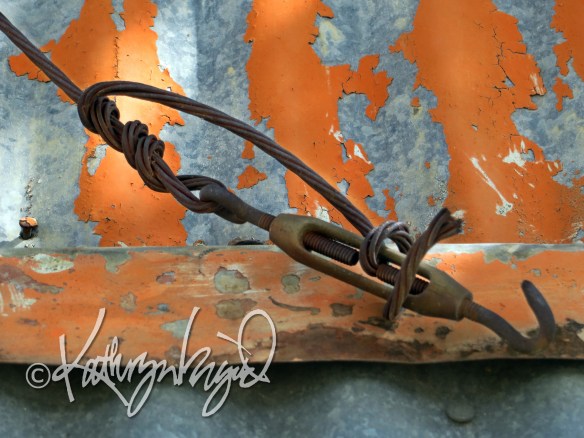
Like any teacher, he had his characteristic methods and terminology, to the degree that any of us who took more than one semester of classes from him had our own favorite little catch-phrases and loving parodies of his work. One of the most frequent phrases (so we thought then, at least) to leave his lips was ‘texturally rich’—and you can bet your sweet pencil sharpener that any of us giving any imitation of him was bound to quote that one.photo
No surprise at all, then, that as soon as I started teaching, which thanks to his intervention and my subsequent hiring I did for the first time out of grad school in the very classroom where he’d taught me, it was as though I was instantly possessed by his spirit. I think I may have visibly started when I heard myself say that mystical phrase, standing there in the very spot where he’d once stood and repeated it to my classmates and me, never having remotely suspected that I would ever quite understand the term let alone use it so glibly and with such conviction a mere few years later. In my turn, I found it became a true favorite topic of study and tool for art-making and there were undoubtedly students of mine who thought it a funny catchphrase of mine and parodied my use of it.

That’s the way this stuff works, isn’t it. We become our teachers. First we find ourselves imitating our parents and siblings and playmates, learning from them both the persistent bad habits and, if we’re lucky and perhaps not too dumb, the worthy and useful skills and knowledge that will stay with us as we grow. Then we turn to teachers outside of the walls of home and neighborhood, as we get to school and move forward, and learn to imitate them too. This, not to put too fine a point upon it, is what helps us create for ourselves our texturally rich lives.photo

In art, it is the visual or tactile form of texture that I most often seek, finding in the wide variety of possible touchable or perceptible patterns and surfaces worlds of ways that I can shape and delineate and describe whatever subject I choose. As I work to make the art deeper and more complex, the textures I seek include less concrete, more metaphorical and philosophical ones that lend further meaning and impact to it. And that is where it begins to intersect with the learning and growing processes of life in general. A life well lived will be inherently texturally rich. I had no idea of the magnitude and import of this when my professor was saying that simple little phrase. But I’m very glad he said it often enough that I did internalize it, ponder it, carry it with me, and eventually, find a wonderful and purposeful truth in it.

Perhaps even fine teachers like him can’t make me into what I never was, a great teacher myself, but there was clearly a place in my heart and mind that resonated to the phrase ‘texturally rich’ happily and hungrily enough for it to take root and teach me good and useful things long after the echo in the classroom had faded away.photo

This Business of being an Artist

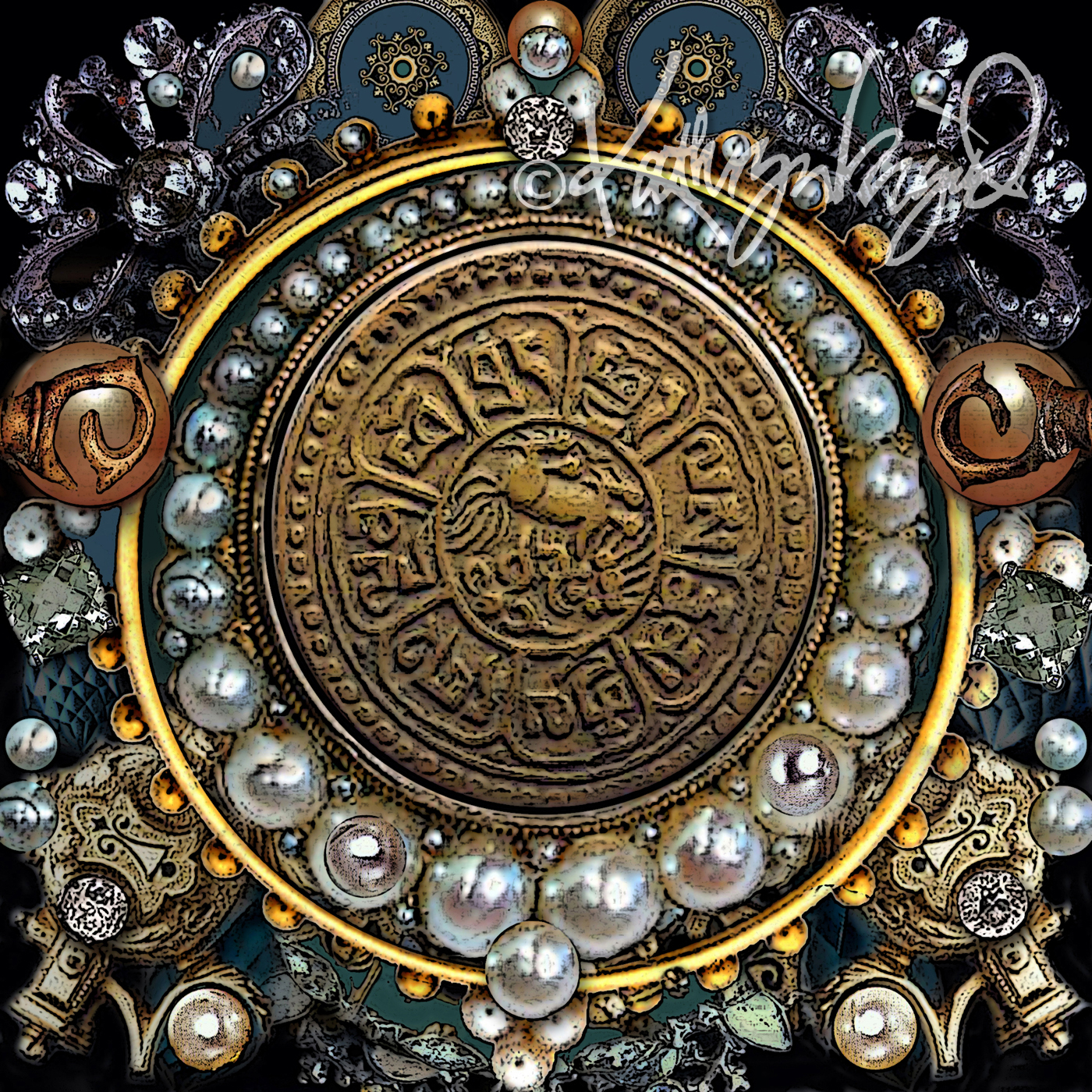
mixed media process montageThere’s been an interesting, if hardly new, thread of conversation taking place in one iteration via LinkedIn, where a Mr. Duane Bronson posed the eternal question thus: “Does an artist have to have a recognizable ‘STYLE’ or a cohesive body of work to be of interest to a gallery and marketable?” My short answer would be a resounding Yes, but I couldn’t resist expanding on what is for me a perpetual problem. I said:

A good, thought-provoking read here! I have experienced much of what is discussed by the various commenters who precede me and think that all have some valid points for our consideration. My own answer to Mr. Bronson’s original question is that I might state it a little differently: to be of interest to a gallery as what it/they would consider marketable. Anything is marketable, if you put the right seller and buyer together under the right circumstances, but galleries, no matter how much they might pride themselves on being ‘in it for the love of art’, are businesses, and (logically enough) are not particularly interested in anything they don’t think is a relatively easy sell. [Commenters] Messrs. Bruland and Moore are absolutely right in recognizing that art does sell–at the confluence of the right forces. Figuring out what those are and how to orchestrate their intersection is the big magic trick that few of us can perform.photo of mural [with artist]I was approached by gallery owners when I was finishing my undergraduate art degree; one of them (the more successful in business, not surprisingly) met with me mainly to encourage me to produce a larger body of the same kind of work so that he could later represent me; the other, being a fledgling in the business, was willing to take what little I had already produced at my young age and give it a go. Of course I was inexperienced and had no concrete plans or prospects, so I opted for the latter, with the predictable result that that gallerist, with such limited experience and connections, was too busy simply trying to work out the logistics of her own business to actually represent any of the artists she hoped to promote. Thankfully, I’d only agreed to half the proposed trial period as part of that ‘stable’ of artists and retrieved my entirely unsold (and as far as I could ascertain, also virtually unseen) work and go forward at the end of it. [And only a year or two before it was also the end of that particular gallery, as far as I could ascertain.]photoIt wasn’t until many years later, after working in construction for a few years to save up for grad school (I suspect I’m of the same vintage as Ms. Senn, having had many similar experiences 30 years ago in that field of work) and then going through the grad program and then teaching for a couple of decades, that I could afford the luxury of devoting real time to focused practice and larger productivity of my own artwork. Along the way, however, I had continued to produce smaller quantities of work. As I’m quite sure many of the artists commenting above have experienced, what pleases me most in my own practice is to do what inspires me at the moment, to experiment, and to follow the serendipitous occurrences that happen along the way, resulting in a recognizable character in the works but not a whole lot of terribly similar subjects, media, and techniques. So I, too, have been told by many a gallerist that he or she thinks my work is terrific but, no thank you, they don’t see how they can possibly ‘package’ and market me.digital collageThe upshot of all this is that I can only echo what others have already said or intimated here: keep doing and being what is right for you, but know that you’ll likely continue to labor in obscurity unless you simply find that combination of luck and resources and persistence coming into perfect confluence. I must assume that all of us are here because making art of whatever sort matters enough that we will do it endlessly, whether it profits us in any way other than inwardly or not. Hurray to being successful, financially of course if we can, but if not that, then as wildly successful in satisfying the artistic urge as we can manage to be.I will add to this that I am no more going to stop making art because I don’t come close to making a living at it than any of the millions of others who can’t ‘get by’ doing what they love best would quit their passions. You might, just possibly, have noticed that I’ve been hanging out here in the blogosphere for some time just churning out art of the visual and written kinds and handing them out daily like free candy. But like many others, I also keep the business side of art on my radar, looking around me to see if there are any connections and opportunities I have overlooked or ways to introduce my work to others who may find something in it that speaks to them as well and (miraculously!) be willing to pay me for it. I guess this is simply my love letter to any other unsung heroes reading this, saying that we’re all in this together and yes indeed, also that I have no plans to leave off pursuing my dreams any more than you have. Might see you at the bar later, though. Everybody needs an outlet, whether it’s on LinkedIn or in the studio or somewhere else entirely. Cheers!graphite drawing

Characteristic Characters

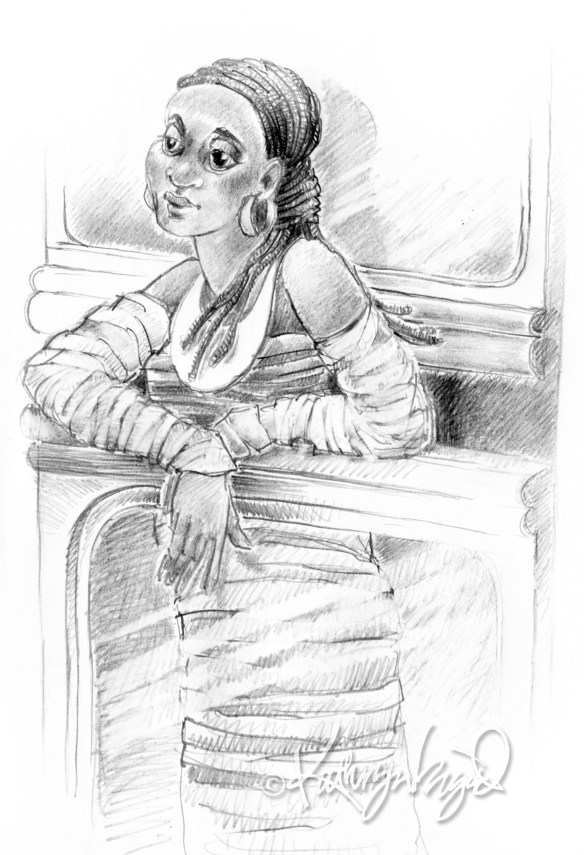
graphite drawingThere have been a few occasions in the past when I thought I would go out into the wide world, metaphorically speaking, and seek my (however tiny) fortune on the strength of my artwork. I happen to think I’m a pretty good artist. Even other, seemingly sentient and sane, people have given me reason to think I’m a pretty good artist in somebody’s eyes besides my own. Not that I would be in the least biased.

So I’ve looked into various ways to ‘put it out there’ [Ed: don’t be ridiculous. NOT THAT!], from looking at DIY publishing, either online or on-demand, of prints of my artworks or of books–I’ve got a whole stack of book pages laid out with my art and writing on a whole slew of topics and themes, all stashed away digitally for Maybe Someday use–to sending hard copy prototypes of said books and artworks to various publishers, galleries, shops and the like to see if they’d be interested in aiding me with their resources. The answer, always, has been No. All who respond with anything other than simple form responses indicate that they, too, think my work is good stuff. But the other universal response is: I’m too hard to ‘package’. After whatever amount of hemming and hawing is required in the instance, the clarification is that my work (usually referring to the visual parts, but written forms have been included as well) varies too much. I’m not same-same-same enough to be marketable, apparently.

I consider this high praise. But it’s rotten for business, as you can imagine. Yes, I’ve sold both speculative and commissioned artworks, but only privately and by word of mouth and for very modest sums and, frankly, none in quite a long time. I’ve had a number of gallery showings, but virtually all ones that I organized myself, paid for from start to finish, framed and installed and lit and removed myself (though as my family and close friends will attest, not entirely without enslaving some of them for some of the schlepping and heavy lifting)–and nearly all of these also garnering me good reviews, when I could get any critics to attend, and lots of enthusiastic appreciation from attendees, but no sales. I’m actually beginning to think they might be onto something, those crazies who sell high-end mansion properties and deal with slow sales by jacking the prices higher and higher until equally crazy buyers consider the places posh enough to capture their highfalutin imaginings and plunk down megamillions of dollars or Euros or what-have-you. Meanwhile, I’m sitting here on my little paper and digital treasure trove of creative wonders and selling occasional copies of them for pennies at Zazzle.com.

The other aspect of the critiques I’ve sought that always seem to end with ‘gosh, you’re wonderful, buuuuuuut . . . ‘ is that the same people who tell me I’m too diversified (if not wholly a dilettante and a flighty fool) for my marketable good often tell me in the same conversations that I have a very recognizable style, so no matter how much my subjects and media and moods vary, they find my work fairly easy to identify. And they say this as though they, too, think that’s a good thing. Can’t say I can untangle how the good seems to be perpetually the enemy of the moneymaking; clearly a puzzle I haven’t solved. Yet.

Until then, I keep doing-what-I-do, plodding along and enjoying the process because if it isn’t making me (or my patient partner) any income, it should at the very least be fun to do it! And I do find that no matter how much my attention wanders or my themes hop around from light to dark, from complex to childlike, from crudely handmade to semi-seamlessly digital, I see more and more the marks of my own nature and personality and style peering out at me from each work. I may draw characters that are as far from my own ‘type’ and experience and even beliefs or prior interests as can be imagined (by me), but each of them ends up being somehow a child of my own making or a member of the larger family of my creative spirit, and that’s pretty good, too, I’d say.graphite drawing