In a comment on my gardening post last week, Ted reminded me of the inimitable Mary Poppins, and I was in turn moved to recollect her frank self-description as ‘Practically Perfect in Every Way‘. In the case of that charming fictional character, it was simply and inarguably the truth. The rest of us, mere mortals, can’t quite go that far if we’re honest.
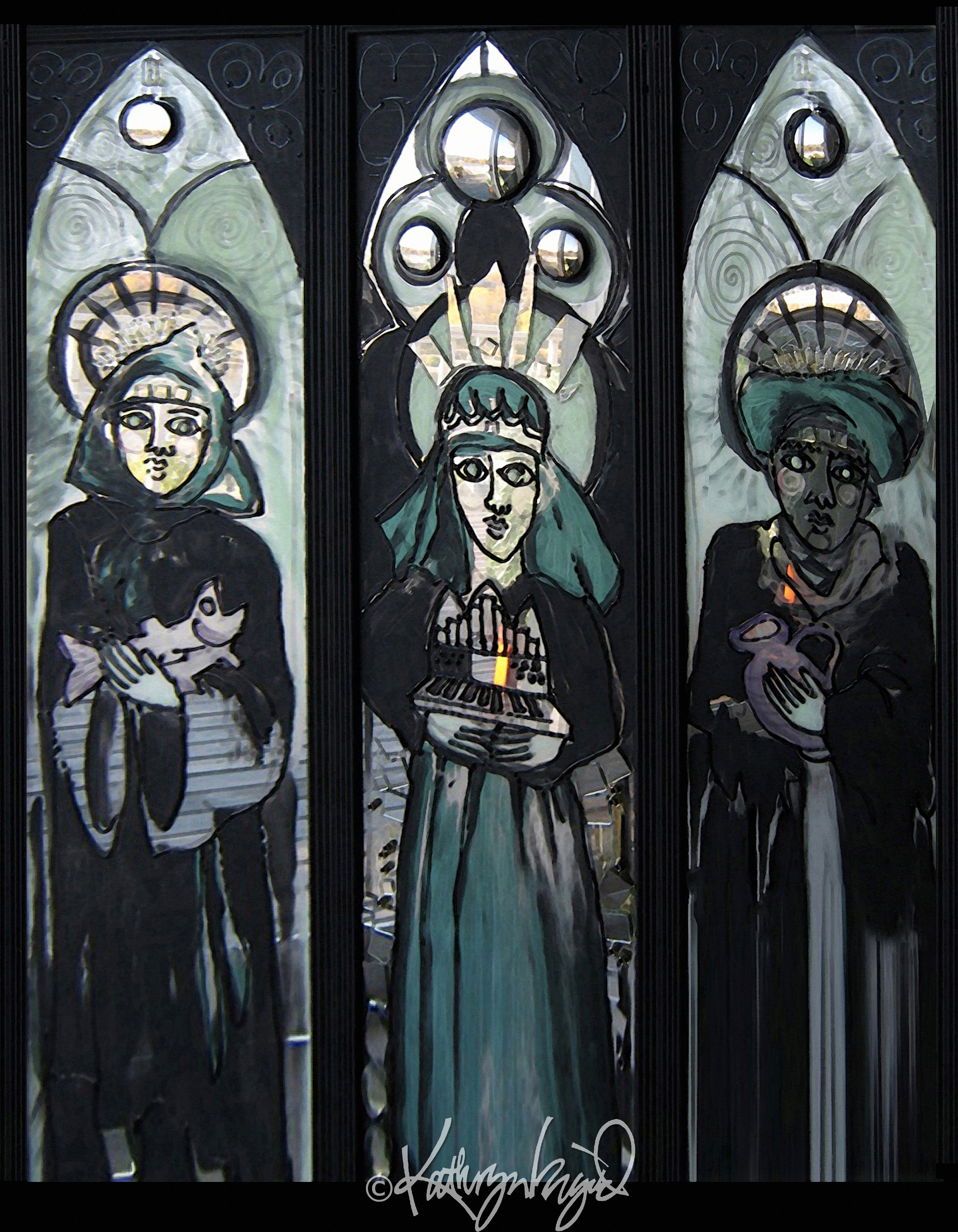
Saints Cury, Cecilia & Goar. I selected these for portraiture in this modern-medievalist piece because of very earthly interests: Cury is one of my birthday saints and famed mainly for his 'miraculous' hospitality; Cecilia is the patron of musicians (for my husband, of course) and even sometimes purported to be the inventor of the pipe organ; Goar's feast day is celebrated on our anniversary and he, sometimes portrayed as a potter, was thus also an artist. He also happens to have a lovely little town on the Rhine named after him. There *can* be perks to being a saint, even a minor one, apparently . . .
Which is why I like saints. It’s doubtful I’d really enjoy meeting them in person, to be precise: it’s the nature, the character of them, that really fascinates me. Because, as I understand it, what separates the saints from the rest of us ordinary slouches is not that they were born or made saints but that they became saints by rising above the ordinary way they began. Unlike superheroes and the majority of fairytale protagonists, it’s not often a transformation that’s accomplished by the wave of a wand or inadvertent exposure to radioactive substances, but rather is brought about by internal change and will and choice.
There is hope for me in the idea that most saints–and I gather this is true of the heroines and heroes of many significant belief systems, along with many of the major religions–start out as plain, simple, unimpressive and very mortal humans and for one reason or another are moved to do the things they do that gradually re-shape them into extraordinary beings. Some of those avatars, indeed, start out as pretty sketchy characters, if not outright jerks, despots, and other first-rank varieties of meanies. It’s the process, the journey, and the ultimate commitment to do and be something else that makes them extraordinary.

Saint Monica could be the perfect example of overcoming obstacles--much of her sainthood was earned just through working to see that her ne'er-do-well son shaped up, the outstanding troublemaker who eventually reformed enough to become himself Saint Augustine of Hippo. Apparently her efforts did not go unrewarded . . .
Chances are beyond-excellent that I will never become a saint of any sort. But the real hope and inspiration in the lives of heroes, saints and exemplars is that nearly all of them began their lives as someone or something far less extraordinary than the way they ended them, and if so there’s always a possibility that with a little thoughtful effort I might actually improve along the way too. Don’t hold your breath, but I might just turn out slightly better than expected. Apparently, miracles do happen.
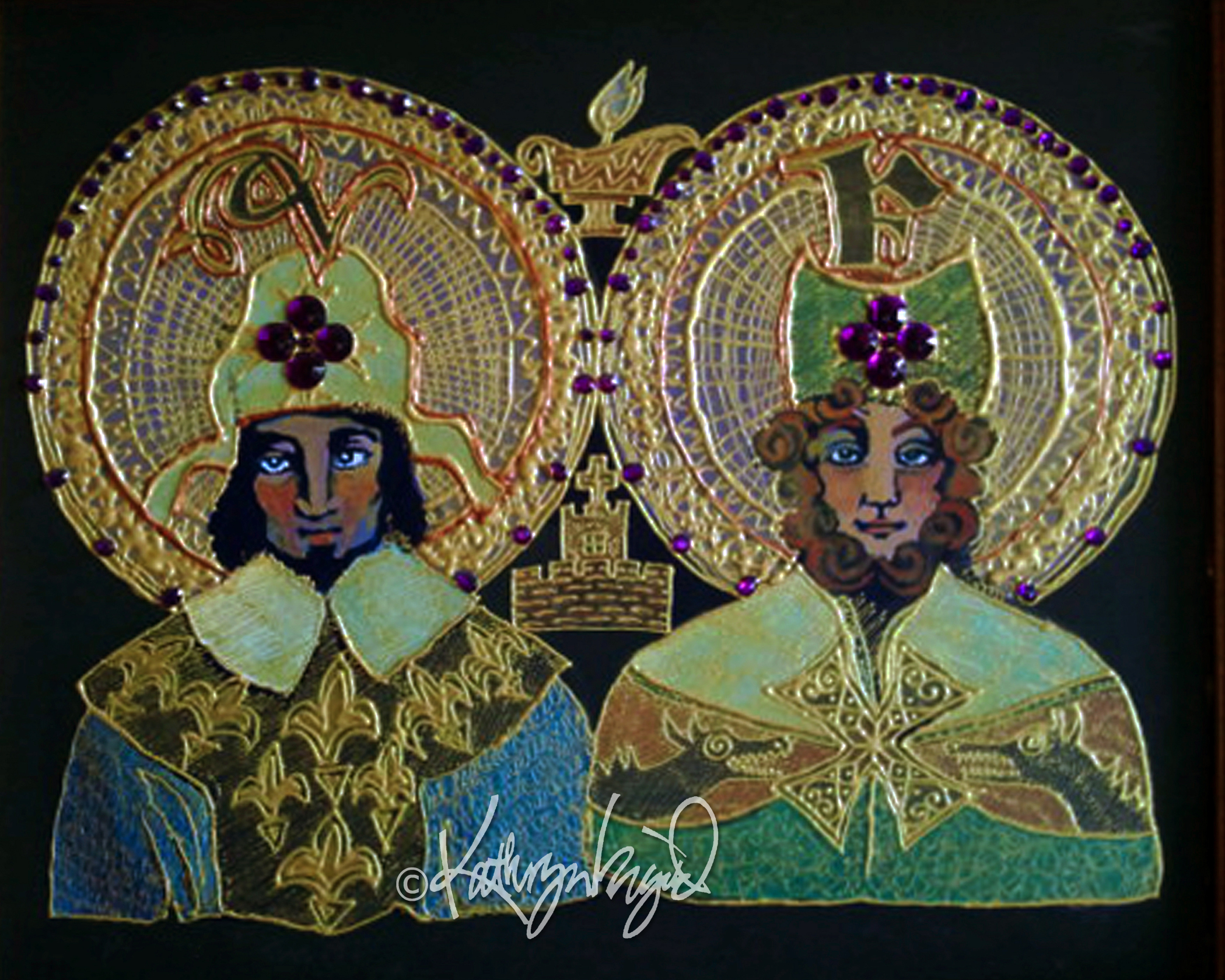
Saints Valery (a French abbot) and Finian (an Irish bishop)--hereafter known as the Feastie Boys since they're also among my birthday saints. They remind me as well that one can come from different places, times, backgrounds and any number of unique circumstances and rise beyond them all to distinctive heights . . .
 Art-Colored Glasses