
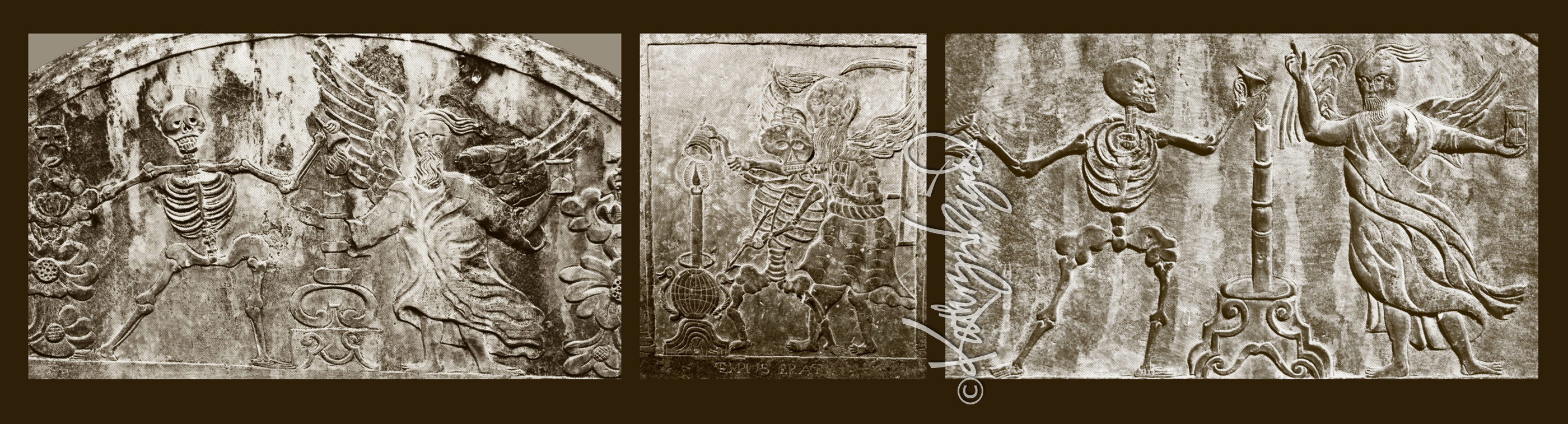
 To Rest in Peace
Alas! for shadows carve my collarbones
and misery is lapping at my heels;
Death’s machinations turn, wheels within wheels,
and grind me for its grist between cold stones–
And yet, as dust-dry as I turn, breath blooms
persistently, a torture to my soul
when I had rather be devoured whole
and go on into Peace’s empty rooms–
Still, here I stay, lie atomized, forlorn,
forgotten on the fringes of what life
and loves I knew once, when my days were rife
with possibility as a new morn–
Let me die now, not live without a chance
of altering this endless Totentanz.
Lest you think me suffering myself, or pessimistic, I assure you I am alive and well. It’s just that I have seen many others struggle with prolonged and pitiful end-of-life dramas and was reminded this June when I saw the beautiful antique gravestones in Boston of how different things are now, when we have such nearly unbelievable powers to keep ourselves alive for tremendously long lives but have lost touch with when it’s acceptable or even desirable not to do so. If our skills for ensuring or encouraging genuine quality of life are far outstripped by our skills for lengthening it, what does that say about us? Generations removed from our forebears, whether in Boston or elsewhere, who knew much more primitive medicine, greater physical dangers, irreparable injuries and the concomitant shorter lifespans we have apparently long since forgotten, do we know how to accept death as a natural end to life and treat dying as a passage to be eased to the fullest extent instead of forbidden?
 Art-Colored Glasses