
 We’re in the process of selling our house, my spouse and I. It’s something we’d considered for a couple of years, downsizing to an apartment closer to a size appropriate for two adults, but we hadn’t made any serious motions because we’d not found anyplace that met our wishes for location, price, condition, and covered parking. (Texas-sized hailstorms, anyone?) When we found such a place, it was when we weren’t really looking anymore, of course.
We’d been out on a Sunday expedition and were heading home when we saw a sign for an ‘upcoming’ listing, called the owner, and discovered that he had something different and probably even better suited to our wishes. Three weeks later, we’re close to closing with buyers. Crazy. What’s fascinating to me, in addition to the oddity of the situation itself, is being reintroduced to the world of Real Estate and its intriguingly arcane, euphemistic, and otherwise idiosyncratic processes and language. Like all other legal and commercial ventures, it’s wondrously weird. Sometimes aggravating, often amusing, and especially entertaining to me when it comes to the times when one party or another is trying very hard to find a word to describe something that is—well—basically indescribable.
I was reminded that both buildings and their furnishings, for example, that are neither clearly classic nor modern can be called Transitional, and that this nondescript term has been so often used in this way that it has become a recognizable style itself, but still lacks many distinct characteristics. It’s more about what it isn’t than what it is. There are long lists of words and phrases and concepts that are equally vague and yet relatively easy to interpret by those of us who have read enough Real Estate-speak and seen the reality of the properties and objects being described to begin to recognize the connections, as tenuous as they may sometimes be, between the word and the actuality.
So when I read “park-like setting,” I am more inclined to think a place is going to require massive injections of cash and labor to sustain its massively over-groomed acreage. “Designer’s dream” usually means someone with far more money than taste hired a person only marginally more skillful to make everything in the building match too well and fit trends so perfectly that they’ll never be wholly in style after their current popularity fades—or, conversely, that some self-declared Artiste so personalized the joint that no one in her right mind would think it anything but a gut job as a purchase. One of the best is always, of course, “starter home” or “DIYer’s delight,” either of which can only mean that the home’s toilet is an open hole in the middle of the living room floor and the last time the roof was repaired it was done with a bright blue tarp.
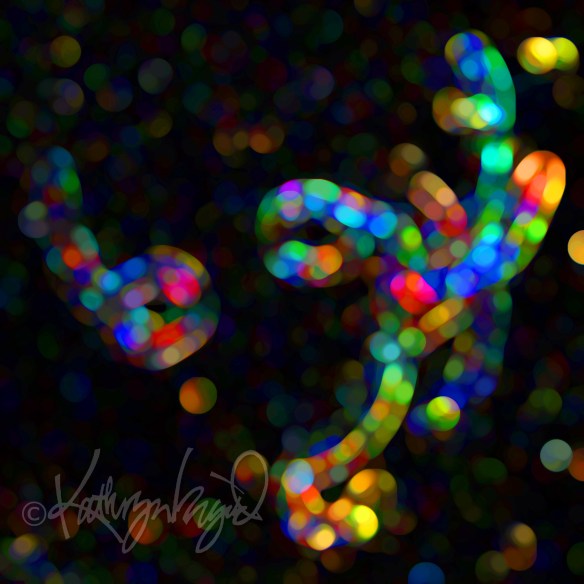
It’s not so different from the brain shift required of a viewer expecting obviousness and objectivity from abstract images. What looks like neon lights in bokeh, perhaps, or a wallpaper pattern of whimsical orangey bubbles can certainly represent nothing more than a blurry photo of a vintage neon sign or a repeating design made from imagined circles. But it could also be that both images were created, however indirectly, by beginning with the very same photo of a small handful of earthworms drowned in rain, beached on a concrete slab, and desiccated into interesting squiggly shapes in varying shades of brown. Which is what these two happened to be. A DIYer’s delight, if you’re an artist with a post-rainstorm messy patio. A transitional sort of place, I guess, for the worms and for my eye for images, both.


 Art-Colored Glasses