Order & Disorder

P&IMost of us seek order in our lives, or at least a sense of order. We want to believe that there are things we can assume and expect and even, if we’re really fortunate, control. Yes, those whose lives full of action and unpredictability and chaos would seem to exclude the possibility–extreme sports aficionados, high-powered businesspeople, rodeo clowns, astronauts, oil-rig roughnecks and those raising toddlers–look for order in their own ways so as make sense of their place in the universe. It might be in simple things like organizing the spice cabinet or sock drawer with obsessive neatness; it might be in the form of how they interact with people outside of the job, or it may be entirely internalized because inside is the only place they can see where they can exert their own opinions and desires and beliefs to the fullest extent.

In art, it’s often what differentiates in its subtle ways between the immature and the mature artist or designer or craftsman. It’s expressed as the creation of thoughtful balances or deliberate imbalances that succeed in creating the visual unity or tension in a composition, between colors, textures, distinct subjects and objects, or other elements of the work. While it’s undeniably true when disgruntled viewers look at abstract and non-objective artworks or some kinds of highly quirky contemporary designs and say “My five-year-old could’ve done that”, it’s equally true that the most sophisticated five-year-old will likely only do so by chance, and then only once, whereas the mature artist usually had a purpose, a process by which he was tweaking the tools and techniques to achieve something that might have as little chance of connecting with any individual viewer as that smarty-pants kid’s work but has a thousand times better the chance to succeed in what the artist intended and is, to boot, repeatable. To live on the less visibly ordered side of the equation is to risk losing communication with a potential audience, but for some artists, that is a worthy risk, most especially because the audience they do reach will be the more attuned to their visual language and will respond in kind.

In truth, the most conventional and marketable of artists and designers may have broader appeal, but can be just as off-putting to some viewers and would-be customers as any avant-garde members of the species. Order, as it happens, is in the eye of the beholder at least as much as is attractiveness in art.P&IConsider the Desk. Nearly everybody who owns or works at one creates his own environment there, because it’s somewhat controlled, controllable space. For some, the orderly desk is a perfect puzzle, each single item in a particular position on a particular bit of real estate thereon or therein. Some are always en route to that Ideal but never entirely there. And some have desks that look remarkably like bomb sights. Yet never assume that this is truly disorder. I have known people with desks whose archaeological depths of debris and deconstructivist demolition could easily hide the crown jewels, a body, or a small automobile and yet who, when they wanted a particular piece of paper or the mini-stapler, instantly knew the precise spot from whence it could be excavated. That’s order of a higher order.

What all of this means in the grand scheme of things is that it’s merely a set of constructs or ideals that varies so greatly from person to person and time to time that we’re all probably best served by finding whatever forms work for us individually and then allowing ourselves the flexibility to understand and tolerate others’ sense of order or disorder, whether we approve of it or not. Mostly, it won’t lead to apocalypse–and if it does, who among us will remain to worry about it? Maybe the ones with the monstrous, mountainous desks, if they can duck and cover under them fast enough. More likely, we will all muddle along as we’ve always done, some of us fascinated with baskets and boxes and cubbyholes and patterns and polish and others delighting in their weirdly convoluted and inscrutable tangles of Stuff.

And nobody Wins or Loses–except if you count losing that one danged Thing that you’ve been hunting for in the pile forever and ever (usually until realizing it is in your left hand pocket).

High Baroque in Low Places

Craftsmanship is not one of my greater strengths. I credit myself so far as to say that I have a pretty good eye for fine craftsmanship. But when it comes to my own work, I’m impatient, short of attention, and lazy enough that I’m always that dilettante rushing through to get the job done and hoping it’s enough to hang together as long as needed. Until the homework is graded; until I can hire a professional to come and do the job properly; until I have escaped notice as the maker of said shabby construct.digital photocollageI have an honest recognition of the limitations of my skills, I think, if it is perhaps slightly magnified by my lack of gumption toward improving them in numerous areas. I could argue that I’m doing my part to support true craftsmen in their arts by not competing with them unduly, but anyone would see through that excuse, I’m afraid. Still, I am awed quite genuinely by the beauty inherent in passionate craftsmanship, whatever the cause. I love the artistry of beautifully handmade or hand-finished objects, whether they are intended as art or meant as humble functional things, everyday items that we might pass over in their daily use but for the marvels of their refinement and Fit.photoI’ve long been equally taken with the ridiculousness of both badly designed and foolishly impractical objects that were intended to be functional. Perhaps it’s the extreme contrast they have with fine craftsmanship. It’s silly enough to make something that by virtue of its careless design does not or cannot accomplish that for which it was meant, but often that very malfunction is trumpeted by the sheer ugliness or oddity of the object: one can see by simply looking at it that it won’t work or will be seriously flawed. It takes no time or effort to amass quite the collection of weirdly inept designs, from Patent applications right on up to the failed products remaindered and forlornly dusty on store shelves, and one can be endlessly entertained by the verbal autopsy of such strange husks from top to bottom–gadgets and gizmos meant to do so many unrelated tasks that they were too obviously cumbersome and ill-integrated to accomplish a single one of them. And dressed up in badly applied finishes of bizarre colors probably in hopes of distracting the customer from all other evident failings, but only drawing attention to the inherent cheapness and outlandish impossibility of their ever working as promised.

But there are so many things of the opposite sort that I think it’s too easy for us to gloss over what’s right in front of us or under our very fingertips as beautifully conceived and crafted objects worthy of our admiration for both a thing and its maker. Yes, it’s natural to admire the loveliness of the bow made for a Baroque Violin or the delicate carving on a lute, for a painting or sculpture or print made with evident and painstaking care. But it ought to be equally impressive to any of us when we pick up a dinner fork that is perfectly weighted and fits smoothly in the hand, to eat a marvelously tasty meal that has been made with such loving attention that the addition or removal of any tiny thing would be superfluous to its elegance–even if that meal is a profoundly rustic stew.

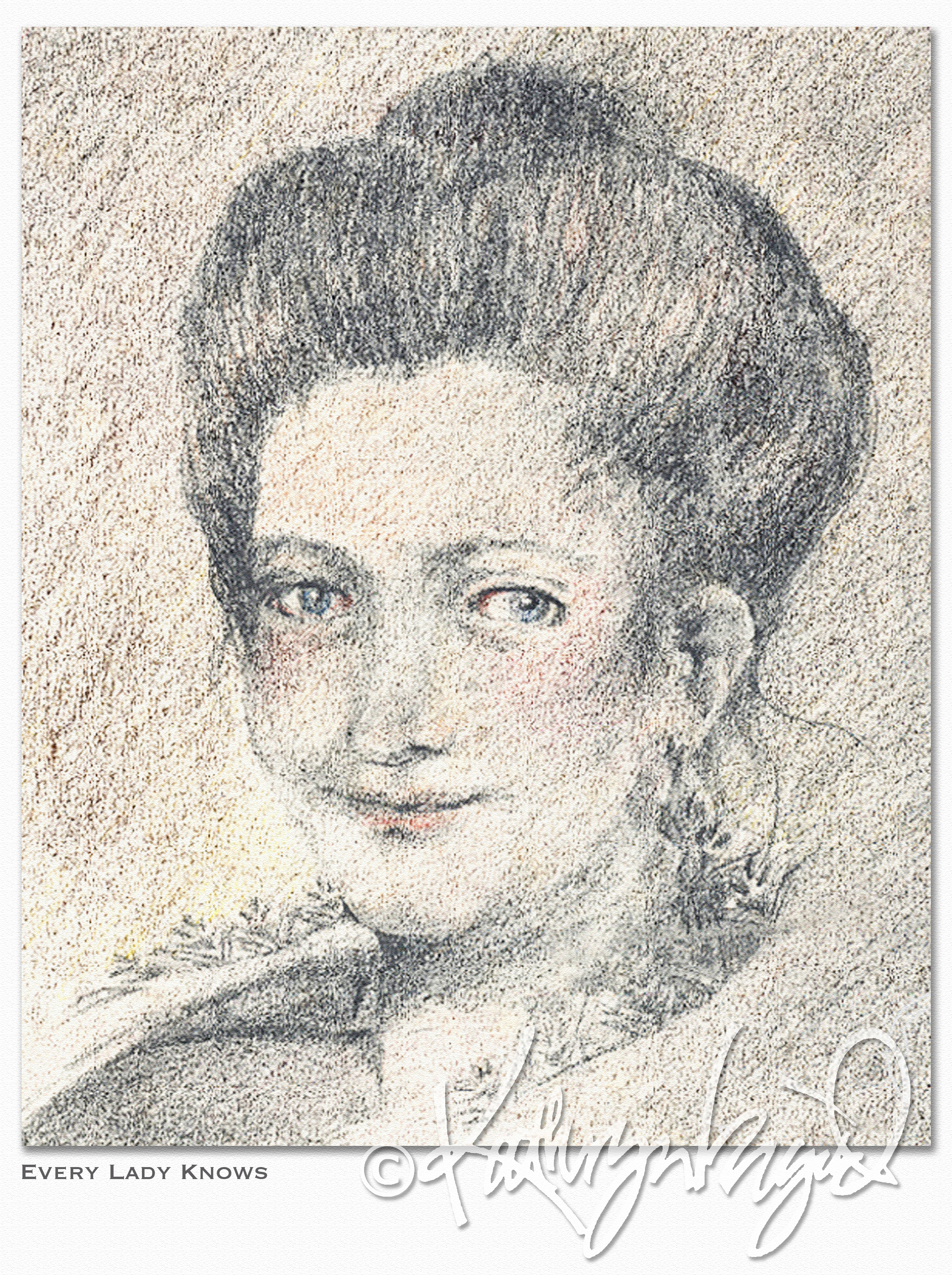
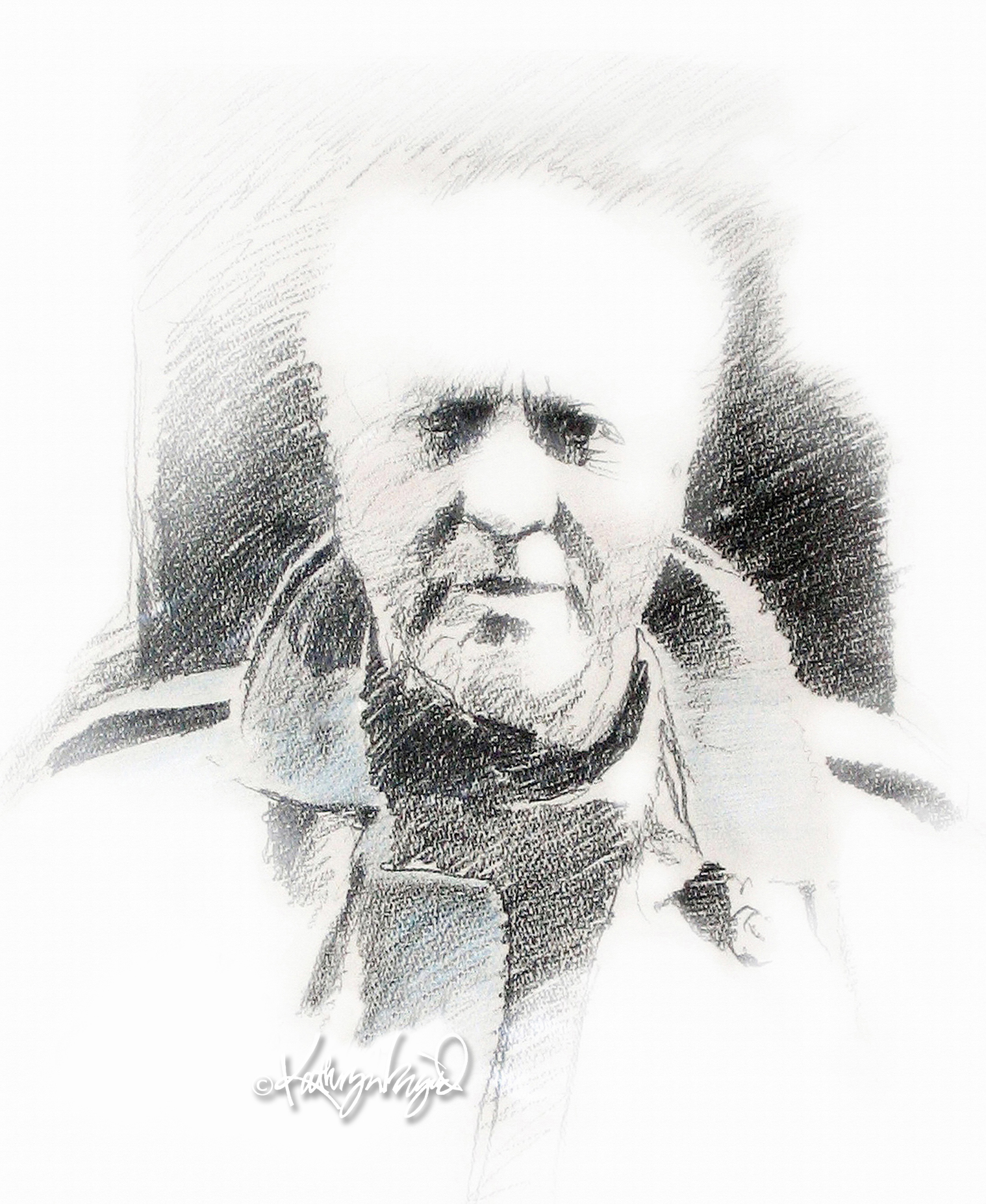
When we sit in a chair, do we notice not only how pretty, how well suited it is to the general character of the room, but also how the height of the arms supports our elbows just so and the curve of its upholstered back is designed to magically adjust to the lumbar spine of each individual sitter? Do we ask ourselves, Who made those helicopter blade fittings so exquisitely that after sixty years the contraption not only still flies the way it was made to fly but is a supremely wonderful geometric confluence of sweetly fitted parts, a sculpture of its kind, as well? Do we remember to look at the window sashes on that old house and be moved by how the intensely focused care of their making has enabled those ancient wooden single-pane mullioned windows to keep the home’s dwellers snug through 150 winters and summers?digital photocollageI hope that I, for one–as poorly equipped as I am myself to create that kind of grandeur in simple things, and too impatient to strive for better as often as I should–will always take the time at least to pay homage to the real craftsmen and women among us. To notice the attention to detail and graceful touch that they have applied to rebuilding stone porches, stitching a brocaded lining for a coat, painting a portrait of an old woman because her lined face is marked with history and pain and beauty and not because she is famous or has the money to pay for a portrait. To say Thank You to those who have made something fine and elegant and Right simply because it was what they were compelled to do.

Give Me Your Talent and Nobody Gets Hurt!

digitally doctored graphite drawingWhy buy the cow when you’re gettin’ the milk for free? As crass as the expression is, it describes pretty neatly something more dangerously pervasive than ‘easy virtue’: artists‘ consistent problem of being undervalued and, subsequently, of undervaluing themselves. Those who take their creative work seriously are often not taken seriously themselves and their output is treated with the disrespect of being assumed effortless and frivolous.

Interesting, isn’t it, that people will loudly praise and admire successful self-made business owners and talented self-taught tradesmen and not generally assume, on the basis of this entrepreneurial zeal and autodidactic achievement, that those folk will unhesitatingly hand over their goods and services for free. But if the successes in question happen to be in the realm of, say, storytelling (via song, dance, picture or book) or the production of beauty for abstract philosophical purposes–these same admirers have no qualms about asking the artists for freebies on a regular basis, whether supposedly justified by a Good Cause or simply out of egregious ignorance of what it takes to produce these great stories and experiences.

I’m quite willing to explain to well-meaning people why it took me multitudinous years of steady study and practice to get to that level where I can “effortlessly” produce a fairly refined poem or drawing or essay in a couple of hours, never mind all of the expensive materials and grueling hours I’ve gone through en route to that one ‘keeper’. Yes, I’m that version of the proverbial “overnight success”. In this I am not so far different from the electrician that ordinary folk, however grudgingly, know they must pay because otherwise they will either wire their home just sufficiently to electrocute themselves, or to get sued by someone else who does. And then they can pay a $600-an-hour lawyer to assist them in their defense. No, my work is scarcely life-and-death. I am not going to offer anyone cranial surgery–nor am I charging anything like the going rate for that–though perhaps I have occasionally considered doing a free midnight trepanning on people who insisted on demeaning my work, and me through it.

Ultimately, though the personalities most typically drawn to creative fields of work are rarely equally skilled at and fond of marketing, self-promotion and business administration (and are often expressing themselves through creative outlets specifically because other forms of interaction and production are less pleasing and natural to them) it is up to them–us–to defend the arts. To tell the rest of the world that these antique yet constantly expanding and changing forms of communication, documentation, and explication are not merely decorative, though that would be enough, but shape our entire social fabric, our history and our sense of ourselves as humans. They express our cultural sameness and differences. They allow us to imagine and design and build new things that in turn can move all of humankind toward greater health, wealth, safety and comfort. Who do people think invents and designs their shelters, their transportation, their tools, their clothing? Who challenges us at every turn to uncover our darkest failings and to discover our better selves? There may be no other broad area of endeavor or lens through which we see our lives that covers so much needful, practical ground, quite contrary to the typical ‘outside’ view of the arts.

I’ve heard so many sob stories about how much people admire my work but can’t possibly afford it–all of them undoubtedly true enough–from the very people who ought to have a fairly good reason to recognize my equally impecunious state (not least, with my being an artist married to another artist and all) but who plow right ahead without batting an eye at asking me to donate my artworks to their organization’s fundraiser, my graphic skills [Ed: not many non-artists seem to understand the separation between various media and techniques, let alone when complicated by and applied through technology] for their brochure or book, my photographic services to document their special event, and on and on. I know all other artists get this same petitioning constantly.

And we acquiesce. Because the causes are great. Because we love and/or are related to the petitioners. Because we love what we do and we were going to do it anyway and somebody with money might see it and commission us for a serious work or offer to represent us in their gallery or decide to publish our book. For all the right reasons, we give in, over and over, and kick ourselves in the morning when we get up with generosity-hangover. Especially after the third person in line yesterday got our extra-special condescending explanation of Why we wouldn’t give it away for free ever again, even though she was standing right behind petitioners one and two who did get something, and we actually like her better than both of them put together and now we just know we are the biggest creep in the whole wide world and should be burned at the stake.

And here I am telling you to stand firm for the cause. Scurrilous scold that I am! No, do what you must, of course, and more importantly, what you want to do, and not what I tell you to do. Always keeping in mind that the reason you’re asked for these benevolences is because you are good at what you do, and because the persons asking can’t do it themselves but really do want it, and because if it has that much value, why then, you should jolly well be comfortable in expecting them to treat it as valuable and pay accordingly. And I apologize in advance for what a rat it may make you feel you are. Until you finally get a little much-deserved pay and can feed your family, your art, and the causes of your choice.

And for any non-artists out there who might have accidentally read this rant: consider giving a truly welcome and desirable gift that, emotionally at least, really does Keep on Giving: pay for some art. Buy a full-price ticket to a concert or the hard-backed version of a book; pay the asking price for an original painting or a hand-crafted piece of furniture; solicit donations for a fundraiser for the local Art Guild or Poetry Society or Contemporary Dance Theatre instead of soliciting from its membership for someone else’s fundraiser. Give a child a box of crayons and a tablet of paper without any expectation that she must make a picture to pay you for it. Teach a teenager to get music out of an oboe as skillfully as he gets it out of his MP3. They will all be eternally grateful. They will start to make a living and perhaps be able to afford your rates for roof repair, for legal advice, or for Great-Auntie’s home medical visitations. And you, you will thank yourself for enriching the world in so many ways.graphite and colored pencil on paper

“Mama, Where Do Baby Ideas Come From?”

graphite and colored pencil on paper

Ingvar Lidholm

Well, Honey, when a mommy artist and a daddy medium love each other very much . . . .

I can’t imagine that there is an artist or creative person alive who hasn’t been asked many and many a time where he gets his ideas or what inspired her to make this piece of artwork, write that song, take whatever photograph or choreograph any given ballet. In many cases, the answers are hard to condense into sound-bite-sized, manageable pieces for the occasion, because much creative endeavor is the tangible end result of a whole lifetime’s experience and train of thought, and we all know how often and how easily that particular train gets rerouted, redirected, diverted and derailed along the way.

But in general, most of us can point to pivotal moments that shaped our thinking, whether on an individual project or about our artistry as a whole. We can cite particular persons and their artistry that inspired and enlightened us and informed our own work as we grew. And for many of us, even we who are relatively late bloomers, a lot of the fodder for this inspiration begins early in life and creeps up on us subliminally to a certain extent.

I’ve already mentioned my long-ago irritation at being ‘bundled’ with Edvard Munch because of my Norwegian roots–and, of course, how ridiculous I realized that irritation was once I discovered that contrary to my belief, the more I got to know his work the more I actually admired it. Now, naturally, I take it as high praise (if perhaps hyperbolically so, though I’m happy to take it anyway) when my stuff is seen as meriting any such comparison.

My personal Style, if there is one, is defined more by a tendency toward slightly aggressive lines and bold coloration and faintly eccentric leanings when it comes to subject treatment than by any distinctive media, techniques or actual subjects. My affections in art are too fickle and my attentions too fleeting for me to be easily contented with any defined set of materials and topics and applications. But I find ideas and encouragement and guidance in the work of many painters, poets, draftsmen, printmakers, essayists, storytellers, architects, boat-builders, jewelers, botanists, lycanthropes . . . dear me, have I wandered again?

Part of the trick in pinning down who has been an influence on my work and where I’ve gotten my inspirations and ideas is that I’m very much a holistic, integrative and analogous operator, so in true Liberal Arts fashion I pull my many threads together from many divergent and possibly unrelated sources. The only consistent thing is that I try very hard to steal from the best.

My gifts are not musical, but I love music. So although my piano skills are fit only for personal amusement and my singing limited by spasmodic dysphonia and lack of practice to in-car singalongs and serenading my spouse with occasional outbursts of bent versions of formerly-familiar songs, I often work with music as my inspiring accompaniment. My paintings could be said to derive more from Aretha Franklin or Felix Mendelssohn, The Real Group or Tomás Luis de Victoria, than from Munch or Vincent van Gogh, though both of the latter have lent me many of my ideas about brushwork and coloration. My writing is more directly writing-derived, perhaps, but all of the favorite writers that spring to mind (Ogden Nash, Vladimir Nabokov, Dr Seuss, JRR Tolkien, S.J. Perelman, Gabriel Garcia Marquez, Tomie dePaola, Geoffrey Chaucer) are on my hit list because of the lyrical, even musical, qualities with which they treat poetry and prose. I love children’s books as much now as I did when an actual child, because the best of them of course comprise a perfect and literal confluence of verbal and visual imagery, something that becomes more deeply ingrained in me by virtue of drawing the senses together. And in that way, my writing is often led to incorporate certain textures and moods and colors or to carry a particular ambience by either pictures (real or imagined) or simply the weight of a visual experience I’m hoping to evoke with words. I’m no synesthete, but all the same I do depend on the interaction of all my senses to shape each of the creative works I’m developing.

I did once make an entire exhibition devoted to portraits of people (mostly historical figures) who had had influence of some significant sort on my art and my creative life, and perhaps the most telling thing about the gallery besides that I had deliberately filled it with nothing but portraits (a form I’d studiously avoided all along in my artistic journey until then) was that very few of them were of visual artists. Most were of composers, singers, and writers. A few were agents of social change, a couple were people I actually know, and a handful were influential in the philosophical or spiritual realms. The writers and musicians ruled the room. I doubt that would change hugely if I were to do such a survey of inspirational influences again. I do know that there would be a new character added, but I’m not certain how exactly I could represent in a portrait my network of online muses in blogdom.

acrylic and graphite on canvasboard

Igor Stravinsky

Awash in Sentiment and in Love with Loveliness

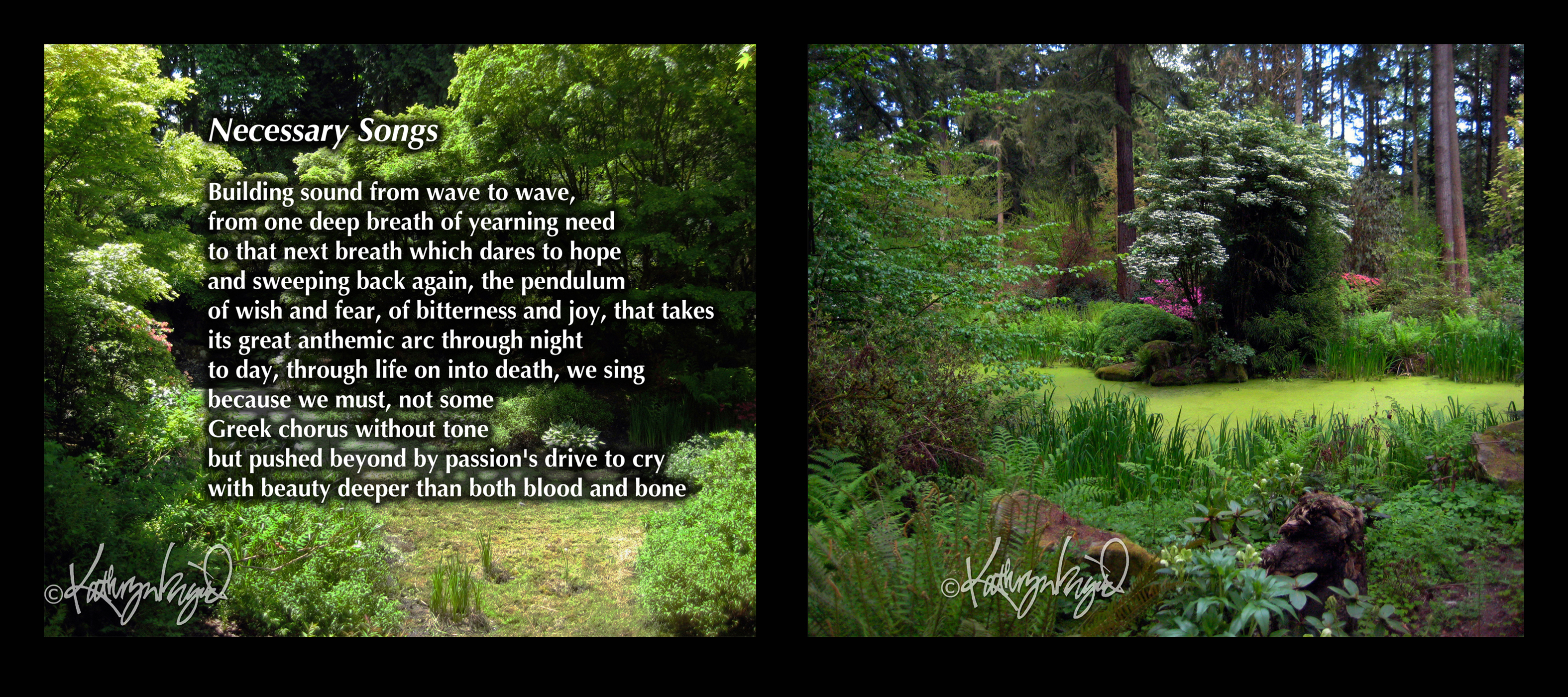
photos + textAbsolutes

Marvel with me, if you will,

that water never flows uphill,

that whiners know no dulcet tone,

and ants leave nary a cake alone;

that day follows night and night the day,

that parrots always have something to say,

that money’s scarce in holiday season,

and you love me still, despite all reason.

digital collageNaturally, I Thought of You

I stepped onto the broad parterre to make a painting en plein air,

but found, instead of gentle breeze, the air was cold enough to freeze;

instead of fresh and sunny scenes, a garden growing wilted greens;

I’d hoped to capture nature’s glory–saw, instead, an allegory

teaching me: the garden pales, the skies grow dim, and nature fails

and seems all doomed to soon be dead–so I just painted you instead,

and in your portrait, found that kind of natural joy I’d hoped to find.

Stories without Words

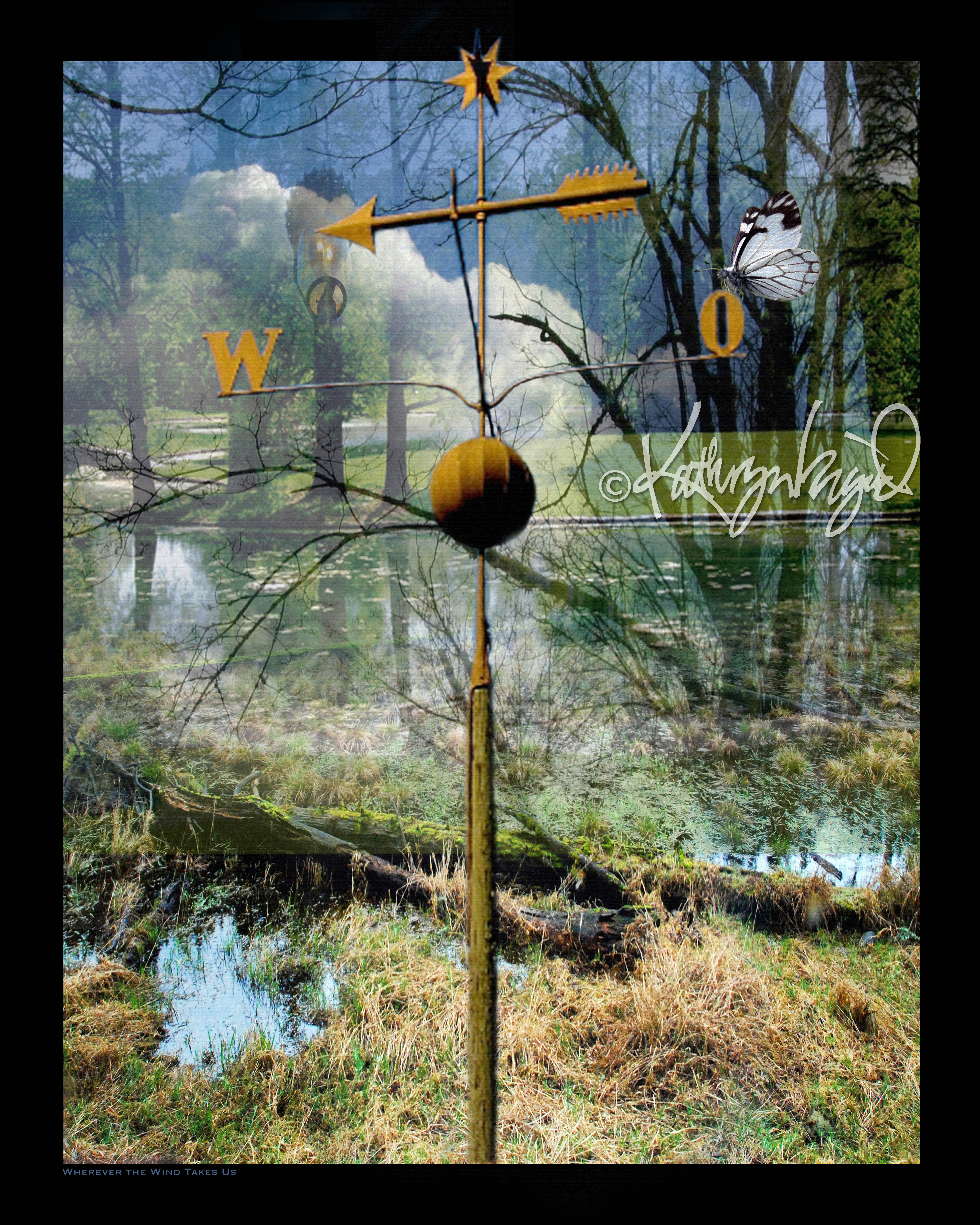
I may have mentioned–some few blog entries ago–that the visual world is full of stories for me. It’s not just me, though. You’ve heard it plenty yourself: “A picture is worth a thousand words.” There’s no end of people inspired to find tales, ideas, inspirations of every kind in things seen, in the real world and in all sorts of visual images, and what we like to imagine they mean, or could mean. So have at it. I give you now a digital collage and know that no one else will see precisely the same collection of Stuff or relationships between the things collected here exactly the way I see them. You might guess why I put some of this together in a single image, maybe even could see some of my motivation more clearly than I do myself (you shrink you), but the fun of the whole thing is the same as what I love experiencing when I have an art exhibition: seeing my own work through others’ lenses and knowing that they always bring something different to it than I did either in looking at the finished piece or in revisiting any part of its birthing.

digital collage of Things

All these things together . . .

Every sighted person “reads” the world through his or her own filters, and for the most part, that’s good. It’s not only what helps us to be ourselves fully in the world but what gives us a large measure of pleasure in existence: we can create the world in which we find ourselves as well. Imagination and interpretation are colorful ways of coping with reality and reshaping it as we go. We can be horribly misled by our crazy or wrongheaded or under-informed explication and conceptualization, and that usually leads to trouble of one sort or another (not least of all making one be a chump, a dimbulb or even a full-fledged jerk). But really, isn’t there a lot of fun in just giving ourselves a moment of fiction to stretch our boundaries and enlarge our existence in some small measure?

Growth Spurt

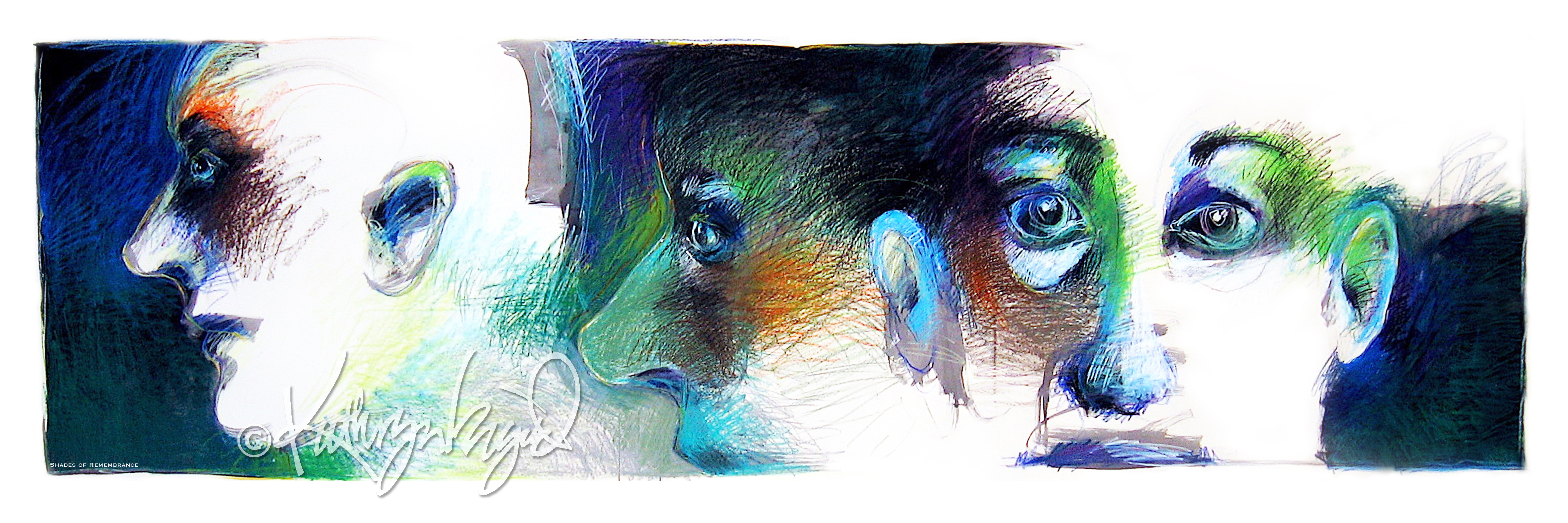
Shades of Remembrancedetail of oil pastel drawing (face)

Mural detail

I’m going to see if I can’t put up a post every day for a while now. Some days I’ll just post an image or two (old, new, any medium) and other times, if actual thoughts or ideas occur to me I’ll make a supreme effort to get them into text before they vanish utterly like so many puffs of pixie dust. In honor of that concept, today’s drawing post is an older piece that represents a period of welcome growth that was spurred by my disappointment and frustration when I met with my chief studio adviser in grad school after a counterbalance of deadly dry time left me with little to show her beyond a handful of insipid scrawls that were mere ghosts of old ideas rehashed. In response to her admonition to ‘try something different’ I had a semi-hysterical bout of throwing out baby, bath water and tub all in one fling, deciding that the desperate measures I desired were a school of opposites. I’d been drawing 16″ x 20″ and smaller fussy (and excruciatingly slowly executed) surrealist still lifes in graphite pretty exclusively, and the exclusions came to include imagination and fun as I spiraled into frustrated ennui.

My solution: work large, explore a multitude of drawing media, work faster than is comfortable, draw subjects unfamiliar and intimidating, and quit critiquing unproductively midstream. It’s one thing to make small adjustments along the way, another to be immobilized by constant critical interruptions obsessing on the imperfection of my technique and execution–practicing past which was really the whole point of my doing graduate studies, after all. The result was that in the same several weeks it had taken to do the previous sad-sack batch of four or five drawings, I filled a gallery with walls about 5 meters in both directions from floor to ceiling with drawings, any one of them filled with greater energy and sense of adventure than the previous set combined. Not necessarily championship material every time out, mind you, but the mere act of pushing my productivity was a healthy kick in the keister for this would-be artist.

It’s entirely possible that my family and friends would have appreciated my taking a slightly less exaggerated approach to the change-up, since it resulted in massive amounts of large-scale (including a number of up to 9′ x 15′ and 4′ x 20′ murals) works that led, at the end of their assisting me with the installation of my thesis exhibition and lugging said works hither and yon, to whispers among them wondering why I hadn’t opted more kindly to become a skilled miniaturist. Or found less overworked relatives and friends, at least. But in the end they were all incredibly supportive and enthusiastic about my starting to learn how to manage my life in art production, and I learned perhaps the most important lesson I’ve fallen into yet, which is that the Muse requires equal ass-kicking; inspiration rarely happens without the regular pressure of constant and assiduous practice. If I think I’ve gotten to the point of needing no more practice to improve, I’ve clearly lost my last brain cell and should just lie down and rid the world of some ‘surplus population’. The mass-production approach to making art is, while a great boost via mere numerical odds to the number of possible “keeper” artworks, also an expensive enterprise, one that made me a much more devoted recycler in the process, to be sure.

Still, I wouldn’t trade this one essential atom of wisdom for all of my other education–anything worth learning and doing is worth practicing. I’ve had fallow periods aplenty since then, of course, but when I get the itch I know full well that the best way to scratch it is to dive back in and practice on a constant and vigilantly pursued basis. So many have written and spoken so eloquently of this in the past and continue to publish brilliantly on the topic, but until I stumbled on the experience in my own naive way I had no real appreciation for the power of this one prized truth.

This mural is one of several of the 4′ high by 20′ wide oil pastel on paper pieces that were part of the big life-changing project I tackled in those enlightening days of yore. This post is the first of my attempts at every-day blogging to bring the next degree of change to my life as an artist. Onward!

mural of faces

Oil pastel on paper, 4'H x 20'W

Inspirational Moments

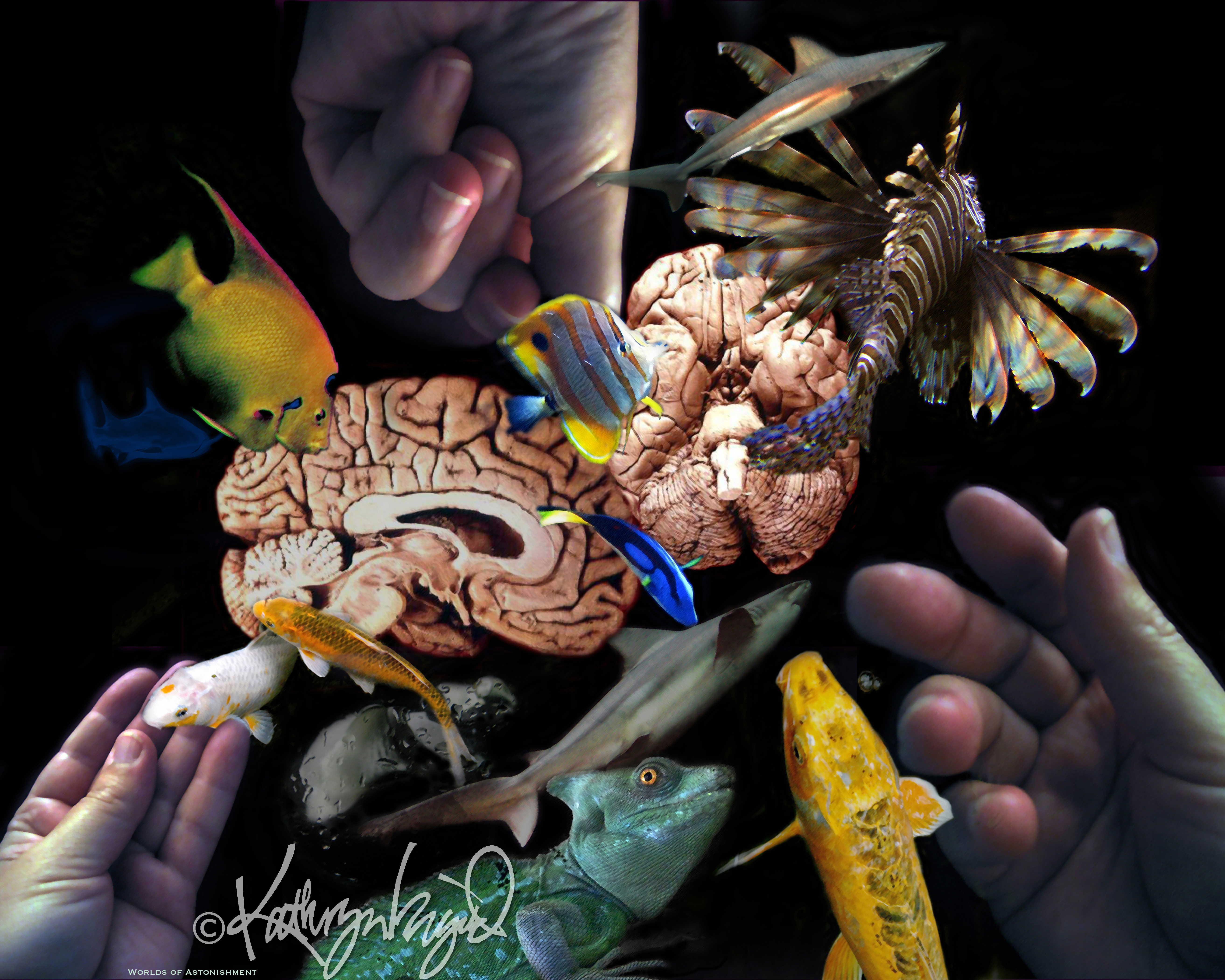
Digital collage of brains, hands and other fun stuff

Ooh, I just thought of something!

There’s nothing more scintillating than having a bout of true inspiration. But it’s so ridiculously rare in real life! That’s what good work habits and persistence are for. Me, I am decidedly against hard work and persevering in general–but I have at least learned that not only are those the only ways by which I can summon the muse if I don’t happen to have a boatload of inspiration dumped on me at random. Further, I’ve discovered that the actual process, the journey, can be a pleasant one if I let go of the assumption that labor is inherently nasty and only the end product makes it worthwhile. After all, if that’s the case, and the product turns out to be a disappointing flop, then I really feel like I’ve wasted my time in Sisyphean grinding. So I’m learning to find my fun in smaller increments and take all possible pleasure from the everyday parts of being who and what I am. It’s my amygdala, and I’ll spoil it as much as I please.

Out of the process-as-entertainment approach sprang a new medium and form for this artist in the last year: learning to play with my digital images as collage elements [thank you, Photoshop]. The image here is from a series of such experiments and represents a little of both my artistic and my mental processes, appropriately enough. I didn’t throw any pencils into the mix, but you can see that I’ve not entirely shaken old habits by learning new ones.

Drawing Conclusions

Much of what I share on this blog is likely to be my artwork (drawings, paintings, photography, digital images, mixed media work, and so forth) and writing. Here’s a sample of my graphite drawing, from what my fans know as my ‘fish and pencils’ period. As in so much of my work, the fish and pencils, both individually and in conjunction, became thematic merely because they interested me and kept me entertained as objects themselves, as subjects to be drawn or rendered, and as a bonus, as agent-provocateurs by the mere eccentricity of their coinciding in images. That, in fact, is thematic in my life as well: the falling-into or happening-upon that leads me to link previously unrelated thoughts and items and creates the flicker of initial interest that takes me down yet another tangential path.