Don’t Blame Me, My Teacher Did It

photoThe drawing professor responsible for mentoring me in my undergraduate specialization in drawing and printmaking had no idea he was creating a monster. Safe to say there was nothing especially distinguished about either my skills or my scholarship in those days; he may be forgiven if he thought there was little hope of my passing his classes, let alone succeeding in being an actual artist at any point in the future. But for whatever reasons of commitment and kindness and selfless dedication to his pedagogical efforts, he took it upon himself to tutor and nurture me in my studies besides working wonderfully hard in the general studio sessions he taught.

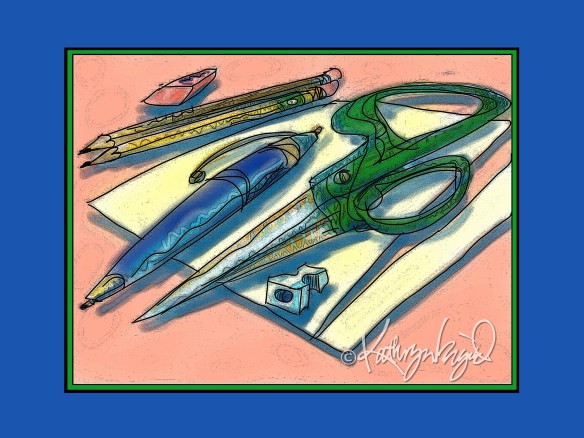
Like any teacher, he had his characteristic methods and terminology, to the degree that any of us who took more than one semester of classes from him had our own favorite little catch-phrases and loving parodies of his work. One of the most frequent phrases (so we thought then, at least) to leave his lips was ‘texturally rich’—and you can bet your sweet pencil sharpener that any of us giving any imitation of him was bound to quote that one.photo
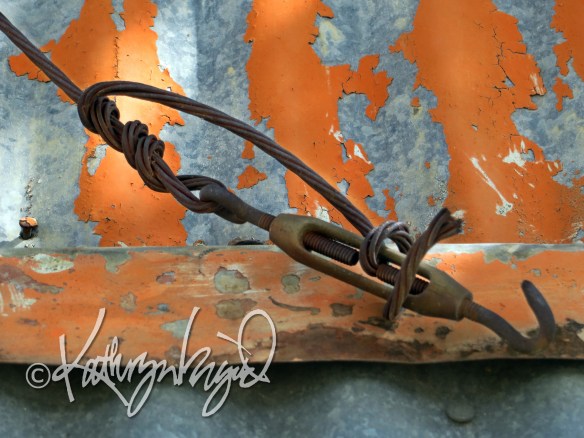
No surprise at all, then, that as soon as I started teaching, which thanks to his intervention and my subsequent hiring I did for the first time out of grad school in the very classroom where he’d taught me, it was as though I was instantly possessed by his spirit. I think I may have visibly started when I heard myself say that mystical phrase, standing there in the very spot where he’d once stood and repeated it to my classmates and me, never having remotely suspected that I would ever quite understand the term let alone use it so glibly and with such conviction a mere few years later. In my turn, I found it became a true favorite topic of study and tool for art-making and there were undoubtedly students of mine who thought it a funny catchphrase of mine and parodied my use of it.

That’s the way this stuff works, isn’t it. We become our teachers. First we find ourselves imitating our parents and siblings and playmates, learning from them both the persistent bad habits and, if we’re lucky and perhaps not too dumb, the worthy and useful skills and knowledge that will stay with us as we grow. Then we turn to teachers outside of the walls of home and neighborhood, as we get to school and move forward, and learn to imitate them too. This, not to put too fine a point upon it, is what helps us create for ourselves our texturally rich lives.photo

In art, it is the visual or tactile form of texture that I most often seek, finding in the wide variety of possible touchable or perceptible patterns and surfaces worlds of ways that I can shape and delineate and describe whatever subject I choose. As I work to make the art deeper and more complex, the textures I seek include less concrete, more metaphorical and philosophical ones that lend further meaning and impact to it. And that is where it begins to intersect with the learning and growing processes of life in general. A life well lived will be inherently texturally rich. I had no idea of the magnitude and import of this when my professor was saying that simple little phrase. But I’m very glad he said it often enough that I did internalize it, ponder it, carry it with me, and eventually, find a wonderful and purposeful truth in it.

Perhaps even fine teachers like him can’t make me into what I never was, a great teacher myself, but there was clearly a place in my heart and mind that resonated to the phrase ‘texturally rich’ happily and hungrily enough for it to take root and teach me good and useful things long after the echo in the classroom had faded away.photo

Everything is Rehearsal

photoIf we are willing to listen, learn, and practice, everything that happens can be rehearsal for a better performance the next time. Musicians know this. We should all recognize it.

Being perfect isn’t the goal. Even being exactly the same each time isn’t it. Mechanically identical reproduction of an event or a feeling or an occasion is for machines; life is messier and more complicated and more artful than that and means we have to be ready to use all that we’ve learned in all of our rehearsals, combined in whatever way gets us the best result in the present moment. It means, too, that what is the best solution for that moment may not be reproducible or even desirable next time. A CD is a lovely evocation of memory but the live performance takes hold of us down to the soul in a very different way.

I want to become better at whatever I am. Some of the betterment may come fairly easily as I recognize more clearly what I am, as I grow older and have more experiences and find my way through more of my life’s journey, picking up clews as I go. More of it will happen, if at all, because I work hard to improve myself in one way and another.

There’s no guarantee that any given moment or event will find me at my best, or even that I will become the best version of myself that I am capable of being no matter how long I live. But I’ll certainly have a better shot at any of that if I commit to practicing.photo

We All Wear Our Masks

digital illustration (B&W)It’s so much easier to hide behind convention and other convenient facades than to let our true selves be seen and known. Don’t we almost always prefer that sense of safe anonymity or at least ‘appropriateness’—however tenuous or specious it may be—to taking the chance that in our own skins we might not measure up to the occasion or to the  expectations of others?

It is, of course, a foolish conceit. One can rarely cozen anyone else, let alone oneself, by such a means. No matter how hard I may try to appear in the guise of what I think will qualify me for the In Group or make me richer-thinner-prettier or smarter than I really am, if it’s all show, the mask will like any faulty exterior prove too thin to cover my realities. It has always been so, and yet I am far from alone in continuing these futile attempts. I do believe that constant practice can transform us into a nearer semblance to the disguise, but that can work for ill as well as good.

Probably wiser is to recognize that the urge is age-old; that insecurity and an assumption that others will find me inadequate in my natural state are neither new problems nor absolutely decisive. The masks of the past remain, both in those symbolic and ceremonial concrete forms and in the records of our history books and art, to amuse, bemuse or warn us, if we will pay attention. And a close enough, thoughtful enough reading will remind any of us that no mask covers the truth forever—and yet, all the same, that we as a species continue (however astoundingly) to survive. Perhaps unmasking isn’t entirely as dangerous as any of us have feared.

I spent enough years acting the part of a brave, socially mature person, one who was more comfortable hosting a gathering, letting others see my art and writing, lecturing, teaching and doing so many other things that in truth absolutely terrified me to tearful agony behind the scenes that it turns out I am capable of doing all of those things after all. I still fuss and worry, yes, but nothing like the self-flaying horrors that I used to suffer just to get through what were apparently no-big-deal occurrences for most other people, and now I can experience them with fair equanimity. Funny how, when you’ve spent your whole remembered life in the grip of a belief that every second was one degree away from total disaster and death, any tiny bit less becomes magically huge.

And each of those instances becomes a step toward understanding that I have perhaps begun to grow into my mask of wishful improvement and become more like it underneath. Or better yet, that it never did matter as much as I feared, this different reality behind the convention. Best of all, I find that the more I let people see me as I really am, the more kindly they seem to look on me, and in turn, I begin to think the real me is perhaps pretty likable, respectable. Even lovable. Who knew.

digital illustration

Unique doesn’t inherently mean Alone.

Suicide without a Corpse

digital illustrationMichelle, a writer I greatly admire, just offered a post on her blog, wherein she details some of the characteristics of her daily experiences in life as a person with depression. As always, she makes me think. It’s not simply that I, too, am such a person—albeit one whose version of depression is as unique, individual as hers and everyone else’s—but that there are a few aspects of depression that, if not exactly universal, are amazingly common. First of these is that being sad is not depression. Sadness is to depression about like a paper cut is to getting an ice pick stuck in your eye.

I will not belittle the paper cut, real or metaphorical. Pain of the physical and the psychic sorts will always be relative to our own experiences and our own moments, and pain of any kind is inherently unpleasant and undesirable. That, I think, would be hard to argue.

But I might also say that it’s less accurate to equate sadness with depression than to call being sad, however jokingly, being “differently happy”. Sadness is a passing, ephemeral experience of the sort where the last scoop of one’s favorite ice cream flavor has been dished up and handed to the person just before her in the queue. Depression is when she has the dish of that flavor sitting right in front of her and not only doesn’t have the strength to reach over and take a spoonful of it to eat, she thinks she isn’t a good enough person to do so, if she can form such a solid thought at all, and if there were a super-powered sleeping pill that could put her peacefully to sleep forever sitting right next to the ice cream and she longed beyond words to die, she mightn’t have enough strength to reach over and take the pill either.

Suicide is a hideous thing, if you ask me. It’s tough enough that anyone would hate or fear her life and self to the degree that she sees no alternative but to end it, but of course she either knowingly accepts whatever horrible consequences her death will have on the entire rest of the universe, starting with the people who love her or she is no longer capable of recognizing that there are such people or consequences or caring about them. Beyond that, it inevitably is simply messy in the practical and logistical and legal senses. Someone will have to clean up after the fact, and the suicide doesn’t or can’t care that this will require others to deal with her corporeal remains, the legal messes she’s left behind, the tasks unfinished, and most of all, with the incurable suffering that follows when survivors realize that they couldn’t save her, might indeed have been utterly forgotten by her in the abysmal darkness of her depression.

Every individual’s best response to depression is as different as his or her version of the ailment. I am one of those whose unique combination of depression and other physical and emotional characteristics and components resisted all non-medical interventions until despite my vigorous resistance to the idea of chemical treatment I learned that that was the only useful method for me. Rather than diminishing my sense of self, it allowed me for the very first time in my four-plus decades to experience what I now believe is (and yes, probably always was) my true self. It still required being dedicated to a variety of other forms of non-chemical rehabilitation and therapy; talk therapy, meditation, and my practice of various arts and exercises mentally and physically that please and heal me all contribute to my wellness along with my meds.

I was fortunate in a way that many clinically depressed people are not: I never seriously contemplated committing suicide. I would go so far as to say that I considered it as a rather detached philosophical argument, inwardly, but I never reached the point where I so lost my will to oppose the idea of killing myself that I could let go of all the external reasons not to do so, those messy consequences others would have to undo or survive. If I valued myself so little as to want to be dead, I suppose it could be said that at least this made me think it would be that much worse of me to impose so terribly on those around me for something that wasn’t directly their problem. This sort of tautology clearly says to me that I wasn’t in imminent danger; I was busy arguing myself out of something that I didn’t really have the strength to do anyhow.

What I didn’t recognize in the midst of all of this soliloquizing was that I was committing a form of suicide, if an invisible one. True, there would be no stinking remains turning into human soap and sliming the rubber gloves of some poor janitor, no internecine paperwork to be sorted by attorneys and opportunists. But the burden on the world around me would have been just as heavy, the struggle of my loved ones just as inexorable, if I hadn’t rather literally stumbled into the intervening care that brought me to this lovely resolution where I find myself dwelling so comfortably today. Because, in my depressive brain fog and fear and self-loathing and ennui, I was rapidly forgetting how to be alive. It’s quite possible, I discovered, to die without stopping breathing, without even losing all conscious thought. A walking coma, an animate death is entirely possible in the midst of true depression.

And for that reason, I am all the more grateful that by virtue of being surrounded by people who helped to guide me in that direction, combined with being blessed, lucky, fortunate, or whatever combination thereof you prefer to name it, after my years in the dark I fell into the combination of elements that conferred a kind of wellness on me that I’d never known before. I am among you today not just as a happy and contented person, full of gratitude and amazement at what a good life I have, but also as a testament to the unfathomable differences and distances between existing and living, between something indescribably yet terribly akin to sleepwalking through life and waking up every day a little bit more…alive.

Remind Me/Rewind Me

For a person who considers herself happily immature relative to her age, I am sometimes caught off guard when I realize how little of my youthful pleasures I’ve continued to pursue with appropriate enthusiasm into the present. Why on earth would I forego standing on a big plank swing, grasping the chains that hold it and me up, and pumping my legs until I feel like I could fly right on over the top steel bar of the swing set with the greatest of ease? Why not kick off my shoes and socks, abandon them in the dirt, and plunge into the cold river’s slippery, rock-strewn flow without regard for getting the legs of my pants all soaking wet? Is there any law that says a 52-year-old is no longer allowed to slurp her fruit punch noisily through a straw just because it’s so wonderfully refreshing and sugary?

Why, indeed, is the common phrase seemingly always about youthful enthusiasm, yet we tacitly agree to let only actual youths embrace it?

Remind me how being childlike and impulsively happy is so dangerous.photo

Despite being of an age where my childhood version of the high swing was of rock-hard rubber on a steel pipe frame and underlaid with gravel-strewn dirt, I am—well—still alive at this age. I never broke a single bone or chipped a tooth, and my only stitches derived from an indoor activity, a school game of floor hockey. Though I wandered recklessly through many a stream and ocean’s shallows, without regard for my pants or my tender soles, and even drank from the occasional icy mountain brook, the worst that ever came of it was a cut from beach glass, soon enough cleansed with stinging but healing salt water. No clothes were ruined, and I got bit by nothing bigger than a sand- or horse-fly or two. I failed to contract Giardia or E. coli from those wild rivulets I sipped. Even the vast quantities of evil cyclamates in my childhood fruit drink binges failed to kill me off.

So how is it that I lost my ability to plunge ahead without caution to where I seemed, nearly always, to find joyful things? Remind me how always being responsible and mature and playing it safe is better for me.

But write it in a note and slip it under my door. I feel the need to go out and look for a little happy trouble.

The Intersection

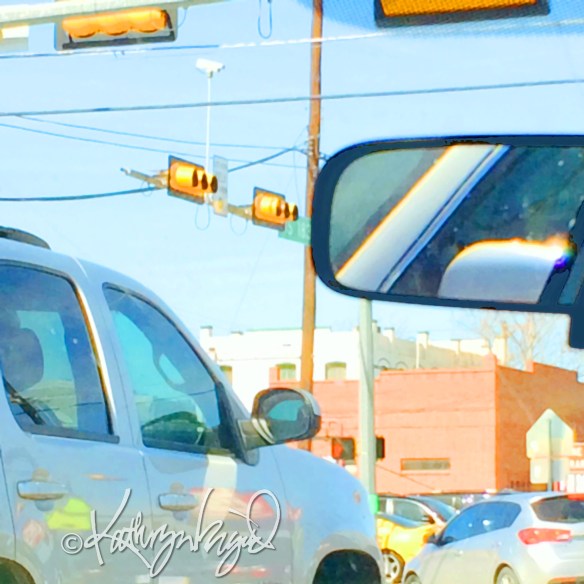
Lacking, as I do (see yesterday’s post!) any real sense of direction, physically or otherwise, in my life’s journey, I kind of live it in the middle of the intersection. You know, when the traffic slows down and the smog clears, it’s kind of exciting and always interesting here at the crossroads.digitally doctored photo

There are not only all of the events and incidents that brought me to the place where I stand at any given moment, but so much more that enriches life in the intersection. All of the peripheral things that I didn’t do—yet, anyway—lie somewhere nearby, should I change course or take notice and choose to move accordingly. There are all of the other people who come and go up and down the same roads and walkways, and there are all of those who cross my path at any given intersection, and all of their lives and adventures are influences on my own travel, even on my moments of standing absolutely still there.

And then I move on, often without any greater sense of direction than before, but also, often enough, with an optimistic sense that I will soon find myself having yet another unexpected, very unplanned trip through yet another unknown intersection.

What is Essential

How the concept of “necessary” tools changes! I can hardly remember how I managed to survive a full day without my laptop, despite the fact that when I was young, personal computers were strictly the stuff of fantasy, and most computers were, in fact, whole rooms full of refrigerated, card-punching machinery. And no, whatever anyone may tell you, I am not a million years old.

Yet here I am, forgetting how to send letters via snail mail when I can email them; wondering how I can Get a Signal in some remote place so I can wirelessly post my daily blog missive off to readers from India to Ireland, from Kansas to Katmandu. All of this, I expect to happen in the blink of an eye—and mostly, it does.

Strange that things so recently thought utter luxuries become so quickly apparent necessities for survival. So quickly we think the newly acquired stuff can no longer be done without. How do we get so spoiled by our wealth that it seems as important as life itself?

It’s not that I lack appropriate appreciation for my many privileges. It’s not even that I don’t think I could keep living a happy and healthy and contented life if I had to give them all up suddenly, let alone that I’d think myself suffering upon losing my high-powered towns and tools for a short while. I will recover, and probably even rediscover some good things about myself and my world if I am smart enough to pay attention.

In the meantime, I am ever so happy to have a clothes washing machine and dryer, running water, a houseful of LED light, flush toilets, central heating, and yes, all of the little electronic goodies that make it possible for me to blog and email, not to mention talk to family and friends overseas, make artworks in space that are able to be brought into the real world as physical entities, and keep other parts of my life in a semblance of order. I do enjoy the privileges of my office!

digital illustration

The original desktop.

Low Energy? Who, Me?

photoNo no no no, not really. It’s just old age. Just kidding! It’s a too-busy schedule. Well, maybe it’s inefficiency. Or….

The truth is, it’s probably all of the above. Time, life and busyness always conspire to make me think I’m losing ground. I get those little spurts of activity from time to time and what do I do with them? I want to sleep. Chores and tasks can wait for another day, can’t they? I tell myself that life is short and I can sleep when I’m dead, but no matter how much I work to convince myself that Getting Things Done and being an accomplished, lively person is useful and maybe even important, I would still rather do that seemingly wasteful thing of sleeping long and deeply.

So if it looks like there’s a power shortage around when I’m in the room, you’re probably not mistaken. Whether it’s my advancing age, overbooked calendar, impractical approach to my schedule, or just that I’m a lazy beast doesn’t really matter. You can be as busy as you like and get all of that Important Stuff done at your own pace.

Please remember to turn out the lights when you leave the room!

In a Very Hot Place

digital illustration

Not to shed crocodile tears, but don’t you feel sorry for my pain?

In the humid human jungle, there is a rapacious beast that cheerily attacks and devours the happiness of many a poor body.

Menopause. Yessiree, I’m sufficiently past the mid-century mark to be personally acquainted with the joys of middle- and slightly past middle-age. I managed, thanks to magical genes or good luck or some jolly combination of the two, to enter into the mysterious temple of Menopause well ahead of the dull-normal average age of 51. I guess my body just couldn’t wait for the fun. Forty years old? Yay! Sure, I can go right ahead and get on that crazy train.

My doctor thought I might just be a fanciful young’un, imagining I was wandering into menopausal territory at the tender age of forty. Until I described my hot flashes. She already knew about my newly accomplished slide to the bottom of a depressive slope, a thing that (while it is seldom developed in complete isolation from other qualities or characteristics of health issues) can sometimes also be a symptom of menopause. She was not one of those dismissive, demeaning doctors who would’ve opted to imply that I was some kind of hysteric or stupid person. So she did a little checking into my state of being in other ways and lo, what I was experiencing was indeed early onset menopause. Or perimenopause, to be more medically precise.

Anyway, I’m now well past a dozen years of this fun and am still here to tell the tale. What’s particularly interesting to me is that it’s not wildly improbable that I’m, well, okay. I think I might’ve bought, at least a little, into the popular mythology that makes menopause universally into a horror of monstrous proportions. I will never minimize the true suffering that some women experience during menopause, a very real horror. But me, I’ve spent over a decade in the strange land of menopause, and I’m still ticking along.

One thing that I have working in my favor, besides that I have relatively few symptoms and lots of blessed good luck, is that I have great support. I have always existed in the midst of a family, friends and acquaintances where topics of real and everyday importance are generally discussed in real and everyday ways. No big deal. Imperfections, illness, death, human failings, and yeah, menopause. These are all realities and unavoidable. Sometimes painful, sometimes inexpressibly difficult, ugly, terrifying, awful. But in all of that, normal. So why would we be so foolish as to pretend otherwise, to let them loom, magnified, as the sort of thing we can never name, let alone discuss, with others who are statistically likely to have shared the experience and might even have wisdom to share in how to survive?

I’m trying to be smart about protecting myself from the bone density loss that is typical of many women in menopause, taking supplements and keeping active as my doctors have recommended. As an exercise hater, this one isn’t easy for me. I do keep current with monitoring and treating my depression so that I am sad only what seems to me a pretty normal amount and about pretty average things, not depressed in extreme and unhealthy and perniciously persistent ways as I was before I began finding the right health regimen of counseling and medication to keep me on a better path. I use extra skin moisturizer and the occasional application of hair creme rinse because despite having been an almost magically oily youth (and having had to battle high-grade acne as a result) I do find that in my advancing years I now have fairly dry skin and hair.

The big annoyance that remains for me is that my internal thermostat broke when I turned 40. My body forgot how to regulate its own temperature, so now I can go in a matter of seconds from the freezing Undead-body temp I was so long accustomed to experiencing in pre-menopausal years to the miracle of my torso becoming a microwave oven and right back again in a few minutes. Sometimes many times a day. This fun, for thirteen years and counting. And yet I am not a wreck.

The best defense I’ve found thus far is a simple little device that is a hybrid of that grand old invention, the hot water bottle, and the slightly newer iteration of the athlete’s curative bag of ice, a flat water-filled-sponge-containing rectangular envelope thingy that goes by the euphonious rapper-appropriate name of Chillow (trademark registered) and can be laid across my overheated midriff when I can’t seem to get my inner temperature moderated. It’s no cure, but it helps, and help is far better than misery. Even a good old fashioned accordion-folded fan fluttered southern belle-style beats undue discomfort.

I would never be so self-indulgent or ridiculous to call my sufferings massive or anything nearly as important as those of women who endure the real pain possible with menopause and its related conditions. That would be both silly and hypocritical. I’m average, plain and simple and normal, in this experience, even when I’m not exactly on the middle line of the statistical charts. But I can assure you that if you are heading into menopausal territory or someone you know is on her way, there is a path through this particular jungle and you need not be devoured by the beasts met along the way.

See you on the other side of the [very sweaty] swamp.

digital illustration

If the jungle is ruled by a hippo, is it a hippocracy?

Foodie Tuesday: Drink & Shrink

photoWould that I could tell you that today’s post title implies I’ve discovered a miracle diet that allows me to become slinky and svelte by doing nothing but sipping cocktails, yet alas, this most sadly is not so. In fact, it’s a very safe bet that numerous cocktails are, like certain bras, nothing more than alluring cups full of doom, being bad for both health and sanity if sampled in inappropriate quantities and circumstances. But to steer closer to my actual point, I must confess that despite my many food-and-drink-related loves and obsessions, I do get quite hungry and thirsty for a healthier change on occasion.

Like now. I seem to have been on a bender lately, eating too often, too much, and too badly in general, and my body is complaining. It’s not that I have grown morbidly obese, thanks more to good genes and good luck than good behavior, but I have grown a whole lot closer to outgrowing my attire and decidedly closer, as well, to just not feeling so great. It makes me squirm when I think of how unfit I will be in short shrift if I don’t just stop being such a spoiled child around food. And I have it on good authority that being horribly unfit is not the way to insure a longer, healthier life.

Drat.

photo

At least I know that I can still have delicious food, but even if it’s better for me, eating too many helpings of ‘Waldorf’ slaw (sweet cabbage-yogurt salad with chopped apples) is just as dangerous to my eating habits as too many helpings of pretty much anything.

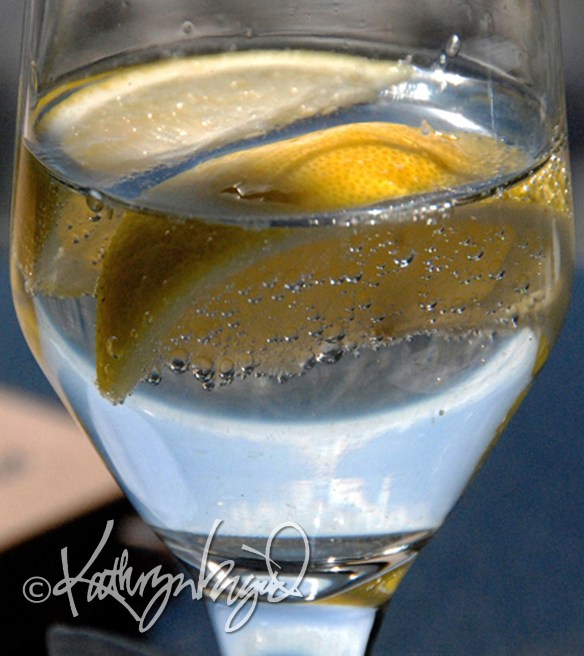
I must throw a bracing dash of cold water on my enthusiasm for overindulgence and get myself closer to optimal comfort. I don’t care if that makes me model-thin or gives me fab abs or any of that superficially pleasing stuff or not; what I want is to feel my best and have a good shot at the whole ‘live long and prosper’ proposition. I know from experience that among other benefits of returning to a more thoughtful eating agenda, my appreciation of all that I do eat and drink increases greatly, to the point where a simple slice of citrus and a glass of pure, clean water is a pleasing sensory experience as well as thirst-quenching, and a complete meal becomes a feast. So much more satisfying in the long run.

And I do want a good long run of it, after all.photo