Hail to All Who Labor in Obscurity! . . . and Pay Attention to Your Teachers

acrylic on canvasboard

Lineage and life-stories notwithstanding . . .

While I was working on the art for my master’s thesis exhibition, I reached a sort of critical-mass point and got a bit huffy at all of the people exclaiming that I must be a real fan of Edvard Munch. Granted, my subject matter probably looked similarly dark and dreary to many; I’ve always enjoyed playing around with that black-humor borderland between gritty and witty, where vampires slurp on souls at teatime and skeletons tap-dance a cheery, leering Totentanz of delight long past All Souls’. I’ve always found great amusement and entertainment in the design and crafting of strange monstrous birds and beasts, outlandish costumes, and rickety structures to house the people that exist on the fringes of imagination. Munch’s images and stories derived from a darker real-world observation, probably tinted by his own mental and physical state of health over time, but the outcome was arguably a comparable sort of oeuvre.

Paste onto those superficial connections the knowledge that I am of Norwegian extraction in pretty much every direction if my lineage is traced out of the US, and I suppose no one could be blamed for linking the Nordic-darkness-tinged artist in front of them with the only really famous one that comes readily to mind. I couldn’t complain about being compared to a justifiably well-known and original artist, now could I?

But I did. I didn’t really like Munch’s work, you see. I thought it obsessively gloomy and depressive and I wasn’t particularly crazy about his style. I tried really hard to disassociate myself and my work from this sticky albatross-of-an-ancestor I was being put into artificial family bondage with and get people to think of all the ways in which I differed from him.

Silly. Turns out, though I still credit myself with having a far more uplifting personal history than his was, what with my generally idyllic existence from day one, we do have a lot in common. When I saw the Munch museum in Oslo for the first time, I was beginning to see why folk might make connections beyond simple Norsk blood, from ties between us in some of the fundamental issues of interest topically and right on through to how we might apply our media to paper or canvas, how we both would wrestle through a whole series on the same subject or even remake the same picture in different media and styles over time to see how we could effect a different outcome with each attempt. I started to notice that there were evidences of similar drawing gestures and brush strokes, an impressionistic looseness with paint and pastel, that were more often similar than not.

What did I do? Rebel against it more. Silly. By the time I really started to come to terms with this whole idea of being on a path not so very different from Edvard Munch’s artistically, no matter how unlike in experience and life, it was kind of a fait-accompli, something that everyone else had acknowledged long before I was willing to do so. As I say, I was already winding up my grad school time when I began to come to grips with saying, Yeah, this is all right with me: I do so like green eggs and ham. I mean, just because Munch was Norwegian-rooted and an artist and explored darkish subjects and I could be described by exactly those same terms doesn’t mean I can’t like him or admit to it!

Once I finally leapt that completely unnecessary and self-imagined chasm, it was easy to begin finding common ground in a lot more places, affinities with a lot of different art practitioners, than I had been open-minded enough to see before. Amazing how much more I can learn when I’m not wasting all of my energy on resistance. Which is, after all, Futile (I have it on good authority). The next step, and a very long and winding road of steps at that, is the one of recognizing what can be gained by learning at the feet of the masters and of those whose place in history and the popular mind is perhaps well established, while still being myself one of the multitude who ‘work the middle’–all of us laboring at our art, our craft, learning and honing skills without any particular expectation of fame or longevity or remuneration to follow.

The short answer: everything. Why would I continue to refuse all offers of insight and inspiration and the potential to learn and grow and delight in what my predecessors–living, dead, famous and obscure–can teach me! Yes, I have learned among other things that great resources of such knowledge can be dug up with a bit of persistence on my part, or as in the case of good old Edvard Munch, shoved at me until I quit whining and pay attention. Or, as in the case of Alf Hurum, handed to me on a silver platter.

Hurum remains an obscure Norwegian and unknown to most Americans, indeed to most people outside of a relatively specialized cadre in the art and music worlds with good reason to know of him. But he was, it happens, a fine composer of piano and violin works–and somewhat influenced by, you guessed it, Edvard Munch. His reach was greater than one might guess not only because his compositional work remains both playable and listenable after lo, these many years, but also because, having married a woman from Hawaii and grown interested in her roots, Hurum spent the latter part of his life in Hawaii and there helped to found the Honolulu Symphony, among other things.

My learning of him was quite simple and straightforward: my brother-in-law, a fine pianist teaching at the University of Agder – Music Conservatory in Kristiansand, Norway, arranged for me to have a commission to do a portrait for the school when they were refurbishing their then-concert hall. This led to my studying up a little on several Norwegian musicians over time, including Hurum, and producing a set of portraits from which the administration could choose, and most importantly, to my hearing some really lovely music I’d never have otherwise known. Even better, my brother eventually did a research project that led him to make a marvelous recording of Hurum’s piano music (Eventyrlandhttp://www.rockipedia.no/Vault.aspx?entity=1169501), and now I have the privilege of using that as inspiration whenever I wish to listen to music while making art yet again.

I have no expectation of creating a lasting legacy and occupying any spot as a well-known character like Edvard Munch. I don’t even fantasize about lingering for generations in the ken of a refined and fortunate circle in the way of a lesser-known but also gifted artist like Alf Hurum. But I can surely perpetuate what joys there are in simply making art and learning from those betters who have preceded me in it, from here in my own quiet little corner of existence, and that is glory enough for anyone.

acrylic and colored pencil on paper

Little known, but not unsung . . . influential, but almost secretly so . . .
Devices for Measuring the Passage of Time

A clock can only go so far. Memory is fleeting and mutable. A calendar, a journal, a snapshot–these mnemonic devices all tickle and tease us into a semblance of attentiveness to the passing of the hours and the effects they have on us and our spheres of existence. Only in the arts, perhaps, do we find a deeper and truer conduit to allow us to fully sense our place in time and how we experience it, now and over time. We are immersed in the moment in a more piquant and provocative way, making a more spiritual connection perhaps, with our past, present and future, when we sing and dance, listen and look, paint and write, tell our tales and learn from those that our fellow-travelers tell.

So I return to an old-friend medium (or two), come back to the antiquated techniques that only burnish with age and use. I begin again to write with greater dedication and fervor. I open clean new leaves of a sketchbook to mark up with the passage of this time.

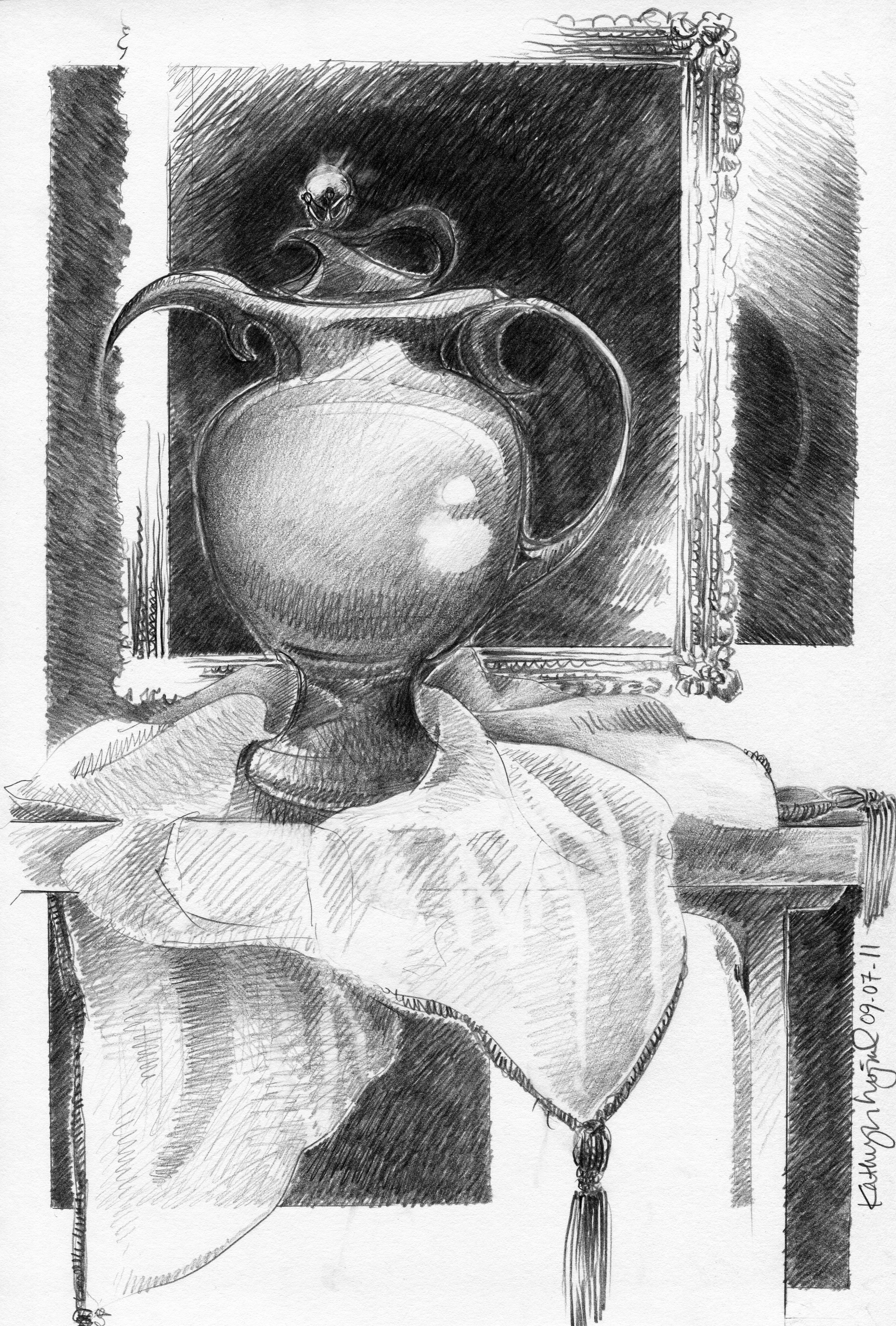
still life in graphite

. . . and the ewer is full again--perhaps with promise . . .

Now that I will be listening in on weekly choir rehearsals again, I have both an artful background to and the time for practicing my ways of recording and interpreting my own passage through time and space. It seemed appropriate to start off this easeful regimen last night, then, with a particularly traditional and foundational study in graphite of texture, shape, value, and so forth, and to mark quite literally where I am after a hiatus of some months from super-regular drawing work.

It feels good to get the creaky hands wrapped around a pencil in this way again. Helps me feel anchored in my place on the continuum I suppose. And I take comfort in doing this little bit to stanch the flow of time unmarked–to make it mine for just this nth of history, then let it go again to sweep toward when I will next choose to prick it into place with this small graphite flagpole that I plant to make it mine.

Seen through Stained Glass

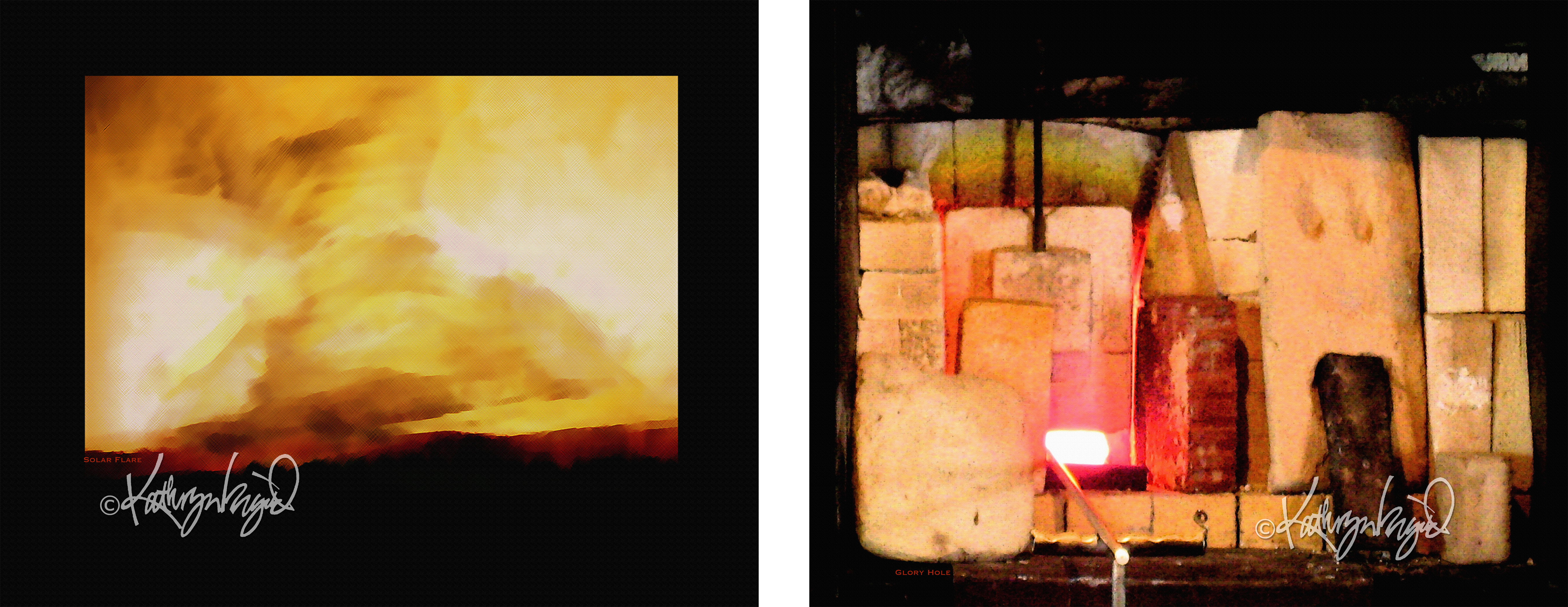
skyscape painting + glory hole digital art

From the glorious inferno, a supercooled liquid . . .

Glass Passages

Strange enough that someone saw at hand,

amid a million million grains of sand,

the only water truly born of fire–

that clarity, deep brilliant light and flow,

refractory and sharp and sweet, desire

that stops in time complete and whole, as though

to freeze all thought and memory and time–

and then took flame to capture its sublime

pure rectitude and stillness; who could know

the alchemy that could and would be wrought

by taming elements to strengthen, stain

and shape anew the crystal, blazing hot

sand silicates and yet somehow retain

such potency, such power that a strand

of history would through it then be drawn

to tell the stories, made so much more grand

in glass by tying evening back to dawn,

and in the light transmitted through that glass,

commemorate the ages as they pass.

saints' portraits

Sources of inspiration can appear even in places where simple and ordinary beings are able to find them. Sometimes it just takes a particular window--or even a mirror--to make it possible . . .


Another Kind of Safety

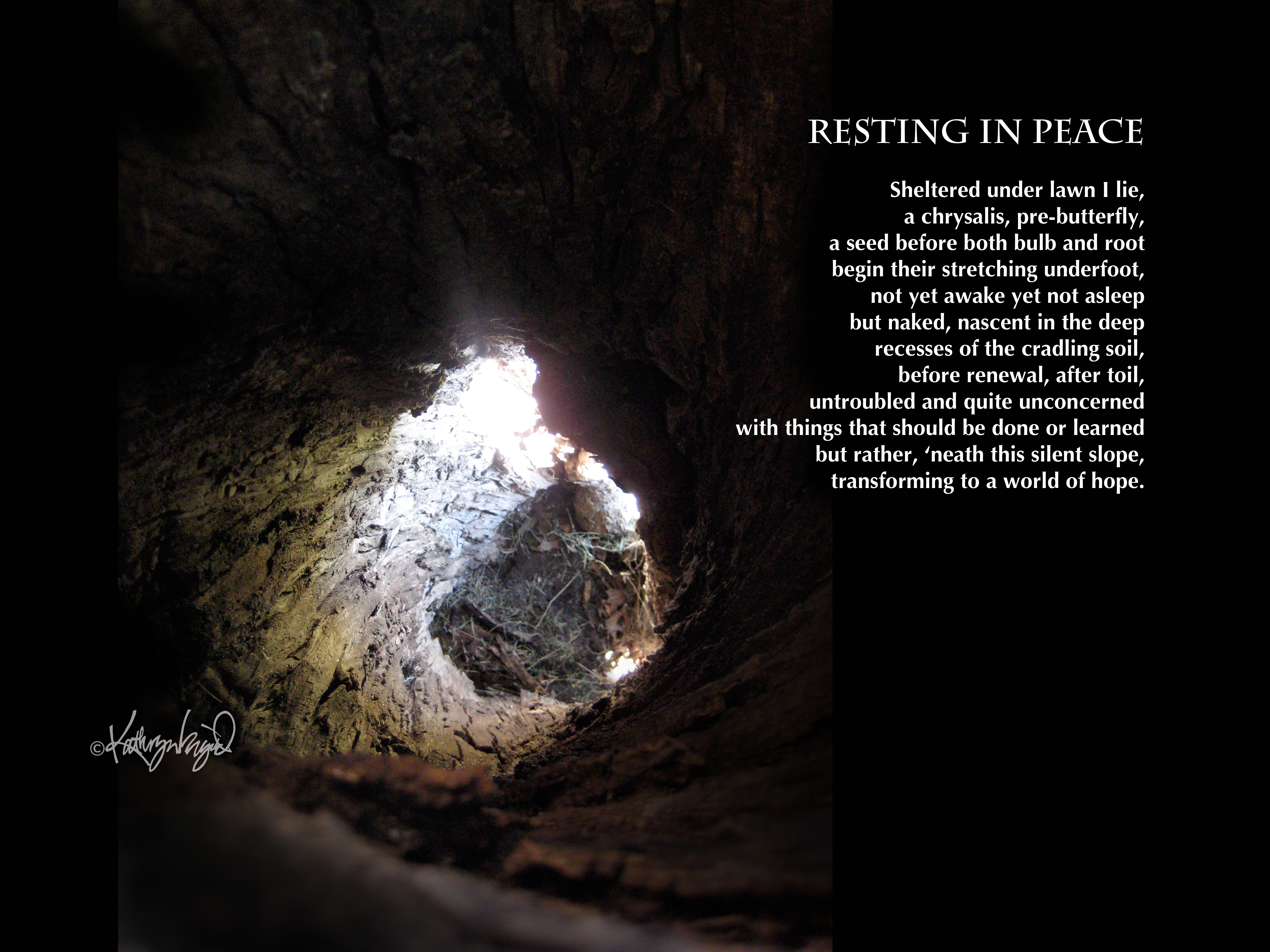
tree hollow + text

. . . always lurking . . .

It’s not only in the comforting arms of cute-and-cuddliness that I feel secure. While yesterday’s post can hold no shocking revelations for anyone who knows the least bit about me, today’s will have no greater surprises when I say that I am also in love with the dark. Not just literal, opposite-to-light dark as in nighttime and dense drawings made with compressed charcoal and velvety mezzotints. Meta-darkness. Scary stories and crumbling skeletons, underside of reality, unsolvable mystery, doom and despair darkness. Never fear, I am still Miss Goody Two-Shoes and hate the danger and pain that all of those sorts of darkness represent in their actuality.

What I love is the frisson of flirting with darkness through art, at a safe arm’s-length remove, and especially so when I am the puppeteer controlling all of the fun. It might be handled with flat-out gleeful ghoulishness or it might be with a much more lighthearted and jocund approach, depending on my mood, but I’ve long been a known prowler in the territory of haunted houses and haunted hearts.

digital painting

I can sleepwalk these halls or crawl them with wakeful deliberation, but one way or another I always revisit . . .

So whether you diagnose me as a creepy would-be villain or see me as I tend to see myself, a collector of peculiarities and curiosities and the dark inner well in all of us that incubates such things, invents such things–and finds some catharsis in the vicarious observation and manipulation of them. That shallow wading in them and climbing over and out of them unscathed, therein lies entertainment, perhaps–but certainly catharsis and yes, another kind of safety.

night in the park + text

. . . and as she sidled out the door at last, she said in a very soft voice, "Good night" . . .

My Moon is Always in Retrograde. I Mean, It is *I* that am Retrograde. Whatever.

I’m not stuck in the past. I just revisit it in my heart with great constancy. I’m not a hopeless romantic. (I’m remarkably hopeful, in fact.) But yeah, I’m as squishy on the inside as they come. The upshot of living with this particular combo of symptoms is that I revert with incredible regularity to making very old-school, gooey, straight-up-rhyming poems on beyond-perennial–millennial?–themes. I fall back on making Pretty pictures and comfort-laden images. I’m very girly like that, very old-lady.

Just another bit of my naturally silly bent, don’t you know.

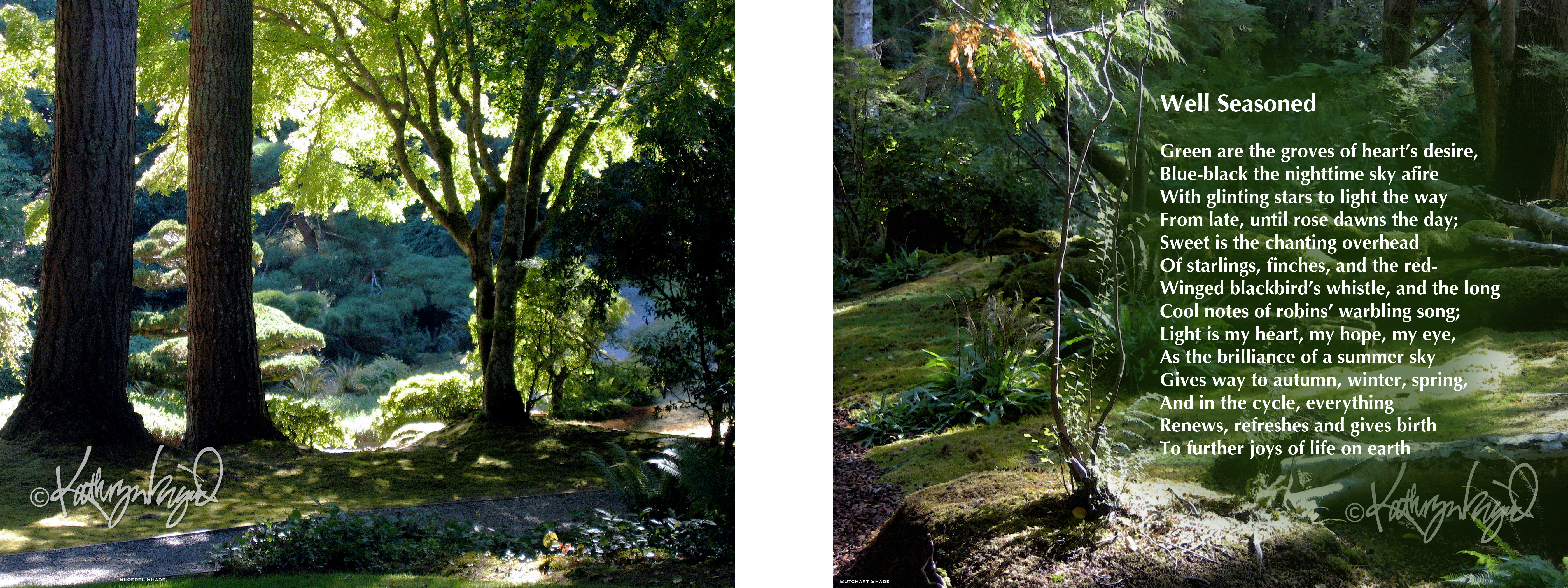
leafy shade photos + text

. . . so I let the treacle trickle . . .

Truth is, I don’t think niceness and sugariness are inherently awful. I know that there are a large contingent of folk, especially arty persons, that get one whiff of this kind of stuff and, well, immediately start to have a reverse-peristaltic episode. The very idea of brushing against the edge of soft-and-cuddly fills many hearts with repulsion. It certainly skates dangerously close to spitting in the face of serious art criticism. Ask John Singer Sargent and Norman Rockwell and, you know, anybody else whose technical prowess and ability to connect both with their clients (yikes! The dreaded commercial success!) and audiences (ewww, what’s with these guys making conventionally attractive artworks and the general populace falling all over themselves liking the stuff??).

And I have to confess to being an outspoken critic of some practitioners famed for precisely the kind of glutinous old-fashioned stuff that I happily turn around and perpetrate myself. The bottom line is not “I don’t know anything about art, but I know what I like”–it’s just “I know what I like”, period. Because one fan’s treasure is another fan’s trash. When I’m producing creative work of any kind, if it isn’t for a specific commission–in which case, it is my desire as well as my contractual duty to produce something that pleases and meets the needs of the client as agreed upon for the occasion–then I’m doing what I feel like doing and can’t be much bothered with whether anybody else will be attracted to it. When I’m making gushy and flowery things, accolades and smooches from the art establishment is far, far from my otherwise cheerily occupied mind.

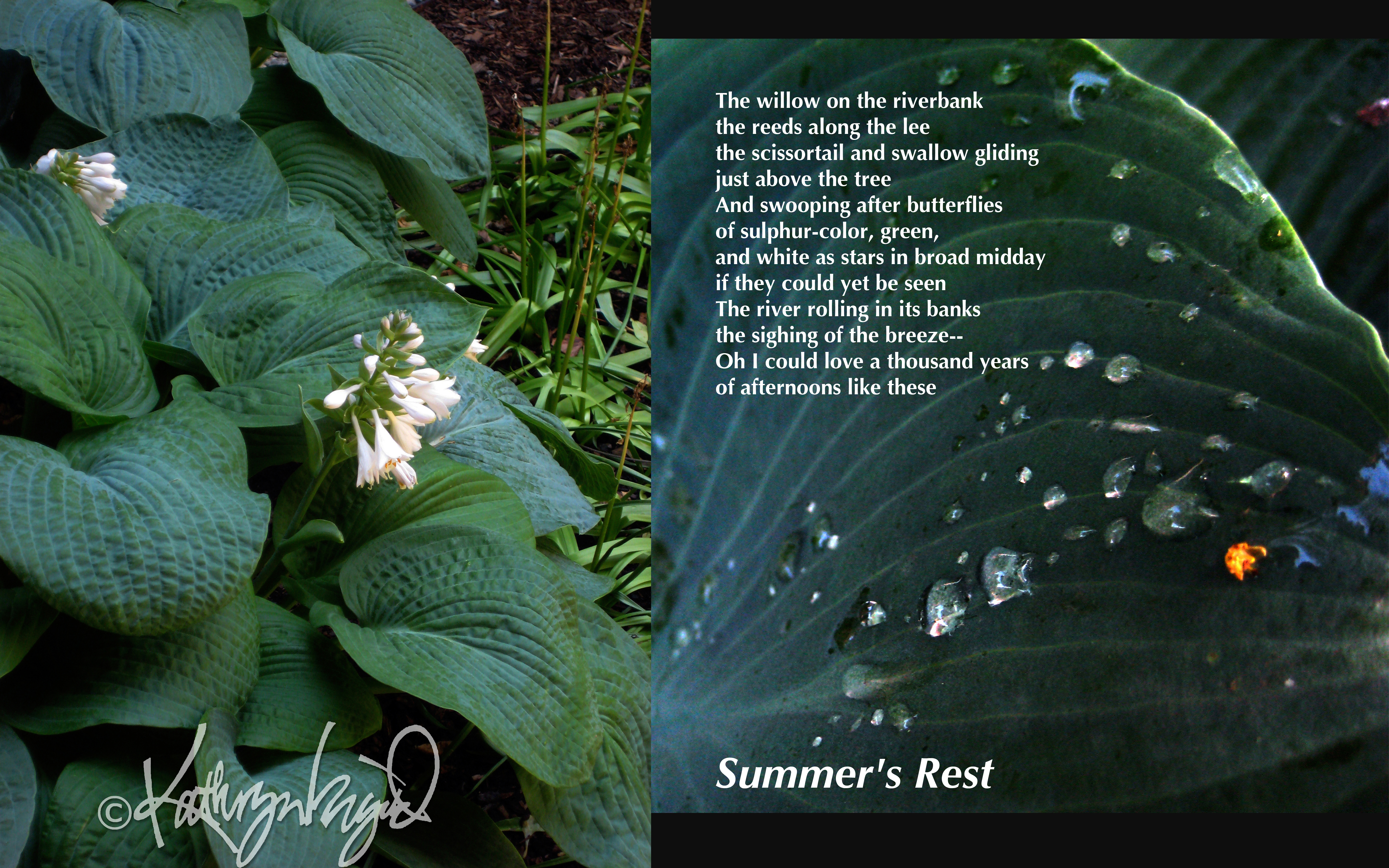
hosta photos + text

. . . so I just lie back in my cozy little hammock and indulge all of my candy-coated urges . . .

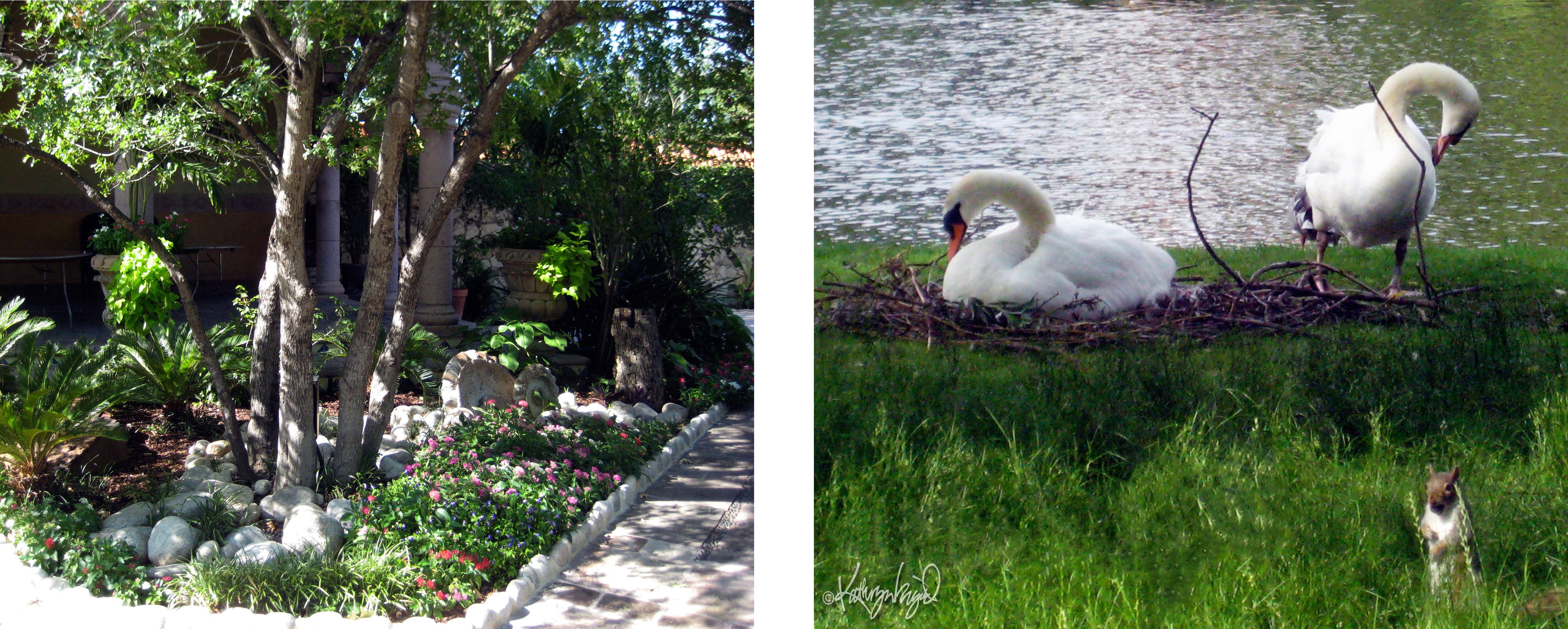
You may have noticed I have virtually no self-restraint; I’m so very not interested in being appropriate and meeting the Exacting Standards of those in the inner circle of the aforementioned establishment. Who, by the way, seem to me to feel a deep compulsion to Not Like stuff on principle if it emits the teensiest odeur of safeness and comfy likeability. Yeah, I’m that backward. There’s a healthy dose of the upstart pipsqueak in me. Nothing I like better than living my life in the shadow of the really important artists out there, secure in the knowledge that my obscurity gives me license to just do what I jolly well please and make photos and poems and stories and drawings and paintings that just give me personal entertainment and amusement and a very traditional sense of happiness. And then I pop up out of the shady tall grass and make a silly squirrelly smirk at the more elegant and impressive real world.

garden, swans and squirrel

Here's laughing at you, kids . . .

Sound Advice for the Voiceless

watercolor birds x 2

Singing our little hearts out . . .

I have spoken about having Spasmodic Dysphonia. That in itself, when in the aural forum and not (as in yesterday’s blog post) just the printed format of the internet, is a fine thing in my estimation. It means that having SD hasn’t rendered me either mute or unwilling to let my sometimes goofy sounding voice be heard. It could conceivably be argued that it would be good if I would actually shut up occasionally, or at least not be quite so outlandishly talkative as I can get. I consider that other people’s problem. Egotistical, I know, and I’m not really exaggerating when I say that. What you hear is what you get.

Being fortunate enough to retain the power of speech, I prefer not to stop using it. SD has meant getting over any vanity I may have had about the sound or quality of my voice. Having been flattered by many in my younger years as a strong and clear and pleasant speaker and encouraged to take singing lessons, to consider radio work, to be a lector and to speak at public events, I now have a different sense of my voice and what I do and don’t trust it to do than I did then.

So I find it less comfortable both physically and psychologically to sing, and certainly have no desire to show off my resulting lack of confidence and practice publicly. I was always a nervous Nellie when it came to singing in any group smaller than a chamber choir (Yikes! Someone might hear me!), but even singing along with a crowd is not the same fun it once was. It has in no way diminished my delight in hearing others sing, however; quite the contrary, it transformed my understanding of what it means to be able to sing, and to do so with skill and fluidity and grace. Working on proper vocal technique will help me continue being able to speak, but my own sense of music has been shifted rather firmly into listening to and appreciating and being moved by others’ mastery of their instruments. My own musical endeavor now sits much more comfortably in the realm of written and spoken language and of trying to capture the marvels of rhythm and pattern and color and sound in the confined refinements of print and speech. The potential is perhaps equally profound and potent, but simply takes an entirely different route through the senses in some significant ways.

Just to be crystal clear on this, I say this without any sense of loss or privation. I’m not suffering! Indeed, I consider myself incredibly fortunate. I’m neither summarized by nor limited to a description of my anomalies any more than I am defined by the ways in which I conform to any norms. SD is something I have or experience, not who I am or what I’m capable of doing. I could go through the list of potentially problematic quirks that help to shape my daily experience and my present self and sound like either a professional victim or a hypochondriac, or I can find–as I most decidedly do–that while each of those oddities has enough effect on my health and capabilities to be worthy of treatment or accommodation of some sort, each brings awareness of deeper gifts and the drive to overcome not only the irksome ills themselves but anything else I might be letting hold me back.

Yes, I am a lily-livered scaredy-pants of the first order as well as a lollygagging and procrastinating and self-sabotaging ignoramus, able to match pretty much any other arguably normal person around in those foolish and unhealthy arts. But at the same time I am so gifted as to understand that my true limitations are all self-imposed and even self-created, and that not only do people with far greater difficulties and far fewer resources live far more impressive and productive lives than I, I can grow up and into a better version of myself by taking notes on how they do it. Being a somewhat lazy and under-motivated student, I have to actively counter the urge to hide behind the couch until all inspirations and moments of willing effort pass, but on certain miraculous occasions I find that, well, I actually get up and do something.

When I do manage to pull myself up by my nearly invisible bootstraps, I find that despite having familial tremor (mainly in my hands) since who-knows-when, I can draw a straight line or a pretty fine freehand circle when I’m focused enough to make art. When I’m not, I have learned to hold my drinking glass with both hands if need be, or to keep kettle and bowl nearly overlapping when ladling soup. When all else fails, spill cloths and laundry detergent are mighty handy things. I may chill easily, thanks to my slightly off-kilter thyroid, but I’ve got layered-clothing styles down to a -40 Edmontonian nine-layer art form that I can still pack in my carry-on baggage. Wanna learn how to do nearly any basic survival task without an inner compass? I have virtually every dyslexic and perceptually dysfunctional talent I’ve ever heard tell of, from the ever popular reading-related visual chaos to spatial, directional, numerical and probably even temporal displacement. So without even knowing or trying to do it, I learned most of the affected skills upside down, backwards and sideways, doing everything with my own inevitably inimitable flair. Once I started treatment for them, my clinical depression and anxiety stopped holding me back and instead informed more of my interaction with other people as well as with my art. My lack of physical stamina and athleticism may have prevented my becoming a famous basketball player or dancer or a three-meter platform diving star, but I figured out early that leverage and a little logical logistical ingenuity could make up for a largish quantity of strength and skill in things physically challenging. Blazing alternative trails isn’t glamorous work but it’s done useful things in my life, and gives me an appreciative slant on those whose achievements outshine mine.

And when it comes right down to it, my ‘substitute’ versions of reality have served me quite nicely. I don’t sing in the way of the magnificent-voiced soloists and choral artists whose offerings have so richly embellished my existence, but there’s nothing stopping me from using the alternate voice I have in words and images to sing in my own way, and mainly for sheer happiness.

spring green flora + text

There are so many ways — and so many reasons — to sing . . .

What is that Thing Called Night?

Edmonton photo + text

Nocturne the first . . .

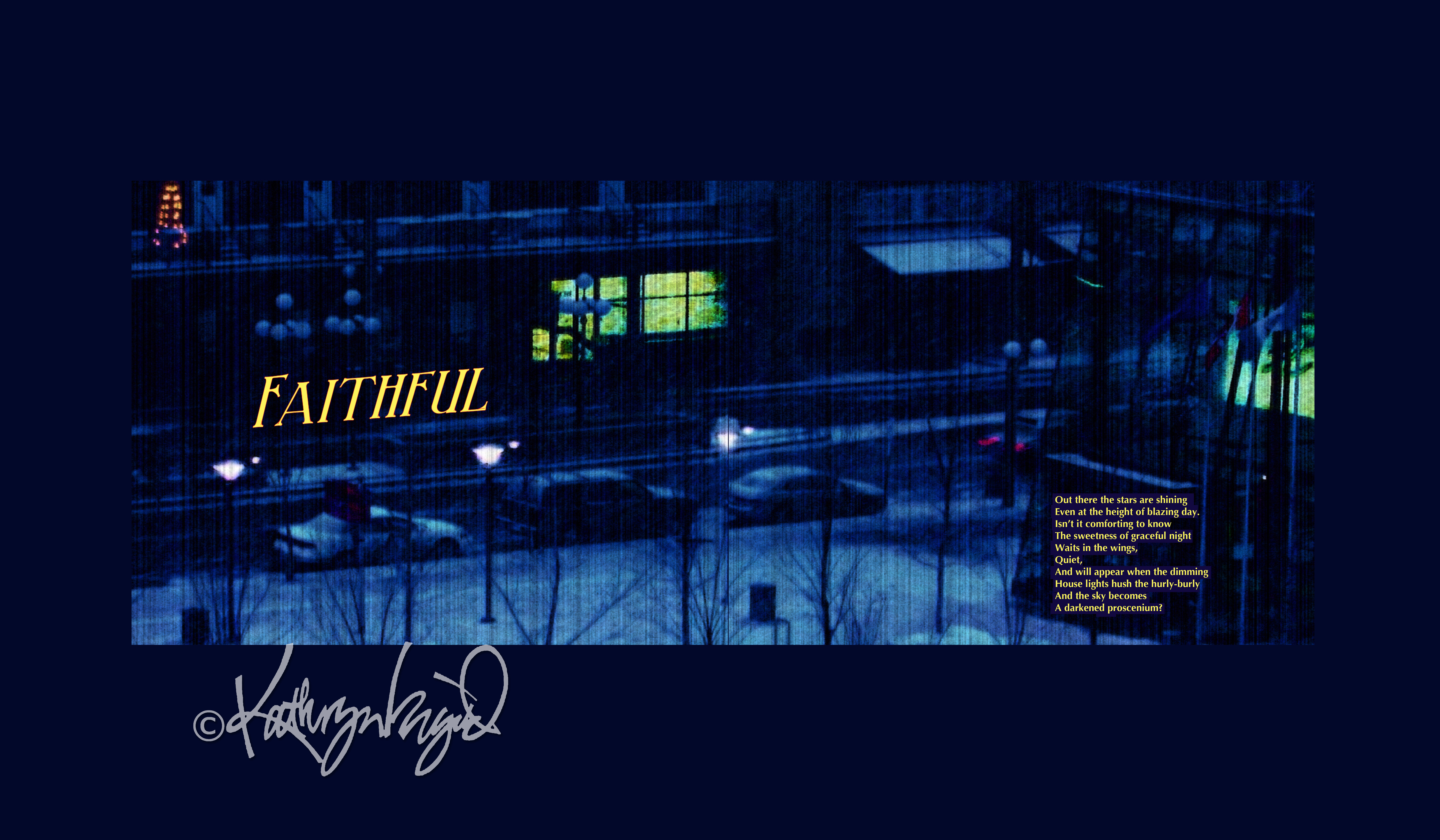
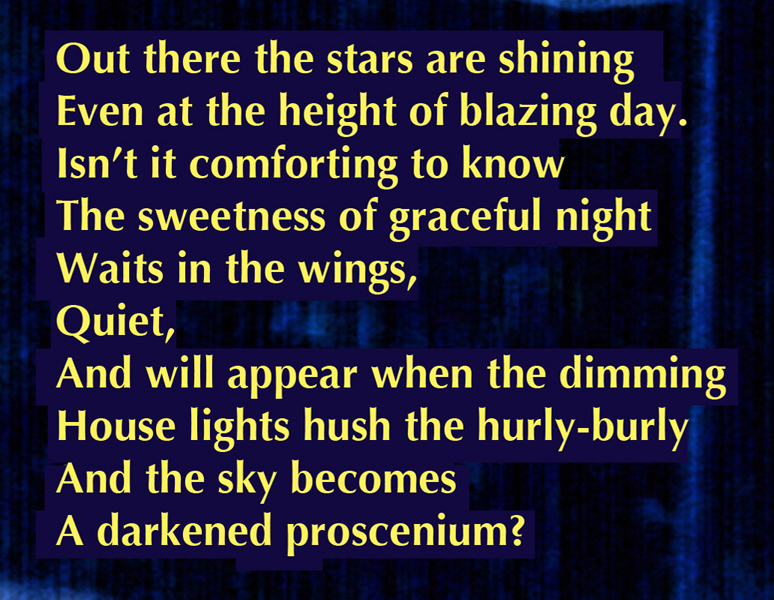
There is no season, dram of nature, age of human development or corner of the soul that hasn’t been parsed and versed and calibrated and celebrated in song and art and poem. Nothing new under the sun, so I’m told. But it seems to my rather casual observations that in the imagery devoted to the light and dark hours, night wins hearts and minds and invokes artists’ worship more frequently and passionately than daytime. If true, this may be horribly unfair given that daytime has so many glories and mysteries of its own. Still. I readily admit that I’m a frequent-flyer on the lovely-is-darkness magic carpet too. There’s the romantic edge, sure, but more than that there’s some inexplicable allure that I get sucked into just like everyone else. Yep, I like it. Serious or not, deep or shallow, I’ll keep jumping in. I love the night.

poem

I'm faithful to the night as well . . .

. . . and while I love the day with equal fervor, I can also say that I’m far less inclined to celebrate it in my art, and one of the things I suspect is that it’s partly pure graphic sense. Darkness, lighted with any small source, provides a much more dramatic and lurid instant contrast than most daytime settings do, in the strictly visual sense, and we all tend, on that, to imbue the world of night (or day) with metaphorical and imagined contrasts that reflect the world of the seen.

park pond in moonlight + text

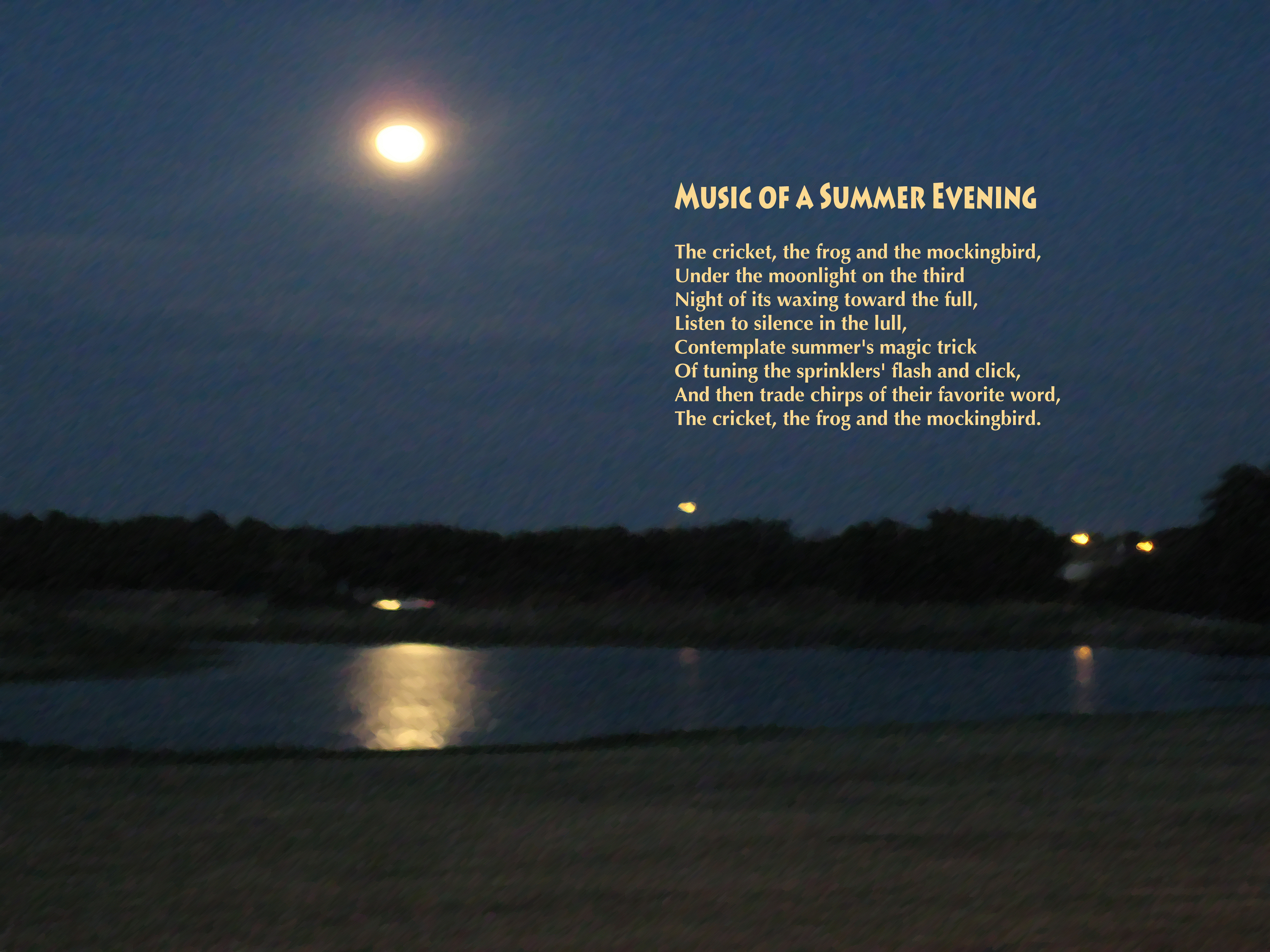
Sing a song of nighttime? Yes, I will again. And again, and again . . .

So I reiterate the old refrain that I, er, always repeat myself. Obsessive? Stuck in a rut? Not so much so that it worries me–my actual concern has more to do with losing interest in finding something new to say about the old, learning how to follow the fruitful tangents that emerge, letting the new supplant the old when it needs to do so. Learning how to let go of the repetitious if it’s sucked dry, or if it’s sucking me dry. But I cannot imagine ever finding so little to love or so little to make new unless night becomes something it isn’t, or stops being the amazing, bizarre, ineffable, haunting, happy, wild-and-woolly things it is.

Good night, my friends, goodnight.

Just This

poem text

Ah, true love never dies . . .

a ReSounding ValeNtine to eXuBerant advocates

Digital collage of two handmade collages

What are we searching for?

What need have I of inspirations of my own when I’m being diligently hand fed meaningful resources by those around me?

In response to my musing on the Muse, or substitutions for one in absentia (https://kiwsparks.wordpress.com/2011/08/06/titles-without-tales/), XB writes and asks what moved me to begin blogging in the first place. Short answer: XB.

The longer and more precise answer is that those kind souls comprising my Support Group–loved ones, fellow artists and writers, and those standing ready with the occasionally required kick in the hindquarters–made me do it. There are those who will say that that’s a typically long-winded way of saying the Devil Made Me Do It, but I like to think their motives were altruistic, regardless of what anyone thinks of my output. After all, there was the now-famous critique of a gallery installation of mine, and I quote, If I had stuff like that, I’d burn it. Since that came from my very own Gramps, and I knew that he had zero sense of irony but that, well, he loved me, I feel certain that there was no hidden agenda in the remark. Purely observational. In point of fact, my grandfather would have burned the lot of it without a second thought, but luckily for me he didn’t have his hands on the stuff. Turns out, it simply made me consider more seriously my audience, if any. Granny, viewing the photos of the installation from the other side of the table, loved it. Bless her soul.

My grandmother, let’s be honest, would have loved my work if it were the closest thing to excrement produced by anything other than a mammalian digestive system, because she so closely associated it with me, whom she also loved. I think she really did get a kick out of the art installation in question, aesthetically speaking, but it was irrelevant in the context of the moment. What I was beginning to figure out was that there are as many filters, as many reasons for liking or disliking what an artist does, as there are electrons in the known universe. And that’s counting the town of Electron, Washington. I was also starting to understand that I was compelled to Make Stuff (pictures, poems, stories, sculptures) without regard for whether anyone else would care or not, would like it or not. This was a very useful realization, as freeing as that period when I discovered that if I made larger quantities of stuff, it wouldn’t matter as much if the same percentage didn’t turn out the way I wanted, I just had more to recycle.

Meanwhile, ambling back to the main question (all roads do lead to me) the concomitant bit of info seeping into my lizard brain was that it did matter to and please others that I made my art and that I shared it. So far I’ve never forced anyone to look at or read my work, unless you count teachers required to evaluate assigned things. Thus, I’ve become more comfortable with the idea that if something I do catches someone’s interest, they will likely come willingly to gaze and, if I’m especially fortunate, to make it a communal experience by responding to it as some of you have here.

Which all loops conveniently back to why I’m blogging. I’ve long been happy to haul out the artwork or haul visitors to where it is, if invited (or if a blank wall is foolishly left near me when I’m on a tear). But my friends, family, and other supporters are far-flung in the physical world and we all have remarkably scheduled lives. So when some of the same gang began to suggest that I consider sharing via a more “portable” and less time-constrained medium, the internet, it started to seem like a good idea. Further, when I began to notice how much more I enjoyed the compulsion to write and draw and whatnot if I actually practiced in a slightly disciplined way, not to mention that I sometimes even got noticeably better at it, then blogging at last appeared to be a logical outlet. I acquiesced. Here I am, forty-some posts into it and scratching my head in wonder.

In another completely unsurprising development of the sort that makes me slap myself in the forehead with an appropriately gobsmacked expression, I got a quick reminder that my attraction to art-making is inextricably intertwined with the urge for storytelling; that storytelling is one of the most basic and universal forms of communication; and that I meet and come to know yet another round of good and encouraging and inspiring people via this medium of ether-wandering. From my Oz correspondent at ‘the wuc’ (http://thewuc.com/) to my longtime friend and artistic supporter Mark who shoots me responsive emails from Edmonton, AB, to this morning’s surprise blog subscription from a high school address in Kathmandu, Nepal, I gain strength and hope and camaraderie and ideas. And this morning, from XB right here in my neck of the woods, I get the impetus for a whole new day’s blog entry.

So thank you, XB, thank you spouse and parents and siblings, Jimmy Dale and VN and my personal Dragonfly, and Candas, and so on ad infinitum. This blog’s for you.

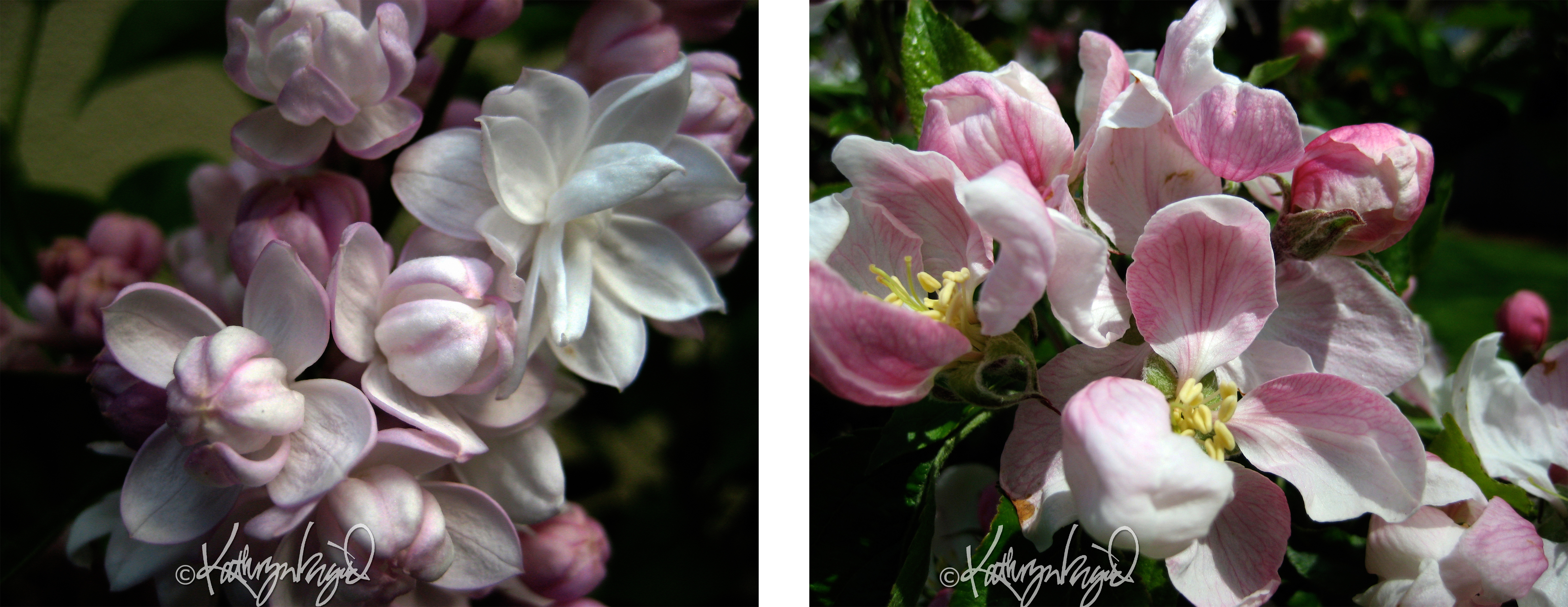
lilac and apple blossom photos

With continued gratitude . . .

Never fear, though, while I do indeed have a soft squishy marshmallow center, I also blog because it’s a socially acceptable place nowadays to whine, vent my spleen with unseemly rants and generally behave like my crusty curmudgeonly exterior wants to do. Just a little caveat, my dears, lest you forget whilst I’m busy drizzling the much-deserved honey on y’all.

Titles without Tales


graphite on paper

One of Our Best Operatives is Missing . . .

As both a visual and verbal storyteller, I’m bound to come up against the stubborn blank wall of imagination empty on occasion, if not often. Long ago I began using the trick of “forced randomness” to fill in the blank until something more substantial would either emerge from the resulting prescription or I’d get a welcome brain-wave from another source to rescue me. As I learned, it’s simply making the first mark on the page that’s generally the hardest part: once there’s a mark, whether genuinely random scribble made with the blessed No. 2 pencil or a slightly gibberish-tinged line written in exasperation, I now have something to respond to, to edit, to like or dislike or build upon, in whatever way I’m moved to do. The response may be disgusted continuous pressing of the Delete key or furious “unscribbling” with the big bad eraser (a tool I find I rarely use for actually erasing). If that’s the case, why then, I can work to divine just what was so unsatisfactory to me about the initial move I’d made and then there’s probably fodder in the facts enough to get me started on something more useful, more personally motivated.

If, on the other hand, I see the seeds of utility and interest in that first foray, I’m often well served by turning the whole process into a good healthy bout of problem solving. That’s what real creativity is to me: my flighty little brain’s attempt to figure out what’s missing from the world, real or not, and fill in the blanks. Blank page, blank canvas, blank silence. Aside from beautiful and meaningful moments of personal zen, I’m driven to fill them with stuff that intrigues and feeds me.

Sometimes I’ll use external means to try to force motivation. I might pick up the first book or magazine I see, crack it open to the first page my fingers find, point to a spot on the page, and tell myself that whatever word or image I land on has to serve as my starting point, the guide for making Mark One. I might look out the window and whatever moves first within my view has to be the source. Any of the old standard repertoire of such tricks will likely do. But perhaps my favorite is to give myself a title or an over-arching concept that could conceivably serve as the framework for a whole series of artworks, chapters, stories. I think of it as my “Mr Booktitles” approach, named years ago in honor of a school of “acting”, sometimes embodied by very famous and very popular actors speaking every line of dialog or soliloquy or narration as though it were a stand-alone title from a very badly written book, a method that still keeps me astonished these particular actors–or the writers and directors that should be forcing them to do better–can get hired and admired. Go figure. But the fatuous title approach has served me reasonably well, so I guess I mustn’t criticize. All I do in the instance is create my title and use either the text or the artwork to try to flesh it out, give it some meaning.

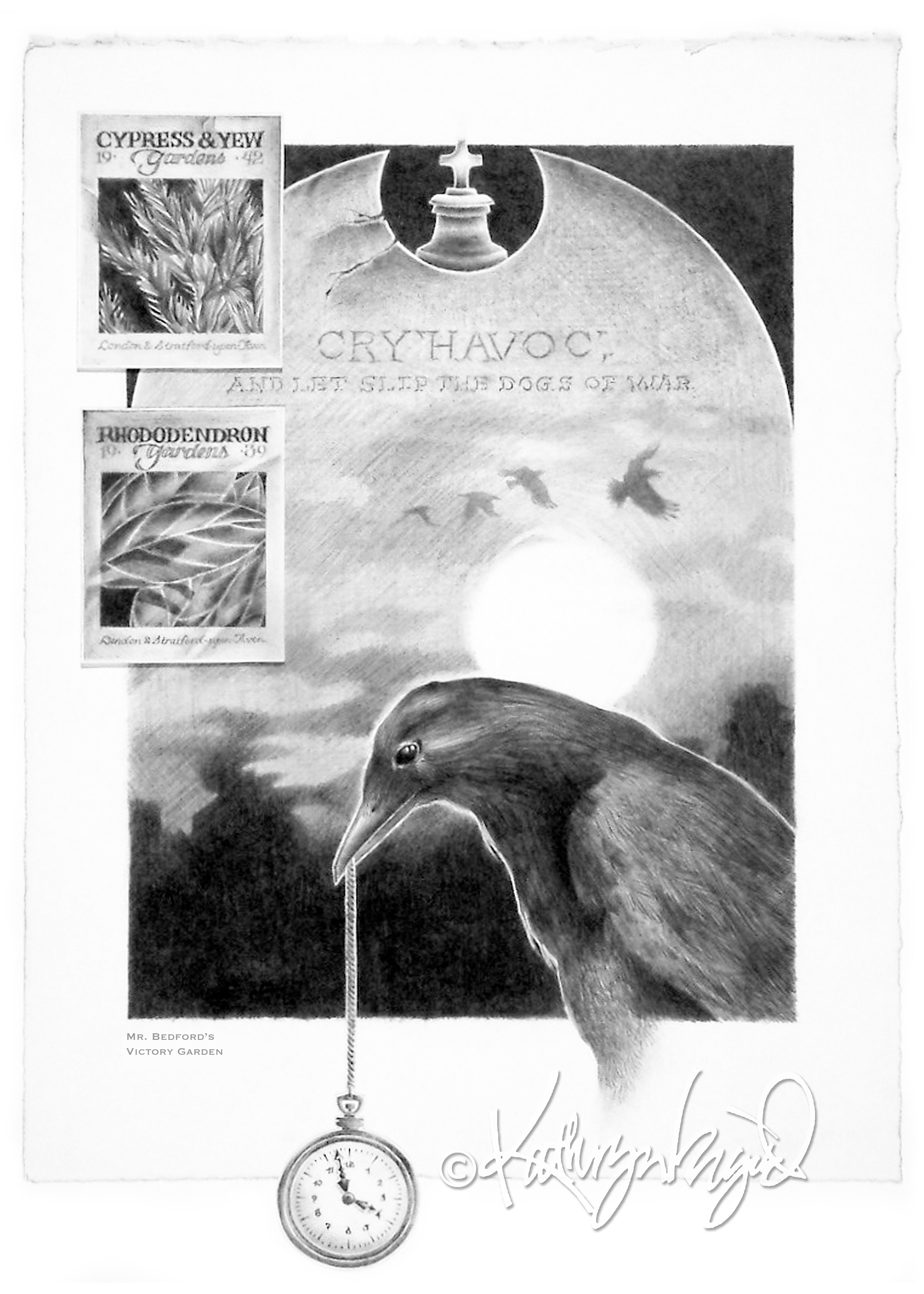
The graphite drawing above came from just such an approach, and ended up being the first in a series of five or six drawings that “illustrated” different parts of the “story” represented by the title, a sort of post-Cold-War spy adventure that never did get written and for which the present artwork illustrated, ultimately, the nonexistent prequel to the never-happened story. Not that I wouldn’t write the actual story at some point, but it wasn’t necessary to have it in hand as impetus to get some work on the page in another format. Who knows, it may be that the illustrations had to exist in order for the story to ‘need to’ happen at some point. If that isn’t convoluted enough, I don’t know what is. But at least it gave me a useful jumping-off point for a series of works that remains something of a favorite among my audiences and yes, with me too.