Great Things are Meant to Last

It’s almost midnight here, but there are a couple of hours left of Mom and Dad’s 59th anniversary back in western Washington state, where they began, and still practice, the fine art of marriage. So before I tuck myself into bed, and because I couldn’t reach them in person to say so the first three times I called, I will take this opportunity to thank them for having had the excellent taste in partners that put them together in the first place, the temerity or mild insanity—or both—to have us kids and keep us, and the strength of will and love and hope to stick together for all of these amazing years. Blessings to you, Mom and Dad, and may whatever comes only strengthen your joy in each other.Photo: Mountaintop Experience

Documented/Undocumented

I’ve been thinking more, lately, about history. About cosmic and cultural, political and personal history. About the way that people do and don’t keep records of any kind of history, how each documentarian shapes the way things are remembered or forgotten, and how each person on the receiving end of the documentation shapes it all further, given the multitudinous filters of experience, intelligence, and personality each brings to the process. School learning, book learning, deep research, and autodidactic learning all depend upon the vicissitudes of human understanding and communication. And a whole lot, also, on luck and succeeding history, since all of the learning can be lost or found many times over the decades and centuries.
Machinist's School Certificate

My family recently unearthed the above little slip of paper that marked my maternal grandfather’s completion of his first machinist training. Gramps had immigrated to the States some years earlier in search of work, and had kept busy and alive in the piecemeal way that [willing, as opposed to indentured or enslaved] immigrants have done since time immemorial, bunking in cheap rented quarters with other young immigrant men, laboring long hours for little pay, and playing greenhorn pranks on each other in the few hours outside of work when they weren’t downing a hasty bite of food or sleeping exhaustedly. His machinist training eventually led to his working at General Motors for quite a long time, even serving on the team that built the first Duck prototypes for the army. And then his life took various turns, over the years, and I grew up knowing him as a skillful carpenter and homebuilder and the hobby-farmer tending beautiful produce gardens and a handful of Cheviot sheep.

But of course I knew very little of his life story. I did have the privilege of sitting and quizzing my grandpa over dinner more often than most, since I rented a bedroom from him and Granny for the three years I worked near their home in between my undergraduate and grad studies. So I heard some of the tales, like the one about his flatmates sending each newest member of the household to town to buy “ten cents worth of Piggly Wigglies,” a silly quest after a mythical grail that afforded the rest the cheap entertainment of watching from afar as their victim tried in his broken English to persuade shopkeepers to hand over something that didn’t exist even if his speech could be deciphered, and the store owners eventually sending the series of foreign-born youths off, each now smarting with the same outsider embarrassment they’d all experienced in their early days in the US. I heard, too, of that uncle of my grandpa’s who had tried to dissuade him from going to America, and if he did, to at least be as wary and canny as possible because “those Americans will sue you for anything.” This was, mind you, not in the modern day that we generally agree is such a ridiculously litigious one, but in 1929 or so. (Apparently some things haven’t changed very radically in this country.) Still, I know only scraps of Grandpa’s whole biography.

I can at least say with conviction that I come by my stubbornness honestly. Despite the family pleas and warnings, Elias Omli sailed willfully ahead, and lived most of the rest of his life in the US of A. In those early times, he must have struggled immensely, yet found fulfillment enough in the life he forged for himself and later, his family, that despite his longing for the old country and one brief but unsuccessful attempt to reintegrate with the family in Norway when my mother was very small, he lived and died an American. Between those atoms of information he shared with any of us his descendants about his childhood and youth in Norway and the rest of his existence in the US, there was a whole, complicated, adventure-filled, and ordinarily colorful life, very little of which anyone really knows, or could know.

That is how we all exist. Even the most documented, celebrated, and historically dissected characters and the events in which they take part in life or death cannot be fully known, let alone understood, by anyone but themselves. If I’m any example, I suspect even such self-knowledge is pretty shallow in the long run. Having written and shared over 1500 posts here in Bloglandia, where I immigrated from the semi-real-world over 4 years ago now, I may in some ways be better documented than a few other people, should anyone care to sift through all of my imagery and verbiage at any point, but even in this, I share what I choose to share, and only my point of view on it all is represented, so that skew is also bound to be imperfect, if not a little disingenuous.

(I’ll at least aver that the stuff I tag as Fiction is really fictional, and leave determining the rest of it up to readers, who will of course interpret it at will anyhow.)
Island Log Book

Gramps’s story was unique, but not dissimilar from many others’ in history, whether they decamped to new homes and lives from their birthplaces or not, whether they had vocations that called them at an early age and flourished throughout their days or they followed more unpredictable routes. The fate of an individual is inevitably affected not only by his own choices and acts but by the natural and national events and changes that fall in his life’s path. The person who penned the Swedish grocery and supply list above, many years ago, did so as the manager of a remote coastal household for not only the family but probably also a handful of townsfolk who shared the responsibility for overseeing the safe arrival of boats and their occupants on that forbiddingly rocky shore. What this little slip of paper denotes is a glimpse into the everyday life of not just the one person who wrote it but of a small group of people whose names are no longer known and whose life stories probably exist, if at all, only in the bloodstreams of distant great-grandchildren, yet the quaint harbor town they once labored to keep in existence all those decades ago is today a thriving and colorful, lively place. New stories are born there all of the time, and I can attest that the dry goods and groceries now available there are, respectively, more plentiful than and as delicious as ever.

Individuals, communities and cultures all have their times of trial and those of triumph, some noticeably more of one than the other.

Digital illo from photos: Houses of Sorrow

A recent reminder of that came into my view when my spouse and I spent a few days in Halifax. It is as beautiful a part of the continent as I’d always imagined, and yet like the rugged coast of that Swedish island it certainly presents difficulties to the ships that approach it today, and all the more must have challenged the lives, safety, and ingenuity of all comers in days long gone. I loved exploring as a tourist and seeing, especially, the natural beauties of the area with all of its geographical wonders, sea-borne marvels, and magnificent greenery, and also the wide variety of architectural styles that hint at the multicultural roots of the region. Not surprising that the shores are dotted with lighthouses large and small, as well as the houses of those who tended them.

When at the waterfront of the city proper, I admired the old lighthouse and the humble buildings near it on the island most visible from the piers. For a lighthouse location, which is by nature placed in a potentially volatile coastal setting, it looks sweetly bucolic, ideal, and peaceful. Indeed, it is nowadays a quiet and pretty place, a heritage site in mid-restoration for its intended future as an historical park. But that heritage is far from peaceful, let alone ideal; like many other islands in such prominent coastal positions, it has a long and storied past as a fort, a military encampment and, even darker, as a prison and internment camp.

Some of those imprisoned on that place now known as Georges Island, Nova Scotia, were among the estimated 1660 prisoners out of 11,500 local Acadians expelled from their homes and lands en masse by British forces during the 18th century imperialist battles between English and French forces over New World territories. Three quarters of the entire Acadian population were deported in those times and thousands died in raids, counterattacks, and battles; others died under torture, of drowning on the deportment ships, of disease, or of starvation. And Acadians were far from alone in being imprisoned or worse on that pretty-looking little island.

Their own comrades, the Mi’kmaq (and other aboriginal Atlantic inhabitants), with whom Acadians on their arrival as French colonists are said to have lived quite equably, suffered on the island along with numerous captured French sailors and soldiers and any number of other “enemies” of the British rule. Something far less benign than a lovely coastal outpost of protective presence came to exist on this sorrowful promontory at the edge of the proto-Canadian world.

Can I look at this island in ignorant imagination anymore as a picture of vintage calm? Of course not. But I can also guess that there are very few acres of earth anywhere that are not stained with ancient cruelty and the blood of untimely deaths, whether of the innocent or not. It’s easy to sit in judgement from my place of comfort and call the expulsion of the Acadians an attempt at genocide or ethnic cleansing. Certainly, records and recollections of the historians present offer ample reasons that I should think there were all kinds of wicked intentions at play, from land greed to hatred of unknown races, from religious and political imperialism to maneuvering for resources. There were clearly personal elements involved, and as in all wars, military actions that turned into personal vendettas, fights over disputed borders into plundering and petty theft. Just as, undoubtedly, the aboriginal Atlantic peoples must have initially feared, and perhaps fought, the Acadians, and the French and British spent great resources and innumerable lives on their distrust and fear of each other and of the inhabitants of their intended expansion zones.

But earlier centuries’ worldview was also vastly different from today’s, all around the globe. Today, we have knowledge of a much larger and more developed world, of the richness of other cultures, even of the possibility of peaceful coexistence, and we have no excuses for not trying in every imaginable way to resolve differences without being exclusionary or  violent. But past times and people didn’t all have the advantage of our expanded view. Every cultural center or nation of significant size in Europe, Africa, Asia, and the Americas has had its powers, each of them assuming a natural, if not divine, right of rule over all that they had not yet explored, by dint of their own isolated mastery. It’s not just that leaders, explorers, and conquerors themselves have seen it as their right, and often as benevolent duty, to claim ascendancy over whatever and (assuming they’ve managed to recognize indigenous residents as people) whomever they encounter, and to rule as they see fit. Those who write down history, or tell its tales, also continue to believe or disbelieve in ways that are unique to them, and the biases that sneak into our views are inextricably mixed into how we, and future generations, think about history.

What can I take away from these musings? Only the usual self-admonition that I look beyond what is visible. That I question and try to learn further, and not rush so quickly to the judgement that comes oh-so-naturally to me. That I ponder whether any slight thing that I do or say myself can perhaps help others, individually or globally, to remember the lessons of history, both bad and good, and to move forward away from our worst selves. We may remain undocumented in these attempts, as in so many other aspects of being small mortal beings, but I think that existence itself bears the marks of our passing as a document that will spell out the difference between annihilation and rehabilitation of our world.

I’m Dying to Know

Do you dare to think about your own death in reasonable, detached terms? Do you think that’s morbid and grotesque to even consider, or do you find it easy? If you find it easy to contemplate in the abstract, is it because you suffer from depression or are suicidal, or is it simply that you recognize living as an inherently terminal condition?

This is big stuff. Even the clinically depressed are sometimes able to recognize, on those tiny instants of light in the midst of the abysmal dark, that their death, no matter how insignificant and unworthy they may think themselves, will affect others. I know this from experience, and from lots of reading and conversation and observation. I know that even when I was at my lowest—thankfully, not as hideously low as that reached by many, as I know in retrospect—my rational moments told me that no matter how they felt about me, or even if they didn’t notice me at all, when I was alive, everyone who was peripheral to me in any way would have some tidying-up to do after my death. Physical, perhaps, for those to whom body removal and disposal fell, but whatever tiny tasks I was not present to perform anymore would either default to another’s To Do list or leave a gap, incomplete. I realized that I am the butterfly effect, in human form. You are. Every living, breathing being has a space in the universe, a purpose, and however unnoticed in life, has an impact both by living and by dying.

All the same, I feel especially fortunate that in my family, talk about death and dying were far from taboo. It wasn’t all that uncommon to find the dinner table talk veering in that direction, if somebody we knew was unwell or had just died. We didn’t need euphemisms and pussy-footing to protect us from the reality of death. It’s nothing more or less than the inevitable cessation of life, and if we can’t talk about that, we’re stuck dealing with all kinds of petty and logistical nonsense just to get through the process when we’d rather be spending time living and loving each other and getting through the complexities of the occasion with a modicum of grace and humanity.

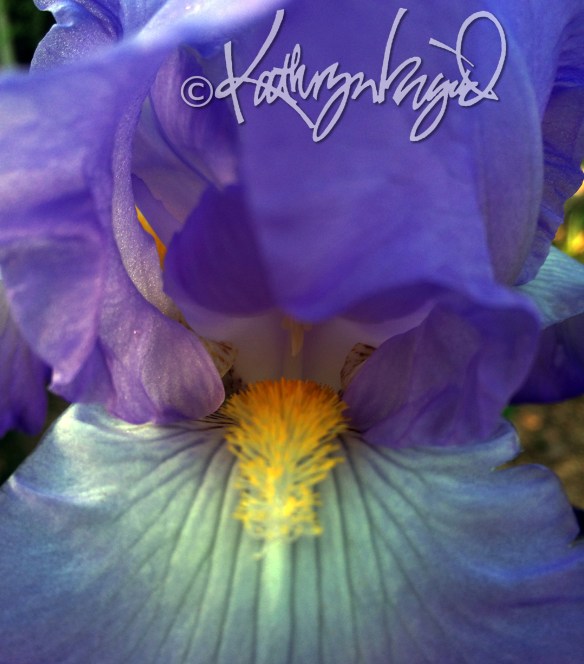
So my family already knows that I would prefer they donate what they can of my organs or remains to someone who has a better chance of survival and health if I give it to them, or to scientists who can learn how to give future patients that better chance. In fact, the government know this: I’m on the organ-donor registry, should I die unexpectedly or with usable parts intact. My loved ones also know that I’d prefer a minimum of fuss disposing of whatever remains of my physical shell after that, the cheapest and quickest cremation and scattering of my ashes being my top choice. I figure that any Supreme Being capable of inventing the human creature from scratch can easily put me into another, newer shell if and when it’s my turn to exist in any other form, and as for the current body, it’s a good source of recyclable carbon and nutrients to replenish any part of the earth that enjoys a good, tasty meal of ashes, say, my long-loved flowers the irises.

Those close to me also know that I have far less interest in what they do to celebrate or mourn my passing than the still-living will. If the occasion of my death can be used as an excuse for a marvelous concert to raise awareness or funds or mere pleasure for the sake of a musical group, whether my spouse is still alive to conduct or attend such an event or not, that would be lovely. But hey, I’ll still be dead, so y’all can do whatever it is that makes sense to you and I promise I won’t roll in my grave or be a pesky poltergeist or complain in any other way. Still dead, if you didn’t catch my drift.

And that, in fact, is a beautiful thing, and a great comfort to me. I don’t look forward to the actual process of dying or the moment of my death. I’d happily live a long, long life in great health and an approximation of sanity that seems cheery enough to me, before dying for real. But once I do, I feel genuinely confident that none of this worldly stuff will matter to me in the slightest, so as much as I like to “plan” ahead to keep my survivors from any terribly fussy practical matters in the event, I’m not worried. Go ahead and dance on my grave, if there is one. Keep on living. Don’t worry about me; I’ll be fine. Really.

Digital illo: Mine was a Death's Head

Splendid

Photo: Two LipsI am loved. Among my greatest sources of affection and sweetness, I treasure having been loved for the past nineteen and a half years by the wonderful partner who is my best friend, a truly marvelous everyday companion whose company continues to be a pleasure, and just plain a good human being. Today, I celebrate having been married to this splendid person for nineteen years. I don’t know why the universe has conferred such largess upon me. I am merely grateful beyond words, and don’t choose to look too closely into the whys and wherefores of my giftedness in this regard lest the bubble burst.Photo: Light-Hearted

Today, I am more contented, happy, and hopeful than I could have imagined possible two decades ago, and the more so because I know that as long as we’re both around to keep marking anniversaries of our marriage I will continue to be so loved, so blessed. Beloved, I wish you as much joy as your heart can hold. Being with you is, for me, the very definition of splendid.Photo: Splendid

My Word on It

Photo: Early MusicBEMF. Road trip. Wedding. Dad’s Day. Arguments. Home. Adventures. “I love you.”

What do they all have in common? One word.

Family.

I’ll bet you were going for: Love. And of course, you would also be correct, because that’s the very definition of family for me, as you well know. It’s not biology; it’s not pedigree and legal contracts and historical ties. It’s love. And love is not, for me, dependent on any of the aforementioned characteristics and descriptors, though it may—and I hope it does—have a close relationship with them more often than not. It’s respect and trust, support and kindness, even in the middle of stress and disagreement, illness, injury, confusion, and chaos. I am so very, very fortunate and blessed and grateful to find myself in the midst of an extraordinarily big, rich family network that comprises biological and legal relatives, yes, but also much more than that: a wide range of dear friends and comrades who are more than mere acquaintances or colleagues can ever be, each one tying me further to the next.

BEMF [the Boston Early Music Festival] was the beginning of the most recent two-week series of family events for me and, as in my previous times there, a joy from start to finish. As an arts event, it has very few peers in the world, being a week-long gathering of superb artists and dedicated audiences who converge for the love and celebration of Early Music and all of its many concomitant delights and beauties, all in a magnificent city. This biennial visit was a typically lovely one, starting with the gathering of our Early Music family from around the continent and overseas, especially the wonderful singers, players, producers, conductors, and other aficionados of the genre; they hailed from the university where my spouse works, well-loved Canadian spots, and many of the states and companies in which we have connected with such marvelous people. On arrival in Boston, we settled into our rented digs with a pair of our dear adopted kin and began the week with the rehearsal and performance of the university’s Collegium Singers and Baroque Orchestra friend-colleague crew whose concert was the impetus for the BEMF visit. And a wonderfully successful one, at that.

What followed was a week packed with beautiful music of all kinds set into the interstices between superb performances of the trilogy of Monteverdi operas and his 1610 Vespers, one of the most significant and exquisite foundational parts of the whole Early Music oeuvre and experience. The weather treated us all remarkably kindly, the food was as always inviting, varied, and delicious, and the historic and aesthetic pleasures of the city and immediate area renewed my love of being a happy observer and tourist there.

Next came renting a car and road-tripping to the Maine and Connecticut coasts, places I’d never been before and my partner, not in many years. Wandering gorgeous little towns and seaside regions like Brunswick and Bowdoinham, Maine, and Stonington and Mystic, Connecticut, and all sorts of big and little cities and towns around them with little specific agenda other than the rooting out of great seafood and scenery (more about both will surely follow here in many posts to come) was great post school year stress relief and entertainment in large measures. Spending time simply meandering in the wonders of the American northeast with my beloved, even better. A great time to reinforce why I love the guy so much and feel immeasurably blessed to live with him for the long run.Photo: Traffic Jam

Was there stormy weather and bad traffic in our two-week outing? Yes, both real and metaphorical. Nature dictates the occurrence of these things around us, and human nature, within us. We’re all designed to need rebooting from time to time, if not a good boot in the booty. Just before heading home after the whole two-week extravaganza of beauty, wonder, love, happiness, and unbelievably good things, I got into an argument with my most beloved spouse—really angrily, ridiculously angrily. Over absolutely nothing. We were both very tired, at the end of a whole school year of huge commitments and busyness plus two weeks of (great and glorious fun notwithstanding) travel and social events and the demands inherent in both, and knowing we’d come home to huge lists of chores and catch-up tasks for both of us.

I’m not lying when I say we are not a fighting couple. But we do disagree, and frequently. One friend cheerily calls us the Bickersons for our style of daily communication, and I’m sure is not entirely feigning his worry that we’re going to don boxing gloves and just duke it out any minute, being an equally balanced pair of supremely stubborn and finicky people. Most of the time we equably agree-to-disagree, because what we do argue about is virtually always, as in the above case, nothing. Often, it’s mere semantics, each of us saying pretty much exactly what the other is saying but in such different personal language that it sounds like we’re worlds apart, and when we really are on different pages, it’s not about anything crucial to the foundations of our marriage. We share our core values, no matter how the day is going.

So by the end of the hour yesterday, tempers cooled down, and by today, I was firmly reminded that I would do well to keep my trap shut long enough to realize how petty and pointless the disagreement is before wasting any energy on arguing a non-point. I never feared that we didn’t still love each other or that a grave emergency was going to occur if he didn’t see the light and agree with me forthwith, but you’d not have guessed that from the way I was talking. How silly of me, and how pointlessly rude. How sorry I am.

I’ll at least give myself the concession that this is how things go sometimes with those we love the most, our family. We put on the proverbial boxing gloves because we love and care too much to just stomp off into the sunset and never get back to I’m Sorry and I Love You. It hurts, yes it does, to argue, and perhaps the more so pointedly when I know in my heart it’s over something idiotic and meaningless, but I suppose it’s far preferable to not having enough passion to vent and relent.

This misadventure was followed by not only reconciliation but remembering that it was, of all things, Father’s Day. We weren’t in one place (with cell reception, anyhow) long enough to call our two fabulous dads right on the day and give them the fervently felt thanks and love they deserved on the occasion—though, arguably (no pun intended), we could have made a pretty quick call to at least one in the time we wasted arguing. Being longtime family members of the truest sort, Dad W and Dad S will undoubtedly forgive our tardiness and just be glad we get around to calling tonight with belated greetings for the occasion. They are both past-masters at the whole Real Love thing, anyway.

Which brings me back into the middle of the story. I haven’t forgotten that way back in the first line of this post I mentioned a wedding. It was the excuse for our road trip after leaving Boston…why fly home to Texas and then back north within a week if a week’s holiday in between beckons? It was also, and no surprise, one of the clear and dazzling highlights of the whole fortnight’s expedition. Two other dear members of our extended family (both former students of my spouse’s) now uniting in the contract of marriage, in a fairytale sort of wedding held in the bride’s parents’ garden where the long threatening rain consented to abeyance, not because to do otherwise would have been a crime against the sweetness of the day but because it was probably more appropriate that the tears being shed were all joyful ones by various members of the wedding party and fond attendees.

There was visual gorgeousness throughout, just as with last year’s wedding of another such pair of adopted-kin sweethearts that took us to Puerto Rico, and as in that instance, also perfectly thought out and enacted to fit and represent the couple in question. The settings were spectacularly prepared, music exquisitely performed by musicians near and dear to the marrying couples, the wedding parties looking like some kind of ethereal Hollywood-designer versions of how wedding parties usually look, and the after-parties a couple of ones guaranteed to be recounted for ages by everyone who attended. And the friend who performed the marriage ceremony for this week’s bride and groom, for whom I am told this was her first such duty, spoke simply and eloquently in the most appropriate of ways for the occasion.

The centerpiece of her brief address of the bride and groom was recognizing their deep and remarkable commitment to family. To the community of care and comfort and love found in people who have chosen each other and stand together willingly, if not willfully, through thick and thin. Those present on the day were a clear part and example of this way of life. And it was impossible not to respond in kind, to acknowledge the connection and delight in it, and promise together to continue to seek it out.

I promise. You have my word on it. That word, you know—Family.Photo: The Family Dance

Foodie Tuesday: Smoke ‘Em If You’ve Got ‘Em

Fish, I mean. I’ve never had the experience of sucking anything into my lungs through a burning tube of dead plants or any other sort of cigarette, pipe, cigar, spliff, bong, etc, and I feel not the slightest sorrow over that as a loss. But smoky foods? Oh, yes, please! Smoked meats, smoked salts and spices, and especially, smoked fishes.

Smoked cod, like the tenderly delicious star of that long-ago fish-and-chips feast in an out-of-the-way pub in Winnipeg where the air was suffused with the aforementioned kinds of smoke to the point that had my companions and I not been quite hungry and quite at sea about where to find another eatery, we’d not likely have stopped. One had to brave a dank, ill-lit stairwell to the netherworld of an almost invisible below-stairs bar, be “sponsored” by a dear friend to become a member of the joint (the barman was happy to be best friends with all of us), order from the cook who was sitting at the bar eating his own lunch of fried rice or chow mein, and trust that one was actually welcome and about to be fed something good. Happily, all of this oddball expedition led to one of the most spectacularly delicious meals of fish and chips I’ve ever enjoyed, not least of all made special by the cod being smoked rather than merely fresh and perfect.

Kippers and Kedgeree would be hard to beat for a tasty breakfast or light supper, being smoked-fish-centric. Smoked tuna salad is a lovely dip or spread for hors-d’oeuvres and snacks. Fresh bagels are a dream with any good schmear, but possibly best of all with some bright, pure cream cheese and pristinely sweet and salty lox.

And of course, being a good native Seattleite and of Norsk lineage, I am fond of salmon in a vast variety of forms, not least of all the Norwegian version of that Jewish treasure, the cured salmon known as gravlax or any smoked salmon worthy of the name. Growing up with a good supply of Gramps‘s freshly caught fish on the table was not only a boon to the economy and health of the household, but a training ground for the love of that noble fish that only grew over the years and expanded to include the beauties of those cured and smoked varieties. It’s no surprise that I should so often fall back on the inclusion of one or more of these salmon delights when it’s time to make a good meal, whether for just my partner and me or for more sophisticated company.

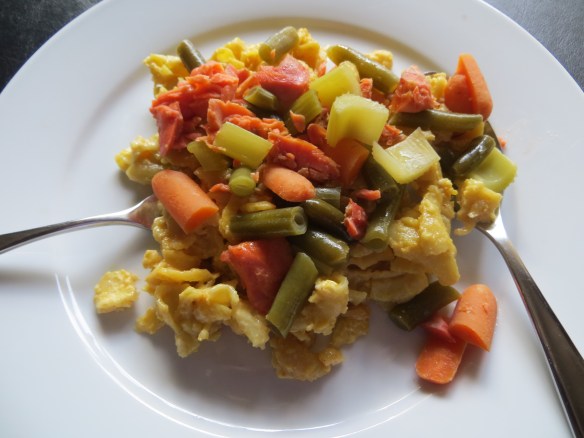
This time I opted to let several different favorites crash into each other on the plate: double salmon (cured lox plus candied/smoked wild Alaska salmon) blended with a little bit of lemon cream, and firmly tender white wine-steamed vegetables (carrots, celery, and green beans), all scooped on top of a goodly heap of baked macaroni and cheese. They were well enough behaved with each other that I never doubted I’d find them friendly toward me, too, and sure enough, they were. Like the Winnipeg barman and me, this dish and I became fast friends—that is, both quickly and deeply attached. Until the serving dish was empty, anyway.Photo: Salmon Mac

What has been and will always be…

Photo: In the DistanceYou have forgotten my name.

My face is familiar, but you’re not sure in what context it belongs. Am I from a magazine cover, or someone from your healthcare team, or am I your firstborn child?

What was it we were discussing there a moment ago? It floated away in mid-sentence, along with the coffeepots and suitcases that just now floated by the window. Never mind, we’ll talk about it again sometime soon. And again, and again. We may not ever reach the end of the sentence anyway, since so many things, unmoored, float by the second-story casement while we’re sitting here.

We sit here a great deal now, indeed, because you’ve forgotten that you can walk. Once in a while you stand up, out of the blue, and stroll to the hall and stand there, pondering, until someone at the nurses’ station twenty steps away sees you, strides down to your room, and swings your wheelchair over to where you sit back down in it without noticing and ask, Are we on the way to My House?

The answer is always Yes.

When I come to see you, yesterday is millennia ago and you’ve missed me in the long years since I saw you then. If you speak, it’s of the more recent yesterday when you were newly out of school and first in love, and you speak in the present tense of how you expect a visit at any moment from those you knew—now dead. If you speak at all.

Often, in silence you look out that second-story window to see the world projected from behind your eyes. Whenever you turn to the room it’s as though I’ve just arrived. And you still can’t remember quite how you know me or why you can’t put a finger on my name.

You tell me a garbled but elaborate tale about someone with my other parent’s name, your late spouse’s, who according to you has just run off with your (also dead) best friend from school and they’re now shacked up in Tahoe, a place you’ve never been. Then you’re silent again, perhaps thinking further on these events so vividly real in the new world of your mind, never finding it improbable though that school-friend moved to the East Coast years before you’d ever met your One True Love.

Later in the week, their names have been bestowed on two tiny stuffed koalas that arrived clipped to the stems of a small bouquet that was sent last winter when you had had your sixth, or was it your seventh, minor stroke. See? I can’t remember now, either.

But over these last few years, it’s come to matter less. I stopped correcting you, only after much futile and agitated foolishness on my part. It took me too long to learn that. It took me too long to learn that Denial was a river that would only drown me, while you might float along with much less sorrow if I let you go wherever it is you need to go. I learned to agree with you no matter how odd the claims, and to remember at last that my reality is hardly the only one; perhaps it’s not even the truest one, at that. After all, wasn’t it you who allowed these possibilities in me when I was very young?

Yes, I recognize it now, though you cannot. When I was small—in days that even I can’t recollect—you agreed with my outlandish claims and played along when I imagined things. It wasn’t purely to amuse me and encourage my imagination, but you knew, as parents do, that it was real enough to me. When it mattered, you’d agree, and they you’d carry on with the action of Real Life, sheltering me from its harsher blows and steering me around the dangers calmly as we’d go. I talked my nonsense and you were there to set me back on my feet when I forgot I’d started learning how to walk.

I couldn’t always remember right from wrong, let alone the difference between pretending and what was real. You remembered it for me so I could live comfortably in those spaces in between where most of us exist a lot of the time when we are small and the boundaries are still so permeable. I’m just learning, now, to find my way back in and visit with you there. And you, forgetting that I’ve lost my way, lead me, without the need to try, because we’re headed Home. Yes, we are. The answer to that is always Yes.Photo: Other Planes

For Grandma, who dwelt in the alternate universe of Alzheimer’s for a few colorful years before wandering out of this plane forever.

50 Wishes for Happiness

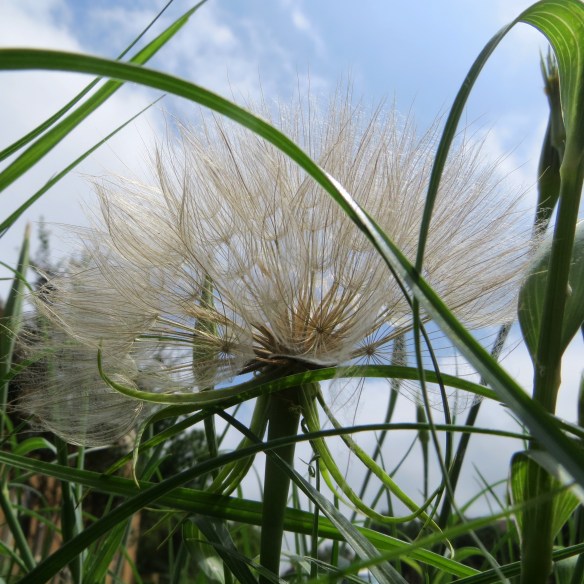
Photo: Carry My Wishes to the StarsOn the most auspicious sixth day of June in human history, my youngest sister was born. If you don’t know what made it the most auspicious, you haven’t met my youngest sister. On this anniversary of her birth, I offer her these wishes for this and many, many birthdays yet to come. Blow on the seeds and let them carry the wishes up to the stars (I give you a milkweed rather than a dandelion, because the former are bigger and bolder, and every seed makes a new plant to feed both butterflies and even more wishes)—Kjæresten Min, may you:

1: Always know that you are loved.

2: Live surrounded by flowers.

3: Breathe fresh air deeply and often.

4: Be grateful for your good fortune.

5: Embarrass yourself just often enough to keep you humble (but

6: also) Wear the armor of unassailable self-confidence.

7: Find money under the furniture every time you clean house.

8: Get hugged whenever you need it.

9: Be generous at every opportunity.

10: Enjoy your ongoing status as the Smartest Sister.

11: Hear fabulous music wherever you go.

12: Never have awkward holes in your clothes.

13: See rainbows in every rainy day.

14: Rest and recover easily.

15: Never be too mature for anything important.

16: Live long and well.

17: Wear only what’s comfortable.

18: Choose joy, every chance you get.

19: Let politics roll off your back.

20: Never sit next to a person who smells awful.

21: Learn to enjoy everything you Have To Do.

22: Be a little wild when you can.

23: Have underwear that never rides up and socks that never fall down.

24: Always be comfortable in your own skin.

25: Smile knowingly with great frequency.

26: Have plenty of opportunities to stretch your horizons.

27: Stay warm enough in winter and cool enough in summer.

28: Wear your silliness proudly.

29: Revel in great good health.

30: Keep monitoring the halls because you care.

31: Be forever glad that you live wherever you live.

32: Frequently learn new things that interest you greatly.

33: Never run out of chocolate.

34: Tuck and roll when necessary.

35: Age with style.

36: Travel in comfort and explore with relish.

37: Be invisible to pests.

38: Think every day is the Best Day Ever.

39: Remember the stuff that matters to you.

40: Forget everything that makes you sad.

41: Immerse yourself in welcome silence.

42: Avoid toxic situations neatly.

43: Keep your savoir-faire intact.

44: See your beauty as clearly as others see it.

45: Miss every pothole in the road ahead.

46: Celebrate at any-and-every excuse.

47: Find unexpected goodness around you everywhere.

48: Be overflowing with contentment.

49: Continue to shine brightly.

50: Always remember that you are loved.

And have the happiest birthday yet…until the next one…and the next…!

Writing, Wandering, Wondering, and World Peace

I dream of being a better writer and artist. Of being a lyricist or maybe even librettist. Of taking many of my designs for furniture, clothing, sets and costumes, building materials, architectural elements, jewelry, inventions, and any number of the other concepts that constantly float around in my skull into the realm of actual production and use. Oh, yeah, and I dream of World Peace, too. Really.

Some people dream of simply having a healthy child with the average odds of survival and success in an average-length life. That was not my dream, but I know that it’s one shared by millions, not least of all by the author of an outstanding blog, The Hartley Hooligans. Gwen is always a superb writer and a tremendously insightful amateur sociologist-cum-psychologist with a wicked sense of humor. She outdid herself in one recent post. It’s a spectacularly beautiful meditation on how, in general, to live life boldly, fully, and richly. The article is ostensibly aimed at mothers or parents of special needs children (the author is mother to two profoundly ‘challenged’ kids and one who’s not), but I realized as I was reading it that it’s perfect advice for anyone, anywhere. (Note: Unless you’re a self-employed home-dude like me, reading The Hartley Hooligans may occasionally prove NSFW! But never, never dull.)

I don’t ordinarily publish anything that I didn’t write or illustrate myself, but in writing, supposedly, to the parents of special needs kids, Gwen offers insights so universally applicable to any of us who find ourselves with different realities than we had fantasized or expected in life, I think others should hear her uniquely graceful, bracing, hilarious, and touching take on the how-to and why-not of holding fast to our hopes and keeping up with the business-busywork tasks that make them possible.

For myself, I just substitute for her discussion of [special needs children] with the concept of any deeply felt, long-held dreams that I’ve felt unable to achieve or too intimidated or ill-equipped to accomplish, or have thought would be forever out of my reach for any reason.  I replace her talk about [doctors and caregivers] with those advisors and companions of any kind whom I assemble to support me in my life. The advice this wonderful, earthy, real woman gives on how to make the most of any situation; to give myself permission to be human, not superhuman; to credit myself with what I do accomplish and build on it; to surround myself with real, two-way relationships of love, respect, challenge, and support; and to make the most of everything I have with gratitude, is inspiring and pretty priceless.

I’m not one for sharing others’ work on my blog often, but this really spoke to me in a direct way that I think is far more broadly applicable than the already impressive comfort and wisdom of its intended point. I suspect we can all learn from it, so I feel compelled to share it here. Enjoy.

Many heartfelt thanks to Gwen for permission to share this epically useful, sane, marvelous insight of hers with my friends here in Bloglandia!

Digital illo from a photo: Everyday Superheroes

What do superheroes look like? Ordinary people who believe, and persist. No masks and capes required. Halos optional.

Rosemary, that’s for Remembrance

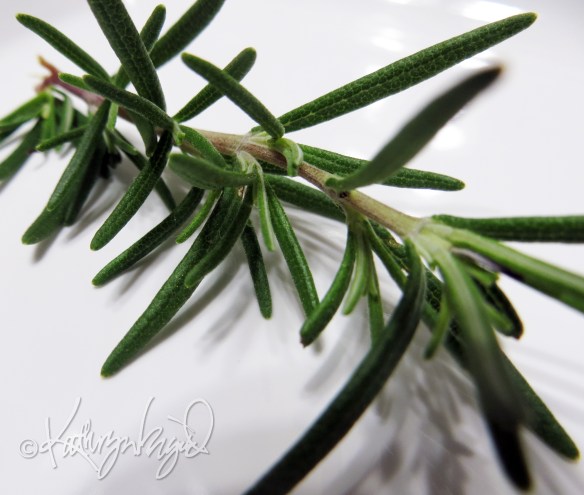
Photo: RemembranceBecause its distinctive and elegant, resinous perfume and flavor are so potent, the herb rosemary is intimidating to use. Hyper-sensory persons like my spouse can be reluctant to choose dishes when they detect a larger presence of herbs, and this beauty is among the most extroverted and easy-to-spot on that list. It can overpower extra delicate ingredients if used heavy-handedly.

But, like many accomplished and self-assured characters, when this fabulous herb is showcased to its best advantage, it’s the life of the party, the belle of the ball. With such a unique, recognizable scent and flavor profile, it’s easy for me to see how it would be the obvious choice as a symbol, and indeed, stimulant, of memory. Whenever I pass a rosemary plant I am compelled to stroke its incense-laden leaves, their odorous stickiness seeming to hold my hand in a reciprocal grasp. I inhale a long, deep draught of that alluring oil and am transported hither and yon in time and space. Of course, I was thinking about this unusually potent attraction when I wrote about the garden just last Tuesday.

Then, last night, I was reminded of how long the name has had a special resonance for me as well. My email held a little note informing me that my great-aunt Rosemary had just arrived at my blog as a subscriber, and without the aid of any herbal catalyst to take me there, I was transported back in time to when I first remember her, when I was very young and small. This Rosemary, too, has always had for me great beauty both inwardly and outwardly, not least of all because she was kind to little me and my siblings and our young cousins and friends and, especially, to my great-uncle, but also because she was eagerly intelligent, thoughtful, and full of quiet strength.

My great-uncle, her husband and companion of so many years, died just recently, and I can only imagine what a sea change this makes in her life. It’s a strange thing when relatives we have rarely been near in person for great lengths of time, whether the distance was one of miles, ages, life paths, or a combination of these as in our case, die. My great-uncle’s sister, my grandmother, left this world in an entirely different way, having been usurped by Alzheimer’s some years before she died and thus becoming a wholly different person than the one I’d known, while still living in a place where I could manage to see her occasionally without crossing the country. Two different sorts of separation, but in both instances, the person I knew from my youth had effectively been removed from my sight and my daily life for a long time; yet when each died, I was surprised to find I experienced the loss afresh. I suppose it’s partly being able, now, to mentally return to the place and conditions in which I felt I knew them best. Memory, yes, it is a strange and magical thing.

No more icebox cookies while reading in Grandma’s living room, or watching her crochet her perfectly aligned tiny rows to make the best potholders on earth while we visited. No more leafing together through Uncle Ralph’s gorgeous black-and-white photos of a full life and all of our relatives looking ever so much younger and more mysterious and glamorous in them, or hearing him discuss anything from nature’s beauty to what was on the table to psychology with avid, probing attention. Heaven knows there are enough quirks in our extended family to have kept his keen and trained mind busy with this last topic to the degree that I can only imagine it will continue to entertain him equally in the afterlife. He’s probably our there having a good laugh over my having said so.

But as for Rosemary, both the herb and my great-aunt, the preciosity lies, not just in the beauties of memory but also in being stalwart, graceful, and remarkably unassuming for such strong and lovely creations. It is truly good to reconnect with and be blessed by those gifts. One chapter of the story ends and a new and sweet one begins.