Don’t Blame Me, My Teacher Did It

photoThe drawing professor responsible for mentoring me in my undergraduate specialization in drawing and printmaking had no idea he was creating a monster. Safe to say there was nothing especially distinguished about either my skills or my scholarship in those days; he may be forgiven if he thought there was little hope of my passing his classes, let alone succeeding in being an actual artist at any point in the future. But for whatever reasons of commitment and kindness and selfless dedication to his pedagogical efforts, he took it upon himself to tutor and nurture me in my studies besides working wonderfully hard in the general studio sessions he taught.

Like any teacher, he had his characteristic methods and terminology, to the degree that any of us who took more than one semester of classes from him had our own favorite little catch-phrases and loving parodies of his work. One of the most frequent phrases (so we thought then, at least) to leave his lips was ‘texturally rich’—and you can bet your sweet pencil sharpener that any of us giving any imitation of him was bound to quote that one.photo
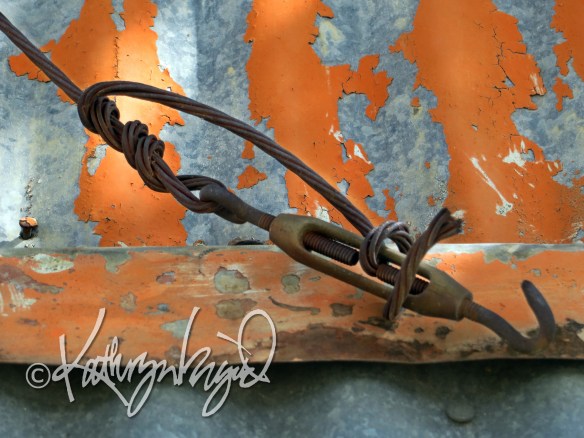
No surprise at all, then, that as soon as I started teaching, which thanks to his intervention and my subsequent hiring I did for the first time out of grad school in the very classroom where he’d taught me, it was as though I was instantly possessed by his spirit. I think I may have visibly started when I heard myself say that mystical phrase, standing there in the very spot where he’d once stood and repeated it to my classmates and me, never having remotely suspected that I would ever quite understand the term let alone use it so glibly and with such conviction a mere few years later. In my turn, I found it became a true favorite topic of study and tool for art-making and there were undoubtedly students of mine who thought it a funny catchphrase of mine and parodied my use of it.

That’s the way this stuff works, isn’t it. We become our teachers. First we find ourselves imitating our parents and siblings and playmates, learning from them both the persistent bad habits and, if we’re lucky and perhaps not too dumb, the worthy and useful skills and knowledge that will stay with us as we grow. Then we turn to teachers outside of the walls of home and neighborhood, as we get to school and move forward, and learn to imitate them too. This, not to put too fine a point upon it, is what helps us create for ourselves our texturally rich lives.photo

In art, it is the visual or tactile form of texture that I most often seek, finding in the wide variety of possible touchable or perceptible patterns and surfaces worlds of ways that I can shape and delineate and describe whatever subject I choose. As I work to make the art deeper and more complex, the textures I seek include less concrete, more metaphorical and philosophical ones that lend further meaning and impact to it. And that is where it begins to intersect with the learning and growing processes of life in general. A life well lived will be inherently texturally rich. I had no idea of the magnitude and import of this when my professor was saying that simple little phrase. But I’m very glad he said it often enough that I did internalize it, ponder it, carry it with me, and eventually, find a wonderful and purposeful truth in it.

Perhaps even fine teachers like him can’t make me into what I never was, a great teacher myself, but there was clearly a place in my heart and mind that resonated to the phrase ‘texturally rich’ happily and hungrily enough for it to take root and teach me good and useful things long after the echo in the classroom had faded away.photo

Talking at Cross Purposes

digital illustrationMy spouse and I have an intriguing way of discussing our disagreements, and I gather from what I see, hear and read that this is not such an unusual complication but probably more like the norm. We don’t fight about stuff that matters, remarkably, very often at all, being on the same page in our essential beliefs and concerns; if we differ there, we’re pretty comfortable having a rational conversation or two and agreeing, if necessary, to disagree. But the more inconsequential things are where we excel in having our weirdly, even hilariously, convoluted bouts of stubbornly wordy disagreement.

And the vast majority of the time, it’s because of the language barrier. We’re both native speakers-of-English, but it seems we are perfectly capable of saying virtually the same thing to each other in such different ways that each of us hears the other saying essentially the polar opposite. It’s quite miraculous, really. Two seemingly cogent adults, people who know each other rather well after being together for eighteen years and who both know inside that we share the deep core values that make eighteen years together possible, not to mention that we share so many experiences and tastes and interests—and we can’t reason our way out of a paper bag when one thinks the other is remembering something incorrectly or a question has been raised about some puzzling matter of fact.

Of course, I don’t think this is specific to being male-female, age-related, or any other such thing, this is a characteristic of our whole species. It’s a perfect example of how humans talk to each other a whole lot of the time. We think we’re having an epic battle over right and wrong, and both sides of the argument are  looking and hoping for exactly the same outcome, but each of us simply thinks we have put the correct names on the problems and resolutions and the other party is clearly an idiot or heretic until he/she/they will acquiesce and let us superior beings fix everything according to our righteous rightness. Happens in politics and religion and academia and relationships just about equally often. Whether weapons are involved has the most influence over how epic these battles really become, but the basis is hardly all that different.

My beloved and I get in the same ridiculous rut of circular conversation often enough, though neither of us takes it particularly personally or even necessarily sees it as a true argument let alone a danger to our relationship, and it’s easy enough to laugh it off when one or the other of us finally realizes that We’re Doing It Again. But it’s strange that we don’t spot the next episode from afar and simply have a straightforward, rational talk. If the goal or solution is nearly always identical or close enough to it, why do we have to wrestle around so determinedly before coming to that natural conclusion? I can’t guess why we mortal mugs are so quick to waste our energy and peace on pointless posturing, but it’s certainly a collective talent of ours.

I guess I’ll just have to take this opportunity to apologize to my partner for my part in the muddle, and hope I learn to listen—and hear—better. And if anyone with any power or aspirations to power (political, religious, academic, or other) happens to be reading this, would you do me a favor and do the same?digital illustration (B&W)

We All Wear Our Masks

digital illustration (B&W)It’s so much easier to hide behind convention and other convenient facades than to let our true selves be seen and known. Don’t we almost always prefer that sense of safe anonymity or at least ‘appropriateness’—however tenuous or specious it may be—to taking the chance that in our own skins we might not measure up to the occasion or to the  expectations of others?

It is, of course, a foolish conceit. One can rarely cozen anyone else, let alone oneself, by such a means. No matter how hard I may try to appear in the guise of what I think will qualify me for the In Group or make me richer-thinner-prettier or smarter than I really am, if it’s all show, the mask will like any faulty exterior prove too thin to cover my realities. It has always been so, and yet I am far from alone in continuing these futile attempts. I do believe that constant practice can transform us into a nearer semblance to the disguise, but that can work for ill as well as good.

Probably wiser is to recognize that the urge is age-old; that insecurity and an assumption that others will find me inadequate in my natural state are neither new problems nor absolutely decisive. The masks of the past remain, both in those symbolic and ceremonial concrete forms and in the records of our history books and art, to amuse, bemuse or warn us, if we will pay attention. And a close enough, thoughtful enough reading will remind any of us that no mask covers the truth forever—and yet, all the same, that we as a species continue (however astoundingly) to survive. Perhaps unmasking isn’t entirely as dangerous as any of us have feared.

I spent enough years acting the part of a brave, socially mature person, one who was more comfortable hosting a gathering, letting others see my art and writing, lecturing, teaching and doing so many other things that in truth absolutely terrified me to tearful agony behind the scenes that it turns out I am capable of doing all of those things after all. I still fuss and worry, yes, but nothing like the self-flaying horrors that I used to suffer just to get through what were apparently no-big-deal occurrences for most other people, and now I can experience them with fair equanimity. Funny how, when you’ve spent your whole remembered life in the grip of a belief that every second was one degree away from total disaster and death, any tiny bit less becomes magically huge.

And each of those instances becomes a step toward understanding that I have perhaps begun to grow into my mask of wishful improvement and become more like it underneath. Or better yet, that it never did matter as much as I feared, this different reality behind the convention. Best of all, I find that the more I let people see me as I really am, the more kindly they seem to look on me, and in turn, I begin to think the real me is perhaps pretty likable, respectable. Even lovable. Who knew.

digital illustration

Unique doesn’t inherently mean Alone.

Attention to Detail in All Things

digital illustrationI’m far from being the world’s best gardener. I may have the perfect skill set as a lazy dilettante, loving the design process and having a tremendous appreciation for all of the non-laborious joys of a garden, whether it’s well tended or not. A bark-boring beetle or a sculptural skeletonized leaf can be as beautiful as any spectacular, pristine lily or a lilac’s heady bloom. A moss-choked stone path is as glorious as a graceful fountain encircled by perfect tea roses and rosemary. And I have had quite the aversion to trench digging, rock picking and weeding ever since I was old enough to be conscripted by my parents for the purpose.

But I also know that if a garden is to have any hope of continuity and flourishing in flower, it needs occasional attention to such details, at the least, from Nature’s seemingly random hand. The gusts and waterings, composting and tillage performed by her weather and her handyman crew of creatures all do their parts in keeping the landscape in beautiful form. Even better chance of thriving if I do my part, too, having noticed what details might better prosper under my attentions, however slight they might be.

I was reminded of it recently as I watched a family make their valiant attempt at getting a group portrait. Flanked by grandparents, the parents stood holding their two little boys: Dad, in back, held the eight month old and Mom, ahead, wrangled the three-year-old. No one seemed able to get the normally placid toddler in front to hold still for even one quick photo, or to understand why he was so unusually squirmy, until someone finally noticed what I could see better from my side angle: that the baby was cheerily leaning forward at intervals and yanking his big brother’s hair. Detail noticed, problem solved. Had that adorable little scalawag been able to keep up the practice, I have little doubt there would’ve been need, eventually, for an expulsion from that particular little Eden.

I, meanwhile, must try to keep after my own gardens, the real and the metaphorical, and make sure the little buzzing creatures and weeds don’t get too far out of hand.digital illustration

In a Very Hot Place

digital illustration

Not to shed crocodile tears, but don’t you feel sorry for my pain?

In the humid human jungle, there is a rapacious beast that cheerily attacks and devours the happiness of many a poor body.

Menopause. Yessiree, I’m sufficiently past the mid-century mark to be personally acquainted with the joys of middle- and slightly past middle-age. I managed, thanks to magical genes or good luck or some jolly combination of the two, to enter into the mysterious temple of Menopause well ahead of the dull-normal average age of 51. I guess my body just couldn’t wait for the fun. Forty years old? Yay! Sure, I can go right ahead and get on that crazy train.

My doctor thought I might just be a fanciful young’un, imagining I was wandering into menopausal territory at the tender age of forty. Until I described my hot flashes. She already knew about my newly accomplished slide to the bottom of a depressive slope, a thing that (while it is seldom developed in complete isolation from other qualities or characteristics of health issues) can sometimes also be a symptom of menopause. She was not one of those dismissive, demeaning doctors who would’ve opted to imply that I was some kind of hysteric or stupid person. So she did a little checking into my state of being in other ways and lo, what I was experiencing was indeed early onset menopause. Or perimenopause, to be more medically precise.

Anyway, I’m now well past a dozen years of this fun and am still here to tell the tale. What’s particularly interesting to me is that it’s not wildly improbable that I’m, well, okay. I think I might’ve bought, at least a little, into the popular mythology that makes menopause universally into a horror of monstrous proportions. I will never minimize the true suffering that some women experience during menopause, a very real horror. But me, I’ve spent over a decade in the strange land of menopause, and I’m still ticking along.

One thing that I have working in my favor, besides that I have relatively few symptoms and lots of blessed good luck, is that I have great support. I have always existed in the midst of a family, friends and acquaintances where topics of real and everyday importance are generally discussed in real and everyday ways. No big deal. Imperfections, illness, death, human failings, and yeah, menopause. These are all realities and unavoidable. Sometimes painful, sometimes inexpressibly difficult, ugly, terrifying, awful. But in all of that, normal. So why would we be so foolish as to pretend otherwise, to let them loom, magnified, as the sort of thing we can never name, let alone discuss, with others who are statistically likely to have shared the experience and might even have wisdom to share in how to survive?

I’m trying to be smart about protecting myself from the bone density loss that is typical of many women in menopause, taking supplements and keeping active as my doctors have recommended. As an exercise hater, this one isn’t easy for me. I do keep current with monitoring and treating my depression so that I am sad only what seems to me a pretty normal amount and about pretty average things, not depressed in extreme and unhealthy and perniciously persistent ways as I was before I began finding the right health regimen of counseling and medication to keep me on a better path. I use extra skin moisturizer and the occasional application of hair creme rinse because despite having been an almost magically oily youth (and having had to battle high-grade acne as a result) I do find that in my advancing years I now have fairly dry skin and hair.

The big annoyance that remains for me is that my internal thermostat broke when I turned 40. My body forgot how to regulate its own temperature, so now I can go in a matter of seconds from the freezing Undead-body temp I was so long accustomed to experiencing in pre-menopausal years to the miracle of my torso becoming a microwave oven and right back again in a few minutes. Sometimes many times a day. This fun, for thirteen years and counting. And yet I am not a wreck.

The best defense I’ve found thus far is a simple little device that is a hybrid of that grand old invention, the hot water bottle, and the slightly newer iteration of the athlete’s curative bag of ice, a flat water-filled-sponge-containing rectangular envelope thingy that goes by the euphonious rapper-appropriate name of Chillow (trademark registered) and can be laid across my overheated midriff when I can’t seem to get my inner temperature moderated. It’s no cure, but it helps, and help is far better than misery. Even a good old fashioned accordion-folded fan fluttered southern belle-style beats undue discomfort.

I would never be so self-indulgent or ridiculous to call my sufferings massive or anything nearly as important as those of women who endure the real pain possible with menopause and its related conditions. That would be both silly and hypocritical. I’m average, plain and simple and normal, in this experience, even when I’m not exactly on the middle line of the statistical charts. But I can assure you that if you are heading into menopausal territory or someone you know is on her way, there is a path through this particular jungle and you need not be devoured by the beasts met along the way.

See you on the other side of the [very sweaty] swamp.

digital illustration

If the jungle is ruled by a hippo, is it a hippocracy?

Sweets for the Sweet (& All Others, Too)

digital illustration

Remember this…

Long-Awaited Benison

The sweetest sound the human ear has heard
Was not a waterfall or splashing brook
To thirsty thoughts; nor thirsty mind, a book
Read out; nor singer’s voice, nor whistling bird

In spring’s cool song; it wasn’t kittens’ purr
Or baby’s comfortably cooing charms
When resting safely in his mother’s arms
—Though it might then seem wildly sweet to her

It wasn’t the “I love you” of romance,
Nor was the sweetest sound of clinking gold,
—Though to its owner, that cannot grow old—
But rather, barring mystic happenstance,

The miracle of sound most truly sweet
Was Mama’s voice announcing, “Come and eat!”

I Tell Myself These Things, Too…

text

text

text

photo + text

One Simple Self-Improvement Tool: Live Among Your Betters & Keep Your Eyes Open

text + images

digital artwork

text + image

Bland Like Me

photo montageThe marvelous Diana of A Holistic Journey has been writing posts asking about the influences of race, culture, national origin, education, and so forth and the ways that they shape who we are and how we perceive ourselves. This series of hers is proving an outstanding eye-opening and thought-provoking exercise for me, too. I have spent most of my life living amid and being part of The Majority—middle-class, white, English speaking, native-born, educated, boringly predictable, etc, etc. There were a few touches of diversity around me here and there, of course, this country of the so-called United States being what it is, but those were relatively small and isolated, so mostly I grew up sheltered and unchallenged in nearly all ways.

Yet as an individual I came to know myself as being different in one way or another from most of what I thought of as the ‘norms’ of my own environs, and even learned over time that what I thought was my Majority milieu was mostly just my very narrow path through it in life. While a lot of my classmates, immediate neighbors and friends when I was a kid, for example, were also little pasty white critters like me, the friends I remember best as seeming most interesting to me were ones like Eha, the Estonian girl, or Karen, one of my few black classmates, or the Japanese friends who shared exotic treats from their lunches and who performed classical Japanese dance in a miniature celebration of the Cherry Blossom Festival at school. I have hardly any memories so suffused with longing as that of watching the girls flutter their fans, while dressed in exquisite kimonos and dancing their stately, courtly dance to the strains of the tune ‘Sakura’, which melody in turn still fills me with delicately melancholy love.

My ideals of human physical beauty, as my husband and I have often noted musingly, are nearly all attached to non-whites or mixed-race people, not something I think of as a conscious or intentional choice but a persistent reality for me ever since I can remember. My superficial list of Most Beautiful People would probably have a paucity of caucasian members among its top fifty. While I have never been either very adventurous or flexible in my choices and tastes and experiences, I suppose I have always been fascinated by what seemed different or even exotic to me. I am a fantasist and a romantic in the cheap, popular versions of those ideas, I guess.

I have even wondered, in a broader sense, if part of my very nature is simply to feel like an outsider for no very specific reason. I was always shy, and learned as an adult that this expressed not only a naturally introverted character on my part but also demonstrated lifelong social anxiety and probably the incipient state of my developing depression that didn’t come to full fruition until later. Those, along with undiagnosed dyslexia, tremors, the dysphonia that came into play in my forties, and who knows what other quirks of my unique persona and biological makeup, could perhaps explain why I never felt I fit in with any particular group or was especially central to its character. But I still can’t say I felt consciously sad or was overtly unhappy or removed or, certainly, ostracized for any of this.

What was odder was that as I reached adulthood and gradually began to find a more comfortable sense of self and direction, I have a feeling I may have chosen to put myself into groups where it was plain that I didn’t quite match the norm, specifically because, if I knew there was no possibility of my being an exemplar in its midst of the highest standard, I might unconsciously feel safe from being expected to be so by anyone else. This might be complete nonsense, but it gives me pause. In any event, I spend a great deal of my ‘quality time’ nowadays in the company of people who are immersed in and even expert at music, pedagogy, administration, and a number of other topics in which I have no training whatsoever and only a very little observational knowledge, and I am very happy in this environment.

Conversely, I tend to keep my company of good visual artists and writers and others with training or knowledge more likely to be similar to mine at the seemingly safer arm’s-length of cyberspace, and that probably doesn’t reflect well on my personal fortitude. I never did, at least, make any claims of being any better than a big ol’ chicken. Being a scaredy-pants is probably not race-specific. Or attached with any particularity to culture, social stratum, nationality, educational accomplishment, religion, language, income level, or anything else in question. Being a scaredy-pants is just part of being myself, and the unique combination of qualities and characteristics that make up the wonderfulness of Me.

On the other hand, being attracted to, frightened by or otherwise connected to or dissociated from people who are Not Like Me is a central consideration of understanding how the human species works. Or doesn’t. And there’s no doubt that all of those things influenced by proximity (physical or metaphorical), the aforementioned race, culture, social strata, and so forth, are very potent indicators and influencers of how we will experience the concept of Self and Other at any level.

So what does that ‘solve’ about me, about how I feel about those who are or seem in any way different from me? I’m still not at all sure. Perhaps the best I can say is that my feeling of being, in a value-neutral way, unlike those around me makes me unwilling to assume much about them, in turn. I would generally rather let personalities and individuality be revealed to me and my understanding of my surroundings at the moment unfold in their own sweet time than that I jump in and make any precipitous assumptions. I’m perfectly capable of finding lots of other ways of being wrong and making a fool of myself without constantly worrying over whether I’m being judged, rightly or wrongly, as a stereotype of either the majority or the minority on hand.

Most of my blogging friends and acquaintances are significantly different from me in nearly all of the aforementioned identifying categories, and yet I feel remarkably at home among you. So I’ll let you decide if sameness or difference affects how you see me. I feel at home, and that’s good enough for my part of the bargain.photo montage

It’s Always The Other Guy

I prefer not to think of my own guilt or culpability if there’s any way it can be avoided. Surely this is a universal characteristic in my species, but it doesn’t make that admission any pleasanter. It’s lousy enough to think of myself as being quite so continually fallible and messy as I am without having to admit that it’s probably avoidable much of the time, and definitely not something I should just let slide or pretend I don’t have to attempt to amend. Being imperfect is crummy enough in itself, and when I look at my shortcomings and think of what I should be doing to let go of them and, presumably, to repair their damage, it’s more than a little bit overwhelming.digital illustration

It’s all well and good to sit and read a rip-roaring murder mystery novel and cluck with self-satisfied disapprobation at the terrible things those awful people do in it, but if I think I’m all spiffy-clean and untouchably innocent I’m just as deluded as any. I may take some delicate form of self-righteous umbrage should anyone dare to note that I’m not so much better than the petty criminals I love to decry in that movie I just saw, or to think myself piously, wonderfully holier than the lowlifes on the evening news who have done Such Terrible Things I can hardly bear to mention them, but what I conveniently disguise to my own satisfaction as trivial and wholly excusable imperfections might just as well be the crime of the century if they harmed another person or set something in the world off kilter, however indirectly or unintentionally.digital illustration

While it galls me beyond words to see other people painting over their own horrible inward rot with every excuse in the book or, as is the amazingly popular pastime among our kind, by blaming everyone except themselves for whatever’s wrong in the world, I hate to be reminded that I so often do the same. Mea culpa is easier to say than the plain truth of it in my mother tongue: I did it. I was wrong. I am sorry. I will endeavor to make this right. But at some point, whether all of the Other Guy suspects are ruled out or not, my own guilt should find me out, and I should be willing to stand up and confess.

If I don’t, my beloved sisters will eventually remember what I got up to ‘way back when we were small, and will finally tell on me. And I’ll have to admit to everybody that I was really hoping someone else with a slightly itchy conscience would’ve stood up and taken the blame for my stupidity and wrongdoings before I had to come out into the spotlight. Well, I did it. Whatever it is, I’m pretty sure I was the rotten fool that messed up so royally, and I do apologize. The truth of it will surely be revealed. I hope you’ll be gentle with me, as it’s just possible you know how it feels, too.