Sparkling Repartee

It’s my sister’s birthday again—not that she’s getting old at a ridiculous rate, but rather that I have three sisters, so their birthdays occur with a certain frequency, since we all have different birthdays despite people’s occasionally mistaking two or more of us for same-day siblings. While we are separated by gaps, there are enough commonalities in our selves and our looks, I suppose, that it’s not entirely shocking anyone might make such an assumption, but those who know us see the vast array of differences more sharply than the less informed might.

And that, my friends, that differentness, is a grand thing. I adore all three of my sisters and love that we have enough in common to be real friends as well as family to each other, but we are clearly the better for having our unique characteristics and points of view and experiences to further enrich our life in common. It’s those distinctions that keep us from being in any way interchangeable and certainly, from having nothing to talk about when we get the all-too-rare chance to visit. We’re all four fabulous, if you ask me!

Take Sister #3, for example, whose natal day we remember on this date (I’m second of the four). From when she was very small—and she was mighty tiny indeed—her fierce drive for perfection and her native and highly honed intellect awed me. She ‘gets’ things that I will never wrap my head around, things like mathematics and the myriad business-administrative powers that keep the machinery of life and work and family ticking along in ways that only happen to me by lucky accident. She is and was the athlete and outdoorswoman I could only dream of being, and her cookery and baking, frankly, kick my measly skills to the curb. And she’s beautiful, inside and out, even if as a typical sibling I didn’t always manage to remind her so as often as she deserves.

That’s all just for starters, but if I were to go on too far I’d sound like I was making her up out of fairy wings and dewdrops and cookie dough, so instead I shall just wish her a spectacular birthday and a year full of wonder and happiness, beginning to end and for many birthdays and years to come.
digital illustration from a photoSpirited Pleasure

Let us raise a crystal glass of Champagne Brut to toast the passing

Of the weeks and months, the years, to raise resounding shouts of “Cheers!”

We’ll ping the flutes “Salut! Cin Cin!“, tip up the stems and drink it in,

For nothing makes it taste so great as bubbly wine to celebrate

(Though if you care not for its pop, I recommend a Lemon Drop)!

Foodie Tuesday: Breakfast should be Brilliant

photoDespite my avowed resistance to the charms of morning [see yesterday’s post], I am far from immune to the delights of breakfast, no matter what time of day it is served and enjoyed. O brave (if perhaps gluten-free) toast soldiers, stand up and be counted! Your being bathed in butter before pan-browning is a gift that I would not willingly snub even when I’d rather sleep in and I’m trying to reduce my carbohydrate footprint anyway.

Of course, eating proper stuff to start the day is smart. I’ve heard that. I’ve even experienced the truth of it. If I get a fair dose of protein, a nice gloss of good fat and a dash of sweetness in my breakfast I tend to have a better day following it than when I’m under-fueled.

Also, I like yummy food.

So it’s pretty simple, then. Put together a tasty and reasonably balanced breakfast, gnash it all up happily to get the day underway, and be glad. Maybe even productive.

Eggs are very often on this kind of menu for me. Scrambled, poached, fried, baked. Plain or in a complicated dish. Hot or cold. I’m reasonably catholic in my tastes, yet contented and thrilled enough when presented with easily predictable but well-prepared classic combinations of breakfast-related goodness.

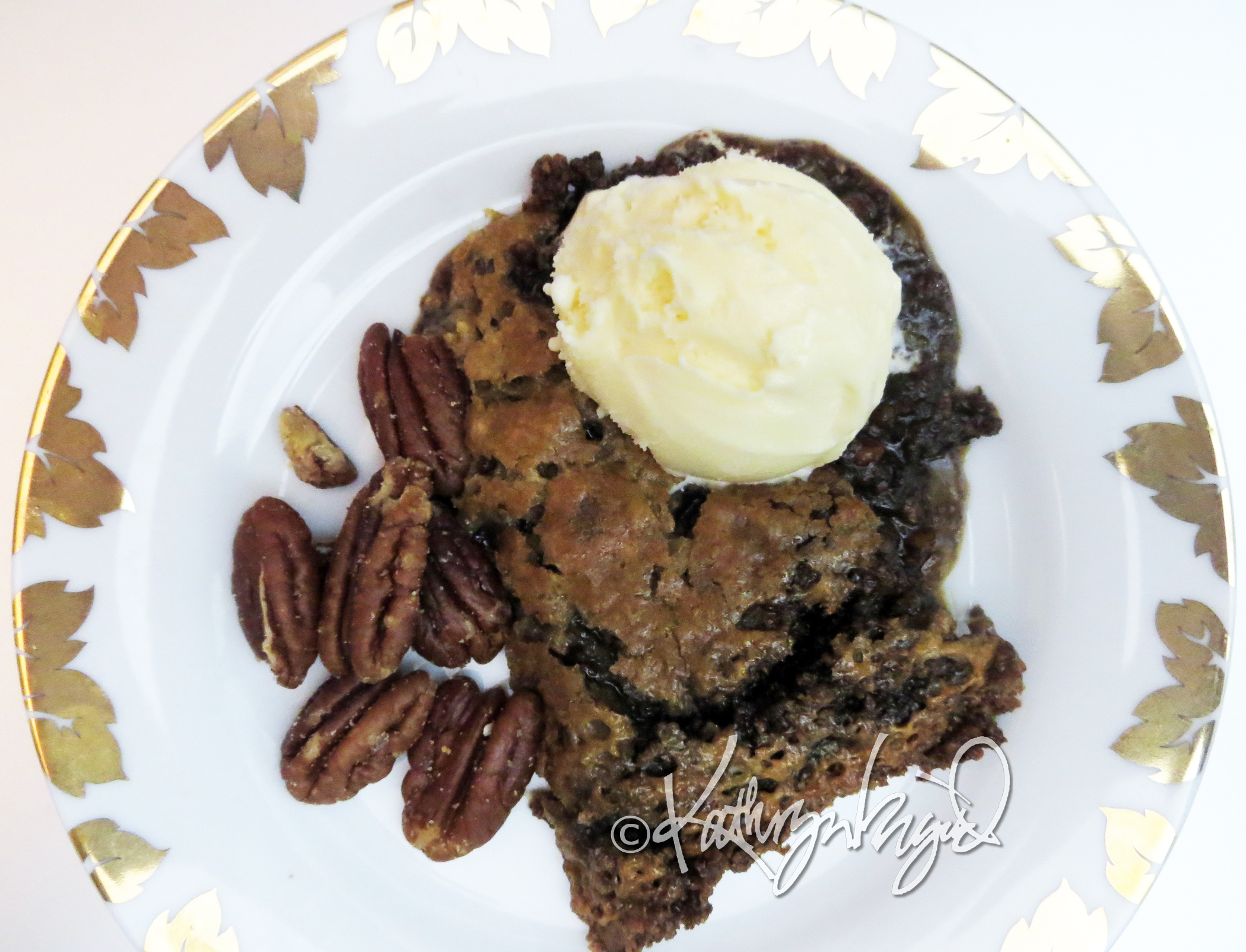
The Full English, as I’ve said here before, is never amiss, in my estimation; would I dream of saying no to a heap of eggs, streaky bacon, sausages, tomatoes, mushrooms, beans and toast? Certainly not. A glorious Bauernpfanne loaded with sausages and potatoes and their friends, yes, that too is heavenly. I am dangerously fond of baked goods and quick breads, so I find waffles or pancakes or pain perdu or my particular favorite, crepes, a dream worth suffering for, but ultimately if left to choose, I’ll opt for something a little heavier on the protein side of the balance. The day finds me less lethargic and more useful on that diet. My aging body responds much more kindly to a cake-and-cookie-deficit than to shortchanging it of protein and fat.photoSo I enjoyed concocting this plateful on that particular plan. Bacon’s a fun place to start. Or end, or eat all the way through the meal. So there’s that. But for egg pleasure, here’s a quick way to get a little variant pizzazz into the cheese omelet kind of treat: fill one side of a small nonstick frying pan with shredded Gouda and cook it over medium-high heat until it’s beginning to crisp up and turn golden, drop a touch of butter, a few fresh sage leaves and then two whole eggs into the other half of the pan, let them fry up until the eggs are nearly set, and fold the crisped cheese side over onto that other layer to finish it all up. Slide it onto a plate with the crispy bacon and serve a nice sweet-and-juicy helping of fruit (a little Satsuma is a fine complement) alongside, and I am ready for a big day of Doing Things. If I don’t happen to get around to anything very significant in the way of accomplishment, at least I’ll have had a very enjoyable start to my latest day of Not Doing Things, and I won’t complain. If breakfast is brilliant enough, why should I need to be?

Like a Spiritual Rinse Cycle, If You Will

photoWash Over Me

What this wild elixir, flown, delivers

By plunging from the heights to break below,

What icy, fearsome, awe-inspiring rivers

Will do to quench my spirit, I don’t know–

Except I look from indigo abysses

And faintly, I discern in blinding mist

What splendid existential bathing this is

That leaves me breathless, battered, cleansed and kissed–

What sense is left when all the course has thundered

And crashed over my head and hands and heart

Keeps in its wake the beauty left unsundered,

A seed to germinate and grant a start–

For nothing’s as renewing as a shower:

What pours out will remake me, hour by hour.photo

Leave the Lights On!

digital illustrationWhile I’m closing out an old notebook that I kept in blog form a number of years ago, I found yesterday’s post and this companion one. So what the hey, I’ll share this one with you, too.
It’s Thanksgiving Day [2005!] and I am particularly thankful this year for having celebrated a whole year of emergence from clinical depression. For anyone out there who has been mired in it, or still is, I send out a fiercely made wish for your recovery and new joy in life, along with this meditation I wrote after realizing not only how far and how long I had been away from my true self, but the cultural setting in which it is possible to get there without realizing it or even having others see it clearly.And with deep thankfulness that it is possible, with help, to be revived.* * * * * * * * * * * * * * * * * * * * * * * * * * * * * * * * * * * * * * * * * *

Let’s stop all this rubbish about Depression as a romantic notion.

The myth of suffering being necessary to ennoble the spirit or, more commonly, to shape creativity and artistry and the personalities that foster them, is an inaccurate and unhealthy construct that belies the potential power of sanity and contentment. The idea that much of the great art that has sprung from the work of troubled or diseased artists throughout history would have been impossible, or the artists Not Themselves, if they’d been well or happy is simply a gross assumption of the inflexibility of the human spirit at best, and an insult to mortal intelligence, invention, and character at worst.

In a telling moment of literal as well as figurative turning-on of the lights, participants in a 2004 Canadian study on Deep Brain Stimulation as a possible treatment for otherwise-untreatable depression noted that the world became a visibly, physically brighter place when “area 25”, or the central zone of depression response in their brains, was stimulated to relieve depression. Many of the patients described a distinctive, even poignant, instant of pleasurable shock when the electrode stimulation, suitably placed, flooded them not only with unaccustomed sensations of contentment and ‘rightness’ in their world but also a clearly discernible brightening of their visual perception. It was as though, one commented, he had suddenly remembered a whole range of colors and values and sensory impulses and emotions that had been locked away for decades.

Nowhere in this was there any indication that the participants in the study experienced a negative change in their self-concept when their depression was eased. No mention is made of the patients losing their creative impulses or intellectual depth. Not a note of regret or sense of personal diminution.

The breezy optimist, on the other hand, is not by definition dimwitted or shallow or uninspired. While cultures that have embraced a darkly Romantic mythos of the suffering genius tend to dismiss brilliance that emerges from happier sources as a fluke or as slick, glib cheapness that won’t withstand the value-test of time, many stars and their accomplishments defy those definitions.

Yes, depressed, manic, even twisted and tortured souls with the deepest of psychological, physiological, or chemical-addled warps and wounds have been the vessels and sources of high art and equally high drama, but they are far from alone in that. To say that they only achieved their greatness because of their damaged state is a cruelty, an insult, and a cop-out that says we all could not be greater than we are, if not equally “gifted” with darkness. If being let off the hook ourselves is what we seek, then let’s just be honest and say we don’t relish the burdens of effort and experimentation and get on with other things. I have a suspicion, as it is, that if there’s a notably higher percentage of mental illness among persons who could be classified as particularly ‘creative’, then the cause/effect relationship is one of persons being used to having to problem-solve their way out of unusually difficult circumstances on a regular basis, and so developing stronger problem-solving (read: creative) skills.

Meanwhile, cheer up! Look at the dazzle that being joyful brings. See the energy and wit that, when not wasted on grief and moroseness and morbidity, can be devoted to pursuing greatness instead, and run after it with childlike delight.

The Ordinary Romantic

I’ve not re-posted anything from my own blogging before that I can recall, but happened upon this (admittedly lengthy) piece I wrote a number of years before I even started this present blog and was reminded of a few things I’ve said here but in quite different ways. So I share it with you now, lightly edited to update it, just because it piqued my own interest once again. Cheer up, my friends: I love that this is written from something like an outsider’s view of the experiences of depression and deep melancholy, after all these years!digital illustration from a photoI highly recommend reading the book I just finished reading [when I originally wrote this post], Peter D. Kramer’s ‘Against Depression‘. He’s the author who wrote ‘Listening to Prozac‘ – a book that, surprisingly, wasn’t really about depression or even Prozac, per se, but due to its bestselling status raised those two specters so frequently that he finally had to respond with this book. He has some sections in it dealing specifically with the effects of depression on arts and creativity, intellect and education, and vice versa. But there’s also a ton about the physiology and pathology of depression, the affect and effect and the impact on self and others. Very thought-provoking for me.

If you want a really scary companion-piece before, during or after the reading of that book, one that for me confirmed the urgency of wellness by any–no pun intended–sane means, look up ‘My Lobotomy‘ – it was a presentation on NPR that horrified me more than umpteen war- and disaster-stories (including true ones) and makes stories by Edgar Allan Poe and Stephen King sound like skipping through a copse picking violets. ‘Lobotomy’ is the harrowing memoir of a lobotomized man who, at 56, finally got up the courage to investigate and explore what happened to him when he was operated on at 12, why it happened, who else was affected, and much that followed. Incredible. Terrifying. I can barely even think about it. But it did make me feel all the more intensely that I want to stay in charge of my own mental health just as much as I should my physical health.

For the moment, since I’ve so often been asked, I will say that when I call myself Ordinary, what “ordinary” means to me is wide-ranging and a bit variable, but in the sense I’m using here in the land of my blog, it covers all of what seems possible, believable, normal or otherwise expected in the universe of human experience. More significant, perhaps, is defining what it doesn’t mean for me: things found at the extremity of experience: brilliance or genius or unearthly, once-in-a-lifetime skills, talents, and insights. Me, I’m not interested in being a supernova. They tend to burn out fast anyway.

What I really pride myself on is taking the simple raw material of being a middle-of-the-road mortal and managing to pull out of that clay my own few moments of dazzle – an outstanding artwork here, a worthy kindness there, and a few sprinkled bon mots or glorious deeds in between – these shine all the more in the setting of my ordinariness. People take note of them precisely because they are deserving of note–because coming from a typical luminary or wunderkind they would be the expected thing, no matter how exciting, and from me they are not. There’s no intrinsic negative value to ‘ordinariness’ for me, no implication of self-abnegation or false modesty, just the sense that only a few in history are genuinely set apart as spectacular examples of either desirable or undesirable traits and gifts, and we in the main herd can still go on and live rich, full, complete lives just as we are. With maybe a little less pressure to perform, too, so that anything extraordinary we do actually shines that much the brighter. Surprise! Aren’t I fabulous!

Why do we see ten tortured geniuses for every happy one? I think it’s primarily a function of taste: the culture that covets over-the-top emotion isn’t interested in supporting and reporting anything that doesn’t have that dangerous gleam. Good news is no news. If the artwork is upbeat, it must be tacky and shallow. If the artist is happy, she must be an air-headed clown. Prettiness and simplicity and everything that pleases the mainstream must, by definition, be playing to the lowest common denominator.

I’m actually a dyed-in-the-wool Romantic myself, but I have been contemplating that old adage “write what you know” and decided that it lends itself to far too tiny a concept of possibility. In the first place, if taken strictly it would mean that we should automatically dismiss as useless falsehood any attempts at empirical or even historical writing, because practically everything that has been once believed absolute has taken on different shadings over our cultural lifetime, if not been disproved. Never mind how we should treat the authors of murder mysteries and crime novels! The aphorism may be a needless dictum or even a myth: one doesn’t necessarily have to BE suffering to appreciate what suffering is. And perhaps anyone who has suffered in the past can be considered to have earned the stripes of exactitude anyway and can rely on recollection rather than continuing to wallow.

There is certainly a bit of truth when people insist that others can’t know what they’re going through; in its most complete sense, I’m sure that’s accurate. But anyone with a little life-experience and the ability to sympathize or even–if imperfectly–empathize, can puzzle out in his or her own way an approximation that makes communication of it possible in art. And, frankly (this goes back to that idea of an Ordinary person doing something Extraordinary), if I can make someone slap his palm to his forehead and go, “YES! That’s what I’m talking about!” when they recognize a shared feeling or insight, then I think it’s all the more memorable and impressive, not the predicted brilliance of some savant.

So thanks to the perpetual discussions of such topics with colleagues and friends and given my understandable interest in depression and its effects as well as more strictly Romantic artistic concepts, focus on the impressive influence and hold of Romanticism on all our lives, I continue to search. If Romantic ideals glorify and sympathize with a dark world-view, with sorrow, cynicism, pain, suffering, and so on, and if arts and beliefs that support those ideals are valued, then how can we respond to things that defy or fail to uphold them? How can we wish to be happy and healthy if what we love is, really, decidedly neither? Since the prevalent taste for Romantic qualities has been in vogue for a number of generations, and cultural memory is dangerously short, few recollect that being In Love with Darkness is a relatively new trend in recorded human history; an externally imposed one at that. As with so many of our beliefs that we take not only for granted but as eternal, immutable fact, all is not necessarily as it always has been or will be. There are larger patterns in the life and development of art, history, healthcare, personal experience, politics, and religion that act and cycle broadly, often inducing in each other significant change as they intersect along the way.

As Dr. Kramer notes in his excellent polemic against depression, even tuberculosis used to be idealized. People who had Consumption were presumably consumed by the unusual intensity of their inner being: larger than life passions, intellects, artistry, love and spiritual astuteness were all attributed to these dramatic sufferers. When it was finally seen that that oh-so-sexy tuberculosis was in fact not only a genuine physiological disease but also a degenerative, communicable, and difficult to treat pathology, and that it would not only kill the patient eventually but also deprive the rest of us of those idols, the tide began to turn toward the desire for palliative care and cure. Depression, also arguably a disease of at least equally destructive dimensions, and demonstrably damaging to such physical attributes as brain tissue and adrenal glands, not to mention to social structures surrounding the patient, is certainly deserving of the same considerations.

So what do we do with our Gothic worldview? Give up our love for the dark? Hardly. Strip it of its value and depth? Not likely. Perhaps, though, we can rebalance the scales a little and say that it’s no longer chic, let alone necessarily accurate, to assume that all things pretty and pleasant and uncomplicated and cheerful are stupid, dull, vacuous, or shallow. Realistically, we’ve all seen attempts at art that cling to the Romantic ideal and yet manage to be stupid, dull, vacuous, and/or shallow. And, as I constantly remind[ed] my beginning art students, one of the hardest things to accomplish well is simplicity. When you take on the task of making a work that appears simple, you make yourself vulnerable to every would-be critic who can find the tiniest flaw as it stands out against that backdrop. Because you have tackled the familiar, it takes far more sophistication and subtlety and inner resource to make the work distinct and worthy, not just a good imitation of what has been done before. Anything can be badly executed, art or otherwise. Anything has the potential to be scintillating and brilliant.

The difference should lie not in one element alone, especially not some preset element like whether the theme is Dark or Light, but in the miraculous confluence achieved of content and intent, medium, methods, and moment. Is it beautiful? Is it successful, deep, lasting, influential, meaningful? We will, and should, continue to make value judgments and assessments and be willing to revisit them from time to time. Because beauty and meaning, whether you believe they’re strictly in the eye of the beholder or not, can change as the beholder’s eyes are changed by a life full of adventures, by time and tide and every nuance of history that washes over us. It should be equally visible in full, bright Light or in cavernous Romantic darkness.
A Glimmering of Sweetness Exceeding All that has Gone Before

This is my wish for all of you as the new calendar year begins. May you find goodness and contentment all around you, and may you in turn share and propagate it everywhere you go in 2014. Peace and abundant happiness, my friends.photoI rarely have an actual Plan for the upcoming year, but this time around I do want to move toward a few specific things. First and foremost, I want to be more deliberate about finding ways and excuses to be an even happier person, and to leverage that happiness to spread it as far and wide as I can to other people. Call it intentional optimism, call it doing random acts of kindness, call it whatever you want, but I think it’s more likely to be good for the overall tone of the year than not, and that alone is worthwhile.photoIn addition, I intend to start making money this year again, however little it may be. I have no delusions of getting rich, but would love to put my own tiny dent in our family expenses, savings, and/or retirement. It’s been a long time since I got any actual dollars for anything other than a present, and I know that, however unlikely a choice I may be on paper for anyone who’s hiring, I will find a way. Or two. It may not be a regular job, or it might be a conglomeration of tasks and sources. I’ll keep you posted, friends, but if anyone happens to have any brilliant insights before I do, chime in; I’m listening! Meanwhile, I’m happy to keep working on increasing the happiness quotient however I’m able. That’s Job #1.

Death is Never Out of Season

photoDid I worry you for a second? Never fear, friends; I’m not going to be a big old humbug, let alone a grand tragedian, here. It’s just that, living where I live, I’m always in the shadow of some circling or perching vulture sussing out his or her next all-you-can-eat buffet. I’m pretty sure that I too would look fairly delish if I just had the kindness to croak somewhere out in the open within a vulture’s purview, yet they don’t turn up their beaks in disdain at smaller game. So I can get a regular reminder of my mortality just by looking over in the tall grass next to the road, where there is often a vulture or two munching on someone else’s gnarly remains, any time I need said reminder.

I am, as you’ve seen if you’ve spent any time around this blog, of the school that still has an appreciation for a good memento mori as a reminder of the fine and great and joyful things that being Not Dead can have to offer. It’s just about time for the biggest holidays of the year in many cultures, and as workers in the life-supporting jobs that include medicine and law enforcement and social services will tell you, depression, health crises (both physical and mental), family violence, crime and all sorts of other terrible social ills tend to peak. Unreasonable schedules and outsized expectations of delirious happiness around holidays and other celebrations are practically doomed to failure, and even those who are fairly realistic about their expectations may have actually built in a sort of assumption of disaster that only adds to their stress.

Letting go of a lot of this overwhelming and impractical perfectionism and most of the silly entitled assumptions that the world owes me satisfaction and pleasure has greatly simplified my life. It has certainly lightened the load of worry and wishing. And every time I walk under the perch of a local vulture and look up at it as a fellow living creature, I am thrilled to pieces that I have the greatest way of all to celebrate whatever holidays and special occasions I want to enjoy: alive. Not particularly wanting, not overburdened with Stuff and needs and promises I can’t keep, and simply, happily Alive. Just having one of those massive birds circle over my head without interest in me as an entree reminds me that death is close at hand, since the avian beast is clearly keeping a keen eye on something nearby that is already deliciously deceased, yet also says that I am not quite yet on that side of the equation and can go on to enjoy my holidays. Kind of makes every day seem more worth the celebrating.

Steaming along Toward the Holidays

I’m sure anyone can easily analyze me to bits for it, but my message today is simple. I made a wreath and I hung it up on the front door to send the message to you, one and all. It’s a holiday message that I think is worth decorating for, regardless of which is your own particular holiday or what the specific date on which it falls.photoThe medium for my message may be a little offbeat. Not everybody puts up a holiday wreath made under a hint of Steampunk influence, but that was my angle at the moment, mostly because I really like all the typical mad-scientist found-object quirky-mechanical fantasy junk that fills the Steampunk world. And I made a wreath because it was fun to do.photo montageAnd I did it all to say, in my own funny-yet-utterly-serious little way, that holidays of a great multitude of kinds please me. More than that, I wanted to say that I wish such sweet happiness to all of you who more properly ‘own’ these holidays. And today, what with the 25th of December being the biggest holiday I grew up knowing in my modest corner of the universe, I think it’s exactly the right time to wish all of you as much joy, contentment, hope and peace as you can possibly contain. Well, more–so there will be plenty to spill out onto all the others around you.

Foodie Tuesday: After-Math

photo

Just for starters…don’t forget that previous meals’ leftovers can be reconstructed into the appetizers for the next meal, like what happened with the remaining bone broth ingredients that lived on after soup-making and made such a nice beef pate for Thanksgiving.

A signature of holiday cooking and eating is, logically, a host of holiday leftovers. After all, we tend to cook and eat more of everything in the first place, when holidays happen, so there’s bound to be more food around, and since most of us do fix more of our favorites on and for celebratory occasions, we’re a bit more likely to want to be careful not to waste them. Holiday leftovers are tastier than everyday ones, aren’t they.

So it is that remnants of glorious sweets will continue to lure us into the ever-so-aptly named larder and the refrigerator will, after Thanksgiving, still have some turkey lurking in it too. While a great turkey sandwich is far from restricted seasonally, the grand whole bird in its pure roasted form is less commonly perched on dinner tables outside of the Big Day, making it anything but boring to have the leftover turkey and its trimmings served without tremendous alteration at least once or twice after the party has passed.

photo

Red relishes are such a nice touch on holidays that when a friend said she was bringing whole cranberry sauce, I decided to add the jellied kind *and* some home-pickled beets for the trifecta.

This year, Thanksgiving at our house was both traditional and extended. Ten of us sat around the table: our musical friends from Germany (why did I write Austria, then?), Hungary, Canada, Puerto Rico, Estonia and the Netherlands as well as the US gathered with our plates of roasted turkey and a fair assortment of other treats and sweets, and though we had our feast the day before most others’, the ingredients of food, drink, and conviviality were the same, and the leftovers equally profuse. My prepped appetizers, turkey, mashed potatoes, wine/stock gravy, creamed sausage, and buttermilk cornbread (the latter two, parts of the planned southern cornbread dressing, remained separate at my husband’s request) were joined by dishes the others brought–Greek salad, squash puree, homemade whole cranberry sauce, and carrot cake and handmade Hungarian biscuits for dessert. My own dessert offerings were the apple pie and Tarte au Sucre.

The Tarte was not only a good excuse for ingesting vast quantities of fabulous dark maple syrup but, as I discovered, when it’s accompanied by salty roasted pecans it becomes a perfect inversion or deconstruction of pecan pie, another very traditional Thanksgiving treat in many homes. I made my Tarte with a crumb crust of mixed pecans and walnuts, so it was perhaps already a variation on a nut pie before the garnishing pecans even arrived on the scene. In any event, it pleased my maple-fiendish heart.

photo

Lightly spicy sausage in cream makes a good alternative to gravy for the turkey and potatoes, if you don’t end up putting the sausage into the cornbread dressing as you’d thought you were going to do…

The idea of creating a meal of any sort, let alone a holiday meal, for a group of ten people and coming out with everyone perfectly sated but without a jot of leftovers is, of course, more mythical than mathematical. It’s in fact ludicrously unlikely to happen, even if the ten are all people one knows intimately and whose preferences and appetites never vary–also, to be fair, a virtual impossibility–so the question of how to manage the leftovers with the best grace remains. In our house, that problem is never terribly difficult. First visitation of this year’s re-Thanksgiving was a smaller and simpler version of the original, turkey and mashed potatoes, cornbread and cranberry sauce, with a side of buttered green beans and bacon. Meanwhile, I’d already started a slow cooker full of vegetables and giblets while the turkey was roasting, and added the bones and bits afterward, so there will surely be turkey-noodle soup soon to follow.

photo

Thanksgiving, Round 2–and only the second of many, perhaps.

What comes after? Probably a little turkey curry or a sandwich or two, but not much more, because having grad students and young, single faculty members at table on the holiday also meant that it was rather important to see that they left with some leftovers of their own to carry them forward. Leftovers, truth be told, are really just a new beginning in their own way. Hospitality, you know, isn’t a solo; it requires participation. One person doing it all, no matter how perfectly, is not a party but a lonely and self-centered business and misses the point of the whole thing.

photo

Ah, do not let the focus on the main meal eclipse all of the good that can follow: a mere creamy turkey soup is a heartwarming way to honor the memory of the great meal that started it all.

Let others partake, help, contribute. And yes, do give to them: share the feast, both in the party’s environs and in the sharing of all that surpasses what was needed for the moment. And share, first and foremost, your time and attention, your companionship and humor and warmth and love. Then there should be plenty of those for leftovers, too, or all the turkey and potatoes in the world will not be enough. Much better, more filling and fulfilling, to be so hospitable that it spills over everywhere.

photo

The only thing better than a delicious dessert is just a little too much of it.

Peter Pan vs. Mother Earth

Maturity is a hard concept to nail down. So few of us would willingly embrace the larger idea of maturity after all: the implication is too much doused with the odor of aging and the loss of innocence, playfulness and joie de vivre.

But if I can move away from those irksome, unflattering aspects of maturation, there is a whole world of better and more admirable traits awaiting me. To refuse to grow up, as so famously done by Peter Pan, one has to reject all of those pleasures and opportunities afforded only to those willing to submit to the passage of time.

I will continue to avoid becoming ensnared in the traps and trials of aging as long as I can get away with it, and probably further. Who wants to become exclusively serious, constantly responsible or particularly predictable? Not I! Age may force me to slow down my physical pace or even make me willing to concede that there is such a thing as a skirt too short or heels too high or a blouse too fitted to be quite seemly for my years, never mind that choosing certain forms of entertainment or places to go or goals to achieve are not particularly well suited for me anymore.

But I am also glad to let down the barriers to other aspects of maturity, and to embrace my aging with a certain relief when it comes to those. I care less and less, for example, about whether I look fashionable or impressive, so the heels and hems can be whatever altitude suits my comfort and mood. I’m happier in my own skin with every year spent getting to know and define and design it.

That, my friends, is the greatest gift of aging: I am freer from the worries, demands and expectations of the world around me and can work at shaping who I am, what I want, and how I feel more deeply and contentedly than when I thought there was a greater need to conform. Youth is not nearly so unfettered as we idealize it as being; so long as more mature people own our territories of home, school, work and even play, they also rule our lives. So long as we concern ourselves with comparison, competition and popularity, we let others have the power as well. When we learn to fit in and find community by being our truest selves, it changes the tune entirely. This is the richness, ripeness and harmony–within and between–conferred by true maturity.digital illustrationAnd while I’m thinking about musical metaphors, I really must give you a link to my husband’s latest YouTube appearance, conducting the beautiful and magical Monteverdi Vespers of 1610 with the Collegium Singers and Baroque Orchestra of the University of North Texas, with some tremendous guest artists singing and playing alongside the artful student and faculty musicians. This production was the premiere performance of the new edition of the Vespers that was developed by UNT professor Hendrik Schulze and ten of his graduate students, and among the instrumentalists playing on marvelous period instruments were some of the greatest players now gracing the halls and stages of the Early Music genre. Enjoy!