A Touch of Existentialism

Like most people, I suppose, I am an odd collection of contradictions. Having a pretty dandy education and good genes, I’m not entirely dimwitted, in fact, would say that I’m not only intelligent enough to have gotten good grades in school right on up through my graduate studies but even so much so that I get along rather well in my life. But everybody who knows me also knows that I am also almost supernaturally dyslexic, being unable to read with ease or tell left from right, up from down, forward from back, and a host of other handy life skills that others, as I’ve observed, seem to come by naturally. This is not a complaint or bragging, either one, just a statement of fact. I do well, when I do well, because I have found sidelong ways to get the job done, whether it’s by reading any text at least three times through before it falls into sensibility in my quirky brain or by traveling on trust and a fairly reliable eye for landmarks to keep me finding home base despite my utter lack of an inner compass.

I am by nature exceedingly shy and have had from early childhood what I only learned as an adult was an unusually high level of constant anxiety that, with serious therapy and a consistent supply of low-level medicine, turns out to be manageable. So even though it seems incredibly unlikely and counterintuitive to people who meet me now, I appear to be a lifelong social butterfly, an extrovert, and naturally fearless about interactions even though without the meds and training I would be wholly unable to function at this happy level. My vocal cords are irritatingly subpar for regular use thanks to my SD*, but when I’m with someone I really enjoy and trust, I can be counted on to chatter without stopping (*other than when forced to) for great lengths of time.

And I have no magical powers. Again, I think myself essentially ordinary in having no skills or talents, knowledge or gifts, of special note. I am not overly self-deprecating or sad on this account, merely noting that if you’re looking for the person who will end all wars, cure cancer or the common cold, or discover a way to stabilize the planet’s climate forever, you should jolly well be looking at almost anybody else imaginable as a better go-to heroine. Yet I really do think we all exist for some sort of reason or purpose. It might well be that mine is nothing more than to spend a lifetime figuring out what my purpose is, and die slightly more contented than otherwise if I should be so lucky as to solve that puzzle any time before I’m taking my last breath.

You know what? That’s good enough for me.Digital illo + text: Hovercraft

Art in the Middle of Dying

Digital illo + text: Angels DescendingThere’s little in the world that gives more meaningful respite from earthly trials than art. Those sorrows and struggles that range from the brutality of human weakness and evil to the most monstrous of natural disasters have no true cure, no end. Safe to assume that they have existed since long before recorded history, and will outlast the lives of any of us now present. But art—a painting, a dance, a song, a story—in its turn outlasts, too, the horrors and madness of the darkest time. What exists in the background, dwells in the underground, during suffering and oppression, so strong that it cannot be extinguished, and both records the terrible event and defies it? Art.

If we learn anything from our history, it should include the knowledge that any threat to eliminate or suppress art by force or merely by neglect and dissolution is a time when we should most avidly practice our defiance of oblivion. When it is bleakest, we should dance most wildly and gracefully; when dark, sing boldly and sweetly; when empty, we should fill the void with thought and challenge it with beauty. The blank Nothing may not mock us into meek obsolescence if we refuse to silence our passion and surrender our dreams.

Some Affections Take More Effort than Others

The artificial construct of American Valentine’s Day is a wonderful economic boost and boon for those who manage to take full advantage of the opportunity. And it’s not terrible, by any means, to feel a nudge toward wearing my heart on my sleeve a little more boldly and publicly than usual on occasion. But isn’t it also marvelous to be romantic and loving just because one really does feel kindly toward and admiring of another person? To do so not merely on one predetermined day of the year but any old time, and without requiring mass popular pressure to ensure that the signs of affection meet commercial standards, but rather, simply, that they please one’s beloved as a token of genuine affection?

Yes, I do still think it’s charming and admirable if part of what I feel moved to do is to shower particular tokens of tenderness and love on the object of my affections by treating her or him to a day of delirious delights smack dab on the aforementioned Official day of love and romance, along with any and all of the other days. Have at it! There is absolutely nothing wrong with honestly effusive compliments, dizzyingly gorgeous chocolates, fresh flowers, and champagne, if you ask me. Feel free to send them my way.

Graphite drawing + text: Heartless

The Façade isn’t Worth It

Ask for help. Short phrase, simple concept. Really, really hard to execute sometimes. We place such high value on ‘keeping face’ or seeming tough and cool and untouched by mere human foibles, trials, and concerns that many of us are perversely frightened at the idea of doing what should be the one easy thing. Ask for help.

It doesn’t pay to play the brave one or the willing martyr when your world is caving in on you, and even less so when you consider the ripples through the host of people who—though you may forget it at times—count on you, whether for equally small and simple things or for being the love and joy of their lives. It doesn’t do any good to sit and wait for help to come to you: remember how hard it is for you to know your own mind, let alone read anyone else’s, and know that they can’t read yours any better. Even if they realize how deeply in need you are, they may be fearful of offering their assistance because of that very mask of competence and courage you’re hiding behind, and you both lose.

There might not be help enough in the universe to fill your need, never mind your desire. But there’s no Maybe, if you ask that from yourself alone; you will fall. You will fail. When you feel you have nothing further to lose, there are really no such things as “acceptable losses.” Accept, instead, the handout, the hand up, whatever it is that anyone at all can offer you, and with it the hope of better things. It might mean nothing more significant than lightening your mood, and that is important enough. It might save your sanity, or your life. Ask.Digital illo from a photo: Nine, Ten, a Big Fat Hen

A Place Full of Love

Photo: Timeless ITimeless I

Great friendship leads to kindling of a kind

Unknown to lovers who have never spent

Nights they devoted purely to content

Intimate intercourse strictly of mind—

Love is expansion, at its best, of souls’

Learned connectivity in friendship first,

And then the cultivating of the thirst,

Pursuing stronger wine, and then the coals—

Embers long banked as friendship had begun—

Light into fire new brilliance from a spark

Lifting great stars from the eternal dark,

Exquisite as a newly blazing sun—

Rich is the love that from such friendship springs,

Kisses of wine—and of more stellar things.Photo: Timeless II

Timeless II

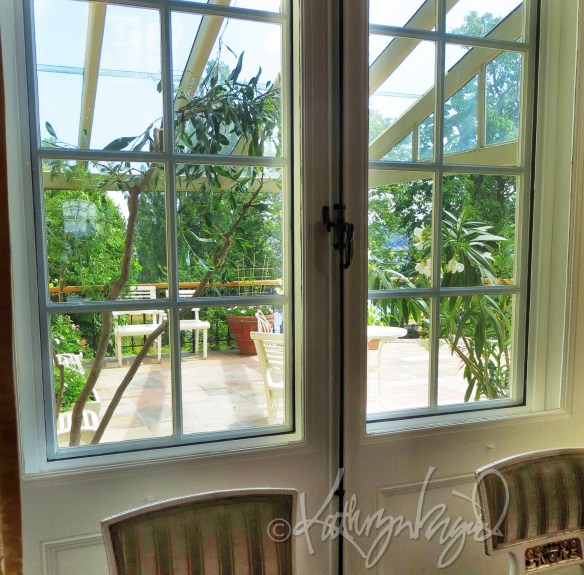
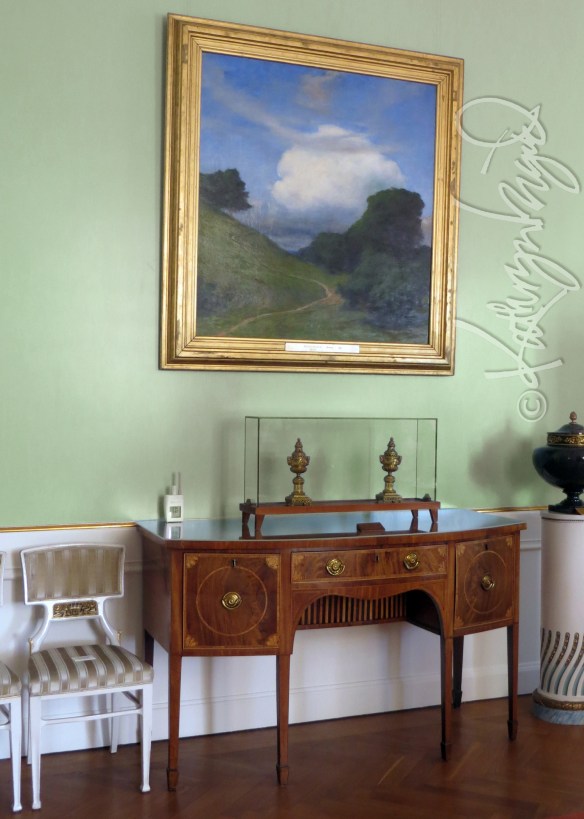
In morning light, the palest leafy shade

Of birches’ green is cast upon the wall

Where portraits hang, ancestral friends who all

Keep silent watch on what the years have made

Of their descendants and their memories;

The secretary, small and staunch, remains,

And in its graceful curving shape contains

What documents can speak these histories;

Oft, in this room, the whisper of that sense

Of timeless care embracing present love

Reaches so gently from its great remove

That love fills up the room itself, immense.

When I am here, I know love so begun

Will flourish to the final setting sun.Photo: Timeless III

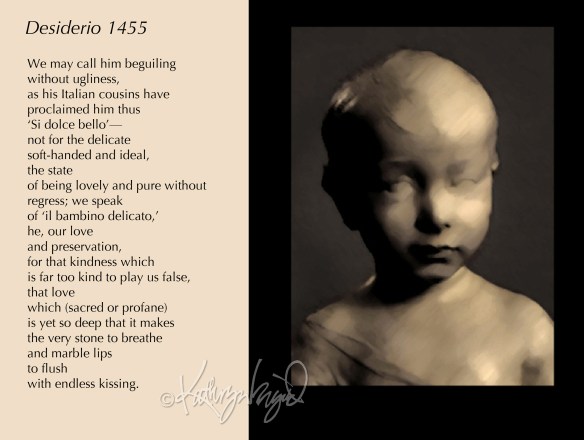
Marble Bust of a Young Child

Some artworks defy the passing of long ages not only as physical objects but also as ideas and images that transcend trends and tastes. One that captured my imagination long ago and has never grown dull or fallen from my affections is a carved stone portrait of a child, created in the fifteenth century by a sculptor mellifluously named Desiderio da Settignano (de Bartolomeo di Francesco detto Ferro). My computer wishes that I would change the unknown word “Desiderio” to “Desire,” and indeed, it is as though the artist had infused the marble of his sculpture with such mystical attraction, a heightened, time-proof version of the natural affection for a child’s inner beauty that can surpass the strength of his individual name or origins or place in time.

In recognition of both that species-perpetuating endearment and the accomplishment of the artist in capturing it, I wrote a pair of dedicated meditations.Digital illustration + text: A Delicate Incandescence

Digital illustration + text: Desiderio 1455

Through the Cracks

Photo: Gears GrindingI wrote this post a few days back, but stuff like this happens with great frequency in this day and age, I think you’ll agree.

How is it that, in this era of hyper-communication, so little information gets transmitted to the right person at the right time? I’m sitting in the doctor’s waiting room contemplating this, not sure if I’ll get in for a simple annual eye exam that’s a couple of years overdue, because last time I came in this doctor’s office, had supposedly been sent the required referral but it wasn’t in my file. Today, same story. I confirmed my appointment with a person in this office, who assured me that the referral had arrived, over a month ago—yet now it’s “not in my file.”

I got here immediately after listening to my spouse go through an incredibly convoluted and tedious rigamarole on the speaker phone to pay a bill for an account that had long been operating smoothly with automatic payments on the exact same credit card, only to learn that the bank that issued the card (despite owing us on its account at this moment) had refused payment on it. All of the numbers and dates were correct and no reason given for the refusal. So my patient partner had to re-register the very same card for the very same auto-pay system, and because there’s a 30-day wait for such registrations to be confirmed, he also had to make the present payment individually. Even the poor billing department employee walking him through the transaction was so confused by and even embarrassed at the silliness of the mess and how many long pauses on hold it took to unravel it all that he kept trying to make small talk to pass the time before it was resolved.

Meanwhile, at various other points in my quotidian wanderings, I frequently watch bosses make decrees that they would know were impossible to enact or enforce if they only asked the underlings who are expected to perform them. I regularly see parents and children, housemates, siblings, spouses, and others talk at cross (sometimes very cross indeed) purposes, all the while with the deeply held belief that they are offering great wisdom and well-planned solutions, yet never quite hearing each other or considering that the person with whom they should be conversing may have already solved the problem in hand. And I have watched employee-representative committees without number at work when they have neither consulted the employees they supposedly represent for their input, nor told them what is being negotiated, how, why, or with whom.

Anybody else feel like you’re sitting right outside the Cone of Silence from Science Fiction Theater? It’s as though I can see gears turning and mouths moving and messages of obvious importance flying back and forth, but can’t see the text of the communiques, let alone read lips or minds.

I sit and wait. I get agitated and then frustrated. I get so irked and itchy that I have to hunt for clues and try to set things on what I hope will be a clearer and better path. And just when I think I’m getting my pulse back down to a practical pace, the documentation I sent out at yet another company’s request six weeks ago magically disappears into the ether, presumably now sandwiched between the pages of somebody else’s documentation in the middle of their file. I’d ask the company to email or phone me when they locate my materials, but I’m pretty sure that if the message to do so doesn’t also disappear in the meantime, he who took the message will have retired by then and the new guy won’t know what was requested and will pass on the request to yet another trainee, who will in turn bury it in another wrong file for later discovery by a random office cleaner. I’d promise to let you all know how it turns out, but I’ll probably forget, anyhow.

At least I can tell you that after one more phone call today, my doctor’s office did agree to fax the ophthalmologist a repeat of my appointment referral, so I got to visit the eye doctor after all and get my eyeglass prescription updated. Until I get those new lenses, though, I can’t be certain I’ll be able to keep an eye on the prescription slip. So disappears another useful piece of data, drifting through the cracks of the information highway.Photo: Geared Up

Treasured Things

What’s trash to one is treasure to another, as it’s so often said. Few others are compelled to admire and delight in the same inventory of weird and ridiculous, horrendous and lovely things that speaks to me. My little mental attic is just as specific as anyone’s, and likely to be as unappealing to them as theirs would be to me.
Graphite Drawing: Treasured Things

But one of the pleasures of this individuality is the ability to share our stories about what’s stored in our unique vaults of ideation, whether in truth or fiction, and revel in our moments of visitation to unknown worlds through the tales. In writing, telling, reading, and hearing, we share and exchange ideas and beliefs, feelings and fantasies, insights and excitations with each other, all from the safe remove of communication that need not be wholly shared experience. After, we can choose to join in on the newfound interests and adventures, or we can choose to retreat to our own inner worlds, perhaps changed a little by the passage or, if not, only glad that we don’t have to dwell in each other’s lives and happy to return to the familiar comfort of our own favored inventories of thoughts and things.

Foodie Tuesday: Butter and Bread

Photo montage: Peasant BreadYou have noticed, I am sure, that the phrase in English is virtually always given as “Bread and Butter,” but if you’ve been here even once before on a Tuesday, you know quite well that for me, butter—not bread—is the sine qua non of this duo, and indeed, in a multitude of other pairings and combinations. Bread, no matter how delicious, is first and foremost a vehicle for a quantity of excellent butter. I will, like other people, eat bread without butter if it’s superb bread or there is no butter to be had, but if you think I won’t eat butter without bread you are very much mistaken.

Butter is delicious.

It is also emerging, in latter years, from under the cloud of privation-inspired (wartime rationing, the Great Depression, and so on back through the ages) inhibitions that resulted in the invention and embrace of all kinds of butter substitutes and, subsequently, the pedantically reinforced attitude that fat in general, and butter, specifically, represented the earthly form of Pure Evil. Turns out that the less dramatic and more practicable truth is that fats, butter among them, are no more dangerous when eaten by non-allergic people and in reasonable quantities proportionate to their other food intake and not processed in ways that remove it too far from its natural state—fat is digestible, useful, and even healthful. Well, butter my biscuits!

Yes, bread is delicious, too.

The list of breads I love is astoundingly long, beginning with the simplest unleavened kinds and wending its way through worlds of batter-based, raised, kneaded, savory or sweet, dark or light, dense and moistly heavy (say, a chocolate-y black pumpernickel) or ethereally feather-fluffy and flaky (perhaps a vanilla-scented brioche or a just-baked croissant) to the filled, sculpted, decorated concoctions of the most masterful bakers. While I was never a baking genius, I was a dedicated maker of a variety of rather delicious breads during grad school, using the kneading time as my meditation and the choices of style and flavors as my medication, both necessary for the survival classes like Ed-Psych and Statistical Data Analysis for Pedagogical Applications.

My favorites to make tended toward the frivolous dessert-tinged breads, upon which a slathering of butter served, in essence, as icing on the cake. I used that classic baking bible, Bernard Clayton’s Complete Book of Breads, for many of my inspirations, though as I always do, I roamed far and wide in making substitutions to suit my pantry and my mood as I baked. But probably the two recipes I used as my foundational go-to favorites most often were from Mom, for Limpa (light, sweet Swedish-style rye) and Julekake (cardamom scented sweet bread traditionally made with dried and candied fruits and peels). I’ve made Limpa plain, once or twice, to be sure, but I can guarantee I never made Julekake exactly according to recipe, since every single version I’ve seen or eaten elsewhere contains raisins and often, candied cherries, neither of which I like texturally in baked goods. Just not my thing. So I’d either delete some add-ins or make all the measures of fruity/candied ingredients in the recipe be strictly candied peel and citron, which will undoubtedly make lots of people laugh, since very few folk I know dislike raisins, or even those neon red-and-green candied cherries, but citron is notoriously a love-it-or-hate-it ingredient and I gather, is less often admired than reviled.

Go figure.

Much of the time, when I’ve baked from recipes that called for candied peel and fruits, dried fruit pieces, nuts, and that sort of thing, I like most of all to substitute that sort of thing with my preferred varieties of them, whether it’s in breads, cakes, cookies, steamed puddings, or anything else. So you’re more likely to find me making a facsimile of Julekake that contains a combination of citron, juicy candied orange peel and ginger, diced dried apricots, and coarsely chopped dark chocolate. That’s the way I roll knead to do it.

And still. Even though it may be full of candy, I’m going to slather some fresh, cool, lightly salted butter all over that bread before I eat it, if I get the slightest chance. Makes it slide down mighty nicely, if I do say so!

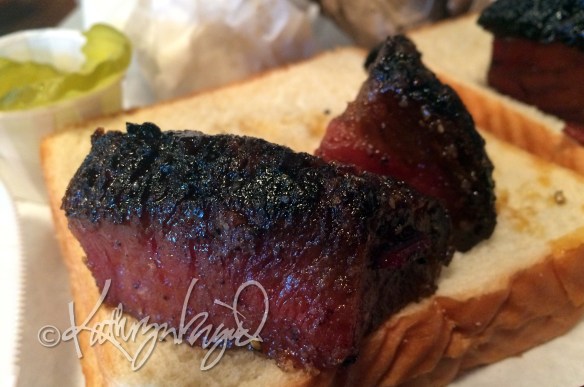
PS—All of that being said, I do greatly enjoy bread’s natural suitability as a superb support and vehicle for lovely fats. Being in Texas, I am glad to indulge my admiration for fine BBQ (and whether it’s meat or not, it ought to be good and greasy) as often as possible, and sometimes even the squishy, soulless processed bread traditionally served with BBQ is perfect with it, a plate you can eat when the rest of the meal is gone. Incredible burnt ends. A hunk of bread to sop up the fat, outside and in. No dishes to wash. Bonus points.Photo: BBQ Fat Happiness

Little Green Men

When I grow up I aspire to communicate with aliens.
Digital illustration: Little Green Man

You know how it is, when you’re a kid: the stories of the unknown are easy for anybody to concoct, since practically everything in the universe is still complete terra incognito to a kid. When I was a little squirt, there were endless options for what could be considered alien, from plain old grownups I couldn’t understand to spies and horror-story monsters, teachers and people who spoke indecipherable languages (you know, like Mathematics), ghosts and clowns. Or any combination thereof. But the best kind of aliens about which to tell tall tales would pretty much have to be extraterrestrials, nearly all of them apparently coming from Mars in the popular lore of my youth, and virtually every one of the Martians being, evidently, a little green man.

We make our gods and monsters in our own image, to a certain extent, even as grownups but most especially as children, so it makes sense that my childhood’s aliens should still have been humanoid, even if from 225 million kilometers away in space, give or take. I suppose that the green skin was mainly to clarify just how different these otherwise similar creatures were from us earthlings, and the littleness perhaps meant to signify their being lesser life forms than the obviously superior terrestrial ones.

But we little life forms known as kids were also savvy enough to make up our tales of Martians and Little Green Men in ways that would generally prove that our own smallness wasn’t so much a marker of inferiority in our race; we could best the invaders (as they always were, in those days) just as much as our elders could, maybe better. And of course we all knew at some point that we could best the human grownups, too. Especially as we grew older and began to realize that, like all of the other sorts of unknown and fearsome creatures that were alien to us, those ghosts and monsters and clowns and teachers, aliens might prove to be different from what we had imagined them to be.

Some might, in fact, turn out to be smarter than us. Be revealed as benign or, to our amazement, even benevolent. Just as we began to understand that not all humans and creatures that resembled humans to the casual observer were intelligent or benevolent or, indeed, quite human at all, we started to realize that each being whose path intersects with our own might prove, on closer observation and interaction, to have unknown depths and nuances, hidden flaws and unimagined strengths and gifts. We all begin as aliens to one another, in a way. It’s in learning to know each other as real and distinct individuals, to see each other with unprejudiced and open-eyed clarity and no preconceived notions of worth, of the good and bad of our hearts, that we can discover connections. Kinship.

I can’t say I think it at all likely that my ancestors were little green men who arrived in a flying saucer from Mars. And I’m not so all-embracing that I’ve given up my sense that there’s something alien and not quite right about most clowns. But I’ve got my own set of strange quirks and characteristics, and since I’d like to think other people will give me the chance to become a good person if I’m not already there, I hope I’m at least smart enough to get to know them as well as I can before assuming that they’re from another planet.