
Tastebud Ticklers
Image
4

 I listen to the mourning doves that coo and call in the shadows nearby and think that they do indeed sound ineffably sorrowful. The low, guttural sounds they make seem to my ear quite melancholy and, no matter how musical, to convey a kind of tragic news that makes me wonder just what it is that they say to one another. In my mind, they are exchanging the saddest of sad information, a litany of lachrymose lugubriousness.
In addition, I fear that I don’t give them enormous credit for wit and intellect, so if you’ll pardon the expression, I suspect that what conversation they do have is probably akin to what we American human-types sometimes call pidgin English—any actual content of worth being marred by the lack of intelligible vocabulary and syntax. But, to paraphrase what someone wiser than I has also said, if pigeons are the arbiters of intelligence in the same way that we humans are when we assume ourselves to be the wisest and brightest beings in creation, then all other creatures will by default be found wanting. No wonder the pigeons deign to unload their critiques on the heads of our celebrated effigies in the park.
The truth, I imagine, is that mourning-dove conversation is no less and no more wise and scintillating than our own, at least in the context of pigeon society. Heaven knows that anyone who translated my quotidian chitchat into ‘pigeon English’ would probably be violating the Columbiformian (I just made that up from their Latin name, thank-you-very-much) Geneva Conventions by boring them to death with my inanity and my extreme dull-wittedness when it comes to where to find the best yucky trash to eat, how to maintain the pecking order in the flock, or why one must always look for the shiniest surface on an automobile for proper deposition of one’s automotive excretions. So no matter how tragic the tone of the mourning-doves’ vocalizing sounds to a mere humanoid like me, it could be that they were just discussing their plans for world domination and the swell soirée with which they intend to celebrate it.
Infernally Yours
Thou mak’st me hot, O swain of mine, afire with passion, sure,
and art my furnace, blazing beau, so flaming your allure;
What is it getteth in my groove that thou hast, O my heart?
How heat I up, so quickly broiled, as roasting from the start?
Mayhap, thou sneaky Devil, thou hast dropped affection’s bomb
When I misjudged it literal and went to Match.com!


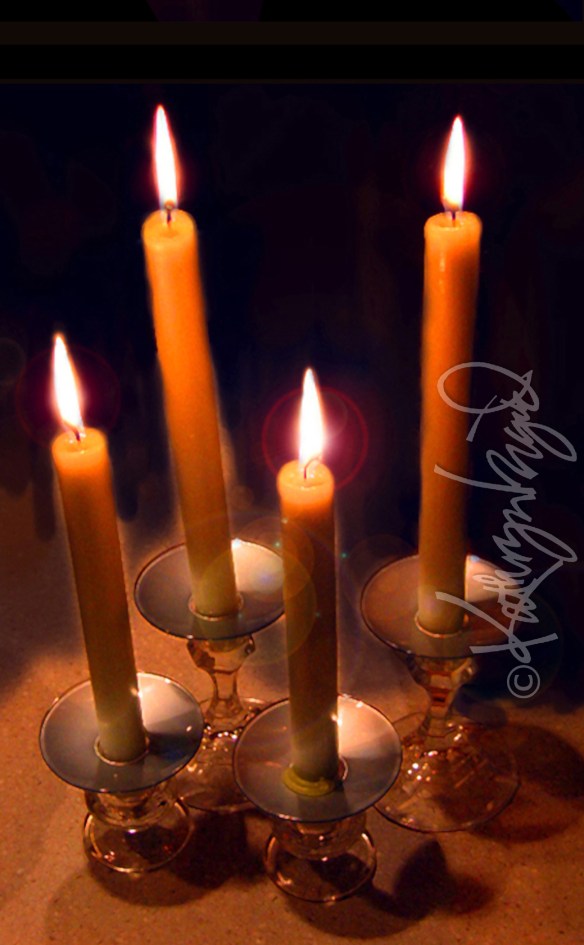
I suppose it’s only natural that if one is expecting a visitation from anyone scary or spooky, one might require a good drink to calm the nerves. After all, one of the most predictable symptoms of fear and trepidation is a dry mouth and that tends to heighten the other signs of nervousness in turn. One can quickly devolve into a quivering heap of ghostly dust at the mere thought of being stalked by ghouls and goons. And of course, the arrival of the Halloween crowd is a virtual guarantee that such terrors will appear on the doorstep.
So I recommend that you keep your shelves of glassware well lighted for the occasion, and have a dram or two of life-saving elixirs handy as well. The thirty-first is nearer than you think, and close on its heels, a horrible horde of wandering souls planning to maraud your home and demand a ransom from your candy-related treasury in exchange for safety from their pranks.
For the dedicated defender of the home barricades, it might be apropos to do up one’s home like that belonging to the landlady of Hänsel and Gretel‘s nightmares, the formidable cannibal who lured them in with the decorative delights of her gingerbread cottage. One could sit on the porch of such a candy-dandy place and leer meaningfully at passers-by over the lip of a neat little glass of Hexenblut. While that might be a counterintuitive choice for threatening them, it could also be seen as a warning that you’re so tough you slurp up your own wicked witchy sisters’ veins just as readily as any flimsy little trick-or-treaters’.
Me, I tend to be content to assuage my fears far more moderately and without putting up such a frightful front. I’m more inclined to turn off the front porch light and hole up in the back room to watch a nice double feature of, say, The Innocents and Gaslight or perhaps Bunny Lake is Missing and What Ever Happened to Baby Jane?, all while drinking a nice soothing glass of dry white wine or Scotch. The family label of “dry Riesling” from the Hungarian Count and Countess Károlyi’s estate that we visited this summer is not a bad choice for a light counterpoint to some delightfully creepy movies, or if I want something to warm my chilled heart better, I can opt for a short medicinal snifter of Bushmills 1608 or the Macallan 12 year old single malt.
Naturally, there are times and places and people not requiring the nerve tonic of alcohol. In that case, there’s nothing more quenching and comforting than the old standby of spiced cider. Nothing warms the cockles of the heart better while simultaneously moistening the dry and gibbering lips of a scaredy cat like me than a nice steaming mug of that stuff. I like mine very well when I get some beautifully unfiltered apple cider (happily, I’ve some on hand right now) and mull it well with stick cinnamon, whole cloves, and pieces of ginger root, but this too can be made more festive if one wants to get a little more playful with it or, when necessary, make it a more potent potion for warding off baleful beasts and cryptozoological creeps. One could, for example, add some black peppercorns to the spice blend for a little more bite. (Take that, ye murky monsters!)
Still, there are so many delicious directions to go with a mulled cider it can be hard to choose: add sliced whole [seedless] oranges, especially of course beautiful blood oranges if you can get them in late October; melt in a dollop of dark molasses before adding the spices to create a little liquid gingerbread effect; serve simple hot cider with hard caramel lollipops as stirrers, if you’d like to drink a caramel apple; and of course, you could go for all-out reassurance and flavor the apple brew, instead of with spicy flavors, with dashes of rose-water and almond essence and a steeping quantity of green tea leaves for something much gentler to soothe your quaking spirits. For spirits will, one way or another, abound on this night.
 Eternal life has always been the masters’ magnificent goal; no wonder that great magister and alchemist Osteodaimon was also determined to solve this elusive mystery himself, to plumb the Stygian depths of knowledge collected by the most piercing minds and intrepid souls ever to walk this dangerous earth. He began with years of reading, apprenticeship, exploration, privation, and experimentation. What Osteodaimon learned most quickly was that the process of becoming immortal was in fact incremental; it was a long series of tiny steps and grand leaps, of fallings-backward and soaring upward, all of which took him through both his long and arduous life of study and also a few strange periods of stasis, in which, all told, he began this mystical transformation of his into one truly able to transcend death. Many and terrifying were the missteps and passages, rites and elixirs, incantations, and the heart-shaking, wrenching feats of bravery and agility required of his profound intellect and the ever-disintegrating body that sought answers from that abyss.
One winter’s night, when he had traversed the grueling routes both between his birth and the ninety-two cycles of the seasons that already marked him as uniquely time-defying by his ancient era’s reckoning, and between the smoothly un-furrowed innocence of youth and his avidly acquired brilliance, he recognized in the ice crystals forming along his lashes the last increment required to complete his journey. Carrying the tinctures and potions that would preserve his last bits of mental and physical strength for the ritual, he set forth in the falling snow and moonlight to go farther into the frozen wilderness than he, or anyone, had ever plunged before. He began to notice as he went forward that the slower he moved, the faster the vastness of ice seemed to recede before him, until it was clear that his pace of progress was directly opposed by the increasingly swift passage of time. He knew that his own final breath was hardly a hairbreadth ahead of him, racing both toward him and away, and that only by letting the speed of it catch up with the glacial slowness he himself was approaching, at exactly the right juncture, and by taking the last dram of his precious medicine at exactly the same instant, could he affect the perfect circumstances for his final transformation.
Osteodaimon finally marked the spot. He lay down on the bottomless swath of blue-black ice, took the last draught of his alchemical magic into his gaunt grey mouth, and stopped. He became fused to the ice there instantly, his eyes made into a pair of wide, dull mirrors for the relentless moon and faded stars of perpetual polar night.
When he returned to himself and forced his eyes to focus again, his vision was oddly fragmented, and he sensed that he had drifted from his last stopping place far more than he had imagined he would have done. But the new place, also moonlit and cold, was pleasant enough, and he knew that soon his vision would clear and the slight buzzing in his ears would pass as he regained his strength. His sense of physical power, indeed, astonished him immediately as it returned; it was not only as though he were young again but as though he had new and exhilarating powers that would easily surpass those of his remembered early years, when he had labored so mightily in his pursuit of conquering death. This new Osteodaimon was a super-being to be reckoned with, and he took off at great speed to see what he could now accomplish in this next passage of his life.
It startled him how quickly he was able to go from place to place, how he seemed now to see things from so many new perspectives and rarely wearied of dashing about, looking, stopping to sup cold water or wine, or have a little food when he chose, but endlessly pursuing the delights of his renewed life. We cannot be sure, for history has failed to record all of the details perfectly, but it may be that it was only a matter of days, or at most weeks, before he realized that he could no longer read.
This proved a surprising disappointment that he would attempt to address soon enough. Not quite soon enough, perhaps, that he was ever able to learn the story of how, in A.D. 1867, a small group of botanists on the steppe discovered a perfectly preserved man encased in ice at the edge of a receding glacier. How the intrepid scientists chiseled their magnificent find out of his tomb in a manageable block and labored to drag it back to their fledgling university by sledge and wagon and train. How they built an ice-house museum room for the express purpose of preserving and examining this amazingly lifelike ancient man. How, one awful night in 1871, the city and that little-known museum in it were consumed by fire. How the ice-entombed mystery man had been spared cremation himself only because the conflagration had taken so long to melt his ice block that he remained weirdly, wonderfully intact, his eyes dully mirroring the moon once again.
Surely Osteodaimon could not have learned how to read again even in time to make sense of the tale that followed, of the chaos after the city’s destruction that prevented anyone from having further sightings of this miraculous time-traveler that had so clearly been the earthly form of the great magister and alchemist himself. Even if he had been able to read again, there would be no document to explain that his ultimate disappearance meant neither that he had finally ceased to exist nor that his old ideas of perpetual life being possible were entirely incorrect, for in the days and weeks immediately following the Great Fire, there was far more concern for removal of dangerous debris and rescue of injured and homeless known victims than for tidying up the remnants of an obscure museum. Had there been a witness to record it, there might have been something that Osteodaimon could hope to learn to read, something telling him that his thawed remains had rotted in the post-apocalyptic drear of an abandoned building, showing no more activity than the usual decay and natural recycling would show.
He might also, of course—had he been able to read it—thought that perhaps the early philosophers and proto-scientists were not entirely wrong but only slightly misdirected in their belief in spontaneous generation. For he would have found in the documentation of the ice-man’s progress that feeding on his mortal remains had been the usual generation or two of avid creatures that led to his emergence, eventually, as revivified carbon in the form of a blowfly. Once alive, always alive, but not, perhaps in precisely the way he had long imagined it.

Do I have Onchocerca volvulus, or is there just an eyelash stuck in my eye?
All Other Martyrdom is Naught before Mine
This harsh, persistent pain I have, O Doctor, tell me, please,
Can it be cured by some cheap salve, Or have I some disease
Beyond the scope of modern meds And pessaries and pills,
Like something Biblical in scope, One of those icky ills
You read about in magazines, See movies-of-the-week
About so frightful that you Realize that you’re a freak
To have such creepy plague, To be afflicted so, withal,
That even specialists will cringe And dash off down the hall
To hide behind their file Cabinets until you leave
Because they’re overwhelmed by the Bizarreness they perceive
Upon your person when they see Disturbingly displayed
Such malicious malady It makes them sore afraid.
What say, Sir Doctor? You detect My source of agony?
Who suffers worse than martyrs who Have papercuts, like me!

Well, shut my mouth! Maybe that nasty odor wasn’t Trimethylaminuria, but don’t just give me the brush-off.
Crows are a great source of pleasure to me. I admire their bold, graphic good looks: wiry legs and strong beak, shining eyes, and smooth feathers accented with iridescent shine. I enjoy listening to their noisy announcements and conversations, knowing that whether one is broadcasting his name in braggadocio or informing the rest of the neighborhood of what she’s discovered, there is often more brainy expression and interaction going than in many a text-messaging flurry from a pack of attention-deficient humans.
Crows can be aggressive and mean-spirited like humans, too, as I well know from working many years on a heavily treed campus where nesting season was Open Season on certain passersby whom the crows chose to bully. But for the most part, when they’re not busy trying to defend their territory they devote a goodly amount of time and energy to exploring and problem-solving and even humorous play, that is also surprisingly easy to see through an anthropomorphic lens. If I see a crow taking a particular interest in anything, chances are pretty good that I’ll find it interesting myself, should I follow its lead.

Shore Enough
I am too smart for you by half; you think you’re bright? Don’t make me laugh!
You think me infantile and boisterous, but cannot crack an oyster
With no knife? Ha! Silly chums: no fingers, no opposing thumbs,
And yet, I’ve dined on oysters thrice before you’ve opened one. How nice
That you consider yourselves wise to have your thoughts and synthesize
Them into action, yet still fail to see that mine makes yours seem pale,
When you consider that you’ve got advantages that I have not,
And still I’m able, while you strive and strain to merely keep alive,
To caw this jeering little poem at you from this, my beachfront home.
I know I’ve talked here before about how easy it is to stop seeing what’s right in front of me because, well, it’s always right there in front of me. The ubiquitous becoming invisible, and all of that. But lately I’ve been thinking, too, about how often what I haven’t seen before gets automatically dismissed by my brain as non-essential because I relied on the part of thinking that makes instantaneous generalizations and assumptions and chooses to categorize things, as soon as it decides the new thing doesn’t pose a threat.
While this rarely makes, in real life, the stuff of horror stories, as much as I like a rollicking scary tale at times, I am more concerned when I begin to wonder just how many things this autopilot state of mine makes me miss. Have I bypassed grand opportunities through lack of attention? Undoubtedly. Has my life been different than it could have been had I been more deliberate and thoughtful and thorough? Certainly. Are there people I’ve met whom I never got to know as well as I should have done, never appreciated as deeply as they deserved, never enjoyed the benefits of learning from them or being made better by a real relationship with them? That is unquestionably the hard truth.
Will I be smarter, moving forward, because I paused to ask myself these questions? That, my friends, definitely remains to be seen. I like to think that I’m teachable, but I know I’m also drawn to the easy path in life and often distracted by non-essentials when I should at least be watching where I step, so I’ll make no promises. If I do, however, happen upon any new and delightful things or, especially, people and recognize greater value than a passing glance would have registered, then I won’t consider myself beyond rescue in this regard. Plus, I might find in them the material for some fantastic fiction later on, if I’m lucky.
 Art-Colored Glasses