Perfectly Imperfect in Every Way

In a comment on my gardening post last week, Ted reminded me of the inimitable Mary Poppins, and I was in turn moved to recollect her frank self-description as ‘Practically Perfect in Every Way‘. In the case of that charming fictional character, it was simply and inarguably the truth. The rest of us, mere mortals, can’t quite go that far if we’re honest.

mixed media

Saints Cury, Cecilia & Goar. I selected these for portraiture in this modern-medievalist piece because of very earthly interests: Cury is one of my birthday saints and famed mainly for his 'miraculous' hospitality; Cecilia is the patron of musicians (for my husband, of course) and even sometimes purported to be the inventor of the pipe organ; Goar's feast day is celebrated on our anniversary and he, sometimes portrayed as a potter, was thus also an artist. He also happens to have a lovely little town on the Rhine named after him. There *can* be perks to being a saint, even a minor one, apparently . . .

Which is why I like saints. It’s doubtful I’d really enjoy meeting them in person, to be precise: it’s the nature, the character of them, that really fascinates me. Because, as I understand it, what separates the saints from the rest of us ordinary slouches is not that they were born or made saints but that they became saints by rising above the ordinary way they began. Unlike superheroes and the majority of fairytale protagonists, it’s not often a transformation that’s accomplished by the wave of a wand or inadvertent exposure to radioactive substances, but rather is brought about by internal change and will and choice.

There is hope for me in the idea that most saints–and I gather this is true of the heroines and heroes of many significant belief systems, along with many of the major religions–start out as plain, simple, unimpressive and very mortal humans and for one reason or another are moved to do the things they do that gradually re-shape them into extraordinary beings. Some of those avatars, indeed, start out as pretty sketchy characters, if not outright jerks, despots, and other first-rank varieties of meanies. It’s the process, the journey, and the ultimate commitment to do and be something else that makes them extraordinary.

mixed media

Saint Monica could be the perfect example of overcoming obstacles--much of her sainthood was earned just through working to see that her ne'er-do-well son shaped up, the outstanding troublemaker who eventually reformed enough to become himself Saint Augustine of Hippo. Apparently her efforts did not go unrewarded . . .

Chances are beyond-excellent that I will never become a saint of any sort. But the real hope and inspiration in the lives of heroes, saints and exemplars is that nearly all of them began their lives as someone or something far less extraordinary than the way they ended them, and if so there’s always a possibility that with a little thoughtful effort I might actually improve along the way too. Don’t hold your breath, but I might just turn out slightly better than expected. Apparently, miracles do happen.

mixed media

Saints Valery (a French abbot) and Finian (an Irish bishop)--hereafter known as the Feastie Boys since they're also among my birthday saints. They remind me as well that one can come from different places, times, backgrounds and any number of unique circumstances and rise beyond them all to distinctive heights . . .

Clarity (Klart Blikk)

photoLet me make one thing crystal clear: all of my world is seen through my filters, colored by my way of thinking, its perspective all my point of view. And that’s not either strange or bad. It’s how we all operate. It’s just important that I always remember that simple reality.digital image from a photo

I finally had time to sit down today and go through a backlog of seemingly gargantuan proportions in my email inbox. Among the items that were most enjoyable to unearth, there was a note from my sister carrying a link to another blogger’s post about her son’s (our nephew’s) band Honningbarna’s first gig in Dublin, with the requisite embedded YouTube clips of their performance there–which, in turn, linked to other Honningbarna clips, including a couple of very informal interviews between a young journalist in Germany, if I recall, and nephew Christoffer and his bandmate Edvard Valberg, the band’s cellist and frontman. Besides that I get a kick out of seeing our relative as a successful rocker and hearing the band’s wildly kinetic and screamingly energetic punk/metal performances, I am reminded every time I see and hear them that Honningbarna represents a particular brand of cynical idealism that only the irrepressible and wiseacre young can so ably embody.digital image from a photo

Like many a punk band before them, they sing/shout about the wrongs and stupidity and injustice in the world, calling attention to it all and making us want to clarify, if just a little, our own view or stance on such things. One of their biggest hits, to date, is in fact a number called ‘Klart Blikk‘–it translates, approximately, to ‘Clear View’–a call to stop being passive about the world’s imperfections, to get up and ask bold questions, to act. The link on the song title right here is, wonderfully, a Norwegian 5th-graders’ video workshop animation of the song, a perfect (and artfully executed) answer to this very call to intelligent response. And I think it a wonderful, if laughable, serendipity that my computer’s auto-correct recommendation today for ‘properly’ spelling Honningbarna is ‘Housecleaning‘.

Update: blogger/reviewer Andy Barnes has just posted an additional critique of Honningbarna and the band’s debut album, the source of ‘Klart Blikk’.photo

There’s obviously no single thing that can always serve to make any situation clear, let alone ‘cure’ it. Collecting all the facts and information and evidence and being fully honest with them can help, but sometimes perfectly diligent research and full disclosure do not constitute reformation or restitution. We’re all human. And only human. We stay muddled.photo

And some things really are a matter of opinion. The glass is half full; the glass is half empty. I like things the way they are, or I don’t.digital image from a photoNow, occasionally, providing a sharp contrast to the point under debate is just the nudge needed to push our minds toward a firmer understanding or acceptance of the longed-for truth. Sometimes, the discovery of new evidence can shed brighter light and move us to choose and accept a more accurate reality. It’s even possible, from time to time, to elucidate and pinpoint the ‘right’ merely by simplifying–by paring away all that isn’t, bit by bit, with thoughtful and insightful explication.photo

None of that, still, stops us from being opinionated, stubborn, sometimes truly stupid, and occasionally outright determinedly wrong. It’s where we derive a lot of our mortal variety, our strange human brand of exoticism, our color, if you will. It’s okay to be ridiculous and bull-headed, even when the Truth is staring us right in the face and can’t be ignored, because it’s really part of who and what we are.photo

No matter what a charming song it makes, everything does not necessarily look ‘worse in black and white‘–and light and clarity are certainly discernible, even brilliant, when we stop being so saturated with peripheral influences like our feelings and hopes and desires. But there’s so much sheer wonder in our colorful world, I say, Why not revel in it, even if it sometimes distracts us from the seriousness at hand. After all, that will always be with us and will push its way forward again eventually, even if it takes a bunch of young Punks yelling at us to get us to pay attention.digital image from a photo

The Sun Always Returns to the Sky

digitally doctored acrylic painting on canvasThis week that is far from a fatuous statement, even from a happy-go-lucky bit of fluff like me. I am always well aware that my life is, was and (I hope) ever shall be a dance party, a dessert buffet and a self-indulgent lounge-by-the-pool compared to most others’ lives. I am grateful to be such a spoiled, blessed or insulated–depending upon your definition; I would admit to all of them in vast quantities–person and like to think that I would never take such wealth for granted.

There are always sharp reminders for me in the family, friends and friends-of-friends who are doing valiant daily battle just to be alive, and if able, to maintain a modicum of quality and dignity in that life, when they are the unwilling hosts of those unwelcome shadow companions of chronic illness–physical, mental, and/or spiritual. I do wish that there were some magic wand I could wave that would miraculously lift away all of those torments and remove the dense dark clouds of them forever, from all people. That is simply a dream, and I know it. But this week I have particular reminders quite close by, and in many ways, of how fortunate I am, and yet also how resilient and remarkable the people and the world around me are as well.

I mentioned yesterday’s storms: the tornadoes that shredded roofs, trees, tractor-trailer trucks and neighborhoods as though they were so much tissue paper. The hail that shattered shelters and windows and destroyed crops. The rain that immersed the already open wounds of the storm-beaten regions in additional water damage. And of course the early high temperatures in the area that will contribute to faster decay and more difficult cleanup and repair work to follow. And not one little iota of the damaging aspects of that touched our home or us personally. Even my tiniest dainty garden sprouts are still thrusting their green leaves upward today. In brilliant sun.

As oversized as All Things Texan can be, the moods of the weather at its wildest are for the most part quickly forgotten by the broad Texas sky, which today is intensely blue and dotted with the mildest of cotton-wool clouds and polished with blazing warm sunlight. The trees, following a light pruning by the winds that mainly took off deadwood and weak twigs in our neighborhood, are lifting their green crowns in thirst-quenched pleasure once more. Barring nuclear winter, it seems that the sun in north Texas always tends to return rather quickly after the darkest and angriest of nights.digital painting of acrylic painting on paper

The thunderclap that affected me more directly this week was not from the stormy skies of a tornado system but via a telephone call from ‘home’: Mom’s recovery from her pair of spinal fusion surgeries hit a serious setback. Her pelvis cracked in a stress fracture. What does it mean? Many more weeks of immobility and pain for someone who has already endured years of it. Another surgery–tomorrow–for the installation of yet more hardware to stabilize her fragile frame. Total bed-rest for what must seem an eon to someone who has been a virtual shut-in for a long time, the woman famous for a lifetime of being out and about taking care of all the rest of the world before her stenosis, scoliosis, Parkinson’s, and joint inflammation all combined to beat her into submission. But whose telephone calls have never ceased to be mainly aimed at reassuring those around her that she maintains her love and concern for themus–and is bracing for whatever the next phase of her fight brings. I hang up from the call and rather than going to pieces in sadness, frustration and anger over the cruelties that her health has dealt her incessantly in these last years, I am weirdly comforted that her doctors are keeping a close eye on her and have a plan for dealing with the current circumstances; that she and my father are, however nervously it may be, committed to seeing through yet another surgery and recovery process; that my sisters and relatives living nearby are keeping a close eye on them and my aunt yet again stepping in willingly to assist with Mom’s care. And that across the world we have a collective host of family and friends who are all cheering them on, willing her well, hoping and supporting in the one way that we can when we are not physically on hand or trained surgeons either one.

In the midst of all of this, the choir-conducting member of my household has the particular and specially challenging time of year that so many western musicians find mighty intense: Holy Week. Never mind that my spouse is in rehearsals for several major upcoming concerts with his and other groups at the university: yesterday afternoon he had rehearsal at 2 pm for next week’s concert with his Collegium Singers (early music choir) that will join them with the university’s Baroque Orchestra, so at the end of that rehearsal he went straight to conduct the orchestra’s rehearsal; when that one finished at 6 pm, he dashed straight over to conduct a rehearsal of the Grand Chorus, which is a combination of his Chamber Choir and Dr. Jerry McCoy’s A Cappella Choir for a major concert on the 25th of this month. Amazingly, he still made it (just) in time to meet me at 8 pm to attend A Cappella’s own concert with Dr. McCoy.

And, oh yes, I was talking about Holy Week. Because of course as my husband is still the interim choirmaster at the Anglican church, he had last weekend’s Palm Sunday services (and Evensong) to conduct, tonight’s Tenebrae service (a ‘service of darkness’ that may have special meaning for many after yesterday’s intense weather slamming the region), tomorrow’s Maundy Thursday evening service, these all interwoven with the usual things musical and administrative continuing at the university; midday and evening services on Good Friday, Easter Vigil to fill with music on Saturday evening, and Sunday morning Easter services. And all the while, day becomes night, night passes, and the sun takes over the Texas sky once more. That’s how it goes.

I merely follow in the wake of all these events and life dramas, taking up the slack in the sails of our little boat as I’m able, and keeping us provisioned with food, clean clothes (keep plenty of black shirts laundered for concerts and services!), and my numerous and sundry checklists of what to do, where to go when, and things we mustn’t forget to bring along. It makes me tired to think of doing what everyone else around me is doing; I’m just glad if I can keep fairly close as I follow them. But I suppose I’m just a little bit like the elephant-following sweeper who is reluctant to ‘leave show-business’, as I wouldn’t trade this Job, however modest it may appear, for anything else on earth. Because the sun, when it shines on me, is so incredibly life-affirming and bright and joyful that I can’t say no to its urgings to come out of the dark and Do things, however small they may be.digital + mixed media

As the Evening Blooms

There are moments when one simple thing–the appearance of its shadow under a boat in a clear lake, kids on the playground chanting a silly song, the smell of potatoes roasting in the oven as you walk in the door at the end of the day–stops you in your tracks with a pang of intense gratitude. You’re filled with wonder that something you may have seen or heard or felt a thousand times before can suddenly arrest you and fill you with such an unmitigated thrill. Your internal sky clears, and you remember how it felt to believe without question in today, in tomorrow.

digital imageOne of the situations that is most able to evoke such potent magic for me is that sweet transitional time when dusk is just about to fall. I’ll be going along the road on the way home, and the peculiar slant of the light makes every color twice as brilliant and saturated as it ought to be, and the clarity of the view seems to intensify so that I feel certain if I looked I could see individual grass-leaves at a hundred yards, maybe even the gossamer lacewing perched on a single blade. I open the window of the car and think that the robin warbling its evensong could be two miles distant and I would hear it just as sharply in its unimpeded clarity, maybe even a hundred miles. Have I fallen into a miracle myself? Become some sort of supernal being?digital painting

No, but at this hour and in this light, the new, dense tapestry of wild spring greens lining the side of the road becomes a moment closer to the perfection of heaven’s glow and I feel as though I myself might just take wing. As the evening starts to fall, this glow is rich with grace and filled with dreams of coming good and present hope. And along with every little else, I know that this beautiful glorious nothing of a thing will happen another time, and not when it will come or what it means, only that life is loaded up with marvelous moments of sweet and poignant joy.

Lullabies and Parallel Universes

photoI have said that music transports me to Other Places. Indeed, all art has that potential for me, for internal travel. It’s one of the great joys of art. As I write this, I’m listening to a live broadcast of this evening’s concert from the Swedish Radio Choir‘s (Radiokören, or RK) concert, one that travels particularly far and wide–and deep–in my heart and mind for a whole lot of reasons.

The note from chief conductor Peter Dijkstra:

Tonight at 1930h I’m doing a concert, live on Swedish radio SVT2 and on Webradio (http://sverigesradio.se/sida/default.aspx?programid=3989, at least in the US) , with the Swedish Radio Choir and Orchestra with an ‘alternative Passionprogram’:
Ligeti – Lux Aeterna
Bach – BWV 12 Weinen, Klagen, Sorgen, Zagen
Poulenc – Stabat Mater
Highly recommended!!!!

Right at this moment, the radio host is interviewing Maestro Dijkstra, and hearing both of their voices, I feel almost as though I’m in the concert hall watching them chat onstage, myself. I’m quite sure I recognize the lady’s voice as that of the same well-spoken broadcaster who interviewed my husband when he was conducting on that same stage at Berwaldhallen at this time of year a few years ago for RK’s Vårkonsert, or Spring Concert. Peter Dijkstra had fairly recently signed on as RK’s chief conductor at the time, and was in town part of the time rehearsing the choir; it’s amazing how quickly the miles disappear when we hear familiar voices or sounds–and the Radio Choir’s distinctive choral sonorities are certainly a part of that equation for me, as well. Their recordings have been for decades among those most widely recognized worldwide for consistently outstanding quality and depth in an incredible range of literature.photo

So here I sit, listening to music sung by a beloved choir and conducted by a truly fine, familiar conductor, and despite being at my desk in my own house, I am traveling to worlds and galaxies far beyond the view of my window. The György Ligeti piece is a perfect vehicle. It’s best known for being that magical, eerie and ethereal sound heard in the famous scene of approach to the monolith in Stanley Kubrick‘s seminal film 2001: A Space Odyssey, and on a personal level is memorable and imaginatively inspiring even more directly because I have heard a couple of groups conducted by my spouse, in both rehearsal and concert, of this famously difficult piece. Each time, the piece itself transforms the performers as they work to ‘get inside’ and master it, and in turn is transformed by their performances, by the acoustic and atmosphere of the place where it’s being sung, and by the expectant and electric energy of audiences who are constantly challenged and awakened by its dramatics, both distinctive and subtle.

Johann Sebastian Bach and a great many of his works are widely familiar to audiences all around as well, and both in spite and because of their very familiarity bring us to an array of places remembered and imagined each time we hear them sung or played. The more famous and oft-played a composer’s works, the more variants we’re likely to come across in style and interpretation, in levels of technical expertise and period accuracy, and especially in the performances’ potential for transportation. I find it profoundly intriguing to see and hear how deeply performers can immerse themselves in the math and mystery, the dancing joy and bottomless grief and resounding laughter and historical drama of Bach, and to experience the accompanying journeys offered to me as a listener. I go to places of Biblical and Apocryphal history, yes, but also to more abstract aspects of the music and the texts: to dark forests and sunless night, and to soaring starry space; to drought-quenching fountains and streams; to realms of green and warm and welcoming respite and meditation.photoThe Stabat Mater of Francis Poulenc, in his characteristic tonalities and performed here with exquisite power and emotional richness (and with a supernal soprano soloist’s voice soaring over the top of the intense and wildly beautiful waves of the choral singing) pulls us into a specific story, but is nonetheless large enough in its musical generosity to allow visions of many other places and states of being. This, too, is a strength of music and of outstanding moments of swimming in it–that it allows us to transcend what is and see, hear and feel what may be.

Music can fill me with passion, and it can also empty me so completely of passion that it lulls me into the abyss of restful peace where I feel nothing can touch me at all.

The images in this post are not based on any of the music in this program at all but rather are documentation of one of the small worlds I myself created a little while (well, a teenager’s lifetime) ago. I wanted to make a place that would act as a safe haven, fantasyland, and visual lullaby for the baby boy my sister was carrying. More than seventeen years later, our younger nephew his brother still has the same little woodland clearing in what’s now his room and seems not to be overly anxious to erase it under a more sophisticated or grown-up paint scheme and decor. So I suppose that perhaps it still offers for him adequately what I myself will never grow too old or mature to want: transportation to other places and planes, times, spaces, moods, hauntings and hopes and happiness. I hope that the luminous-paint stars that I sprinkled on that bedroom ceiling still light up after the lamps are turned off at night.photo

Lily of the Valley

photoOne of the rituals of fending off the dregs of winter’s chill is to linger in the hothouses and aisles of flower shops and every place that stocks us up with ideas and plants as we rejuvenate the landscape for the year. A splash of heated color draws the eye; the flash and gleam of leaves caught in each little draft pulls us in, from some pale-margined broad-leafed plant off to some lacy other. The faint sound of their fluttering evokes both sylvan breeze and birdsong and reminds us, beyond those, of springs and fountains drawn to life as winter thaws.

Perhaps the most evocative and pleasing sense that spring and summer lie in wait somewhere not far at all: perfume–the heady redolence that wafts from hyacinths and jasmine blooms, from sweet Viola odorata, from each little honeyed heart that says that life will soon return to earth. One of my favorites for sheer intensity and unstained loveliness of scent is Lily of the Valley–those clean, brilliant bells that cloister in the moss and keep their meditative calm a little secret ’til I’m close enough to catch their drift and see their whiteness glinting in the green. It may be, too, that breathing that intensity of air when these petite white satin blooms nod in the breeze calls up an atavistic searching in my blood. I start to hear that most beloved of Swedish songs (forgive me, my Norwegian forebears–but we were still ‘run’ by our cousins the Swedes until we parted ways in the early 20th century) resonating somewhere in the distance of earth’s slow axial turn, tolling in a sweetly sorrowful voice the tale of the grieving Lily King. Spring is like that–pierced with the lingering poignancy of winter’s deadly grip, but with an insistent, gorgeous urge to let earth be reborn; no matter the loss, the sorrow and the bygone things, to carry forward with what perfumed sweetness it can find.

The Romantic Nationalism that has periodically gripped the music world and produced such pleasures as David Wikander’s exquisite melody for poet Gustav Fröding’s Kung Liljekonvalje is that way too: longing for the old, but wanting something new raised up in it, like the rebirth that comes with spring. Sorrow and joy can mingle then, glowing with possibility and pain, with hesitation and with hope.

The text is sorrowful but evocative, I think, of the intensely bittersweet beauty of the Lily of the Valley; it isn’t hard to see how this must have captured the dark imaginings of many a Northerner in a Romantic frame of mind. I’ve included a translation of my own, meant not as a literal one but rather an attempt to understand something more of the character of the tale and perhaps, indeed, how it grew out of dreaming over the bowing bells of a tiny blooming thing, searching in its ice-white blossoms for promises of better and brighter things.

Kung Liljekonvalje                                  King Lily of the Valley

Kung Liljekonvalje av dungen                  King Lily-of-the-Valley’s in the green-wood,
Kung Liljekonvalje är vit som snö             King Lily-of-the-Valley, who is white as snow,
Nu sörjer unga kungen                            The young king now mourning his maiden,
Prinsessan liljekonvalje mö                      Princess Lily-of-the-Valley, in woe

Kung liljekonvalje han sänker                  King Lily-of-the-Valley now lowers                  
Sitt sorgsna huvud så tungt och vekt      His heavy head so burdened with grief
Och silverhjälmen blanker                       And on his silver helm gleams the sunset,
I sommerskymningen blekt                      Pale dusk that can bring no relief

Kring bårens spindelvävar                       Round her cold bier the cobwebs are woven,
Från rökelsekaren med blomsterstoft       And hang from censers flow’r-filled & spent,
En virak sakta svävar                               Their frankincense drifting down slowly,
All skogen är full av doft                          The forest all filled with the scent

Från björkens gungande krona                From birches’ swaying crowns to their bases,
Från vindens vaggande gröna hus          From winds that rock the green-wood’s home
Små sorgevisor tona                                Small tunes, songs of sadness and mourning
All skogen är uppfylld av sus                   Fill all of the woods as they roam

Det susar ett bud genom dälden             And rustle as wind through the glen; find
Om kungssorg bland viskande blad       The King all cloaked in whispering leaves
I skogens vida välden                              As full sorrow falls on the wood-world,
Från liljekonvaljernas huvudstad             The whole of the Valley still grieves . . .P&I drawing

The Very Music of the Air

My husband’s parents are longtime travelers and music lovers. In addition to being their son’s chief cheerleaders and supporters in his musical career from the beginning, they have always enjoyed listening to all sorts of other music, particularly jazz, and in that, particularly big band and swing music. They love live music and have gone many times on road trips to various jazz festivals over the years, and Mom called this afternoon with an enthusiastic review of their just-completed trip down to the Newport Jazz Festival. They don’t do any of this by halves: it’s a serious pack up the car and leave home expedition for these two, in this case a drive from east of Seattle where they live on south down the Washington corridor to Astoria (just over the Oregon border) to meet a couple of good friends at a restaurant before they trek their last couple of hours down the coast to Newport, Oregon where they stay for the festival. They attend a number of concerts and events every time, and this time opted for the additional festival closing candlelight dinner with its own live music. And of course, being Mom and Dad, they also took a couple of side trips to see an old friend (possibly younger than they are) who doesn’t get around as much, and to go a bit farther down the coast for an extra stay in a seashore place they love. And the centerpiece of the trip is, on these expeditions, certainly still the music–they take such contagious joy in the variety of performers and styles and pieces and concerts they hear each time and, I think, are fueled by them with a bit of a new lease on life each time too. Music does do that to us, as I might have mentioned once or twice in these posts . . .

digital drawing imageI think of all the lives that have been changed by music–and the music-makers who have changed the lives of us listeners who get to experience it–and am astounded yet again by the potency of this communal experience. What would it be like to [shudder!] have a world with no composers, no violinists, no Dave Grusin, no African drummers, no klezmer bands, no Ray Charles, no Elly Ameling, no Chinese opera, no Eric Clapton, no mariachi, no Baroque oboists, no ZZ Top, no reggae, ska or zydeco music, no Ella Fitzgerald, no oud or sitar, no Jussi Björling? An unimaginably dark place, that world, if you ask me!digital drawing imageI’m always immensely pleased to hear Mom and Dad have had another marvelous time out exploring and savoring the countryside. Of course there’s the simple delight in knowing they’re happy. But besides that, through these adventures of theirs they keep up with an enormous cadre of family and friends all over the country, take interest in a mind-boggling range of cultural and historical sites and sights along the way, admire the breathtaking breadth of the American landscape and its ever-changing character, meet and adopt fascinating people everywhere they go, dine at whatever local favorite watering-hole captures their imaginations, and come home to tell the tale and renew our interests in such things–either over the phone or, if we’re lucky enough to all be in the same part of the country at the same time, over dinner.

So much of this started in part as a response to their love of music and the pull it has to bring them across this sprawling land. I think of the composers, music theoreticians, and other artists and philosophers worldwide and over the years who have posited a cosmic musical scale, heard music in the ambient overtones of the atmosphere in which we exist, and built art and ideas around that in ways the speak to the inherent musicality of our existence. It’s entirely possible to conceive of the existence of something that very literally attunes us to one another and to the universe in which we exist, that urges us irresistibly to live in harmony somehow.

digital drawing imageWhether there is some quantifiable and empirical way of knowing and understanding this, I as a non-musician and madly un-scientific person can’t tell you fully. What I do know is that there is something so inherently compelling in music that almost all of us are drawn to its power in one form or another. And that there is plenty of good reason for us to attempt harmonious living of whatever kind we can, and if there is no other way to achieve such things I think that in music might very well lie the key to doing so.

Oceans of Music

photoRecent weeks have seen our household in full music immersion. The casual observer or fly on the wall might be rather skeptical of the claim, when our home–other than occasional brief bursts of singing from my partner’s office while he’s studying a score–is, if anything, more silent than usual. That’s simply because the music is mainly taking us both elsewhere. And thanks to our practice of managing a one person/two places of employment, one car household economy by means of my sometimes chauffeuring him between gigs and staying through on the sidelines when possible, I get to share in the musical inundation.

It’s no surprise that a conductor, especially one who works in one of the largest university music programs on the continent and therefore has colleagues and students almost beyond the counting who offer musical rehearsals and programs well worth our sharing from morning until late every day right alongside and overlapping his own, would be so surrounded by sound. The Anglican church where he’s currently serving has, in addition, the average Sunday in which the choirs he conducts will sing anthems, Psalms and liturgical service music at two full morning Eucharistic services and one Evensong. All of this is, in fact, hardly unique among conductors, many of whom like him also do guest conducting, clinics and lectures and all of the adminis-trivia that accompany choral, educational, ecclesiastical and institutional operations everywhere. I’m still often astounded at what he manages to do, not only logistically but with continued thoughtful musical scholarship and grace.

And always, always, I am moved to gratitude that I’ve had the incredible good fortune to link my life with his, this person whom I not only like and love but also admire immensely for his integrity, artistry and good humor. On top of all this, I get to Go Along for the Ride and listen to it all.

So as things have gained momentum on the calendar chez nous (as they do cyclically in every household), I have been privileged to bathe in oceans’-worth of music to please my ears, to challenge my thinking, rejoice my heart, soothe my sorrows, ease my weariness, shake my complacency, and rock me gently on sonic waves of peace and beauty. I could do with a little more of that household silence, not to mention free time or sleep, and we can safely assume my spouse would welcome these ten times as eagerly. But I can’t think of what I’d willingly cross off the list from among what we’ve been hearing in the last number of weeks.

I always love listening in on rehearsals, whether with groups my husband’s conducting or otherwise, in part for the wonderful music I hear and in large part because, as a non-musician myself, I can enjoy nearly any music more if I’ve not only listened to it a few times to become more familiarized but, especially, if I’ve gotten a sense of what the singers and/or players are being told about the work–its origins, history, style, particular complexities, and so forth–and are being asked to do with it musically and interpretively. Each group of artists converges at an entirely different point in time in the performing arts, each and every time they rehearse or perform, because in addition to gradually improving or changing skill levels and building affinities with the works in question, they each bring different degrees of their daily condition with them for the occasion: health, attitude, and the news of the last hour may color a performance and endanger or enrich it accordingly. All ages and levels of skill and experience and passion can have ‘off’ nights onstage or, conversely, magically exhilarating moments of unsurpassed attunement, somehow, with the universe.photo

I love actual performances, too, of course, where the high drama of potential crash-and-burn or apotheosis resides in every second of the concert, the recital, the act. The power that emerges from the performers nerving themselves and plunging wholeheartedly into the moment is a splendid spectacle and can transport us all to other places and planes. Not having the performance skills myself (nor the will or self-confidence to develop them as necessary), I am all the more aware of what’s at stake and how nearly incredible it is that great things come out of the effort so often. And, of course, that much more appreciative that there are those who can and will share such gifts with the rest of us.

What the last weeks have brought have included a huge range of such gifts. There was an outstanding high school choir whose fine conductors invited my husband to do an evening’s clinic with the singers on literature they’re preparing for a choral competition. Such joy and energy and responsiveness filling the room! Then, some of his sopranos and altos from one of the university choirs singing the lovely and yes, alluring ‘Sirènes‘ of Claude Debussy as guests on a university orchestra concert, calling all of us listeners to wreck our souls on the dangerous promontories of their imagined seashore. Two performances of the uni Symphony Orchestra in a showcase of some of the school’s powerhouse players, including a recently acquired, fabulous violinist who gave a mesmerizing performance of the Allegro moderato of Tchaikovsky‘s violin concerto (Op. 35) each time–once on campus, then at the Texas Music Educators’ Association conference 5 hours’ road-trip south, where if I weren’t musicked up enough lately I certainly could (and did) dive in among the over 25,000 musicians in attendance at the convention.

There was a delightful performance by a doctoral conducting student with his recital choir. Lots of rehearsals and warmups and services with the church choirs, including lovely works by William Byrd, Morten Lauridsen, Gregorio Allegri. Rehearsals with the university Chamber and Collegium (early music) choirs going on as always, and new ones beginning with the combined singers from Collegium and Dr. Jerry McCoy‘s outstanding A Cappella Choir whom my partner was preparing for performances of George Frideric Handel‘s oratorio ‘Theodora‘ under the baton of Maestro Graeme Jenkins of the Dallas Opera, along with the university’s Baroque Orchestra. Ash Wednesday was a road-tripping adventure, with the two of us working at home in the morning, heading to Dallas for him to warm up and conduct the choir in the noon Ash Wednesday service at the church, dashing back to the university for his afternoon Chamber Choir rehearsal, then back to Dallas for the 6 pm service and a following weekly choir rehearsal before going home back north for the night. But oh, so much lovely music sandwiched in between car races!

That was followed by Thursday and Friday nights’ ‘Theodora’ performances–3 hours of ecstatic music about agonizing trials, or good old life-and-death oratorio drama of Handel’s best sort–and then, yesterday’s Metropolitan Opera broadcast of ‘Ernani’, which I told you about in last evening’s post. Squeezed between concerts and rehearsals, a few pauses while at home spent on listening to a Canadian rock CD (yes, pretty listenable!) I just got as a comp for letting the musicians use my art for their CD cover, and especially on stealing bits of time to revisit our nephew’s punk band Honningbarna when I can. Upcoming is, oh, just more of the same: more beautiful liturgical music-making at the church; more rehearsals, recitals, and concerts at school and in town; another major musicians’ conference; the Dallas Symphony Orchestra, opera at the university and perhaps the One O’Clock Lab Band (the university’s top, Grammy-nominated Jazz ensemble), if we can somehow manage the time for it. Holy Week services (about 8 in 5 days, counting only the ones my husband’s conducting). More of the same.photoAnd yet it is music: never quite the same thing twice, nor the same experience of it. Always powerful, always waking up parts of me that I may have forgotten or not even known were there to be awakened. A constantly changing stream of sound-waves that in turn, become oceans of music to buoy me up, toss me around, pull me in, and carry me far, far away.


The ABCs of Me, Episode 3

The Awesome Blog Content Award, Courtesy of HRH ‘Nessa of the Stronghold, requires that I provide you with an entire alphabet of Me-itude in response, so in order to prevent your eyes from snapping back in your head like the cylinders in a slot machine and your brain going into hibernation, I have subdivided the alphabet into three parts. I will reiterate only the award rules–to get the rest of my response to it you should head back to Episode 1–and share the second series of letters in today’s post.

Rules of this award:

1. Pass this on to unlimited fellow bloggers.

2. Share some things about you, using the alphabet.

photo

R is for Rascal

Rascal, riffraff or rapscallion, I’m not such a naughty Nell,
but I am enough subversive that I think the faintest smell
of a smokescreen is escaping with me on my escapades;
hope nobody’s looking closely ’til I up and close the shades.
Smithereens and splinters and microscopic mites
are all that’s left of language when I’ve mangled it in verse
and twisted it and tangled it and murdered it; by rights,
I should be stopped from writing, for it’s only getting worse.
Tangential thinking takes my mind
and leaves my plots and plans behind
to visit wildly different fields
and see what each new tangent yields.
Uxoriated by my man I be, if any woman can,
but never fear, I shan’t abuse by whipping him whom I did choose
as much as he chose me, for I would fain have no one else nearby,
since his uxorious love for me remains a perfect mystery.
Volare Wagon, with your fine faux-paneled sides,
the way your heavy-duty shocks put such smooth-gaited glides
on my great cache of tools; how virile your slant six
that took me where no other car could do such tricks!
Why, O Why? The question best to ask
no matter what the moment or the task,
for none can learn the magicks life brings by
more quickly than the man who questions Why.
Xeriscape my garden–that’s the mandate I have got
for making up the most of every inch of my small plot
in weather short of water and in heat too high for hope
except if I can make dry art upon my garden’s slope.
Yikes! is such a handy shout
when trial and trouble are about,
when great surprise occurs–and when
I’m overjoyed, now and again!

photo

Z is for Zymurgy

Zymurgy–musical, this word,
whose other music we have heard
when from the tap a creamy head
yields cheers for joys from A to Zed.
ABC Blog Award Logo

The End. You’ve survived, my friends! Hope I haven’t worn out my welcome in home, laptop and email inbox, but I trust you all know where the Delete button is by now. Forthwith, Back to Our Scheduled Programming. Whatever that is! Tomorrow will tell.

The ABCs of Me, Episode 2

The Awesome Blog Content Award, Courtesy of HRH ‘Nessa of the Stronghold, requires that I provide you with an entire alphabet of Me-itude in response, so in order to prevent your eyes from snapping back in your head like the cylinders in a slot machine and your brain going into hibernation, I have subdivided the alphabet into three parts. I will reiterate only the award rules–to get the rest of my response to it you should head back to Episode 1–and share the second series of letters in today’s post.

Rules of this award:

1. Pass this on to unlimited fellow bloggers.

2. Share some things about you, using the alphabet.

photo

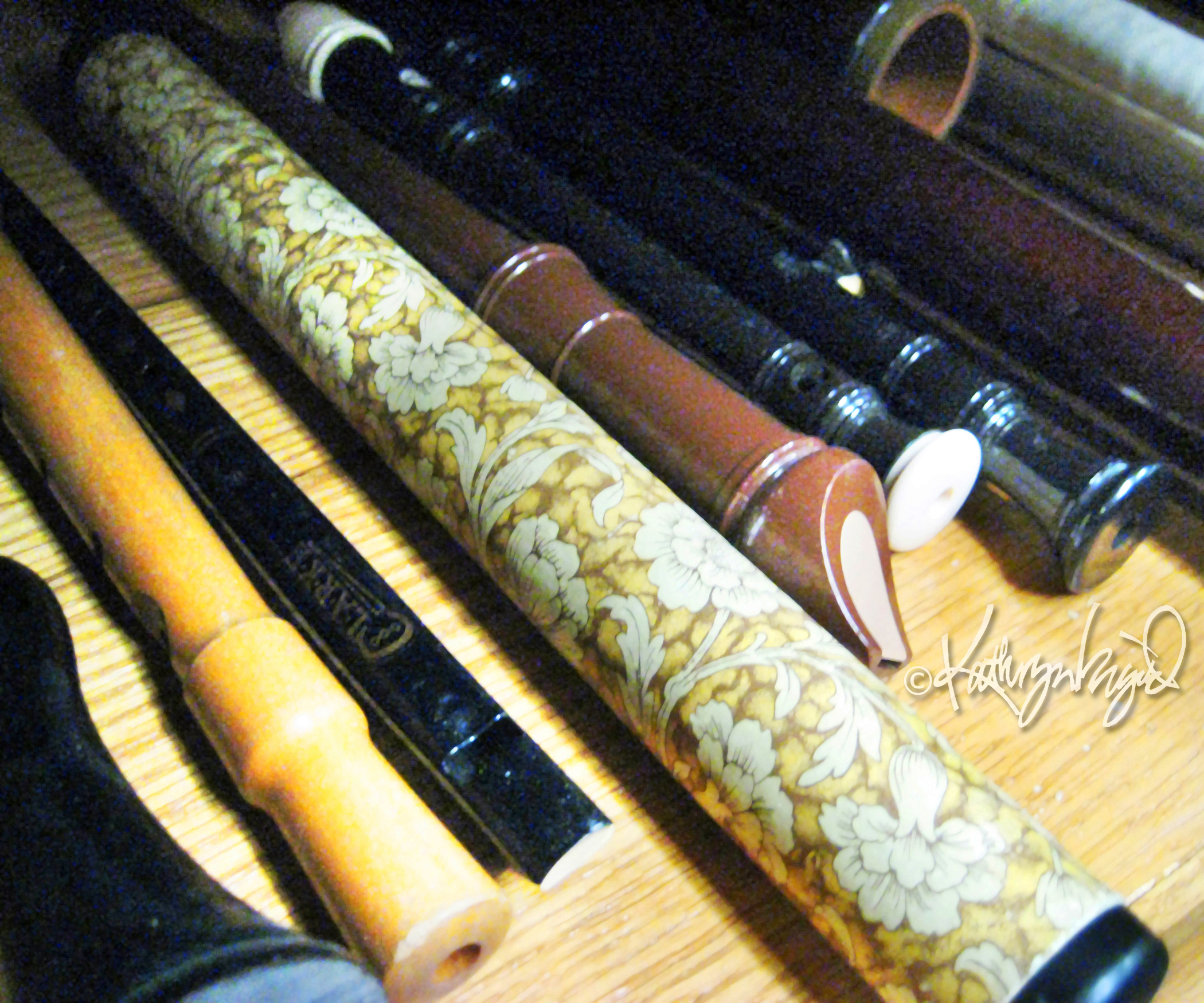
K is for Krumhorn

not clues in Trivial Pursuit,
but instruments from ancient days–
I’ve newly learned to sing their praise.
Light, come clear the darkness, break impenetrable night
to let in day and sanity and set the wrong aright,
to open hopeful windows wide, to raise to higher station
these wond’ring, wand’ring souls of ours through your illumination.
Mute as the grave, voiceless and weak,
I haven’t a singular word to speak
when the signal fails and the synapse strays–
but only on my worst dysphonic of days.
Night calls to me. I love the velvet
darkness of its touch, its song,
its slowing breath, the way a well-met
dream can draw me right along . . .
Ossified as I can be,
a stuck and stubborn brute am I,
unwilling and unchanging–see?
I let the whole quatrain go by–
Peculiarity is my gift! My adoration for the weird
knows few bounds–I get a lift from thinking fish could grow a beard,
from dreaming idle silly dreams of lizards singing, candy socks,
electric sofas, grey ice-creamsand giving grown-ups nasty shocks.

photo

Q is for Quiver

Quiver full of arrows, yes? Here in my heart I quiver with glee
because in love I’m a quivering mess,’less Cupid comes to puncture me–
No, no!–the quiver, instead, should hold an armload of arrows of skill and wit
to set ye a-quiver, as though fell cold, in astonishment I had thought of it.