Things to Remember

Apparently I am sucked into the Throwback Thursday vortex, for amid my housework wanderings I stumbled across some dish-drying towels that brought a flood of memories over me. The first thing that came to mind was curiosity about whether there are many others who grew up using tea-towels like these made of flour sacking material and hand-embroidered, often with a small posy or aphorism in the corner, and usually by Mom or some older relative, at least until we ourselves were conscripted for the task.

My mother enjoyed embroidery as a relaxation mode as well as art form, and the last batch of dish towels that I know of her having made were a series of line drawings of local native flora, based (with the author’s permission) on a book of lovely little watercolors of the same plants and flowers. I chose one representing a favorite alpine blossom, even though the creamy white blooms were guaranteed to fade quickly against the pale fabric, and the outline of them remains faintly visible even after many years of hard use. That’s a perfect representation, in its way, of how my memory works. I began to reminisce, seeing this embroidery, on the alpine plants that have always signaled peace and freedom to me as I day-hiked on the flanks of Mt. Rainier. So I meandered over to search online for native alpine plants of the northwest, and as soon as I began looking at the images I was struck with an infusion of the very scent of those hikes, a spicy, earthy, fresh and herbal blend of tree resins—cedar, pine, alpine fir—and sun-baked earth, lightly perfumed flowers, crushed needles and fallen leaves underfoot, the brisk dash of elevated air. What a lot of fine things to be contained, in addition to the treasury of love and family history, within my mama’s embroidered dish drying cloth.Photo: Mama's Embroidery

You might think I’d’ve inherited an embroidery gene, because in addition to my mom’s fine handiwork, I grew up seeing and using Grandma’s embroidered towels and pillowcases and enjoyed them, too. I did not, and since I had these two sources readily available, I didn’t mourn the gap in my skill set. I could always go to one or the other of them and find some new kitchen linens in a time of need.

My father’s mother never got so inventive as to design her own embroideries based on book illustrations like Mom’s were, but Grandma chose for her projects the resource of hand-me-down and found patterns, most of them quite out of date already (hence the ease of her collecting them), and almost all of them much quirkier and tackier than her normally refined taste would have allowed. These were, however, mainly destined to be given to charity or sold for the proceeds that would go to the charity in their stead, so she had no attachment or agenda for showing them at home. I, on the other hand, bought a few not only out of any little do-gooder intentions but because the sheer silliness of some of the designs so delighted me.

This one, for example, that was my inspiration for joining now in the Throwback Thursday brigade, was highly amusing to me in its ridiculously fantastic subject, its period style, and its girly goofiness. I couldn’t resist it. I found no other Days of the Week as companions, so I can only imagine what happened on those days, but it was enough to find this towel that could simultaneously remind me of my grandmother and my youth and make me laugh, all while getting my dishes dried.Photo: Throwback Thursday

Fashions change, and with them, the decor and even tools that fill our lives and homes. Yesterday’s dish towels are probably more often machine-made of some high-tech sort of microfiber or super-absorbent bamboo fiber blend with an artful printed-on design in the proper Pantone colors of the year. But do they do a more artful job, as well, of wiping dishes dry after washing? Can they strain soup broth into crystal clarity? Do they make perfect wraps for ice packs when a sore neck or bruised arm is in want of one? No better than the old standbys of my youth, I imagine. Old as I am, I come from good stock that valued something a bit quaint and very handmade, and if it managed to accomplish the task and carry memories for decades at the same time, why, I suspect I’ll do well to try to be a human imitation of it myself.


Sing Comfort to Me

Digital illustration: Wild Daisies 1Sweet is the Song

However cold and sharp the wind may be,

As wild and deep as darkness ever falls,

From utmost edges of the storm still calls

A song that stills, that draws and comforts me—

Though battles rage, the world in sorrow drowns,

And trials threaten life and hope and light,

That gracious call still guides me through the night

As long as I will listen to its sounds—

No danger is so great, no ill so dire,

Nor pestilence and terror so extreme,

That it cannot be mended by the stream

Of melody from that angelic choir—

Now when amid the depths of dark and pain,

I’ll listen for that heavenly refrain.Digital illustration: Wild Daisies 2

Fixity

“Why?” is a beautiful question, even though it terrifies most of us. A wise soul once said that the opposite of faith is not doubt but certitude. When we grow too attached to a belief and its perfect correctness, we disallow not only our own reexamination of that belief, which if it’s so perfectly correct should pose no threat to us and if it’s not, should allow us to become wiser and more faithful to our convictions; we also fail to show respect for the belief itself, if we are so fearful of its being exposed as wrong.

Standing fixed in a position of faith is only impressive if that belief can be defended in a calm, intelligent, reasonable conversation with someone who doesn’t yet share the same convictions. A shouting match or the refusal to discuss respectfully is as likely to convince and convert an unbeliever as punching someone in the nose is to prove that you’re smarter than she is if anyone’s questioned it. It’s more useful to ask, whenever any disagreement arises, whether one is genuinely defending one’s belief or just feels personally threatened. Egos so often get in the way of rational, logical conversation when we reflexively mistake the call for proof or persuasion of our beliefs for personal insults. It might be useful to remember that when someone asks for evidence of something we cherish as fact, we could give them the benefit of believing that they really want to know why we accept it as truth. A genuine discussion might actually lead to common ground.

It might also, if we let it, lead to greater insight on our own part. The dispassionate process of a logician is aimed not at debunking everything in sight but stripping away falsehoods and irrelevancies and fallacies to expose the facts in the matter. Truth can withstand all questioning. It trumps politics, rants, bullying, diversionary tactics, disinformation and pure human foolishness, if we dare to examine all of the input carefully and patiently and with respect for those who may have so far missed the mark. A reasoned and quietly stated truth will finally have more power than all of the smoke and mirrors that deniers propagate and cling to, or we will have to admit we’ve lost more than our own convictions.Digital illustration from photos + text: Zoanthrope

Seeking Sabbatical

Everybody needs a break. Not everyone gets one or is in the position to take advantage of it, but when the opportune moment arises, it’s a gift that should be savored. After all, it gives us far more energy for going forward with style.Digital illustration from photos + text: Recess

Nothing Wrong with Stating the Obvious

That which is ubiquitous in my life, the thing that I walk by every single day or experience every time I am in a particular, familiar setting, can become invisible to me. For good or ill, I can forget to notice anymore those things that are so close they could bite me on the nose before I paid proper attention to them. They might be so near I could change them for the better with little effort or they could, if I’m too foolish to do that, turn on me and make my life or someone else’s immeasurably worse for having been left unchanged; good things, conversely, can be so near that I could be uplifted by the mere thought of them if I only gave them a thought in passing.

I must pay better attention. My senses should be enough to remind me of all the woe and wealth that surround me at every turn, and my will should follow my convictions enough to make me respond with a hand of aid, a voice of change, or a heart full of admiration and gratitude. The vast majority of the world hasn’t nearly the kind of wealth and privilege that surrounds me in my life—materially, yes, but also in health, safety, opportunity, hope and happiness—and while there is no reason to reject what I have, it should motivate me to take a closer look around me. I ought to take constant inventory and be willing to counter the wrongs and repair those things that I can, or at the least, call upon those who are able to make positive change. And I should be glad at every sign that states the obvious good in my life. Thankfulness is a small enough part of true mindfulness, but looms large in the world of well-being.Photo: Stating the Obvious

Beginning with the Very First Night

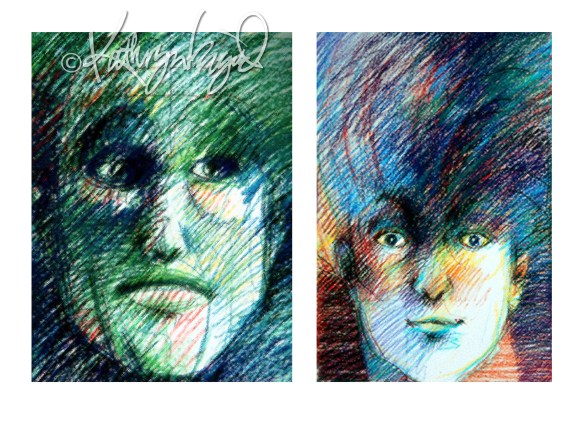
Digital illustration from a photo: Slide into NightFrom Darkness to Stars

Those distant notes of smoky, sighing dusk

That underlay and raise the early moon

Draw mystery from earth, as if its musk

Were growing far too fecund, far too soon,

To lie a moment longer there in wait

And hide the heart of what was made for strength,

The time when reinvention is so great

It imitates Creation, and at length,

Renews its potent primacy and grows,

Becomes, designs, accelerates, empow’rs

All who would build, each being here that knows,

The inspiration of the nighttime hours—

So break the stars of newness in the night

To bring from utter darkness brilliant light!Digital illustration from a photo: From Darkness to Stars

Discretionary Fun

Digital illustration/drawings: Mood & 'TudeI get the impression that some people treat non-work times as the only times when they’re allowed to be happy. I do understand the need for income that can drive one to spend time in a job that doesn’t fulfill any other need or desire in life, and many of those are in the least-compensated positions at low-paying employers’ as it is. Been there, done that.

But I can say, too, that the greatest misery in my work life was attitudinal, and the more I did to discover and avoid the things that made me unhappy in my work, the less miserable I was. The more I sought to learn what I enjoyed in work and chose ways to magnify that, the closer I got to contentment both at and out of the workplace.

I grew more cognizant, at the same time, of not wanting to waste precious time on work that challenged my inner playfulness or threatened my general sense of joy and purpose. I was given a great gift in being able recognize the longing and accept and pursue it by choosing a much lower-paying job (on paper, at least) with a great happiness-quotient. I’ve seen, over the years, that many of us are easily misled when we try to calculate what we think we need for our daily expenses, and how much it costs us to earn that. Yes, we get those paychecks, but if the job requires, say, clothes that we wouldn’t wear other than at work, child care, transportation, professional training and memberships, and that sort of thing, how much pay on an annual or monthly or hourly basis does it really cost to go beyond paying for those, at least far enough to keep a roof overhead and food on the table as well?

Nobody knows this awful kind of math better than the working poor. I’ve been in that category more than once in my life, but have always had safeguards others lacked—like friends or relatives from whom I could rent living space more cheaply than I could even a minuscule, run-down apartment in a scary part of town—so I also know that I am luckier than most. Now, when I am married to a person who is not only able to make enough income to support both of us but is willing to do so, I am among the most privileged and fortunate of creatures, and I know that, too.

But one of the best things I learned along the way when I was living on a very slender, sometimes sporadic, income, remains valuable to this day: if I spend so much time and energy on just ‘getting by’ in life and don’t put forth equal effort to enjoy, live, and love my life along the way, all of the pennies I earn are of little value at all. And while I can’t always afford the most thrilling and glamorous ways of keeping myself amused, especially when I do need to be working at any task or job, I had better find the simpler and cheaper ways and the most reliable ones to fill my life with happiness and contentment, I know by now that surrounding myself with people I love, admire, enjoy and respect is the very best solution. And if my job doesn’t allow for that kind of happiness and contentment, then it is costing me more than it pays, in the end.

Chinatown is Everywhere

It was true when the world was much younger, but all the more so in this age of easy travel and speedy communication: the globe shrinks, cultures meet and intermingle, and there’s less and less difference between one city and another. A minuscule part of me is sadder each time I see English plastered across the signs and storefronts of a foreign country that used to seem more exotic and culturally distant from where I grew up and lived my life. Intermingling can easily lead to homogeneity, and that can be mighty boring.
Photo montage: Chinatown is Everywhere

But then I am reminded that even when travel was arduous and communication as slow as molasses in a meat locker, cultures met, mixed and mated, and gradually produced new and fantastic variants of themselves. Where would we be if languages had never borrowed and stolen terms from each other, evolved and changed over time? If nobody had ever crossed a border, learned about another culture, married a foreigner, or learned the way a more advanced or inventive group could accomplish tasks more efficiently and elegantly, would humans even still be around to do that stuff anymore?

My attitude is changing. Now, I really do still greatly appreciate that there are recognizable ethnic neighborhoods in nearly every city, every country. They’re wonderful microcosms of the nations and peoples that immigrated and founded them. But I also love that there’s a regular hurricane of linguistic mash-ups, cultural blending and reinvention of characteristics that comes from our happy meetings on new shores. It’s how we got here; it’s how we’ll move forward and continue to thrive.

Meanwhile, as long as there are those fantastic ethnic-enclave neighborhoods still in action, I’ll know I can follow the locals and find the best jiaozi and sticky rice in town when I get hungry.

Little Things

The tiniest detail can determine the depth and intensity of a memory. It’s that faint fragrance wafting from the corner of the flowerbed at my first home that I remember most about playing in its front yard, and that in turn, reminds me—every time I get a whiff of the same scent—of living in that cozy brick house with its backyard apple trees to climb, the slope from fence to sidewalk where we slid down the grass on a cardboard magic carpet, and the narrow muddy track behind the back wall where we played at exploration.

My grandmother gave me a little locket, once, that had been her father’s watch fob, and I made a little drawing of the monogram on its front, HDB for Hans Daniel Bolstad. When I look at the drawing now, the locket itself long gone somewhere else after multiple moves of residence, I remember the small weight of it in my hand, the warm burnished shine of its pale yellow metal, and the feel of the engraved curves in the monogram bitten well into the gold-plated finish on it. I also remember, thanks to the tiny little hole where the drawing is black at the bottom center of the drawing, hearing the story of how the space between the engraved lines there were caved in by a different kind of bite, that of Great-Grandpa’s tiny daughter when she teethed on the locket a little fiercely.Drawing: Memento

What will I remember when my memory is further faded by time and age? Impossible to know. But my guess is that it’ll be seemingly insignificant, minute motes, and not the grand arc of history, that’ll remain intact and prod me to recall unexpected things from time to time. I may not hang onto much of importance, but some dust-sized fleck of a sensory clue that will likely trigger a cascade of reminiscence when the moment comes.

The Strangest Kind of Strangers on a Train

The old tale of complete strangers meeting in transit, discovering they have identical problems, and “solving” the problems by trading crimes to eliminate the people they see as the root of their unhappiness, makes for a striking mystery drama, in fiction. Ask Patricia Highsmith and Alfred Hitchcock fans! But I was reminded recently that we give too little credit to our commonalities as a positive solution to our problems, and end up missing crucial opportunities as a result.

The filmic version takes as its thesis that the two strangers who meet can find not other, or at least no better, solution to the problem of having bad relationships with inconveniently incompatible people than to murder them, and by ‘exchanging’ murders with each other they hope to escape detection by each having no apparent connection to, or a motive for killing, the other’s nemesis.

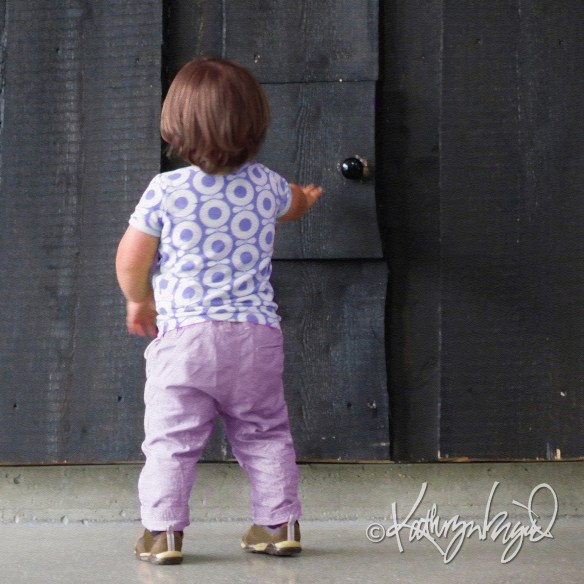
While this makes for startling and even compelling imagined mystery, it’s horrific if imagined in real terms. Yet we do similar things all the time in this world, don’t we? Because I tend to agree with a particular point of view in general, say, a specific philosophy or political party’s policies, or my country’s traditions, does that mean it’s wise or humane or practical or generous to follow along without question, no matter what my group, party or nation says and does? We mortals are remarkably good at noticing and magnifying our differences, as genuine and large as they may be. But we’re frighteningly weak, in opposing measure, when it comes to recognizing, focusing on, and building upon our true kinship. This, I believe, easily outweighs in both quantity and importance, our separating characteristics. Digital illustration from a photo: Opening Doors

The recent train outing in Sweden that reminded me so pointedly of this also confirmed my belief that it’s an area where youth is wiser than experience. In a railcar where a young father, not a local or a native speaker of the language, was keeping his fifteen-month-old daughter occupied and contented during the trip by helping her practice her tipsy walking, she made her way with his help to where another family, also foreign but not of the same culture as father and daughter, was sitting together. That group was of two adult sisters and their four or five school-age children. The toddler was naturally attracted to the friendly and spirited older children, and as soon as they saw her, they too were enchanted. What followed was perhaps twenty minutes of delighted interaction between them all, with occasional balance aid from Papa and photo-taking by the Mamas. And barely a word was spoken, much less understood by any of the participants, during the entire episode.

The greatest among the many beauties of this endearing one-act was that the conversation essentially began, continued and ended with the kids reaching toward one another with open hands, waving and gesturing and generally putting on an elaborate pantomime together, and above all, giggling and chortling with peals and squeals of ecstatic laughter.

Needless to say, all of us adults in the railcar grinned, giggled, chortled and otherwise became happy kids right along with them. Resistance was an impossibility and a pointless attempt, at that. And isn’t that an excellent lesson for all? Adults are too busy being territorial and fearful and downright feral to remember that the open hand of welcome and sharing is as quickly reciprocated as any gesture, and a smile of greeting and acceptance is contagious beyond any language, age, or cultural barriers. We can nurse our terrors of the unknown as supposed adults, or we can choose to laugh together like children.Digital illustration from a photo: As If in a Mirror