


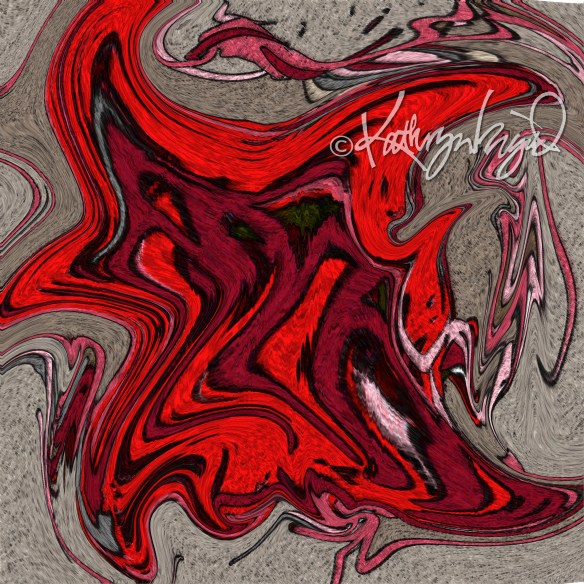
 Psychedelic Pstarfish
Seems sillier than psyllium to sing of starry seas,
Yet so the ocean’s silken shore’s sufficient proof of these
That sparkling in such shady deep, something is sure to gleam
In stunning stellar specks and sparks in that submergèd stream,
So sing we sweet and shining songs of starfish as we wish
Upon the evening star to see a firmament of fish
Some things simply can’t be planned, foreseen, or avoided. The impossible is surely one of those things, and I happen to know that the impossible happens amazingly often. At least, in my part of the universe.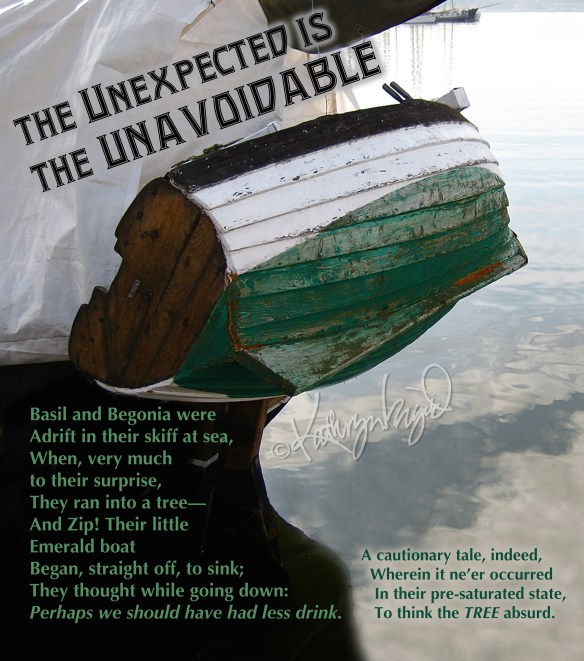
Naming things is an endlessly fascinating and complicated way of creating and better understanding our relationships with them. Different cultures have even devised quite distinct ways of classifying and identifying the kinships within them, to the extent that families and relations in the different cultures affect the very ways people interact and consider themselves connected, responsible for each other, and much more.
One of the appealing (or appalling) quirks, depending upon one’s view, of the American traditions of familial identification and the names given them in English is the way we use the word Great to specify layers of distance from ourselves. This photo, for example, is of one of my sets of great- and/or great-great grandparents (my maternal grandfather’s forebears), if I am not mistaken, and there is much to pique my curiosity in this image.
First, of course, is the question of whether I have identified them correctly at all. But then, in what ways—besides the nominal—were they great? Clearly, being among my ancestors is an easy in to that category. [Ba-dum-tsssssssshhhhhh!]*
Seriously, though, what distinguished these people? Safe to assume, from what little I do know of my relatives in Norway, these two lived on a small farm, and they worked hard. I mean, incredibly hard, by my standards. I’m inclined, actually, to think that the gent is my great grandpa and the lady next to him is his mummified mum, but having seen many a portrait from that era whose subject I was shocked to discover was eons younger than I’d have imagined, I can’t be sure. If this is a couple, I am extra, extra glad I have such a lazy and comfortable life. I may be no spring chicken, but I like to think that people will be able to tell whether or not I’ve already died, and when it does occur, won’t be able to make work boots out of my hide without tanning it further.
This could be the great-grandfather who was a tinsmith. A pretty skilled one, at that. The hands I see here could easily be tough enough to have put metal in its place. As for the farming, what little I’ve gleaned [enough with the shtick! I’ll try to behave myself]* from the various family stories and photos indicates that my family were subsistence farmers, growing what produce would feed their own households or be swapped with neighbors for further goods, and raising enough sheep and goats, chickens and cattle to keep them in meat, eggs, hides and bones as needed. Agrarian life, until more recent decades, was generally a far more solitary and jack of all trades kind of existence. My grandmothers, great and otherwise (and I can only assume all of the neighbor women of this ancestress’ approximate vintage) did such work as probably made them all look equally leathery.
I would like to think that the sober, if not condemnatory, expressions in the photo sprang from the typical problem of holding still for the interminable exposure time a photograph required in those days, not to mention doing so while squinting in the sunlight. But I also suspect that a combination of that hardscrabble life of theirs and the grimly perdition-obsessed brand of religion to which many of my relatives have subscribed means that these two generally took life mighty seriously as well. They probably didn’t see so much to joke about or room for fun and games in their daily lives.
What I can safely assume about my relatives still gives me some hope. Obviously, they knew enough about how to survive and yes, thankfully, to procreate, that I am here generations later to tell the tale. I consider my existence a fine thing. Although they weren’t either wealthy or showy, they are dressed in well made, tidily kept clothing and lo, my mustachioed male relative even sports a watch chain, so theirs was not, even from the perspective of my privileged and cushy life, a torturous life of pure privation. So I don’t feel enormous existential guilt for their suffering. But I’m not inclined that way like they might have been, anyhow.
My late Norwegian relatives lived and labored in a landscape and climate rather like where I grew up in the American northwest, so I know that even if their daily work was hard they did it surrounded by beauty and nurtured in a mostly benevolent natural environment. They raised children who were able to go out in turn into the wider world and make their ways, eventually finding own their paths, making their own livings, and raising their own families, and eventually crossing many mountains, borders, and seas. I think all of this a fine, if modest, sampler of human existence with [dang it, I just can’t help it!]* relatively little grand tragedy or overblown drama. Most of all, I am glad that the long-gone beings who posed for this rather inscrutable image contributed to the production of a line of pretty good folk, culminating in my immediate family. That’s greatness enough for me, and makes me very thankful indeed. Happy Thanksgiving, my friends.


If left to my own devices to raise or, more difficult yet, forage and hunt for all of my food, I’d soon enough be a non-meatatarian. I haven’t the patience or the skill for any sort of animal husbandry, nor the remotest chance of outsmarting anything sentient in order to catch it. But despite my pitiful showing as a junior fisherman alongside Gramps in days of yore, I think I could pull myself together enough to learn how to fish and forage the sea enough to keep my love of seafoods at least occasionally treated. Good protein, too.
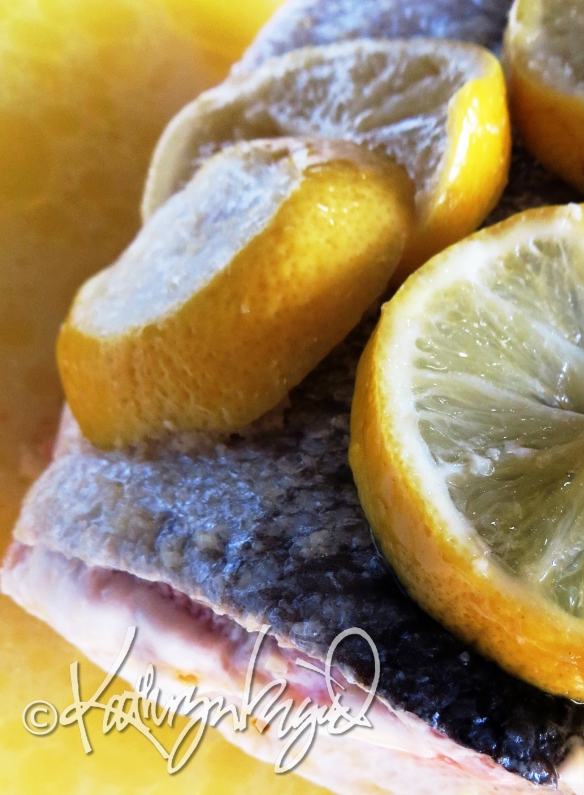
Sometimes I am happy enough to have a rather plain fried, roasted, baked, steamed, raw, or poached piece of fish. When it’s pristinely, spankingly fresh and sweet, fish should probably not be made too fancy. Why mask perfection? At most, a dash of fresh herbs or a little zip of some lovely masala ought to be plenty of interest to vary the day’s meals. Even I have been known to identify and safely pick and consume wild sorrel, which is an excellent companion to fish in modest amounts. And of course, there’s nothing friendlier with a piece of salmon than citrus or ginger root or plain black pepper, if the foraging can extend as far as a grocery store. One thing I do think well worth the [negligible] fuss if I’m preparing salmon with its skin is to sear it, lightly salted, in butter or a high smoke-point oil before I cover its pan to finish cooking it through on cooktop or in the oven, because crispy salmon skin is delicious and its crunch a wildly beautiful complement to the velvety tenderness of the flesh. Once my palate was introduced to this marvel, I wondered how I had managed to enjoy salmon so much, so often, without having known what I’d been missing. Salty, slightly fat, salmon-flavored, and crispy? How could I not love it!
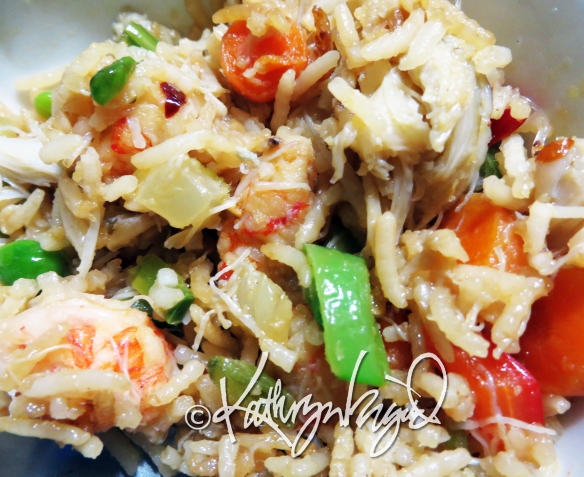
Of course, there are innumerable other outstanding ways to enjoy and indulge in seafood, if one does happen to have access to plenty of other ingredients. Seafood fried rice is one very flexible, quick to fix, and reliably delectable way to enjoy such things. Salmon in bite sized pieces, for one seafood treat, goes quite well with the contrasting grains of rice, lovely with rich that’s been cooked in either broth or coconut water or milk and filled with a delicate confetti of diced celery, carrots, onions, bell peppers, or peas, whether shelled or in sugar snap or snow pea form. But as you can see in the accompanying photo, I enjoy, along with salmon or other kinds of fish, those admirable insect imitators the crustaceans. Hardly anything, sea-based or otherwise, is more enticing in fried rice than crab (naturally, I vote for Dungeness first, every time), lobster, langoustines, or shrimps of various sizes. I would guess that some tiny, tender clams might be more than acceptable in this sort of dish as well, but truthfully, I doubt I’ll ever get quite that far, as long as any of the usual suspects are available. Never say never.
Meanwhile, back at the fried rice, I am still an old Occidental renegade when I make it, cooking it much too slowly for a wok-master’s taste and throwing in whatever I have on hand and am in the mood to eat, from the aforementioned vegetable ingredients, crisply sautéed, to seasonings like Tamari or soy sauce, citrus juice, fresh or candied or pickled ginger or ginger syrup (or all four, as I am an unregenerate ginger fiend), honey, shallots, and/or chile pepper flakes. All of these cook in gently, over low heat, while I’m stirring in an egg to scramble into shreds, and then letting the rice slowly develop a good crust amid copious lashings of fat—coconut oil, avocado oil, ghee, whatever I have on hand. All of this, until I can’t quite wait any longer. Must keep that seafood delicate and fresh. Until I can devour it, anyway.
Beloved, let us sit down together in the shadow of the oaks; let us take deep draughts of fresh water from the clear, swift stream. In the scorching heat of the middle of day, let us take refreshment like the dragonflies that skim the water’s edge, and be restored by the caroling of birds in the distant shade.
The days are long and our work makes wearying and seemingly infinite demands, and we know that this will not soon change. There is change of many sorts ahead, this we know too, but what it will be is yet beyond our imagining. Thus it has been, and so shall it ever be: we travel our paths, seldom knowing quite where they lead, and we labor in darkness the while. Some days, the destination is sparkling joy, and on others it is marred by sorrow and strife; at times, the mists of uncertainty part and the way ahead becomes clear, and at others it remains quite fully obscure.

What I know, Beloved, is this—that no matter how hard or easeful is the road and no matter what the destination holds for us, we walk our way together, you and I. We may long for clarity and even for the strength to wait for it, but in the meantime we will take our stops for breath along the way, sitting in shade when we may and drinking deeply from the icy stream, traveling always hand in hand no matter what the journey brings.


 Art-Colored Glasses